India’s Official Distributor and Retailer for Licensed Action Figures, Statues and Anime Collectibles

0

Your Cart is Empty

July 02, 2026 31 min read

For more than eight decades, Marvel Comics has stood at the forefront of superhero storytelling, creating unforgettable heroes, iconic villains, and groundbreaking narratives that have transformed the comic book industry. From the pages of Spider-Man, X-Men, Avengers, Fantastic Four, and Daredevil to cosmic epics featuring the Infinity Gauntlet and emotional character-driven sagas, Marvel has consistently delivered stories that resonate with readers across generations. Its influence extends far beyond comic books, inspiring blockbuster films, television series, video games, novels, and an ever-expanding pop culture legacy.

What truly sets Marvel apart is its ability to combine larger-than-life superhero action with deeply human storytelling. The publisher revolutionized the medium by introducing flawed, relatable protagonists who struggled with real-world challenges alongside world-ending threats. This storytelling philosophy helped redefine what superhero comics could be, turning Marvel into one of the most influential and celebrated comic book publishers in history.

Among Marvel's vast library of legendary stories, a select few stand above the rest as true milestones. These aren't simply fan favorites or critically acclaimed graphic novels—they are the defining masterpieces that reshaped the Marvel Universe, reinvented beloved characters, introduced unforgettable concepts, and permanently altered the direction of comic book storytelling. Some laid the foundation for the modern Marvel mythos, while others challenged long-held conventions and raised the creative bar for the entire industry.

Whether they are Silver Age classics, revolutionary modern masterpieces, or underrated gems that deserve far more recognition, these ten stories represent Marvel Comics at its absolute best. Their influence can still be felt throughout today's comics, the Marvel Cinematic Universe (MCU), animated series, and countless other adaptations, proving that truly exceptional storytelling never goes out of style.

If you're looking to experience the most essential Marvel comics ever created—or simply want to understand the stories that forever changed the House of Ideas—these are the masterpieces that belong at the very top of every comic fan's reading list.


Giant-Size X-Men #1 (1975) – The Comic That Rebuilt the X-Men and Changed Marvel Forever
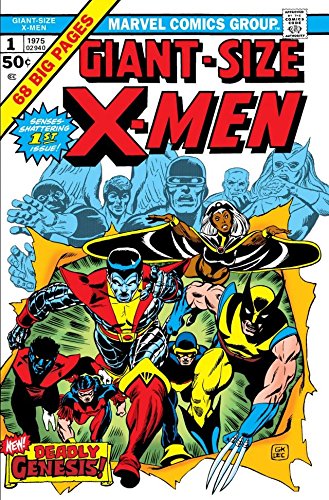
Few comic books have transformed a struggling franchise as dramatically as Giant-Size X-Men #1. Today, the X-Men are widely regarded as one of the greatest superhero teams in Marvel Comics history and are often considered among the most influential superhero teams ever created. Their stories have explored prejudice, acceptance, diversity, sacrifice, and heroism in ways that have resonated with readers for decades. However, the X-Men's journey to becoming Marvel icons was far from guaranteed.

When the team first debuted in 1963, legendary creators Stan Lee and Jack Kirby introduced the original lineup consisting of Cyclops, Jean Grey, Beast, Angel, and Iceman, under the mentorship of Professor Charles Xavier. Despite the creative pedigree behind the series, the original X-Men struggled to capture the same level of popularity enjoyed by Marvel's other flagship titles like The Amazing Spider-Man and Fantastic Four.

Sales gradually declined throughout the late 1960s and early 1970s, and interest in the mutant team dwindled. Eventually, Uncanny X-Men stopped producing new stories altogether, with Marvel instead filling the series with reprints of earlier issues—a clear indication that the franchise was in danger of fading into obscurity.

Everything changed in 1975.

With Giant-Size X-Men #1, writer Len Wein and legendary artist Dave Cockrum completely reinvented the franchise. Instead of relying solely on the original team, the comic introduced an entirely new generation of mutants recruited from around the world, instantly giving the X-Men a more diverse, global identity than virtually any superhero team of its era.

Readers were introduced to future Marvel legends including Wolverine, the fierce Canadian mutant whose popularity would eventually make him one of the company's biggest stars; Storm, the weather-controlling mutant from Kenya who would later become one of Marvel's greatest female heroes; Nightcrawler, the teleporting swashbuckler from Germany; Colossus, the gentle Russian powerhouse with organic steel skin; Thunderbird, the proud Apache warrior; Sunfire from Japan; and Banshee from Ireland.

This bold new lineup dramatically expanded the scope of the X-Men mythology, bringing together heroes from different cultures, nationalities, and backgrounds in a way that was groundbreaking for mainstream superhero comics. The team's international composition reflected Marvel's growing ambition to tell stories that appealed to readers around the world while reinforcing the X-Men's central themes of inclusion and acceptance.

Beyond introducing unforgettable new characters, Giant-Size X-Men #1 fundamentally redefined what the X-Men could be. The comic shifted the series away from a relatively conventional superhero formula and laid the foundation for the emotionally complex storytelling that would later flourish under writer Chris Claremont, whose legendary run helped transform the X-Men into Marvel's most successful comic franchise throughout the late 1970s, 1980s, and early 1990s.

The impact of this single issue cannot be overstated. It launched characters who would become household names, inspired countless animated series, blockbuster films, and video games, and established many of the themes that continue to define X-Men stories today. Without Giant-Size X-Men #1, landmark events like The Dark Phoenix Saga, Days of Future Past, Age of Apocalypse, and many of the X-Men's greatest adventures might never have existed.

More than just a successful relaunch, Giant-Size X-Men #1 completely redefined the future of Marvel's mutant heroes and proved that even a struggling comic series could become one of the industry's biggest success stories through bold creative reinvention. Nearly five decades later, it remains one of the most influential single issues ever published and an essential read for anyone exploring the greatest Marvel comics of all time.


Secret Wars (2015) – The Modern Marvel Epic That Redefined the Multiverse

When Marvel fans talk about the greatest crossover events ever published, Secret Wars (2015) almost always finds its way to the top of the conversation. While it shares its title with Marvel's groundbreaking 1984 Secret Wars event—the first company-wide crossover built around Marvel's biggest heroes and villains—Jonathan Hickman's Secret Wars is an entirely different story. Far from being a remake, it is a bold reimagining that elevates the original concept into one of the most ambitious and critically acclaimed comic book events of the modern era.

Written by visionary storyteller Jonathan Hickman and brought to life by the breathtaking artwork of Esad Ribić, Secret Wars (2015) is widely regarded as one of Marvel Comics' greatest creative achievements. Rather than functioning as a standalone crossover, the event serves as the spectacular payoff to years of meticulous storytelling that Hickman carefully built across acclaimed titles such as Fantastic Four, FF, Avengers, and New Avengers. Every plot thread, character decision, and cosmic mystery introduced throughout his Marvel run ultimately converges in this unforgettable saga, making Secret Wars feel less like a single event and more like the grand finale of an epic years in the making.

The story begins with the collapse of the Marvel Multiverse, as catastrophic Incursions cause entire universes to collide and annihilate one another. Faced with the complete destruction of reality itself, Earth's greatest heroes desperately search for a solution, but their efforts prove futile. When the Multiverse finally falls, a single fragmented world known as Battleworld rises from the ashes—a patchwork planet composed of pieces of countless destroyed realities and ruled with absolute authority by the seemingly omnipotent God Emperor Doom.

At its heart, however, Secret Wars is far more than a spectacle of cosmic destruction and multiversal warfare. Beneath its enormous scale lies an intensely personal story centered on one of Marvel's greatest rivalries: Doctor Doom and Reed Richards. Throughout decades of Marvel history, the two brilliant minds have represented opposing philosophies of power, responsibility, and ambition. Secret Wars brings that conflict to its ultimate conclusion, delivering an emotionally satisfying confrontation that explores not only who is the smarter man but also who is truly worthy of shaping the future of existence.

One of the event's greatest strengths is its remarkable balance between breathtaking science fiction and deeply human storytelling. While readers are treated to universe-spanning battles, alternate realities, and some of the most imaginative world-building ever seen in Marvel Comics, Hickman never loses sight of the characters themselves. Their relationships, sacrifices, personal failures, and hopes remain the emotional foundation of the narrative, ensuring that the story feels intimate even as it unfolds on an unimaginable cosmic scale.

Visually, Esad Ribić's artwork elevates Secret Wars into a true masterpiece. His cinematic compositions, detailed environments, and emotionally expressive characters perfectly capture both the grandeur of Battleworld and the quieter moments between its heroes and villains. Every page reinforces the epic scope of the story while maintaining the emotional weight that makes the event so memorable.

Beyond its storytelling achievements, Secret Wars permanently reshaped the Marvel Universe. The event streamlined Marvel's continuity, brought together elements from the Ultimate Universe and the primary Marvel Universe, and introduced lasting status quo changes that continue to influence comics today. Beloved characters, alternate realities, and fan-favorite concepts found new life following the event, making it one of the most consequential crossover stories in Marvel history.

For many readers and critics alike, Secret Wars (2015) represents the gold standard of modern Marvel events. It combines years of meticulous long-form storytelling with spectacular sci-fi action, emotionally resonant character development, unforgettable world-building, and meaningful consequences that extend far beyond its final issue. Whether you're a longtime Marvel fan or discovering Hickman's work for the first time, Secret Wars stands as an essential reading experience and one of the finest achievements the comic book medium has ever produced.
 

Ultimate Spider-Man (2000) – The Series That Reinvented Spider-Man for a New Generation

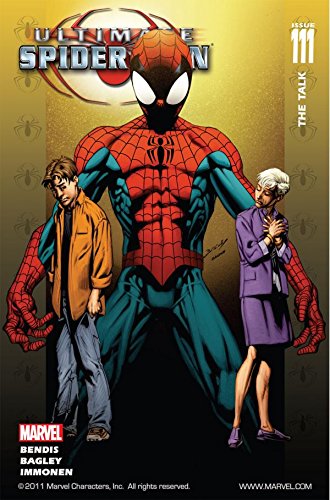
Few comic book reboots have been as successful—or as influential—as Ultimate Spider-Man. At a time when Marvel was looking to introduce its most beloved heroes to a new generation of readers, this groundbreaking series accomplished something truly remarkable: it reinvented Peter Parker without losing the heart and humanity that had made him one of the world's most beloved superheroes for decades. More than two decades after its debut, Ultimate Spider-Man is still widely regarded as one of the greatest Spider-Man comics ever published and one of the defining titles of Marvel's Ultimate Universe (Earth-1610).

The timing of its release couldn't have been better. By the late 1990s and early 2000s, many longtime readers felt that the mainline The Amazing Spider-Man comics had become increasingly difficult to follow. Years of complex continuity, controversial status quo changes, inconsistent storytelling, and character decisions that often felt at odds with Peter Parker's established personality left many fans frustrated. While Spider-Man remained one of Marvel's most recognizable heroes, his flagship comic was struggling to capture the same sense of excitement that had made earlier stories so beloved.

It was against this backdrop that writer Brian Michael Bendis and artist Mark Bagley teamed up to launch Ultimate Spider-Man in 2000, delivering a fresh, modern interpretation of Peter Parker that resonated with both longtime fans and first-time readers alike. Rather than requiring decades of comic book knowledge, the series reintroduced Spider-Man's origin from the ground up, allowing a new audience to experience Peter's journey with contemporary storytelling, relatable dialogue, and emotionally grounded character development.

Beginning with the celebrated opening arc, Power and Responsibility, readers witness Peter Parker's transformation from an ordinary teenager into Spider-Man after being bitten by a genetically altered spider. While the core elements of his origin remain familiar, Bendis expands nearly every aspect of Peter's personal life, giving greater depth to his relationships with Aunt May, Mary Jane Watson, Harry Osborn, Gwen Stacy, and many of the characters who would come to define his world.

One of the series' greatest strengths is its willingness to slow down and let readers truly grow alongside Peter. Instead of rushing through major events, Bendis devotes significant time to developing the emotional consequences of becoming Spider-Man. Peter's struggles with school, friendships, family, romance, responsibility, guilt, and the overwhelming burden of living a double life feel authentic and relatable, making him more human than ever before. This grounded approach perfectly captures the qualities that have always made Spider-Man one of Marvel's most enduring heroes.

Complementing Bendis' character-driven writing is Mark Bagley's energetic and expressive artwork. His dynamic action sequences, memorable character designs, and consistently outstanding visual storytelling became synonymous with the series. Remarkably, Bagley illustrated over 100 consecutive issues alongside Bendis, creating one of the longest and most celebrated creative partnerships in modern comic book history. Their exceptional consistency allowed Ultimate Spider-Man to maintain a level of quality rarely seen in long-running superhero comics.

Beyond revitalizing Peter Parker, Ultimate Spider-Man became the cornerstone of Marvel's Ultimate Universe, an alternate continuity designed to modernize the publisher's most iconic heroes for the 21st century. The series would eventually pave the way for major characters such as Miles Morales, whose debut following Peter Parker's story transformed the Spider-Man legacy forever and introduced one of Marvel's most popular modern heroes.

The influence of Ultimate Spider-Man extends far beyond comics. Its modern storytelling, youthful tone, and reimagined supporting cast inspired numerous animated series, video games, and blockbuster films, with many elements later finding their way into the Marvel Cinematic Universe (MCU) and Sony's acclaimed Spider-Verse movies. Its impact on modern Spider-Man adaptations remains undeniable.

For readers seeking the perfect place to begin their Spider-Man journey, Ultimate Spider-Man remains one of the finest entry points ever created. At a time when the mainline Spider-Man books had become increasingly complex, Brian Michael Bendis and Mark Bagley delivered a long-running masterpiece that never lost sight of what makes Peter Parker so special. Rich with unforgettable character moments, heartfelt storytelling, thrilling superhero action, and remarkable consistency, Ultimate Spider-Man stands as the greatest achievement of the original Ultimate Universe and one of the most essential Marvel comics ever published.


The Phoenix Saga – The X-Men Epic That Redefined Tragedy in Marvel Comics

Few storylines in comic book history have left a legacy as profound as The Phoenix Saga. More than just another superhero adventure, this landmark X-Men storyline transformed Marvel's mutant heroes into one of the publisher's most emotionally compelling teams while proving that even Earth's mightiest heroes are not immune to loss, corruption, and heartbreaking sacrifice. Decades after its original publication, The Phoenix Saga continues to be regarded as one of the greatest Marvel stories ever written and a defining chapter in the history of superhero comics.

The saga arrived during the legendary run of writer Chris Claremont, whose work on Uncanny X-Men forever changed the trajectory of Marvel's mutant franchise. Following the game-changing success of Giant-Size X-Men #1 (1975), Claremont inherited a revitalized team featuring heroes such as Wolverine, Storm, Nightcrawler, Colossus, and Jean Grey, and transformed Uncanny X-Men into what many readers and critics still consider the finest ongoing series Marvel has ever published. Issue after issue, Claremont expanded the X-Men mythos with richer character development, deeper emotional storytelling, and increasingly ambitious narratives that elevated superhero comics to new creative heights.

Among the countless classic stories produced during this remarkable era, The Phoenix Saga stands as Claremont's crowning achievement.

At the heart of the story is Jean Grey, one of the original founding members of the X-Men and one of the most powerful telepaths and telekinetics in the Marvel Universe. After an encounter with the mysterious cosmic entity known as the Phoenix Force, Jean undergoes an extraordinary transformation, emerging with godlike abilities that vastly surpass anything she had previously possessed. Initially, her newfound powers appear to be a blessing, allowing her to protect her teammates and accomplish feats that seem almost limitless.

However, as the Phoenix Force continues to grow in strength, Jean finds herself struggling to control its overwhelming power. What begins as an inspiring story of evolution gradually becomes a heartbreaking tale of temptation, corruption, and inner conflict. The immense cosmic energy threatens to consume her identity, forcing Jean to battle not only external enemies but also the darkness growing within herself.

In telling Jean Grey's dramatic rise and devastating fall, The Phoenix Saga fundamentally changed superhero storytelling. It demonstrated that even Marvel's most beloved and seemingly invincible heroes could succumb to unimaginable power and face irreversible consequences. The storyline challenged long-standing comic book conventions by embracing genuine emotional stakes, moral complexity, and tragedy on a scale rarely seen in mainstream superhero comics at the time.

The saga is celebrated not only for its spectacular action sequences and breathtaking displays of cosmic power but also for its exceptional character development. Chris Claremont carefully explores the relationships between the X-Men, allowing readers to witness the emotional impact of Jean's transformation on teammates such as Cyclops, Professor Charles Xavier, Storm, Wolverine, and the rest of Marvel's premier mutant team. These deeply personal moments give the story an emotional weight that remains just as powerful today as it was when it first appeared.

Beyond its unforgettable characters, The Phoenix Saga significantly expanded Marvel's cosmic mythology, introducing readers to powerful intergalactic civilizations, complex political conflicts, and universal threats that extended far beyond Earth. Its ambitious world-building helped establish the cosmic side of the Marvel Universe as an integral part of the publisher's storytelling landscape, paving the way for future epics involving characters such as the Shi'ar Empire, the Starjammers, and numerous other cosmic entities.

The storyline ultimately builds toward one of the most heartbreaking and iconic conclusions in Marvel Comics history. Jean Grey's journey reaches a devastating climax that delivers one of the most tragic deaths ever depicted in Marvel Comics, forever altering the X-Men and leaving an emotional scar that would shape the franchise for decades to come. Although later stories would revisit Jean's fate, the original conclusion remains one of the most emotionally powerful moments ever published by Marvel.

The influence of The Phoenix Saga extends far beyond comic books. Its themes of sacrifice, identity, corruption, redemption, and overwhelming power have inspired multiple animated series, novels, video games, and major Hollywood films, including X-Men: The Last Stand (2006) and Dark Phoenix (2019). Even today, it continues to influence modern X-Men comics and remains a benchmark for emotionally driven superhero storytelling.

For anyone exploring the greatest Marvel comics ever created, The Phoenix Saga is essential reading. Combining unforgettable action, masterful character work, expansive world-building, and deeply moving tragedy, Chris Claremont's masterpiece remains one of the defining achievements of the X-Men and one of the most influential stories in the history of Marvel Comics.


The Immortal Hulk – The Horror Masterpiece That Redefined Bruce Banner Forever

Every generation of comic book readers experiences a series that completely transforms the way they view an iconic superhero. These rare stories don't simply tell great adventures—they redefine a character's mythology, deepen their emotional complexity, and establish a new benchmark for every story that follows. For Bruce Banner and the Hulk, that defining masterpiece is The Immortal Hulk.

Launched in 2018, The Immortal Hulk by acclaimed writer Al Ewing and visionary artist Joe Bennett is widely regarded as one of the greatest modern Marvel comics ever published. Rather than presenting the Hulk as a traditional superhero, the series reinvents him through the lens of psychological horror, body horror, supernatural mystery, and philosophical storytelling. The result is a bold and unforgettable reinterpretation of one of Marvel's oldest and most complex characters—one that many fans and critics consider the definitive Hulk story of the 21st century.

Inspired by classic horror literature, monster films, and decades of Hulk mythology, the series introduces a chilling new premise: Bruce Banner dies... but the Hulk always returns after sunset. This terrifying concept transforms the Green Goliath into something far more mysterious than a gamma-powered superhero. Instead, the Hulk becomes an almost immortal force of nature, blurring the line between science fiction, horror, and mythology in ways rarely seen in mainstream superhero comics.

At its emotional core, however, The Immortal Hulk is a deeply tragic character study. Al Ewing explores Bruce Banner's lifelong trauma, fractured psyche, childhood abuse, guilt, loneliness, and complicated relationship with the monster inside him with remarkable depth and sensitivity. Instead of treating the Hulk as Bruce's greatest curse, the series examines the many different personalities that exist within Banner's mind, presenting the Hulk as both protector and destroyer while questioning what it truly means to be human.

Across 50 extraordinary issues, the series continually reinvents itself without ever losing sight of its central themes. Every story arc expands the mythology surrounding gamma radiation, introduces disturbing new horrors, and challenges readers' expectations through shocking twists and emotionally powerful revelations. Whether exploring cosmic horror, government conspiracies, environmental collapse, corporate greed, or existential philosophy, The Immortal Hulk seamlessly blends social commentary with compelling superhero storytelling.

One of the defining strengths of the series is its willingness to tackle real-world issues. Throughout its run, Ewing incorporates themes involving political corruption, unchecked corporate power, environmental destruction, scientific ethics, and humanity's relationship with violence and fear. These ideas elevate the book beyond a traditional superhero comic, making it one of Marvel's most intellectually ambitious ongoing series in decades.

Visually, Joe Bennett's artwork perfectly complements the book's unsettling atmosphere. His detailed illustrations bring every horrifying transformation, grotesque creature, and emotionally charged confrontation to life with stunning precision. Combined with the haunting color work and cinematic storytelling, the artwork creates an experience that is equal parts terrifying, beautiful, and unforgettable.

The influence of The Immortal Hulk extends well beyond its pages. Since its conclusion in 2021, the series has been praised as a modern comic book masterpiece, earning multiple Eisner Award nominations and widespread critical acclaim. Many fans now consider it not only the greatest Hulk comic ever published but also one of the finest Marvel series of the modern era.

It's difficult to overstate just how transformative this run has been for the character. Much like Frank Miller's Daredevil, Chris Claremont's X-Men, or Jonathan Hickman's Fantastic Four, Al Ewing fundamentally redefined the Hulk for an entirely new generation of readers. His work demonstrated that Bruce Banner's stories could be intelligent, emotionally devastating, philosophically rich, and genuinely terrifying without sacrificing the larger-than-life action that has always defined the character.

For many comic book fans, The Immortal Hulk stands as the finest Marvel comic published in the past 25 years. Its remarkable consistency, fearless storytelling, unforgettable horror elements, and deeply human exploration of Bruce Banner make it a true masterpiece from beginning to end.

The series also highlights something many readers have long felt about Marvel's cinematic adaptations. While the Marvel Cinematic Universe (MCU) has delivered memorable moments featuring the Hulk, it has rarely embraced the emotional complexity, psychological depth, and horror-driven storytelling that made The Immortal Hulk such a groundbreaking success. As a result, the comic remains the definitive modern interpretation of Bruce Banner—a powerful reminder of just how compelling the character can be when creators fully explore every facet of his humanity and the monster that lives within him.

For anyone looking to experience Marvel Comics at its creative peak, The Immortal Hulk is essential reading. Combining psychological horror, unforgettable character development, breathtaking artwork, thought-provoking themes, and one of the most ambitious reinventions in superhero history, it stands as a landmark achievement that forever changed the way readers see the Incredible Hulk.


The Night Gwen Stacy Died – The Spider-Man Story That Changed Marvel Comics Forever

Few moments in comic book history have had the lasting emotional impact of The Night Gwen Stacy Died. Published in The Amazing Spider-Man #121 in 1973, this landmark story forever altered the life of Peter Parker, redefined the direction of Spider-Man comics, and marked a turning point for superhero storytelling across the entire Marvel Universe. More than five decades later, it remains one of the most heartbreaking, influential, and widely discussed moments in comic book history.

Written by legendary Spider-Man writer Gerry Conway, with unforgettable artwork by Gil Kane and John Romita Sr., the story delivers what is arguably the most shocking death ever seen in Marvel's main continuity. Until that moment, readers had grown accustomed to believing that superheroes would always find a way to save the people they loved. The Amazing Spider-Man #121 shattered that expectation forever.

At the center of the tragedy is Gwen Stacy, Peter Parker's first true love and one of the most important supporting characters in the early years of The Amazing Spider-Man. Intelligent, compassionate, and deeply devoted to Peter, Gwen had become an integral part of Spider-Man's world, making her one of Marvel's most beloved characters. Few readers could have imagined that Marvel would permanently remove such a central figure from the series.

The story reaches its unforgettable climax when the Green Goblin, Norman Osborn, kidnaps Gwen Stacy and lures Spider-Man into a final confrontation atop the George Washington Bridge. As the battle unfolds, the Goblin throws Gwen from the bridge, forcing Peter to react in an instant. Spider-Man fires a webline that catches Gwen before she hits the water, but despite his desperate attempt to save her, the rescue ends in tragedy. Whether caused by the sudden stop, the fall itself, or the Goblin's actions, Gwen Stacy dies in Spider-Man's arms, leaving Peter devastated by the realization that even his extraordinary powers could not save the person he loved most.

The emotional aftermath of Gwen's death fundamentally changed Peter Parker as a character. Consumed by grief, guilt, and anger, Spider-Man embarks on a relentless hunt for the Green Goblin, leading directly into The Amazing Spider-Man #122, another landmark issue that forever reshaped Marvel's mythology. The tragedy becomes a defining part of Peter's identity, reinforcing the painful lesson that great power does not guarantee happy endings and that even the greatest heroes cannot save everyone.

At the time of its publication, readers were stunned by the story's uncompromising finality. Major supporting characters simply did not die in superhero comics—especially not permanently. Marvel's willingness to take such a bold creative risk challenged long-standing conventions within the industry and ushered in a more mature era of comic book storytelling. Many historians regard The Night Gwen Stacy Died as one of the defining moments that helped transition comics into the Bronze Age, where emotional realism, lasting consequences, and morally complex narratives became increasingly common.

The influence of Gwen Stacy's death continues to echo throughout Marvel history. It has inspired countless comic book storylines, animated series, blockbuster films, novels, and video games, while also giving rise to alternate interpretations of the character, including the immensely popular Spider-Gwen (Ghost-Spider). Yet despite these alternate versions, the original tragedy remains one of the most emotionally powerful moments ever written for Spider-Man.

Beyond its historical significance, The Amazing Spider-Man #121 serves as the emotional foundation of Peter Parker's character. His resilience, compassion, selflessness, and determination to keep fighting despite unimaginable personal loss can all be traced back to this defining moment. Gwen Stacy's death reminds readers that Spider-Man's greatest battles are not always fought against supervillains but against grief, guilt, and the weight of responsibility he carries every single day.

More than fifty years after its publication, The Night Gwen Stacy Died remains one of the most important events in Marvel Comics history. It redefined Spider-Man forever, transformed superhero storytelling, and proved that comics could deliver genuine emotional impact without sacrificing the excitement and heroism that made readers fall in love with the medium. For anyone exploring the greatest Marvel stories ever created, this landmark issue isn't simply recommended—it's absolutely essential reading.


The New Avengers (2005) – The Series That Revitalized Earth's Mightiest Heroes and Reshaped Marvel's Future

The early 2000s marked one of the most transformative periods in Marvel Comics history, and no creator played a bigger role in that evolution than Brian Michael Bendis. During this remarkable era, Bendis was simultaneously writing several of Marvel's most acclaimed ongoing titles, including Daredevil, Ultimate Spider-Man, and The New Avengers. Through his character-driven storytelling, modern dialogue, and bold creative vision, he helped usher Marvel into a new age of superhero comics, redefining some of the publisher's most iconic characters for an entirely new generation of readers.

Among his many achievements, The New Avengers stands out as one of the most influential. At a time when the Avengers had lost much of the momentum they once enjoyed, the series breathed new life into Marvel's premier superhero team, transforming it into the centerpiece of the Marvel Universe and laying the foundation for an era that continues to shape comics, films, and popular culture today.

Before the launch of The New Avengers, the Avengers were often viewed as a respected but somewhat traditional superhero team. While they had decades of incredible stories behind them, many readers felt the franchise had become predictable and struggled to match the cultural dominance of Marvel's X-Men during the 1980s and 1990s. That changed dramatically following the events of Avengers Disassembled (2004), another landmark story written by Brian Michael Bendis that dismantled the classic team and forever altered the Avengers' status quo.

From the ashes of that devastating storyline emerged The New Avengers in 2005, introducing a completely reimagined lineup that broke away from convention. Instead of relying solely on long-established Avengers, Bendis assembled an unconventional roster featuring fan-favorite heroes such as Captain America, Iron Man, Spider-Man, Wolverine, Luke Cage, Spider-Woman, Sentry, and later Doctor Strange, among others. Bringing together heroes who had rarely served on the same team created fresh dynamics, compelling interpersonal relationships, and exciting storytelling possibilities that immediately captured readers' attention.

One of the defining strengths of The New Avengers was its emphasis on character interactions as much as superhero action. Bendis focused heavily on the personalities, friendships, disagreements, and emotional struggles of the team, making every conversation feel just as important as the explosive battles they faced. His signature dialogue and grounded approach gave the Avengers a level of humanity that resonated with longtime fans while making the series highly accessible to newcomers.

Beyond revitalizing the team itself, The New Avengers became the driving force behind an extraordinary sequence of interconnected Marvel events. The series played a central role in shaping major crossover storylines such as House of M, Civil War, Secret Invasion, Dark Reign, and Siege, establishing a level of long-form continuity that redefined how Marvel approached universe-wide storytelling. Every major decision made within the pages of The New Avengers sent ripple effects across the entire Marvel Universe, making the title one of the publisher's most important ongoing series.

The impact of Brian Michael Bendis' work extended far beyond comic books. Many of the team dynamics, character relationships, and narrative structures introduced in The New Avengers directly influenced the development of the Marvel Cinematic Universe (MCU). The emphasis on Iron Man, Captain America, and a modernized Avengers roster helped shape the blueprint for Marvel Studios' interconnected storytelling, ultimately leading to one of the most successful film franchises in entertainment history.

Without The New Avengers, it's difficult to imagine the MCU evolving into the global phenomenon it is today. The series shifted Marvel's creative focus toward the Avengers, elevating them from a respected superhero team into the publisher's flagship franchise. Had Bendis not successfully reinvented the team, it's entirely possible that the X-Men would have remained Marvel's dominant property instead of the Avengers becoming the face of the company's modern era.

More than just a successful relaunch, The New Avengers represents a pivotal turning point in Marvel history. It revitalized a legendary team that many believed had lost its edge, introduced a bold new direction for superhero storytelling, and sparked a decade of unforgettable events that forever changed the Marvel Universe.

For readers looking to explore the stories that had the greatest impact on modern Marvel Comics, The New Avengers is absolutely essential reading. Combining compelling character development, fresh team dynamics, universe-shaping events, and visionary storytelling, Brian Michael Bendis' masterpiece remains one of the defining comic book series of the 21st century and a cornerstone of Marvel's modern legacy.


The Coming of Galactus – The Fantastic Four Epic That Expanded the Marvel Universe Beyond Earth

Fantastic Four Epic Collection: The Coming Of Galactus eBook : Lee, Stan,  Kirby, Jack, Kirby, Jack, Kirby, Jack, Lee, Stan: Amazon.in: Books

Every great comic book universe has a story that changes its scale forever. For Marvel Comics, that defining moment came with The Coming of Galactus, an unforgettable saga that transformed Marvel from a world of street-level heroes and supervillains into a sprawling cosmic universe filled with godlike beings, interstellar civilizations, and existential threats. More than half a century after its publication, the story remains one of the most influential superhero comics ever created and a cornerstone of Marvel's cosmic mythology.

Originally published across Fantastic Four #48–50 (1966), this legendary storyline was crafted by the incomparable creative team of Stan Lee and Jack Kirby, whose groundbreaking work laid the foundation for the modern Marvel Universe. Often referred to by fans as "The Galactus Trilogy," these three issues are widely considered among the greatest comic books ever published, introducing concepts and characters that continue to shape Marvel comics, animated series, video games, and blockbuster films to this day.

At the center of the story is Marvel's First Family, the Fantastic Four. Although the team may not enjoy the same mainstream popularity today as characters like Spider-Man or the Avengers, their importance to Marvel's history cannot be overstated. Since their debut in 1961, Reed Richards (Mr. Fantastic), Sue Storm (Invisible Woman), Johnny Storm (Human Torch), and Ben Grimm (The Thing) have served as the foundation upon which much of the Marvel Universe was built. Their adventures introduced countless iconic heroes, villains, races, dimensions, and scientific concepts that remain integral to Marvel storytelling.

Among all of their adventures, The Coming of Galactus stands as perhaps their single greatest achievement.

The story begins with mysterious disturbances across the cosmos as the enigmatic Watcher, one of the oldest and most powerful cosmic beings in Marvel lore, becomes increasingly alarmed by an approaching force unlike anything the universe has ever witnessed. Soon, Earth faces the arrival of Galactus, an ancient cosmic entity whose existence depends on consuming entire planets to sustain himself. Unlike traditional comic book villains motivated by greed, revenge, or conquest, Galactus is portrayed as an elemental force of nature—a being whose actions are driven by necessity rather than malice. This groundbreaking interpretation forever changed how readers viewed comic book antagonists.

Heralding Galactus' arrival is the Silver Surfer, the noble cosmic wanderer who serves as his herald by searching the universe for worlds suitable for consumption. Initially loyal to his master, the Silver Surfer's encounter with humanity awakens his compassion and sense of morality, leading him to question the purpose of his mission. His emotional journey from obedient servant to heroic defender of Earth remains one of the most compelling character arcs in Marvel history.

Beyond introducing Galactus and the Silver Surfer, the storyline significantly expanded the role of the Watcher, deepening Marvel's cosmic mythology and establishing Earth as only a small part of a much larger universe filled with unimaginable civilizations, cosmic powers, and ancient entities. Before The Coming of Galactus, superhero stories were largely confined to Earth. This saga shattered those limitations, opening readers' imaginations to the vastness of space and laying the groundwork for Marvel's future cosmic adventures.

The influence of this story cannot be overstated. Nearly every major cosmic Marvel storyline—from The Infinity Gauntlet and Annihilation to Secret Wars and modern Fantastic Four adventures—can trace its roots back to the ideas introduced by Stan Lee and Jack Kirby in these three landmark issues. Characters like Galactus and the Silver Surfer have since become indispensable parts of Marvel mythology, appearing in countless comics, animated series, video games, and live-action adaptations while inspiring generations of creators.

What makes The Coming of Galactus especially remarkable is its ambition. Rather than delivering a straightforward superhero battle, the story explores profound philosophical questions about survival, morality, sacrifice, and humanity's place in an infinite universe. Galactus isn't portrayed as evil in the traditional sense; instead, he exists as an unavoidable cosmic constant, forcing heroes and readers alike to grapple with difficult ethical questions rarely explored in superhero comics at the time.

Visually, Jack Kirby's artwork remains nothing short of revolutionary. His larger-than-life cosmic landscapes, imaginative technology, and awe-inspiring character designs helped define Marvel's visual identity and earned him the nickname "The King." Combined with Stan Lee's imaginative storytelling, the duo created one of the most influential creative partnerships in comic book history.

Today, Galactus and the Silver Surfer are among Marvel's most iconic characters, with their long-awaited arrival in the Marvel Cinematic Universe further highlighting the enduring importance of this classic storyline. More than fifty years after its debut, The Coming of Galactus continues to serve as the blueprint for Marvel's cosmic storytelling and remains essential reading for anyone seeking to understand how the Marvel Universe grew from a world of superheroes into an infinite cosmos of limitless possibilities.

For comic book fans exploring the greatest Marvel stories ever written, The Coming of Galactus isn't just another Fantastic Four adventure—it's the story that opened up the Marvel Universe itself, forever changing the scale, imagination, and ambition of superhero storytelling.


Daredevil: Born Again – The Masterpiece That Elevated Daredevil Into Comic Book Greatness

Daredevil: Born Again (Marvel Premier Collection)

Few superhero stories have had as profound an impact on a character as Daredevil: Born Again. Widely regarded as one of the greatest graphic novels ever published, this landmark Marvel storyline didn't just redefine Matt Murdock—it permanently transformed the way readers viewed Daredevil and demonstrated that superhero comics could deliver emotionally complex, deeply human storytelling on par with the finest works in any medium.

Originally published in Daredevil #227–233 (1986), Born Again reunited legendary writer Frank Miller with acclaimed artist David Mazzucchelli for what many consider the definitive Daredevil story. Their collaboration produced a timeless masterpiece that continues to influence Marvel Comics, television adaptations, and modern superhero storytelling nearly four decades after its release.

By the time Born Again arrived, Frank Miller had already established himself as one of the most influential creators in comic book history. His groundbreaking work on Daredevil during the early 1980s reinvented the character by introducing darker crime noir elements, morally complex storytelling, and unforgettable characters such as Elektra, Stick, and The Hand. Miller would later reshape the industry with classics like The Dark Knight Returns, Batman: Year One, Sin City, and 300, but for many readers, his work at Marvel Comics remains among the finest achievements of his extraordinary career.

While Miller's original Daredevil run elevated the series to new heights, Born Again became the story that forever defined Matt Murdock.

The narrative begins when one of Daredevil's closest secrets falls into the hands of his greatest enemy. After Karen Page, struggling with addiction and desperate circumstances, unknowingly sells Matt Murdock's identity for drug money, the information eventually reaches Wilson Fisk, better known as the Kingpin. Rather than confronting Daredevil directly, Fisk orchestrates a slow, calculated campaign to systematically destroy every aspect of Matt's life.

One by one, Matt Murdock loses everything he has worked so hard to build. His legal career collapses, his finances disappear, his home is destroyed, his reputation is shattered, and his sanity is pushed to its absolute limits. Instead of relying on explosive battles or world-ending threats, Born Again explores the devastating psychological consequences of watching a hero lose his identity piece by piece.

Yet the brilliance of the story lies not in Matt's downfall, but in his resilience.

After stripping him of everything, Born Again follows Matt Murdock's painful journey toward redemption and renewal. Broken physically, emotionally, and spiritually, he gradually rediscovers the strength that has always defined him—not through superpowers, but through faith, determination, compassion, and an unwavering refusal to surrender. In many ways, the story reflects the mythical symbolism of its title, portraying Matt's suffering as the necessary first step toward becoming an even greater hero.

Throughout the series, Frank Miller delivers some of the most memorable dialogue ever written for a Marvel comic. Every conversation feels purposeful, revealing deeper layers of Matt Murdock, Kingpin, Karen Page, and the supporting cast while exploring themes of justice, morality, corruption, redemption, sacrifice, and hope. The emotional depth of the writing elevated superhero comics to a level rarely seen during the mid-1980s.

Complementing Miller's script is the extraordinary artwork of David Mazzucchelli, whose minimalist yet emotionally expressive style remains one of the defining visual achievements in comic book history. His dynamic storytelling, cinematic panel layouts, and subtle character expressions perfectly capture both the gritty realism of Hell's Kitchen and the emotional vulnerability at the heart of Matt Murdock's journey. Together, Miller and Mazzucchelli created a graphic novel whose storytelling feels just as modern and impactful today as it did upon release.

The influence of Daredevil: Born Again extends far beyond the comic book page. Nearly every major Daredevil story published since has drawn inspiration from its themes of personal loss, resilience, and redemption. Its DNA can also be found in numerous adaptations, including Netflix's critically acclaimed Daredevil series and elements incorporated into the Marvel Cinematic Universe's portrayal of the Man Without Fear.

More importantly, Born Again proved that Marvel Comics could produce stories every bit as sophisticated, emotionally layered, and artistically ambitious as any work being created elsewhere in the industry. It demonstrated that superhero comics were capable of exploring mature themes without sacrificing compelling action or unforgettable characters, helping elevate the perception of the medium itself.

For many fans and critics alike, Daredevil: Born Again remains the definitive Daredevil story and one of the greatest Marvel comics ever published. By tearing Matt Murdock down to his lowest point before allowing him to rebuild himself stronger than ever, Frank Miller and David Mazzucchelli created a timeless masterpiece that cemented Daredevil's place among the greatest superheroes in comic book history.


X-Men: God Loves, Man Kills – The Definitive X-Men Story That Redefined Marvel's Mutant Legacy

X-Men: God Loves, Man Kills Extended Cut (2020) #1 (of 2) eBook :  Claremont, Chris, Larroca, Salvador, Anderson, Brent: Amazon.in: Books

When discussing the greatest X-Men stories ever written, one title consistently rises above the rest: X-Men: God Loves, Man Kills. More than just an exceptional superhero graphic novel, it is a powerful examination of prejudice, fear, extremism, and humanity that forever changed the direction of Marvel's mutant mythology. More than four decades after its original release, the story remains one of the most influential graphic novels in comic book history and is widely regarded as the definitive X-Men tale.

Originally published in 1982 as part of Marvel's acclaimed Marvel Graphic Novel line, God Loves, Man Kills was written by legendary X-Men architect Chris Claremont and illustrated by acclaimed artist Brent Anderson. Unlike many superhero stories of its era, the graphic novel was released outside the monthly comic schedule, allowing Claremont to craft a more mature, emotionally layered, and self-contained narrative that continues to resonate with readers today.

Much like Daredevil: Born Again redefined Matt Murdock, X-Men: God Loves, Man Kills became the story that fundamentally shaped the modern identity of the X-Men. Its themes, conflicts, and moral questions have served as the blueprint for countless X-Men comics, animated series, films, and video games ever since.

At its core, the story explores the ongoing struggle between humanity and mutants, presenting a world where fear of those who are different fuels hatred, violence, and systemic discrimination. Rather than relying solely on superpowered battles, Claremont uses the X-Men to confront deeply relevant social issues, transforming the graphic novel into one of Marvel's boldest and most thought-provoking works.

The story introduces readers to William Stryker, a charismatic yet deeply dangerous televangelist whose fanatical beliefs drive him to wage war against mutantkind. Convinced that mutants are an affront to humanity and religion, Stryker manipulates public opinion through fear, misinformation, and extremist rhetoric while orchestrating increasingly violent attacks against innocent mutants. His campaign of hatred forces the X-Men to confront an enemy whose greatest weapon isn't superhuman power but the ability to inspire intolerance in ordinary people.

As the conflict escalates, the graphic novel examines themes of bigotry, religious extremism, social injustice, political violence, propaganda, and discrimination with remarkable honesty and emotional depth. These issues are presented not as background elements but as the very heart of the story, making God Loves, Man Kills one of the earliest mainstream superhero comics to tackle such complex subjects with genuine nuance.

What makes the graphic novel especially powerful is its focus on character. Chris Claremont masterfully develops Professor Charles Xavier, Magneto, Cyclops, Storm, Wolverine, Kitty Pryde, Nightcrawler, and the rest of the X-Men, allowing each hero's personal beliefs and experiences to shape the narrative. Even the long-standing ideological divide between Professor X and Magneto takes on greater emotional complexity, as both men are forced to confront a threat that challenges their contrasting visions for mutant survival.

Throughout the story, Claremont never loses sight of the X-Men's greatest strength—their humanity. While spectacular superhero action remains an important part of the narrative, the emotional weight comes from the characters' compassion, resilience, and determination to protect a world that often fears and rejects them. This balance between thrilling action and meaningful social commentary is one of the reasons the graphic novel continues to resonate with new generations of readers.

Visually, Brent Anderson's expressive artwork perfectly complements the story's serious tone. His grounded character designs, emotionally charged facial expressions, and cinematic storytelling enhance every dramatic moment, creating a graphic novel whose emotional impact remains just as powerful today as it was upon publication.

The influence of X-Men: God Loves, Man Kills extends far beyond comic books. The graphic novel served as the primary inspiration for X2: X-Men United (2003), a film widely regarded by many fans and critics as one of the greatest live-action X-Men movies ever made. Its exploration of prejudice, acceptance, and coexistence has also shaped countless later X-Men comics, animated adaptations, and modern Marvel storytelling.

Perhaps most importantly, God Loves, Man Kills fundamentally changed the way Marvel Comics approached mature themes. It demonstrated that superhero stories could address real-world issues such as intolerance, hate, political manipulation, and social division without sacrificing compelling characters or exciting action. In doing so, it helped elevate the comic book medium as a platform for meaningful storytelling capable of tackling subjects that remain relevant decades later.

For many readers, Chris Claremont remains the greatest X-Men writer of all time, having spent more than 16 years transforming Marvel's mutant heroes into one of the publisher's most beloved franchises. Among the countless classics he created—including The Dark Phoenix Saga, Days of Future Past, and numerous other landmark stories—X-Men: God Loves, Man Kills stands as his crowning achievement.

Powerful, emotionally resonant, and remarkably timeless, X-Men: God Loves, Man Kills is more than just one of the greatest X-Men stories ever written—it is one of the most important graphic novels in Marvel Comics history. Its fearless exploration of prejudice, social unrest, political violence, and the enduring hope for understanding continues to define the X-Men more than forty years after its release, making it essential reading for anyone seeking the very best that Marvel has to offer. 

Marvel Comics has spent more than 80 years redefining what superhero storytelling can be. From the cosmic wonder of The Coming of Galactus and the emotional devastation of The Night Gwen Stacy Died to the philosophical brilliance of The Immortal Hulk, the groundbreaking reinvention of Ultimate Spider-Man, and the unforgettable social commentary of X-Men: God Loves, Man Kills, these stories have done far more than entertain—they have shaped the very foundation of modern comics.

Each of these masterpieces introduced unforgettable characters, challenged long-standing storytelling conventions, and inspired generations of creators across comics, television, animation, video games, and the Marvel Cinematic Universe. Whether you're a lifelong Marvel reader or someone looking to dive into the publisher's greatest stories for the very first time, these iconic comics deserve a permanent place on your reading list.

As Marvel continues to expand through new comics, blockbuster films, Disney+ series, and multiversal adventures, these timeless classics remain the blueprint that every new generation of storytellers builds upon. They aren't just some of Marvel's greatest comics—they are among the most influential graphic novels ever created, proving that the very best superhero stories are ultimately about humanity, sacrifice, hope, responsibility, and the courage to stand up for what's right.

If you've never experienced these legendary stories, now is the perfect time to discover why they continue to be celebrated decades after their original publication. And if you've already read them, they're more than worthy of another visit—because true masterpieces only become richer with every reread.

Your favorite Marvel stories deserve an equally legendary collection.

Explore India's ultimate destination for officially licensed collectibles featuring

 and many more premium collectibles, including action figures, statues, replicas, model kits, die-cast vehicles, LEGO sets, and exclusive merchandise.

 and many more.

From premium action figures and sixth-scale collectibles to high-end statues, model kits, die-cast vehicles, LEGO sets, replicas, Funko Pops, and exclusive merchandise, there's something for every collector.

🛒 Shop thousands of authentic collectibles at Superhero Toystore and enjoy up to 40% OFF with FREE shipping across India.

Whether you're building your dream Marvel display or expanding your pop culture collection, now is the perfect time to level up your shelf with officially licensed collectibles.