India’s Official Distributor and Retailer for Licensed Action Figures, Statues and Anime Collectibles
July 03, 2026 24 min read
For most readers, Marvel Comics is synonymous with colorful superheroes, epic battles, and world-saving adventures. Yet beneath the bright costumes and heroic triumphs lies a much darker legacy that many fans rarely explore. Long before the Marvel Universe became home to icons like Spider-Man, the Avengers, and the X-Men, the company's predecessor, Atlas Comics, built a strong reputation by publishing chilling horror anthologies packed with monsters, supernatural curses, eerie mysteries, and psychological nightmares that echoed the classic horror films of Hollywood's Golden Age.
When legendary creators such as Stan Lee, Jack Kirby, and Steve Ditko ushered in the Marvel Age of Comics during the early 1960s, superheroes naturally became the publisher's primary focus. While several supernatural creatures and horror-inspired concepts from the Atlas era continued to appear, traditional horror gradually faded into the background as Marvel concentrated on expanding its interconnected superhero universe throughout the following decades, particularly during the late 1970s and 1980s.
That dark chapter, however, was never truly closed.
Over the past few decades—and especially in the modern era—Marvel has fully embraced its horror heritage once again. Today's creators have pushed the boundaries of what mainstream superhero comics can depict, delivering stories filled with disturbing body horror, cosmic nightmares, occult rituals, psychological terror, grotesque monsters, and unsettling visual storytelling. Acclaimed writers and artists have transformed familiar Marvel characters into terrifying versions of themselves while introducing readers to horrifying new villains, cursed dimensions, and nightmare-fueled narratives that rival some of the best horror comics ever published.
The resurgence of Marvel Horror has also been fueled by the growing popularity of supernatural characters such as Blade, Ghost Rider, Werewolf by Night, Elsa Bloodstone, Man-Thing, and Doctor Strange, along with darker crossover events involving zombies, vampires, demons, symbiotes, and eldritch entities. These stories prove that the Marvel Universe can be just as frightening as it is heroic.
Choosing only ten entries is no easy task, considering Marvel has produced countless horror-themed comics spanning supernatural thrillers, psychological horror, cosmic terror, and graphic body horror. Nevertheless, the comics featured in this ranking stand apart for one defining reason: their unforgettable artwork. Whether through grotesque creature designs, disturbing imagery, haunting color palettes, or deeply unsettling visual narratives, these series showcase some of the most terrifying and visually shocking illustrations ever published under the Marvel banner, making them essential reading for every horror comic enthusiast.

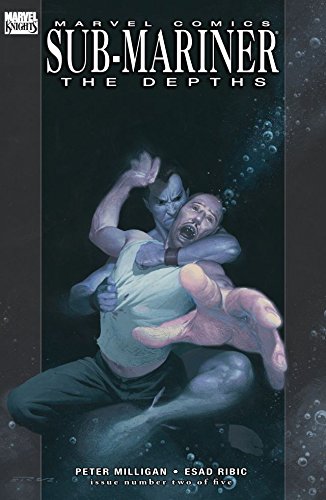
Unlike the traditional superhero adventures that most readers associate with Namor, Sub-Mariner: The Depths offers a haunting reimagining of the iconic Atlantean. Written by Peter Milligan with breathtaking artwork by Esad Ribić, this standalone Marvel Knights miniseries remains one of the publisher's most visually distinctive and psychologically unsettling horror comics. Rather than portraying Namor as a noble antihero or king, the story transforms him into an almost mythical predator lurking in the crushing darkness of the ocean depths.
Drawing clear inspiration from the suffocating tension of films like Alien, The Abyss, and Underwater (2020), the series abandons traditional superhero storytelling in favor of survival horror. Readers are plunged into an isolated underwater expedition where a small crew of submariners becomes stranded beneath miles of unforgiving ocean. Cut off from civilization, surrounded by endless darkness, and with no hope of immediate rescue, the crew must fight to stay alive while an ancient terror stalks them from the abyss. That terror is none other than Namor, presented less as a superhero and more as an enigmatic sea demon whose motives remain impossible to understand.
Ironically, although Namor serves as the central threat throughout the narrative, he spends remarkably little time on the page. His limited appearances only amplify the suspense, allowing fear to grow through uncertainty rather than constant confrontation. The true horror lies in the overwhelming sense of isolation, the crushing pressure of the deep sea, and the psychological toll of knowing that something unseen is hunting from the darkness. Every chapter steadily ratchets up the tension, making readers feel the same helplessness and paranoia experienced by the trapped crew.
Esad Ribić's artwork is the driving force behind the comic's unsettling atmosphere. His painterly illustrations masterfully capture the oppressive vastness of the ocean while simultaneously making the submarine interiors feel painfully cramped and claustrophobic. Shadows consume nearly every panel, with darkness becoming an active storytelling device rather than a simple visual element. The sparse lighting, muted color palette, and eerie underwater landscapes create an overwhelming feeling of panic, vulnerability, and isolation that lingers long after each page is turned.
When Namor finally emerges from the darkness, the payoff is unforgettable. Rather than relying on graphic violence or elaborate action sequences, his appearances are terrifying because of the relentless suspense that has been carefully cultivated throughout the story. In Sub-Mariner: The Depths, horror isn't created through spectacle—it thrives on anticipation, silence, and the primal fear of what may be lurking just beyond the reach of the light, making this one of Marvel's most unique and chilling horror comics ever published.

Few Ghost Rider stories embrace pure horror as fearlessly as Ghost Rider: Road to Damnation. Published under Marvel's Marvel Knights imprint and created by acclaimed writer Garth Ennis alongside visionary artist Clayton Crain, this six-issue miniseries is widely regarded as one of the darkest and most visually unforgettable Ghost Rider comics ever produced. Rather than focusing solely on supernatural action, the story plunges readers into a brutal journey through demonic horror, spiritual torment, and grotesque imagery that pushes the boundaries of mainstream Marvel storytelling.
From the very first page, the series overwhelms the senses with Clayton Crain's unmistakable artistic style. His heavily saturated colors, dramatic lighting, and intensely textured digital paintings create a visual experience that feels chaotic, almost overwhelming at times—but that's exactly what makes it so effective. Every panel radiates an unsettling energy, immersing readers in a nightmarish world where Hell constantly bleeds into reality. The comic relies heavily on dynamic shadows and atmospheric lighting, with the darkness repeatedly broken by Ghost Rider's blazing hellfire, producing striking contrasts that make every scene feel alive. The artwork possesses an almost three-dimensional quality, making the horrors on each page seem as though they're emerging directly into the reader's world.
While Garth Ennis is known for crafting morally complex and uncompromising stories, his work here presents a far more merciless version of the Marvel Universe than fans typically encounter in Ghost Rider comics. The stakes feel relentlessly high, the violence is brutal, and the supernatural threats are genuinely disturbing rather than merely comic-book villains. Ennis fills the narrative with fallen angels, demons, eternal damnation, and horrifying moral choices, creating an atmosphere where hope is constantly overshadowed by despair.
Still, it's Clayton Crain's artwork and coloring that elevate Road to Damnation into something truly exceptional. His hyper-realistic painting style gives every demon, corpse, flame, and supernatural creature an uncanny realism that feels simultaneously beautiful and deeply disturbing. The combination of lifelike detail and surreal horror produces imagery that lingers long after the story ends, making even familiar Marvel characters appear terrifyingly otherworldly.
Released during a period when Marvel Knights was experimenting with darker, more mature interpretations of its iconic heroes, Ghost Rider: Road to Damnation fully embraces adult horror without hesitation. Much like Marvel's MAX imprint, Marvel Knights gave creators greater freedom to explore mature themes, but this series goes even further by refusing to soften its depictions of Hell, violence, or supernatural terror. Its unapologetically grim tone, graphic visuals, and psychological intensity allow it to stand almost as a work of horror art in its own right, separate from the traditional superhero comics that dominate Marvel's publishing line.
For fans of supernatural horror, occult storytelling, and visually stunning comics, Ghost Rider: Road to Damnation remains one of Marvel's boldest creative achievements—a terrifying reminder that some of the publisher's greatest monsters don't come from outer space, but from the depths of Hell itself.

Among Marvel's many supernatural stories, The Darkhold stands out as one of the publisher's most creative horror anthologies in recent years. Rather than following a single continuous narrative, this Marvel Comics event embraces an interconnected anthology format, allowing multiple creative teams to explore unique visions of horror while remaining tied together by one terrifying thread—the Darkhold, the infamous Book of Sins. Long regarded as one of the most dangerous magical artifacts in Marvel lore, the Darkhold has corrupted countless souls over the decades, influencing major characters such as Scarlet Witch, Doctor Doom, Doctor Strange, Chthon, and many others. This anthology brilliantly captures the book's ability to warp reality and twist even Earth's mightiest heroes into horrifying versions of themselves.
One of the anthology's greatest strengths lies in its rotating lineup of acclaimed writers, artists, and colorists. Each issue introduces a completely different visual style, storytelling approach, and subgenre of horror, ensuring that every chapter feels fresh while still contributing to the larger narrative. Across its six stories, readers experience everything from psychological terror and supernatural suspense to body horror, cosmic nightmares, and grotesque monster fiction. Although some entries lean more heavily into horror than others, the collection as a whole delivers a satisfying and diverse showcase of what modern Marvel Horror can achieve.
Among the standout stories, "Tales of Suspense," created by Ryan North, Guillermo Sanna, and Ian Herring, offers one of the anthology's most memorable experiences. Its distinctive 1960s retro-futuristic visual style immediately sets it apart from the other entries. While the artwork initially appears clean and deceptively simple, that aesthetic cleverly complements the story's slow-burning tension, allowing the unsettling atmosphere to build steadily before culminating in a genuinely shocking finale. The contrast between its nostalgic comic-book presentation and its increasingly disturbing narrative makes the horror even more effective.
Equally unforgettable is "Tensile Strength," crafted by Alex Paknadel, Diógenes Neves, and Jim Charalampidis. In sharp contrast to the retro feel of Tales of Suspense, this chapter embraces contemporary horror aesthetics, drawing heavily from zombie fiction and visceral body horror. The artwork wastes no time establishing its grotesque tone, filling every page with disturbing transformations, unsettling creature designs, and graphic imagery that immediately immerses readers in its nightmare. Its modern visual language perfectly complements the story's relentless sense of dread.
Taken as a complete collection, The Darkhold serves as an excellent introduction to the many faces of Marvel Horror. By blending multiple artistic styles, storytelling techniques, and horror subgenres into one cohesive event, the anthology demonstrates just how versatile Marvel's supernatural universe has become. More importantly, it reinforces Marvel's continued commitment to expanding its horror catalog, proving that the publisher is just as capable of delivering chilling psychological terror, disturbing body horror, and supernatural nightmares as it is producing blockbuster superhero adventures. For readers looking to experience the full range of Marvel's darker imagination, The Darkhold is an essential addition to the reading list.

Following the groundbreaking success of The Immortal Hulk, Marvel took Bruce Banner in an unexpected yet brilliantly terrifying direction with The Incredible Hulk (2023). Crafted by Phillip Kennedy Johnson, illustrated by Nic Klein, and brought to life through the atmospheric colors of Matt Wilson, this critically acclaimed series serves as a spiritual successor to its predecessor while carving out an entirely new identity within Marvel's growing horror lineup. Rather than revisiting the body horror that defined The Immortal Hulk, the creative team plunges the Jade Giant into a chilling blend of folk horror, cosmic horror, and supernatural mythology.
Instead of presenting Hulk as the unstoppable force readers have known for decades, the series places him in a world where ancient evils, forgotten legends, and primal monsters are far more terrifying than brute strength alone. Across its story arcs, Bruce Banner finds himself pursued by horrifying creatures inspired by folklore, rural myths, occult traditions, and urban legends. Gone are the abstract, shapeless horrors that dominated earlier Hulk stories. In their place stand grotesque beings with twisted physical forms that feel as though they've escaped directly from centuries-old campfire tales and medieval nightmares, giving the series a uniquely unsettling atmosphere rarely seen in Marvel Comics.
Nic Klein's artwork plays a pivotal role in establishing that sense of fear. One of his most effective storytelling techniques is his masterful use of scale. Traditionally, the Hulk is portrayed as the largest and most intimidating presence in any battle, a monster that everyone else fears. Here, that expectation is deliberately shattered. Time and again, Hulk is confronted by colossal adversaries that dwarf even his immense size, instantly shifting the balance of power and making readers feel that, for perhaps the first time, Hulk himself has become the underdog. The overwhelming size of these towering creatures transforms every confrontation into an encounter with the unknowable, reinforcing the comic's folk and cosmic horror influences.
No discussion of The Incredible Hulk would be complete without recognizing the remarkable contribution of colorist Matt Wilson. His subdued, painterly coloring style gives the series an intentionally weathered and timeless appearance, almost as if readers are paging through an old, forgotten horror manuscript discovered deep within an abandoned library. The muted tones, earthy palette, and textured matte-painting aesthetic perfectly complement the ancient supernatural forces that dominate the narrative. Every page carries a haunting sense of age, suggesting that the horrors Bruce Banner faces have existed long before humanity itself and will continue long after.
Phillip Kennedy Johnson further strengthens the horror elements by weaving together themes of isolation, mythology, ancient curses, family trauma, and survival, proving that the Hulk can thrive in stories that extend far beyond superhero action. The result is a series that feels less like a conventional Marvel comic and more like a modern gothic horror epic infused with Lovecraftian dread and Appalachian folklore.
By merging cosmic terror with folk mythology and pairing it with haunting visuals, The Incredible Hulk (2023) successfully redefines the Green Goliath for a new generation. It's a chilling reminder that even Marvel's strongest hero can find himself standing before horrors that cannot simply be punched away, making this one of the most visually striking and genuinely frightening horror comics Marvel has published in recent years.

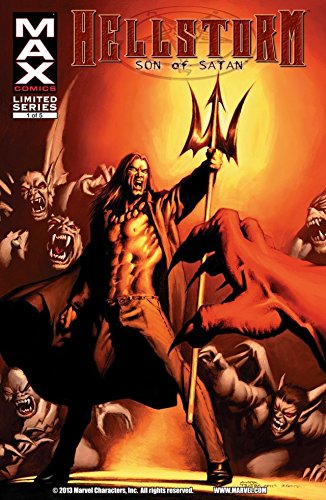
Few characters in Marvel's supernatural corner have evolved as dramatically over the years as Daimon Hellstrom, better known as the Son of Satan. Since his debut in the 1970s, Hellstrom has been reimagined countless times, with nearly every writer and artist offering a fresh interpretation of his personality, powers, and place within the Marvel Universe. His stories have ranged from occult adventures and supernatural detective tales to psychological horror and theological conflicts. Yet among all these interpretations, Hellstorm: Son of Satan, created by Alex Irvine, Russell Braun, and Giulia Brusco, stands apart as one of the character's darkest and most visually immersive outings.
Published under Marvel's MAX Comics imprint, the miniseries benefited from the creative freedom that the mature-readers label offered. Unlike Marvel's mainstream superhero titles, MAX allowed creators to move beyond the publisher's traditional editorial restrictions, opening the door to more graphic violence, disturbing imagery, mature themes, and emotionally complex storytelling. That freedom is evident throughout Hellstorm: Son of Satan, which unapologetically explores demonic mythology, religious symbolism, psychological torment, and the eternal struggle between humanity and damnation. The result is a horror comic that feels intentionally crafted for adult readers rather than a conventional superhero audience.
Although the series employs several artistic techniques found in many of Marvel's finest horror comics, it is the collaboration between Russell Braun's detailed illustrations and Giulia Brusco's atmospheric coloring that truly defines its identity. Their masterful use of dynamic shading transforms even ordinary scenes into unsettling visual experiences. Instead of relying solely on graphic imagery, the artwork creates tension through carefully balanced light and darkness, allowing shadows to become an active part of the storytelling.
That approach is further enhanced by the comic's consistent use of ambient lighting. Flickering candlelight, infernal flames, moonlit landscapes, and dimly illuminated interiors create rich visual textures that give every page remarkable depth. The environments feel tangible and lived-in, making readers feel as though they're stepping into cursed churches, haunted buildings, and realms touched by Hell itself. Compared to the flatter, brighter coloring styles that dominated many mainstream comics of the era, Hellstorm: Son of Satan possesses a striking realism that heightens both its supernatural atmosphere and emotional weight.
Alex Irvine's writing complements the artwork by presenting Daimon Hellstrom as a deeply conflicted antihero constantly caught between his human conscience and his infernal heritage. Rather than portraying him as a traditional superhero, the story leans into themes of temptation, redemption, identity, and inner darkness, reinforcing the mature tone established by the MAX imprint. Every supernatural encounter carries genuine emotional consequences, making the horror feel personal as well as terrifying.
Through its sophisticated visual style, mature storytelling, and fearless exploration of occult horror, Hellstorm: Son of Satan remains one of Marvel's most underrated horror comics. It demonstrates how the MAX imprint empowered creators to push artistic boundaries while delivering a chilling, visually textured experience that continues to stand out among Marvel's darkest supernatural stories.

The Ghost Rider mythos has always been deeply rooted in horror. With its demonic entities, cursed souls, infernal fire, and eternal battles against the forces of Hell, Johnny Blaze has long been one of Marvel's most naturally terrifying heroes. Yet Ghost Rider (2022), created by Benjamin Percy, Cory Smith, and Bryan Valenza, elevates those familiar horror elements to an entirely new level. Rather than simply revisiting classic supernatural themes, the series strips away the traditional image of Ghost Rider and reveals the relentless psychological and physical torment that defines Johnny Blaze's existence.
From the opening issues, Percy makes it clear that Blaze's life is far more horrifying than endless confrontations with Mephisto or transforming into the Spirit of Vengeance. The comic presents his everyday reality as an unending nightmare—a landscape littered with mutilated corpses, horrific supernatural murders, and relentless demonic predators that leave destruction in their wake. Every chapter reinforces the idea that Johnny isn't merely fighting monsters; he's trapped inside a living Hell that refuses to release him.
One of the series' greatest strengths is the introduction of Exhaust, a terrifying new demon born directly from Johnny Blaze's own fractured soul. Unlike many traditional Marvel villains, Exhaust isn't driven by grand ambitions or world domination. Instead, it exists as a pure manifestation of torment and corruption. The creature hunts its victims with disturbing brutality, slowly suffocating them before infecting their bodies with grotesque demonic offspring. This horrifying method of attack introduces a chilling blend of psychological dread, body horror, and supernatural terror, making Exhaust one of the most unsettling demons to emerge from modern Marvel Comics.
Visually, Cory Smith delivers some of the most disturbing artwork in Ghost Rider's publishing history. Mangled bodies, twisted creatures, infernal landscapes, and grotesque demonic transformations are rendered with striking detail, creating a constant sense of unease. Complementing Smith's linework, Bryan Valenza's rich color palette bathes every page in fiery oranges, blood-red hues, oppressive shadows, and sickly tones that make Hell feel tangible. Together, the artwork creates a world where every panel radiates dread, making readers feel as though they are descending deeper into the underworld alongside Johnny Blaze.
While the series certainly embraces Ghost Rider's classic religious and occult horror—including demons, possession, damnation, and the ever-present influence of Hell—it refuses to stop there. Benjamin Percy expands the mythology by exploring what Hell truly means on both a literal and emotional level. Rather than depicting damnation as merely a place, the comic presents it as a state of existence. The suffering Johnny carries isn't limited to his supernatural curse; it manifests as trauma, guilt, grief, and relentless psychological anguish that follows him wherever he goes.
This deeper exploration transforms Ghost Rider into far more than Marvel's flaming antihero. His burden is no longer simply the Penance Stare or the curse of vengeance—it is the crushing weight of endless agony. Every transformation, every battle, and every encounter reminds readers that the greatest horror isn't the demons hunting Johnny Blaze. It's the Hell he carries within himself.
By combining visceral body horror, supernatural terror, psychological trauma, and stunning visual storytelling, Ghost Rider (2022) stands as one of Marvel's finest modern horror comics. It proves that the most terrifying version of Ghost Rider isn't the one engulfed in flames—it's the man condemned to live with Hell every single day.
Although the X-Men have frequently crossed paths with supernatural forces, occult magic, and mystical dimensions throughout their long history, few characters are better suited to lead Marvel's darker magical stories than Madelyne Pryor, the Goblin Queen. With her tragic past, immense magical abilities, and deep connection to demonic realms, Madelyne has always occupied one of the darkest corners of mutant mythology. That legacy takes center stage in Dark X-Men, the 2023 miniseries by Steve Foxe, Jonas Scharf, and Frank Martin, which delivers one of the most horrifying mutant stories to emerge from the Krakoa Era.
While the Krakoan age largely focused on mutant nation-building, political intrigue, resurrection, and evolving mutant society, Dark X-Men boldly shifts the narrative into far more sinister territory. Instead of traditional superheroics, readers are plunged into a world of supernatural terror, occult nightmares, and relentless violence, creating an atmosphere unlike almost anything else produced during Marvel's modern X-Men era.
Visually, the series immediately stands apart. Jonas Scharf's artwork is remarkably clean, sharp, and polished, allowing every horrifying moment to stand out with startling clarity rather than being obscured by excessive stylistic effects. Rather than relying on chaotic visuals, the comic lets its disturbing subject matter carry the horror. This deliberate artistic restraint makes every gruesome reveal feel even more impactful, as the polished presentation contrasts sharply with the nightmare unfolding across the pages.
Working alongside Scharf, Frank Martin's atmospheric coloring amplifies the comic's unsettling mood through deep shadows, eerie lighting, and richly textured environments. Together, the creative duo constructs a visual landscape filled with imagery designed to satisfy fans of virtually every major horror subgenre. The pages are drenched in rivers of blood and graphic violence, while grotesque fungal infestations spread like living nightmares. Swarms of insects crawl through panels with unsettling realism, body horror takes root in horrifying transformations, and themes of religious terror and demonic corruption weave themselves throughout the story. Every chapter introduces fresh visual horrors that keep readers in a constant state of unease.
What makes Dark X-Men particularly effective is how completely it commits to its oppressive atmosphere. The horror builds so naturally that, by the time more familiar members of the traditional X-Men eventually enter the narrative, their presence almost feels strangely out of place. After spending so much time immersed in Madelyne Pryor's brutal supernatural world, the arrival of conventional superhero figures serves as a stark reminder of just how dramatically the series has shifted away from Marvel's usual mutant adventures.
Steve Foxe's writing further elevates the experience by embracing the Goblin Queen's complex mythology and surrounding her with characters who inhabit Marvel's supernatural landscape. The story explores themes of identity, corruption, redemption, and power while never losing sight of its horror roots. Rather than using supernatural elements as background decoration, they become the driving force behind every emotional and physical conflict.
Blending occult mythology, visceral violence, psychological horror, religious symbolism, and stunning visual storytelling, Dark X-Men proves that the mutant corner of the Marvel Universe can be just as terrifying as its supernatural one. It's a fearless horror miniseries that transforms familiar X-Men mythology into an unforgettable nightmare, making it one of Marvel's most disturbing and visually arresting comics of the modern era.

When Marvel Zombies debuted in 2005, it completely transformed the way readers viewed the Marvel Universe. What began as a limited miniseries quickly evolved into one of Marvel's most successful horror franchises, spawning numerous sequels, spin-offs, crossover events, merchandise, and eventually inspiring the Marvel Zombies animated series on Disney+ as part of Marvel Studios' expanding multiverse. More than just another zombie comic, the original series fundamentally changed Marvel's approach to horror by proving that even its most beloved superheroes could become the source of unimaginable terror.
Created by Robert Kirkman, with haunting artwork by Sean Phillips and atmospheric colors by June Chung, Marvel Zombies arrived during the height of the mid-2000s zombie renaissance. Popular culture was experiencing an explosion of undead storytelling across comics, films, television, and video games, with audiences embracing darker, more brutal takes on the horror genre. Rather than merely capitalizing on that trend, Marvel delivered something refreshingly original by asking a simple but horrifying question: What if the Avengers, Spider-Man, the X-Men, and the Fantastic Four became flesh-eating zombies?
That terrifying premise became the comic's greatest strength. Unlike traditional zombie stories, where heroes desperately struggle to survive an outbreak, Marvel Zombies completely reverses the formula. Here, Marvel's greatest champions aren't humanity's last hope—they're its greatest nightmare. Infected by an unstoppable zombie virus, Earth's Mightiest Heroes retain their intelligence, personalities, and superhuman abilities, making them infinitely more dangerous than ordinary undead creatures. Their constant battle between insatiable hunger and fading humanity creates a uniquely disturbing form of psychological horror alongside the graphic violence.
The series also marked an important creative milestone for Marvel Comics. Throughout much of the late 1990s, the publisher experimented with darker storytelling but often struggled to fully integrate mature horror into its mainstream line. Marvel Zombies demonstrated that Marvel could successfully embrace modern horror while still remaining unmistakably Marvel. Its fearless blend of graphic body horror, black comedy, superhero mythology, and apocalyptic storytelling opened the door for many of the darker Marvel stories that followed in the years ahead.
Visually, Sean Phillips' artwork perfectly complements the comic's gruesome premise. Despite the horrifying depictions of decay, mutilation, and decomposing superheroes, the illustrations maintain a remarkably consistent artistic identity. Every zombified character remains instantly recognizable, even beneath layers of torn flesh, exposed bone, and rotting skin. This careful balance between familiarity and grotesque transformation makes the horror far more effective, as readers are forced to watch their favorite heroes slowly become monstrous versions of themselves. June Chung's muted, atmospheric coloring further enhances the bleak tone, emphasizing death, decay, and the hopelessness of a world consumed by the undead.
In every sense of the phrase, Marvel Zombies was an enormous success. Released during the same era that saw the growing popularity of Robert Kirkman's acclaimed comic The Walking Dead—which would later become AMC's global television phenomenon—the series felt like a natural extension of the decade's fascination with zombie fiction rather than a simple attempt to cash in on a popular trend. Kirkman's deep understanding of the genre helped give Marvel Zombies its own distinct identity, combining relentless horror with shocking satire and dark humor in ways that few superhero comics had attempted before.
More than two decades later, Marvel Zombies remains one of Marvel's defining horror comics. Its unforgettable premise, disturbing visuals, and bold storytelling continue to influence Marvel's supernatural and horror-focused projects, proving that sometimes the scariest monsters aren't ancient demons or cosmic entities—they're the heroes we once trusted to save the world.
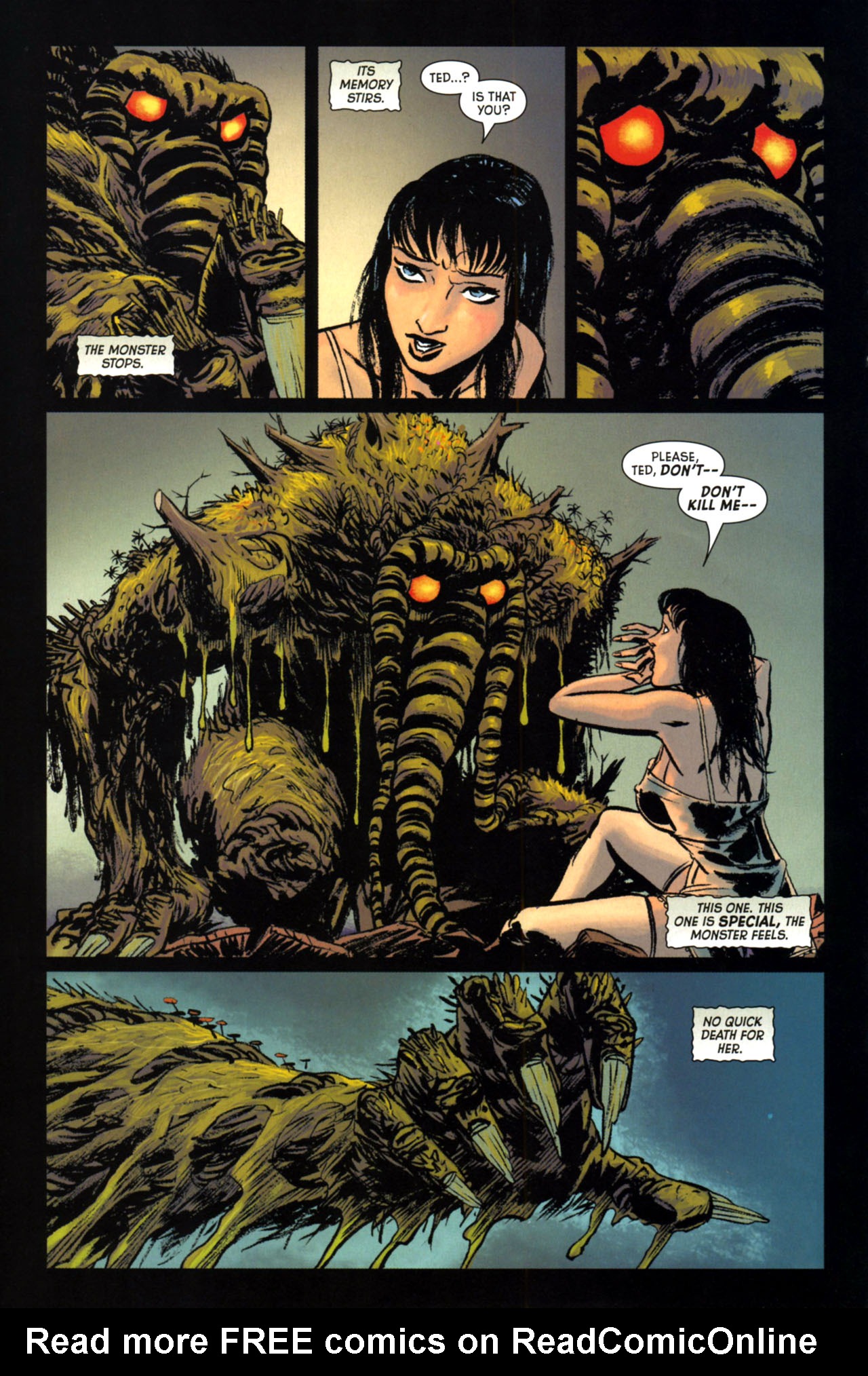
Among Marvel's many supernatural comics, Dead of Night Featuring Man-Thing remains one of the publisher's most overlooked yet genuinely terrifying horror series. Published under the MAX Comics imprint, this mature-readers limited series strips away the lighter interpretations that the character has occasionally received over the years and returns Man-Thing to his horrifying roots. While modern Marvel stories have sometimes portrayed the creature with a surprisingly sympathetic—or even semi-comedic—personality, this series reminds readers why Ted Sallis' transformation into the Man-Thing was originally conceived as one of Marvel's darkest tragedies.
Written by Robert Aguirre-Sacasa and brought to life through the work of an exceptionally talented artistic team—including Brian Denham, Nick Percival, June Chung, and Nic Klein—the series explores every terrifying aspect of what Ted Sallis has become. Rather than depicting Man-Thing as a conventional superhero or misunderstood monster, Dead of Night presents him as something far more unsettling: an ancient, unstoppable force that exists beyond ordinary human understanding.
One of the comic's greatest strengths is the way it builds suspense. Instead of relying solely on relentless violence, the creative team carefully stretches moments of silence and uncertainty before unleashing bursts of grotesque horror. Those deliberate pauses create an almost unbearable sense of anticipation, making every violent encounter feel even more disturbing. When the horror finally erupts, readers are confronted with shocking imagery, grotesque creature designs, and visceral sequences that fully embrace mature supernatural horror.
The series also stays remarkably faithful to the essence of Man-Thing's mythology. As longtime Marvel fans know, Man-Thing is not driven by heroism or villainy. He is a primal force of nature tied to the mystical Nexus of All Realities, an interdimensional gateway that connects countless worlds throughout the Marvel Multiverse. Governed by instinct rather than morality, the creature neither seeks revenge nor hunts out of cruelty. Instead, it reacts to the emotional energy surrounding it. Most famously, anyone who knows fear and dares to threaten the Man-Thing risks suffering the creature's legendary curse: "Whatever knows fear burns at the Man-Thing's touch." That supernatural ability transforms fear itself into a weapon, making every confrontation psychologically terrifying long before physical violence begins.
Rather than portraying Man-Thing as malicious, Dead of Night emphasizes his complete indifference to human concepts of good and evil. He observes, waits, and instinctively responds to the actions of those who enter his domain. Unless provoked, the creature harbors no ill intent. But once its natural balance is disturbed, its retaliation is swift, brutal, and inescapable. This detached approach makes the horror even more effective because the monster cannot be reasoned with, manipulated, or emotionally understood.
Despite featuring multiple artists, the miniseries maintains an impressively unified visual identity. Each creative contributor complements the others, ensuring that Man-Thing consistently appears as an enormous, ancient beast born from the swamp itself. Towering over his victims with an almost mythological presence, the creature radiates an aura of inevitable doom. Long before he ever reaches those unfortunate enough to cross his path, the artwork communicates that their fate has already been sealed. His supernatural abilities don't promise a quick death—they suggest a slow, horrifying, and inescapable end that feels almost predestined.
Through its atmospheric storytelling, mature themes, unsettling artwork, and unwavering commitment to supernatural horror, Dead of Night Featuring Man-Thing restores one of Marvel's oldest monsters to his rightful place among the publisher's most terrifying creations. It serves as a chilling reminder that some of Marvel's greatest horrors aren't driven by evil at all—they simply exist as ancient forces of nature, completely indifferent to the fragile lives caught in their path.
![The Immortal Hulk' Brings Horror Back to Marvel's Greatest Monster [Comics] - Bloody Disgusting](https://i0.wp.com/bloody-disgusting.com/wp-content/uploads/2020/03/immortal-hulk.png?fit=1057%2C644&ssl=1)
When discussing the most terrifying comic ever published by Marvel Comics, one title consistently rises above the rest: The Immortal Hulk. Created by Al Ewing, illustrated by Joe Bennett, and brought to life through the haunting colors of Paul Mounts, this Eisner Award-nominated series completely reinvented the Hulk mythos by transforming Marvel's iconic Green Goliath into the centerpiece of a deeply unsettling horror epic. While the Hulk has always been known for his unstoppable rage and savage destruction, The Immortal Hulk was the first series to fully embrace the terrifying implications of what Bruce Banner truly is, redefining the character through psychological horror, grotesque body horror, cosmic mythology, and existential dread.
From its opening issue, the comic abandons the familiar superhero formula in favor of something far darker. Joe Bennett's artwork is nothing short of nightmarish, drawing clear inspiration from the grotesque body horror popularized by filmmaker David Cronenberg. Flesh twists, bones fracture, organs distort, and bodies reshape themselves into disturbing monstrosities that seem to defy biology itself. Every transformation feels painful, unnatural, and horrifying, making readers witness not simply a superhero changing forms, but a living nightmare unfolding panel by panel. The result is some of the most visually disturbing artwork ever published in a mainstream Marvel comic.
As the story progresses, the horror only becomes more surreal and abstract. Rather than focusing solely on the Hulk's physical violence, the series dives deep into the mysterious nature of gamma mutation, revealing that gamma-powered beings are connected to immortality through metaphysical forces far beyond human understanding. Central to this mythology is The One Below All, a terrifying cosmic entity representing the darkest aspect of existence itself. As Bruce Banner and other gamma mutates uncover their connection to this infernal force, the series gradually evolves from body horror into cosmic horror, blending science, religion, philosophy, and supernatural terror in ways rarely seen in superhero comics.
Although Marvel had previously allowed creators greater artistic freedom to explore darker subject matter, Joe Bennett's visual direction shattered many of the boundaries typically associated with modern mainstream superhero storytelling. The imagery is intentionally grotesque, deeply unsettling, and often difficult to forget. Limbs stretch impossibly, faces distort into horrifying expressions, and human anatomy is repeatedly reconstructed into writhing masses of flesh and bone. Rather than using horror for shock value alone, every disturbing transformation serves the emotional and psychological themes at the heart of the narrative.
That emotional core belongs to Bruce Banner himself. Beneath the graphic horror lies a deeply human story about trauma, identity, abuse, guilt, and fractured consciousness. Throughout the series, Bruce's damaged psyche is explored with remarkable depth as his multiple personalities, inner conflicts, and lifelong emotional scars gradually come to the surface. He is portrayed not simply as a scientist cursed with becoming a monster, but as a profoundly broken man desperately trying to reconcile the fractured pieces of his own mind.
Al Ewing's writing masterfully explores these psychological struggles, weaving together decades of Hulk continuity while introducing bold new ideas that permanently expanded the character's mythology. Yet it is Joe Bennett's artwork that gives Bruce's internal suffering its most powerful visual expression. The constantly shifting, writhing, and grotesquely mutating forms become physical manifestations of Banner's unresolved trauma, emotional instability, and fractured identity. Every horrifying transformation reflects not only the Hulk's monstrous nature but also the psychological wounds that have haunted Bruce since childhood.
Complementing the artwork, Paul Mounts' atmospheric coloring intensifies the comic's oppressive mood with eerie greens, shadow-drenched environments, and unsettling contrasts that make every page feel alive with dread. Together, the creative team crafts an atmosphere where horror isn't confined to monsters or violence—it exists within the human psyche, the mysteries of the universe, and the terrifying realization that immortality itself may be the cruelest curse imaginable.
More than just a superhero comic, The Immortal Hulk stands as one of the finest horror comics of the modern era, regardless of publisher. Its groundbreaking blend of Cronenberg-inspired body horror, Lovecraftian cosmic terror, psychological drama, and deep character exploration elevated the Hulk to storytelling heights few thought possible. It is a disturbing, emotionally powerful, and visually unforgettable masterpiece that not only redefined Bruce Banner for a new generation but also cemented itself as the single greatest horror comic in Marvel's history.
After decades of superhero storytelling, Marvel Comics has proven that its universe isn't limited to colorful costumes and world-saving adventures. Hidden beneath the pages of its greatest stories is a terrifying world filled with ancient demons, cosmic nightmares, grotesque body horror, psychological trauma, supernatural monsters, and cursed dimensions capable of rivaling the best horror comics ever created.
From the haunting psychological tension of Sub-Mariner: The Depths and the infernal nightmare of Ghost Rider: Road to Damnation to the grotesque brilliance of The Immortal Hulk, these comics showcase Marvel at its darkest, boldest, and most creatively fearless. Whether your favorite horror subgenre is zombie apocalypse, Lovecraftian cosmic horror, folk horror, occult terror, or disturbing body horror, Marvel has produced unforgettable stories that deserve a place on every comic fan's reading list.
As Marvel continues expanding its supernatural universe through characters like Blade, Ghost Rider, Werewolf by Night, Moon Knight, Man-Thing, Doctor Strange, and Scarlet Witch, there's never been a better time to dive into these chilling masterpieces. These comics don't simply tell horror stories—they redefine what superhero comics can achieve when fear becomes the driving force.
If you're a passionate fan of Marvel, DC, Disney, Pixar, Star Wars, Anime, Transformers, Mortal Kombat, Godzilla, One Piece, Dragon Ball, Naruto, Batman, Spider-Man, Iron Man, Deadpool, and countless other iconic franchises, it's the perfect time to upgrade your collection.
Explore an incredible range of officially licensed action figures, premium statues, collectibles, Hot Toys, S.H.Figuarts, McFarlane Toys, Iron Studios, Prime 1 Studio, Banpresto, Beast Kingdom, LEGO, Funko Pop!, die-cast models, and much more at Superhero Toystore.
Shop thousands of authentic collectibles from the world's biggest pop culture franchises with up to 40% OFF and FREE shipping across India.
Whether you're building your dream display shelf or searching for the perfect gift, Superhero Toystore has something for every collector.
Sign up to get the latest on sales, new releases and more …