


Hidden Gems: The Greatest Underrated DC Comics Miniseries
For nearly a century, DC Comics has shaped the superhero landscape with legendary characters such as Batman, Superman, Wonder Woman, The Flash, Green Lantern, and countless others. While blockbuster crossover events and long-running comic series often dominate the spotlight, some of the publisher's greatest storytelling achievements have come in the form of self-contained miniseries. These shorter, tightly structured stories give creators the freedom to tell focused narratives without the constraints of ongoing continuity, resulting in unforgettable adventures that continue to resonate with readers years after their release.
Over the decades, DC has produced an impressive collection of critically acclaimed miniseries that have redefined beloved heroes, explored alternate realities, and introduced fresh perspectives on iconic characters. Yet despite their exceptional quality, many of these stories remain overlooked by modern readers, often overshadowed by major crossover events, blockbuster adaptations, or the publisher's numerous continuity resets such as Crisis on Infinite Earths, Flashpoint, and The New 52. These hidden gems deserve far more recognition for the creativity, emotional depth, and bold storytelling they bring to the DC Universe.
In recent years, DC has embraced the miniseries format more than ever, giving acclaimed creators like Neal Adams, Tom King, Jeff Lemire, and many other award-winning writers and artists the opportunity to craft compelling standalone stories that showcase the very best of the publisher's characters. This creative shift has allowed readers to enjoy complete narratives that are accessible to newcomers while still rewarding longtime fans with fresh takes on familiar heroes and villains.
Whether you're fascinated by gritty tales set in the American Wild West, emotionally driven character studies, supernatural thrillers, or expansive science-fiction mysteries that stretch across the multiverse, DC's catalog is filled with remarkable miniseries waiting to be discovered. Some have simply faded into history, while others have become hidden beneath decades of reboots and evolving continuity, but each offers a unique reading experience that deserves a place on every comic fan's bookshelf.
If you're looking to explore beyond the obvious classics, these underrated DC Comics miniseries showcase some of the publisher's most imaginative, emotionally powerful, and rewarding storytelling. They're proof that some of the greatest adventures in the DC Universe aren't always the ones everyone talks about—they're the ones waiting to be rediscovered.
The Immortal Men: The Forgotten DC Comics Series That Explores the Publisher's Hidden History
How The Immortal Men Uncovered One of DC's Most Fascinating Secret Societies

In 2017, DC Comics introduced its ambitious New Age of Heroes publishing initiative, a fresh wave of superhero titles that emerged directly from the groundbreaking events of Scott Snyder and Greg Capullo's acclaimed Dark Nights: Metal. Designed to expand the DC Universe with original characters and unexplored concepts, the initiative aimed to shine a spotlight on corners of the universe that readers had rarely seen before. Among its most intriguing and underrated releases was James Tynion IV, Jim Lee, and Scott Williams' The Immortal Men.
Rather than focusing on familiar Justice League members, The Immortal Men dives into an ancient secret society of immortal beings who have quietly influenced humanity's greatest moments for thousands of years. These powerful individuals operate behind the scenes, manipulating world events, preserving hidden knowledge, and battling for control over civilization's future. Their seemingly endless lifespans have allowed them to accumulate unimaginable influence, wealth, and power, creating a hidden history that exists beneath everything fans thought they knew about the DC Universe.
At the heart of the story is Reload, a reluctant young hero who becomes entangled in this centuries-old conflict after discovering the existence of the mysterious Immortal Men. His journey places him on a collision course with terrifying adversaries, including the reality-warping Batman Who Laughs and the enigmatic Infinite Woman, both of whom play pivotal roles in the larger mythology introduced during the Dark Nights: Metal era.
One of the biggest surprises surrounding The Immortal Men is just how much creative talent was involved. The series paired celebrated writer James Tynion IV with legendary comic book artist Jim Lee, whose dynamic interior artwork was beautifully enhanced by longtime collaborator Scott Williams. With a creative team of that caliber, many readers expected the series to become one of DC's flagship books.
Unfortunately, the comic became one of the many casualties of the New Age of Heroes initiative. Despite introducing compelling mythology, memorable new characters, and world-building that significantly expanded DC lore, the imprint struggled to find a consistent audience. Other critically praised titles from the same line, including Silencer and Damage, experienced similar commercial difficulties, ultimately leading to the initiative's premature conclusion.
What makes The Immortal Men especially fascinating is how it feels like DC Comics' own interpretation of Marvel's iconic groups such as the Eternals and the Illuminati. By blending immortal guardians, secret organizations, cosmic mysteries, and centuries of hidden history into one compelling narrative, the series introduced an entirely new dimension of the DC Universe that felt bold, original, and unlike anything else the publisher was producing at the time.
Although it never achieved the widespread recognition it deserved, The Immortal Men remains one of the most overlooked hidden gems in modern DC Comics. For readers who enjoy expansive mythology, secret histories, and superhero stories that push beyond traditional capes-and-cowls adventures, this forgotten miniseries offers an imaginative and refreshingly unique reading experience that is well worth rediscovering.
Sgt. Rock vs. the Army of the Dead: The Underrated DC Horror Comic That Turned World War II Into a Zombie Nightmare
Bruce Campbell and Eduardo Risso Delivered One of DC's Most Entertaining Horror Miniseries
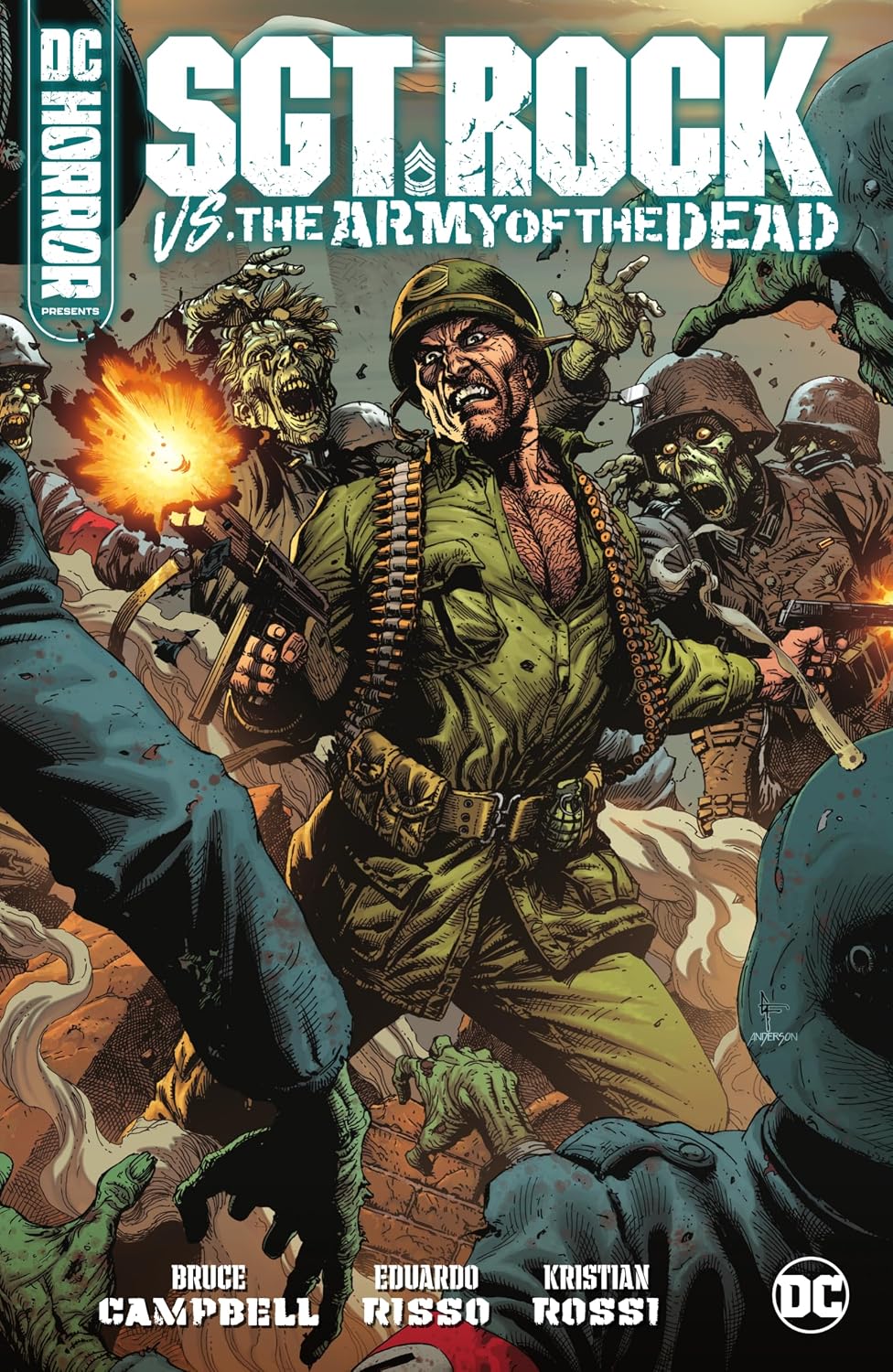
In 2021, DC Comics expanded its horror lineup with the DC Horror Presents imprint, a publishing initiative dedicated to darker, genre-driven stories featuring some of the publisher's most iconic characters. Among its standout releases was Sgt. Rock vs. the Army of the Dead, an explosive miniseries that paired legendary B-movie icon Bruce Campbell with acclaimed artist Eduardo Risso. The result was one of the most entertaining and underrated modern interpretations of DC's legendary World War II hero.
Returning readers to the battlefields of World War II, the story follows Sgt. Franklin "Frank" Rock and the battle-hardened soldiers of Easy Company, one of DC Comics' most celebrated military units. Known for surviving impossible missions against overwhelming odds, the squad soon discovers that their latest assignment is unlike anything they've ever encountered. Instead of facing ordinary enemy forces, they find themselves locked in a brutal fight against an army of undead Nazi soldiers created through horrifying supernatural means.
As the mission spirals into chaos, members of Easy Company begin falling victim to the terrifying zombie infection themselves, forcing Sgt. Rock to battle not only relentless waves of the living dead but also the heartbreaking loss of his own comrades. With time running out and humanity hanging in the balance, the veteran soldier must carve a bloody path through Nazi zombies to complete the ultimate objective—eliminate Adolf Hitler before the nightmare spreads beyond the battlefield.
Blending pulse-pounding military action with classic zombie horror, Sgt. Rock vs. the Army of the Dead perfectly captures the over-the-top spirit that has made Bruce Campbell a cult legend. The series embraces its B-movie roots without sacrificing suspense, delivering relentless action sequences, gruesome horror, dark humor, and larger-than-life storytelling from beginning to end. Eduardo Risso's atmospheric artwork further amplifies the tension, creating battle scenes that feel both terrifying and cinematic.
Widely regarded as one of the strongest entries in the DC Horror Presents lineup, the miniseries serves as both a love letter to classic horror comics and a modern reimagining of DC's long-running military titles. Fans will notice clear inspirations drawn from the wildly popular Call of Duty: Zombies game mode, while longtime comic readers will appreciate its homage to legendary DC war anthologies like Weird War Tales (often associated with the publisher's supernatural war storytelling) and the gritty military adventures that made Sgt. Rock a comic-book icon. The result feels like Inglourious Basterds reimagined through the lens of The Walking Dead, combining war, horror, and explosive action into one unforgettable adventure.
Despite receiving praise for its unique premise, energetic storytelling, and the star power of Bruce Campbell, Sgt. Rock vs. the Army of the Dead never achieved the commercial success DC had hoped for. Much like the broader DC Horror Presents imprint, the series struggled to find a wide audience, making it one of the publisher's most overlooked horror releases in recent years.
For readers who enjoy zombie fiction, military adventures, supernatural thrillers, and fast-paced action with a healthy dose of pulpy fun, Sgt. Rock vs. the Army of the Dead stands as a hidden gem that deserves far more attention. It proves that some of DC Comics' most memorable stories aren't always found in the superhero spotlight—they're buried deep within its rich history of genre storytelling.
New Challengers: The Underrated DC Comics Revival That Brought the Challengers of the Unknown Back to Life
How Scott Snyder Reinvented One of DC's Oldest Adventure Teams for a New Generation

As DC Comics launched its ambitious New Age of Heroes initiative following the universe-altering events of Scott Snyder and Greg Capullo's Dark Nights: Metal, the publisher set out to breathe new life into forgotten concepts and introduce readers to unexplored corners of its ever-expanding universe. Among the initiative's most overlooked titles was New Challengers, a bold reimagining of the legendary Challengers of the Unknown, created by Scott Snyder, Aaron Gillespie, with spectacular artwork by comic book legends Andy Kubert and Klaus Janson.
Rather than simply reviving the classic lineup, New Challengers introduces an entirely new generation of fearless explorers brought together by the mysterious Professor Haley. Selected because they have all experienced life-changing encounters with the impossible, these unlikely heroes are recruited to become the latest incarnation of the Challengers of the Unknown—a team destined to confront the greatest mysteries of the DC Universe.
This modern interpretation adds an exciting cosmic dimension to the team's legacy. Guided by Professor Haley, the new Challengers embark on dangerous missions across space and reality itself, searching for immensely powerful artifacts known as the Cosmic Relics. Each relic possesses extraordinary abilities capable of reshaping existence, placing the team in constant conflict with forces that seek to exploit these ancient objects for their own ambitions. Every adventure pushes the heroes further into the unknown, blending high-concept science fiction with classic comic-book exploration.
One of the series' greatest strengths is its infectious sense of adventure. Much like The Terrifics, another standout title from the New Age of Heroes lineup, New Challengers embraces imaginative world-building, larger-than-life discoveries, and fast-paced storytelling that celebrates the wonder of comic book science fiction. Yet despite its compelling premise and accomplished creative team, the series received only a fraction of the attention enjoyed by some of its contemporaries.
A major reason for its limited visibility lies in the history of the team itself. Originally created during the late 1950s by legendary comic book pioneer Jack Kirby, the Challengers of the Unknown predate many of today's most famous superhero teams and have long been regarded as one of the inspirations behind Kirby's later work on Marvel's Fantastic Four. Although the Challengers have appeared in multiple DC eras over the decades, they have often struggled to maintain lasting popularity, making any modern revival an uphill battle from the very beginning.
Scott Snyder's reinterpretation sought to honor that rich legacy while introducing fresh mythology that could resonate with contemporary readers. By combining cosmic exploration, mysterious relics, character-driven storytelling, and universe-spanning adventures, New Challengers successfully modernized the franchise without losing the spirit of discovery that made the original concept so memorable.
For readers who enjoy the intergalactic adventures of Guardians of the Galaxy, the scientific imagination of the Fantastic Four, or the exploratory spirit of classic science-fiction comics, New Challengers was one of DC Comics' hidden treasures in 2018. Although it never achieved mainstream success, the series remains one of the strongest forgotten titles from the New Age of Heroes era and deserves to be rediscovered by anyone looking for an exciting cosmic adventure beyond DC's traditional superhero stories.
Neal Adams' Deadman: The Underrated Supernatural Masterpiece That Celebrated a DC Comics Legend
A Stunning Final Vision from Neal Adams That Reintroduced Deadman to a New Generation

In 2018, legendary comic book creator Neal Adams delivered one of the defining works of his later career with Deadman, a haunting miniseries that would ultimately stand among his final major contributions to the comic book industry before his passing in 2022. Revered as one of the most influential artists in comic book history, Adams helped redefine visual storytelling at both DC Comics and Marvel Comics, and his return to one of the characters most closely associated with his legacy felt both deeply personal and creatively ambitious.
The miniseries once again follows Boston Brand, the former circus aerialist whose life was tragically cut short by assassination. After his murder, Brand was transformed into the spectral hero known as Deadman, a ghost capable of possessing the bodies of the living while searching for justice. Decades after his original debut, Adams revisits the character's supernatural journey as Boston continues investigating the mystery surrounding his own death, only to uncover a conspiracy far larger and more dangerous than he ever imagined.
As Deadman's investigation unfolds, the mystery expands beyond a simple murder case into a sprawling supernatural thriller that reaches deep into the mystical foundations of the DC Universe. Along the way, Boston Brand joins forces with some of DC's most iconic heroes and magical protectors, including Batman, Etrigan the Demon, and Zatanna, each helping him unravel clues that ultimately point toward one of the publisher's most legendary masterminds—Ra's al Ghul. The result is a compelling blend of detective fiction, occult horror, and superhero adventure that keeps readers immersed from beginning to end.
One of the aspects that makes Deadman especially significant is its connection to comic book history. Rather than serving as a complete reinvention, the series continues the story that Neal Adams originally helped establish during the Silver Age in the pages of Strange Adventures. Deadman first appeared in Strange Adventures #205 in 1967, created by writer Arnold Drake and artist Carmine Infantino, before Neal Adams' groundbreaking artwork elevated the character into one of DC's most visually distinctive supernatural heroes. This 2018 miniseries feels like a natural continuation of that legacy, rewarding longtime readers while remaining accessible to newcomers.
Adams' storytelling embraces the surreal and mystical elements that have always defined Deadman. The narrative plunges readers into dreamlike landscapes filled with ancient magic, supernatural conspiracies, ghostly encounters, and psychological uncertainty. Complementing the story is Neal Adams' unmistakable artwork, whose dynamic anatomy, dramatic compositions, and psychedelic visual style create an experience that feels every bit as strange and mesmerizing as the supernatural world Deadman inhabits. Every page reinforces the feeling that readers are accompanying Boston Brand on an unforgettable journey through the unseen corners of the DC Universe.
Despite the extraordinary creative effort behind the project, Deadman never received the level of recognition many fans believe it deserved. Overshadowed by larger crossover events and higher-profile superhero titles released around the same period, the series quietly became one of DC's most overlooked modern miniseries. That lack of mainstream attention is especially surprising given Neal Adams' immense influence on the comic book medium and the passion he poured into revisiting one of the defining characters of his career.
For a hero who has often been relegated to supporting appearances in other characters' stories, Deadman finally gave Boston Brand the spotlight he had long earned. More importantly, it allowed one of comics' greatest artists to deliver a heartfelt farewell to a character he helped immortalize. Rich in mystery, supernatural intrigue, breathtaking artwork, and emotional storytelling, Neal Adams' Deadman remains an essential read for fans of DC's mystical universe and a hidden masterpiece waiting to be rediscovered.
Jonah Hex: Two-Gun Mojo Is the Underrated DC Western Horror Classic Every Comic Fan Should Read
How Two-Gun Mojo Reinvented Jonah Hex with a Dark Blend of Western Action and Supernatural Horror
Long before superheroes became the dominant force in comic books, Western stories were among the industry's biggest attractions, and few characters have come to define the genre as completely as Jonah Hex. Since his debut in 1972, created by writer John Albano and legendary Filipino artist Tony DeZuniga, the scarred bounty hunter has become one of DC Comics' most enduring antiheroes. Known for his uncompromising sense of justice, razor-sharp marksmanship, and morally complex personality, Jonah Hex has remained the publisher's definitive Western icon for more than five decades.
As comic books entered the 1990s, acclaimed novelist Joe R. Lansdale joined forces with artists Timothy Truman and Sam Glanzman to create what many longtime readers still consider Jonah Hex's finest standalone adventure: Jonah Hex: Two-Gun Mojo. Originally published under DC's mature-readers Vertigo imprint, the miniseries boldly expanded the character's world by combining gritty frontier storytelling with chilling supernatural horror, creating an unforgettable tale that stood apart from traditional Western comics.
The story follows the legendary bounty hunter after he is falsely accused of committing a brutal murder. As Hex attempts to clear his name, he uncovers a terrifying conspiracy orchestrated by a powerful necromancer who has discovered a way to raise the dead. Rather than resurrecting ordinary outlaws, the villain summons some of the most feared gunslingers and killers the American frontier has ever known, forcing Jonah to confront supernatural enemies unlike anything he has faced before. What begins as a simple manhunt quickly evolves into a relentless battle between the living and the dead, where every encounter tests Hex's courage, survival instincts, and unwavering resolve.
One of the miniseries' greatest strengths lies in its atmosphere. Timothy Truman and Sam Glanzman's artwork captures the dusty, unforgiving landscapes of the Old West while embracing the gritty visual style that defined the Bronze Age of Comics, the very era that introduced Jonah Hex to readers. Every page feels weathered, raw, and cinematic, perfectly complementing Lansdale's sharp dialogue, dark humor, and suspenseful storytelling.
Beyond its supernatural elements, Two-Gun Mojo serves as a heartfelt tribute to the classic Western films that inspired generations of storytellers. Fans of iconic movies such as Hang 'Em High, starring Clint Eastwood, will recognize the same themes of frontier justice, revenge, moral ambiguity, and lone gunslingers fighting against impossible odds. By blending those timeless Western traditions with horror, occult mythology, and pulp adventure, the series delivers an experience that feels both nostalgic and refreshingly original.
The timing of the miniseries also makes it especially significant. During the 1990s, Western comics had largely faded from mainstream popularity as superheroes increasingly dominated the industry. Yet Two-Gun Mojo demonstrated that the genre still had plenty of life left, proving that Jonah Hex could thrive by embracing darker, more mature storytelling without abandoning the rugged spirit that made the character iconic in the first place.
Although later creators such as Jimmy Palmiotti and Justin Gray would earn widespread acclaim for revitalizing Jonah Hex through their celebrated long-running series, Two-Gun Mojo remains an essential chapter in the character's history. Its gripping narrative, unforgettable supernatural premise, and atmospheric artwork make it one of the greatest Jonah Hex stories ever published and a perfect companion piece for fans exploring the bounty hunter's finest adventures.
For readers who love classic Westerns, supernatural horror, morally complex antiheroes, or comics that blend multiple genres with remarkable confidence, Jonah Hex: Two-Gun Mojo stands as one of DC Comics' most underrated masterpieces. Even decades after its release, this haunting frontier thriller remains a hidden gem that deserves a place among the greatest Western comics ever created.
Batman vs. Bigby: A Wolf in Gotham – The Underrated DC and Fables Crossover Every Fan Should Read
When Batman Crossed Paths with the Big Bad Wolf in One of DC's Most Unique Comic Book Team-Ups

Few comic book series have reinvented classic fairy tales as brilliantly as Bill Willingham's Fables. Originally published under DC Comics' Vertigo imprint, the Eisner Award-winning series became one of Vertigo's defining titles throughout the 21st century by imagining a hidden society where legendary characters from folklore, mythology, and fairy tales secretly lived among ordinary humans. Heroes and villains such as Snow White, Prince Charming, The Big Bad Wolf, and countless other iconic figures were reimagined with surprising depth, creating one of modern comics' richest fantasy universes.
In 2021, Bill Willingham returned to that beloved world for one of the most imaginative crossovers in recent DC history. Teaming up with artist Brian Level, he crafted Batman vs. Bigby: A Wolf in Gotham, a six-issue miniseries that seamlessly merged the dark streets of Gotham City with the magical world of Fables. The result was a supernatural detective story that celebrated the strengths of both franchises while offering readers a crossover unlike any other in DC's publishing history.
The story begins when Bigby Wolf—better known as the reformed Big Bad Wolf and the sheriff of Fabletown—travels to Gotham to investigate the theft of an immensely powerful magical book stolen from the hidden fairy-tale community. Possessing extraordinary werewolf abilities, razor-sharp investigative instincts, and decades of experience solving supernatural crimes, Bigby quickly finds himself navigating Gotham's dangerous underworld in pursuit of the mysterious artifact.
His arrival, however, doesn't go unnoticed for long.
As rumors spread that a gigantic werewolf is stalking Gotham's streets, Batman naturally intervenes, believing the mysterious newcomer poses a serious threat to the city's safety. The inevitable confrontation between the Dark Knight and the legendary Big Bad Wolf delivers one of the most memorable clashes in modern crossover comics, with each hero initially viewing the other as an obstacle before gradually uncovering the truth behind the unfolding mystery.
Complicating matters further is the involvement of Bookworm, one of Batman's lesser-known but intellectually dangerous adversaries. Determined to unlock the immense magical power contained within the stolen tome, Bookworm becomes the catalyst for a conflict that threatens not only Gotham but also the secret world of the Fables. As the investigation deepens, Batman and Bigby are forced to confront supernatural forces that blur the line between myth and reality.
Although Batman has encountered werewolves and other supernatural creatures numerous times throughout his comic book history—including memorable stories featuring characters like Anthony Lupus and various mystical threats—Batman vs. Bigby: A Wolf in Gotham stands out as arguably his finest werewolf adventure. Rather than relying solely on monster battles, the miniseries combines detective fiction, fantasy, noir storytelling, and supernatural horror into a compelling mystery that feels perfectly suited to both protagonists.
The crossover also ranks among Bill Willingham's strongest Fables stories, successfully recapturing the charm, wit, and mythology that made the original series so beloved. Fans were treated to exactly what they had hoped for: an explosive showdown between Batman and Bigby, an engaging mystery centered around ancient magical artifacts, and an intriguing exploration of Gotham City's hidden magical underworld. The series demonstrates just how naturally the grounded detective world of Batman and the fantastical mythology of Fables complement one another.
Despite receiving praise from longtime readers of both franchises, Batman vs. Bigby: A Wolf in Gotham never achieved the widespread recognition enjoyed by many of DC's larger crossover events. Overshadowed by blockbuster superhero storylines, this remarkable miniseries quietly became one of the publisher's most overlooked modern releases.
For fans of Batman, Fables, urban fantasy, supernatural detective stories, or imaginative comic book crossovers, Batman vs. Bigby: A Wolf in Gotham is an essential hidden gem. It proves that when Gotham City's relentless crime-fighting collides with the timeless magic of fairy tales, the result is a thrilling adventure that deserves far more attention than it received.
Tom Strong and the Planet of Peril: The Underrated DC Sequel That Perfectly Continued Alan Moore's Pulp Adventure Legacy
How The Planet of Peril Brought Alan Moore's Legendary Pulp Hero Into the DC Universe

Few comic book creators have influenced the medium as profoundly as Alan Moore, whose groundbreaking work has reshaped the way readers view superheroes and graphic storytelling. While Moore is often celebrated for darker, genre-defining classics like Watchmen, V for Vendetta, and The Killing Joke, one of his most imaginative creations embraced something entirely different—a joyful celebration of classic pulp adventure. That creation was Tom Strong, a larger-than-life hero who first appeared under WildStorm Productions' America's Best Comics (ABC) imprint after Moore concluded his earlier work with DC Comics.
Debuting in 1999, Tom Strong was conceived as a heartfelt tribute to the legendary pulp icons who inspired generations of superheroes. Drawing clear inspiration from characters such as Doc Savage, Tarzan, and other larger-than-life adventurers of the early 20th century, Tom Strong embodies the spirit of exploration, scientific discovery, optimism, and fearless heroism that defined the golden age of pulp fiction. Raised in extraordinary circumstances and gifted with enhanced abilities, Strong serves as the brilliant protector of Millennium City, defending humanity against an astonishing range of threats that span science fiction, fantasy, alternate dimensions, and history itself.
Throughout his adventures, Tom Strong faces everything from multiversal conquerors and bizarre scientific anomalies to time-traveling enemies and even Nazi fighter pilots, creating stories that seamlessly blend action, adventure, and imagination. Moore's vision transformed the series into one of the defining titles of America's Best Comics, earning widespread critical acclaim for its inventive storytelling and refreshing sense of optimism.
The future of the character changed significantly when WildStorm became part of DC Comics, bringing Tom Strong and the rest of the America's Best Comics library under DC's publishing umbrella. Following the acquisition, DC expanded the hero's adventures with two sequel miniseries—Tom Strong and the Robots of Doom and Tom Strong and the Planet of Peril. While both stories honored the foundation established by Alan Moore, many readers consider The Planet of Peril to be the stronger and more memorable continuation of the beloved franchise.
The Planet of Peril builds naturally upon Moore's original mythology while embracing the same boundless spirit of adventure that made the series so distinctive. The story takes Tom Strong beyond Earth on an epic cosmic journey alongside his alien son-in-law, leading to thrilling encounters across the universe before culminating in yet another confrontation involving Nazi forces. The miniseries effortlessly combines interstellar exploration, high-concept science fiction, family dynamics, classic pulp action, and globe-spanning heroics into a narrative that feels remarkably faithful to Moore's original vision.
One of the greatest achievements of The Planet of Peril is its ability to preserve the tone that made Tom Strong such a unique comic. Rather than attempting to modernize the character through darker storytelling or excessive realism, the sequel embraces the optimism, adventurous spirit, and limitless imagination that have always defined the series. Readers are treated to imaginative worlds, larger-than-life inventions, colorful villains, and exhilarating adventures that evoke the wonder of classic serialized fiction while still feeling fresh for modern audiences.
For comic book fans, Tom Strong remains essential reading—not only because of its importance within Alan Moore's body of work but also because of its lasting influence on modern adventure comics. The sequel miniseries expand that legacy beautifully, proving that the universe Moore created still had countless stories left to tell after his departure.
Perhaps most importantly, The Planet of Peril serves as a reminder of a side of Alan Moore that is sometimes overshadowed by his reputation for groundbreaking deconstruction and darker, more philosophical superhero narratives. While his legacy is frequently associated with redefining the comic book medium through complex, mature storytelling, Tom Strong celebrates the sheer joy of adventure, heroism, optimism, and limitless imagination. It stands as a testament to Moore's extraordinary versatility and remains one of the most overlooked treasures connected to the broader DC Comics library.
For readers who appreciate classic pulp heroes, globe-trotting adventures, imaginative science fiction, and timeless superhero storytelling, Tom Strong and the Planet of Peril is a hidden gem that deserves far more recognition. It not only honors Alan Moore's original masterpiece but also proves that some of the greatest adventures in comics are the ones driven by wonder, curiosity, and an unapologetic sense of fun.
The Death of Hawkman: The Underrated DC Space Opera That Deserves a Second Look
How Hawkman and Adam Strange Teamed Up for One of DC Comics' Best Cosmic Adventures

While Hawkman is often celebrated for his rich mythology, complex reincarnation saga, and ties to ancient civilizations, some of his finest stories have taken him far beyond Earth. One of the most overlooked examples is The Death of Hawkman, a thrilling six-issue miniseries from DC Comics that combines superhero action, interstellar warfare, political intrigue, and classic science-fiction adventure into one unforgettable cosmic epic.
Written by Marc Andreyko and brought to life through the dynamic artwork of Aaron Lopresti, The Death of Hawkman gives Katar Hol—the Thanagarian incarnation of Hawkman—one of his strongest modern adventures. Rather than centering on Earth's familiar superhero conflicts, the series transports readers into the vast reaches of the DC Universe, where long-standing political tensions between powerful alien civilizations threaten to erupt into an all-out galactic war.
The story follows Katar Hol as he reluctantly joins forces with fellow Silver Age hero Adam Strange, the legendary adventurer and protector of the planet Rann. After a devastating attack raises suspicions between Thanagar and Rann, the two heroes begin investigating the incident in an effort to prevent a conflict that could consume entire star systems. As they uncover hidden truths behind the escalating hostility, they realize that the growing tensions are far from accidental.
Behind the scenes lurks one of the Justice League of America's oldest and most dangerous enemies—Despero. Renowned for his immense telepathic powers, incredible strength, and relentless ambition, Despero has secretly manipulated events from the shadows, intending to ignite a devastating interstellar war for his own gain. Faced with overwhelming odds, Hawkman and Adam Strange must race against time to expose the conspiracy before countless worlds are drawn into a catastrophic conflict.
What makes The Death of Hawkman particularly compelling is its embrace of the grand science-fiction storytelling that helped define DC Comics during the Silver Age of Comics. Instead of focusing solely on superhero battles, the series delivers an engaging blend of space exploration, political diplomacy, murder mystery, military strategy, and cosmic spectacle. Every chapter expands the scale of the adventure, creating a narrative that feels as much like a classic space opera as it does a traditional superhero comic.
The chemistry between Hawkman and Adam Strange is another major highlight. Although the two heroes come from vastly different worlds and often clash in their perspectives, their shared determination to protect innocent lives forms the emotional backbone of the story. Their partnership allows the series to celebrate two of DC's greatest science-fiction heroes while exploring the unique cultures, histories, and political complexities of Thanagar and Rann, two planets that have long played important roles in the publisher's cosmic mythology.
For readers familiar with Tom King, Mitch Gerads, and Evan Shaner's critically acclaimed Strange Adventures, The Death of Hawkman offers a refreshingly lighter and more action-driven companion piece. While both stories feature Adam Strange and explore the vast reaches of the DC Universe, this earlier miniseries leans into swashbuckling adventure, colorful alien worlds, and classic pulp-inspired science fiction rather than psychological deconstruction, making it an excellent entry point for fans of cosmic superhero storytelling.
Unfortunately, despite its strong creative team and compelling premise, The Death of Hawkman never received the attention it truly deserved. Released during DC Comics' transition into the Rebirth publishing era—a period dominated by major relaunches, high-profile character revivals, and flagship titles—the miniseries was largely overshadowed by the excitement surrounding the publisher's broader initiative. As a result, many readers overlooked what remains one of Hawkman's finest standalone adventures.
For fans of epic space operas, intergalactic mysteries, Silver Age science fiction, and DC's expansive cosmic universe, The Death of Hawkman is an essential hidden gem. With its memorable partnership between Hawkman and Adam Strange, gripping conspiracy, breathtaking cosmic settings, and thrilling action, the series stands as one of the publisher's most underrated modern miniseries and a must-read for anyone looking to explore the adventurous side of the DC Universe beyond Earth.
Superman '78: The Underrated DC Comics Sequel That Perfectly Continues Christopher Reeve's Legendary Superman
How Superman '78 Captured the Heart and Heroism of Christopher Reeve's Man of Steel

Few superhero portrayals have left as lasting an impact on popular culture as Christopher Reeve's Superman. First introduced in Richard Donner's 1978 film Superman: The Movie, Reeve's performance became the definitive live-action interpretation of the Man of Steel, inspiring generations of fans with its warmth, optimism, and unwavering belief that heroes should always stand for hope. More than four decades later, DC Comics gave that beloved cinematic universe the continuation many fans had been waiting for.
In 2021, DC launched an exciting line of comic book continuations based on two of the most influential superhero films ever made: Richard Donner's Superman (1978) and Tim Burton's Batman (1989). These projects allowed readers to revisit their favorite cinematic versions of the characters while exploring stories that were never possible on the big screen. Although Burton's Gotham received much of the early attention, Robert Venditti and artist Wilfredo Torres quietly crafted one of the finest Superman stories of the modern era with the six-issue miniseries Superman '78.
Serving as a direct continuation of Christopher Reeve's time as Superman, the series faithfully recreates the tone, visual style, and heartfelt optimism that made the original films so iconic. Readers once again follow the Last Son of Krypton as he protects Earth from extraordinary threats while balancing his life as Clark Kent, all within a world that feels unmistakably connected to Donner's cinematic vision.
One of the greatest strengths of Superman '78 is its willingness to introduce classic comic book villains that the original film series never had the opportunity—or the visual effects technology—to fully realize. Across its first two miniseries, Superman faces an unforgettable confrontation with Brainiac, one of his most intelligent and dangerous adversaries. The character's immense alien technology, world-shrinking ambitions, and cosmic scale are brought to life in ways that would have been nearly impossible to achieve convincingly during the special effects era of the late 1970s and early 1980s.
The adventures continue with Superman battling another legendary foe, Metallo, whose Kryptonite-powered cybernetic body presents one of the greatest physical threats the Man of Steel has ever encountered. As these larger-than-life conflicts unfold, the series also grounds its narrative within the geopolitical uncertainty of the Cold War, using escalating international tensions as a compelling backdrop that reflects the atmosphere of the era in which Christopher Reeve's films originally took place.
Robert Venditti's storytelling succeeds because it understands exactly what made the Donner films timeless. Rather than attempting to modernize Superman through darker themes or moral ambiguity, the comics embrace the sincerity, compassion, and hopeful spirit that defined Christopher Reeve's unforgettable performance. Every issue feels like a lost chapter from the original film franchise, capturing both the emotional warmth and the larger-than-life adventure that audiences fell in love with decades ago.
For many fans, the series also offers something equally valuable—it serves as a spiritual course correction for the original movie continuity. By presenting fresh adventures that remain faithful to Donner's vision, the comics provide an appealing alternative to some of the later film sequels, particularly Superman IV: The Quest for Peace, allowing readers to imagine a continuation that better reflects the quality and legacy of the original classics.
Visually, both Wilfredo Torres and later artist Gavin Guidry do an exceptional job recreating the cinematic look and feel of Christopher Reeve's Superman. Their artwork captures not only the actor's unmistakable likeness but also the vibrant Silver Age-inspired aesthetic that heavily influenced Richard Donner's films. From the expressive character work to the bright, optimistic color palettes and larger-than-life science-fiction settings, every page evokes the same sense of wonder that made the original movies cultural landmarks.
Despite its outstanding storytelling, Superman '78 has often lived in the shadow of Batman '89, the companion comic series inspired by Tim Burton's films. While Batman's return initially generated greater mainstream excitement, many readers and critics have since come to regard Superman '78 as the stronger continuation. Blending cosmic mysteries, heartfelt character moments, thrilling superhero action, and an engaging Cold War political backdrop, the series captures the essence of Christopher Reeve's Superman with remarkable authenticity.
For longtime fans of the Donner films, classic Superman comics, or hopeful superhero storytelling, Superman '78 is an essential read. It proves that Christopher Reeve's Man of Steel still has inspiring stories left to tell and stands as one of DC Comics' most underrated modern miniseries—one that deserves every bit as much recognition as the legendary films that inspired it.
The Question: The Deaths of Vic Sage – DC Black Label's Most Underrated Detective Masterpiece
How Jeff Lemire and Denys Cowan Reimagined The Question in One of DC Comics' Finest Modern Mysteries

When DC Comics launched its Black Label imprint, the goal was to give acclaimed creators the freedom to tell bold, mature, and self-contained stories featuring some of the publisher's most iconic characters. While the imprint has produced several critically acclaimed titles, few have reached the level of artistic ambition and narrative depth achieved by The Question: The Deaths of Vic Sage. Released in 2021, this extraordinary four-issue miniseries reunited celebrated writer Jeff Lemire with legendary artist Denys Cowan to deliver what many readers and critics now consider the finest detective story ever published under the Black Label banner.
At its core, the series is both a gripping mystery and a heartfelt tribute to the legendary run of writer Dennis O'Neil, whose work transformed The Question into one of DC's most intellectually compelling and philosophically complex characters during the late 1980s. Rather than simply revisiting familiar themes, Lemire builds upon that legacy by crafting a story that explores identity, corruption, morality, and the cyclical nature of history through a uniquely supernatural lens.
The story follows investigative journalist and masked vigilante Vic Sage as he returns to the crime-ridden streets of Hub City, determined to uncover the truth behind a sprawling conspiracy that has poisoned the city for generations. As Sage digs deeper into the mystery, he discovers that the corruption consuming Hub City is far older and far more sinister than ordinary crime or political manipulation. His investigation soon transforms into an unsettling journey through time, forcing him to confront different eras of the city's violent past.
Rather than remaining confined to the present day, Vic Sage finds himself transported across multiple periods in history, including the Old West, the 1940s, and modern-day Hub City. Each timeline reveals another piece of a disturbing supernatural puzzle, exposing hidden connections that have shaped the city's destiny for centuries. As reality itself begins to blur, Sage must unravel the mystery before the darkness at the center of Hub City's history consumes everything.
One of the miniseries' greatest strengths is its remarkable atmosphere. Equal parts detective noir, psychological thriller, supernatural horror, and philosophical mystery, The Deaths of Vic Sage delivers one of the eeriest and most thought-provoking stories in contemporary DC Comics. Every revelation pulls readers deeper into a haunting conspiracy where history seems destined to repeat itself, and where the line between life, death, memory, and destiny becomes increasingly difficult to define.
The artwork by Denys Cowan, who has long been closely associated with The Question, perfectly complements the story's unsettling tone. His expressive, stylized illustrations create an atmosphere of unease that makes Hub City feel almost like a living character—one haunted by decades of violence, injustice, and buried secrets. Together with Lemire's layered storytelling, the visual presentation elevates the book into one of the most immersive reading experiences produced by DC Black Label.
Beyond its supernatural mystery, the series also embraces the social commentary that has always defined the best stories featuring The Question. Much like Dennis O'Neil's influential run, Jeff Lemire places issues such as systemic corruption, abuse of power, inequality, urban decay, and personal responsibility at the heart of the narrative. Rather than existing solely as background themes, these ideas become essential to understanding both Vic Sage's investigation and the larger mystery surrounding Hub City itself.
The miniseries also serves as another powerful reminder of why Jeff Lemire is widely regarded as one of the finest writers working in comics today. His ability to combine emotionally driven character development with intricate mysteries, philosophical ideas, and deeply human storytelling has earned him acclaim across both independent comics and major publishers, and The Question: The Deaths of Vic Sage stands among his very best achievements.
Although the series initially flew under the radar compared to many of DC's higher-profile Black Label releases, its reputation has continued to grow with each passing year. More readers are discovering what early fans recognized immediately—that The Question: The Deaths of Vic Sage is not only one of the greatest Black Label stories ever published but also arguably the most underrated detective miniseries DC Comics has produced in the modern era.
For fans of noir mysteries, supernatural thrillers, philosophical crime fiction, and character-driven storytelling, The Question: The Deaths of Vic Sage is essential reading. Rich in atmosphere, layered with symbolism, and driven by one of DC's most fascinating detectives, this overlooked masterpiece deserves to be remembered as one of the defining comic book miniseries of the decade.
The DC Universe has never been limited to blockbuster crossover events or long-running comic book series. Some of its most imaginative, emotionally resonant, and creatively ambitious stories have emerged through standalone miniseries that allowed legendary creators to take bold risks with iconic characters and forgotten heroes alike.
Whether it's the supernatural mystery of The Question: The Deaths of Vic Sage, the cinematic nostalgia of Superman '78, the cosmic spectacle of The Death of Hawkman, the horror-infused action of Sgt. Rock vs. the Army of the Dead, or the magical crossover of Batman vs. Bigby: A Wolf in Gotham, these hidden gems prove that some of DC Comics' greatest stories are often the ones that fly under the radar.
If you've already experienced DC's biggest classics like Watchmen, The Dark Knight Returns, Kingdom Come, All-Star Superman, or Batman: Year One, these underrated miniseries deserve a place at the very top of your reading list. They expand the DC Universe in unexpected ways, introduce unforgettable characters, and showcase the incredible creativity that has made DC Comics one of the most influential publishers in comic book history.
As new readers continue discovering these overlooked masterpieces through collected editions and digital platforms, there's never been a better time to dive into the stories that deserve far more recognition than they've received. Sometimes, the greatest comic book adventures aren't the ones everyone talks about—they're the hidden treasures waiting to become your next favorite read.
Continue Your Superhero Collection
If you're passionate about comic books, superheroes, anime, movies, and pop culture, don't stop at the pages. Bring your favorite characters to life by exploring an incredible collection of officially licensed action figures, premium statues, collectibles, replicas, die-cast models, and exclusive merchandise inspired by DC, Marvel, Disney, Pixar, Anime, Transformers, Mortal Kombat, Star Wars, Harry Potter, Godzilla, One Piece, Dragon Ball, Naruto, Spider-Man, Batman, Superman, and many more.
Visit Superhero Toystore, India's trusted destination for authentic collectibles, and discover thousands of officially licensed products from world-renowned brands including Hot Toys, Iron Studios, Prime 1 Studio, McFarlane Toys, Beast Kingdom, Bandai Spirits, Tamashii Nations, Banpresto, Mezco Toyz, Kotobukiya, Funko, NECA, and many others. Fans can also enjoy up to 40% OFF, along with FREE shipping across India on a huge range of collectibles.
Whether you're starting your first collection or searching for your next grail piece, there's something waiting for every collector.