


Why Supergirl Loses Her Powers Under Red Suns in DC Canon
When Superman soared past expectations to become the highest-grossing superhero film of 2025, it did more than just reboot an icon—it set the emotional and thematic tone for the entire DC Universe moving forward. DC Studios now wants to carry that momentum into 2026 with Supergirl, directed by Craig Gillespie and starring Milly Alcock as Kara Zor-El.
Kara, of course, isn’t just “Superman’s cousin.” She’s his mirror, his counterweight, and—depending on the story—his emotional scar. And the first teaser made it clear that this version of Supergirl isn’t here to smile politely in Superman’s shadow.
The teaser opens on Kara’s 23rd birthday. She’s in an alien bar, drink in hand, clearly intoxicated, laughing through the burn. She raises a toast to what she calls “the best year yet,” then immediately undercuts it: “Not a very high bar to clear.” It’s a line that lands like a bruise—funny on the surface, devastating underneath. That moment doesn’t exist in isolation either; it quietly continues a thread planted in one of Superman’s final scenes.
In that scene, Kal-El casually explains something deeply personal to Gary the robot:
“She likes to go and party on other planets—planets with red suns. Because of our metabolism, we can’t get drunk on a planet with a yellow sun.”
It’s a throwaway line that isn’t a throwaway at all.
That detail is lifted straight from the comics—specifically Supergirl: Woman of Tomorrow by Tom King, the very story that forms the backbone of Supergirl’s first solo outing in the DCU. And once you understand what red suns do to Kryptonians, that bar scene becomes something far more revealing than a bit of sci-fi worldbuilding.
The Red Sun Separates Supergirl From Her Main Power Source

At the heart of Supergirl’s power set—just like her cousin Superman—is something deceptively simple: sunlight. More specifically, yellow sunlight.
Kryptonian biology is built like a living solar engine. Every cell in Kara Zor-El’s body absorbs solar radiation and converts it into extraordinary abilities—super strength, flight, invulnerability, heat vision, enhanced senses, and even a hyper-efficient metabolism that burns through toxins instantly. That’s why alcohol barely registers for her under a yellow sun. Her body neutralizes it before it can do anything.
But that entire system shuts down under a red sun.
Red stars—like the one Krypton originally orbited—do not emit the specific radiation Kryptonian cells can metabolize. Under red-sun light, Kara’s body stops charging itself. Her powers drain away. Her metabolism slows to near-human levels. She loses her godlike edge and becomes physically ordinary. On Krypton itself, this was simply life as usual—Kryptonians weren’t superheroes there. They were just people.
What’s fascinating is that this now-iconic piece of DC lore exists because of Supergirl.
How Supergirl Accidentally Rewrote Superman Lore

In Superman’s earliest appearances, his powers weren’t explained by solar radiation at all. The original idea was much simpler: Earth’s gravity was weaker than Krypton’s. Because he grew up on a lighter world, Kal-El became stronger, faster, and more capable than humans.
That explanation worked—until Supergirl entered the picture.

Supergirl was introduced in Action Comics #252, and her origin immediately complicated things. Kara didn’t come directly from Krypton. She came from a surviving fragment of the planet—a massive chunk drifting through space that later stories named Argo City. This fragment was shielded by a giant dome, allowing its people to survive Krypton’s destruction.
Here’s the problem: once Krypton exploded, Argo City was no longer bound by Krypton’s gravity.
Logically, that meant everyone on Argo—including Kara—should have developed superpowers just like Superman did on Earth. But they didn’t. Kara arrived on Earth without powers and only developed them after exposure to Earth’s sun.
That contradiction forced DC Comics to rethink everything.
The Birth of Yellow-Sun Lore

The fix came in Action Comics #262, where the rules of Kryptonian power were fundamentally rewritten. Gravity alone wasn’t enough. The true catalyst was solar radiation—and only a very specific kind.
In that issue, Kal-El explains the truth to his cousin:
“Our super-powers come partly from less gravity, plus ultra solar rays that penetrate Earth day and night! These rays only affect people who were born in other solar systems than Earth’s. And only yellow stars like Earth’s sun emit those super-energy rays! On planets of non-yellow suns, we would not be super-powered, even under low gravity.”
With that single explanation, decades of lore snapped into place.
Krypton orbited a red sun—no powers.
Earth orbited a yellow sun—powers unlocked.
Argo City drifting in space—still no powers until Kara reached Earth.
What began as a continuity patch became one of the most important rules in all of Superman mythology.
Why the Red Sun Still Matters Today
Even after multiple reboots, retcons, and continuity resets that wiped away much of early DC history, the yellow-sun rule never disappeared. In fact, it became more sophisticated over time.
Writers expanded the idea by showing Kryptonians actively manipulating their power source. In some stories, Superman or Supergirl flies extremely close to—or even directly into—the sun to overload their cells with solar energy. This dangerous, last-resort tactic temporarily boosts their abilities far beyond normal limits, a process fans now know as sun-dipping.
The implication is chilling and beautiful at the same time: Kryptonian power isn’t infinite. It’s conditional. It depends on proximity, exposure, and choice.
And that’s why red suns are so important to Supergirl’s story.
They don’t just weaken her physically.
They disconnect her from the force that makes her extraordinary.
They return her to the state Kryptonians once lived in—fragile, mortal, and painfully aware of consequences.
Under a red sun, Kara isn’t a symbol.
She isn’t a weapon.
She isn’t invincible.
She’s just Kara Zor-El—standing in the quiet shadow of a world that once was, feeling everything her powers usually keep at bay.
Red Sunlight Is a Major Weakness for Kryptonians
For all their godlike power, Kryptonians carry a quiet vulnerability baked into their biology—and red sunlight presses directly on that fault line.
Kara Zor-El, like Supergirl and her cousin Superman, doesn’t need to stand under a yellow sun every second to stay powerful. Kryptonian cells are capable of storing excess solar energy, acting almost like living batteries. That’s why Supergirl can still save lives at night, underground, or deep inside alien structures where sunlight never reaches.
Red sunlight, however, overrides that reserve.
When exposed to a red sun, Kryptonian cells stop functioning as energy conduits almost instantly. Stored power becomes inaccessible. Strength drains. Flight fails. Invulnerability collapses. It doesn’t matter how charged they were moments earlier—the switch flips fast.
Comic history is full of examples of red sunlight being weaponized against Kryptonians, most often by minds smart enough to know brute force won’t work. Lex Luthor has used it repeatedly, and Batman has red-sun contingencies baked into his plans. One of the most extreme instances appears in Superman: War of the Supermen #2, where Lex temporarily transforms Earth’s sun into a red star.
The consequences are immediate and terrifying.
Superman and Supergirl, caught outside Earth’s atmosphere at the time, lose the ability to fly within seconds. Worse, their invulnerability fades just as quickly. They begin to suffocate in the vacuum of space, helpless, until their allies manage to intervene. It’s a stark reminder that without solar power, Kryptonians are not cosmic gods—they are fragile beings in an unforgiving universe.
Red Sunlight vs. Kryptonite: A Crucial Difference
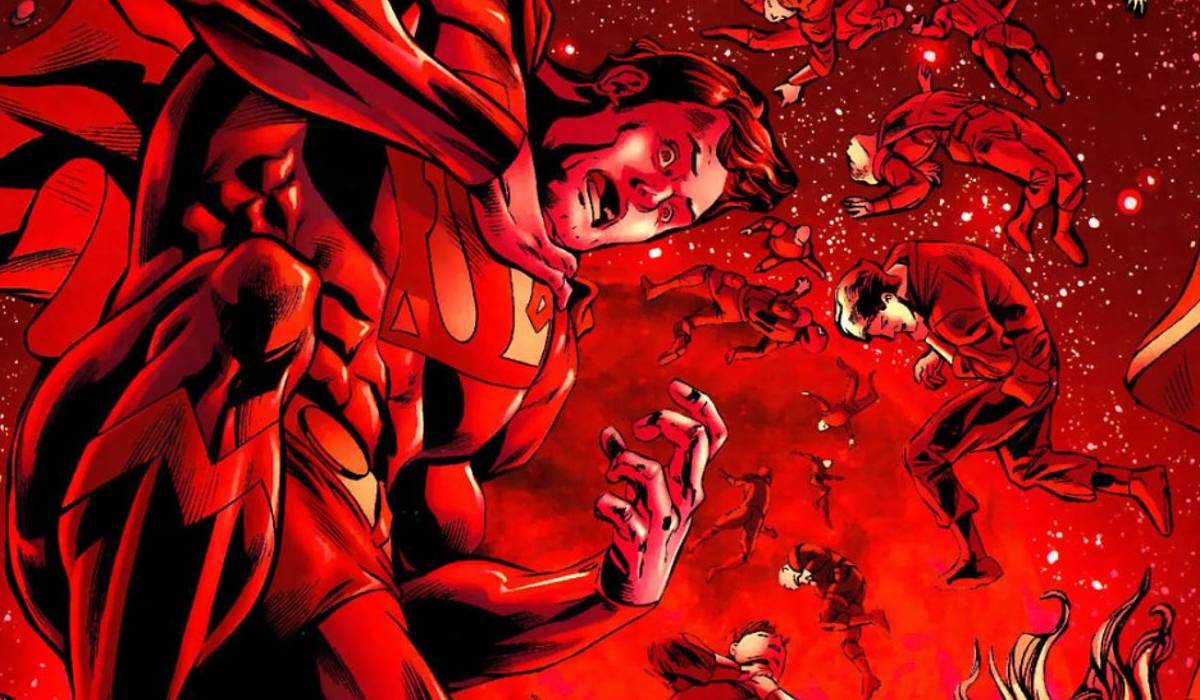
Red sunlight is often grouped with kryptonite, but the two weaknesses are fundamentally different.
Kryptonite is poisonous. It actively harms Kryptonians—inducing pain, sickness, unconsciousness, and, with prolonged exposure or large enough quantities, death. Red sunlight doesn’t poison Kara. It doesn’t hurt her cells. It simply disconnects her from her power source.
Under a red sun, Supergirl is essentially human.
And outside of combat or environmental danger, there are no lasting side effects. No illness. No cellular damage. Just vulnerability.
That distinction is important—especially for Kara.
Supergirl Doesn’t Always Need Her Powers
This is where Supergirl quietly gains an edge over her cousin.
Fans have argued for decades over whether Kara or Kal is stronger, faster, or more powerful, and the answer changes depending on the writer and the era. But even in stories where Kara is physically weaker, she is often portrayed as the more skilled combatant.
Before Krypton’s destruction, Kara trained in Klurkor, a Kryptonian martial art that emphasized precision, leverage, and adaptability over brute force. After arriving on Earth, her education didn’t stop. She was trained by the Amazons of Themyscira, learning both armed and unarmed combat at a level few mortals—and even few heroes—ever reach.
That training matters most when her powers are gone.
In Supergirl: Woman of Tomorrow, Kara proves this in a brutally grounded way. She’s at a bar on a red-sun planet when she notices a young girl named Ruthye Marye Knoll pleading with a bounty hunter to help avenge her murdered father. She offers him a pristine sword as payment. He takes the sword anyway—and knocks her to the ground.
Kara intervenes.
What follows isn’t a super-powered beatdown. It’s a raw, messy brawl. Kara is drunk. She’s depowered. And she still defeats the bounty hunter with surprising ease. The only real injury she suffers comes from her own lapse in awareness—she cuts her hand on broken glass because she forgets, in her own words, “the stupid red sun.”
Superman can fight without powers. He has training, discipline, and experience. But he often struggles more than Kara in those moments because he’s spent so much of his life relying on overwhelming strength to end fights quickly. Kara, by contrast, knows how to survive without it.
The Supergirl teaser subtly reinforces this difference, showing Kara wielding weapons—suggesting the film may lean into her martial background rather than treating her powers as her only defining trait.
Not All Suns Are Equal

Yellow and red stars are the most common in DC stories, but they aren’t the only ones Kryptonians have encountered.
Blue and white stars push Kryptonian biology even further. Under these rarer stellar types, Kryptonians don’t just regain their powers—they evolve. Strength increases dramatically. New abilities can manifest.
In Action Comics #855, Superman discovers that a blue sun allows him to temporarily grant his powers to others. In Action Comics #1050, exposure to an artificial white sun gives him the ability to teleport—something entirely outside his normal skill set.
Supergirl would logically be affected in the same way. But because blue and white stars are far rarer than yellow or red, their effects have been written inconsistently over the years. In the CW’s Supergirl TV series, for example, blue sunlight doesn’t empower Kara at all—it depowers her like red sunlight and is even lethal to Kryptonian males.
In short: the science of Kryptonian starlight is powerful, but unstable—shaped as much by story needs as by in-universe logic.
The DCU’s Quiet Shift in Supergirl’s Personality
One of the most telling changes the DCU has made isn’t about powers at all—it’s about behavior.
In Woman of Tomorrow, Kara’s visit to a red-sun planet to drink is a one-time act. A birthday milestone. A moment of rebellion. In the DCU, however, DCU subtly reframes it. Kal-El recognizes it as a habit. Something Kara does often enough that it no longer surprises him.
At 23 years old in the teaser, Kara has likely visited red-sun systems multiple times already.
So far, her drunkenness has been played lightly—almost as a joke—but it isn’t funny when you look closer. For Kara, alcohol is a coping mechanism. Unlike Kal, she was old enough to remember Krypton. She remembers the fear. The waiting. The slow realization that no one was coming to save them.
As she tells Ruthye in the teaser: Krypton didn’t die in a day. The gods are not that kind.
There’s also a haunting shot of Kara screaming alone in space—almost certainly in the aftermath of Krypton’s annihilation.
Red-sun worlds let her feel numb. Let her feel human. But they also make her reckless. She chooses vulnerability just to escape her memories, and that choice has consequences. In Woman of Tomorrow, that recklessness leaves Kara and Krypto wounded and stranded when the bounty hunter returns for revenge.
A New Kind of Weakness for the Big Screen
Kryptonite has dominated Superman adaptations for decades, but it isn’t the only way to challenge a Kryptonian—and arguably not the most interesting one. With no kryptonite left on Earth in the DCU, concepts like red sunlight suddenly have room to breathe.
They don’t just weaken Supergirl physically.
They expose her emotionally.
They force her to fight, choose, and survive without the safety net of invincibility.
And that makes red sunlight more than a weakness.
It makes it a mirror—one that shows who Kara Zor-El really is when the power is gone and the pain is all that’s left.
Dive deeper into your favorite universes with premium collectables from Anime, Marvel, DC, Transformers, LEGO, and more—now available at up to 40% OFF. Whether you’re a seasoned collector or just starting out, this is the perfect time to bring your heroes home.