


Every Supergirl Suit Ranked: From Classic Capes to DCU Reinvention
The moment the first teaser for Supergirl dropped, time itself started moving slower. June 26, 2026 suddenly feels unreasonably far away. One short glimpse was all it took for fans to lock in—this isn’t just another DC release on the calendar; it feels like the arrival of someone who’s been waiting a long time to be understood.
Front and center is Milly Alcock, whose take on Kara Zor-El has already struck a nerve in the best way. There’s wit in her eyes, a sharp edge to her humor, and a very clear sense that this Supergirl isn’t here to soften herself for anyone. She’s dry, self-aware, a little bruised, and refreshingly done with pretending everything’s fine. It’s a no-nonsense energy that instantly separates her from past live-action iterations and makes her feel lived-in rather than idealized.
That tone tracks perfectly with the creative hands behind the film. Directed by Craig Gillespie, the movie pulls its emotional spine from Supergirl: Woman of Tomorrow, the acclaimed graphic novel written by Tom King and illustrated by Bilquis Evely. That story isn’t about flashy heroics or saving the universe before breakfast—it’s about grief, anger, moral exhaustion, and the slow, painful act of choosing to keep going anyway. The teaser wears that DNA quietly but confidently.
Interestingly, while fans have been dissecting Kara’s attitude, her dialogue, and even the way she carries herself, conversation around her costume has been surprisingly muted. That silence isn’t accidental. The DC Universe already introduced this version of Supergirl’s suit earlier, during Alcock’s brief but memorable cameo in Superman. By the time the teaser rolled around, the look felt familiar—almost accepted—like something that belonged to her rather than something demanding approval.
Still, familiarity doesn’t end curiosity.
Now that Kara is stepping fully into the spotlight, the inevitable question lingers beneath the surface: how does this new live-action Supergirl costume truly stack up against the legacy of suits that came before it? From bright, hopeful designs to darker, armor-like reinterpretations, Supergirl’s wardrobe has always reflected how each era understood her. Strength versus softness. Optimism versus anger. Symbol versus survivor.
This version feels quieter. More grounded. Less concerned with spectacle and more focused on who Kara is when no one’s looking.
And maybe that’s why the conversation hasn’t exploded yet—not because the suit isn’t worth discussing, but because this Supergirl feels like more than what she’s wearing. The teaser suggests a Kara Zor-El whose presence, pain, and personality speak louder than fabric ever could.
Melissa Benoist’s First Supergirl Suit Is Played Entirely for Laughs
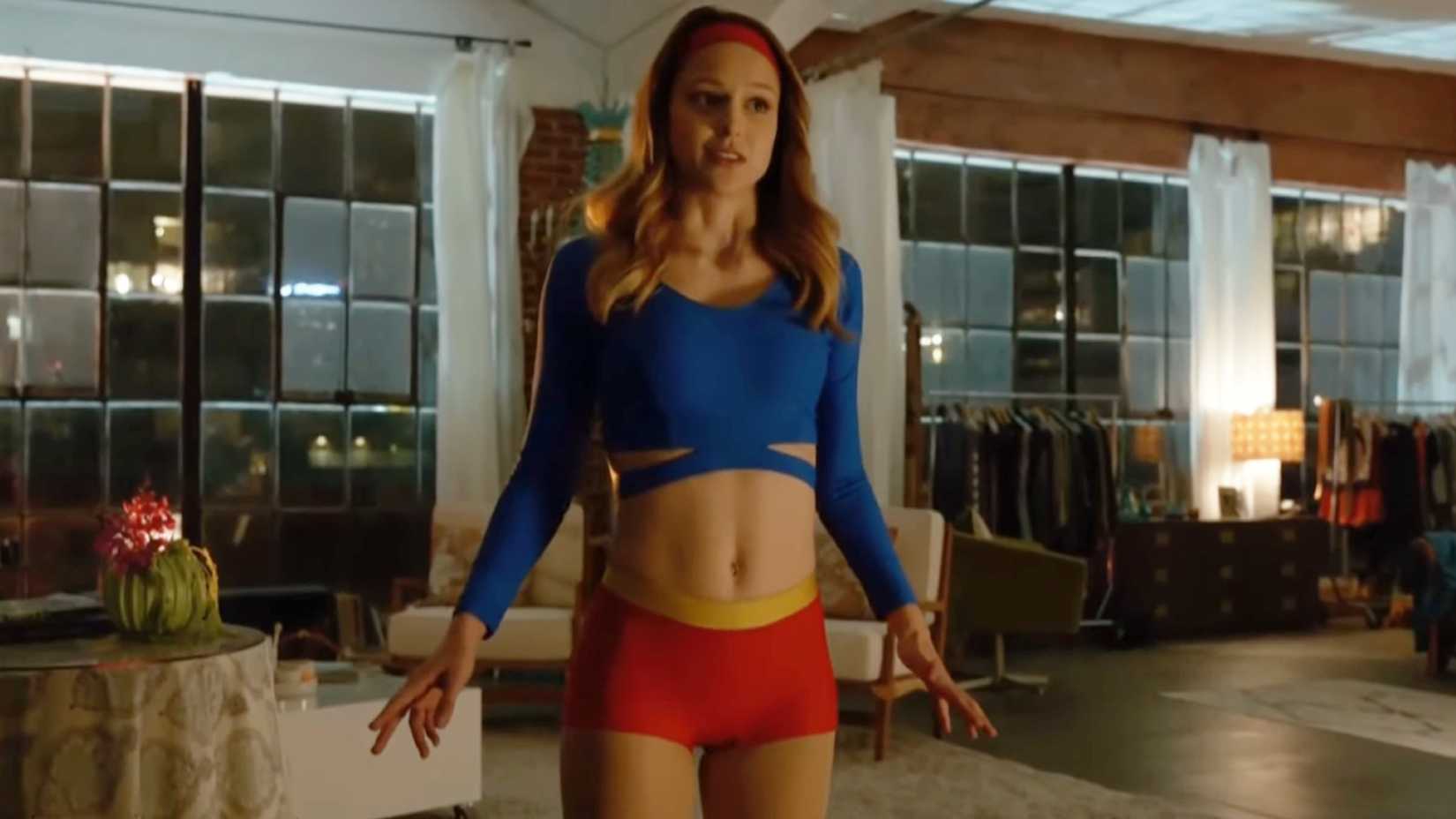
With the DCU’s Supergirl still on the horizon, it’s far too early to decide whether Milly Alcock will ultimately become the definitive live-action Supergirl. For now, that crown still firmly belongs to Melissa Benoist, whose portrayal of Kara Zor-El on Supergirl helped redefine the character for an entire generation. And a big part of why her version resonated so strongly had nothing to do with powers or punch-outs—it was about intent. Especially when it came to the suit.
That said, the show’s pilot makes one thing very clear: not every Supergirl costume is meant to be taken seriously.
Before Kara settles into the now-iconic blue-and-red look that would define the Arrowverse era, she experiments with a few early outfit ideas. The very first one she tries on is… unmistakably a joke. And not a subtle one.
The moment Kara sees herself in that first costume, she shuts it down instantly. The outfit is a painfully obvious nod to Supergirl’s more uncomfortable comic history—when female heroes were often drawn less as characters and more as pin-up fantasies. It’s a spandex two-piece, aggressively revealing, and wildly impractical. Kara doesn’t mince words about it either, remarking that she wouldn’t wear something like that “even to the beach.”
The line lands because it isn’t just funny—it’s pointed.
The suit doesn’t even have a cape, thanks to her tech-savvy friend and confidant Winn Schott, played by Jeremy Jordan, who casually dismisses capes as “lame.” That missing cape somehow makes the outfit feel even more wrong, stripping away one of the few elements that gives Supergirl visual authority and mythic weight.
Yes, technically, it does feature Supergirl’s classic color scheme—blue and red—but that’s about the only charitable thing that can be said about it. There’s no symbolism, no practicality, no sense that this outfit was designed for a woman who intends to save lives. It exists purely as a meta-commentary: a quick, sharp rejection of how Supergirl used to be framed.
And that’s why the scene works.
The joke isn’t just “look how bad this costume is.” The joke is that Kara herself knows it’s wrong. She knows she deserves better. And within minutes, the show makes it clear that this version of Supergirl won’t be defined by the male gaze, outdated design choices, or nostalgia that ignores progress.
By laughing that suit out of the room, Supergirl wasn’t mocking its past—it was closing the door on it.
That moment set the tone for everything that followed, and it’s part of why Melissa Benoist’s Supergirl still holds such a powerful place in live-action DC history.
Laura Vandervoort Hated Her Smallville Supergirl Outfit — and You Can Feel Why

There’s a very specific red flag in superhero television—one that has nothing to do with ratings, CGI, or continuity. It’s when the actor wearing the suit can’t wait to take it off. Not because it’s tight or heavy or impossible to sit in, but because it feels wrong on a deeper level. Because it doesn’t feel like armor. It feels like exposure.
That was the reality for Laura Vandervoort during her time as Kara Zor-El on Smallville.
Vandervoort played Supergirl across 23 episodes spread over four seasons, introducing Kara into a show that was still very much Clark Kent’s world. Her costume was a stripped-down take on the classic Supergirl look: a blue crop top emblazoned with the “S” crest and a short red skirt. Clean. Simple. Iconic on paper.
But deeply uncomfortable in practice.
And not just physically.
Over time, Vandervoort openly admitted that she hated the outfit. By the end of her run, she joked that she wanted to burn it—and while the comment was delivered lightly, the feeling behind it wasn’t. The issue wasn’t just how the suit fit. It was what it represented.
Much like Melissa Benoist’s Kara instantly rejecting her first, overly sexualized costume option in Supergirl, Vandervoort found herself stuck in a design that echoed an older, less considerate era of superhero storytelling. An era where female strength was often framed through how much skin could be shown, rather than how much presence a character commanded.
Yes, the Smallville suit was technically less revealing than the deliberately mocked “joke outfit” from the CW’s Supergirl pilot. But that doesn’t mean it felt empowering. The cropped top and skirt still placed Kara in a visual category that male heroes simply didn’t occupy. Clark Kent got layers. Kara got bare skin.
And that imbalance wears on you—especially when you’re playing a character who is meant to stand shoulder to shoulder with Superman.
Costumes matter. They shape how actors move, how they carry themselves, how safe they feel inhabiting a role. When a suit makes an actor feel self-conscious instead of powerful, it quietly undermines the character on screen. Vandervoort’s discomfort wasn’t vanity—it was instinct. She knew Kara Zor-El deserved something that felt like protection, not presentation.
Looking back now, her frustration feels less like complaining and more like an early warning sign. One that later adaptations would finally listen to.
Modern Supergirl designs—especially in the DCU—are moving away from the idea that Kara’s strength needs to be visually softened or sexualized. Vandervoort’s honesty about her experience helped expose the gap between iconic imagery and lived performance.
Melissa Benoist’s Second Supergirl Outfit Was a Small—but Meaningful—Step Forward
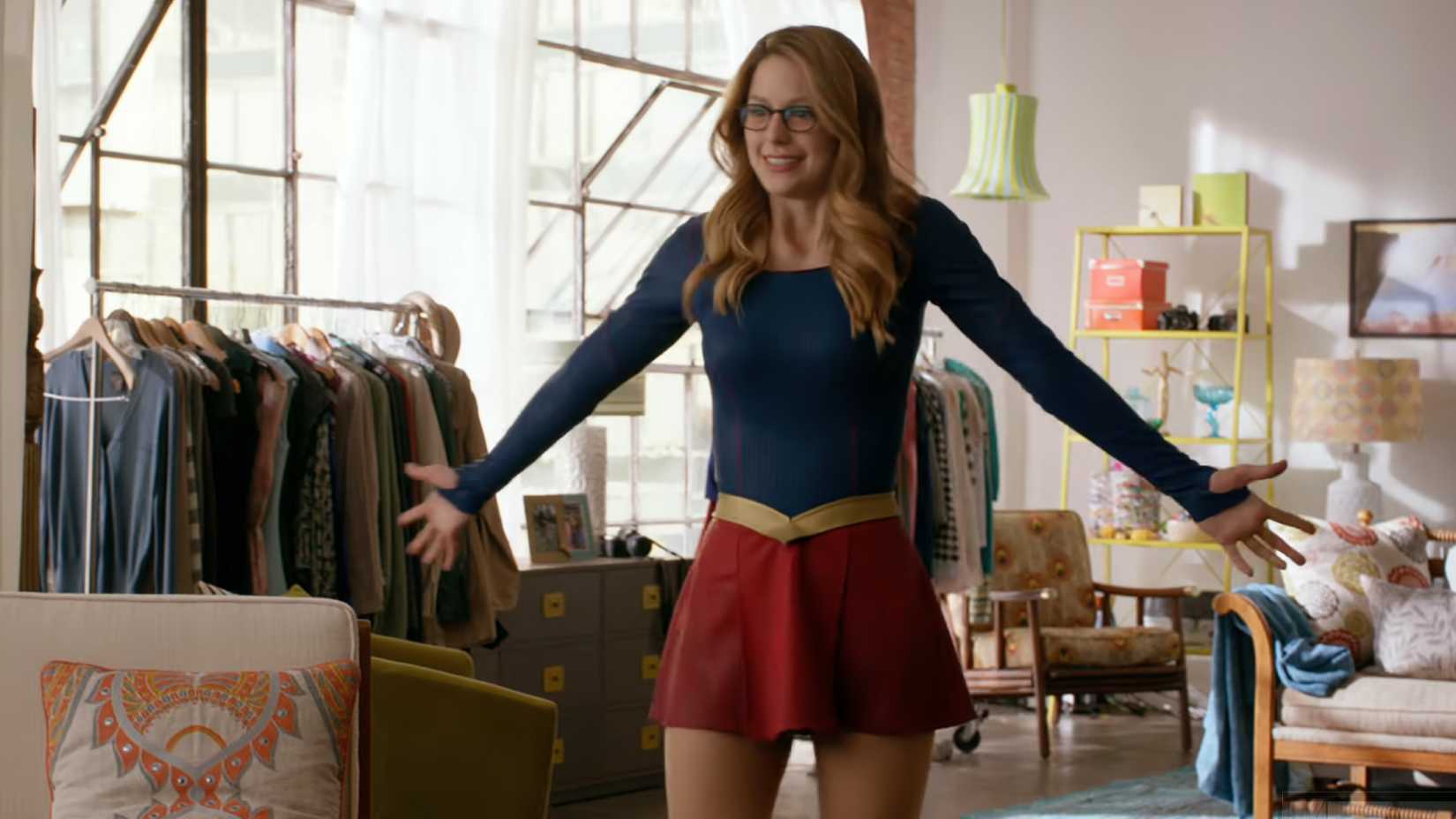
Barely seconds after Kara Zor-El recoils from that infamous, painfully awkward two-piece in the Supergirl pilot, the show course-corrects—quickly, but not quite completely. When Kara steps back into frame this time, she’s wearing something that finally resembles Supergirl rather than parodying her.
This second outfit is noticeably more respectful to the character. It’s a one-piece design that immediately feels closer to tradition, covering far more of Kara’s upper body and ditching the overtly sexualized tone of the first attempt. It’s still not perfect—the skirt remains short enough to leave most of her legs exposed—but compared to what came before, it feels like progress rather than provocation.
You can almost sense the show testing the waters here. Learning. Adjusting.
That said, the suit still feels unfinished. There’s no cape—a decision justified in-universe by Winn Schott, who insists capes are impractical (a bold stance in a profession built entirely on symbolism). But let’s be honest: in superhero storytelling, capes aren’t optional flair. They’re visual mythology. They give weight, movement, and presence. Without one, Kara looks less like a rising icon and more like someone still borrowing clothes from the prototype phase.
Even more noticeable is the absence of the House of El crest. That symbol isn’t just branding—it’s identity. It ties Kara to her heritage, her loss, and her connection to Kal-El. Without it, the costume feels emotionally hollow, as if the suit hasn’t yet decided who it’s meant to represent.
To be fair, the CW series was aiming for something more grounded and approachable than a straight comic-book translation. And in that context, the simplicity makes sense on paper. But simplicity can easily slide into blandness, and this version of the suit lands uncomfortably close to that line. It’s safer, yes—but it’s also forgettable.
Still, intent matters.
This second costume clearly signals that the show understood its first mistake and was actively trying to do better. It respects Kara more. It allows Melissa Benoist to move like a hero rather than pose like one. And narratively, it fits a Kara who is still figuring herself out—still becoming Supergirl rather than fully being her.
It’s not the suit she was meant to wear forever.
But it is the suit that proves the show was listening.
Helen Slater’s Supergirl Suit Was Essentially a Feminized Echo of Christopher Reeve’s Superman
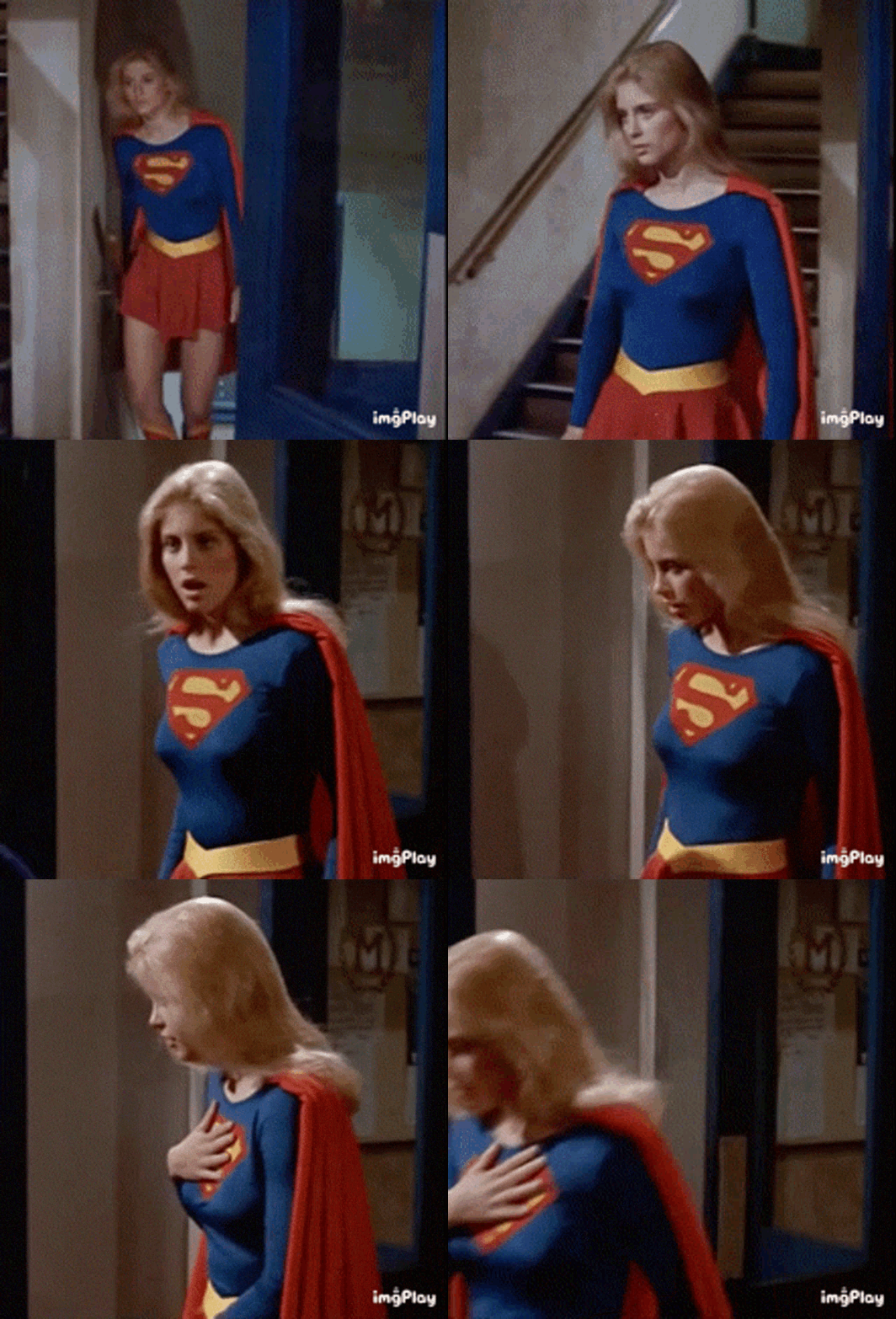
Before Supergirl ever became a TV staple or a modern cinematic talking point, she took her very first live-action flight in Supergirl, portrayed by Helen Slater. The film itself struggled—critically, commercially, culturally—but oddly enough, Kara’s look wasn’t really the problem.
In fact, compared to many versions that would come later, Slater’s suit actually gets a few important things right.
Most notably, it proudly features the House of El crest front and center. That alone gives it a legitimacy some later live-action designs would weirdly sidestep. The symbol grounds Kara in Kryptonian heritage, visually linking her to Superman rather than presenting her as a disconnected offshoot. On a symbolic level, that matters.
But once you look past the crest, the design tells a very familiar story.
This Supergirl suit is, for all intents and purposes, Christopher Reeve’s Superman costume—softened, slimmed, and feminized. The same blue. The same texture. The same overall silhouette. The key difference? A red skirt added almost as an afterthought, as if that alone was enough to communicate, “This one’s for a woman.”
The intention was clear: visual continuity. In the 1980s, Supergirl wasn’t being positioned as her own myth—she was an extension of Superman’s. Familiarity was the goal. If audiences recognized the suit, they’d recognize her place in that world.
But that approach also limited her.
Rather than reimagining what Supergirl could look like, the design simply borrowed Superman’s iconography and adjusted it to fit gender expectations of the era. It wasn’t offensive—it was unimaginative. Safe. Almost cautious to a fault.
That sameness became impossible to ignore decades later, when digital recreations of Reeve’s Superman and Slater’s Supergirl appeared side by side in The Flash. Seeing them together didn’t just highlight nostalgia—it highlighted how closely Kara’s visual identity had been tethered to Clark’s from the very beginning. The resemblance wasn’t thematic anymore; it was literal.
And yet—credit where it’s due.
Despite its lack of originality, Helen Slater’s Supergirl suit remains the most comic-book-accurate live-action version to date. The colors are right. The proportions are classic. The overall aesthetic feels lifted straight from the page in a way later adaptations often tried to modernize or “fix.”
It may not have pushed boundaries.
It may not have redefined the character.
But it respected the source.
In many ways, Slater’s costume feels like a time capsule—a snapshot of an era when Supergirl was still being introduced to the world through Superman’s shadow. Not fully her own yet, but unmistakably Kryptonian. And as history has shown, sometimes the earliest steps don’t age perfectly—but they still matter.
Melissa Benoist’s Third Supergirl Outfit Became The Definitive Look
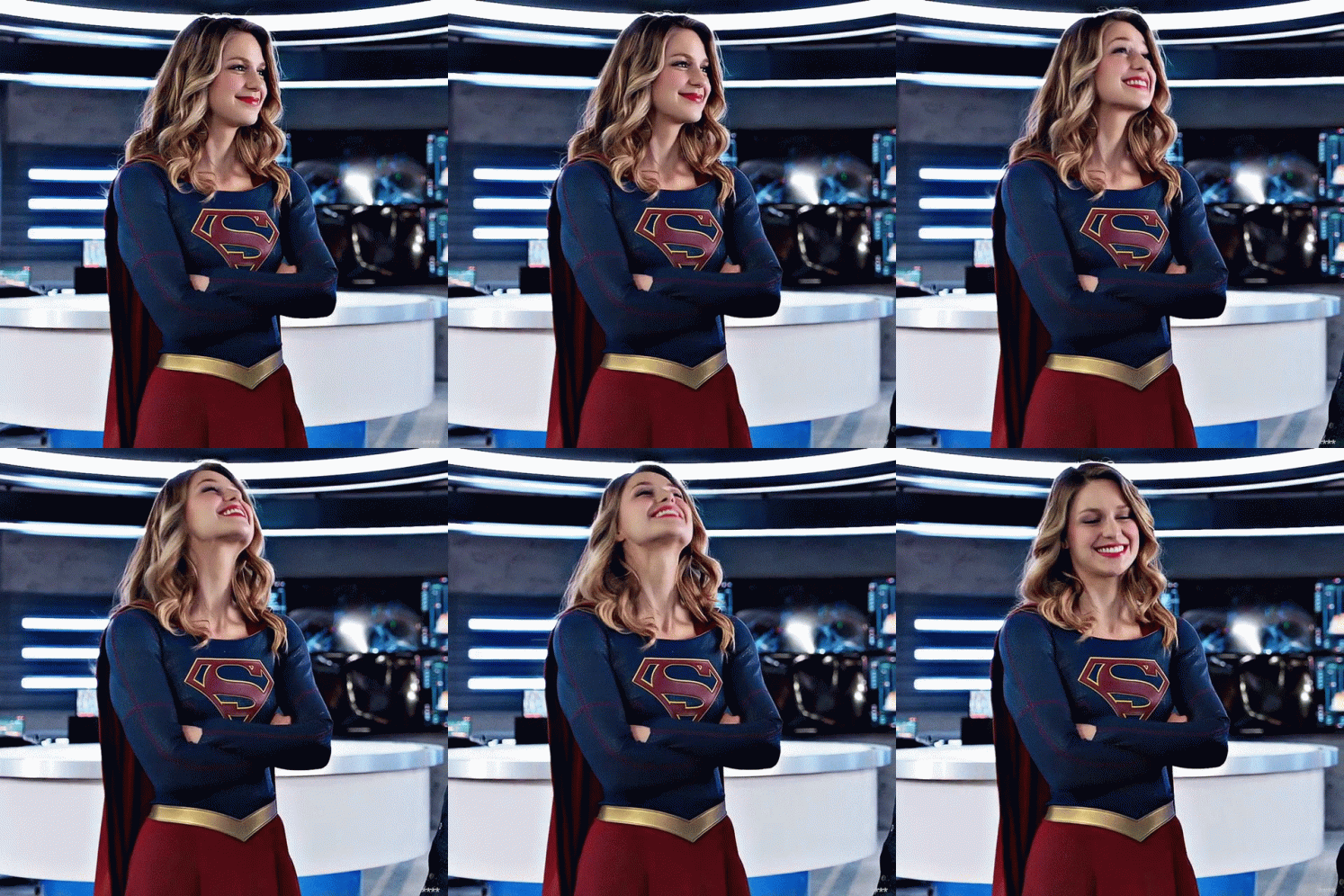
There’s a moment in every superhero adaptation where the costume stops feeling like wardrobe and starts feeling like identity. For Melissa Benoist’s Kara Zor-El, that moment arrived with her third—and ultimately iconic—Supergirl suit.
By this point, the CW’s Supergirl had found its footing. The show understood that comic-book accuracy alone doesn’t make a great live-action costume. What matters more is how a suit translates—how it moves, how it photographs, how it makes the actor feel when they step into it. And this design finally got that balance right.
At first glance, the changes seem subtle, almost conservative. But it’s those precise, thoughtful tweaks that elevate the suit beyond what came before. The chest emblem keeps the House of El symbol front and center, but the yellow accents are toned down, giving the crest a cleaner, more modern presence. The belt shifts from bright comic-book yellow to a richer, more authentic gold—small, yes, but visually grounding. These choices quietly separate Kara’s look from the more literal, era-bound design worn by Helen Slater in the 1980s, without disrespecting it.
Then come the elements that complete the myth.
The red cape finally takes its rightful place—flowing, dramatic, unmistakable. The knee-high boots add strength and silhouette, anchoring Kara visually in a way earlier outfits never quite managed. The skirt is lengthened just enough to feel practical without losing the character’s classic aesthetic. And most importantly, everything feels intentional. Nothing looks like a placeholder anymore.
This is the suit where Kara stops experimenting and starts arriving.
Benoist herself openly loved this costume. You can feel that comfort and confidence translate on screen—the way she stands taller, moves with purpose, and owns the symbol on her chest. That said, she’s also been refreshingly honest about its drawbacks. Filming in colder temperatures was brutal, and the suit offered little mercy against the elements. Heroic, yes. Warm? Not even close.
Still, discomfort aside, this was the look that defined an era.
It became the visual shorthand for Supergirl in the Arrowverse—the version fans instantly recognize, cosplay, and emotionally attach to. It struck that rare balance between honoring the comics and evolving beyond them, proving that a superhero costume doesn’t need to be loud or flashy to be powerful.
And while it wouldn’t be the Arrowverse’s final word on Supergirl’s design, this third outfit remains the one that truly stuck. The moment when Kara Zor-El’s suit finally matched her presence.
Milly Alcock’s Supergirl Suit Is a Confident—If Familiar—Return to Tradition

It’s still too early to crown a definitive verdict on Milly Alcock’s Supergirl. We simply haven’t spent enough time with her Kara Zor-El yet. But what has been revealed—brief as it may be—already tells us something important: visually, this Supergirl understands where she comes from.
Alcock looks effortlessly right in the role. There’s a quiet confidence to her presence, a sense that Kara doesn’t need to announce herself loudly to command attention. And while the suit she wears might not reinvent the wheel, it does something arguably more difficult—it restores balance.
At a glance, the criticism is obvious and fair. Much like Helen Slater’s 1984 suit, this costume is unmistakably derived from Superman’s. In fact, it’s essentially a reworked version of David Corenswet’s Superman suit, introduced in Superman—same visual language, same structural philosophy, finished with a skirt to distinguish Kara from Kal.
And yet… it works.
That’s largely because Corenswet’s suit was already one of the strongest elements of James Gunn’s 2025 blockbuster. The redesigned House of El crest feels bold without being aggressive, classic without being dated. The brighter, more hopeful shade of blue recalls Silver Age optimism while still looking grounded enough for modern cinema. Transplanting that design philosophy onto Supergirl gives her instant legitimacy within the DCU. She doesn’t look like a side project—she looks like she belongs.
Crucially, the proportions matter this time.
The distance between Kara’s skirt and the top of her boots is intentionally narrow, avoiding the uncomfortable visual gap that plagued so many past Supergirl designs. There’s no sense of the costume existing to display her. It reads as functional, respectful, and heroic—finally free from the faint undertone of spectacle that once followed the character.
Then there’s the detail that isn’t technically part of the suit—but might be the most revealing choice of all.
Kara’s trench coat.
It’s a small addition, easy to overlook, yet quietly brilliant. The coat gives her silhouette personality. It adds texture, mood, and a sense of lived-in history—like this is someone who’s traveled, survived, and picked up habits along the way. It separates her emotionally from Superman, even when the suits echo one another. Clark wears his symbol openly. Kara wraps herself in layers.
That contrast matters.
So yes, Milly Alcock’s Supergirl suit plays it safe. It leans into tradition instead of tearing it down. But after decades of overcorrection, that restraint feels intentional rather than lazy. This isn’t a costume trying to redefine Kara Zor-El.
Melissa Benoist’s Final Supergirl Suit Finally Fixed a Problem Decades in the Making
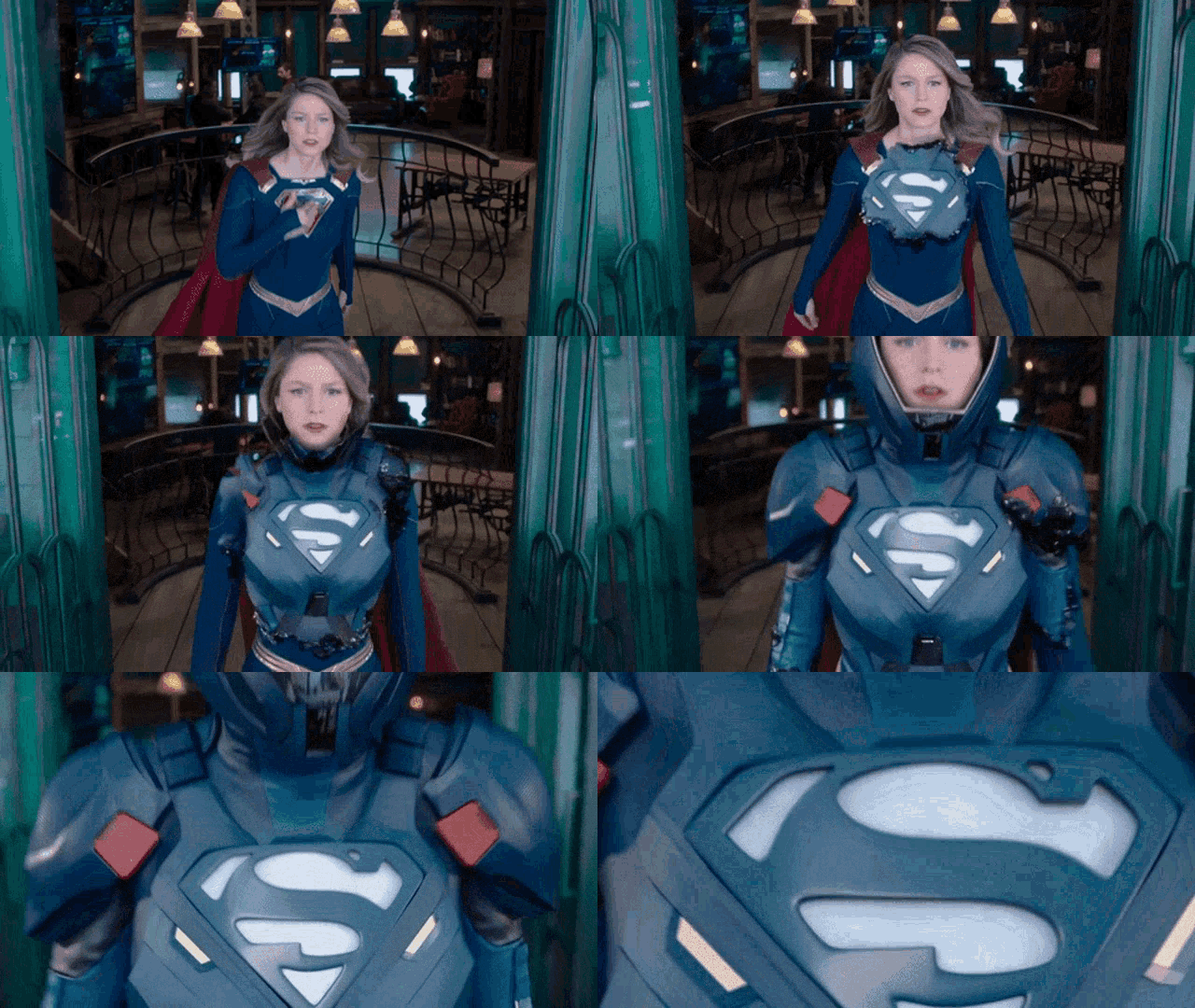
Some changes in superhero history feel overdue. Others feel earned. Melissa Benoist’s final Supergirl suit manages to be both.
It’s almost wild to think about this now, but it took 12 years after Supergirl’s comic debut for DC to even experiment with the idea that Kara Zor-El didn’t need a skirt to be recognizable as a hero. In Adventure Comics #412 and Adventure Comics #413, Supergirl briefly traded her skirt for a full-body suit—a practical, forward-thinking design that felt decades ahead of its time.
And then… nothing.
That idea sat on the page for nearly half a century.
It wasn’t until Season 5 of Supergirl that live-action finally caught up. Kara receives a brand-new suit—sleeker, more advanced, activated via nanotechnology—and for the first time on screen, she wears pants. When she realizes it, Kara reacts with barely contained joy, pointing it out with a grin that feels half in-character, half Melissa Benoist speaking directly to the audience.
And honestly? The moment lands because it’s true.
This was long overdue.
For years, Supergirl’s skirt had been a point of contention—not because skirts are inherently wrong, but because of what this one symbolized. It had become a visual holdover from an era that treated female heroes differently, often framing them through aesthetics before function. Meanwhile, her male counterparts were layered in armor, boots, and utility.
This suit finally closes that gap.
The pants don’t just modernize Kara’s look—they legitimize it. She looks ready for combat, flight, rescue, and survival. The design feels purposeful, as if it was built for a hero rather than styled around one. It’s clean, confident, and undeniably powerful.
That said, it isn’t flawless.
The gold brackets attaching the cape to Kara’s shoulders are the one real misstep. They clutter the silhouette, drawing the eye away from what should be a smooth, uninterrupted flow. It’s the same issue that plagued the early version of Tyler Hoechlin’s Superman suit—too many visual anchors competing for attention. Earlier designs handled this far more elegantly by tucking the cape beneath the collar, letting the suit breathe.
Still, those brackets are a minor blemish on an otherwise stunning redesign.
Sasha Calle’s Supergirl Suit Was Truly One of a Kind

Every once in a while, a superhero interpretation comes along that breaks almost every rule—and somehow ends up feeling more honest because of it. Sasha Calle’s Supergirl in The Flash is exactly that kind of lightning-in-a-bottle moment.
On paper, it shouldn’t have worked. This Kara Zor-El exists in an alternate reality. She crashes on Earth instead of her cousin. She’s imprisoned, experimented on, and never gets the chance to grow up loved or protected. Her story is colder, harsher, and stripped of optimism. And yet—because of those choices—this version of Supergirl lands with a raw intensity that’s hard to shake.
Calle made history simply by stepping into the role as the first Latinx Supergirl, but what truly set her apart was how completely she severed visual ties with tradition. Her costume doesn’t feel like a variation. It feels like a declaration.
For decades, Supergirl suits—on screen especially—have struggled to escape Superman’s shadow. Most designs were either softened reflections of his costume or outright derivatives with skirts added as shorthand. Calle’s suit refuses that lineage.
Yes, there are echoes. The deep blue fabric and the House of El crest clearly align her with Henry Cavill’s Superman from the DC Extended Universe. But that’s where the familiarity ends. Everything else is reimagined.
The boldest choice comes at the shoulders and neckline, where rich red replaces the expected blue. It’s a striking inversion—almost confrontational in how different it looks. Instead of relying on red boots or a flowing cape to balance the color palette, the suit integrates red into the upper body itself, framing Kara like armor rather than ornamentation. It visually reinforces that this Supergirl wasn’t meant to inspire hope first—she was built to survive.
Even the decision to ditch red boots in favor of a solid blue, onesie-style silhouette works in the suit’s favor. It streamlines her shape, making her feel less like a symbol and more like a weapon honed by captivity and rage. This Kara doesn’t arrive with pageantry. She arrives like a storm breaking containment.
And it’s that visual storytelling—paired with Calle’s ferocious, wounded performance—that makes her short-lived tenure so painful in hindsight.
There was so much more to explore.
Her Supergirl wasn’t defined by optimism. She was defined by loss, fury, and an aching sense of stolen possibility. The suit mirrors that perfectly: no nostalgia, no softness, no concession to what Supergirl “should” look like.
It’s refreshingly unique. Fearlessly modern. And arguably one of the strongest live-action Supergirl designs ever put on screen.
That’s why its abrupt ending stings so much.
Still, all may not be lost. There’s a growing sense among fans that Sasha Calle would be perfect as Power Girl in the DCU—a character who carries Kryptonian strength with a more aggressive, assertive edge. If that ever happens, it would feel less like a consolation prize and more like destiny circling back.