India’s Official Distributor and Retailer for Licensed Action Figures, Statues and Anime Collectibles
March 21, 2026 15 min read
In a world where gods descend from the sky, armored billionaires crash through buildings, and battles between heroes and villains can level entire city blocks in minutes, there’s one question most people never stop to ask—what happens after all of that is over?
Because the truth is, the Marvel Universe isn’t just spectacular… it’s messy. Brutally, unapologetically messy.
And that’s exactly where Damage Control comes in.
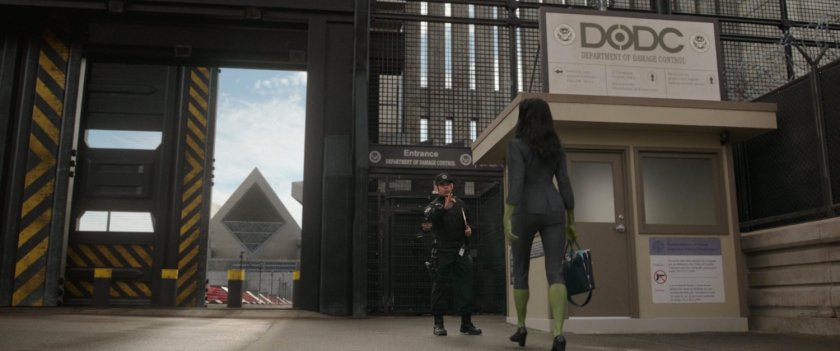
From the pages of Marvel Comics to its evolving presence in the Marvel Cinematic Universe, Damage Control exists in the aftermath—the quiet, overlooked space where destruction lingers long after the fight is done. While the world celebrates its heroes and fears its villains, someone still has to deal with the debris, the broken infrastructure, the remnants of chaos left behind. Cleaning up after super-powered showdowns isn’t glamorous work. It’s not heroic in the traditional sense. Most of the time, it’s thankless. But it’s essential.
In Marvel Comics, Damage Control began as a surprisingly grounded idea in an otherwise larger-than-life universe. Originally founded with ties to figures like Tony Stark and Wilson Fisk, the organization was built on a simple but powerful premise—if battles are inevitable, then rebuilding must be too. Over time, it became far more than just a clean-up crew. Damage Control handled everything from repairing cities torn apart by superhero conflicts to securing dangerous alien technology and ensuring that what was left behind didn’t create even bigger problems. They were the people who stepped in when everyone else had already moved on.
And that role only becomes more important when you consider just how chaotic the Marvel Universe really is. With constant clashes happening across the globe, destruction isn’t rare—it’s routine. Entire neighborhoods can be wiped out in the crossfire of a single fight. And yet, somehow, the world keeps going. Buildings are rebuilt. Streets are restored. Life resumes. That sense of normalcy doesn’t just happen on its own. It exists because someone is working tirelessly behind the scenes to make sure it does.
When Damage Control transitions into the Marvel Cinematic Universe, it takes on a slightly different identity—one that feels more grounded in reality and a lot more authoritative. Here, it becomes the Department of Damage Control, or DODC, a government-backed organization that doesn’t just clean up messes but actively manages the consequences of superhuman activity. Especially after major events like the Battle of New York, the world of the MCU starts to shift. Superheroes are no longer just extraordinary—they’re something that needs oversight.
And that’s where the DODC steps in.
They still handle the aftermath, still deal with the debris and destruction, but there’s an added layer now—control. Surveillance. Regulation. Their presence reflects a world that’s trying to understand, contain, and sometimes even fear the power it’s created. They don’t just rebuild cities—they monitor the people who break them.
What makes Damage Control so fascinating, both in the comics and on-screen, is that it represents a different kind of heroism. It’s not loud. It doesn’t come with costumes or catchphrases. It exists in the background, in the rebuilding, in the quiet effort to restore order after chaos has already taken its toll.
Because when the dust settles and the spotlight fades, the world is still left with the consequences.
And someone has to take responsibility for that.
That someone… is Damage Control.

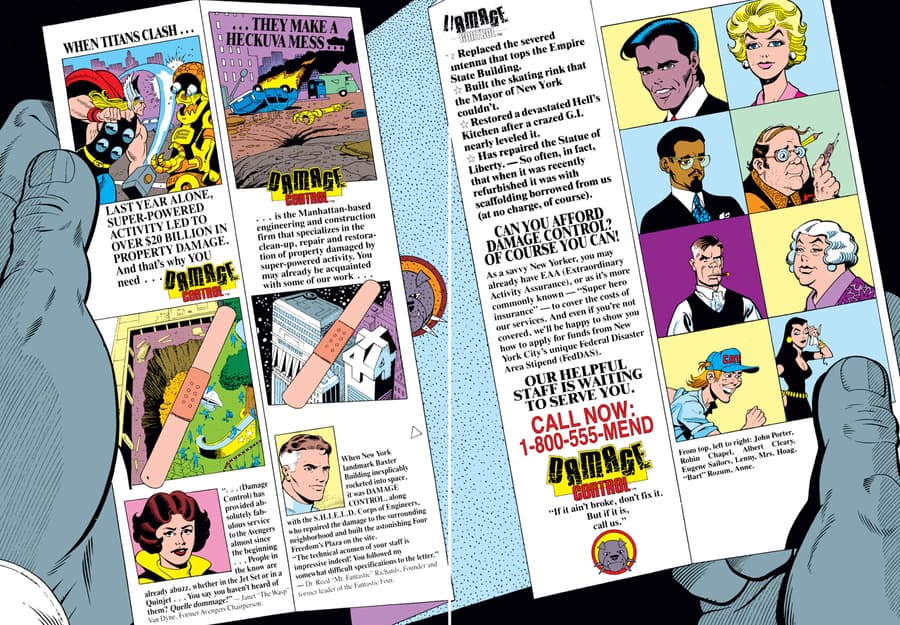
Damage Control’s origin in Marvel Comics begins in a way that perfectly captures what the organization is all about—not with a grand heroic moment, but with a strangely grounded, almost ironic encounter. The company made its debut in Marvel Age Annual (1985) #4, in a short story by Dwayne McDuffie, Ernie Colón, and Jon D’Agostino, creators who chose to explore something the Marvel Universe rarely paused to consider—the aftermath of chaos. The story unfolds in Las Vegas, where the Hulk is indulging in the excess and noise of the city, a fitting backdrop for someone who embodies destruction itself. It’s here that a marketing executive from Damage Control makes an ambitious move, approaching the Hulk with a pitch to feature in an advertisement campaign promoting the company. The idea is clever in theory—use the face of destruction to sell the solution to it—but it completely misjudges its audience. Hulk, unimpressed and uninterested, responds in the only way he knows how. He roughs up the executive and has security escort him out of the casino, rejecting the offer without a second thought.
Despite the failed pitch, that brief interaction reveals everything about Damage Control’s purpose. Through a sample brochure that Hulk glances at—if only momentarily—the company lays out its mission and introduces the key personnel behind it, positioning itself as a structured response to an increasingly uncontrollable world. The brochure highlights a staggering reality: superhuman activity has caused over $20 billion in property damage in just a single year. It’s a number that reframes everything we think about superhero battles, shifting the focus from spectacle to consequence. In that moment, Damage Control stops being a background idea and becomes something essential. Because if destruction on that scale is routine, then rebuilding isn’t optional—it’s inevitable. And that’s where Damage Control steps in, not as heroes in the traditional sense, but as the ones who remain when the fight is over, quietly dealing with the damage everyone else leaves behind.

Damage Control didn’t stay in the background for long. What began as a clever, almost satirical concept about cleaning up after superhero chaos quickly earned its own spotlight with Damage Control (1989) #1, brought to life by Dwayne McDuffie, Ernie Colón, and Bob Wiacek. And the moment the organization stepped into center stage, it became clear that this wasn’t just a joke about collateral damage—it was a fully functioning machine built to survive in a world constantly on the brink of destruction. At the heart of it all was Anne Marie Hoag, the sharp, no-nonsense founder and owner of Damage Control, a woman who understood that in a universe driven by superhuman conflict, the real power sometimes lies in knowing how to rebuild what’s been broken. Under her leadership, the company was staffed not with superheroes, but with something arguably just as valuable—people who could make sense of chaos in real time. Financial prodigies who could calculate property damage and insurance costs on the fly, turning devastation into numbers, and numbers into solutions.
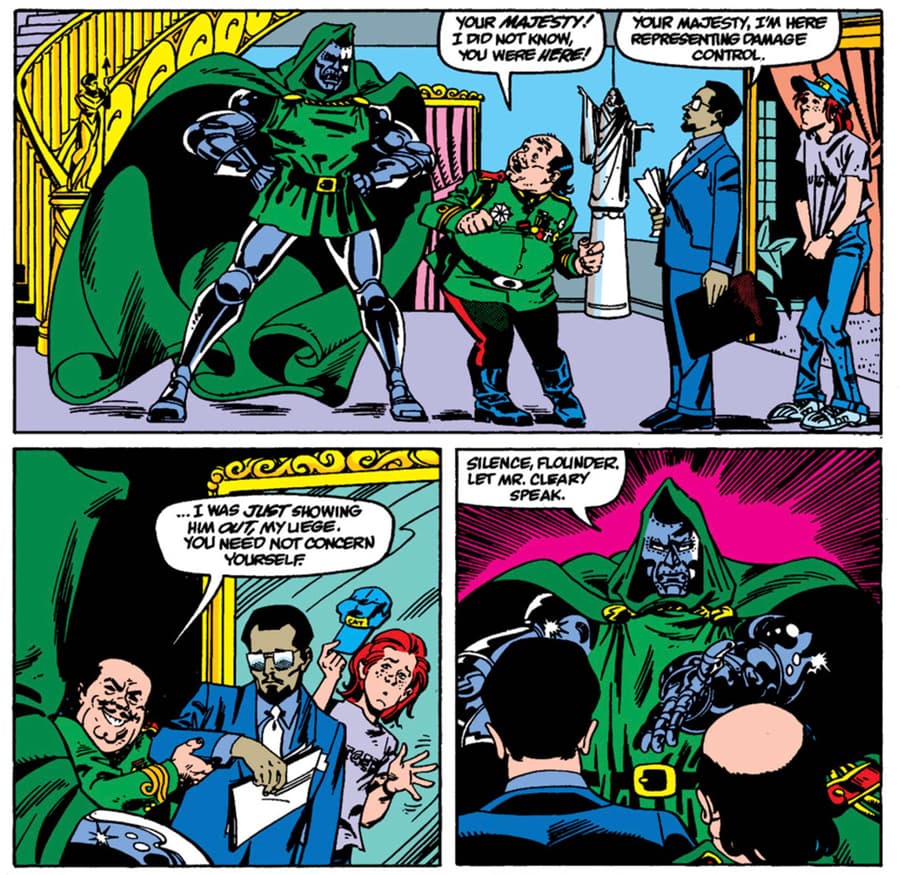
The team itself was an eclectic mix of grounded, deeply human professionals trying to operate in a world that was anything but normal. Robin Chapel stepped in as a corporate manager, navigating the business side of a company constantly dealing with extraordinary circumstances. John Porter took on the role of account executive, managing clients whose problems often involved leveled buildings and superhuman incidents. Out in the field, Albert Cleary worked as comptroller, directly engaging with the aftermath of destruction, ensuring that every broken wall and shattered street translated into actionable recovery. What made them remarkable wasn’t power—it was resilience. Because despite lacking superhuman abilities, they consistently delivered on expectations in situations most people wouldn’t survive. In fact, they pushed that commitment so far that they even confronted Doctor Doom himself over unpaid expenses—an act that says everything about the kind of nerve it takes to work at Damage Control. In a world where Doom rules a nation and commands technology beyond imagination, they still showed up with paperwork and demands.
But if running a company in the Marvel Universe wasn’t complicated enough, ownership brought its own chaos. In Damage Control (1989) #1, Anne Marie Hoag made a pivotal decision—she sold ownership of the company to two of the most powerful and morally contrasting figures imaginable: Tony Stark and Wilson Fisk, each taking a 50% stake. On paper, it was a strategic move, aligning Damage Control with immense financial and technological backing. In reality, it was a ticking time bomb. Stark, already uneasy about being tied to Fisk—whose reputation as the Kingpin of crime cast a long shadow—quickly chose to walk away, selling off his shares rather than continue the partnership. Fisk, on the other hand, had his own reservations. His distrust of Robin Chapel’s role in managing the company led him to divest as well, unwilling to leave his investment in hands he didn’t fully control.
And just like that, the company found itself back where it started—but stronger.
With the backing of S.H.I.E.L.D., Hoag regained full ownership of Damage Control, reestablishing control over her vision and steering the company into a new phase. This wasn’t just independence—it was evolution. Now operating with direct contracts from S.H.I.E.L.D., Damage Control became more than a clean-up crew; it became an extension of one of the most powerful intelligence organizations in the Marvel Universe. Their role expanded, their importance deepened, and their place in the world became undeniable.
Because by this point, one thing was clear—Damage Control wasn’t just reacting to chaos anymore.
It had become part of the system that managed it.

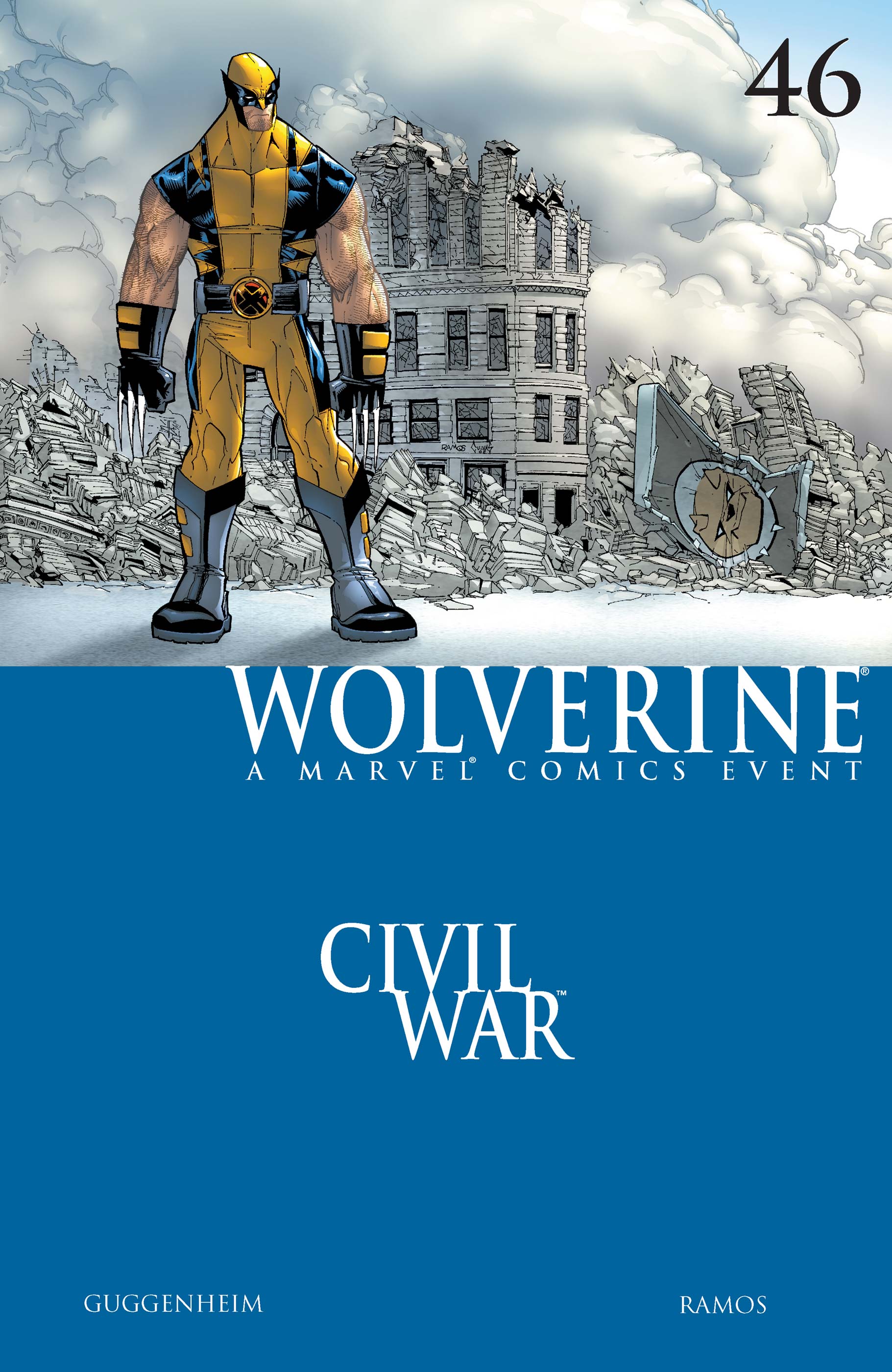
Damage Control’s story takes a darker, far more uncomfortable turn during the events of Civil War in 2006—a moment where the line between necessity and exploitation begins to blur in ways that feel almost too real. What was once a company built to clean up the aftermath of chaos suddenly finds itself entangled in the very destruction it was meant to contain. It all traces back to the Stamford incident, a catastrophic event that reshaped the Marvel Universe. During a battle between the New Warriors and a group of villains, the supervillain Nitro unleashed an explosion so devastating that it wiped out a large portion of Stamford, Connecticut, killing hundreds, including innocent civilians. The tragedy sent shockwaves across the world and became the tipping point for the Superhuman Registration Act, a law that would divide heroes and redefine what it meant to operate in the open.
But beneath the surface of that disaster, something far more sinister was unfolding.

When Wolverine tracked Nitro down and finally cornered him, what he uncovered wasn’t just revenge—it was truth. Nitro revealed that Damage Control had supplied him with mutant growth hormones, enhancing his already volatile, combustive abilities and turning him into something far more destructive than he should have been. And that revelation cracked the entire narrative wide open. Because this wasn’t an isolated incident—it was part of something bigger. As Logan dug deeper, he uncovered a disturbing scheme tied to private investor Walter Declun, who had taken control of Damage Control and quietly reshaped its operations from the inside. Under Declun’s leadership, the company wasn’t just cleaning up disasters anymore—it was helping create them.
The business model had changed.
Instead of simply responding to destruction, Damage Control began secretly supplying villains with advanced gear and enhancements, effectively fueling chaos on purpose. The logic was cold, calculated, and deeply unethical—manufacture the disaster, then profit from the cleanup. It was capitalism twisted into something predatory, where destruction became an investment strategy. And in a world already teetering under the weight of superhuman conflict, that kind of manipulation made everything worse.
Wolverine didn’t just see it as corruption—he saw it as betrayal.
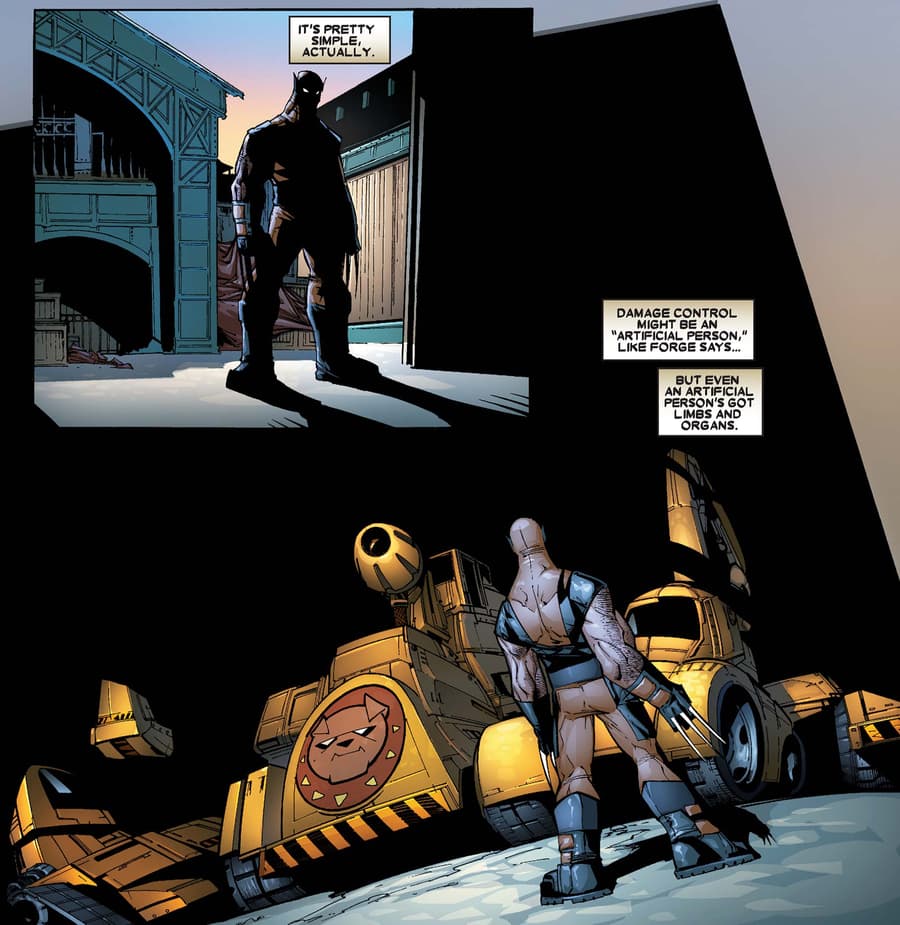
What followed wasn’t a calculated takedown or a legal battle. It was personal. Logan launched a one-man war against Damage Control, a relentless sabotage campaign driven by anger and a sense of justice that refused to be ignored. He tore through their operations, destroying expensive equipment, disrupting projects, and dismantling the infrastructure that allowed the company to function at scale. It wasn’t subtle, and it wasn’t clean—but it was effective. The damage he inflicted was severe enough to push the company to the brink of financial collapse.
And in that collapse, accountability finally caught up.
Walter Declun was ousted from control, his grip on the company broken as the consequences of his actions became impossible to ignore. In his place, Anne Marie Hoag was reinstated as the principal owner, returning Damage Control to the leadership that once defined its purpose. Declun didn’t disappear entirely—like many figures in the Marvel Universe, he resurfaced later as a villain, carrying the same ambition that had corrupted the company in the first place. But Damage Control, now forced to confront the weight of what it had become, began the slow and difficult process of rebuilding not just cities—but its own reputation.
Because sometimes, the damage isn’t just physical.
Sometimes… it’s the kind that lingers long after everything else has been repaired.

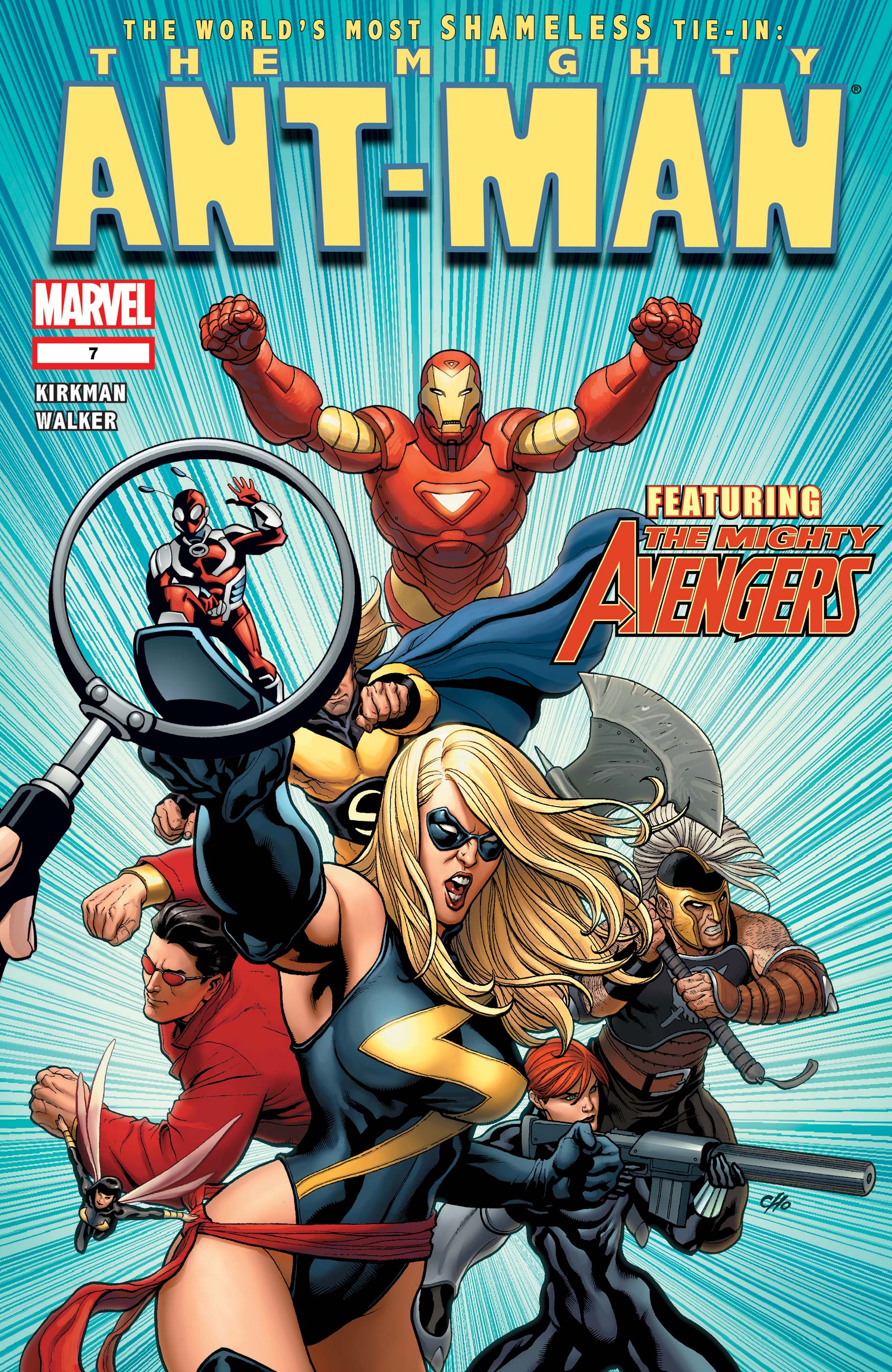
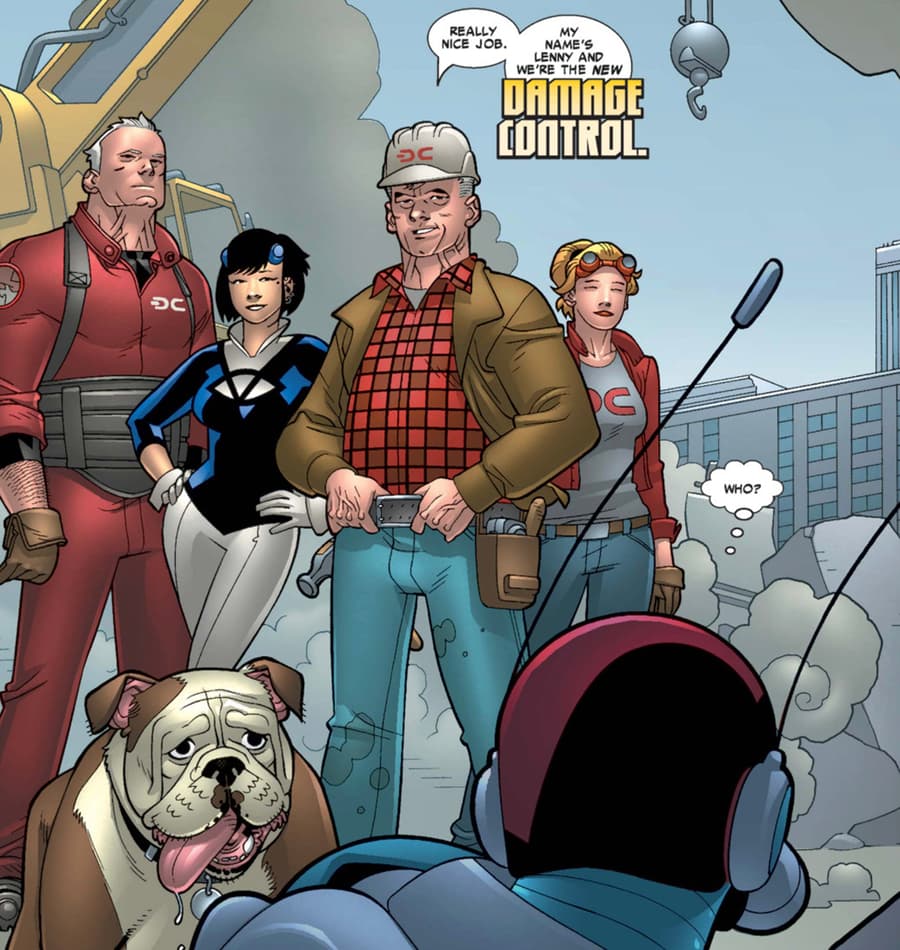
After the storm that nearly tore its identity apart, Damage Control didn’t just rebuild cities—it set out to rebuild trust. In the aftermath of Walter Declun’s removal, the company took a decisive step toward redefining what it stood for, launching a new branch focused specifically on search and rescue. This shift came into focus in The Irredeemable Ant-Man (2006) #7 by Robert Kirkman and Cory Walker, where Damage Control began to move beyond simply repairing damage and instead positioned itself on the front lines of saving lives. It was a subtle but powerful evolution. No longer just the crew that arrived after the chaos, they were now part of the immediate response—stepping into danger not just to fix what was broken, but to pull people out of the wreckage before it was too late.
This transformation didn’t happen in isolation. Around the same time, Damage Control’s partnership with S.H.I.E.L.D. grew stronger, more structured, and far more influential. What had once been a working relationship evolved into something deeper, with the company even playing a role in helping train registered heroes in the wake of the Superhuman Registration Act. It was a sign that Damage Control was no longer operating on the fringes—it had become embedded within the system itself, trusted not just to clean up after heroes, but to help shape them.
And then came one of its biggest tests.
During the events of World War Hulk (2007), when the Hulk returned to Earth with unstoppable fury and Manhattan became a battlefield, the scale of destruction reached staggering levels. Entire sections of the city were left in ruins, scarred by a conflict that felt less like a fight and more like a force of nature tearing through civilization. Once again, Damage Control was there in the aftermath, taking on the monumental task of rebuilding Manhattan from the ground up. But their work didn’t stop at reconstruction. As always, they had to deal with what others overlooked—recovering errant alien technology scattered across the wreckage, ensuring that dangerous remnants of the conflict didn’t create new threats in the future.
By this point, something had shifted.

With its reputation largely restored, Damage Control had become more than just a company—it had become an institution. A constant presence in a world defined by unpredictability. Whenever heroes and villains clashed in earth-shattering battles, you could count on Damage Control to follow, not as spectators, but as the ones who made sure the world could stand again afterward. And at the heart of it all were the people who had carried the company through its darkest moments. Veterans like Anne Marie Hoag and John Porter remained fixtures on job sites, not tucked away in offices, but out there in the field, drawing from years of hard-earned experience to guide the next generation.
Perhaps the most telling sign of their redemption, though, was something you couldn’t measure in contracts or revenue.
It was trust.
Over time, even the hero community—once wary of the company’s darker chapter—began to see Damage Control for what it had become. Heroes like Hercules and Tom Foster didn’t just work alongside them; at times, they worked for them. And that speaks volumes. Because in a universe where trust is fragile and often hard-earned, Damage Control had managed to reclaim its place—not just as the people who clean up the mess, but as a vital part of the world that keeps everything from falling apart.

The Department of Damage Control’s arrival in the Marvel Cinematic Universe feels less like an introduction and more like a consequence—something that had to exist once the world changed forever. It makes its debut in Spider-Man: Homecoming, but its roots trace back to a moment that reshaped everything—the Battle of New York in The Avengers. That battle wasn’t just a victory for Earth’s mightiest heroes; it left Manhattan scarred, broken, and buried under the wreckage of an alien invasion led by the Chitauri. In the immediate aftermath, as the dust settled and the reality of the destruction set in, private contractors rushed in to begin the massive clean-up operation. It felt like business as usual—until it wasn’t.
Because this time, the government stepped in.
The United States Department of Damage Control, newly established and backed by a powerful partnership with Stark Industries, took over the operation entirely, pushing aside those private crews and asserting control over the aftermath of superhuman conflict. It marked a turning point. The world was no longer willing to leave the consequences of these battles to chance or to independent contractors. The DODC became the official arm of the federal government tasked with handling the fallout—collecting alien technology, securing dangerous materials, and ensuring that what was left behind didn’t spiral into even greater threats. It wasn’t just about cleaning up anymore. It was about containment, oversight, and control in a world that was rapidly becoming unpredictable.
At the center of this new order was Anne Marie Hoag, who made her MCU debut in Spider-Man: Homecoming as the director of the Department of Damage Control. Calm, authoritative, and unwavering, she steps in and formally takes control of the Chitauri clean-up operation, embodying the shift from chaos to structure. But while the system was evolving, not everyone benefited from it.
For Adrian Toomes, the arrival of the DODC wasn’t progress—it was loss.
A salvage contractor who had already begun cleaning up the aftermath of the Battle of New York, Toomes suddenly found his entire operation shut down, his livelihood taken away in an instant by a system backed by someone far more powerful—Tony Stark. That frustration didn’t fade. It simmered, evolved, and eventually turned into something far more dangerous. Instead of walking away, Toomes chose a different path. He began scavenging alien technology in secret, forming his own crew and repurposing Chitauri weapons and components into advanced gear. What started as survival slowly became ambition, and ambition turned him into something else entirely—the Vulture.
Operating in the shadows, Toomes began targeting Department of Damage Control facilities themselves, seeing them not as authority, but as opportunity—stockpiles of valuable alien tech waiting to be stolen. But in a city where heroes are always watching, he didn’t go unnoticed for long. Peter Parker, still finding his footing as Spider-Man, uncovered the Vulture’s operations and ultimately stepped in to stop him, preventing a threat that had been born not from pure villainy, but from the fallout of a system that left someone behind.
And in that way, the Department of Damage Control represents something more than just an organization.
It represents a world trying to catch up with its own chaos… even if not everyone survives the transition.

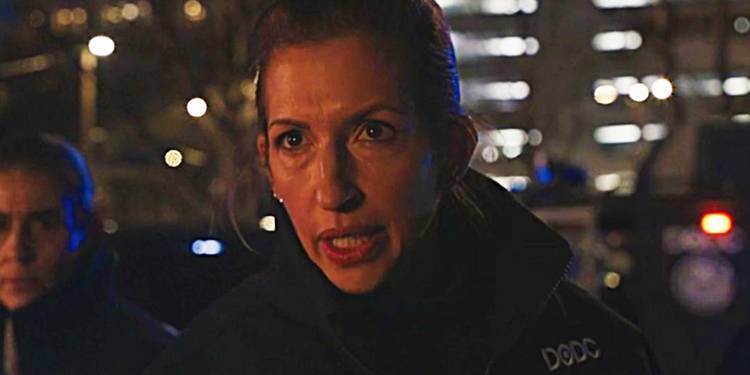
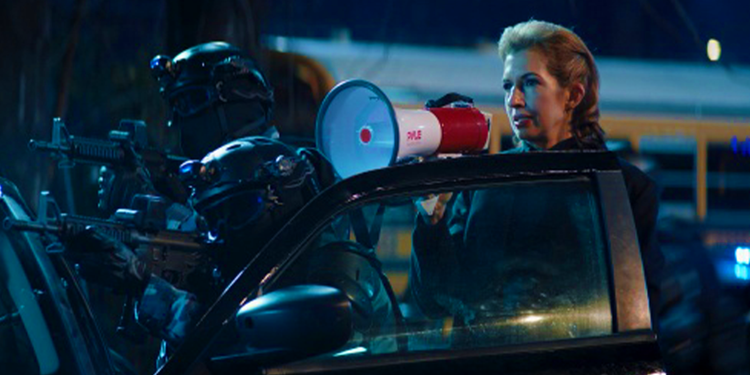
The Department of Damage Control’s evolution in the MCU doesn’t stop at clean-up and containment—it escalates into something far more controlled, far more calculated. By the time we encounter them in Ms. Marvel, the DODC has already begun shifting into a more aggressive, surveillance-driven force, one that isn’t just reacting to superhuman activity but actively hunting it down. Agent P. Cleary resurfaces here, following reports of enhanced individuals emerging in Jersey City, and almost immediately, the organization finds itself on a collision course with Kamala Khan and those connected to her. What becomes clear in this phase is that Damage Control is no longer just about managing the aftermath—it’s about preemptive control. To deal with individuals they deem dangerous, the DODC constructs a supermax prison specifically designed to contain people with super-powers, a facility built not just with reinforced walls, but with the understanding that traditional systems are no longer enough for the world they’re dealing with.

As tensions escalate, the cracks within the organization begin to show. Agent Deever, driven by urgency and perhaps a growing paranoia around superhuman threats, takes matters into her own hands. While tracking Ms. Marvel, she exceeds her authority and orders a full-scale raid on Coles Academic High School, targeting students she labels as superhuman “suspects.” It’s a moment that feels less like law enforcement and more like overreach—a line crossed in the name of control. Agent P. Cleary, who had initially been leading the investigation, opposes this escalation, and the consequences are swift. Deever is relieved of her duty for defying orders, and in the aftermath, the DODC withdraws from Jersey City entirely. It’s a rare moment where the system corrects itself, pulling back from the edge before things spiral further out of control.
But the existence of the DODC’s supermax prison reveals a larger truth—the world has changed in ways that demand new kinds of containment. This becomes even more evident when looking back at one of the MCU’s earliest superhuman threats. Following the Abomination’s destructive rampage alongside the Hulk in Harlem—a battle that left chaos in its wake—the Department of Damage Control eventually takes custody of Emil Blonsky, ensuring he remains contained for the remainder of his sentence. By the time we revisit him in She-Hulk: Attorney at Law, Blonsky is no longer just a monster locked away—he’s a man seeking redemption.
Jennifer Walters, a skilled lawyer and cousin to Bruce Banner, steps into this controlled environment to represent him, visiting the DODC’s supermax prison where Blonsky is held. The facility itself reflects everything Damage Control has become—clinical, fortified, and built to handle the extraordinary. Despite the complications surrounding his past and the weight of his actions, Walters manages to secure parole for Blonsky, presenting him not as a threat, but as someone who has genuinely changed.
And in that moment, the DODC’s role feels more complex than ever. Because it’s no longer just about locking people away. It’s about deciding who deserves to be.
And that’s the thing about Damage Control—it was never meant to stand in the spotlight. It exists in the aftermath, in the silence that follows chaos, in the spaces where broken cities begin to breathe again. From its comic book origins to its evolving authority in the MCU, Damage Control represents something grounded in a world that rarely is—responsibility. Not the kind that comes with capes and applause, but the kind that shows up when everything else has fallen apart.
Because while heroes save the world…
Damage Control makes sure there’s still a world left to live in.
And if you’re someone who lives and breathes these stories—the battles, the characters, the legacy—then it’s time to bring that universe closer to home.
Explore a massive range of collectibles featuring He-Man and the Masters of the Universe, Anime icons, Marvel legends, DC superheroes, Transformers, LEGO, and so much more, all available at up to 40% OFF. Whether you’re a collector, a fan, or someone just stepping into this world—there’s something waiting for you.
Sign up to get the latest on sales, new releases and more …