India’s Official Distributor and Retailer for Licensed Action Figures, Statues and Anime Collectibles
March 20, 2026 21 min read
There’s a certain electricity in the air when Spider-Man returns—and this time, it feels different. Not louder. Not flashier. Just… heavier. More personal.
After what feels like an eternity since Spider-Man: No Way Home shattered Peter Parker’s world into something unrecognizable, we finally have our first official glimpse at Spider-Man: Brand New Day. And honestly? It doesn’t just look like another sequel—it feels like a reset button with consequences that still sting.
Sony Pictures didn’t just drop a trailer—they orchestrated anticipation. Teases, whispers, that infamous low-resolution leak back in December that fans dissected frame by frame like it was a sacred text. And now that the real thing is here… it delivers. Quietly, confidently, and with just enough mystery to keep us leaning forward.
This isn’t a full reveal—it’s a teaser. But sometimes, a teaser says more in what it withholds than what it shows.

There’s something undeniably off about this moment—and not in a subtle, easy-to-ignore way. It feels like one of those details that quietly reshapes everything we thought we understood about the MCU’s current power structure. If you’ve been following Daredevil: Born Again, you’ll know that Wilson Fisk, now operating as New York’s Mayor, has made it his mission to vilify vigilantes, painting them as dangerous threats rather than heroes and effectively pushing them to the edges of legality. In his city, masks aren’t symbols of hope—they’re targets. Which is exactly why the moment in the Spider-Man: Brand New Day trailer, where Spider-Man is awarded the Key to the City, feels so jarring. It’s not just unexpected—it directly contradicts everything Fisk has been building.
And then there’s the detail that makes this even more intriguing. Standing there, celebrating Spider-Man’s achievements, is Sheila Rivera, played by Zabryna Guevara—a character firmly rooted within Fisk’s inner circle. She’s not some random official; she’s been portrayed as a loyal and strategic extension of his administration. So why is she publicly endorsing a vigilante in a city that’s supposedly outlawed them? The answer almost certainly points to a major shift behind the scenes. It’s entirely possible that Fisk’s grip on power has slipped—or shattered altogether. Whether through political downfall, exposure, or something far more violent, this moment could be teasing that his time as Mayor has already come to an end. In that scenario, someone like Sheila Rivera stepping into a position of authority would explain the sudden change in tone, where Spider-Man is no longer hunted but honoured, and the city itself seems to be reclaiming a sense of hope.
But there’s another, far more unsettling possibility lurking beneath the surface. What if Fisk is still in control, just not in the way we expect? This could all be part of a larger manipulation, where Spider-Man is positioned as a “safe” or “approved” vigilante—a symbol the system can control—while others, like Daredevil, remain enemies of the state. It’s exactly the kind of calculated narrative Fisk would construct, turning public perception into a weapon while tightening his grip from the shadows. Either way, this brief moment feels like more than just a ceremonial scene; it feels like a clue. A quiet hint that Daredevil: Born Again Season 2 could mark the end of Fisk’s political reign—or the beginning of something even more dangerous. Because if there’s one thing the Kingpin has always proven, it’s that he doesn’t simply lose. He evolves. And suddenly, what looks like a hopeful moment for Spider-Man starts to feel like the calm before a much darker storm.

There’s a quiet kind of heartbreak woven into this detail—one that doesn’t scream for attention, but lingers if you’re paying close enough attention. To really feel the weight of it, you have to go back to the ending of Spider-Man: No Way Home, where Doctor Strange makes the ultimate call, casting a spell that quite literally rewrites reality. In order to seal the fractures in the Multiverse, the world is forced to forget Peter Parker entirely—his name, his face, his existence. And tragically, that includes the person who mattered most to him: MJ.
When we last saw her, there was something… fragile in the air. That final café scene wasn’t just a goodbye—it was a moment suspended between memory and instinct. MJ didn’t know Peter anymore, not consciously, but there was a flicker there. A hesitation. A sense that something—someone—was missing, even if she couldn’t place it. It was subtle, almost cruel in how close it came to recognition without ever fully crossing that line.
And now, in the Spider-Man: Brand New Day trailer, that emotional thread quietly resurfaces through something small, but deeply meaningful: the necklace.
The same one Peter gave her in Spider-Man: Far From Home—a seemingly simple gift that once symbolized their growing connection—is still around her neck.
Think about that for a second.
In a world where Peter Parker has been erased from memory, that necklace should be just another object. Random. Forgettable. But it isn’t. She’s still wearing it. Holding onto it. Carrying it forward into a life where she no longer remembers why it matters.
And that’s what makes it hurt.
Because it suggests that even when memory is wiped clean, emotion doesn’t disappear so easily. Something about Peter—about what they had—still echoes beneath the surface, buried somewhere deeper than logic or explanation.
But life, as it tends to do, has moved on.

The trailer also reveals that MJ now has a new boyfriend, played by Eman Esfandi (best known for his role in Ahsoka). And just like that, the situation becomes even more complicated. Because while Peter is out there, watching from a distance, still carrying every memory they shared… MJ is building something new. Something real. Even if it’s built on a version of reality where he never existed.
And that’s the cruel beauty of it.
Peter didn’t just lose MJ—he chose to let her go, believing that a life without him might be safer for her. But moments like this—something as small as a necklace still resting against her collarbone—remind us that their story isn’t as easily erased as the spell might suggest.
It’s still there.
Not in her mind.
…but somewhere deeper, where even magic struggles to reach.

As the trailer unfolds, we see Spider-Man locked into a high-speed pursuit, chasing down that heavily armored tank that fans had already spotted in earlier set leaks. It’s the kind of spectacle you expect—web-swinging precision, quick thinking, Peter doing everything he can to control a situation that’s rapidly spiraling. But then, cutting through the noise like a bullet, comes someone who doesn’t believe in control at all.
Enter The Punisher.

Frank Castle doesn’t swing into the scene—he storms into it, roaring down the streets in his battle van like a one-man war machine. Where Peter calculates, Frank reacts. Where Spider-Man pulls punches, the Punisher doesn’t believe in holding back at all. And that clash of ideologies becomes immediately clear. Peter isn’t just focused on stopping the tank—he’s actively trying to rein Frank in, even going as far as physically removing him from the chase at one point. There’s even a brief, almost darkly comedic beat where Spider-Man cuts him off mid-sentence to stop an F-bomb from slipping through, a small reminder that despite everything he’s been through, Peter is still trying to hold onto a sense of restraint… of decency.
But beneath the friction, there’s something else simmering.

Because as chaotic as their dynamic is, it doesn’t feel entirely oppositional. There’s a strange, unspoken rhythm to it—like two completely different philosophies colliding, yet somehow managing to move in the same direction. It hints at something deeper than just conflict. Something closer to a reluctant partnership.

In the comics, Spider-Man and the Punisher have crossed paths many times, often starting as adversaries before being forced into uneasy alliances when circumstances demand it. Frank represents a version of justice that Peter could become if he ever let go of his moral line—a path defined by loss, anger, and finality. And maybe that’s why this interaction feels so charged. Because for Peter, especially after the events of Spider-Man: No Way Home, the temptation to become something harder… something less forgiving… is probably stronger than ever.
And yet, you can already sense where this is heading.
Peter won’t adopt Frank’s methods. He can’t. That line—the one that separates him from people like the Punisher—is the very thing that defines who Spider-Man is. But that doesn’t mean he won’t learn from him. Because sometimes, understanding darkness is the only way to choose not to become it.
And that’s what makes this pairing so exciting.
Not just the action, not just the sheer spectacle of seeing them fight side by side—but the tension. The philosophy. The constant push and pull between two men who want the same outcome… but are willing to go to very different lengths to get there.

For the first time in a long time, it feels like Peter Parker isn’t just dealing with emotional fallout—something deeper is shifting. Something physical. And that’s where things start to get a little unsettling.
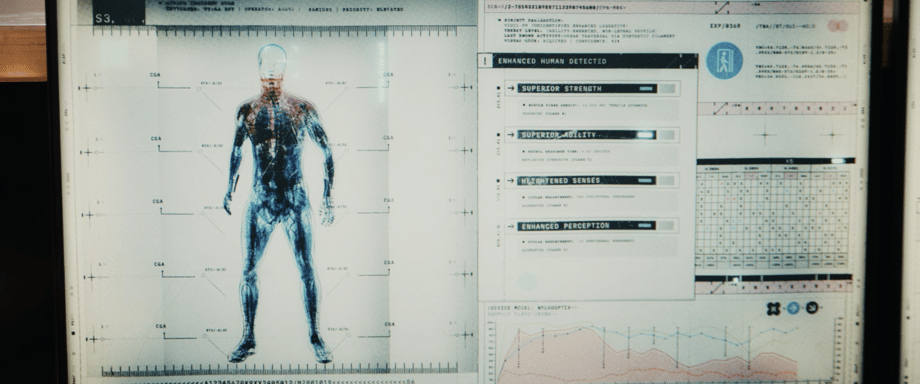
We already know where Peter stands emotionally after Spider-Man: No Way Home. He’s alone. Completely cut off from the people who once defined his world—his best friend, his girlfriend, his entire support system. But Spider-Man: Brand New Day hints that what he’s going through might go beyond heartbreak. There’s a moment in the trailer that’s easy to overlook if you’re caught up in the spectacle—a full-body scan being conducted on Peter.
And that single image raises a lot of questions.
Because going into this, many assumed Spider-Man would be at odds with the Department of Damage Control. After all, the DODC has been steadily evolving into a more controlling, surveillance-heavy force within the MCU, especially after their aggressive presence in Ms. Marvel. They’re not exactly known for being friendly toward enhanced individuals operating outside the law. But here, the dynamic feels… different.
Peter isn’t running from them.
He’s working with them.
And that changes everything.
The scan itself suggests cooperation, not capture. It implies that whatever is happening to Peter—whatever these “changes” are—might be serious enough for him to seek help from an organization he wouldn’t normally trust. And if you look even closer at the screen, there’s a name that quietly opens up an entirely new layer of speculation: Agent Ramirez.
Now, that’s not a random addition.
In Marvel Comics, a character named Ramirez was tied to the X-Desk, a covert CIA unit specifically created to monitor and control mutant activity. That’s a huge piece of lore to casually slip into a Spider-Man film. Because if the MCU is pulling from that thread, it suggests something much bigger is forming in the background—something tied to mutants.
And suddenly, all the dots start to connect.
There have already been strong rumors and fan theories surrounding Sadie Sink potentially stepping into the role of Jean Grey—one of the most powerful mutants in Marvel history, famously linked to the Phoenix Force. If that turns out to be true, then the idea of the DODC expanding its operations to include a specialized task force for mutants doesn’t just make sense—it feels inevitable. Especially when you consider that the MCU has been slowly laying the groundwork for mutantkind ever since WandaVision and Doctor Strange in the Multiverse of Madness began bending the rules of reality.
Even characters like Wonder Man—who straddle the line between superhuman and something more complex—could fall under that kind of surveillance.
So where does that leave Peter?
Right in the middle of something far bigger than himself.
If his body is changing, if the DODC is involved, and if mutant-related infrastructure is quietly being introduced, then Peter might not just be dealing with the consequences of his past—he could be stepping into the opening chapter of the MCU’s mutant era.
And that’s what makes this moment so compelling.
Because for once, the question isn’t just “What is Spider-Man going to do next?”
It’s “What is Spider-Man becoming?”

This is the kind of detail that doesn’t demand your attention—it earns it quietly, almost like it’s waiting for you to notice. In the Spider-Man: Brand New Day trailer, there’s a fleeting glimpse of Bruce Banner, and at first, everything about it feels almost… calm. He’s no longer in the middle of a battlefield or buried inside a lab trying to outrun his own creation. Instead, he’s standing in a classroom at Empire State University, stepping into the role of a teacher—a man who’s finally found a way to contribute without destruction following close behind. It feels like growth. Like peace. But then your eyes catch it—a small, glowing device wrapped around his hand—and suddenly, that sense of calm starts to feel a little fragile.
Because if you think about where Bruce left off in Avengers: Endgame, this doesn’t quite add up. That version of him—the so-called Smart Hulk—was balance personified. It was the resolution to a years-long internal war, where intellect and strength finally learned to coexist. And even later, in She-Hulk: Attorney at Law, he seemed stable, self-aware, almost comfortable in his own skin in a way we’d never seen before. There was no sense of struggle, no hint that the monster inside him was clawing its way back to the surface. Which is exactly why this new detail feels so loaded, because if everything was truly under control, there shouldn’t be a need for control at all.
That device doesn’t feel like an accessory—it feels like a safeguard. Something designed to regulate, suppress, maybe even contain. And that opens up a much bigger question than the trailer is willing to answer outright: what changed? Because something clearly did. Maybe the Smart Hulk state wasn’t as permanent as we believed, or maybe it was always a temporary solution—an uneasy truce rather than a true fusion. If that balance has started to crack, then Bruce might be slipping back into a place he knows all too well, where control isn’t internal anymore, but something he has to enforce externally.
And if that’s the case, then what he’s holding back isn’t just the Hulk—it’s the version of the Hulk that doesn’t listen. The one that doesn’t reason. The one that reacts purely on instinct and emotion. The Savage Hulk. The kind of force that doesn’t just win fights—it overwhelms entire environments. In the comics, whenever Bruce loses that grip, it never stays contained for long. Cities become battlegrounds, and people become collateral. Now place that possibility right in the middle of New York, in a story that already feels more grounded, more personal, more exposed than anything Peter Parker has dealt with before, and suddenly this tiny glowing device starts to feel like a ticking clock rather than a piece of tech.
Because if Bruce needs something like that to stay in control, then it also means that control isn’t guaranteed. And if it fails—even for a moment—Spider-Man won’t just be facing another villain. He’ll be standing in front of something far more unpredictable. Not an enemy with a plan, but a force of nature that used to be an Avenger… and might not be anymore.

There’s a haunting quality to this reveal—one that lingers a little longer than the action, a little deeper than the spectacle. For a brief moment in the Spider-Man: Brand New Day trailer, we see a young woman who doesn’t just look out of place… she looks like she’s been forgotten. And if you’ve been following the set leaks, it’s almost impossible to miss the connection—this is very likely Sadie Sink’s character, wearing the exact same outfit she was spotted in during filming. But what really stands out isn’t who she is—it’s what’s been done to her.
She’s been held. For a long time.
There’s a stillness to her presence that doesn’t feel natural, like someone who hasn’t seen the outside world in far too long. And all signs seem to point toward the Department of Damage Control as the ones responsible. The same organization that’s been slowly tightening its grip across the MCU, evolving from cleanup crews into something far more authoritative—more controlling. If they’re detaining individuals like her, it suggests they’re not just reacting to superhuman activity anymore… they’re preemptively containing it.
And then there’s what she can do.
The trailer strongly hints that she’s not just a prisoner—she’s powerful. There are subtle cues suggesting that she may be using her mind to jump between different perspectives, possibly even inhabiting or influencing others, like the elderly tank driver and the DODC agents themselves. It’s not presented loudly, but it’s there if you’re looking for it. And if that’s true, then we’re not just dealing with enhanced strength or agility—we’re looking at something far more invasive. Telepathy. Mind control. Consciousness shifting.
Which brings us to the biggest question of all:
Who is she?
The most obvious answer—and the one fans have latched onto—is Jean Grey. It makes sense. Jean is one of the most powerful telepaths in Marvel lore, often associated with the Phoenix Force, a cosmic entity tied to destruction and rebirth. With the MCU slowly building toward the introduction of mutants, bringing her in through a story like this wouldn’t just be bold—it would be monumental. And having the DODC detain someone like Jean would align perfectly with the idea of governments fearing and controlling mutant abilities before they fully understand them.
But at the same time… it almost feels too obvious.
Marvel has a history of misdirection, and this could very well be one of those cases where they’re letting us believe we’ve figured it out—only to pull the rug out from under us later. Because the way she’s being held, the secrecy around her, even the tone of her scenes… it all feels eerily similar to the origin of Silk (Cindy Moon). In the comics, Cindy Moon was bitten by the same radioactive spider as Peter and then locked away for years to protect the world—and herself—from what she could become. Isolation, experimentation, control—it’s all there.
And then there’s an even stranger possibility.
What if she isn’t one character—but a fusion of several?
The MCU has done it before, blending traits, origins, and mythologies to create something new. There are faint echoes here of characters like Shathra, a mystical spider-totem tied to darker, more primal forces, and the Spider-Queen, who once played a key role in altering Spider-Man’s biology, pushing his powers into something far more monstrous—transforming him into the Man-Spider. If Brand New Day is leaning into themes of evolution and change, then pulling from these mythologies wouldn’t just be creative—it would be thematically perfect.
And suddenly, Sadie Sink’s character stops being just a mystery…
…and starts feeling like the key to something much bigger.
Not just a new hero. Not just a hidden threat.
But possibly the beginning of an entirely new chapter for the MCU—one where power isn’t just discovered…
it’s contained.

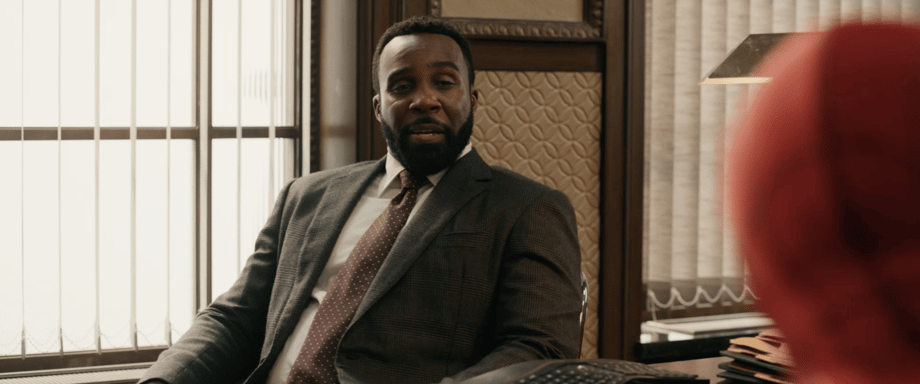
There’s a certain authority in this moment—calm on the surface, but carrying the weight of something far more unsettling underneath. The trailer introduces us to a character who doesn’t just feel important… he feels like the kind of man who knows more than he’s saying. Tramell Tillman, best known for his quietly intense presence in Severance, is widely reported to be playing William Metzger, the Director of the Department of Damage Control. And in this brief but loaded appearance, he delivers a line that lingers long after it’s spoken—a warning about a “danger we can’t control… one we can’t even see.”
It’s the kind of line that doesn’t just set stakes—it reframes the entire narrative.
Because it doesn’t point toward something loud or destructive. It points toward something invisible. Something psychological. Something that aligns almost perfectly with what we’ve already begun to suspect about Sadie Sink’s mysterious character—someone whose abilities might not just affect the physical world, but slip into the mind itself. Telepathy. Influence. The kind of power that doesn’t leave a visible trail, but can quietly reshape reality from the inside out. And if that’s what Metzger is referring to, then the fear in his words suddenly makes a lot more sense. You can’t fight what you can’t see. You can’t stop what you can’t even detect.
What makes this even more interesting, though, is the dynamic that’s forming around it.
Because against all expectations, the Department of Damage Control doesn’t seem to be positioned as Spider-Man’s enemy—at least not at first. In fact, the trailer hints at something almost unthinkable given their history: cooperation. Spider-Man, once viewed with suspicion and treated as a liability, now appears to be working alongside them. And perhaps even more surprising is how the public seems to have embraced him. After everything—the destruction, the controversies, the fallout of Spider-Man: No Way Home—New York seems to be looking at Spider-Man not as a menace, but as a hero again.
But if there’s one thing the MCU has consistently shown, it’s that institutions like this rarely stay on the right side of things for long.
Because the more you listen to Metzger, the more it starts to feel like this partnership isn’t built on trust—it’s built on necessity. And those two things are never the same. The DODC isn’t helping Spider-Man out of goodwill; they’re responding to something they don’t understand, something they can’t control, and they need someone like Peter to act as a bridge between their world and whatever this new threat is.
Which raises the inevitable question:
What happens when they decide Spider-Man is no longer useful?
Because if the DODC is already dealing with unseen, uncontrollable powers—powers that may very well tie into the emergence of mutants—then it’s not hard to imagine where this is heading. In the comics, organizations like this often evolve into something far more aggressive, shifting from containment to control, from observation to enforcement. And if the MCU is laying the groundwork for the arrival of the X-Men, then the idea of a government-backed agency positioning itself as a watchdog over mutantkind doesn’t just fit—it feels inevitable.
That’s where this starts to feel less like a partnership… and more like the beginning of a conflict.
Because sooner or later, Peter Parker is going to see through it. He always does. And when he realizes that the people he’s working with might actually be part of a much bigger problem, the line between ally and enemy is going to blur very quickly.
And when it does, the Department of Damage Control won’t just be a supporting player in this story.
It might become one of the MCU’s most dangerous threats moving forward.
This is where the trailer really leans into its comic book DNA—loud, stylish, and packed with the kind of deep-cut references that feel like a love letter to long-time fans. But beyond the visual flair, there’s something else happening here. A shift. A clear signal that Spider-Man’s world is about to get a lot more crowded… and a lot more dangerous.


Three major villains step into the spotlight, each pulled straight from the pages of Marvel Comics, and each carrying a very different kind of threat. The most immediately striking return is Michael Mando, reprising his role as Mac Gargan, a character we last saw teased all the way back in Spider-Man: Homecoming. Back then, he was just a man with a grudge and a promise of something more. Now, that promise is finally paying off. Gargan has suited up as Scorpion (Mac Gargan), and even though the trailer holds back on fully revealing his mask, what we do see is more than enough to sell the transformation. That mechanical tail alone looks brutal—heavy, precise, and built for destruction. In the comics, Scorpion was created through an experiment meant to rival Spider-Man’s abilities, often pushing Gargan into a more unstable, aggressive state, and if the MCU leans into that, Peter might be facing someone who isn’t just physically dangerous, but psychologically unhinged.
But the surprises don’t stop there.
The trailer also introduces two more villains making their MCU debut, and it does so in a way that feels incredibly intentional. Tarantula and Boomerang (Fred Myers) aren’t just thrown into the mix—they’re framed through stunning recreations of iconic comic book imagery. Long-time readers will immediately recognize the visual nods to The Amazing Spider-Man #134 and The Amazing Spider-Man #345, with shots that feel almost panel-for-panel in their composition. It’s the kind of detail that doesn’t just reward comic fans—it pulls the source material directly into the cinematic space, blurring the line between page and screen.
And then there’s a quieter, almost poetic reference layered beneath it all.
A visual homage to Amazing Fantasy #15—the comic where Spider-Man first swung into existence back in 1962. It’s not loud or overly highlighted, but it’s there, woven into the fabric of the trailer as a reminder of where it all began. And placing that reference alongside the introduction of multiple villains feels deliberate, almost symbolic. It’s like the film is circling back to Spider-Man’s roots while simultaneously expanding his world in ways we haven’t fully seen before.
Because this isn’t just about one villain anymore.
It’s about a rogues’ gallery taking shape.
And if this trailer is anything to go by, Spider-Man: Brand New Day isn’t just setting up conflicts—it’s building a battlefield where Peter Parker will be tested from every angle. Physically, mentally, and emotionally.
There’s a different kind of danger creeping through this trailer—not loud, not chaotic, but precise… and ancient. The kind of threat that doesn’t need to announce itself because its reputation does that for it. And right there, woven into multiple moments, is the unmistakable presence of The Hand.

What makes this so intriguing isn’t just who they are—it’s where they’re showing up. We see them first in a prison sequence, a setting that already feels tense, grounded, and claustrophobic. And right in the middle of it is Spider-Man—unmasked, exposed, vulnerable in a way we rarely see him. It’s the kind of image that immediately raises questions. How did he end up there? Who put him there? And more importantly… why are The Hand involved?

Then the trailer shifts gears, and suddenly we’re high above the streets of New York, in a sequence that feels faster, sharper, more chaotic. And there they are again—moving through the skyline like shadows, engaging Spider-Man in a fight that feels as dangerous as it is deliberate. It’s not random. It’s coordinated. Which tells you everything you need to know about what kind of threat they represent.
Because The Hand, in Marvel lore, aren’t just another group of enemies. They’re an ancient, secretive ninja clan with deep ties to mysticism, resurrection, and organized crime. In past appearances—especially in the world of Daredevil—they’ve been depicted as relentless, almost myth-like in their persistence. They don’t just fight… they endure. And sometimes, they come back.
But here’s where things take an interesting turn.
They’re evolving.
Alongside their traditional katanas—those iconic blades that define their identity—they’re now wielding advanced energy weapons. That’s not just an aesthetic upgrade. That’s a statement. It suggests that whoever is backing them, or leading them now, has resources. Technology. Influence. This isn’t the old Hand operating in the shadows—this is something more modern, more dangerous, and possibly more organized than we’ve seen before.
And that naturally leads to the bigger question:
Who’s behind it?
Because groups like The Hand don’t just level up on their own. Someone is pulling the strings. Someone with enough power to merge ancient mysticism with cutting-edge tech and deploy it right in the heart of New York City. And if you start looking at the kind of figures who operate in that space—crime bosses with reach, influence, and a taste for control—one name starts to stand out: Tombstone (Lonnie Lincoln).
In the comics, Tombstone is a calculating, physically imposing crime lord who thrives in the underworld’s power vacuum. He’s not flashy, not theatrical—but he’s effective. And placing someone like him at the center of a reimagined Hand would make a lot of sense. It grounds their mystical roots in something more structured, more strategic—turning them into not just assassins, but assets.
And then there’s the ripple effect this could have.
Because it’s almost impossible to see The Hand operating at this scale and not think about what it means for Daredevil: Born Again. If they’re back, stronger and more advanced than ever, then this doesn’t just stay contained within Spider-Man’s story. It spills over. It expands. It sets the stage for something much bigger—something that could easily carry into a potential third season and beyond.
There’s something almost poetic about the way this trailer chooses to end—quiet, eerie, and filled with a kind of meaning that doesn’t fully reveal itself right away. A voice cuts through the visuals, calm but heavy with implication: “Spiders have three life cycles. When between cycles, it can leave the spider vulnerable to threats. And for those spiders who make it through… it amounts to a kind of rebirth.” It’s the kind of line that feels less like exposition and more like a warning. And while the trailer doesn’t explicitly confirm who’s speaking, it strongly points toward either New York’s rising “Kingpin,” Tombstone (Lonnie Lincoln), or the unmistakable voice of Keith David—both of whom bring a certain gravitas that makes the message land even harder.

Because this isn’t just about symbolism.
It’s about change.
Everything we see in those final moments suggests that Spider-Man isn’t just growing—he’s evolving. And not in the clean, heroic way we’re used to. There’s something more primal happening here. The organic webbing alone is a huge departure from the tech-based shooters Peter has relied on in the MCU so far, hinting at a deeper biological shift. Then there’s the cocoon imagery—brief, unsettling, and loaded with meaning. In nature, a cocoon isn’t just protection. It’s transformation. A liminal state where something breaks down completely before becoming something new.
And then come the eyes.

Those closing shots—sharp, almost alien, more spider than man—feel like the final piece of the puzzle. This isn’t just an upgrade. It’s a metamorphosis. And unless this is all some kind of illusion—perhaps influenced by Jean Grey or another telepathic force—it really does look like the film is setting Peter on a path toward something far more extreme.
The Man-Spider.

In Marvel Comics, the Man-Spider isn’t just a power boost—it’s a loss of control. A transformation where Peter’s humanity takes a backseat to something more instinctual, more animalistic. It’s body horror wrapped in superhero mythology, and it’s rarely a place Peter goes willingly. But thematically? It fits perfectly with where his story is right now. After losing everything at the end of Spider-Man: No Way Home, Peter is already in a kind of emotional cocoon—isolated, vulnerable, stripped down to his core. Pushing that into a physical transformation feels like a natural, if terrifying, next step.
And this is where things start to feel bigger than just a Spider-Man story.
Because if Spider-Man: Brand New Day is leaning into this kind of evolution—this blend of science, mutation, and something almost mystical—then it suggests a tonal shift for the MCU itself. One that edges closer to the supernatural and the metaphysical. That idea isn’t new to Spider-Man fans, either. Comic runs like Spider-Man: Coming Home and Spider-Man: The Other, both written by J. Michael Straczynski, explored the idea of Spider-Man as more than just a science experiment—tying his powers to ancient, almost spiritual forces connected to the idea of the “Spider-Totem.”
If the film is pulling even a fraction of inspiration from those stories, then this “rebirth” isn’t just physical.
At its core, Spider-Man: Brand New Day doesn’t feel like just another chapter—it feels like a turning point. This trailer isn’t simply teasing action or spectacle; it’s quietly setting the stage for a version of Spider-Man we’ve never truly seen before. One shaped by loss, isolation, and something far more unpredictable… evolution.
From shadowy organizations like the Department of Damage Control tightening their grip, to the eerie emergence of The Hand, to the psychological and physical transformation Peter may be undergoing—everything here points toward a story that’s darker, more intimate, and far more dangerous than anything that’s come before. And with threads potentially tying into Daredevil: Born Again, the arrival of mutants, and the rise of a new criminal power structure in New York, this isn’t just a Spider-Man story anymore—it’s the beginning of something much bigger.
But what truly makes this moment special is the idea of rebirth. Not the kind that erases the past, but the kind that’s forged from it. Peter Parker isn’t starting over—he’s carrying everything he’s lost into something new. Something sharper. Something stronger. And maybe… something a little more dangerous.
And if this breakdown got your Spidey-senses tingling, it’s the perfect time to level up your own collection. Dive into a massive range of collectibles featuring He-Man and the Masters of the Universe, Anime, Marvel, DC, Transformers, LEGO, and more—all available at up to 40% OFF. Whether you’re a seasoned collector or just getting started, there’s never been a better moment to bring your favourite heroes (and villains) home.
Sign up to get the latest on sales, new releases and more …