


Must-Read Supergirl Comics: From Origins to Woman of Tomorrow
upergirl has long stepped out of Superman’s shadow—offering stories that are just as fun, just as powerful, and often just as emotionally compelling as anything found in Metropolis. From lighthearted team-ups to character-defining epics, Kara Zor-El brings a versatility that few heroes can match.
Classic stories like “Batman/Superman: World’s Finest” highlight her playful energy and effortless chemistry with DC’s biggest icons, while arcs such as “Red Daughter of Krypton” explore deeper themes of anger, loss, and the struggle to find her place in the universe. It’s this balance—between charm and complexity—that has allowed Supergirl to resonate with readers generation after generation.
Despite Superman’s decades-long head start, Supergirl has carved out a powerful identity within DC’s mythology. She’s not just one of the publisher’s most iconic women—she’s one of its most celebrated heroes overall. Her best comic runs showcase exactly why: they’re bold, heartfelt, adventurous, and often unforgettable.
Here’s a look at some of the essential Supergirl stories that truly capture what makes Kara Zor-El shine.
Batman/Superman: World’s Finest #12
by Mark Waid and Emanuela Lupacchino

While many entries on this list highlight Supergirl’s most defining or influential stories, World’s Finest #12 earns its spot for a different reason: it captures the pure fun that has always been a part of Kara’s charm. After years of heavier, more emotional arcs, this issue serves as a refreshing reminder of Supergirl’s lighthearted roots — and it does the same for a young, pre-Nightwing Dick Grayson.
Set as a standalone chapter within the already delightful Batman/Superman: World’s Finest series, this issue steps away from the usual chaos surrounding Batman and Superman to shine a spotlight on their protégés. The result is a wonderfully chaotic “first date” between Robin and Supergirl, where everything that can go wrong… absolutely does.
From awkward moments to unexpected interruptions, each beat of the story leans into the humor and innocence of two teen heroes trying to navigate something as simple — and as stressful — as a date. And with every stumble, fans get a clearer understanding of why modern-day Supergirl isn’t exactly Nightwing’s biggest fan.
It’s charming, messy, and irresistibly fun — the kind of story that reminds readers why Supergirl’s lighter adventures are just as memorable as her most dramatic ones.
Elseworld’s Finest: Supergirl & Batgirl
by Barbara Kesel, Matt Haley, and Tom Simmons

This story may not sit within official DC continuity, but Elseworld’s Finest more than earns its place on any Supergirl recommendation list. Even in an alternate universe, there’s something undeniably enjoyable about seeing Supergirl and Batgirl share the spotlight. Honestly, no matter the timeline or reality, these two deserve an ongoing series together — their chemistry is simply too good to waste.
In this particular Elseworld, the traditional dynamics are flipped: there is no Superman or Batman. Instead, Supergirl and Batgirl stand as the premier heroes of their world, each with origin stories that cleverly echo those of their male counterparts. It’s a fresh angle that lets both characters shine in new ways while still feeling familiar.
What makes this story even more interesting is that the usual instant bond between Kara and Barbara is replaced by a more conflicted start. Much like Superman and Batman’s early partnership, their initial clash creates tension and sets the stage for real growth. But as the story unfolds, the two work through their differences and evolve into this universe’s ultimate heroic duo.
Alternate universe or not, Elseworld’s Finest shows just how effortlessly Supergirl and Batgirl can carry a story — and why fans continue to wish for a long-term series centered on the two.
Superman/Batman: Supergirl from Krypton
Superman/Batman #8–13 by Jeph Loeb and Michael Turner
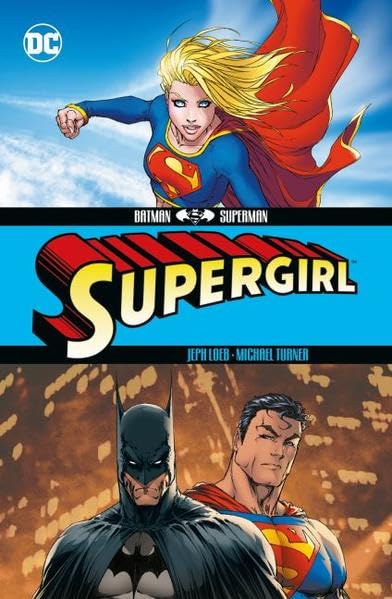
Supergirl has a history of effortlessly stealing scenes, even in stories where the spotlight technically belongs to others — and Superman/Batman: Supergirl from Krypton is a perfect example. Despite the title centering on Superman and Batman, it’s Kara who brings the emotional spark and undeniable charm that lifts the entire arc.
This storyline holds special significance: it marks the first major reintroduction of Supergirl into DC canon since her death in Crisis on Infinite Earths. And what an entrance it is. When a mysterious Kryptonian spacecraft crash-lands in Gotham, Batman discovers a frightened, incredibly powerful teenage girl emerging from the wreckage — the moment fans meet Supergirl once again.
A trip to the Fortress of Solitude confirms the truth: she is Kara Zor-El, Kal-El’s long-lost cousin, meaning Superman is no longer the final survivor of Krypton. From there, the story follows Kara’s struggle to adapt to a world that feels alien to her, while both cousins try to understand where she fits in a universe already shaped by heroes.
But in the background, another force is watching — Darkseid — whose interest in Kara adds a dangerous edge to her arrival. His looming presence raises the stakes, turning what begins as a hopeful discovery into a tense, high-stakes battle for control of her destiny.
Equal parts heartfelt, action-packed, and visually stunning thanks to Michael Turner’s art, this arc cements her as one of DC’s most compelling characters from the moment she arrives.
“Crucible”
Supergirl #36–40 by Kate Perkins, Mike Johnson, and Emanuela Lupacchino

“Crucible” brings the final chapter of Supergirl’s New 52 era, following her standout run as a Red Lantern and setting the stage for a new direction in her story. The New 52 series did an impressive job redefining Kara for a modern audience, so its finale needed to feel meaningful — and for many readers, “Crucible” absolutely hits the mark.
This arc takes Kara to the Crucible Academy, an interstellar training ground designed to shape the next generation of heroes. For Supergirl, it’s an opportunity to finally step into the role she’s been striving toward — but, as always, things aren’t quite what they appear. The academy holds secrets of its own, and Kara quickly finds herself navigating both personal growth and a brewing conflict beneath the surface.
“Crucible” also ties up several emotional threads from earlier storylines, including a heartfelt moment where she and Superman repair their relationship — a necessary step after the tensions explored in previous arcs.
Although the New 52 era comes to an end after this run, “Crucible” acts as a natural handoff. Its themes and character work flow directly into the beginning of Supergirl’s Rebirth era, making it a bridge toward the next evolution of Kara Zor-El.
For fans who followed her journey through the New 52, “Crucible” is a satisfying, hopeful, and fitting crescendo.
The Hunt for Reactron
Action Comics #881–882 + Supergirl #45–46 by creators including Greg Rucka, Sterling Gates, and Jamal Igle

Being part of the Superman Family often means sharing villains, and it’s true that many of Kara’s enemies overlap with those of her cousin, Superman. That makes it rare to find a rogue who feels uniquely tied to her story. But one villain absolutely belongs in Supergirl’s corner of the DC Universe — Reactron.
Reactron’s obsession with Supergirl takes center stage in this arc, pushing his hatred to its most dangerous extreme. The storyline kicks off when Supergirl, along with Flamebird and Nightwing (not Dick Grayson), becomes the target of a global manhunt. They’re framed for the murder of Mon-El, and suspicion spreads quickly across the world.
Determined to uncover the truth, Supergirl launches her own investigation — convinced Reactron is at the center of the setup. But as she digs deeper, the conspiracy surrounding Mon-El’s death twists in unexpected directions, revealing layers of manipulation and danger that even she didn’t anticipate.
“The Hunt for Reactron” stands out not just as a gripping chase story, but as a showcase of one of Supergirl’s true personal villains — someone whose vendetta is aimed at her and no one else. It’s tense, emotional, and full of surprising turns that keep readers hooked from start to finish.
“Red Daughter of Krypton”
Supergirl #26–33 by Tony Bedard & Yıldıray Çınar, and Red Lanterns #30–34
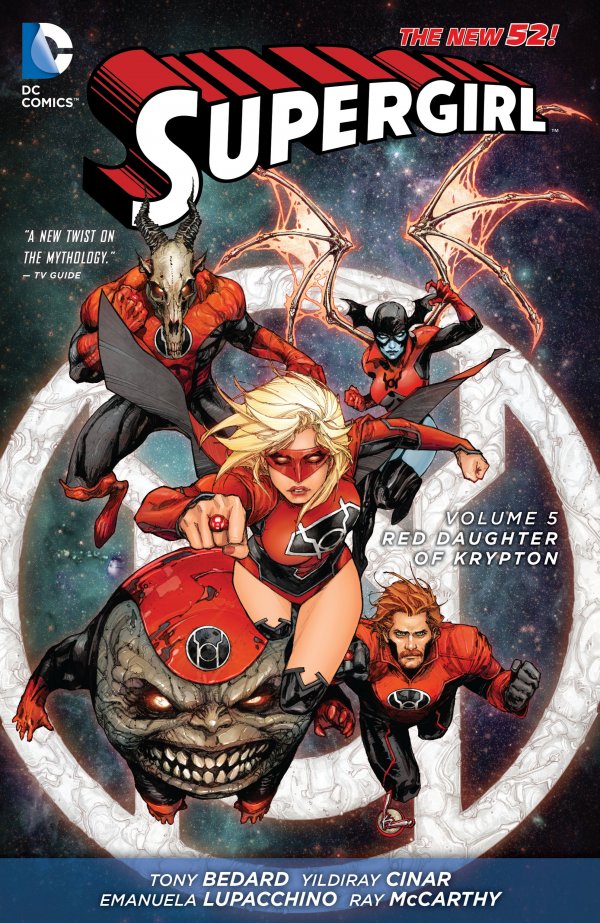
When Supergirl entered the New 52 era, several storylines helped redefine her character for a new generation — but few made an impact as bold as “Red Daughter of Krypton.” This arc stands out for its powerful exploration of anger, isolation, and emotional burnout, showing Kara at one of the most turbulent points in her life.
After surviving intense confrontations with H'el, Cyborg Superman, Lobo, and even clashing with Superman himself, Kara reaches a breaking point. Her pain and frustration become so overwhelming that the Red Lantern Ring, drawn to unrestrained rage, chooses her as its new wielder — transforming her into something far more volatile than fans have ever seen.
Unable to remove the ring without dying, Kara reluctantly embraces her new identity among the Red Lanterns. What follows is a gripping evolution: a Supergirl who is fierce, wounded, and brutally honest — a stark contrast to the optimistic, bright-hearted teen of the Silver Age.
For longtime fans, this arc is fascinating precisely because it pushes Kara into territory she’s rarely explored. It shifts her relationships, challenges her sense of self, and forces her to confront emotions she’s buried for far too long.
Supergirl: Escape from the Phantom Zone
Batgirl Annual #1 + Supergirl #9–11 — by Steve Orlando, Hope Larson, Inaki Miranda, Brian Ching, and more

Steve Orlando’s run on Supergirl is filled with standout moments, but if there’s one arc that truly captures the heart and excitement of his era, it’s “Escape from the Phantom Zone.” This storyline begins when Kara encounters a mysterious woman holding the key to the Phantom Zone — a discovery that pulls her into an unexpected, high-stakes adventure alongside a fellow hero she’s meeting for the first time: Batgirl.
For fans who grew up watching Supergirl and Batgirl together in the DCAU, this arc feels like a long-awaited reunion. While their animated chemistry became iconic, modern comics rarely pair them together, making this team-up feel especially refreshing. Kara and Barbara’s dynamic shines here — balancing sharp wit, heartfelt moments, and the kind of teamwork that instantly makes you wish they had a dedicated ongoing series.
The arc blends cosmic danger with grounded character interactions, sending the duo into one of DC’s most iconic and haunting realms: the Phantom Zone. Their mission pushes both heroes outside their comfort zones while giving readers the thrill of watching two fan-favorite characters form a bond on the page for the first time.
“Escape from the Phantom Zone” is more than a fun adventure —
it’s the kind of crossover that celebrates the legacy of both heroes and delivers a team-up fans had been hoping to see for years.
Supergirl: Being Super
by Mariko Tamaki and Joëlle Jones

For modern Supergirl fans who want a true coming-of-age story without having to dig back through decades of continuity, Supergirl: Being Super is the perfect starting point. Written by Mariko Tamaki and illustrated by Joëlle Jones, this reimagined origin presents Kara’s early life through a contemporary lens — giving new readers a grounded, relatable entry into her story.
Set firmly in the modern world, the series follows Kara as she begins to uncover her powers while juggling the struggles of teenage life. School drama, confusing physical changes, shifting friendships, and moments of overwhelming emotion all shape her journey — but with a Kryptonian twist. Yes, even something as simple as acne becomes a full-blown crisis when you’re built like the Girl of Steel.
Being Super captures the heart of what makes Kara Zor-El so compelling: her kindness, her uncertainty, her strength, and her resilience. It’s intimate without losing its superhero scale, and heartfelt without becoming overly sentimental. For any reader looking to understand Supergirl beyond the cape — to see the person before the hero — this is essential reading.
Supergirl: The Last Daughter of Krypton
Supergirl #1–7 by Michael Green, Mike Johnson, and Mahmud Asrar

The Last Daughter of Krypton marks the beginning of the New 52 era for Supergirl, a period in DC Comics history that may have sparked mixed opinions but undeniably left a lasting mark on its modern continuity. Love it or criticize it, the New 52 reshaped the foundation of many heroes — and Supergirl’s revamped origin is one of its most enduring contributions.
Written by Michael Green and Mike Johnson, with dynamic artwork by Mahmud Asrar, this opening arc reintroduces Kara with a tone that’s both fresh and emotionally grounded. At a time when her personality still carried a youthful spark, this storyline brought a more mature, introspective approach to her character — one that explored her trauma, her confusion, and her determination without sacrificing the optimism that defined her early years.
It’s difficult to imagine many of Supergirl’s current portrayals — including her acclaimed Woman of Tomorrow era — without the groundwork laid here. The Last Daughter of Krypton helped reframe Kara for a new generation, blending emotional depth with high-stakes action while establishing themes and character beats that continue to influence her stories today.
In many ways, this arc didn’t just launch a new version of Supergirl —it helped shape the one readers recognize now.
Supergirl: Woman of Tomorrow
by Tom King and Bilquis Evely

Often hailed as the definitive Supergirl story, Supergirl: Woman of Tomorrow stands as one of the most powerful and transformative reinterpretations of Kara Zor-El ever published. Written by Tom King and stunningly illustrated by Bilquis Evely, this eight-part series pushes deeper into Kara’s past than most stories have ever dared to go.
Instead of glossing over her trauma, the narrative leans directly into it — exploring what it truly means to be someone who watched her world die and has carried that weight across the stars. This pain resurfaces when a young alien girl, burdened by a tragedy mirroring Kara’s own, seeks her out for help in finding those responsible for destroying her home.
The journey that follows strips away the remnants of the naive, bright-eyed girl who first entered DC’s pages over 65 years ago. In her place stands a woman shaped by loss, resilience, and a quiet, unwavering strength. Woman of Tomorrow reframes Supergirl not as a shadow of her cousin, but as a hero forged by her own lived experience — a survivor who chooses compassion not because she is innocent, but because she has endured.
Here, Supergirl’s optimism doesn’t shine through simplicity or youthful idealism.
It shines like sunlight breaking through after a civilization has fallen — earned, deliberate, and deeply human.
Supergirl’s history is rich, dynamic, and constantly evolving — and these stories highlight just how much depth, heart, and versatility Kara Zor-El brings to the DC Universe. From cosmic adventures to deeply personal journeys, from lighthearted team-ups to emotionally layered character studies, each of these arcs shows a different facet of who Supergirl is and why she remains one of DC’s most enduring heroes.
Whether readers are discovering her for the first time or revisiting their favorite eras, Supergirl’s stories offer something for everyone — action, emotion, humor, trauma, triumph, and above all, hope. She isn’t just Superman’s cousin; she is a hero defined by her own resilience, empathy, and hard-won optimism.
Before you head off, make sure to explore our incredible range of Anime, Marvel, DC, Transformers, LEGO, and more collectibles—now up to 40% OFF. It’s the perfect time to add a new piece to your collection or bring home a hero who inspires you just as much as Supergirl does.
Click Here to explore
Here’s to more stories, more adventures, and more moments that remind us why the Girl of Steel continues to shine.