


Miles Morales vs Peter Parker: Every Major Power Difference
Few superheroes in popular culture have achieved the universal recognition and enduring appeal of Spider-Man. Since swinging onto comic book pages in 1962, the friendly neighborhood wall-crawler has become one of the most beloved fictional characters ever created, captivating generations of fans through comics, movies, television shows, video games, and animated adventures.
The reasons behind Spider-Man's popularity are easy to understand.
Part of it comes from his relatability. Unlike many superheroes, Peter Parker has always felt like an ordinary person trying to navigate extraordinary circumstances. He struggles with work, school, relationships, finances, and personal loss, making him someone readers and viewers can genuinely connect with. At the same time, his unwavering determination to do the right thing—even when it comes at great personal cost—has transformed him into one of the most inspiring heroes in fiction.
Then there's the iconic suit.
Spider-Man's red-and-blue costume is instantly recognizable across the world, standing alongside the most famous superhero designs ever created. Combined with his sharp wit, acrobatic fighting style, and timeless "with great power comes great responsibility" philosophy, it's easy to see why the character has remained relevant for more than six decades.
But there's another major reason fans continue to love Spider-Man.
His powers are simply awesome.
Watching Spider-Man leap between skyscrapers, swing effortlessly through New York City, cling to walls, dodge danger with his spider-sense, and perform gravity-defying acrobatics never gets old. His unique abilities create some of the most visually exciting moments in superhero storytelling and have become an essential part of the character's identity.
The traditional Spider-Man powerset has become so iconic that it has served as the blueprint for countless Spider-heroes across Marvel's ever-expanding Spider-Verse. Whether it's Spider-Gwen, Spider-Man 2099, Spider-Woman, Silk, Spider-Punk, or other web-slinging heroes from across the Multiverse, many of them share variations of the same core abilities that first made Peter Parker famous.
These classic Spider-Man powers typically include:
- Superhuman strength
- Enhanced agility and reflexes
- Wall-crawling abilities
- Accelerated healing
- Extraordinary balance and coordination
- Spider-Sense, which warns of incoming danger
- Web-swinging through specially designed web-shooters
Together, these abilities create one of the most versatile and entertaining power sets in all of comics.
However, not every Spider-Man is built exactly the same.
As Marvel's Spider-Man legacy expanded, creators began experimenting with new interpretations of what Spider-powers could look like. Some heroes received subtle variations, while others developed entirely new abilities that helped distinguish them from Peter Parker.
No Spider-hero represents that evolution better than Miles Morales.
Introduced in Ultimate Fallout #4 in 2011 by writer Brian Michael Bendis and artist Sara Pichelli, Miles Morales quickly became one of Marvel's most popular modern superheroes. While he inherited many of the classic abilities associated with Spider-Man, his powers weren't simply copied and pasted from Peter Parker.
Instead, they evolved.
Miles possesses the familiar traits fans expect from a Spider-Man character, including enhanced strength, agility, wall-crawling, and spider-sense. But alongside those abilities, he developed unique powers that set him apart from every Spider-Man who came before him.
Most notably, Miles can generate a powerful bio-electric energy known as the Venom Blast, allowing him to incapacitate opponents with a touch or unleash devastating electrical attacks against larger threats. He also possesses a camouflage ability that enables him to blend into his surroundings and become nearly invisible, giving him stealth capabilities that Peter Parker has never traditionally possessed.
These additions transformed Miles from being simply "another Spider-Man" into a distinct hero with his own strengths, challenges, and fighting style.
His unique powers also reflect a larger truth about the Spider-Man mythos.
While every Spider-person may share similar origins and core values, each one brings something different to the legacy. The abilities may look familiar at first glance, but the details often change in ways that reflect the individual beneath the mask.
And nowhere is that more evident than with Miles Morales, whose fresh take on Spider-Man's powers helped redefine what a Spider-Hero could be for a new generation of fans.
As the Spider-Verse continues to expand across comics, films, and games, one thing remains clear: Spider-Man's powers will always be a major part of his appeal. But it's the unique twists, personal journeys, and individual interpretations of those powers that keep the character evolving decade after decade.
Because while many heroes can wear the mask, no two Spider-Men ever swing exactly the same way.
Miles Morales' Bio-Electric Venom Powers: The Ability That Makes Him Different from Every Other Spider-Man
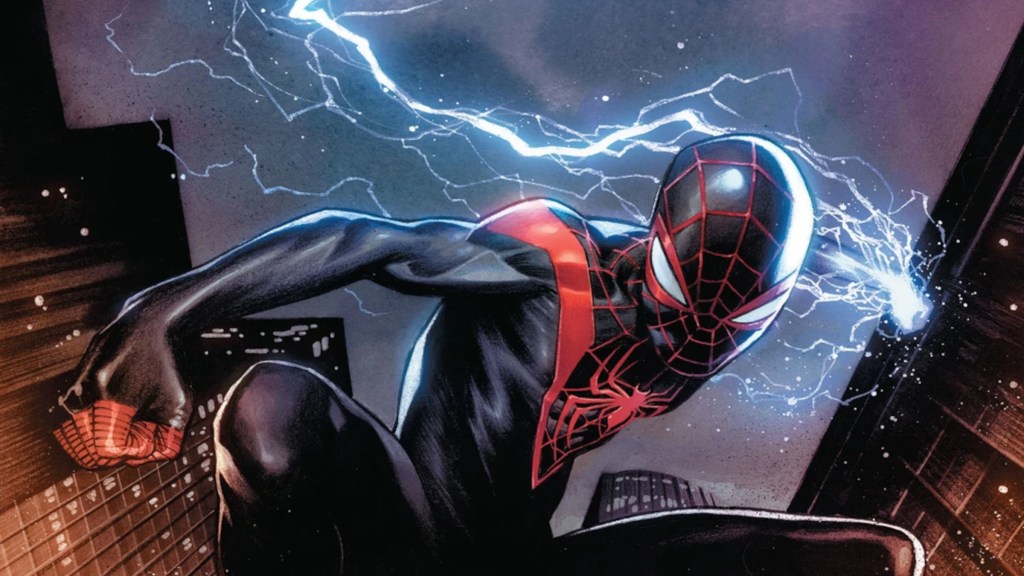
When people compare Miles Morales to Peter Parker, the first thing that usually comes up isn't their costumes, personalities, or even their origins—it's their powers. While both heroes share the classic Spider-Man abilities that fans know and love, Miles possesses a unique gift that has become one of the defining features of his character and one of the most exciting powers in the entire Spider-Verse.
That power is Bio-Electricity, more commonly known as Venom.
Since his debut in Marvel's Ultimate Universe, Miles Morales has steadily evolved into one of the most powerful Spider-Heroes in existence, and much of that evolution can be traced back to his remarkable ability to generate and manipulate bio-electric energy. Unlike Peter Parker, whose powers largely revolve around enhanced physical attributes and spider-sense, Miles has access to an entirely different offensive arsenal that continues to grow stronger and more versatile with each passing year.
At its most basic level, Miles' Venom power allows him to produce concentrated bursts of bio-electric energy throughout his body.
By channeling this energy into physical contact, he can unleash devastating attacks known as Venom Blasts. These powerful electrical surges can instantly stun opponents, disable advanced technology, overwhelm larger enemies, and even incapacitate foes who would normally be far beyond the reach of an ordinary Spider-Man.
What initially began as a simple shock attack has since evolved into one of the most adaptable powers in Marvel Comics.
Miles can infuse his punches and kicks with Venom energy, dramatically increasing their impact and allowing him to take down enemies that would otherwise require significantly more force. In combat, this gives him an unpredictable edge, as opponents must constantly account for both his Spider-Man abilities and the explosive power of his bio-electric attacks.
Over time, however, Miles has learned that Venom can be used for much more than direct offense.
Recent comic storylines have revealed that his mastery over bio-electricity has advanced to astonishing new levels. Rather than merely releasing bursts of energy, Miles can now shape and mold that power into tangible constructs.
This development has dramatically expanded what the ability can do.
By controlling the energy with greater precision, Miles has demonstrated the ability to form a variety of objects and weapons from pure Venom energy. Among the most notable examples is the creation of bio-electric blades, allowing him to generate energy-based weapons during battle. He has also learned to create energy strands that function similarly to traditional Spider-Man webs, giving him entirely new ways to move, restrain opponents, and interact with his environment.
These abilities make Venom one of the most versatile powers ever possessed by a Spider-Man character.
Whether he is fighting supervillains, escaping dangerous situations, disabling technology, or adapting to unexpected threats, Miles can apply his bio-electricity in countless creative ways. Time and again, this unique power has helped him survive situations that would have overwhelmed most heroes, proving itself to be one of the most valuable tools in his arsenal.
What makes the ability even more fascinating is that it appears to be constantly evolving.
Unlike many superhero powers that remain relatively static, Miles' connection to Venom continues to develop as he gains experience and confidence. Writers have gradually expanded its capabilities over the years, transforming it from a simple electrical attack into a complex energy-manipulation system with seemingly limitless potential.
This ongoing evolution has sparked significant discussion among Marvel fans.
As Miles grows stronger and discovers new applications for his abilities, many readers have begun to wonder just how far his bio-electric powers can ultimately develop. Could Venom eventually evolve beyond internal energy generation? Might Miles one day gain the ability to directly manipulate external electrical currents, control electricity in his environment, or wield energy on an even larger scale?
At the moment, Marvel has not provided a definitive answer.
But given how dramatically the power has expanded since Miles first appeared in Ultimate Fallout #4, it certainly doesn't seem impossible.
For now, bio-electricity remains one of the most distinctive aspects of Miles Morales' identity as Spider-Man. It separates him from Peter Parker while reinforcing the idea that every Spider-Hero brings something unique to the legacy.
In a universe filled with extraordinary powers, Venom stands out because it perfectly reflects Miles himself—adaptable, innovative, constantly growing, and always finding new ways to rise to the challenge.
And if the past few years are any indication, Miles Morales may have only scratched the surface of what his bio-electric abilities are truly capable of becoming.
Miles Morales' Invisibility Power: The Stealth Ability Peter Parker Never Had
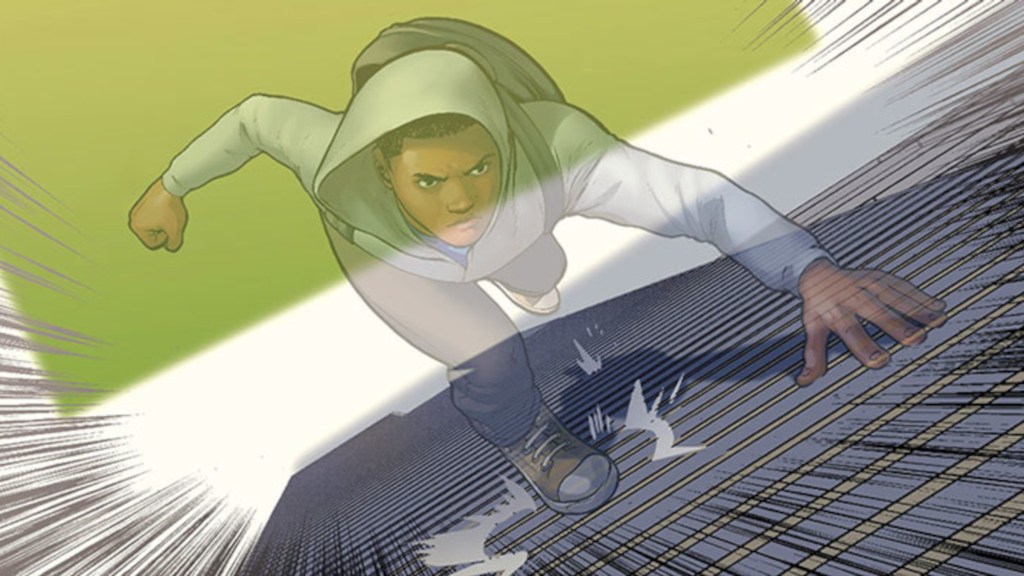
Among the many abilities that make Miles Morales unique within the Spider-Man legacy, few are as fascinating—or as useful—as his power of invisibility. While Miles shares many of the classic Spider-Man abilities that fans associate with Peter Parker, he also possesses several powers that set him apart from the original wall-crawler. One of the most remarkable of these is his ability to seemingly vanish from sight altogether.
Unlike Peter Parker, who relies primarily on agility, intelligence, and stealthy movement to avoid detection, Miles can take stealth to an entirely different level.
His invisibility ability stems from a unique biological trait that allows him to manipulate the electromagnetic spectrum around his body. By subtly altering how light interacts with him, Miles can effectively bend light around himself and blend seamlessly into his surroundings. Rather than simply hiding in shadows, he becomes nearly impossible to see, creating the illusion that he has disappeared entirely.
The result is a form of active camouflage that functions much like the natural camouflage abilities found in certain animals, but taken to a superhuman level.
When activated, Miles can merge into his environment with astonishing effectiveness, whether he's perched on a wall, navigating a crowded city street, or stalking an enemy from above. To observers, it often appears as though he has simply vanished into thin air.
This power has become one of the defining features of Miles Morales' version of Spider-Man.
What makes the ability especially effective is how perfectly it complements the traditional Spider-Man powers he already possesses.
Like Peter Parker, Miles benefits from enhanced agility, lightning-fast reflexes, extraordinary balance, and the ability to cling to virtually any surface. These traits naturally make him difficult to track even under normal circumstances. Spider-Men have always been known for moving silently across walls, ceilings, and rooftops, often catching opponents completely off guard.
But when Miles combines those abilities with invisibility, the result is a level of stealth that few heroes in the Marvel Universe can match.
An enemy may hear nothing.
See nothing.
And receive no warning before Miles strikes.
His camouflage power allows him to infiltrate secure locations, evade dangerous opponents, gather intelligence, and escape situations that would be nearly impossible for most heroes. In many stories, Miles has used invisibility not only for combat but also for reconnaissance, rescue missions, and tactical planning, making it one of the most versatile abilities in his arsenal.
Peter Parker, to his credit, has always demonstrated impressive stealth skills of his own.
Over decades of comic book adventures, Peter has repeatedly shown that he can move with incredible silence, crawl across walls unnoticed, and utilize shadows and positioning to his advantage. His experience, intelligence, and spider-sense often allow him to surprise enemies despite lacking a dedicated stealth power.
However, there is a clear difference between being sneaky and becoming invisible.
Peter can hide.
Miles can disappear.
That distinction gives Miles a significant tactical advantage and further reinforces his identity as a Spider-Man with powers uniquely suited to his own style of heroism.
Over the years, Marvel has continued to explore and refine this ability. In some stories, Miles' camouflage has been portrayed as requiring concentration and energy, while in others he has demonstrated greater control and longer periods of invisibility as his powers mature. Like many aspects of Miles' Spider-Man abilities, the power has evolved alongside the character, becoming more refined and reliable as he gains experience.
The popularity of this ability has also extended beyond the comics. Miles' invisibility power has played a major role in video games, animated adaptations, and blockbuster films, helping distinguish him from Peter Parker for audiences discovering the character for the first time. It has become as recognizable to many fans as his Venom Blast bio-electric abilities.
More importantly, invisibility reflects a broader theme that has always defined Miles Morales.
While he carries the mantle of Spider-Man, he does so in his own way.
He isn't a copy of Peter Parker.
He isn't meant to be.
His unique powers, perspective, and experiences allow him to bring something entirely new to the Spider-Man mythos, proving that the mask can be worn by different people while still representing the same ideals.
And when it comes to stealth, strategy, and staying one step ahead of the enemy, Miles Morales operates on a level few Spider-Heroes can match.
Miles Morales' Radar Sense: The Advanced Spider-Sense Ability That Could Rival Daredevil

One of the defining powers shared by nearly every Spider-Hero in Marvel Comics is the legendary Spider-Sense. Whether it's Peter Parker, Miles Morales, Spider-Gwen, or countless other Spider-People across the Multiverse, this extraordinary ability serves as an early warning system, alerting them to danger before it strikes.
For decades, Spider-Man fans have watched Peter Parker dodge bullets, avoid ambushes, and react to threats that should have been impossible to anticipate, all thanks to his Spider-Sense. It is one of the most iconic powers in comic book history and a cornerstone of what makes Spider-Man such an effective hero.
However, while Miles Morales inherited this classic ability, his version of Spider-Sense has recently evolved into something even more remarkable.
As Miles matured as both a hero and a person, he began experiencing significant emotional and psychological challenges. Like many teenagers balancing enormous responsibilities, Miles struggled with anxiety, self-doubt, and the pressures that come with carrying the mantle of Spider-Man. During this period, his Spider-Sense became increasingly unstable and unpredictable, often overwhelming him with information and making it difficult to distinguish genuine threats from emotional stress.
At first, this seemed like a weakness.
In reality, it was the beginning of an evolution.
Rather than allowing his anxiety to control him, Miles eventually learned how to center himself, focus his thoughts, and gain greater mastery over his precognitive abilities. Through discipline and concentration, he discovered that his Spider-Sense could do far more than simply warn him about danger.
It could help him see it.
This breakthrough led to the development of what many fans now refer to as Miles Morales' Radar Sense.
Instead of receiving vague warnings or instinctive feelings, Miles can actively focus his Spider-Sense to create a detailed mental map of potentially dangerous elements in his surroundings. When using this ability, he perceives visual outlines and impressions of threats around him, even when they are hidden from normal sight.
For example, Miles has demonstrated the ability to detect armed enemies through walls, identifying the skeletal silhouettes of multiple thugs waiting in another room before ever physically seeing them. This heightened awareness allows him to gather information, anticipate danger, and assess tactical situations with extraordinary precision.
In many ways, the ability resembles a supernatural form of environmental scanning.
Rather than simply knowing that danger is nearby, Miles can gain insight into where threats are located and how they are positioned. This gives him a significant strategic advantage in combat, infiltration missions, and rescue operations where situational awareness can mean the difference between success and failure.
The power has naturally drawn comparisons to another beloved Marvel hero: Daredevil.
Matt Murdock's famous radar sense allows him to perceive the world through a highly sophisticated form of sensory awareness, effectively granting him a three-dimensional understanding of his surroundings despite his blindness. While Miles' ability functions differently and originates from his Spider-Sense rather than heightened physical senses, the similarities are difficult to ignore.
In fact, when Miles fully utilizes this advanced form of Spider-Sense, the visual representation of nearby threats can appear remarkably similar to the way Daredevil experiences the world.
There is, however, an important limitation.
At least for now, Miles can only access this heightened awareness through intense concentration. Activating and maintaining the ability requires his complete focus, making it difficult to use during highly chaotic situations where multiple distractions compete for his attention.
This restriction helps balance what could otherwise become one of the most powerful sensory abilities in the Spider-Verse.
Even so, the potential of the power is enormous.
As of now, Miles Morales remains the only Spider-Person known to have demonstrated this specific application of Spider-Sense. That uniqueness further reinforces his growing reputation as one of the most innovative and evolving Spider-Heroes in Marvel Comics.
Spider-Man's Radioactivity Explained: The Hidden Power Peter Parker Has That Miles Morales Doesn't

When fans compare the powers of Peter Parker and Miles Morales, most conversations tend to focus on the abilities Miles possesses that Peter lacks. Powers like bio-electric Venom Blasts, active camouflage, and his evolving Spider-Sense variations often dominate discussions about what makes Miles unique.
However, there is one surprisingly important ability that belongs almost exclusively to Peter Parker—a power that many casual fans don't even realize he has.
That power is radioactivity.
At first glance, being radioactive might not sound like a particularly desirable superpower. In fact, it sounds more like a dangerous side effect than a genuine advantage. Yet throughout Spider-Man's long history, Peter's radioactive nature has repeatedly proven to be one of his most overlooked and useful attributes, helping him survive threats that would have been fatal to most other heroes.
The reason for this difference lies in the origins of the two Spider-Men.
Peter Parker famously gained his abilities after being bitten by a radioactive spider during a scientific demonstration, one of the most iconic moments in comic book history. The spider's radiation altered Peter's body on a genetic level, granting him the incredible powers that would eventually make him Spider-Man.
Miles Morales' origin, however, is fundamentally different.
Rather than being bitten by a radioactive spider, Miles was bitten by a genetically altered spider connected to Norman Osborn's Oz Formula, the same experimental substance that played a major role in the Ultimate Universe. Unlike Peter's spider, the Oz-enhanced spider was never explicitly described or implied to be radioactive in any meaningful way.
As a result, Miles inherited many Spider-Man-like abilities but did not inherit Peter's radioactive biology.
That distinction may seem minor at first.
In reality, it has created some fascinating differences between the two heroes.
One of the most obvious advantages is Peter's extraordinary resistance to radiation. Because his body has adapted to and continuously generates low levels of radiation, he can endure exposure to radioactive environments and energy sources that would seriously injure—or outright kill—an ordinary human being.
Over the years, this resistance has saved Peter's life on numerous occasions.
In situations involving nuclear materials, radioactive technology, cosmic energy, and super-powered adversaries, Spider-Man has repeatedly demonstrated an ability to withstand radiation levels far beyond normal human limits. While he is not completely immune, his tolerance is significantly higher than that of the average person.
This hidden advantage has become increasingly important as Spider-Man's adventures have expanded beyond street-level crime fighting and into larger cosmic and multiversal threats.
Perhaps the most famous example of Peter's radioactive nature becoming a major asset occurred during the acclaimed Spider-Verse storyline.
In that event, Spider-Man and countless other Spider-Heroes found themselves targeted by the Inheritors, an ancient family of interdimensional predators led by the terrifying Morlun. These powerful beings feed on the life force of Spider-Totems throughout the Multiverse, effectively hunting Spider-People across countless realities.
For most Spider-Heroes, the Inheritors represented an almost unstoppable threat.
Peter Parker, however, possessed something unusual.
His radioactive blood and unique biological makeup made him significantly more dangerous to consume than many other Spider-Totems. The radiation within his system acted as a natural deterrent, making him a far less appealing source of energy for creatures like Morlun and his family.
In a conflict where survival often depended on the smallest advantage, Peter's radioactive physiology became an unexpectedly important factor.
It's one of the clearest examples of how a characteristic that initially seemed insignificant evolved into a meaningful component of Spider-Man lore.
Peter's radiation resistance has also proven invaluable in more traditional superhero encounters.
One notable example occurred during The Amazing Spider-Man (2018) #75, where Peter survived an intense radiation blast generated by the U-Foes, a team of villains whose powers are heavily connected to various forms of dangerous energy. Under normal circumstances, exposure to that level of radiation could have been catastrophic.
Yet Peter endured.
While the encounter certainly took its toll, his unique physiology allowed him to survive an assault that would have overwhelmed most individuals.
Moments like these demonstrate why radioactivity should be viewed as more than just a footnote in Spider-Man's origin story.
It is an integral part of what makes Peter Parker unique.
Unlike many superhero abilities that are constantly showcased through flashy action sequences, Spider-Man's radioactive nature often operates in the background. It quietly enhances his survivability, protects him from specific threats, and occasionally becomes the deciding factor between life and death.
The contrast between Peter and Miles also highlights one of the most interesting aspects of the Spider-Man legacy.
Although both heroes share the same mantle and many of the same abilities, their powers are not identical.
Miles brings bio-electricity, camouflage, and unique Spider-Sense applications to the table.
Peter brings decades of experience, scientific brilliance, and a body altered by radiation itself.
Neither power set is inherently better than the other.
They're simply different.
And that difference is part of what makes the Spider-Verse so fascinating.
As Marvel continues to explore new Spider-Heroes and expand the mythology surrounding Spider-Man, Peter Parker's radioactive biology remains a reminder of where the legend began. It may not be his flashiest power, but time and again, it has proven to be one of his most valuable.
Because sometimes the abilities that save a hero's life aren't the ones everyone notices.
They're the ones quietly working behind the scenes all along.
Is Miles Morales Immortal? The Mysterious Ultimate Universe Power That Could Change Everything

Of all the differences between Peter Parker and Miles Morales, this may be the most surprising—and certainly the most difficult to prove.
Unlike powers such as bio-electric Venom Blasts, invisibility, or enhanced Spider-Sense techniques, this particular ability remains largely theoretical. There is no definitive confirmation that Miles Morales possesses it, and yet the evidence found within Marvel Comics suggests that the possibility cannot be dismissed.
The power in question?
Immortality.
At first glance, the idea sounds unbelievable. After all, Spider-Man has always been defined by his humanity and vulnerability rather than god-like abilities. Yet when examining the history of the Ultimate Marvel Universe, there is compelling evidence that Miles Morales may possess a unique connection to one of the most mysterious side effects ever introduced into Spider-Man mythology.
The answer lies within the Oz Formula.
Unlike Peter Parker from Marvel's main continuity, both Miles Morales and the Peter Parker of the original Ultimate Universe received their powers through experiments connected to Norman Osborn's Oz Formula. This experimental substance played a central role in the Ultimate Universe, granting extraordinary abilities while also producing unexpected and often dangerous side effects.
For years, readers believed the story of Ultimate Peter Parker had reached its tragic conclusion.
His heroic sacrifice during The Death of Spider-Man storyline remains one of the most emotional moments in Spider-Man history. Peter gave everything he had to protect the people he loved, ultimately dying as a true hero.
Or so everyone thought.
In a shocking twist later revealed in Miles Morales: Ultimate Spider-Man #1, Peter Parker returned from the dead.
Even more surprising was the fact that Norman Osborn had also survived what should have been fatal encounters. Despite seemingly dying on multiple occasions, Osborn repeatedly returned, leading readers to question whether the Oz Formula had effects far beyond simple superhuman enhancement.
The implication was extraordinary.
The Oz Formula appeared capable of resurrecting certain individuals after death.
In both Peter Parker's and Norman Osborn's cases, the formula seemed to trigger a form of regenerative resurrection, bringing them back long after they had been presumed dead. Rather than granting traditional immortality in the fantasy sense, the substance appeared to prevent death from being truly permanent.
If that interpretation is correct, it raises an obvious question:
Could Miles Morales possess the same ability?
The logic certainly exists.
Miles was also empowered through an Oz-enhanced spider, meaning the same substance that altered Peter Parker and Norman Osborn also exists within his biological makeup. If the Oz Formula is indeed responsible for their apparent immortality, then Miles could theoretically share that trait as well.
The problem is that there is currently no way to know for certain.
Unlike Peter Parker and Norman Osborn, Miles Morales has never died and returned to life. As a result, Marvel has never been forced to answer the question directly.
And that leaves fans in an unusual position.
The evidence suggests the possibility exists.
But the proof does not.
Complicating matters even further is the case of Harry Osborn.
Like Peter and Norman, Harry was also exposed to the Oz Formula. Yet despite sharing that connection, he did not experience the same resurrection phenomenon. This inconsistency raises important questions about how the formula actually works and whether immortality is tied to specific circumstances rather than universal exposure.
Because of Harry's fate, it becomes impossible to definitively state that every Oz-enhanced individual can return from death.
The rules remain unclear.
And that's exactly what makes this mystery so fascinating.
To this day, comic readers continue debating whether Miles Morales possesses a hidden resurrection ability waiting to reveal itself. Some view it as a dormant aspect of his powers that Marvel has simply never explored. Others believe Peter and Norman may represent unique exceptions rather than evidence of a broader rule.
Until Marvel addresses the subject directly, the truth remains one of the Spider-Verse's most intriguing unanswered questions.
What is clear, however, is that Miles Morales continues to evolve in ways few Spider-Heroes ever have. From his bio-electric Venom powers and active camouflage to his advanced Spider-Sense applications, his abilities have steadily expanded beyond what anyone initially expected.
And if immortality eventually proves to be part of that package, it could become one of the most significant revelations in Spider-Man history.
Peter Parker vs. Miles Morales: Different Powers, Same Heroic Legacy
That brings us to the biggest differences between the powers of Peter Parker and Miles Morales.
When it comes to sheer variety, Miles undeniably has the advantage. His powers include bio-electric Venom energy, invisibility, advanced sensory abilities, and potentially even mysteries that Marvel has yet to fully explain. In terms of versatility, he possesses one of the most diverse power sets ever seen in a Spider-Man character.
But that doesn't make Peter Parker any less remarkable.
Peter remains the gold standard against which every Spider-Hero is measured. His radioactive physiology, scientific genius, unmatched experience, and unwavering determination have allowed him to overcome threats ranging from street-level criminals to multiversal catastrophes.
At the end of the day, comparing Peter Parker and Miles Morales isn't really about deciding which Spider-Man is better.
It's about appreciating what makes each one unique.
Miles brings innovation, adaptability, and exciting new abilities to the Spider-Man legacy.
Peter brings the timeless foundation that inspired generations of heroes in the first place.
To put it another way, a classic cheese pizza can be every bit as satisfying as a fully loaded supreme.
One may come with more toppings.
But that doesn't mean the original isn't still incredible.
And that's perhaps the best way to describe Peter Parker and Miles Morales: two different Spider-Men, two different power sets, and two equally amazing heroes who continue to prove why Spider-Man remains one of the greatest characters ever created.
The Spider-Man legacy has always been about more than powers, costumes, or even the person beneath the mask. It's about responsibility, perseverance, and using whatever gifts you have to help others. Yet one of the most fascinating aspects of modern Spider-Man storytelling is seeing how different heroes carry that legacy in their own unique ways.
Peter Parker remains the blueprint—the original Spider-Man whose radioactive powers, scientific brilliance, and unwavering moral compass laid the foundation for everything that followed. Miles Morales, meanwhile, represents the evolution of that legacy, bringing exciting new abilities such as bio-electric Venom powers, active camouflage, advanced Spider-Sense techniques, and potentially even mysteries that Marvel has yet to fully explore.
While Miles may have the more diverse power set, Peter's experience, resilience, and decades of heroism continue to make him one of Marvel's greatest champions. Rather than competing with one another, the two Spider-Men complement each other, proving that there is no single way to be Spider-Man.
As Marvel continues expanding the Spider-Verse across comics, movies, television, and video games, one thing remains clear: whether it's Peter Parker swinging through New York or Miles Morales lighting up the skyline with Venom energy, both heroes embody the same timeless ideals that have inspired generations of fans.
Love collecting iconic characters and timeless stories?
From premium Spiderman statues and action figures to Funko Pops, limited-edition collectibles, plush toys, and display-worthy memorabilia, there's something for every fan looking to bring a little magic home.
Whether you're a lifelong Spiderman enthusiast, a Marvel collector, or someone who still believes there's a friend in Peter and Osborne, and the rest of Spiderverse toys, you'll find amazing collectibles waiting to join your shelf.