


10 Best Spider-Man Comics Ever Written Ranked and Explained
Few characters in comic book history have left a cultural impact as enduring as Spider-Man. Since his debut in 1962, the friendly neighborhood hero has evolved far beyond the pages of superhero comics to become one of the most recognizable and beloved fictional characters in the world. Yet what truly sets Spider-Man apart isn't his incredible powers, iconic costume, or unforgettable rogues' gallery—it's the humanity at the heart of every story.
Over the decades, Spider-Man comics have delivered some of the most powerful and emotionally resonant narratives ever published. These aren't simply tales of a hero swinging across New York City and stopping villains. They are stories about grief, sacrifice, perseverance, redemption, identity, love, and the consequences of our choices. At their core, they explore what it means to carry responsibility even when life feels impossibly unfair.
From heartbreaking moments like the loss of loved ones to epic adventures that span entire universes, Peter Parker's journey has consistently reflected the struggles and triumphs of everyday people. Readers have watched him stumble, fail, grow, and rise again, making him one of the most relatable heroes ever created.
What makes Spider-Man's legacy so remarkable is how each creative era has brought something unique to the character while staying true to the principles that define him. The groundbreaking work of Stan Lee and Steve Ditko introduced a teenage superhero whose personal problems were just as important as the villains he fought. Later storytellers expanded those foundations in bold and unexpected ways, exploring deeper emotional territory and larger narrative ambitions.
Writers such as J.M. DeMatteis delved into the darker corners of Peter Parker's psyche, crafting psychologically rich stories that examined trauma, guilt, and self-discovery. Meanwhile, creators like Dan Slott pushed Spider-Man into exciting new territory with universe-spanning adventures, scientific innovation, and imaginative concepts that showcased the limitless possibilities of the Marvel Universe.
Through every generation, Spider-Man stories have continually reinvented themselves while preserving the character's emotional core. Whether confronting personal tragedy, battling impossible odds, or protecting complete strangers without expecting recognition, Peter Parker remains a hero defined not by power, but by character.
That enduring commitment to doing what's right—even when it's difficult, painful, or thankless—is why Spider-Man continues to resonate with audiences around the world. More than sixty years after his creation, the web-slinger remains a symbol of hope, resilience, and the belief that ordinary people can make an extraordinary difference.
And through every unforgettable story, one timeless lesson continues to echo across generations: with great power, there must also come great responsibility.
10. The Clone Saga: The Spider-Man Story That Shattered Peter Parker's Identity

Few Spider-Man storylines have sparked as much debate, controversy, and fascination as The Clone Saga. Originally published throughout the 1990s across multiple Spider-Man titles, this ambitious storyline challenged everything readers thought they knew about Peter Parker. More than just another superhero adventure, it became a deeply personal tale about identity, belonging, destiny, and what truly makes someone Spider-Man.
The saga begins with the startling return of a man Peter Parker believed had died years earlier: Ben Reilly, a clone created by the twisted genetic experiments of the villain known as The Jackal. Ben's existence traces back to The Amazing Spider-Man #149 (1975), where he was seemingly killed after a battle between Peter and the Jackal. For years, everyone—including Ben himself—believed the story had ended there.
But Ben survived.
Burdened by the knowledge that he was a clone, Ben spent years wandering across America in self-imposed exile. Convinced that he was merely a copy of the "real" Peter Parker, he avoided forming close relationships and lived a lonely, uncertain life. Taking the surname "Reilly" from Uncle Ben and Aunt May's maiden name, Ben struggled to find purpose while wrestling with questions about his own existence.
Everything changes when Ben returns to New York City.
His arrival sets off a chain reaction that sends shockwaves through Peter Parker's world. At first, Peter and Ben find themselves at odds, each unsure of where the other stands and what their connection truly means. The tension between them is understandable—after all, they share the same memories, the same powers, and the same sense of responsibility. Looking at Ben is like Peter staring into a mirror that reflects a different life.
As the story unfolds, rivalry slowly gives way to understanding, and the two eventually become allies. Together, they uncover a far-reaching conspiracy that stretches far beyond anything they initially imagined.
At the center of that conspiracy is The Jackal, whose obsession with cloning has only grown more dangerous over the years. Complicating matters further is the emergence of Kaine, a deeply scarred and unstable clone of Peter Parker. Unlike Ben Reilly, Kaine was a failed cloning experiment whose physical deterioration and psychological trauma transformed him into one of the most unpredictable figures in Spider-Man lore.
As Peter and Ben search for answers, they discover that powerful forces have been manipulating events from the shadows. Behind the chaos lies a mastermind whose influence reaches deeper than either hero could have imagined: Norman Osborn, the original Green Goblin. Thought dead for years, Osborn's shocking return would eventually become one of the defining revelations of the entire saga and reshape Spider-Man mythology for years to come.
Yet the most jaw-dropping twist arrives when Peter Parker is confronted with a possibility so devastating that it threatens to unravel his entire life.
He is told that he isn't the original Peter Parker at all.
Instead, Peter learns that he may actually be the clone, while Ben Reilly is revealed to be the genuine Peter Parker.
For Peter, the revelation is emotionally devastating. Every victory, every heartbreak, every relationship, and every sacrifice suddenly comes into question. If he truly is the clone, then who is he? Is he still Peter Parker? Does his life still matter? Can a copy ever be considered real?
These questions transformed The Clone Saga into far more than a typical superhero crossover event. Beneath the action and mystery lies a surprisingly philosophical exploration of identity and self-worth. The story forces both Peter and Ben to confront a difficult truth: a person's value is not determined by where they came from, but by the choices they make and the lives they touch.
Although The Clone Saga remains one of the most divisive Spider-Man stories ever published, its impact on the character cannot be denied. It introduced fan-favorite characters like Ben Reilly and Kaine, both of whom remain important parts of Marvel Comics today. Ben would go on to become the Scarlet Spider, while Kaine eventually forged his own path as a darker but heroic protector.
Nearly three decades later, The Clone Saga continues to stand as one of the most ambitious and emotionally complex chapters in Spider-Man history—a story that dared to ask the ultimate question:
If two people share the same memories, the same powers, and the same heart, what truly makes someone Peter Parker?
9. Ultimate Spider-Man: The Historic Debut of Miles Morales and the Future of Spider-Man
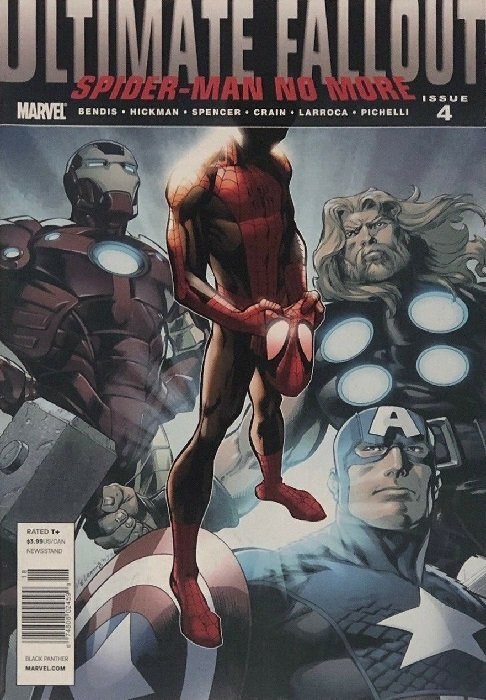
Some comic book moments change a character forever. Others change an entire generation. The debut of Miles Morales in Marvel's Ultimate Universe accomplished both.
When Peter Parker died in the Ultimate Marvel Universe, readers were left stunned. For many fans, it felt like the end of an era. Peter's death in Ultimate Spider-Man was a heartbreaking conclusion to one of the most beloved modern interpretations of the character, a heroic sacrifice that embodied everything Spider-Man had always stood for: courage, selflessness, and responsibility in the face of impossible odds.
But while Peter Parker's story had reached its tragic conclusion, the legacy of Spider-Man was far from over.
In 2011, Marvel introduced readers to a brand-new web-slinger in Ultimate Fallout #4—a teenager named Miles Morales. What could have been seen as an impossible task quickly became one of the most important and celebrated chapters in Spider-Man history.
Miles wasn't simply a replacement for Peter Parker. He was something entirely new.
A young Afro-Latino teenager from Brooklyn, Miles brought a fresh perspective to the Spider-Man mythos while still embodying the values that had made the character beloved for decades. Created by writer Brian Michael Bendis and artist Sara Pichelli, Miles was introduced as an ordinary teenager trying to navigate family expectations, friendships, school life, and the overwhelming responsibility that came with extraordinary powers.
His journey began in the pages of Ultimate Comics: Spider-Man, where readers witnessed a new origin story unfold. After being bitten by a genetically altered spider connected to the same experiments that created Peter Parker, Miles suddenly found himself dealing with abilities he neither expected nor fully understood.
Unlike Peter, Miles wasn't initially eager to become a hero.
In fact, Peter Parker's death weighed heavily on him. Witnessing the sacrifice of the original Spider-Man left Miles questioning whether he was worthy of carrying such an enormous legacy. He struggled with fear, self-doubt, and the pressure of living up to a symbol that meant so much to so many people.
That internal conflict became one of the defining strengths of his story.
Rather than presenting Miles as an instant hero, Marvel allowed readers to watch him grow into the role. His victories felt earned. His mistakes felt authentic. His fears and insecurities made him relatable. Every challenge he faced reflected the experience of a teenager trying to figure out who he was while carrying responsibilities far beyond his years.
What made Miles Morales resonate so strongly with audiences was how genuine his journey felt. His relationships with family, friends, mentors, and fellow heroes added emotional depth to the story, creating a version of Spider-Man that felt both familiar and refreshingly original.
As his adventures expanded, Miles developed memorable dynamics with other Spider-heroes throughout the Marvel Multiverse. Among the most powerful of these relationships was his connection to Peter Parker himself. In stories where the two heroes eventually meet, Peter serves not as a competitor, but as a source of inspiration, guidance, and validation. Their interactions highlight one of the most important themes in Spider-Man history: heroism is not defined by a single person, but by the values they choose to uphold.
That message would ultimately become the heart of Miles Morales' story.
His rise as Spider-Man proved that the mask could belong to anyone. It didn't matter where you came from, what you looked like, or how different your experiences might be. What mattered was your willingness to help others, stand up for what's right, and continue moving forward when life becomes difficult.
Over time, Miles evolved from a promising new character into one of Marvel's biggest stars. His popularity exploded beyond comics through animated films like Spider-Man: Into the Spider-Verse and Spider-Man: Across the Spider-Verse, introducing millions of new fans to his story and cementing his place as a cornerstone of modern Spider-Man mythology.
Today, Miles Morales stands as one of the most influential superheroes of the 21st century. His debut didn't just expand the Spider-Man universe—it redefined what Spider-Man could be for a new generation.
More than anything, the story of Miles Morales serves as a powerful reminder that Spider-Man is bigger than any one individual. It is an idea, a symbol, and a responsibility that can inspire people from every background.
8. Spider-Verse: The Ultimate Spider-Man Event That United Every Web-Slinger Across the Multiverse

What if every version of Spider-Man ever imagined—across every reality, timeline, and dimension—was forced to stand together against a threat capable of wiping them all out?
That incredible premise became reality with Spider-Verse, one of the most ambitious and influential Spider-Man stories ever published. Written by Dan Slott and released in 2014, this multiverse-spanning epic transformed the Spider-Man mythos forever, proving that the legacy of the wall-crawler extends far beyond Peter Parker alone.
At its core, Spider-Verse is a celebration of everything that makes Spider-Man special.
The story brings together an astonishing collection of Spider-heroes from across Marvel's vast Multiverse. From familiar faces like Peter Parker, Miles Morales, Spider-Man Noir, and Spider-Man 2099 to unexpected variants such as Spider-Ham and countless alternate versions of the web-slinger, the event embraces the idea that Spider-Man can exist in many forms while still representing the same heroic ideals.
But this gathering isn't for celebration.
A terrifying enemy is hunting them.
The central villains of the story are the Inheritors, an ancient and powerful family of interdimensional energy vampires led by Morlun. Unlike traditional Spider-Man villains, the Inheritors don't seek wealth, power, or domination. Instead, they feed on the life force of individuals connected to the Spider-Totem, a mystical concept that links Spider-powered heroes throughout the Multiverse.
To the Inheritors, every Spider-Man, Spider-Woman, and Spider-themed hero is prey.
As entire universes fall and Spider-heroes begin disappearing one by one, the survivors realize that their only chance of survival is to unite. What follows is an epic battle spanning countless realities as hundreds of Spider-characters come together to fight for the future of the Multiverse itself.
The scale of Spider-Verse is enormous, but what makes the story truly memorable isn't just the spectacle.
It's the heart.
Beneath the multiversal chaos, giant battles, and endless parade of alternate Spider-heroes lies a surprisingly emotional exploration of what connects these characters. Some are scientists. Some are teenagers. Some are seasoned veterans. Some aren't even human. Yet despite their wildly different backgrounds, personalities, and experiences, they all share the same defining qualities: courage, compassion, sacrifice, and a willingness to help others no matter the personal cost.
That shared spirit becomes the emotional backbone of the event.
In many ways, Spider-Verse serves as a love letter to more than fifty years of Spider-Man storytelling. It celebrates every era, every interpretation, and every creative reinvention of the character while reinforcing the timeless idea that being Spider-Man has never been about a costume or a name—it's about choosing responsibility over fear.
For longtime readers, the event is packed with rewarding callbacks, hidden references, and appearances from fan-favorite Spider-heroes who had previously existed on the fringes of Marvel continuity. For newer readers, it offers an exciting gateway into the larger Spider-Man Multiverse and the countless possibilities it contains.
Perhaps the most significant legacy of Spider-Verse is the introduction of a character who would quickly become one of Marvel's biggest modern stars: Spider-Gwen, also known as Gwen Stacy from Earth-65.
In her reality, it was Gwen—not Peter Parker—who was bitten by the radioactive spider. Her debut captured readers' imaginations almost instantly, and her unique costume, compelling personality, and emotionally rich backstory transformed her from a supporting player into one of the most popular Spider-heroes ever created. Today, Spider-Gwen stands alongside Peter Parker and Miles Morales as one of the defining faces of the Spider-Man franchise.
The influence of Spider-Verse would extend far beyond comics. Its ideas inspired major storylines across Marvel media and served as the foundation for the Academy Award-winning animated film Spider-Man: Into the Spider-Verse, which introduced mainstream audiences to the concept of a connected Spider-Multiverse and helped elevate characters like Miles Morales and Spider-Gwen to global superstardom.
More than a decade later, Spider-Verse remains one of the most beloved Spider-Man events ever published. It's action-packed, imaginative, emotional, and endlessly entertaining, but above all, it captures the essence of why Spider-Man continues to resonate across generations.
No matter the universe, the costume, the powers, or the person beneath the mask, every Spider-hero shares the same unwavering belief:
Anyone can make a difference when they choose to do the right thing.
And when every Spider-Man in existence swings into battle together, that message becomes more powerful than ever.
7. The Kid Who Collects Spider-Man: The Most Heartbreaking Spider-Man Story Ever Told
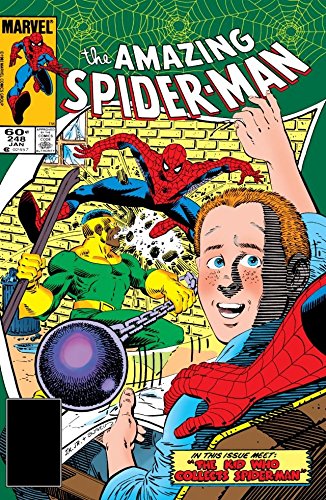
When people talk about the greatest Spider-Man stories of all time, most conversations revolve around epic battles, tragic losses, or universe-shattering events. Yet one of the most powerful stories in the character's history contains no supervillain fight, no city-threatening disaster, and no spectacular display of Spider-Man's powers.
Instead, it focuses on something far more meaningful: compassion.
Published in The Amazing Spider-Man #248 in 1984 and written by Roger Stern with artwork by Ron Frenz, The Kid Who Collects Spider-Man remains one of the most beloved and emotionally devastating stories ever told in superhero comics. Despite being only a single issue long, its impact has endured for decades, often appearing on lists of the greatest Spider-Man comics ever published.
The story centers on a young boy named Tim Harrison, an enthusiastic Spider-Man fan whose greatest dream is to meet his hero.
Tim isn't just a casual admirer. He collects newspaper clippings, follows Spider-Man's adventures obsessively, and knows more about the wall-crawler than almost anyone else. Like countless readers over the years, he sees Spider-Man as a symbol of courage, hope, and perseverance.
When Spider-Man learns about Tim's admiration, he decides to pay the young fan a surprise visit.
What follows is one of the most touching interactions in comic book history.
Rather than rushing off to stop criminals or battle villains, Peter Parker spends his day simply talking with Tim. He shares stories about his adventures, reflects on his experiences as Spider-Man, and treats the boy not as a fan, but as a friend.
As their conversation continues, Peter does something he almost never does.
He removes his mask.
In a moment of complete trust, Peter reveals his secret identity to Tim Harrison, allowing the young boy to see the person behind the legend. For Spider-Man, whose entire life revolves around protecting his identity, it is an extraordinary gesture—one reserved for someone truly special.
But the story's most emotional moment is still to come.
Readers eventually learn the heartbreaking truth behind Tim's wish.
Tim Harrison is terminally ill.
His condition has left him with very little time, and meeting Spider-Man has become his final dream. Peter's visit isn't simply a reward for a loyal fan; it's an act of kindness for a child facing circumstances no one should ever have to endure.
The revelation transforms every page that came before it.
Suddenly, Peter's decision to spend the day with Tim carries even greater weight. The stories, the laughter, the shared moments, and the identity reveal become more than a meeting between a hero and a fan—they become a final gift of comfort, happiness, and connection.
What makes The Kid Who Collects Spider-Man so unforgettable is its simplicity.
There are no elaborate plot twists, world-ending stakes, or larger-than-life action sequences. The story succeeds because it strips Spider-Man down to his most essential qualities. It reminds readers that heroism isn't always about defeating villains or saving cities. Sometimes, the greatest act of heroism is simply showing up for someone who needs you.
At its heart, the story captures what has always made Peter Parker different from many other superheroes.
Spider-Man understands pain.
He understands loss, loneliness, fear, and uncertainty. Because of that, he connects with people in a way few heroes can. His greatest strength has never been his spider-sense, his agility, or his incredible powers—it's his empathy.
That humanity is on full display throughout every page of this story.
Over the years, The Kid Who Collects Spider-Man has become one of Marvel's most celebrated standalone issues and is frequently recommended to readers looking to understand the true essence of Spider-Man. The story has influenced countless writers and remains a shining example of how superhero comics can tell deeply personal and emotionally authentic stories.
More than forty years after its publication, it continues to resonate because its message is universal.
We often think heroes are defined by the battles they win.
This story reminds us that heroes are also defined by the lives they touch.
The Kid Who Collects Spider-Man is not just one of the greatest Spider-Man stories ever written—it's one of the most powerful examples of compassion in comic book history.
6. Spider-Man: Blue – A Heartbreaking Love Letter to Gwen Stacy and Peter Parker's Greatest Loss

Among the many unforgettable Spider-Man stories published over the decades, few capture the emotional depth of Peter Parker's life quite like Spider-Man: Blue. While many Spider-Man comics are remembered for their thrilling action, iconic villains, and superhero spectacle, this beloved miniseries takes a very different approach. Instead of focusing on battles and high-stakes adventures, it turns inward, exploring the memories, emotions, and lingering heartbreak that continue to define Peter Parker long after one of the greatest tragedies of his life.
Created by the acclaimed creative team of Jeph Loeb and Tim Sale, Spider-Man: Blue was published in 2002 as part of Marvel's celebrated "Color Series," which also included Daredevil: Yellow, Hulk: Gray, and Captain America: White. The story revisits one of the most important relationships in Spider-Man history: Peter Parker's romance with Gwen Stacy, the woman many fans still consider to be his first true love.
The narrative unfolds through a deeply personal framework. On Valentine's Day, Peter sits alone and records a series of messages addressed to Gwen, speaking to her as though she were still there. Through these recordings, he reflects on their time together, revisiting the early days of their relationship and the moments that shaped both their lives.
What follows is a bittersweet journey through Peter's memories.
Readers are transported back to a simpler era of Spider-Man's history, when Peter was still a college student trying to balance superhero responsibilities, friendships, family obligations, and the uncertainties of young adulthood. Through Peter's recollections, Gwen is brought vividly back to life—not as a tragic figure remembered only for her death, but as a vibrant, intelligent, compassionate young woman who played an enormous role in shaping the person Peter would become.
The story beautifully recreates the innocence and excitement of first love. We witness awkward conversations, tender moments, youthful uncertainty, and the emotional highs that come with discovering a genuine connection with someone. Yet beneath every joyful memory lies an unavoidable sadness, because both Peter and the reader know how the story ultimately ends.
That sense of inevitability gives Spider-Man: Blue its extraordinary emotional power.
Unlike many Spider-Man stories that focus on the shocking death of Gwen Stacy in The Amazing Spider-Man #121, this series is less concerned with the tragedy itself and more interested in its lasting impact. The story explores how grief continues to shape Peter years later, revealing that some losses never truly disappear, no matter how much time passes.
Even as Peter has moved forward with his life, built new relationships, and found happiness in other ways, Gwen's absence remains a permanent part of who he is. She exists not only as a memory but as a reminder of a chapter of his life that can never be reclaimed.
This is what makes Spider-Man: Blue so much more than a nostalgic retelling of classic Spider-Man stories.
At its heart, it is a profoundly human exploration of love, memory, and loss. It examines the way people carry those they have lost with them, not through dramatic gestures or grand declarations, but through quiet moments of remembrance. Peter's recordings become a form of healing, allowing him to revisit the past while acknowledging the pain that still lingers beneath the surface.
The emotional authenticity of the story is matched perfectly by Tim Sale's breathtaking artwork. His distinctive visual style gives the series a dreamlike quality, blending nostalgia with melancholy in a way that feels almost cinematic. Every page is filled with warmth, emotion, and character expression, making the memories feel both vivid and fragile, as though they could fade away at any moment.
The color palette plays an equally important role. The title itself, Blue, operates on multiple levels. It references Spider-Man's iconic costume, but it also symbolizes Peter's emotional state. The story is infused with a sense of longing and sadness, reflecting the universal experience of looking back on a happier time that can never be fully recovered.
What makes the series especially powerful is its understanding that grief is not always loud.
Sometimes grief is quiet.
Sometimes it appears in old photographs, familiar songs, forgotten conversations, or memories that unexpectedly return years later. Spider-Man: Blue captures those emotions with remarkable honesty, making it one of the most relatable and emotionally mature stories ever published by Marvel.
Over the years, the series has earned widespread critical acclaim and is frequently recommended as one of the greatest Spider-Man comics ever written. It resonates not only with longtime comic readers but with anyone who has experienced love, loss, or the bittersweet passage of time.
More than two decades after its release, Spider-Man: Blue remains a masterclass in emotional storytelling. It reminds readers that behind the mask is not just a superhero, but a man shaped by the people he has loved and the ones he has lost.
In the end, the story isn't really about Gwen Stacy's death.
It's about her life, her impact, and the way love continues to leave its mark long after someone is gone.
5. The Death of Jean DeWolff: Spider-Man's Darkest Murder Mystery and His Greatest Test of Justice

Spider-Man is often celebrated for his optimism, humor, and unwavering belief in doing the right thing, even when the odds are stacked against him. Yet some of the character's greatest stories explore what happens when those ideals are pushed to their breaking point. Few Spider-Man comics accomplish this as effectively—or as hauntingly—as The Death of Jean DeWolff.
Originally published in The Spectacular Spider-Man #107–110 in 1985 and written by Peter David with artwork by Rich Buckler and Sal Buscema, this groundbreaking storyline remains one of the most mature and influential Spider-Man stories ever told. Combining elements of crime fiction, psychological thriller, and superhero drama, it transformed the friendly neighborhood wall-crawler into the reluctant protagonist of a gripping murder mystery.
What begins as a shocking tragedy soon evolves into one of the most emotionally complex chapters in Spider-Man history.
The story opens with the brutal murder of Captain Jean DeWolff, one of Spider-Man's closest allies within the New York City Police Department. Unlike many supporting characters in superhero comics, Jean wasn't simply another police officer. She had earned Peter Parker's trust through years of cooperation, mutual respect, and friendship. Her belief in Spider-Man never wavered, even when public opinion turned against him.
That's what makes her death so devastating.
When Spider-Man discovers that Jean has been murdered in cold blood, the loss strikes him on a deeply personal level. This isn't just another crime to solve or another villain to stop. It's the murder of someone he genuinely cared about.
Determined to find the person responsible, Spider-Man launches an investigation that takes him into some of the darkest corners of New York City.
The trail eventually leads to a terrifying serial killer known as The Sin-Eater.
Unlike many of Spider-Man's traditional enemies, the Sin-Eater doesn't wear a colorful costume or seek world domination. Instead, he operates with chilling conviction, believing that he has been chosen to punish those he views as sinful. Armed with a shotgun and driven by a twisted sense of righteousness, the Sin-Eater embarks on a campaign of murder that targets figures connected to power and authority, leaving fear and uncertainty in his wake.
The mystery surrounding the killer's identity creates an atmosphere rarely seen in Spider-Man comics at the time. The story embraces a noir-inspired tone, blending suspense, detective work, and psychological tension to create a narrative that feels more like a crime thriller than a traditional superhero adventure.
As the body count rises and the city grows increasingly terrified, Peter Parker finds himself struggling with emotions he can barely control.
For perhaps the first time in his career, Spider-Man isn't motivated solely by responsibility.
He's motivated by anger.
Jean DeWolff's murder awakens a rage within Peter that threatens to consume him. Throughout the investigation, readers witness a side of Spider-Man that rarely surfaces—a man grieving, frustrated, and desperate for justice. The closer he gets to the Sin-Eater, the more difficult it becomes to separate justice from vengeance.
That internal conflict lies at the heart of the story.
While the murder mystery drives the plot forward, The Death of Jean DeWolff is ultimately an exploration of morality. It forces Peter to confront difficult questions that have no easy answers. How far should a hero go to stop evil? What happens when personal loss clouds judgment? Can justice still exist when emotions demand revenge?
These themes become even more compelling during Spider-Man's interactions with Daredevil, who plays a crucial role in the storyline. While both heroes are committed to protecting innocent people, their perspectives on guilt, punishment, and redemption often clash. Their philosophical disagreements add another layer of complexity to the narrative and challenge Spider-Man's understanding of what it truly means to be a hero.
The brilliance of Peter David's writing lies in its refusal to offer simple solutions.
The story exists in shades of gray rather than black and white. Characters make mistakes. Emotions cloud decisions. Good people suffer. Evil isn't always obvious. This moral ambiguity gives the narrative a realism that continues to resonate decades after its publication.
At the same time, the noir-inspired atmosphere elevates Spider-Man's character in fascinating ways. Stripped of the larger-than-life spectacle that often defines superhero comics, Peter is forced to rely on his intelligence, determination, and humanity. Watching Spider-Man navigate a world filled with corruption, grief, and uncertainty reveals dimensions of the character that many stories rarely explore.
The influence of The Death of Jean DeWolff can still be felt throughout modern Spider-Man comics. It helped pave the way for darker, more mature storytelling within the Spider-Man mythos while proving that the character could thrive in stories that emphasized emotional depth and psychological complexity over superhero spectacle.
More than forty years later, it remains one of the defining Spider-Man stories ever written.
Not because of its action.
Not because of its mystery.
But because it forces Peter Parker to face one of the hardest truths any hero can encounter: sometimes doing the right thing means resisting the very thing your heart wants most.
The Death of Jean DeWolff is a powerful reminder that Spider-Man's greatest battles have never been against supervillains alone.
Often, they are against the darkness within himself.
And that is what makes this unforgettable murder mystery one of the most important stories in Spider-Man history.
4. If This Be My Destiny...! – The Master Planner Saga That Defined Spider-Man Forever
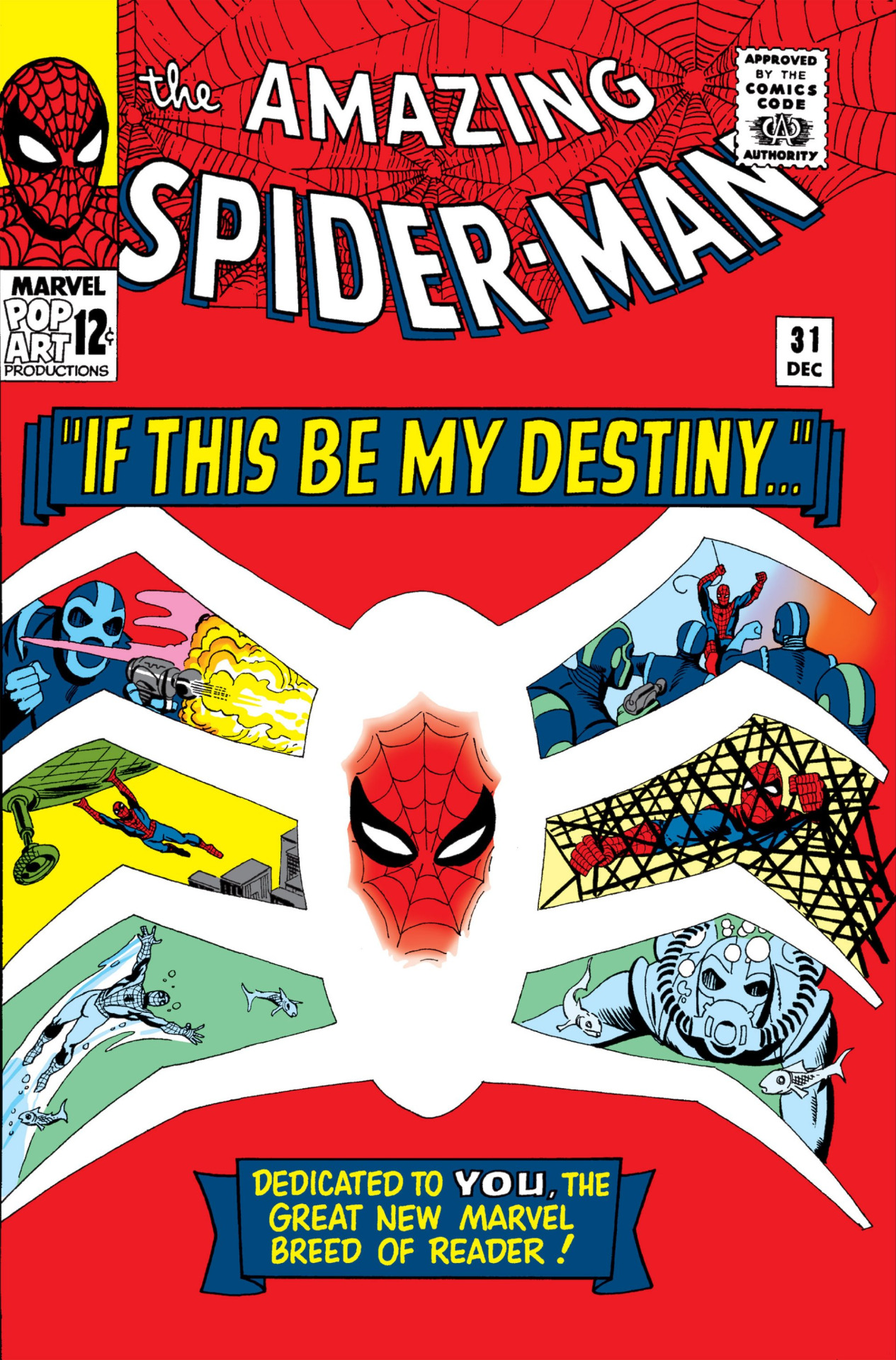
Every great superhero has a defining moment—a single story that perfectly captures who they are and why they matter. For Spider-Man, that moment arrived in The Amazing Spider-Man #31-33, a legendary storyline commonly known as "If This Be My Destiny...!" or The Master Planner Saga.
More than sixty years after its publication, this classic tale remains one of the most influential and celebrated stories in comic book history. Written by Stan Lee and illustrated by Steve Ditko during Spider-Man's formative years, the storyline didn't just establish Peter Parker as a great superhero—it established him as one of the most inspiring fictional characters ever created.
At its core, The Master Planner Saga is a story about perseverance.
The plot begins when Aunt May's health suddenly deteriorates, leaving her desperately in need of a rare life-saving treatment. As Peter struggles to balance his personal life, college responsibilities, and duties as Spider-Man, he discovers that the criminal mastermind known as The Master Planner is connected to the events unfolding around him.
Unknown to Peter at the time, the Master Planner is actually Doctor Octopus, one of Spider-Man's most dangerous and intelligent enemies.
Determined to stop the villain and obtain the isotope needed to save Aunt May's life, Spider-Man launches himself into a desperate battle against overwhelming odds. The confrontation eventually leads him into an underwater base where disaster strikes.
A massive explosion causes enormous machinery and debris to collapse around him.
Suddenly, Spider-Man finds himself trapped beneath tons of twisted steel and wreckage.
Alone.
Exhausted.
Injured.
And seemingly powerless to escape.
For most heroes, this would have been the end.
But for Peter Parker, giving up was never an option.
What follows is widely regarded as one of the greatest sequences ever created in superhero comics.
Pinned beneath an unimaginable weight, Peter slowly begins to lose hope. His body is battered. His strength is fading. Every attempt to free himself seems doomed to fail. Water rises around him as panic threatens to take hold.
Yet amid the despair, Peter's thoughts return to the people depending on him.
He thinks about Aunt May.
He thinks about Uncle Ben.
He thinks about the responsibilities he carries and the lives that will be affected if he fails.
And then something remarkable happens.
Drawing on every ounce of physical and emotional strength he has left, Peter refuses to surrender.
In one of the most iconic moments in Marvel Comics history, Spider-Man slowly lifts the crushing machinery above him and forces his way free.
The image of Peter Parker rising beneath the impossible weight of the wreckage has become one of the defining visuals not only of Spider-Man but of the entire superhero genre. Decades later, the scene continues to be referenced, recreated, and celebrated across comics, animation, video games, and films, including memorable adaptations in Spider-Man: Homecoming and numerous animated Spider-Man projects.
But what makes the moment so powerful isn't the feat of strength itself.
It's what that strength represents.
The scene has never been about Spider-Man's powers.
It's about his determination.
Anyone with superhuman abilities might be able to lift heavy machinery. What makes Peter Parker extraordinary is his refusal to quit when everything seems hopeless. The weight crushing him is as much emotional as it is physical. It represents grief, responsibility, fear, failure, and the countless burdens he carries every day.
By lifting the machinery, Peter is symbolically lifting all of those burdens as well.
That is why the sequence continues to resonate with readers across generations.
Everyone has experienced moments when life feels overwhelming. Everyone has faced obstacles that seem impossible to overcome. Peter's struggle beneath the wreckage serves as a powerful metaphor for resilience, reminding readers that perseverance often matters more than raw strength.
The storyline also showcases one of Spider-Man's most important qualities: his humanity.
Unlike many superheroes who appear larger than life, Peter Parker feels vulnerable. He doubts himself. He gets scared. He experiences setbacks and failures. Yet despite those fears, he continues moving forward.
That willingness to keep fighting, even when he believes he can't, is what truly makes him heroic.
The Master Planner Saga also marks an important turning point in Spider-Man's early development. It reinforces the central lesson that has defined the character since the death of Uncle Ben: with great power comes great responsibility. Peter understands that Aunt May's survival depends on him, and that knowledge becomes the fuel that helps him achieve the impossible.
Over the decades, countless Spider-Man stories have explored larger threats, bigger battles, and more dramatic consequences. Yet few have matched the emotional impact of If This Be My Destiny...! because few stories understand the character as completely.
This is Spider-Man stripped down to his essence.
No flashy gadgets.
No multiversal stakes.
No armies of heroes.
Just one young man refusing to give up when everything around him tells him he should.
More than six decades later, the image of Peter Parker lifting that crushing machinery remains one of the most enduring symbols in comic book history—a timeless reminder that true heroism is not measured by power, but by the courage to keep going when all hope seems lost.
And that is precisely why The Master Planner Saga remains one of the greatest Spider-Man stories ever told.
3. The Night Uncle Ben Died: The Origin Story That Created Spider-Man and Changed Comics Forever

Every legendary hero has an origin story, but few have had the lasting cultural impact of Spider-Man's. More than sixty years after it was first published, Peter Parker's origin in Amazing Fantasy #15 remains one of the most important and influential stories in comic book history. It isn't simply the beginning of Spider-Man's journey—it is the emotional and moral foundation upon which every Spider-Man story has been built ever since.
Published in 1962 by Marvel Comics and created by the legendary team of Stan Lee and Steve Ditko, Amazing Fantasy #15 introduced readers to a superhero unlike any they had seen before. At a time when most heroes were confident adults with extraordinary abilities, Peter Parker was an ordinary teenager struggling with school, social isolation, money problems, and self-doubt.
That relatability would become the secret behind Spider-Man's enduring popularity.
Peter Parker begins the story as a brilliant but awkward high school student living in Queens, New York, with his loving Aunt May and Uncle Ben. Like many teenagers, he often feels overlooked, misunderstood, and frustrated by the world around him. When a scientific demonstration unexpectedly changes his life, everything seems to improve overnight.
After being bitten by a radioactive spider, Peter develops incredible spider-like abilities.
Suddenly, he possesses enhanced strength, lightning-fast reflexes, extraordinary agility, and the ability to cling to walls. Using his intelligence, he designs web-shooters and creates the iconic Spider-Man identity that would eventually become known around the world.
But Peter doesn't immediately become a hero.
In fact, one of the reasons Spider-Man's origin remains so powerful is because it doesn't portray Peter as perfect.
Initially, he sees his newfound abilities as an opportunity for personal gain. Rather than using his powers to help others, Peter focuses on fame, money, and self-interest. He quickly becomes a television sensation and enjoys the attention and success that come with his extraordinary abilities.
Then comes the moment that changes everything.
While leaving a television studio, Peter encounters a fleeing criminal. A security guard asks for his help in stopping the thief, but Peter refuses to get involved. Believing it isn't his responsibility, he lets the criminal escape.
At the time, the decision seems insignificant.
But it soon proves to be the most important mistake of Peter Parker's life.
Days later, tragedy strikes when Peter learns that his beloved Uncle Ben has been murdered during a burglary. Devastated and consumed by grief, Peter sets out to track down the killer.
When he finally corners the criminal responsible, he makes a horrifying discovery.
The man he has been hunting is the very same thief he had chosen not to stop earlier.
In that instant, Peter realizes that his own inaction played a role in Uncle Ben's death.
The revelation shatters him.
For the first time, Peter understands that possessing power comes with responsibility. His abilities are not gifts meant solely for personal benefit. They are tools that can be used to protect others, and failing to act can have devastating consequences.
From that tragedy emerges one of the most famous lessons in all of fiction:
"With great power there must also come great responsibility."
Although those exact words originally appeared in the story's narration rather than being spoken directly by Uncle Ben, the phrase has become inseparable from Spider-Man's legacy and one of the defining moral principles of the superhero genre.
What makes Spider-Man's origin so timeless is its universality.
At its heart, this isn't really a story about superpowers.
It's a story about accountability.
Peter learns that our choices matter, that actions have consequences, and that looking the other way when we have the ability to help can carry a cost far greater than we imagine. These themes resonate just as strongly today as they did when readers first encountered them in 1962.
Over the decades, Spider-Man's origin has been adapted countless times across comics, television series, animated films, blockbuster movies, video games, and novels. Whether portrayed by Tobey Maguire, Andrew Garfield, Tom Holland, or featured in acclaimed projects like Spider-Man: Into the Spider-Verse, the emotional core remains unchanged.
Everything traces back to that defining night.
Every sacrifice Peter Parker makes.
Every villain he fights.
Every life he saves.
Every burden he carries.
All of it can be traced to the lesson he learned from losing Uncle Ben.
The brilliance of Spider-Man's origin lies in its simplicity. There are no cosmic battles, multiversal threats, or world-ending catastrophes. Instead, it focuses on a deeply personal tragedy that transforms an ordinary teenager into an extraordinary hero.
More than six decades later, Amazing Fantasy #15 remains one of the most influential comic books ever published, not because it introduced a superhero, but because it introduced a philosophy.
A belief that true heroism is not defined by strength, wealth, fame, or power.
It is defined by what we choose to do when those things are placed in our hands.
2. Kraven’s Last Hunt: The Darkest Spider-Man Story Ever Told

Few comic book stories have left a mark on readers quite like Kraven's Last Hunt. Decades after its original publication, it is still widely regarded as one of the greatest Spider-Man stories ever written and one of the most psychologically complex tales in superhero history. Unlike traditional Spider-Man adventures that focus on spectacular battles and larger-than-life villains, this groundbreaking storyline strips both hero and villain down to their emotional core, delivering a haunting exploration of identity, mortality, obsession, and what it truly means to be Spider-Man.
Published in 1987 and written by J.M. DeMatteis with stunning artwork by Mike Zeck, Kraven's Last Hunt was released across multiple Spider-Man titles and forever changed how readers viewed one of Spider-Man's oldest enemies.
For years, Sergei Kravinoff, better known as Kraven the Hunter, had been portrayed as a formidable but often underestimated adversary. Obsessed with proving himself as the world's greatest hunter, Kraven had spent years pursuing dangerous prey from around the globe. Yet no challenge fascinated him more than Spider-Man.
To Kraven, Spider-Man represented the one hunt he could never truly complete.
The one victory he could never fully claim.
Consumed by that obsession and driven by a desperate need to validate his life's purpose, Kraven devises a plan unlike anything he has attempted before.
And for the first time, he succeeds.
The story begins with Kraven capturing Spider-Man and accomplishing what countless villains had failed to do. Using a specially prepared rifle and a carefully orchestrated strategy, he defeats Peter Parker and buries him alive beneath the earth.
For readers at the time, the moment was genuinely shocking.
Spider-Man wasn't simply defeated.
He was broken.
Buried in a coffin and left for dead, Peter finds himself trapped beneath layers of soil, isolated from the world above. The imagery is unsettling, symbolic, and deeply disturbing, reflecting the emotional darkness that defines the entire story.
But Kraven isn't satisfied with merely defeating Spider-Man.
He wants to become him.
Determined to prove that he is superior in every way, Kraven dons a black Spider-Man costume and takes Peter Parker's place. As he patrols the streets, he sets out to demonstrate that he can be a more effective, more ruthless, and ultimately better Spider-Man than the original.
At first glance, it appears that Kraven has finally achieved his lifelong goal.
Yet the deeper he immerses himself in Spider-Man's role, the more he begins to understand the burden Peter Parker carries every day.
This realization becomes one of the story's most compelling themes.
Kraven has always admired Spider-Man's abilities, but he never fully understood the responsibility behind them. By attempting to replace Spider-Man, he discovers that heroism is not measured by physical strength, hunting skill, or dominance over one's enemies. It is measured by compassion, restraint, and the willingness to protect others even when no reward awaits.
Meanwhile, beneath the surface, Peter Parker refuses to surrender.
Buried alive and pushed beyond his physical and emotional limits, Spider-Man faces one of the greatest challenges of his life. His eventual struggle to claw his way out of the grave has become one of the most iconic moments in comic book history, symbolizing resilience, determination, and the refusal to accept defeat.
The image of Spider-Man emerging from his own grave remains one of Marvel's most unforgettable visual achievements.
It is a moment that perfectly captures Peter Parker's defining characteristic: no matter how impossible the odds may seem, he always finds a way to get back up.
While Spider-Man's survival provides the story with its heroic core, Kraven's Last Hunt is ultimately just as much Kraven's story as it is Peter's.
J.M. DeMatteis crafts a deeply introspective portrait of a man consumed by obsession. Throughout the narrative, readers are given unprecedented access to Kraven's thoughts, fears, insecurities, and deteriorating mental state. His fixation on defeating Spider-Man evolves into something tragic, revealing a character searching desperately for meaning in a life defined by competition and conquest.
As the story progresses, Kraven finally realizes a painful truth.
The victory he spent his entire life pursuing brings him no fulfillment.
Having accomplished his ultimate goal, he discovers that the emptiness within him remains.
That revelation transforms Kraven's Last Hunt from a simple superhero story into a profound meditation on purpose, identity, and mortality.
The storyline also explores themes rarely seen in mainstream superhero comics at the time. Questions about life and death, personal legacy, self-worth, and the destructive nature of obsession are woven throughout the narrative, giving the story a literary depth that continues to resonate with readers decades later.
A significant part of the story's enduring power comes from Mike Zeck's extraordinary artwork. His visuals perfectly complement the grim atmosphere, blending horror-inspired imagery with emotional storytelling. Every shadow, expression, and panel reinforces the sense of psychological tension that hangs over the entire narrative.
The result is a comic that feels haunting long after the final page is turned.
Over the years, Kraven's Last Hunt has become a benchmark for mature superhero storytelling and is frequently cited as one of the greatest Spider-Man comics ever created. Its influence can be seen across countless Spider-Man stories, adaptations, and character studies that followed.
More than three decades later, it remains a masterclass in character-driven storytelling.
It is a story about a hunter who finally catches his prey.
A hero who refuses to stay buried.
And a man who discovers that achieving his greatest dream cannot heal the emptiness within.
Dark, thought-provoking, emotionally devastating, and unforgettable, Kraven's Last Hunt stands as one of the most haunting and powerful chapters in Spider-Man history—and a reminder that the greatest battles are often fought within ourselves.
1. The Night Gwen Stacy Died: The Spider-Man Story That Changed Comics Forever

There are comic book stories that entertain, stories that inspire, and stories that redefine an entire medium. The Night Gwen Stacy Died belongs firmly in the last category. More than fifty years after its publication, this landmark Spider-Man storyline remains one of the most influential moments in comic book history—a tragic turning point that forever changed Peter Parker, reshaped superhero storytelling, and marked the end of an era.
Published in The Amazing Spider-Man #121-122 in 1973 and created by writer Gerry Conway alongside legendary artists Gil Kane and John Romita Sr., the story is widely regarded as one of the most important Spider-Man comics ever written. What begins as another confrontation between Spider-Man and his greatest enemy quickly evolves into a tragedy that would leave a permanent scar on the Marvel Universe.
At the center of the story is Gwen Stacy, Peter Parker's first great love and one of the most important people in his life.
For years, Gwen had represented stability, happiness, and hope in Peter's increasingly complicated world. While balancing college, personal responsibilities, and his life as Spider-Man, Peter found comfort in his relationship with Gwen. She was more than just a romantic partner—she was a symbol of the future Peter dreamed of building beyond the mask.
That future is shattered when Norman Osborn, the Green Goblin, discovers Spider-Man's secret identity and decides to strike where it will hurt the most.
Driven by madness and vengeance, the Green Goblin kidnaps Gwen Stacy and takes her to the top of a bridge overlooking the water below. Depending on the interpretation, readers have long debated whether the location is the George Washington Bridge or the Brooklyn Bridge, but what matters most is what happens next.
In one of the most famous scenes in comic book history, the Green Goblin throws Gwen from the bridge.
Peter reacts instantly.
Using his web-shooter, Spider-Man fires a webline toward Gwen as she falls through the air. For a brief moment, it appears that he has saved her.
But tragedy strikes.
Although Peter manages to stop her fall, the sudden force created by the webline causes a violent whiplash effect. The heartbreaking implication is that the abrupt stop snaps Gwen's neck, resulting in her death.
For decades, readers and creators have debated the exact circumstances surrounding Gwen's death, with some interpretations suggesting she may have died from the fall itself. However, the emotional truth remains unchanged: despite Spider-Man's desperate attempt to save her, Peter Parker loses the person he loves most.
And that is what makes the moment so devastating.
For perhaps the first time in mainstream superhero comics, a hero does everything right and still fails.
Peter wasn't too late.
He wasn't careless.
He didn't make a selfish decision.
He tried to save Gwen with everything he had.
And it wasn't enough.
The emotional fallout is immediate and overwhelming. Consumed by grief, guilt, and rage, Spider-Man relentlessly pursues the Green Goblin. What follows is one of the most emotionally charged confrontations in the character's history, culminating in a tragic final showdown that leaves both Peter Parker and Norman Osborn forever changed.
Yet the true significance of The Night Gwen Stacy Died extends far beyond its plot.
The storyline fundamentally altered the way superhero stories were told.
Before Gwen's death, comic books often operated under the assumption that major heroes and their loved ones would ultimately be safe. Readers expected danger, but they also expected things to return to normal. This story shattered that illusion.
Suddenly, actions had consequences.
Loss became permanent.
Failure became real.
For the first time, audiences were forced to confront the uncomfortable reality that even superheroes cannot save everyone.
The impact on Spider-Man as a character was profound.
Gwen's death became the defining tragedy of Peter Parker's life, influencing countless stories for decades to come. It reinforced the burden of responsibility he already carried from Uncle Ben's death and deepened his understanding of the painful truth that power alone cannot prevent every loss.
That emotional wound would continue to shape Peter's relationships, decisions, and worldview throughout his life.
Many comic historians view this storyline as the symbolic end of the Silver Age of Comics and the beginning of a more mature era of storytelling. The innocence and optimism that characterized many earlier superhero adventures gave way to narratives that embraced tragedy, complexity, and emotional realism.
In many ways, modern superhero storytelling can trace its roots back to these two issues.
The influence of Gwen Stacy's death can still be felt today across comics, films, television series, and video games. The storyline has been referenced, adapted, and reinterpreted countless times, most notably in The Amazing Spider-Man 2 and various animated Spider-Man projects. Yet no adaptation has diminished the emotional power of the original story.
What makes The Night Gwen Stacy Died endure is not simply the shock of the event itself.
It is the humanity behind it.
Peter Parker's pain feels real because it reflects a universal fear: the fear of losing someone we love despite doing everything possible to protect them. It reminds readers that life is not always fair, that tragedy can arrive without warning, and that sometimes even our best efforts cannot change the outcome.
And yet, despite that heartbreak, Peter continues.
He keeps fighting.
He keeps helping others.
He keeps choosing responsibility over despair.
That resilience is what ultimately defines Spider-Man.
More than half a century later, The Night Gwen Stacy Died remains the gold standard for emotionally impactful superhero storytelling. It is a story about love, loss, failure, and perseverance. It transformed Spider-Man forever, reshaped the comic book industry, and proved that superheroes could tell stories every bit as powerful and emotionally complex as any other form of literature.
It wasn't just the day Peter Parker lost Gwen Stacy.
It was the day comic books grew up.
Why These Spider-Man Comics Still Matter Today
More than sixty years after his debut in Amazing Fantasy #15, Spider-Man remains one of the most searched-for and beloved superheroes in the world. Stories like Kraven's Last Hunt, Spider-Verse, Spider-Man: Blue, The Death of Jean DeWolff, and The Night Gwen Stacy Died continue to influence modern Marvel comics, blockbuster films, television series, and video games. Their themes of responsibility, sacrifice, resilience, grief, and hope resonate across generations, making them essential reading for every Spider-Man fan.
Few superheroes have inspired generations of readers quite like Spider-Man. Across more than six decades of comics, Peter Parker's journey has delivered some of the most emotional, thought-provoking, and unforgettable stories ever published. From the heartbreaking tragedy of The Night Gwen Stacy Died and the psychological brilliance of Kraven's Last Hunt to the multiversal spectacle of Spider-Verse and the inspiring rise of Miles Morales, these stories showcase why Spider-Man remains Marvel's most relatable and enduring hero.
What makes these comics truly special isn't the superpowers, epic battles, or iconic villains. It's the humanity at their core. Every great Spider-Man story reminds us that heroism isn't about being perfect—it's about standing back up after failure, choosing responsibility over selfishness, and finding hope even in the darkest moments.
Whether you're a lifelong Marvel reader or discovering Spider-Man comics for the first time, these legendary stories represent the very best of what superhero storytelling can achieve. They are timeless, emotionally powerful, and as relevant today as when they were first published.
If these incredible Spider-Man stories have inspired you to revisit the Marvel Universe, now is the perfect time to expand your collection.
Whether you're building the ultimate Marvel display or searching for the perfect collectible gift, there's never been a better time to bring your favorite characters home.
Start your collection today and celebrate the stories that made Spider-Man a legend.