


Kitana Mortal Kombat Guide: Origins, Powers & Full Story
Royal Blood, Hidden Truths
Kitana—often referred to as Princess Kitana, and at one point known as Kitana Kahn—is one of the most enduring and layered characters in the Mortal Kombat franchise. She is the rightful Princess of Edenia, born to Queen Sindel and King Jerrod, and for a time, she also carried the mantle of Kahnum of Outworld.
Her story, however, is not one of simple royalty. It is shaped by deception, conquest, and a life built on carefully constructed lies. After Edenia was invaded, her father was killed, and her realm was absorbed into Outworld, Kitana was taken in by Emperor Shao Kahn and raised as his daughter. For years—centuries, in fact—she believed this to be her truth.
Within Kahn’s empire, she served as one of his most trusted operatives, often acting as a deadly assassin alongside figures like Mileena and Jade. But beneath that loyalty was a story waiting to unravel—one that would redefine everything she thought she knew about herself.
A Warrior Forged by Betrayal
Kitana’s journey truly begins the moment she discovers the truth about her origins—that her life under Shao Kahn was never one of family, but of manipulation and control. Her father had been murdered, her mother enslaved, and she herself molded into a weapon for the very tyrant who destroyed her home.
That realization becomes the turning point of her character. She breaks free from Kahn’s influence, turning against him and aligning herself with Earthrealm’s champions. From that moment onward, Kitana transforms from an obedient enforcer into a leader fighting for justice, restoration, and the liberation of her people.
Despite being over 10,000 years old—a result of Edenian longevity—Kitana retains the appearance of a young woman, a detail that often contrasts with the immense weight of her experiences.
Love, Loyalty, and Leadership

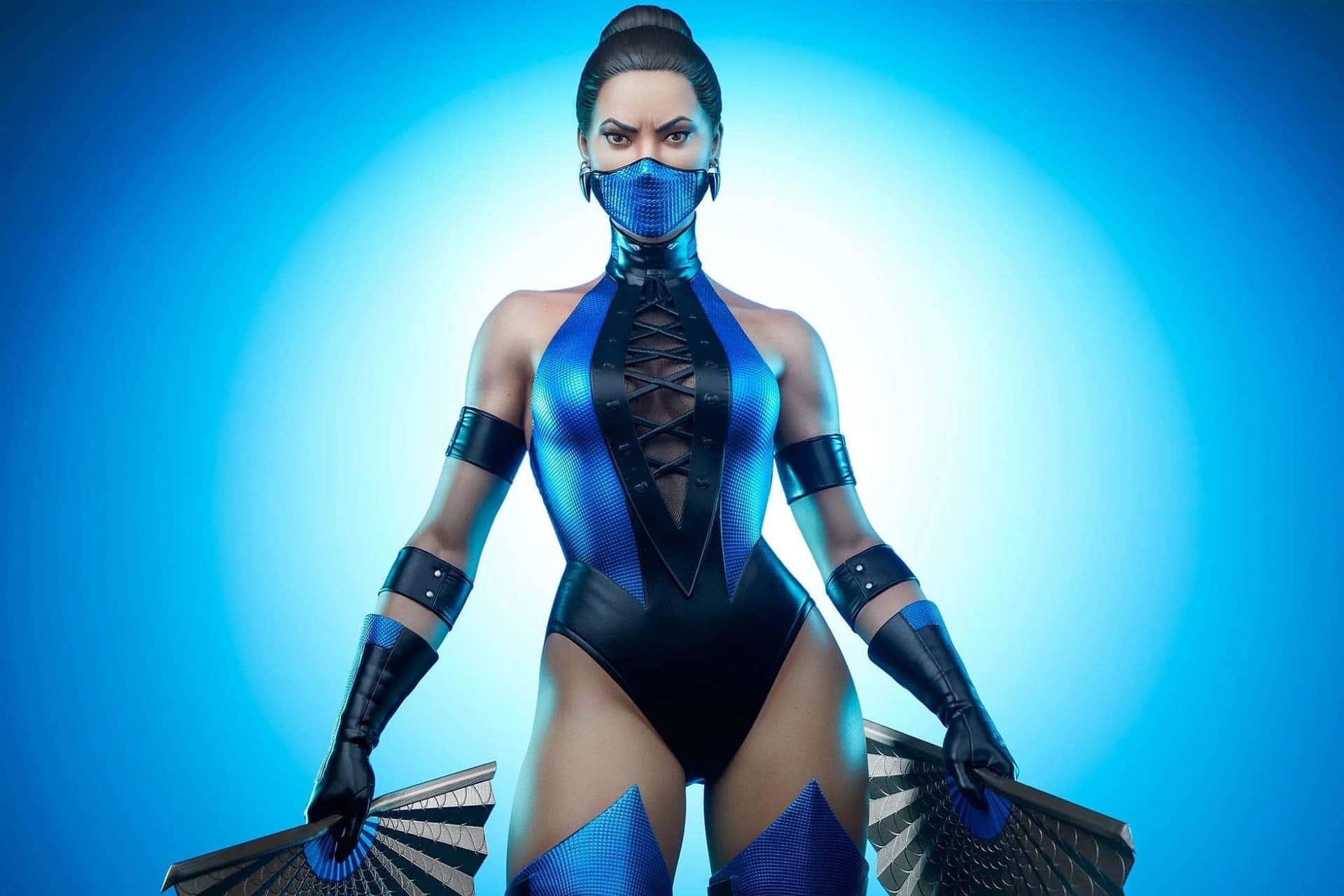

At the heart of Kitana’s story lies her connection to Liu Kang. Their relationship evolves gradually across the series—from mutual respect to a deeply rooted bond that stands as one of the most iconic romances in fighting game history.
Their dynamic is not defined by dependency, but by shared purpose. Both characters are warriors shaped by duty, sacrifice, and the burden of protecting their realms. Together, they represent a rare balance of strength and compassion within a universe often driven by conflict.
Beyond romance, Kitana’s role as a leader becomes increasingly central. In later storylines, she rises to power as Kahnum of Outworld, taking on the responsibility of ruling and uniting fractured realms. Her leadership is not inherited—it is earned through years of struggle, resilience, and the courage to stand against tyranny.
A Legacy That Endures
Kitana first appeared in Mortal Kombat II, marking the introduction of one of the franchise’s most iconic female fighters. From that point onward, she became a constant presence, appearing as a playable character in nearly every major installment.
Her signature steel fans—both elegant and deadly—have become synonymous with her identity, reflecting the duality of her character: grace paired with lethal precision. Over time, she has grown beyond her origins as a supporting figure into one of the central pillars of the Mortal Kombat narrative.
In Mortal Kombat 1, a new interpretation of Kitana emerges within the reimagined timeline crafted by Liu Kang. This version maintains her core essence—royalty, strength, and emotional depth—while adapting her role within a reshaped universe. Alongside her, a counterpart from a previous timeline appears, further reinforcing her importance across multiple realities.
About Kitana
An Edenian Legacy Spanning Millennia

Princess Kitana is a character defined as much by time as by transformation. Though she is over 10,000 years old, she is still regarded as young by Edenian standards—an insight into the longevity and near-immortal nature of her people. Despite the centuries she has lived through, Kitana retains the physical appearance of a woman in her prime, a contrast that quietly reflects the immense weight of her experiences.
Across those long years, she rose to prominence in two very different roles. She was once the loyal stepdaughter of Shao Kahn, raised within his empire and shaped into one of his most trusted warriors. But that loyalty was built on illusion. When the truth of her origins surfaced—her father King Jerrod’s murder and Edenia’s conquest—everything changed.
Kitana broke free from Shao Kahn’s control, turning against him and ultimately helping liberate her home realm. Her journey did not end there. She later led an army into Outworld itself, ensuring that Shao Kahn would never again have the opportunity to rise to power.
A Bond That Transcends Death
At the emotional core of Kitana’s story is her relationship with Liu Kang, the champion of Mortal Kombat. Their connection is understated yet deeply rooted, evolving over time into one of the franchise’s most enduring romances.
Even death does not sever that bond. After Liu Kang is killed by the Deadly Alliance, Kitana’s loyalty to him remains unwavering. Their relationship exists beyond simple timelines or circumstances—it is built on mutual respect, shared purpose, and a deep understanding of sacrifice.
This emotional grounding becomes even more significant when contrasted with Kitana’s earlier life. For much of her existence, she served Shao Kahn without question. But as doubt began to take hold—fueled by guilt, moral conflict, and the truth about her father—she chose to walk a different path, aligning herself with Earthrealm’s defenders.
Betrayal, Death, and Rebirth


In an alternate timeline, Kitana plays a pivotal role during the first two Mortal Kombat tournaments as one of Outworld’s champions. However, upon uncovering the truth about her past and Shao Kahn’s actions, she defects and joins the warriors of Earthrealm.
Her story takes a tragic turn when she is ultimately slain by her own mother, Sindel—beaten brutally and stripped of most of her soul. This moment marks one of the darkest chapters in her journey, reshaping her fate entirely.
After Sindel’s death, Kitana’s soul does not find peace. Instead, it is claimed by Quan Chi, who resurrects her as a revenant—an undead servant bound to the Netherrealm. Alongside other fallen warriors, she becomes part of the Netherrealm’s invasion of Earthrealm, stripped of her former autonomy.
Following Quan Chi’s death and Shinnok’s defeat at the hands of Cassie Cage, the balance of power shifts once again. Raiden, now hardened and ruthless, decapitates Shinnok and presents his severed head to Kitana and Liu Kang—who now rule the Netherrealm together in their revenant forms.
The Collapse and Rebirth of Time
The events that follow are shaped by Kronika, the Keeper of Time and mother of Shinnok. Seeking to undo Raiden’s interference, she attempts to reset the timeline entirely, manipulating both past and present versions of various fighters—including Kitana’s revenant self.
As timelines collide and realities begin to fracture, Kitana exists in multiple forms at once—each representing a different path her life could take. Ultimately, Kronika’s plan fails. The revenant Kitana is defeated, and her past counterpart is erased from existence—an act that also erases the revenant version tied to her.
It is a rare moment in Mortal Kombat’s narrative where a character is not just defeated, but completely removed from the flow of time itself.
A New Beginning in a Rewritten Timeline
In the current timeline, shaped by Liu Kang as the new Keeper of Time, Kitana is reborn into a different reality. Here, she is created to serve as one of Outworld’s champions, and notably, she exists as the biological twin of Mileena—reframing one of the franchise’s most complex rivalries.
Despite this fresh beginning, the stability of this new world is far from guaranteed. The Outworld throne—and the realm itself—quickly becomes the focus of a new and emerging threat, one that seeks to unravel the carefully constructed timeline Liu Kang has forged.
Appearance
Timeless Beauty, Evolving Identity
Despite being over 10,000 years old, Kitana consistently appears as though she is in her early twenties—a defining trait of Edenian physiology, where age and physical appearance rarely align. Her features are often accentuated with subtle eye makeup, reinforcing her regal yet composed presence.
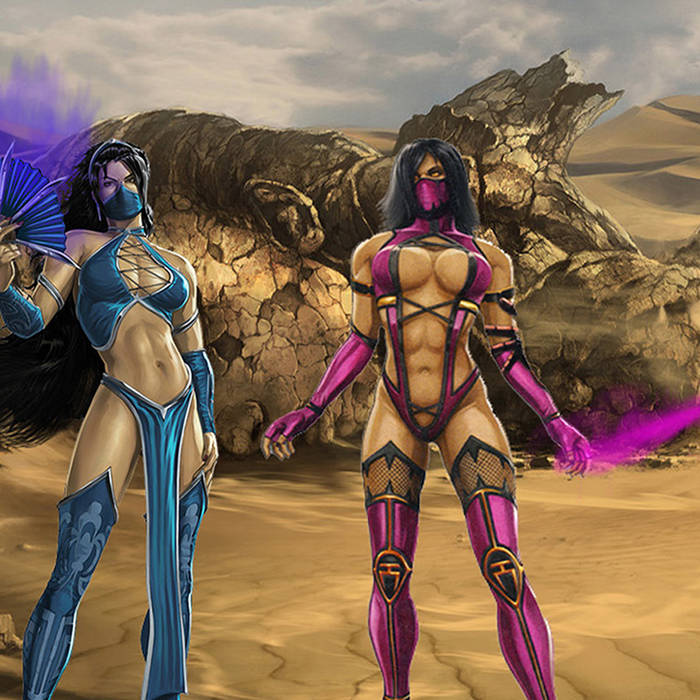
When masked, Kitana is virtually indistinguishable from Mileena, her clone and counterpart. The illusion breaks the moment the mask is removed—revealing the stark contrast between them. Where Kitana embodies grace and symmetry, Mileena’s face exposes the Tarkatan deformities beneath, making their visual similarity both intentional and unsettling.
Over the years, Kitana’s design has undergone significant transformations, reflecting not just changes in game technology but also shifts in tone, storytelling, and character depth across the Mortal Kombat series.
Early Designs — Simplicity with Identity
In Mortal Kombat II, Kitana’s look was straightforward yet instantly iconic. She wore a simple blue leotard paired with matching knee-high boots, long gloves, and a headband. This design established her signature color palette and introduced her as a sleek, agile fighter defined by elegance and precision.
By Ultimate Mortal Kombat 3, her outfit evolved with added detail. The leotard featured a laced chest opening, complemented by armlets and ear studs, along with a stronger use of black accents. Her headband was removed, and her hair was styled into a tight bun—giving her a more refined and battle-ready appearance.
Her transition into 3D began with Mortal Kombat Gold, where she appeared unmasked for the first time. Her facial features were modeled after actress Talisa Soto, adding a layer of realism to her design. Her outfit remained rooted in the leotard concept but featured a near-closed chest opening, a gold brooch, and blue earrings—marking the beginning of her more regal aesthetic.
The Regal Warrior Era
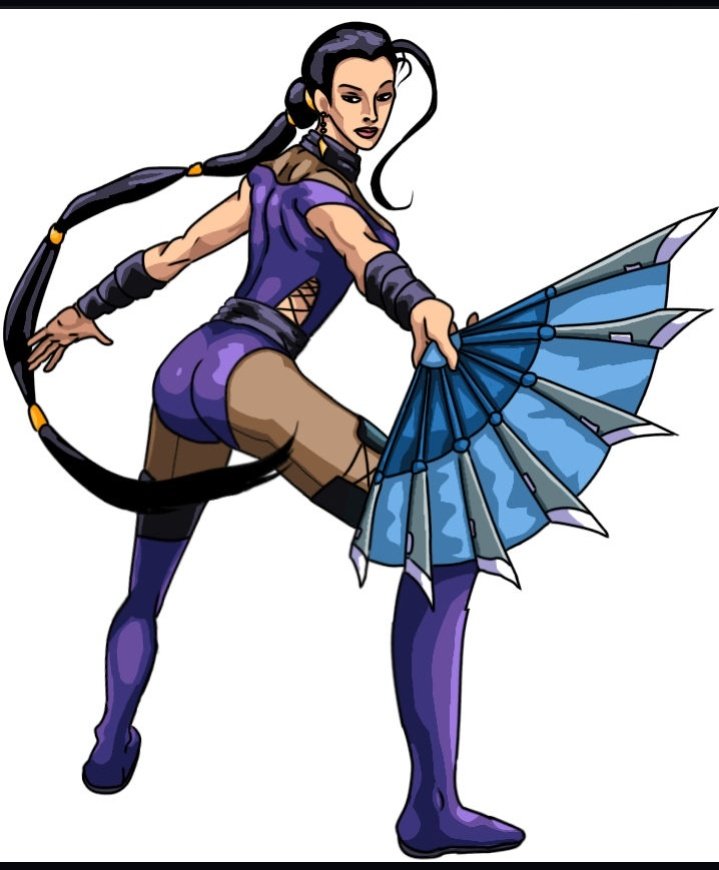
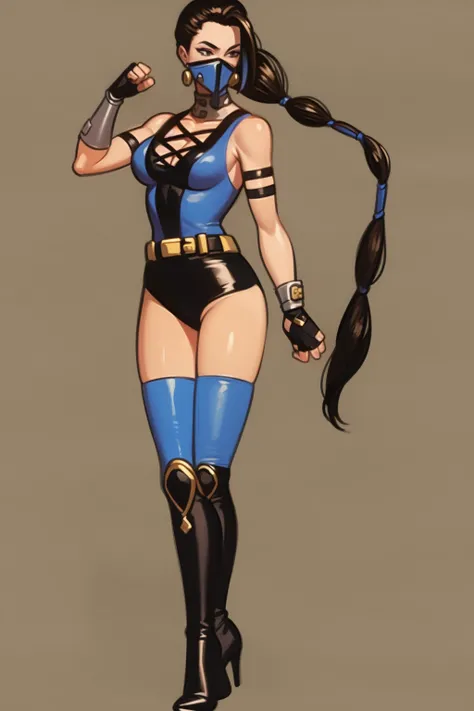
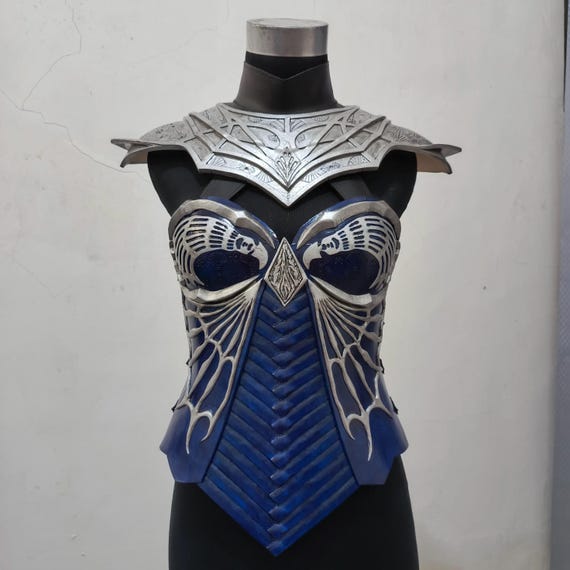
During titles like Deadly Alliance, Unchained, Armageddon, and Mortal Kombat vs. DC Universe, Kitana’s appearance leaned more heavily into her royal heritage.
She wore a blue-and-black leotard paired with thigh-high, high-heeled boots, maintaining her classic silhouette while enhancing its complexity. Alongside this, she also had a more overtly regal costume—a lavender leotard with a deep V-neck, paired with a brown belt, gold earrings, and lavender thigh-high boots.
Her hair during this period became notably longer, styled into three segmented ponytail sections, adding to her distinct visual identity.
Modern Reinvention — Mortal Kombat (2011)
In Mortal Kombat (2011), Kitana’s design was reimagined with a more intricate and stylized approach. She wore a cerulean cropped halter top with silver trimmings, split above the navel and laced at the center—visually echoing her UMK3 design.
This was paired with a matching thong-style bottom and a long, flowing loincloth at the front, decorated with embroidered patterns that mirrored the subtle detailing on her mask. Her accessories included a coronet, thigh-high boots, silver earrings, arm gauntlets, and a tiara. Her hair was styled into a high ponytail.
Her alternate costume featured a blue-and-silver halter top with bikini-style briefs, a rear loincloth, knee-high boots, and detached sleeves, with her hair styled in a low braided ponytail—offering a slightly different interpretation of her look while retaining her core identity.
Duality of Life and Death — Mortal Kombat X

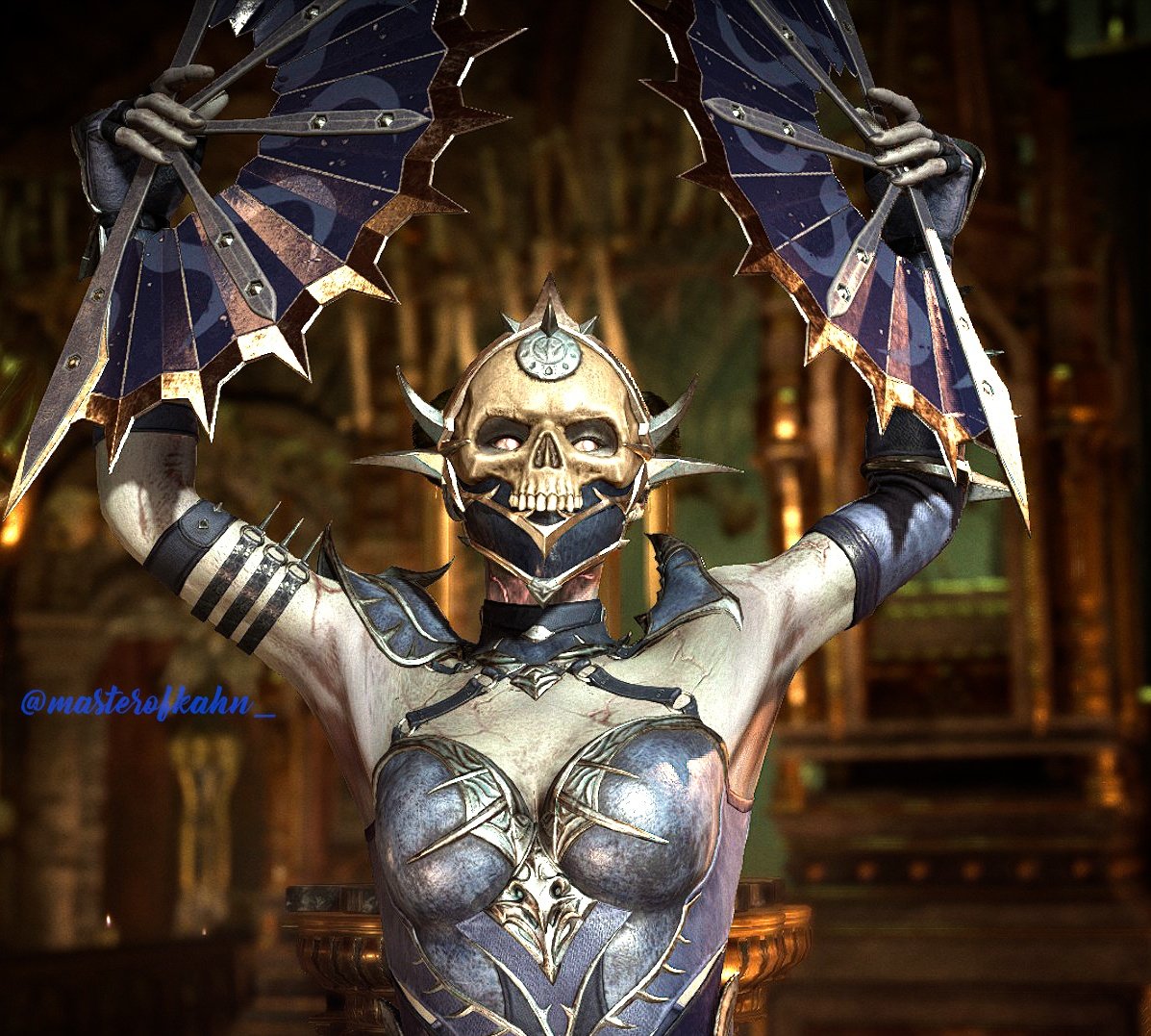

In Mortal Kombat X, Kitana’s design shifted toward a more armored and tactical aesthetic. She wore a blue top reinforced with silver armor across her shoulders, arms, and chest, paired with a belt, loose-fitting pants with side openings, dark blue gloves, and brown boots. Her hair was styled into a bun with two side braids, secured by hairpins.
As a revenant, her appearance became significantly darker. Her skin turned pale, marked by glowing golden cracks, and her eyes emitted an eerie yellow glow. Her attire became worn and corrupted—a dark blue top and skirt combined with black boots and silver gauntlets. Her hair was styled into a high bun, adorned with skull-shaped accessories, emphasizing her transformation into a Netherrealm entity.
Refined Power — Mortal Kombat 11
In Mortal Kombat 11, Kitana’s human form featured a sleek, fitted blue-and-black leather suit, complemented by dark gloves and boots. Her hair was styled into a high bun, secured with a small hairpin and wrapped with a blue ribbon.
Her revenant form continued the darker visual theme, with pale skin and glowing eyes. She wore a heavily armored dark blue outfit, complete with a skull-shaped helmet reminiscent of Shao Kahn’s design. Her hairstyle shifted into two small buns, further distinguishing this version from her living counterpart.
A New Era — Mortal Kombat 1
In Mortal Kombat 1, Kitana’s design reflects the reset timeline while staying true to her essence. She wears a dark blue off-the-shoulder crop top paired with matching tights and a steel belt, with a blue loincloth draped at the front.
Her gloves are fingerless and reinforced with steel plating, while a blue cloth collar frames her neck and collarbones. For the first time since Mortal Kombat (2011), her hair is worn loose, flowing naturally, and she wears a blue tiara—blending elegance with a more grounded, modern aesthetic.
Variants — Titan and Order of Darkness
As a Titan, Kitana adopts a more celestial appearance. She wears an ornate silver top layered over a light blue bodysuit, paired with high-heeled, open-toe sandals and partially armored fingerless gloves. Her mask reflects this design with a blue-and-silver color scheme, and her hair is styled into double buns, reinforcing her elevated, almost divine presence.
In her Order of Darkness variation, her design takes on a more aggressive tone. She wears a gold outfit accented with darker shades of gray. Her hair is shortened, resembling Mileena’s style, and her mask becomes more menacing—gold with silver trim and sharp, tooth-like detailing. Notably, she forgoes gloves entirely and wears sandals, aligning her look with other darker-themed variants in the series.
Character Development
From “Kitsune” to Kitana — The Origins
Before Kitana became one of the most iconic characters in Mortal Kombat, she existed in a very different form during the early development of the original game in 1991. At that stage, she was not even playable. Instead, she was conceived as a herald-type character known as Kitsune.
The inspiration behind this early version can be traced back to Princess Mariko from Karateka (1984), a cinematic-style martial arts game created by Jordan Mechner. Much like Mariko, Kitsune was envisioned as a royal figure tied closely to the narrative, rather than a frontline combatant.
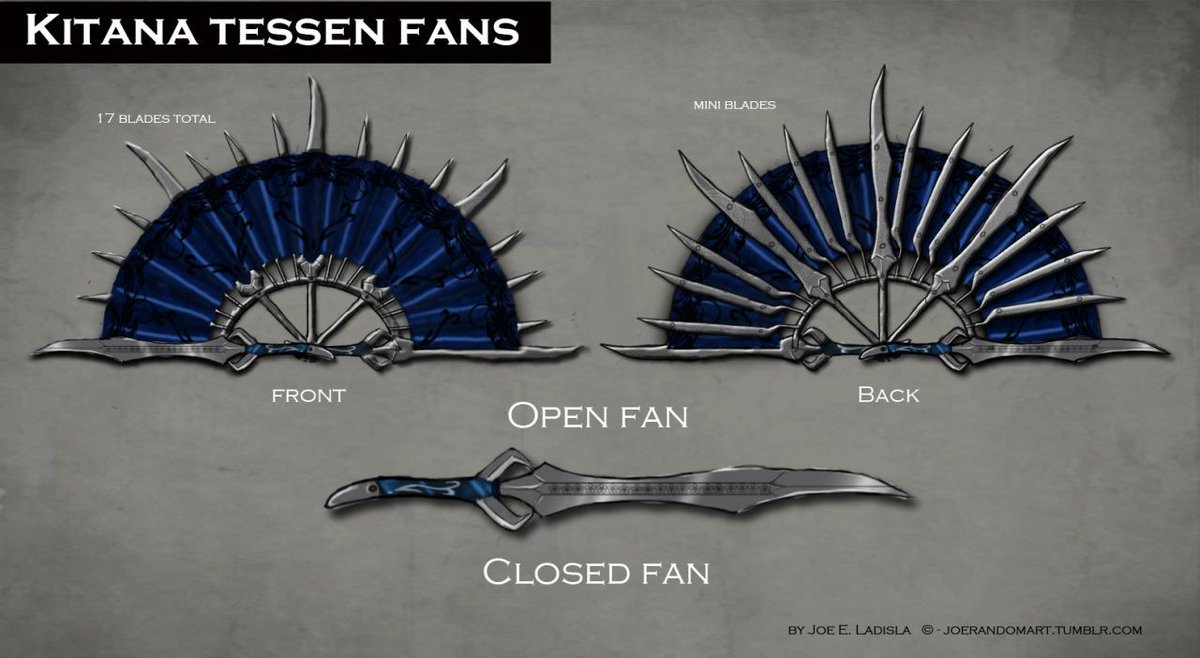
In John Tobias’ early design sketches, Kitsune carried a single ornamental fan—a detail that would later evolve into one of Kitana’s most defining weapons. At the time, her role in the story was already taking shape. She was intended to be the daughter of Shang Lao, positioned as a “reward” or “spoil of victory” for the tournament’s winner. However, even in this early concept, there was a twist—she would ultimately betray her father after developing feelings for Liu Kang.
The Evolution into Kitana
As the Mortal Kombat universe expanded during the development of Mortal Kombat II, the narrative structure shifted significantly. Shang Tsung’s role was redefined, placing him under the authority of Shao Kahn. This change required a reworking of Kitsune’s character.
The result was the creation of Kitana—a refined version of the original concept. Rather than being Shang Lao’s daughter, she was reimagined as Shao Kahn’s stepdaughter, preserving the “princess” identity while integrating her more deeply into the growing mythology of Outworld.
This transition marked a crucial step in her development. She was no longer just a narrative figure—she became a central character within the larger power structure of the Mortal Kombat universe.
The Birth of Mileena — A Defining Duality

4
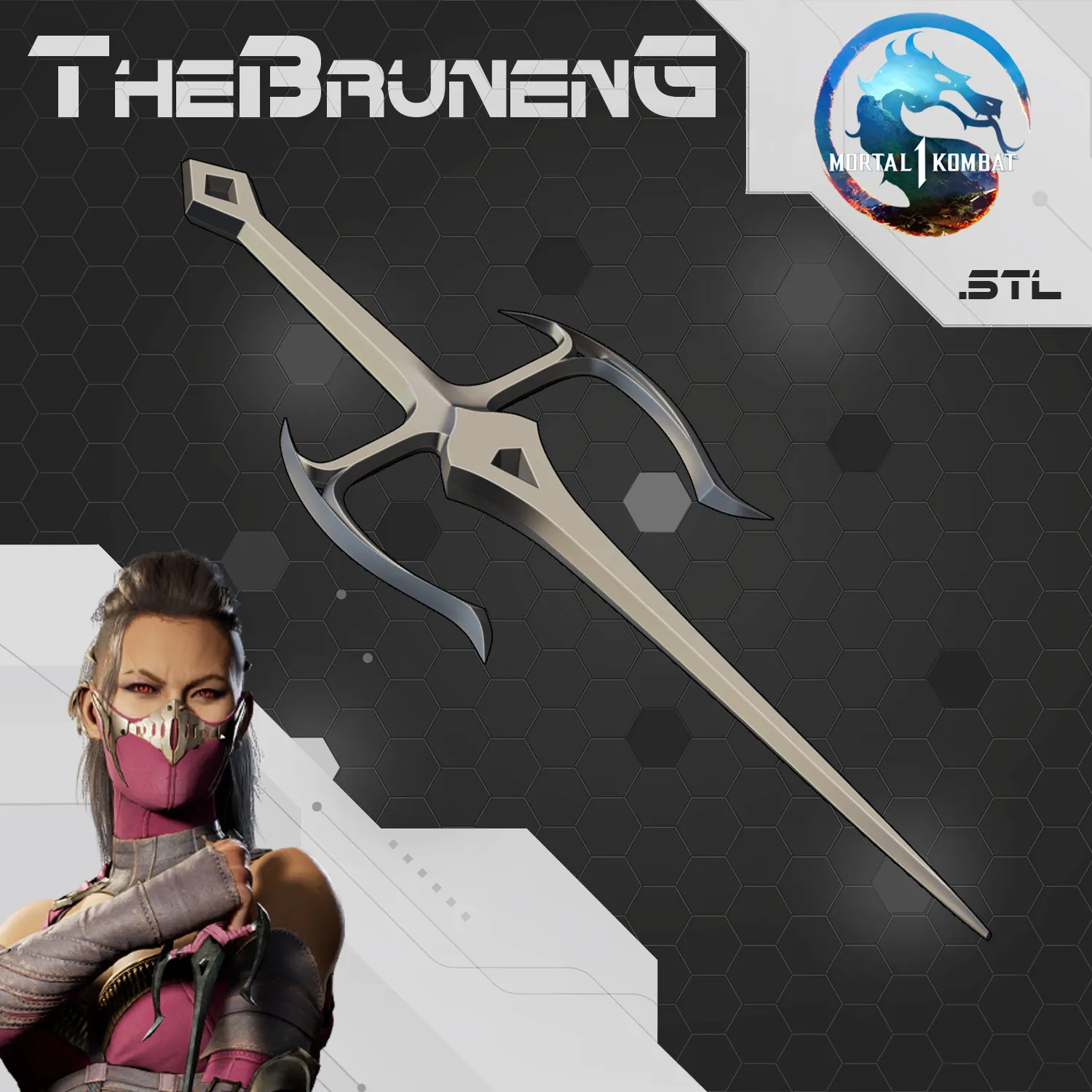
One of the most important creative decisions during Kitana’s development came from a simple yet impactful idea. In early sketches, Tobias initially depicted her wielding sais—a weapon that would later become synonymous with Mileena.
When these designs were presented to Ed Boon, he suggested leveraging palette swapping—a common technique in early fighting games—to create an additional character using the same base model. This idea led to the creation of Mileena.
From there, the two characters were given distinct identities. Mileena retained the sais, while Kitana was redefined with her now-iconic bladed fans. What began as a technical workaround evolved into one of the most compelling dualities in the franchise—two characters visually similar, yet fundamentally different in origin, personality, and purpose.
Naming the Princess of Edenia
The name “Kitsune,” which translates to “fox” in Japanese, was ultimately discarded during development. According to Tobias, the name didn’t align with the cultural direction of the characters at the time, particularly Shang Tsung and Shao Kahn, who were perceived as having Chinese influences.
Another option—“Katana”—was also considered but rejected, likely due to its direct association with the weapon rather than the character.
The final name, Kitana, emerged as a hybrid—combining elements of “Kitsune” and “Katana.” The goal was to create something that sounded broadly “Asian-inspired” without being tied too specifically to one cultural reference. As Tobias later reflected, the series itself eventually became a blend of various mythologies and influences, making the name fitting within its evolving identity.
Game Information
A Fan-Favorite Born in Mortal Kombat II
When Kitana entered the arena in Mortal Kombat II, she quickly became one of the most popular characters in the entire roster. For many players, she wasn’t just another fighter—she was the go-to choice, especially for those who preferred precision, control, and combo-based gameplay.
Her fighting style stood out immediately. Players discovered that her moves could be chained together fluidly, often ending with her signature fan throw while the opponent was still airborne. This created a rhythm to her combat that felt both stylish and devastatingly effective.
It didn’t take long for the community to push her abilities even further. During the early production runs of the game, Kitana developed a reputation for being nearly unbeatable. At the center of this was her now-infamous “fan lift” move. When executed correctly—particularly in the corner of the screen—it could trap opponents in a loop, leaving them suspended and unable to respond.
This allowed skilled players to follow up with a continuous series of punches and attacks without interruption, effectively locking their opponent out of the fight entirely. In an era where fighting game balance was still evolving, this made Kitana one of the most dominant characters in the game.
Interestingly, even the developers were surprised by what players were able to achieve. Ed Boon himself noted—via Kitana’s official trading card—that it was remarkable to see fans creating combos that hadn’t even been considered during development.
However, this level of dominance came at a cost. The mechanic created clear balance issues, and as a result, adjustments were made in later versions of Mortal Kombat II to prevent the “fan lift” from being exploited in this way.
The Mortal Kombat 4 Absence — And Hidden Presence
Kitana’s journey through the series hasn’t always been straightforward. During the development of Mortal Kombat 4, she was originally planned to be part of the roster. However, she was ultimately removed to make room for the introduction of a new character—Tanya.
Despite this decision, Kitana was never entirely erased from the game. Traces of her presence remained. Her character model was still used in Liu Kang’s ending, serving as a subtle reminder of her intended inclusion.
Even more interestingly, players found ways to access her. In the Nintendo 64 and PC versions of the game, Kitana could be played using cheat devices—turning her into a kind of hidden character for those willing to dig a little deeper.
Additionally, a portrait of Kitana exists within the unused beta assets of Revision 1.0 of the arcade version. This image appears to have been cropped from her Mortal Kombat Trilogy ending, further confirming how far along her development had progressed before she was removed.
Her full return came shortly after with Mortal Kombat Gold on the Dreamcast, an updated version of Mortal Kombat 4 where she was finally restored as a fully playable character.
A Shift in Deception’s Storyline

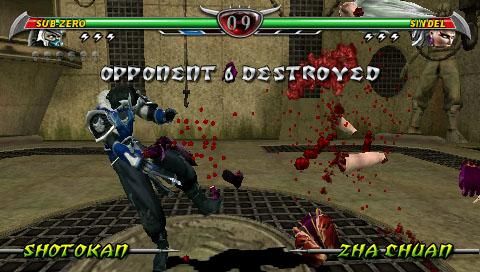
Kitana was also originally intended to appear in Mortal Kombat: Deception. However, during development, the direction of the story changed. Instead of featuring her as an active participant, the narrative shifted to portray her as captured—removing her from the playable roster.
This decision was made to bring Jade back into focus, a character who had not appeared in many previous installments and whose return added a different dynamic to the story.
That said, Kitana was not entirely absent from this era. She remained playable in Mortal Kombat: Unchained, ensuring that fans could still access her within the broader scope of the franchise, even if her role in Deception itself was limited.
Combat Characteristics

Fighting Style, Powers and Abilities
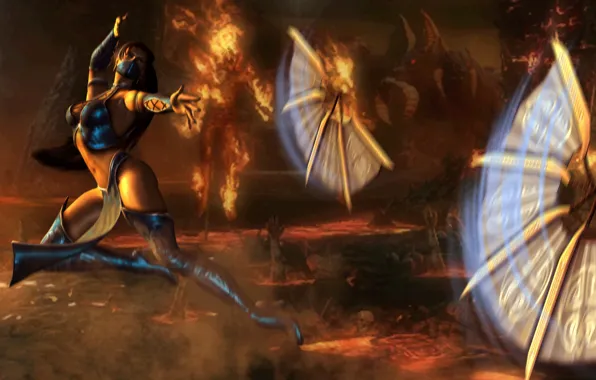
Kitana’s combat style is a seamless blend of elegance and lethality. While she is fully capable in unarmed, hand-to-hand combat, her true strength lies in her mastery of her signature Steel Fans—precision weapons that function both as close-range blades and long-range projectiles.
She can launch her fans with deadly accuracy, slice through opponents at melee distance, and even use them mid-air to maintain offensive pressure. Her aerial control is particularly notable—she can throw fans while airborne and follow up with mid-air strikes, allowing her to counter opponents who attempt to fight above ground level.
Beyond physical combat, Kitana channels Edenian wind magic through her war fans. This allows her to generate tornadoes—both large and small—capable of lifting and controlling opponents. She can also teleport across short and long distances, and even demonstrate limited flight capabilities.
These abilities made her one of the most dominant fighters in Mortal Kombat II, particularly when combined with her combo potential. However, due to balance concerns, her power level was gradually toned down in later installments.
In Armageddon, her mobility expands further, allowing her to teleport and launch herself forward into opponents with rapid, multi-hit kick sequences.
Narratively, Kitana has consistently been portrayed as stronger than her counterpart Mileena, defeating her multiple times across the series. Beyond combat, she also proves herself as a capable leader—successfully bringing Sindel back to her side in Mortal Kombat 3 and even convincing Goro to align with her in Mortal Kombat Gold.
In Mortal Kombat 1, her wind-based abilities are explored more deeply. She can now charge her fans with wind energy, creating traps that lift opponents into the air. These traps can also be manipulated telekinetically, allowing her to reposition them mid-fight and control space more effectively.
Signature Moves


Fan Throw / Fan Toss
Kitana throws one of her fans toward her opponent—a move that became iconic due to its versatility. It can be executed both on the ground and mid-air, making it a reliable combo finisher and one of the key reasons she dominated Mortal Kombat II.
In Deadly Alliance, the move gained a risk-reward mechanic: a successful hit would impale the opponent, but a missed or blocked throw meant losing the fan for the rest of the round. Later games, such as Armageddon, reverted this limitation, allowing multiple throws again.
Across the series, the move has evolved in naming and functionality:
-
MK (2011): renamed Fan Toss, throwing both fans
-
MKX: returns to Fan Throw, using one fan
-
MK11: called Fan Toss again, with variations like Upwards and Low Fan Toss
-
MK1: enhanced version creates an ellipsoid fan pattern and wind burst that launches opponents
Enhanced versions across games add delayed throws, increased damage, faster recovery, or additional projectiles depending on the title.
Square Wave Punch / Square Boost / Square Wave
Originally borrowed from Sonya Blade during her absence in Mortal Kombat II, this move sees Kitana leap into the air and strike opponents with a flying attack.
Over time, the move evolved:
-
In MK (2011), renamed Square Boost, incorporating her fans into a diving slam
-
In MKX, it can be performed both grounded and airborne
-
In MK11, renamed Square Wave, gaining armor-breaking properties
-
In MK1, it becomes a backward arcing kick similar to Sonya’s Arc Kick
Enhanced versions increase damage, grant armor, or allow follow-ups like teleport strikes or chaining multiple attacks. In MK11, it can trigger a Krushing Blow under specific conditions, dealing significant damage.
Fan Lift / Upraise / Uplift
Kitana uses her fans—or wind magic—to suspend opponents helplessly in the air. Initially one of the most powerful tools in her arsenal, it served as both an anti-air move and a combo starter.
Over time, its effectiveness was reduced for balance reasons. In later games:
-
Renamed Upraise in MK (2011) and MKX, using windstorms
-
Enhanced versions (Uplift) increase height and duration
-
In Deadly Alliance and similar titles, using the move automatically switches her to fan-based combat style
Fan-Nado / Fan Vortex
Kitana creates a moving tornado that lifts opponents into the air. In MKX (Royal Storm variation), this replaces Upraise.
In MK11 and MK1, the move evolves into a more versatile tool, allowing different ranges and even aerial usage. Enhanced versions extend the tornado’s reach across the screen.
Additional Techniques
Kitana’s arsenal expands significantly across the series, reflecting both her evolution and gameplay variety:
-
Fan Swipe – Close-range slashing attack with her fans
-
Pretty Kick / Pretty Legs – Multi-kick aerial assault
-
Pixie Dust Teleport – Teleports behind the opponent in a violet cloud (borrowed from Jade)
-
Rolling Fury – Rolls under opponents, similar to Mileena’s technique
-
Cutting Fan / Fan Dice – Defensive spinning attack with added strikes
-
Fake Out Kick – Feint-based shin kick
-
Rising Fan / Rising Blades – Launching fan strike with armor in enhanced form
-
Throat Slice / Throat Slash – Lethal close-range execution attack
-
Air Float / Fan Flutter – Mid-air hovering and movement control
-
Bounce Back – Reflects projectiles using a tornado
-
Assassin Strike / Assassin Impale – High-speed charge attack with impalement
-
Princess Parry – Counterattack with teleport and multi-hit combo
-
Sharpen / Razor Blade – Buff that increases fan damage
Weapon Variations and Borrowed Techniques
Kitana occasionally adopts weapons and abilities associated with other characters:
-
Glaive Throw / Returning Glaive – Uses Jade’s weapon as a projectile
-
Shadow Kick / Eclipse Kick – Borrowed from Jade, with enhanced slam
-
Staff Grab / Staff Smash – Utilizes Jade’s staff for grappling attacks
Advanced and Modern Abilities
In later games, particularly MK11 and MK1, Kitana’s toolkit becomes more modular and strategic:
-
Quick Execution – Teleport-based dual strike attack
-
Edenian Razors – Summons rotating fans as defensive traps
-
Half-Blood Stance – Incorporates Mileena’s sai attacks with multiple follow-ups
-
Seeking Sai / Arcing Sai – Homing or directional projectile attacks
-
Gutted – Multi-hit finisher with Krushing Blow potential
-
Dive Kick – Teleport-based aerial strike
-
Piercing Dagger – Downward fan throw for juggling
-
Edenian Fade – Teleport with follow-up attacks
-
Dancing Fans – Multi-range fan projectile attack
-
Edenian Twist – Aerial spinning attack with Krushing Blow conditions
-
Royal Protection – Absorbs projectiles and boosts damage
Mortal Kombat 1 Enhancements
In Mortal Kombat 1, Kitana’s abilities are further refined and expanded:
-
Princess Pirouette – Spinning fan attack with knockdown
-
Fancy Flick – Anti-air fan throw with stagger potential
-
Wind Bomb / Wind Bomb Squall – Ground traps that launch opponents
-
(Air) Reverse Fan Toss – Backflip throw that reappears from the opposite side
Enhanced versions of these moves often add wind-based effects, lifting opponents into the air and enabling extended combos.
Kitana’s journey across the Mortal Kombat universe is one defined by transformation, resilience, and quiet strength. From a loyal assassin raised under deception to a queen who reclaims her legacy, her story carries a rare balance of grace and power that few characters in gaming can match.
She is not just a warrior defined by her iconic steel fans or her mastery of Edenian magic—but a leader who has endured betrayal, death, rebirth, and the collapse of entire timelines, only to rise again with purpose.
Across every version of her story, one truth remains constant—Kitana fights not for conquest, but for restoration. For her people. For her realm. And for the future she believes can still be shaped.
And if you’re someone who lives for characters like Kitana and the worlds they belong to—there’s so much more waiting for you.
Explore an incredible range of collectibles featuring Mortal Kombat, He-Man and Masters of the Universe, Anime legends, Marvel, DC, Transformers, LEGO, and more—perfect for fans who want to bring these iconic universes into their own space.