


Who Is Lobo? 7 Must-Read DC Comics Before the DCU
Lobo has suddenly found himself back in the spotlight following the announcement that Jason Momoa will portray the infamous bounty hunter in the upcoming DC Studios film Supergirl, originally announced as Supergirl: Woman of Tomorrow. For longtime comic readers, this casting feels almost inevitable, but for many casual DC fans, it has sparked a new curiosity about the character. As excitement continues to build around his live-action debut, countless readers are now looking back toward the comics to discover who Lobo really is and why he has remained one of DC’s most unforgettable anti-heroes for decades.
The character first exploded onto the comic book scene in 1983, when creators Roger Slifer and Keith Giffen introduced him in Omega Men #3. At the time, Lobo was never intended to become a major star. He was conceived as a satirical response to the growing popularity of grim and excessively violent comic book characters. Heroes such as Wolverine and Punisher had helped usher in a darker era of comics, and Lobo was designed to poke fun at those trends by taking every extreme characteristic and pushing it to absurd levels.
What nobody expected, however, was that readers would fall in love with him.
Over time, Lobo evolved far beyond a simple parody. During the late 1980s and especially throughout the 1990s, he transformed into one of DC Comics’ biggest cult icons. Sporting a leather jacket, a chain hooked to his belt, a cigar permanently clenched between his teeth, and an attitude that seemed to challenge the entire universe, the self-proclaimed “Main Man” became a phenomenon. His outrageous personality, complete disregard for authority, and gleefully chaotic approach to violence made him stand out in a landscape already crowded with anti-heroes. Instead of fading away as a joke character, Lobo became the joke that outlived everyone else.
Part of his appeal lies in the sheer contradiction of who he is. He is an intergalactic bounty hunter from the planet Czarnia, possesses immense strength, near-invulnerability, regenerative abilities, and enough arrogance to fill several galaxies, yet he approaches life with a bizarre sense of humor that makes him strangely lovable despite his destructive tendencies. Over the years, he has battled some of the most powerful beings in the DC Universe, crossed paths with heroes like Superman, and developed a reputation as one of the most unpredictable figures in comic book history.
Lobo’s influence on the comic book industry is often understated. Long before characters such as Deadpool became household names for their irreverent humor and self-aware chaos, Lobo was already redefining what an anti-hero could be. Many fans and critics view him as one of the characters who helped pave the way for the rise of fourth-wall-breaking, darkly comedic protagonists. Even elements that later became associated with characters like Harley Quinn can be traced back to the kind of anarchic energy that Lobo brought to comics years earlier.
Now, with Jason Momoa finally stepping into a role he has publicly expressed interest in for years, Lobo is preparing for his biggest mainstream spotlight yet. The upcoming film adaptation is expected to introduce the Czarnian mercenary to an entirely new generation of fans, placing him alongside Milly Alcock in one of the most anticipated projects of DC Studios’ new era.
For readers eager to understand why comic book fans have celebrated the Main Man for decades, there is no shortage of material to explore. Lobo’s publishing history is packed with outrageous adventures, cosmic mayhem, razor-sharp satire, and moments of surprisingly effective character work. While there are countless stories worth reading, the seven comic arcs that follow serve as the perfect gateway into the world of DC’s loudest, meanest, and most gloriously unhinged anti-hero.
After all, there may be many bounty hunters across the universe—but there is only one Main Man.
Lobo: The Last Czarnian (#1–4) — The Story That Defined the Main Man Forever
By Keith Giffen, Alan Grant, and Simon Bisley
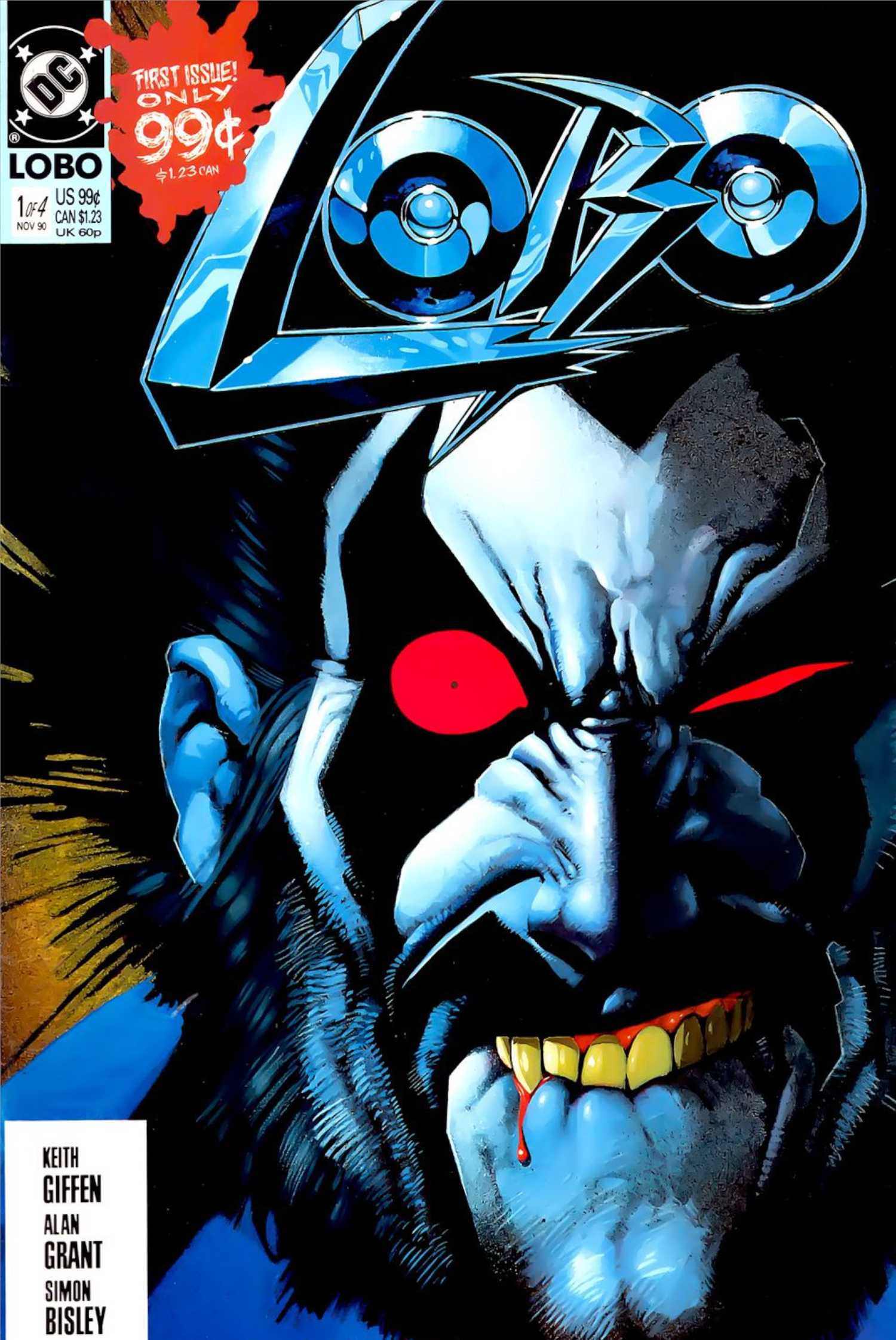
If there is one comic that perfectly captures everything Lobo represents, it is Lobo: The Last Czarnian. More than three decades after its original publication, this four-issue miniseries remains the gold standard for the character and is still widely regarded as the definitive introduction to DC's most infamous intergalactic bounty hunter. While Lobo has starred in countless stories since then, few have managed to distill his unique blend of absurdity, violence, dark comedy, and larger-than-life personality quite as effectively as this landmark series.
At its core, The Last Czarnian is the comic that truly established Lobo's identity. It takes every exaggerated aspect of the character and unleashes it at full volume, creating a story that is equal parts space opera, satire, and complete chaos.
The adventure begins when the brilliant but notoriously manipulative Vril Dox hires Lobo for what appears to be a straightforward assignment: infiltrate a maximum-security prison facility in deep space and break out a highly valuable prisoner. For a mercenary of Lobo's reputation, it sounds like just another payday.
What Vril Dox conveniently neglects to mention, however, is the identity of the prisoner.
The target turns out to be Miss Tribb, Lobo's fourth-grade schoolteacher.
From that moment onward, any semblance of a normal mission immediately spirals into utter madness. What follows is a galaxy-spanning trail of destruction, misunderstandings, outrageous confrontations, and increasingly ridiculous complications as Lobo finds himself stumbling from one disaster to the next. Every chapter raises the stakes and the insanity, turning what should have been a simple extraction job into one of the most entertaining and chaotic adventures of his career.
For new readers, the series serves as an ideal primer because it introduces virtually every defining element that would come to characterize Lobo for decades to come. His explosive temper, inflated ego, twisted sense of humor, surprising resourcefulness, and complete disregard for authority are all on full display. The comic also showcases the satirical edge that helped separate Lobo from other anti-heroes of the era, proving that beneath the carnage lies a sharp parody of comic book excess itself.
A major reason the miniseries works so well is the creative team behind it.
Keith Giffen, one of Lobo's co-creators and the legendary writer behind acclaimed titles such as Justice League International and Blue Beetle, plays a crucial role in preserving the character's distinctive voice. Giffen understood better than anyone that Lobo's appeal wasn't simply about violence; it was about embracing the ridiculousness of that violence and finding humor in the most outrageous situations imaginable.
Alongside him is Alan Grant, whose own talent for dark comedy and offbeat storytelling proved to be the perfect complement to Giffen's sensibilities. Together, the two writers approached the series with the enthusiasm of mischievous schoolboys constantly trying to outdo one another with increasingly absurd ideas. That creative chemistry shines through on every page, giving the story an infectious energy that never takes itself too seriously while still remaining immensely entertaining.
Yet perhaps the most important contribution came from artist Simon Bisley.
The Last Czarnian marked Bisley's first major work featuring Lobo, and his impact on the character cannot be overstated. Before Bisley's arrival, Lobo looked dramatically different from the version fans recognize today. It was Bisley who transformed him into the towering, heavy-metal-inspired force of nature that would become an icon throughout the 1990s and beyond.
His redesign gave Lobo the massive, exaggerated musculature, wild black hair, intimidating skull-like facial features, and biker aesthetic that would define the character for generations. The oversized boots, intimidating physique, and the now-famous hook-and-chain weapon wrapped around his forearm all became permanent fixtures of the Main Man's visual identity. Virtually every modern interpretation of Lobo, whether in comics, animation, video games, or upcoming live-action adaptations, can trace its visual DNA back to Bisley's groundbreaking work on this miniseries.
The influence of Lobo: The Last Czarnian extends far beyond its four issues. It helped transform Lobo from a cult-favorite supporting character into one of DC Comics' biggest breakout stars of the late 1980s and early 1990s. The success of the series paved the way for multiple solo titles, spin-offs, crossovers, and an enduring legacy that continues to resonate with readers today.
For anyone preparing for Lobo's arrival in the new DC Universe or simply looking to understand why the character became such a phenomenon, there is no better place to start. The Last Czarnian is more than just a great Lobo story; it is the blueprint for everything the Main Man would become. Loud, outrageous, unapologetically over-the-top, and endlessly entertaining, it remains one of the finest and most influential anti-hero comics ever published.
Lobo’s Paramilitary Christmas Special #1 — The Most Infamous Holiday Comic Ever Published
By Keith Giffen, Alan Grant, and Simon Bisley
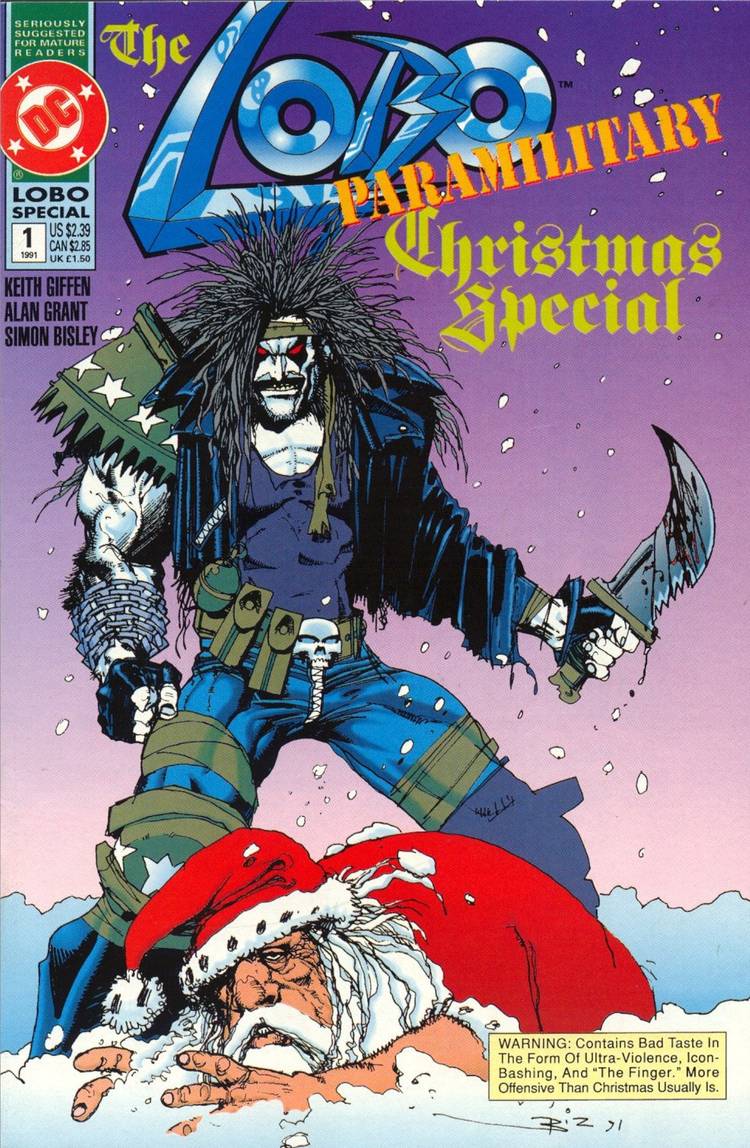
If Lobo: The Last Czarnian established the Main Man as one of comics' most outrageous anti-heroes, then Lobo’s Paramilitary Christmas Special #1 proved there were absolutely no limits to where the character could go. Published in 1991, this legendary one-shot reunited the now-iconic creative trio of Keith Giffen, Alan Grant, and Simon Bisley, and the result remains one of the most unapologetically absurd, controversial, and hilariously over-the-top stories ever released by DC Comics.
Even decades later, many fans still regard it as the definitive example of what makes a Lobo comic unique. It is a story that gleefully ignores convention, mocks tradition, and embraces complete insanity from beginning to end.
The premise alone sounds like something dreamed up during a particularly chaotic brainstorming session.
The Main Man is approached by none other than the Easter Bunny, who has grown increasingly frustrated with Christmas dominating the holiday season. Tired of watching Santa Claus receive all the attention while other celebrations are overlooked, the Easter Bunny decides to solve the problem in the most extreme way possible: by hiring Lobo to eliminate Santa himself.
For Lobo, it's simply another job.
Without hesitation, the galaxy's most notorious bounty hunter heads straight for the North Pole, where he launches an all-out assault on Santa's operation. The elves working in Santa's workshop quickly discover why Lobo has earned such a fearsome reputation across the universe, as he tears through the holiday workforce with his trademark blend of brutality and dark humor.
Yet despite making short work of Santa's helpers, Lobo soon discovers that the man known as Kris Kringle is far more formidable than expected.
Rather than portraying Santa as a cheerful old gift-giver, Giffen, Grant, and Bisley reinvent him as a larger-than-life barbarian warrior. This version of Saint Nicholas is every bit as intimidating as the Main Man himself and is accompanied by an equally memorable companion: a massive pet gorilla named Kong. What follows is a spectacularly ridiculous clash between two unstoppable forces, resulting in one of the most memorable holiday showdowns ever depicted in comic books.
Part of the enduring appeal of Lobo’s Paramilitary Christmas Special is that it never relies on seasonal sentimentality. While Christmas serves as the backdrop, the story remains entertaining regardless of the time of year. Whether read during the holidays or in the middle of summer, its combination of outrageous satire, explosive action, and irreverent humor remains just as effective.
The comic's reputation has only grown over time, becoming something of a cult classic among comic book readers. Its influence was significant enough that it eventually inspired a live-action fan adaptation in 2002. In the film, actor Andrew Bryniarski—best known to many genre fans for portraying Leatherface in The Texas Chainsaw Massacre remake—stepped into the role of Lobo, bringing the cigar-chomping Czarnian to life in what remains one of the character's most notable live-action appearances prior to his upcoming debut in DC Studios' cinematic universe.
Beyond its outrageous plot, the comic is important because it helped define the creative philosophy that would shape nearly every major Lobo story that followed.
Lobo’s Paramilitary Christmas Special #1 firmly establishes a simple rule: nothing is off limits.
No institution, holiday, tradition, celebrity, cultural icon, or sacred cow is beyond parody. The comic embraces complete creative freedom, using satire as aggressively as it uses action. Every page demonstrates a willingness to push boundaries, challenge expectations, and mock anything that takes itself too seriously.
The balance between savage humor and over-the-top violence achieved by Giffen, Grant, and Bisley is remarkably difficult to replicate. Few Lobo stories have matched it, and even fewer superhero comics have managed to combine parody and action with such confidence. In many ways, the issue served as a blueprint not only for future Lobo adventures but also for the broader wave of comic book satire that would emerge throughout the 1990s and beyond.
Its influence can still be felt in modern comics that blend self-aware humor with extreme action, making it one of the most important entries in Lobo's publishing history.
With its deliberately outrageous premise, unforgettable visual style, relentless energy, and complete disregard for virtually everything, Lobo’s Paramilitary Christmas Special #1 remains essential reading. It captures the character at his most chaotic, his most unapologetic, and arguably his most entertaining.
For longtime fans, it is a beloved classic. For newcomers, it offers a perfect introduction to the anarchic spirit that made the Main Man a comic book icon. If you want to understand why Lobo became one of the most celebrated cult characters of the 1990s, there are few better places to start than the story where he was hired to assassinate Santa Claus.
Lobo: Infanticide (#1–4) — When the Main Man Finally Had to Face His Biggest Mistake
By Keith Giffen, Alan Grant, Lovern Kindzierski, and Todd Klein
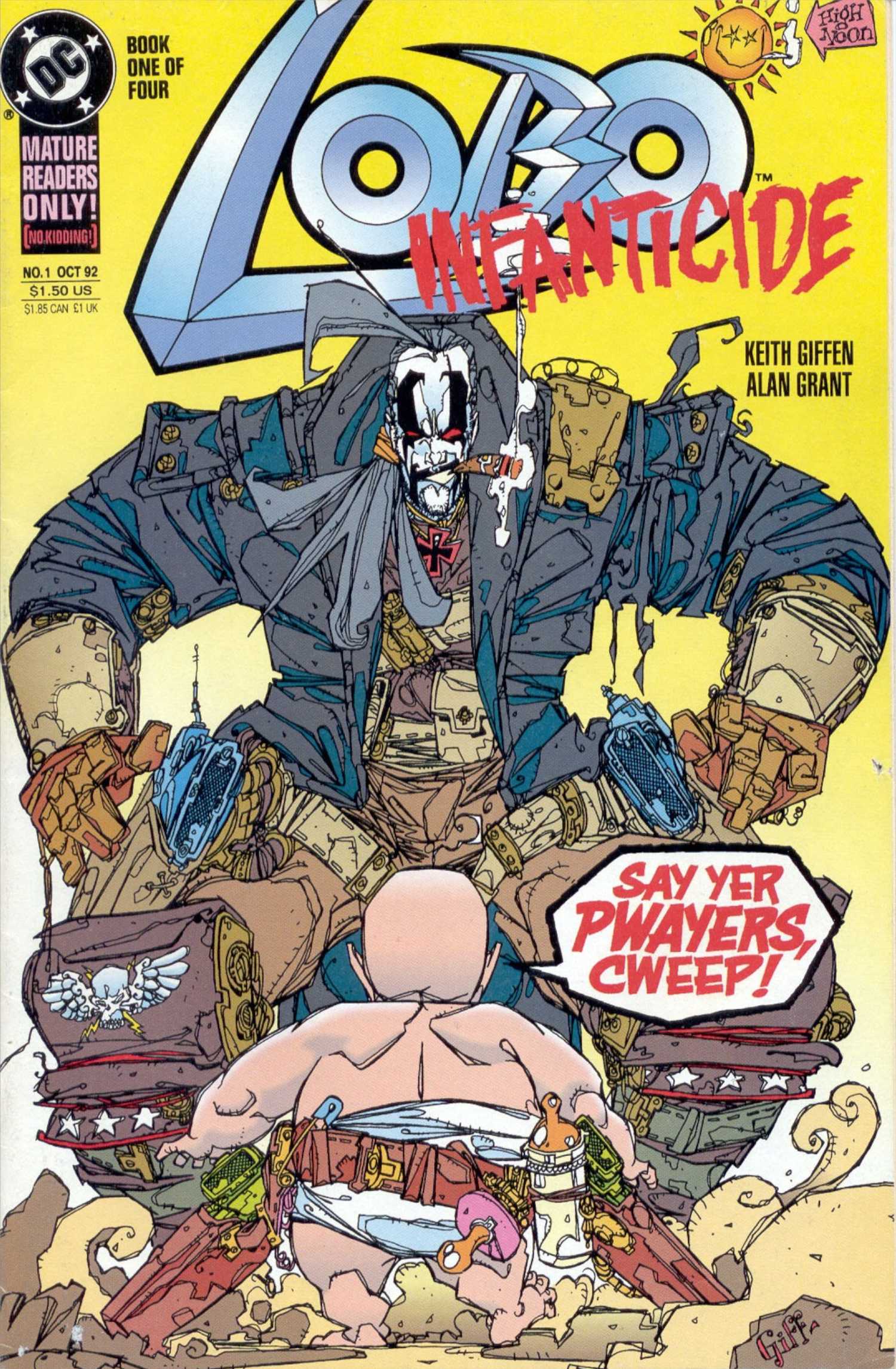
If there is one thing that has always made Lobo such an unpredictable character, it is that no matter how outrageous a premise sounds, a Lobo comic will somehow take it even further. That philosophy is on full display in Lobo: Infanticide, a four-issue miniseries that takes one of the Main Man's most infamous character traits and transforms it into a galaxy-spanning catastrophe.
Published in 1994 during the height of Lobo's popularity, Infanticide reunited co-creators Keith Giffen and Alan Grant for another wildly excessive adventure, one that blends explosive action, black comedy, and biting satire in a way only a Lobo comic can. While Simon Bisley's visual interpretation had become synonymous with the character by this point, Giffen stepped into the role of artist for this series, bringing a distinctly different but equally memorable visual identity to the story.
Readers familiar with Giffen's work on the cult-favorite Image Comics series Trencher will immediately recognize the influence. His artwork embraces the same exaggerated, chaotic, and intentionally over-the-top aesthetic that made Trencher such a standout title in the early 1990s. The result is a comic that feels appropriately unhinged, perfectly matching the absurdity of the narrative unfolding on its pages.
The premise begins with a problem entirely of Lobo's own making.
Over the course of his long and reckless life, the Main Man has left a trail of destruction across countless worlds, but he has also left behind something else: children.
A lot of children.
In fact, there are well over a hundred of them scattered throughout the galaxy.
As Infanticide reveals, those children have finally had enough.
Rather than continuing to live in the shadow of their infamous father, Lobo's illegitimate offspring decide to unite and eliminate him once and for all. What follows is a relentless assault on the galaxy's most feared bounty hunter as wave after wave of angry descendants come looking for revenge.
For perhaps the first time in his life, Lobo finds himself facing an opponent he cannot simply intimidate or outmuscle.
He is outnumbered.
Massively.
The storyline serves as one of the earliest explorations of Lobo's complicated legacy as a father, a theme that would become increasingly important in later years. Modern readers may find the series particularly fascinating because it foreshadows future stories involving Crush, Lobo's daughter who would eventually become a prominent character in DC Comics and a member of the Teen Titans. While Crush would not be introduced until decades later, Infanticide laid some of the groundwork for exploring the consequences of Lobo's chaotic personal life.
At the center of the conflict is Su-Lehmon, one of Lobo's daughters and the mastermind behind an elaborate revenge scheme designed to bring down the Main Man once and for all. Her plan sets the entire story in motion, forcing Lobo into a battle unlike any he has faced before.
Yet, as is often the case in Lobo stories, things quickly become even more absurd.
Just when it appears that the conflict between father and children has reached its breaking point, an alien invasion enters the picture, threatening everyone involved. Faced with a common enemy, Lobo and his offspring are forced into the unlikeliest of alliances. The temporary truce creates some of the miniseries' funniest and most entertaining moments, as generations of dysfunctional family members attempt to work together long enough to survive.
Of course, this being a Lobo comic, sentimentality is never allowed to stick around for too long.
Without spoiling every detail, the story ultimately concludes in a manner entirely consistent with the Main Man's reputation. By the time the dust settles, Lobo has "fragged" just about everyone still standing, delivering the kind of darkly comedic ending that fans have come to expect from his adventures.
One of the most interesting aspects of Infanticide is how effectively Giffen's artwork complements the story's tone. While Simon Bisley's legendary illustrations gave Lobo his iconic heavy-metal aesthetic, Giffen approaches the character from a different angle. His linework is looser, more exaggerated, and noticeably more cartoonish, allowing the comedy and satire to take center stage without diminishing the scale of the action.
The pages remain packed with energy, violence, and larger-than-life imagery, but there is an added sense of absurdity that reinforces the book's parody-driven storytelling. The visual style constantly reminds readers that while the stakes may be high, the comic never wants them to take any of it too seriously.
That balance between outrageous spectacle and self-aware humor has always been one of Lobo's greatest strengths, and Infanticide showcases it brilliantly.
Looking back today, the miniseries occupies an important place within Lobo's publishing history. It demonstrates how flexible the character can be as a storytelling vehicle, capable of supporting everything from cosmic action adventures to family comedies gone horribly wrong. It also highlights the satirical edge that has defined the character since his earliest appearances, using exaggerated violence and ridiculous scenarios to poke fun at comic book conventions and larger-than-life anti-heroes.
For readers exploring Lobo's greatest stories, Lobo: Infanticide remains an essential stop along the way. It is outrageous, chaotic, frequently ridiculous, and surprisingly influential, particularly when viewed through the lens of later stories involving Lobo's family. Most importantly, it captures the Main Man exactly as he was meant to be seen: larger than life, impossible to control, and always one bad decision away from turning an already disastrous situation into complete galactic mayhem.
Hitman / Lobo: That Stupid Bastich #1 — When the Main Man Crashed Into Gotham’s Craziest Corner
By Garth Ennis, Doug Mahnke, Carla Feeny, Tom McCraw, Ken Lopez, and the Hitman Creative Team
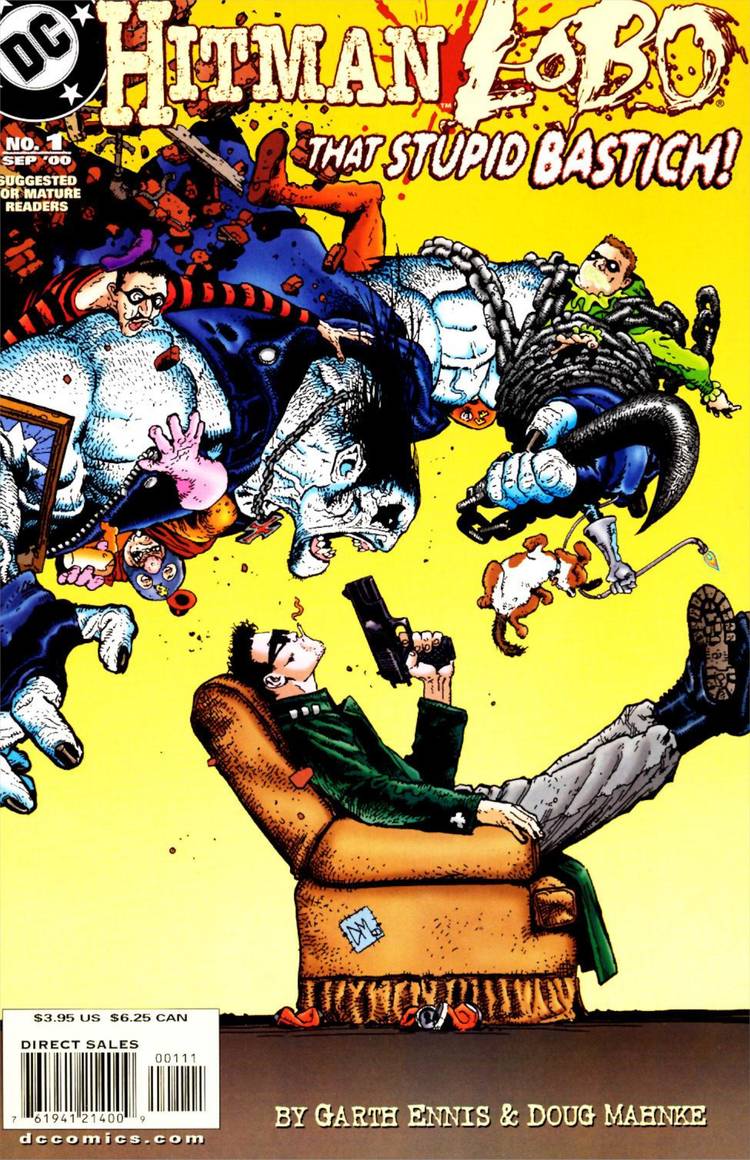
Some comic book crossovers feel forced, created simply because two popular characters happen to exist under the same publishing banner. Hitman / Lobo: That Stupid Bastich is the exact opposite. From the moment readers open the book, it becomes obvious that these two worlds were practically destined to collide.
On one side stands Lobo, the cigar-chomping Czarnian bounty hunter whose solutions to most problems involve overwhelming force, property damage, and an alarming disregard for common sense. On the other is Tommy Monaghan, the wisecracking professional assassin from Gotham City's infamous Cauldron district, a man who somehow manages to remain grounded despite constantly finding himself surrounded by superheroes, demons, aliens, and complete lunatics.
Bringing these two anti-heroes together might sound like a recipe for chaos.
That is exactly what makes this comic work so brilliantly.
By the late 1990s, Hitman had already earned a reputation as one of DC Comics' most beloved cult titles. Created by Garth Ennis and John McCrea, the series combined crime fiction, dark comedy, supernatural elements, and surprisingly heartfelt character work in ways few comics could match. Although it never achieved the mainstream popularity of Batman or Superman, the book developed a fiercely loyal fanbase and remains one of the most acclaimed hidden gems in DC's publishing history.
Lobo slides into that world so naturally that it almost feels as though he had been part of it all along.
Writer Garth Ennis, a creator famous for his work on Preacher, The Boys, and Punisher, wastes absolutely no time exploiting the comedic potential of a confrontation between Tommy Monaghan and the self-proclaimed Main Man. Rather than treating the crossover as a serious clash of titans, Ennis embraces the absurdity of the concept and pushes it to its logical extreme.
The result is one of the funniest Lobo stories ever published.
This is Ennis operating at his most unrestrained and cartoonishly chaotic. The narrative often feels like a violent, profanity-filled episode of Looney Tunes, where every encounter escalates into something more ridiculous than the last. The humor is relentless, the action is explosive, and the destruction left in the wake of the two protagonists borders on catastrophic.
As Lobo and Tommy Monaghan square off, the streets of Gotham City's Cauldron district become their personal battlefield. Buildings are wrecked, innocent bystanders are left wondering what just happened, and the situation spirals further out of control with every passing page.
Yet the comic's greatest strength lies in how fully it embraces the supporting cast that made Hitman such a beloved series.
Virtually every major player from Tommy Monaghan's world gets a chance to shine.
Among the standout appearances is Six Pack, the perpetually intoxicated superhero whose unwavering confidence is often inversely proportional to his actual competence. Despite his obvious flaws, Six Pack remains one of the most unexpectedly lovable and tragic characters in the entire Hitman mythos, and his inclusion immediately elevates the comedy.
Joining him are the unforgettable members of Section Eight, arguably one of the most bizarre superhero teams ever created. This collection of dysfunctional misfits and societal rejects brings even more chaos to an already chaotic story, ensuring that every scene becomes increasingly unpredictable. Their presence perfectly complements Lobo's own brand of madness, creating a crossover that feels less like a traditional superhero story and more like a beautifully orchestrated train wreck.
What makes the one-shot particularly impressive is that Ennis builds all of this insanity around a surprisingly simple premise. There are no universe-ending stakes, no cosmic threats, and no complicated continuity-heavy plot twists. Instead, the story thrives on personality clashes, escalating misunderstandings, and the sheer entertainment value of watching outrageous characters bounce off one another.
The simplicity works in its favor because it allows the humor and character interactions to remain front and center.
While Ennis deserves enormous credit for the script, the true visual star of the book is artist Doug Mahnke.
Already widely respected for his work on The Mask, JLA, Green Lantern, and numerous other DC titles, Mahnke delivers artwork that perfectly captures both the brutality and comedy of the story. Every page is packed with intricate details, expressive character acting, and dynamic action sequences that practically explode off the paper.
His rendition of Lobo is particularly memorable.
Mahnke understands that Lobo is not merely a force of destruction; he is also inherently ridiculous. The artist captures both sides of that equation flawlessly, presenting the Main Man as simultaneously intimidating and laughable. Whether he is smashing through walls, threatening his enemies, or becoming the victim of another joke, Lobo remains endlessly entertaining to watch.
In fact, many fans consider That Stupid Bastich to be one of the finest artistic interpretations of the character ever produced. Doug Mahnke earns his place alongside legendary Lobo artists such as Simon Bisley, Keith Giffen, and later Darick Robertson by understanding exactly what makes the character tick.
Perhaps the most refreshing aspect of the story, however, is that it refuses to treat Lobo as untouchable.
Many comics portray the Main Man as the unstoppable center of attention, the loudest personality in every room and the most dangerous figure in every fight. Here, Ennis gleefully flips that formula upside down. Rather than always being the one delivering the joke, Lobo frequently becomes the joke itself.
He spends much of the story serving as the punchline to increasingly absurd situations, and the comic is better because of it.
There has always been a certain charm to seeing a character as arrogant and overconfident as Lobo taken down a peg. His massive ego makes him a natural target for comedy, and some of his funniest appearances occur when circumstances refuse to acknowledge his self-proclaimed greatness. That Stupid Bastich understands this perfectly and mines every possible laugh from the concept.
Looking back, the one-shot remains one of the strongest crossover stories in either character's history. It captures everything readers love about Lobo—his violence, bravado, unpredictability, and ridiculous sense of self-importance—while simultaneously showcasing the unique humor and heart that made Hitman such a cult classic.
For longtime fans of either series, it is an absolute treat. For newcomers, it serves as an excellent introduction to both worlds. Most importantly, it demonstrates why Lobo works so well outside his own titles. Place the Main Man in a room full of eccentric personalities, give him someone equally stubborn to clash with, and comic book magic tends to follow.
Few stories understand that better than Hitman / Lobo: That Stupid Bastich, a crossover that remains every bit as hilarious, chaotic, and gloriously stupid as its title promises.
Batman / Lobo #1 — When the Main Man Became Gotham’s Darkest Nightmare
By Alan Grant, Simon Bisley, Nathan Eyring, and Bill Oakley
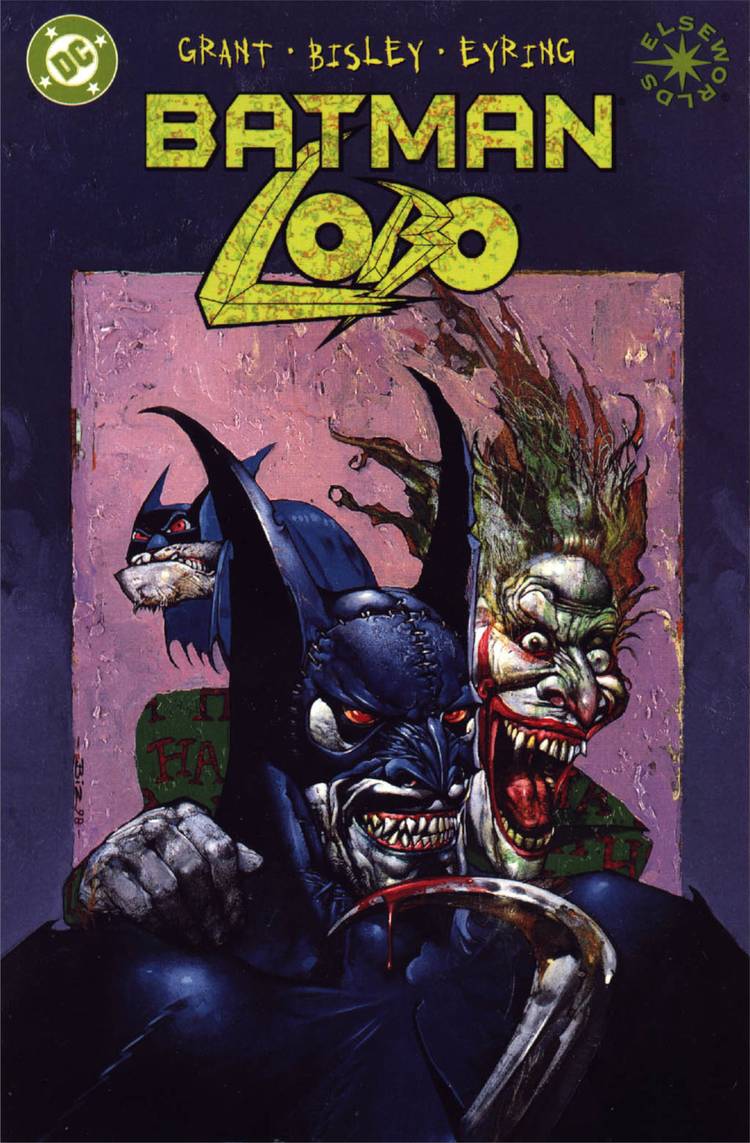
There are comic book crossovers that feel unexpected, and then there are comic book crossovers that sound so completely absurd that they somehow become irresistible. Batman / Lobo #1 firmly belongs in the latter category. Bringing together DC Comics' most disciplined and methodical hero with its most chaotic and destructive anti-hero was always going to create fireworks, but this unforgettable Elseworlds one-shot takes the concept far beyond a simple hero-versus-villain showdown.
Released under DC's celebrated Elseworlds imprint, the story reunites legendary Lobo artist Simon Bisley with longtime Lobo writer Alan Grant, creating a comic that embraces every ounce of insanity its premise promises. For readers unfamiliar with the Elseworlds line, these stories existed outside DC's main continuity, giving creators the freedom to experiment with alternate realities, impossible scenarios, and outcomes that could never occur in the regular DC Universe. That creative freedom allows Batman / Lobo to become one of the wildest and most entertaining stories either character has ever appeared in.
The premise begins with one of Gotham City's most infamous criminals making an offer that proves too tempting for the galaxy's greatest bounty hunter to ignore.
The Joker places a staggering $10 million bounty on Batman's head.
Naturally, news of that reward attracts attention from all corners of the criminal world, but only one hunter has the confidence to believe the job will be easy.
Enter Lobo, the self-proclaimed Main Man.
Never one to turn down an opportunity for violence and a massive payday, the Last Czarnian heads straight to Gotham City intending to collect the reward. However, the Joker has a specific condition attached to the contract. Simply killing Batman is not enough. Before the Dark Knight can be eliminated, his reputation must first be destroyed.
For Lobo, this requirement sparks an idea that is every bit as ridiculous as it is dangerous.
If Batman's image is going to be ruined, why not become Batman?
And so begins one of the most unforgettable visual gags in DC Comics history.
Lobo dons his own customized Bat-suit and begins patrolling Gotham City, though "patrolling" might be far too generous a description. Rather than protecting innocent citizens or striking fear into criminals through stealth and detective work, the Main Man leaves a trail of destruction wherever he goes. His version of Batman is louder, bloodier, more explosive, and completely lacking in subtlety.
The result is pure Lobo chaos.
As the fake Batman tears through Gotham's underworld, criminals and civilians alike find themselves wondering what happened to the Caped Crusader they once knew. Every attempt by Lobo to imitate Batman only serves to further tarnish the hero's reputation, perfectly fulfilling the Joker's twisted demand while simultaneously turning Gotham into an even bigger disaster zone than usual.
What makes the story particularly entertaining is that Lobo doesn't stop at impersonating Batman.
Along the way, he begins systematically dismantling Gotham City's criminal hierarchy.
Members of Batman's legendary rogues gallery quickly discover that the Main Man operates by an entirely different set of rules. Villains who would normally challenge Batman in carefully orchestrated schemes instead find themselves facing a walking force of nature. One after another, some of Gotham's most notorious criminals are taken out as Lobo bulldozes his way through the city's underworld with characteristic brutality.
The collateral damage doesn't end there.
The Main Man's rampage eventually brings him into conflict with Batman's closest allies, including Nightwing and Robin, both of whom find themselves caught in the crossfire of his mission. Their involvement raises the stakes considerably and transforms what initially seemed like a bizarre bounty hunt into a deeply personal attack on everything Batman has built.
It is at this point that the real story begins.
Once Bruce Wayne realizes what is happening in Gotham, the Dark Knight sets his sights on the individual responsible.
The hunt is on.
Batman, a hero known for his relentless determination and strategic brilliance, now finds himself facing an opponent unlike any he has encountered before. Lobo possesses immense superhuman strength, near-invulnerability, a healing factor that borders on absurdity, and centuries of combat experience earned across countless worlds. Unlike many of Batman's enemies, he cannot be intimidated, reasoned with, or easily outsmarted.
The confrontation that follows becomes the centerpiece of the entire comic.
What begins as a bounty hunt escalates into a full-scale battle between two of DC's most formidable fighters, each representing a completely different philosophy of combat. Batman relies on preparation, discipline, intelligence, and precision. Lobo relies on overwhelming force, reckless confidence, and an almost supernatural ability to survive things that should kill him.
The question at the heart of the story becomes simple:
Who is truly the deadliest combatant in the DC Universe?
Grant fully embraces the possibilities afforded by the Elseworlds setting, crafting a narrative that would be impossible to tell within standard continuity. The story never concerns itself with preserving the status quo or ensuring that everyone returns safely to their usual roles. Instead, it explores the consequences of unleashing a character like Lobo upon Gotham without any restrictions.
That freedom allows the comic to become increasingly outrageous as it progresses.
Of course, no discussion of Batman / Lobo would be complete without highlighting the extraordinary artwork of Simon Bisley.
By this point, Bisley had already established himself as the definitive visual architect of Lobo. His muscular, heavy-metal-inspired interpretation had transformed the character into a comic book icon, and his work here is every bit as unforgettable. Every page crackles with energy, exaggeration, and raw visual power.
Most importantly, Bisley understands the inherent absurdity of the premise.
The sight of Lobo stomping through Gotham dressed in a Bat-suit should be ridiculous, and Bisley leans into that fact completely. Whether the Main Man is battling villains, terrorizing criminals, or creating havoc throughout the city, every panel embraces a level of excess that perfectly matches the character's personality.
His depictions of Gotham's rogues meeting increasingly violent and over-the-top fates are rendered with a gleeful sense of madness that few artists could have achieved. The artwork never attempts realism; instead, it captures the comic's anarchic spirit with bold visuals that feel larger than life.
Looking back today, Batman / Lobo #1 remains one of the most entertaining Elseworlds stories DC ever published. It combines the grim atmosphere of Gotham City with the outrageous energy of a classic Lobo adventure, creating a crossover that feels both completely ridiculous and surprisingly compelling.
For Batman fans, it offers the fascinating spectacle of seeing Gotham through the eyes of someone who has absolutely no respect for Batman's methods. For Lobo fans, it delivers exactly what they want: unchecked mayhem, outrageous violence, and a protagonist whose solution to every problem is somehow making the situation worse.
Most importantly, it provides one of the greatest images in comic book history: the Main Man wearing a Bat-suit, rampaging through Gotham City, and turning Batman's world upside down in ways only Lobo possibly could.
52 — The Unexpected Reinvention of Lobo and His Strangest Transformation Yet
By Geoff Johns, Grant Morrison, Greg Rucka, Mark Waid, Keith Giffen, and Others
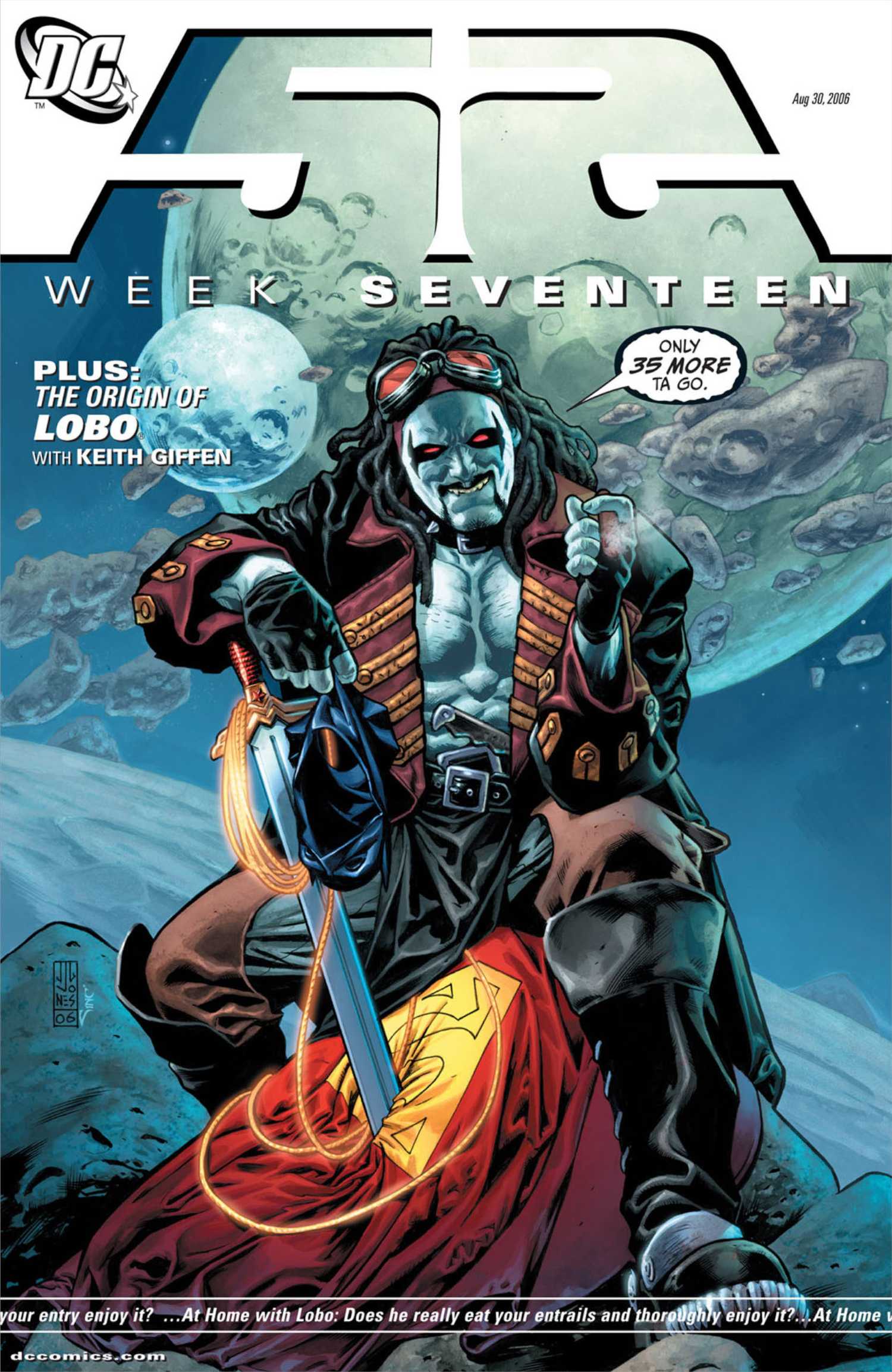
For much of the 1990s, it felt as though Lobo was everywhere.
The Main Man had evolved from a cult-favorite parody character into one of DC Comics' most recognizable anti-heroes. He headlined multiple miniseries, starred in one-shots and special events, crossed paths with virtually every major hero in the DC Universe, and even maintained a successful ongoing solo title. During the height of his popularity, there was seemingly no corner of the DC Universe that was safe from the Last Czarnian's brand of mayhem.
Yet popularity can be a double-edged sword.
By the dawn of the 21st century, the character's constant presence had begun to work against him. After years of increasingly outrageous stories, many readers felt that the joke had started to lose some of its impact. The qualities that had once made Lobo feel fresh and unpredictable had become familiar, and his appearances gradually became less frequent throughout the early 2000s. While he never disappeared completely, the character who had once dominated comic book shelves was no longer the larger-than-life force he had been during the previous decade.
That made his return all the more significant.
Lobo's true reintroduction to the modern DC Universe arrived in 52, one of the most ambitious and critically acclaimed projects DC Comics had ever attempted.
Published between 2006 and 2007, 52 was a groundbreaking weekly comic series released in the aftermath of the universe-altering Infinite Crisis event. Rather than focusing on DC's traditional Trinity of Superman, Batman, and Wonder Woman, the series explored a unique moment in the publisher's history when those iconic heroes had temporarily stepped away from the spotlight. The result was a year-long narrative that followed dozens of lesser-known heroes, villains, and cosmic adventurers as they navigated a world still recovering from the consequences of Infinite Crisis.
The project itself was a remarkable undertaking.
Guided by an all-star team of writers that included Geoff Johns, Grant Morrison, Greg Rucka, Mark Waid, and Keith Giffen, 52 delivered a new issue every week for an entire year. The series is still regarded as one of the most successful large-scale storytelling experiments in comic book history, praised for its ambitious structure, interconnected narratives, and ability to elevate characters who rarely occupied center stage.
It was within this sprawling cosmic saga that readers unexpectedly encountered Lobo once again.
One of the series' most memorable storylines follows the adventures of Animal Man, Starfire, and Adam Strange, a trio of heroes stranded far from home after the events of Infinite Crisis. Their journey takes them across some of the strangest and most dangerous regions of the DC Universe as they search for a way back to Earth.
Eventually, their travels lead them to Sector 3500.
And there they find Lobo.
At first glance, the encounter appears to promise exactly what longtime fans would expect. The Main Man is back, and chaos surely cannot be far behind.
Instead, readers were given one of the most surprising character reinventions in Lobo's history.
The galaxy's most notorious bounty hunter has undergone a dramatic transformation.
He has found religion.
More astonishingly, he has embraced a life of pacifism.
Gone is the endlessly aggressive mercenary who solved every problem with violence. In his place stands a deeply spiritual Lobo devoted to the worship of a bizarre triple-headed fish god. The revelation catches both the characters and the audience completely off guard, creating one of the funniest and most unexpected moments in the entire series.
For readers who remembered the cigar-smoking, chain-wielding maniac of the 1990s, the contrast could not have been more dramatic.
Yet beneath the humor, the change served an important purpose.
Rather than simply bringing Lobo back exactly as he had been before, the creative team used 52 as an opportunity to refresh the character. After years of escalating excess, the pacifist version of Lobo offered a clever way to explore new aspects of his personality while simultaneously commenting on the character's own history. The reinvention allowed writers to play against expectations and breathe new life into a figure who had become somewhat predictable during the latter years of his original popularity boom.
The result was surprisingly effective.
Lobo's newfound faith becomes one of the most entertaining running gags throughout his appearances in the series, but it also introduces a layer of genuine tension. Every scene featuring the reformed Main Man carries an underlying question: how long can this possibly last?
After all, readers know exactly who Lobo is.
This is a character whose reputation was built on excessive violence, limitless arrogance, and a complete disregard for restraint. Watching him attempt to maintain a peaceful existence becomes entertaining precisely because it feels so unnatural. Every challenge, every provocation, and every dangerous situation tests his commitment to his new beliefs.
The audience understands something that Lobo himself may not fully appreciate.
Eventually, the old instincts are going to resurface.
That inevitability becomes one of the most enjoyable aspects of his role in 52. The longer he remains committed to his pacifist principles, the more readers anticipate the moment when those principles finally collapse under pressure. The suspense is not about whether Lobo will return to his old ways but when.
And when that moment eventually arrives, it feels entirely consistent with the character's nature.
By the conclusion of the year-long series, the Main Man's experiment with spiritual enlightenment comes to an end, and Lobo gradually reverts to the ultra-violent persona that made him famous in the first place. However, the journey leaves a lasting impression because it demonstrates that there is more to the character than endless destruction and one-liners.
In many ways, 52 represents one of the most important chapters in Lobo's modern history.
Rather than simply celebrating the character's past, it challenged assumptions about who he was and what kinds of stories he could support. The pacifist Lobo may have seemed like a joke on the surface, but it ultimately helped reestablish the character within the contemporary DC Universe and reminded readers why he had become such a beloved cult icon in the first place.
For longtime fans, it was an unexpected but welcome reinvention. For newer readers, it offered a fresh entry point into the world of the Main Man. Most importantly, it proved that even after decades of galactic bounty hunting, universe-shaking battles, and countless acts of destruction, Lobo could still surprise people.
And for a character built on excess, that might have been the most impressive feat of all.
Superman vs. Lobo (#1–3) — A Hilarious Cosmic Clash Between the Last Sons of Dying Worlds
By Tim Seeley, Sarah Beattie, Mirka Andolfo, Arif Prianto, and Fabio Amelia

Few rivalries in the DC Universe work as naturally as Superman and Lobo.
On paper, they could not be more different. Superman is the embodiment of hope, restraint, and selflessness, a hero who uses his incredible power to protect others. Lobo, meanwhile, is a foul-mouthed, chain-wielding intergalactic bounty hunter whose preferred method of conflict resolution usually involves excessive violence and property damage. Yet despite their opposing personalities, the two characters have shared a surprisingly entertaining history ever since Lobo first burst onto the comic book scene in the 1980s.
The reason their dynamic works so well is simple: they serve as perfect foils for one another.
Where Superman exercises restraint, Lobo embraces chaos. Where Superman sees the best in people, Lobo usually assumes the worst. One is a symbol of responsibility; the other is a walking disaster. Put them in the same room, and sparks are almost guaranteed to fly.
Over the years, the Last Son of Krypton and the Last Czarnian have crossed paths numerous times, producing some memorable confrontations and unlikely team-ups. However, among all their shared adventures, Superman vs. Lobo stands out as one of the most entertaining and accessible modern stories featuring both characters.
Published under DC's Black Label imprint, this three-issue miniseries takes the familiar Superman-Lobo dynamic and amplifies it through a bizarre, comedic, and surprisingly heartfelt science-fiction adventure. While the title promises a straightforward battle between two powerhouse characters, the series quickly reveals itself to be something far more interesting than a simple slugfest.
At the center of the story are two unusual figures: the godlike alien entity Numen and the brilliant but ethically questionable scientist Dr. Flik.
Both become fascinated by Superman and Lobo for the same reason.
Despite their vastly different personalities and moral codes, the two heroes share an unusual bond. They are both survivors of extinct civilizations and, in many ways, the final living representatives of their respective species. Superman is famously the last son of Krypton, while Lobo has long carried the title of the Last Czarnian—a distinction made even more ironic by the fact that he personally exterminated the rest of his race in many versions of DC continuity.
To Numen and Dr. Flik, these two cosmic anomalies represent the ultimate scientific curiosity.
Determined to study them at any cost, the pair subject Superman and Lobo to a series of increasingly bizarre situations and experiments, forcing the two reluctant allies into one chaotic encounter after another. As expected, neither character is particularly happy about being treated as a laboratory specimen, and their frustration frequently boils over into explosive confrontations.
The result is a story packed with action, absurdity, and plenty of opportunities for Superman and Lobo to get on each other's nerves.
One of the miniseries' greatest strengths is its tone.
Writers Tim Seeley and Sarah Beattie understand that a comic featuring Superman and Lobo should be fun first and foremost. Rather than approaching the material with excessive seriousness, they lean into the absurdity of the premise and allow both characters to play off one another in ways that highlight their strengths. The dialogue is sharp, the humor is self-aware, and the narrative never becomes weighed down by its larger themes.
That playful energy is perfectly complemented by the artwork of Mirka Andolfo, whose expressive style gives the series a unique visual identity. Known for her work on titles such as Sweet Paprika, Mercy, and numerous DC and Marvel projects, Andolfo brings an infectious sense of movement and personality to every page. The action feels energetic, the comedy lands effectively, and even the quieter character moments carry an emotional warmth that prevents the story from becoming purely satirical.
Colorist Arif Prianto and letterer Fabio Amelia further enhance the experience, helping create a comic that feels vibrant, fast-paced, and consistently engaging from beginning to end.
While the series certainly delivers its share of superpowered brawls, readers expecting three issues of nonstop fighting may be surprised by what they find. Much of the story's humor stems from its commentary on modern celebrity culture, public perception, online outrage, and social media-driven controversies. The narrative occasionally pokes fun at what many people refer to as "cancel culture" and the tendency of internet mobs to pass judgment before fully understanding a situation.
Some readers may find those satirical elements hit harder than others, but they undeniably give the series a distinct personality beyond its action sequences.
Fortunately, the social commentary never overshadows the relationship at the heart of the story.
Beneath the jokes, explosions, and cosmic weirdness lies an unexpectedly thoughtful examination of what Superman and Lobo have in common.
Both characters understand the loneliness that comes from being the final survivor of a lost civilization. Both carry the burden of representing worlds that no longer exist. The difference is in how they respond to that reality. Superman channels his grief into compassion and service, while Lobo often masks his pain behind arrogance, humor, and reckless behavior.
This shared experience ultimately becomes the emotional core of the miniseries.
As the story unfolds, Superman challenges Lobo to look beyond his usual cynicism and embrace a greater sense of empathy. Rather than judging the Main Man solely for his worst qualities, Superman recognizes the tragedy that lies beneath the bravado. The result is a surprisingly touching exploration of identity, loss, and responsibility that adds genuine depth to a story that could have easily settled for spectacle alone.
It is these quieter moments that elevate Superman vs. Lobo beyond a simple crossover event.
The comic never forgets to be entertaining, but it also understands that the most memorable stories are often those that reveal something meaningful about their characters. By the time the final issue concludes, readers are left with a greater appreciation for both Superman's unwavering optimism and Lobo's hidden complexity.
For longtime fans, the miniseries offers a fresh and humorous take on one of DC's most entertaining rivalries. For newer readers, it serves as an excellent introduction to the Main Man, showcasing nearly every aspect of what makes him such an enduring character. His arrogance, humor, unpredictability, violence, vulnerability, and surprising capacity for growth are all present and accounted for.
With Jason Momoa preparing to bring Lobo into DC Studios' new cinematic universe, Superman vs. Lobo feels more relevant than ever. It captures the character at his funniest and most human while also reminding readers why he has remained a fan favorite for decades.
If you're looking for a modern Lobo story that balances outrageous comedy, explosive action, and genuine emotional depth, few comics accomplish that better than Superman vs. Lobo. It is a wild, hilarious, and unexpectedly heartfelt adventure that demonstrates exactly why the Main Man continues to thrive in the DC Universe nearly forty years after his debut.
the Main Man continues to thrive in the DC Universe nearly forty years after his debut.
Few characters in comic book history have carved out a niche quite like Lobo. What began as a satirical parody of ultra-violent anti-heroes eventually evolved into one of DC Comics' most enduring cult sensations. Whether he's hunting Santa Claus for the Easter Bunny, impersonating Batman while terrorizing Gotham City, battling hundreds of his own children, embracing an unlikely life of pacifism, or trading blows with Superman, the Last Czarnian has consistently delivered stories unlike anything else in the DC Universe.
Part of Lobo's lasting appeal is that he refuses to fit into any conventional superhero mold. He can be hilarious, terrifying, ridiculous, and surprisingly emotional—sometimes all within the same story. Beneath the chains, cigar smoke, and galaxy-shattering violence lies a character who has remained relevant for over four decades because creators continuously find new ways to reinvent him while staying true to his chaotic spirit.
With Jason Momoa set to bring the Main Man to life in DC Studios' upcoming Supergirl film, there has never been a better time to dive into Lobo's comic book legacy. Whether you're a longtime fan revisiting his greatest adventures or a newcomer curious about why comic readers have celebrated the Last Czarnian for generations, these stories offer the perfect gateway into the wild, unpredictable world of the self-proclaimed Main Man.
One thing is certain: when Lobo finally arrives on the big screen, he'll be bringing the same larger-than-life attitude, unapologetic mayhem, and unforgettable personality that made him a legend in the first place.
And trust us—the universe will never be ready for him.
Calling All Collectors & Pop Culture Fans!
If reading about Lobo has reignited your love for comics, superheroes, and larger-than-life adventures, now is the perfect time to expand your collection.
Explore an incredible range of officially licensed collectibles, action figures, statues, model kits, and premium merchandise from your favorite franchises, including:
DC Comics
Marvel
Anime
Mortal Kombat
He-Man & Masters of the Universe
Transformers
LEGO
Discover exclusive collectibles from brands like McFarlane Toys, Hot Toys, Iron Studios, Beast Kingdom, Funko, Banpresto, Kotobukiya, Threezero, and many more—with discounts of up to 40% OFF on select products.
Whether you're hunting for the next centerpiece of your display shelf or searching for the perfect gift for a fellow fan, there's never been a better time to add something legendary to your collection.