


Upcoming Anime in 2026: Jujutsu Kaisen, Frieren & More
With 2026 breathing down the neck of the anime world, the anticipation feels electric. Fans aren’t just counting down to the Winter slate anymore—they’re looking at an entire year stacked with promise. New series, long-awaited adaptations, bold originals, and cinematic returns are all lining up, ready to define the next chapter of anime. Even from what’s been officially announced, it’s clear that 2026 isn’t playing it safe—it’s going all in.
This is shaping up to be one of the most stacked years of the decade for new-gen anime. Beloved giants are returning with new seasons of Jujutsu Kaisen and Frieren: Beyond Journey’s End, while fans finally get their long-overdue wins with adaptations like Witch Hat Atelier and Hana-Kimi stepping into the spotlight. And the hype doesn’t stop at television—2026’s anime films are set to hit hard, with Puella Magi Madoka Magica making a long-awaited, explosive return.
If momentum alone is anything to go by, 2026 isn’t just another anime year—it’s shaping up to be a turning point.
Goodbye, Lara
format(webp))
For most of the 2020s, being a shojo fan has felt like holding onto a fading echo—memories of stories that once understood softness, longing, and quiet heartbreak. But 2026 arrives like a tide turning, and with it comes Goodbye, Lara—a series that doesn’t just revive shojo, but reminds us why it mattered in the first place.
Created to celebrate the 15th anniversary of Kinema Citrus, Goodbye, Lara is a modern reimagining of The Little Mermaid, wrapped in a classic anime soul. This isn’t spectacle-driven fantasy—it’s emotion-forward storytelling, the kind that lingers long after the screen fades to black.
At its core is a tragedy steeped in yearning. A mermaid who dreams of becoming human doesn’t get a fairytale ending—she dies. Two centuries later, she is reborn as a girl in modern-day Japan, carrying a heart that remembers the ocean, loss, and a love that never quite had a name. It’s reincarnation not as wish fulfillment, but as emotional inheritance.
What little we’ve seen already speaks volumes. The animation feels tender and deliberate—every glance held a second too long, every quiet moment allowed to breathe. There’s warmth here. Earnestness. A gentleness that modern anime often rushes past. Goodbye, Lara looks unapologetically soft, and that softness feels radical.
This is shojo that aches. Shojo that remembers. Shojo that believes emotions don’t need to be loud to be powerful.
If the trailers are any indication, Goodbye, Lara won’t just bring shojo back—it will make audiences fall in love with it all over again.
Hell’s Paradise Season 2 Is About to Drag Us Back Into Hell
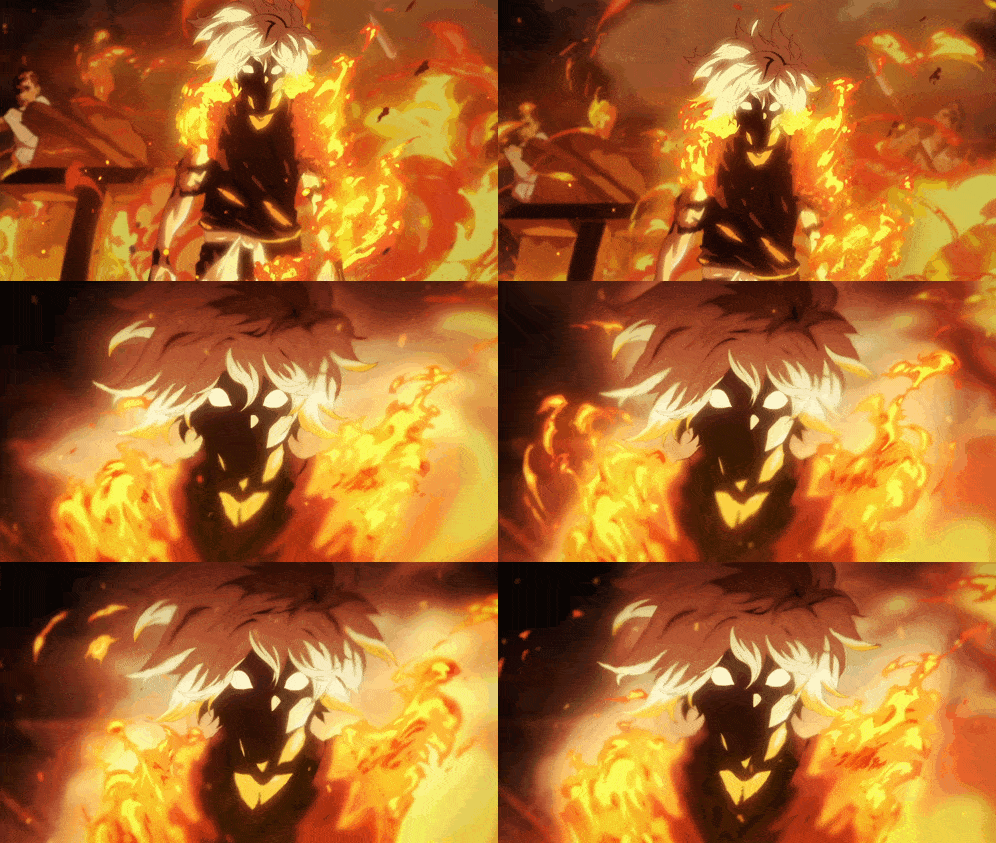
When Hell’s Paradise Season 2 finally premieres, it won’t just be another sequel—it’ll be a return to suffering, beauty, and brutality three long years in the making. Fans last walked the blood-soaked paths of Edo-era Japan alongside Gabimaru, and since then, the silence has only made the hunger grow. In January 2026, that wait ends—and the most criminally underrated pillar of the Dark Shōnen Trio steps back into the fire.
Season 2 isn’t easing anyone in. From the very first beat, the anime kicks down the door with an opening theme powered by BABYMETAL, setting the tone for a season that promises chaos, fury, and momentum that never lets up. It’s loud. It’s aggressive. It’s a warning.
From there, Hell’s Paradise does what it does best—tight, nerve-shredding combat, suffocating atmosphere, and animation that makes every slash feel fatal. But beneath the violence lies its real strength: characters pushed to their emotional and moral limits, forced to confront whether they deserve redemption—or extinction.
This isn’t just another action-heavy shōnen comeback. It’s a descent back into a world where beauty and horror coexist, where survival is punishment, and where peace is never free.
Hell has been waiting. And in 2026, we’re being dragged back in.
The Apothecary Diaries Season 3 Is Coming Back Smarter, Sharper, and More Dangerous
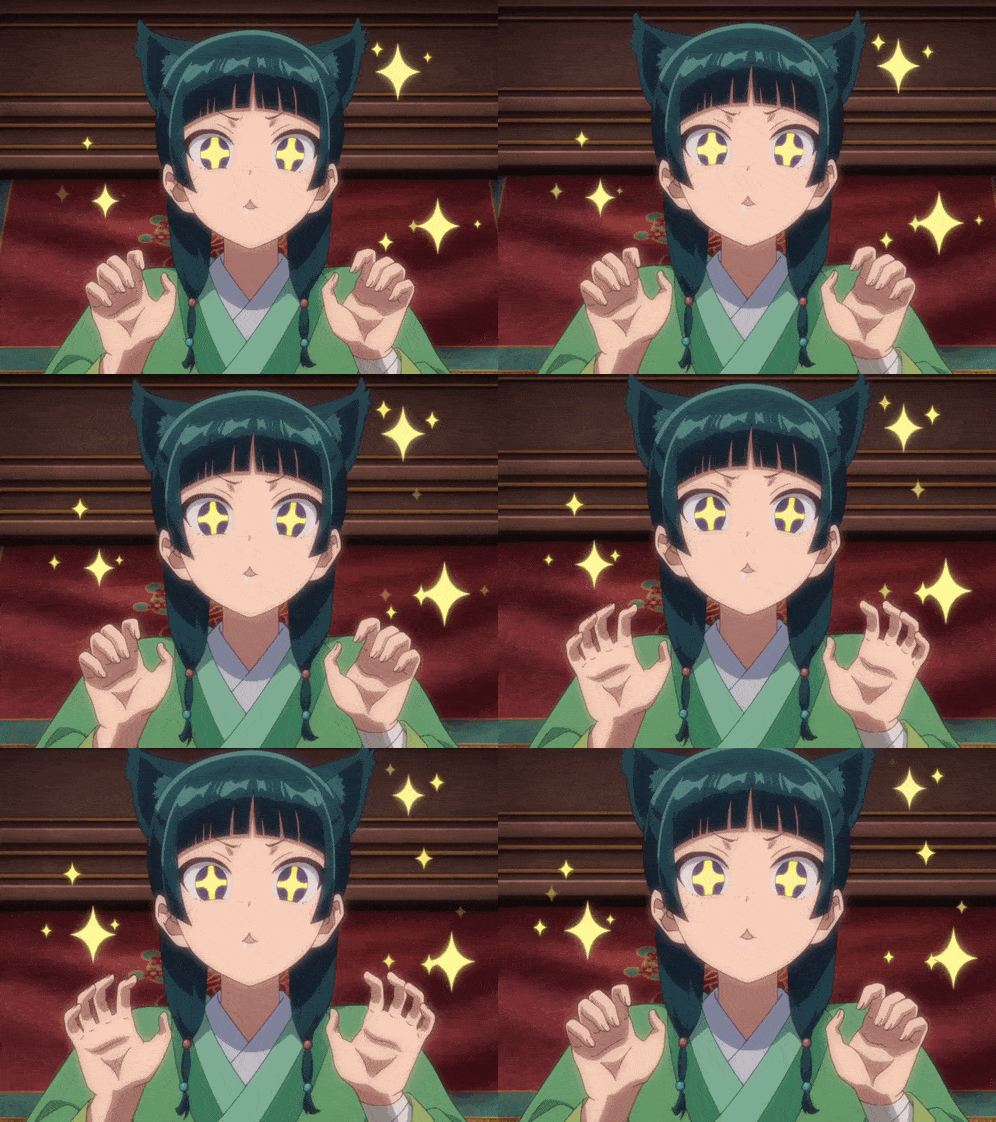
It hasn’t been gone for long—but the absence is already felt. The Apothecary Diaries carved out a rare space in modern anime: a slow-burn, mystery-driven period drama that trusted its audience to listen closely, think deeply, and savor every revelation. And thankfully, its overwhelming success hasn’t gone unnoticed. Season 3 is officially on the way, set to arrive in late 2026, barely a year and a half after Season 2 drew its final curtain.
This next chapter won’t unfold all at once. Season 3 will be released in two cours, with the first premiering in October 2026, followed by the second in April 2027—a deliberate pacing choice that perfectly suits a story built on intrigue rather than impulse.
But don’t expect familiarity to carry you forward unchanged. Both cours are poised to break away from previous settings and supporting casts, signaling a bold evolution in the series’ scope. New environments, new power players, and new dangers will step into the spotlight. Yet at the center of it all remains the soul of the story: Maomao.
Sharp-tongued, relentlessly curious, and quietly compassionate, Maomao remains as engaging and complex as ever—still dissecting poisons, motives, and human nature with the same dry wit and piercing intelligence. And as the stage shifts, the heart of the series endures: layered mysteries, subtle political games, and truths that only reveal themselves to those brave—or clever—enough to look twice.
Season 3 isn’t just more The Apothecary Diaries.
It’s the series stepping into a larger, riskier world—without losing the mind that made us fall in love with it.
Frieren: Beyond Journey’s End Season 2 Returns—Quiet, Powerful, and Unmissable

Few anime have left a mark as deep—or as gentle—as Frieren: Beyond Journey’s End. Across 2023 and 2024, it didn’t just succeed; it redefined what modern fantasy could feel like. Soft-spoken yet devastating, reflective yet resonant, the series earned its place at the top—becoming the highest-rated anime of all time on MyAnimeList. And now, as Winter 2026 approaches, Frieren returns as one of the season’s most anticipated main events.
Season 2 arrives with both excitement and quiet heartbreak. It’s been confirmed that the new season will run for just 10 episodes, meaning it won’t adapt the much-loved Golden Land Arc from the manga by Kanehito Yamada and Tsukasa Abe. For a story that thrives on long, meditative arcs, that news stings.
But Frieren has never been about excess—it’s about precision.
Even without the Golden Land Arc, there is still a wealth of beautiful, emotionally rich material waiting to be brought to life. With Tomoya Kitagawa stepping into the director’s chair, the series is poised to evolve while staying true to its soul. Expect the same exquisite pacing, the same aching silences, and the same deeply human reflections on time, memory, and loss.
Frieren doesn’t shout for attention. It doesn’t rush its feelings.
And that’s exactly why, even with fewer episodes, Season 2 will remain one of the finest fantasy anime experiences around—a reminder that sometimes, the quietest journeys leave the deepest scars.
Black Torch Is Rising From the Ashes—and Anime Fans Are Watching Closely
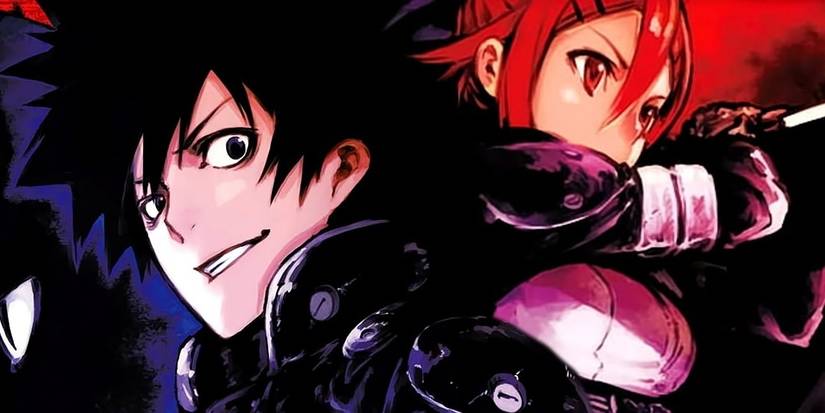
In an industry where anime adaptations often exist as fleeting advertisements, Black Torch feels almost defiant. Adapting a canceled Shōnen Jump title years after its run ended is practically unheard of—and yet here we are, eight years after cancellation, with Black Torch finally stepping into the anime spotlight. That alone has been enough to turn heads.
Black Torch was never a chart-topper. It never dominated conversations or sales charts. But its resurrection speaks to something deeper: untapped potential. Sometimes, all a story needs is time—and the right medium—to find its audience.
At its core, the series follows Jiro Azuma, a soft-spoken ninja gifted (or cursed) with the ability to speak to animals. His life takes a brutal turn when he’s fused with a powerful Evil Spirit and forcibly inducted into a shadowy espionage organization tasked with hunting and exterminating other spirits. What follows is a blend of supernatural action, covert warfare, and identity crisis—where power comes at a personal cost.
Despite its early end, Black Torch has quietly endured, sustained by a small but fiercely loyal fanbase that never quite let it fade away. And now, with an anime premiere slated for next July, the series stands on the edge of a second chance.
This isn’t just a revival—it’s a redemption arc.
If the adaptation delivers on its premise, Black Torch could be one of those rare cases where anime doesn’t just adapt a manga—it redefines it. And when that happens, cult favorites don’t stay cult for long.
Steel Ball Run Is About to Redefine JoJo—Again

For more than two decades, JoJo’s Bizarre Adventure has stood as one of anime’s most enduring, ever-evolving giants. Each part reinvents the rules, shifts the tone, and dares fans to follow it somewhere new. In 2026, that journey reaches its most ambitious turning point yet with Steel Ball Run, arriving on Netflix—and it’s poised to change everything.
Steel Ball Run isn’t just the seventh part of JJBA. It’s a full-scale reboot and widely regarded as one of the greatest manga ever created, currently sitting as the second-highest-rated manga of all time on MyAnimeList. Expectations couldn’t be higher—and somehow, they still feel justified.
Set against the brutal beauty of a cross-continental horse race, Steel Ball Run fuses everything fans adore about JoJo—eccentric powers, razor-sharp mind games, unforgettable rivalries—with the grit and soul of the Western genre. Dust, blood, ambition, and obsession collide in a story that feels mythic and deeply human all at once.
Unlike earlier entries, Steel Ball Run is firmly Seinen, not Shōnen. That shift allows creator Hirohiko Araki to dig deeper—into moral ambiguity, physical suffering, and the cost of chasing dreams at any price. The result is some of the most complex characters, layered narratives, and jaw-dropping battles the action genre has ever produced.
This isn’t just another JoJo part.
It’s JoJo growing up, sharpening its teeth, and riding straight into legend.
When Steel Ball Run hits in 2026, it won’t just be bigger than ever; it’ll be unforgettable.
Jujutsu Kaisen Season 3 Is Where Everything Breaks

Few anime define an era the way Jujutsu Kaisen has defined the 2020s. Brutal, stylish, emotionally unflinching—JJK hasn’t just dominated conversations, it’s reshaped expectations. While 2025 kept fans well-fed with Hidden Inventory / Premature Death and the early stirrings of Jujutsu Kaisen Modulo by Gege Akutami, the collective gaze never wavered. Everything has been leading here. January 2026. Season 3. The Culling Games.
And now, with the first trailer finally unleashed, the message is unmistakable: MAPPA isn’t backing down.
The footage hits like a curse to the chest—relentless motion, razor-sharp choreography, and animation that looks ready to eclipse even JJK’s already legendary highs. There’s a sense of scale here that feels heavier, crueler. Less about survival… more about inevitability.
Season 3 won’t adapt the entire Culling Games Arc—but don’t mistake that for restraint. What it will do is shove Jujutsu Kaisen violently toward its endgame. This is the arc where rules collapse, morality fractures, and the series stops pretending anyone is safe. New players enter the battlefield. Long-teased conflicts finally ignite. Manga readers know what’s coming—and they’ve been waiting years to see these moments animated.
This isn’t just another season.
It’s the pivot point—where JJK shifts from chaos into catastrophe.
Akane-banashi Is Proof That Shōnen Doesn’t Need Fists to Hit Hard

Within the pages of Weekly Shōnen Jump, few modern manga have earned the kind of reverence that Akane-banashi enjoys. Since its debut in 2022, the series has quietly but decisively captivated readers—not through explosions or power-ups, but through performance, pride, and precision.
At its heart lies a deeply personal quest. Akane Osaki isn’t chasing glory—she’s chasing justice. After witnessing her father’s public humiliation and banishment from the world of rakugo, Akane steps onto the same stage, determined to master the art form and reclaim the honor stolen from her family. What unfolds is one of the most gripping “non-battle battle shōnen” stories ever told—arguably surpassing genre standouts like Food Wars, Smile Down the Runway, and Dr. Stone in emotional intensity.
Akane herself stands shoulder to shoulder with modern anime’s finest protagonists. She carries the quiet resilience of Frieren: Beyond Journey’s End and the sharp intelligence of Maomao, yet remains wholly her own—driven, vulnerable, and endlessly compelling. Watching her grow isn’t about leveling up; it’s about learning how to command a room with nothing but words.
What truly sets Akane-banashi apart is its foundation in rakugo, a traditional, single-performer form of Japanese storytelling. The series brilliantly bends familiar shōnen tropes—rivalries, mentors, tournaments—around an art form that lives and dies by timing, expression, and emotional truth. Every performance feels like a duel. Every pause, a strike.
And now, the anime adaptation is poised to elevate it even further. The first trailer already radiates confidence and craft, with acclaimed director Ayumu Watanabe leading the charge. If early footage is anything to go by, Akane-banashi isn’t just getting animated—it’s being performed.
Puella Magi Madoka Magica: Walpurgisnacht Rising Is the Ending Fans Have Waited 12 Years For
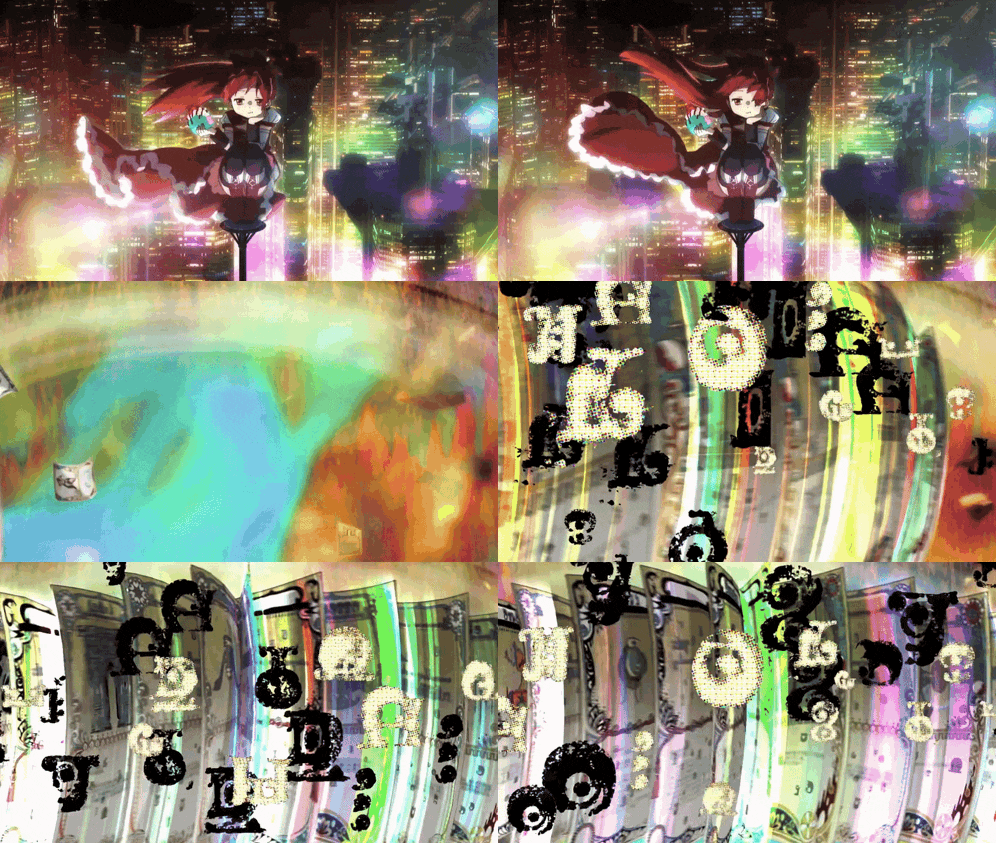
Twelve long years. That’s how long fans have lived with the ache left behind by Rebellion—twelve years of theories, heartbreak, and unanswered questions echoing through one of anime’s most devastating finales. But in February 2026, the silence finally breaks. Puella Magi Madoka Magica: Walpurgisnacht Rising arrives as the long-awaited sequel to Rebellion, promising closure to the franchise’s most infamous cliffhangers—and perhaps, one final wound.
This film isn’t just another chapter. It’s the reckoning.
Walpurgisnacht Rising is set to bring the tragic, reality-warping love story between Madoka Kaname and Homura Akemi to its long-foreshadowed climax. A bond forged through timelines, sacrifice, and obsession finally reaches its breaking point—where love, despair, and hope can no longer coexist quietly.
True to its legacy, the film won’t soften the blow. New concepts and existential horrors are being introduced, expanding the franchise’s already mind-bending mythology while staying brutally faithful to the emotional cruelty that defined the original series. This is Madoka Magica at its most uncompromising—beautiful, shocking, and relentlessly tragic.
Multiple trailers have already confirmed what fans feared and hoped for in equal measure: Walpurgisnacht Rising looks stunning. Every frame drips with surreal symbolism, bold visual experimentation, and haunting elegance, positioning it as one of the most gorgeously animated films of 2026.
We saved the best for last- Witch Hat Atelier Is Finally Casting Its Spell in 2026
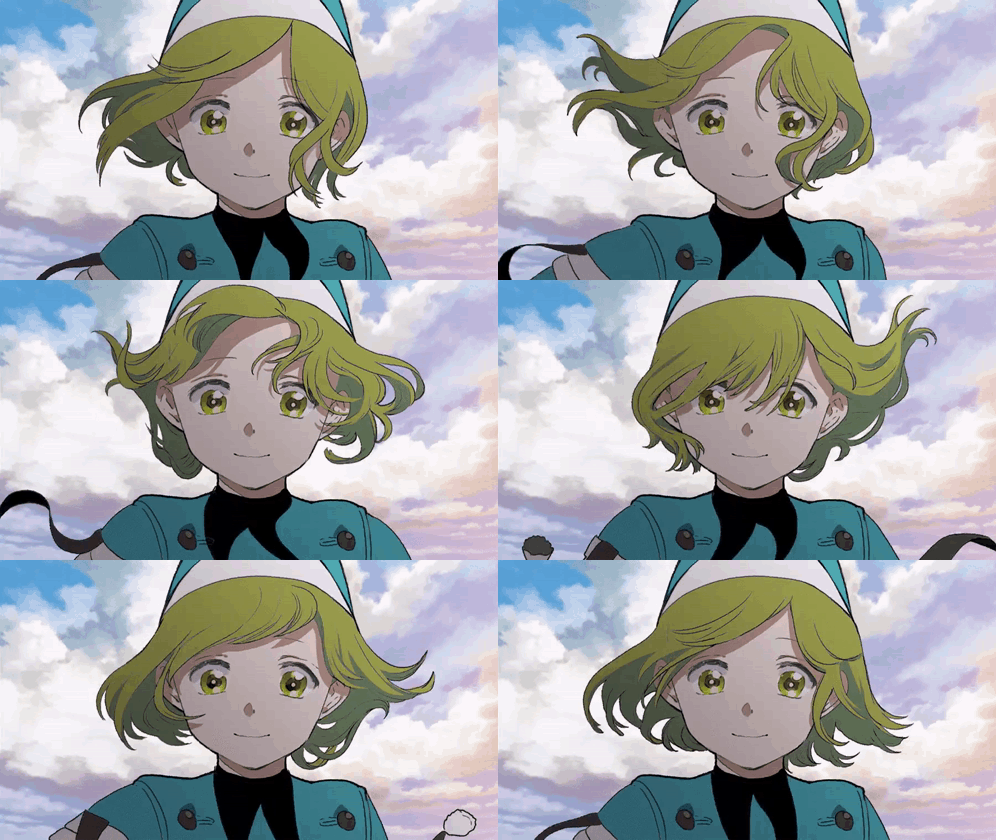
For years, the wait for Witch Hat Atelier felt endless—like standing at the edge of a spell circle that never quite activated. But in 2026, the magic finally begins. After more than a decade as one of the most beloved and critically acclaimed Seinen manga in circulation, Kamome Shirahama’s masterpiece is at last being brought to life—and it’s getting the kind of adaptation fans have dreamed about.
Set to premiere in April 2026, the anime is being handled by the studio behind Zom 100: Bucket List of the Dead, with direction by the visionary behind Space Brothers, After the Rain, and Komi Can’t Communicate. That alone signals intent. This isn’t a rushed adaptation or a surface-level fantasy—it’s a carefully crafted translation of wonder.
At the center of the story is Coco, the kind-hearted daughter of a dressmaker whose quiet life is upended when she’s granted the chance of a lifetime: becoming a witch’s apprentice. But magic, in this world, is never free. As Coco steps deeper into her studies, she finds herself entangled in dark conspiracies, forbidden truths, and a system that punishes curiosity as harshly as it rewards talent.
Witch Hat Atelier is fantasy at its most complete. It weaves drama, humor, tragedy, mystery, romance, and action into a single, flowing tapestry—never letting one overpower the others. Its magic system is meticulous and awe-inspiring, its world hand-drawn with storybook precision, and its emotional beats land with quiet devastation.
And visually? If the anime stays true to Shirahama’s intricate linework and breathtaking panel composition, it won’t just look good—it’ll be one of the most beautiful anime of the decade.
2026 isn’t just another year on the anime calendar—it’s a statement year. From long-awaited returns like Puella Magi Madoka Magica and Jujutsu Kaisen to genre-defining adaptations such as Witch Hat Atelier and Steel Ball Run, the coming slate proves that anime is entering one of its boldest creative eras yet. Whether you’re here for emotional slow burns, philosophical fantasy, brutal shōnen chaos, or quiet character-driven masterpieces, 2026 promises stories that will linger long after the final episode airs.
This is the year where patience pays off, risks are rewarded, and anime reminds us why we fell in love with it in the first place. Buckle up—because the next generation of classics is almost here.