


Top Dragon Ball Movies of All Time That Every Fan Must Watch
For over four decades, Dragon Ball has stood atop the anime world like an unshakable monument—evolving, expanding, and still roaring forward with new films and sequels. What began in 1984 as a playful manga about a strange, super-strong boy chasing adventure slowly transformed into a global cultural force—one of the defining pillars of shōnen storytelling.
At the heart of it all was Akira Toriyama, pouring equal parts imagination, exhaustion, and sincerity into every page. Dragon Ball wasn’t just punches and power levels—it was a fusion of martial arts philosophy, absurdist humor, sci-fi wonder, and emotional sincerity that resonated across generations. And it wasn’t built easily. Toriyama worked under relentless deadlines, crushing studio expectations, and recurring health struggles—yet somehow still delivered characters that felt alive, rivalries that felt personal, and worlds that felt infinite.
When the anime surged in the late ’80s and exploded worldwide in the early ’90s with Dragon Ball Z, the franchise crossed a point of no return. Its legacy was cemented. What followed was inevitable: sequels, merchandise, global adaptations, and an ever-growing fanbase hungry for more stories from this universe.
That hunger pushed Dragon Ball beyond the boundaries of weekly episodes and manga panels—into cinema. The films, often existing as standalone legends outside strict canon, became creative battlegrounds where new villains were unleashed, emotions ran deeper, and animation reached heights television couldn’t always afford. Some were fleeting curiosities. Others became essential chapters in Dragon Ball’s myth.
The very best of those cinematic journeys—where spectacle meets soul—are ranked below.
10) Dragon Ball Z: Battle of Gods
The Film That Reawakened a Sleeping Legend
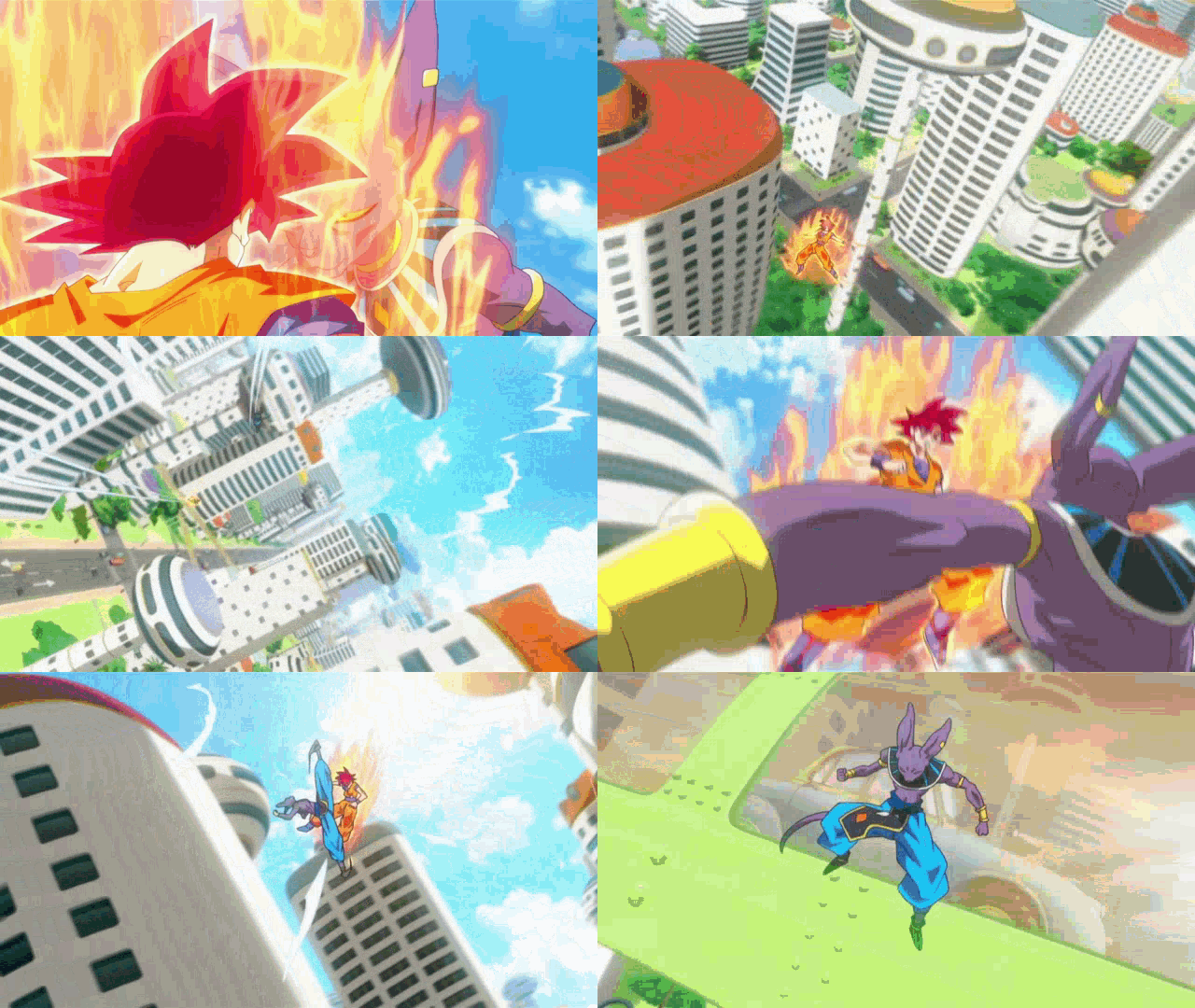
Dragon Ball Z: Battle of Gods is not just another entry in the franchise’s long cinematic history—it is the moment Dragon Ball awakened from dormancy and redefined its own future. More than a comeback, this film marked a turning point: the birth of the Dragon Ball Super era and the arrival of an entirely new tier of power, mythology, and cosmic hierarchy.
At its center stands Beerus, the God of Destruction—a being whose casual indifference carries more terror than most villains’ rage. Introduced with deceptive humor and divine arrogance, Beerus immediately reframes what “strength” means in the Dragon Ball universe. This isn’t conquest. This is balance. And Earth, for the first time in a long while, feels small again.
The story opens disarmingly—with Bulma’s birthday celebration, laughter, food, and the familiar warmth of found family. It’s classic Dragon Ball comfort. Then Beerus awakens from a centuries-long slumber, drawn by a prophetic dream of a Super Saiyan God. What follows is a brutal reminder of how fragile the Z Fighters truly are. One by one, they fall—not in climactic struggles, but in effortless demonstrations of divine superiority. Beerus doesn’t fight to prove himself. He fights because he’s bored.
Yet Battle of Gods isn’t about domination—it’s about evolution.
When the Saiyans unite, offering their power to Goku, the franchise crosses an invisible threshold. Super Saiyan God is born—not through rage or loss, but through ritual, unity, and trust. It’s a profound thematic shift: strength drawn not from fury, but from connection.
The climactic battle between Goku and Beerus is less about victory and more about recognition. Goku doesn’t truly defeat the God of Destruction—but he earns something rarer: respect. In sparing Earth, Beerus signals a new era—one where gods walk among mortals, and Dragon Ball’s universe expands far beyond what came before.
Visually dazzling, tonally balanced between comedy and awe, and mythologically essential, Battle of Gods stands as the spark that reignited Dragon Ball’s flame—proving that even legends can evolve without losing their soul.
9) Dragon Ball Super: Super Hero
When Forgotten Guardians Reclaimed the Spotlight
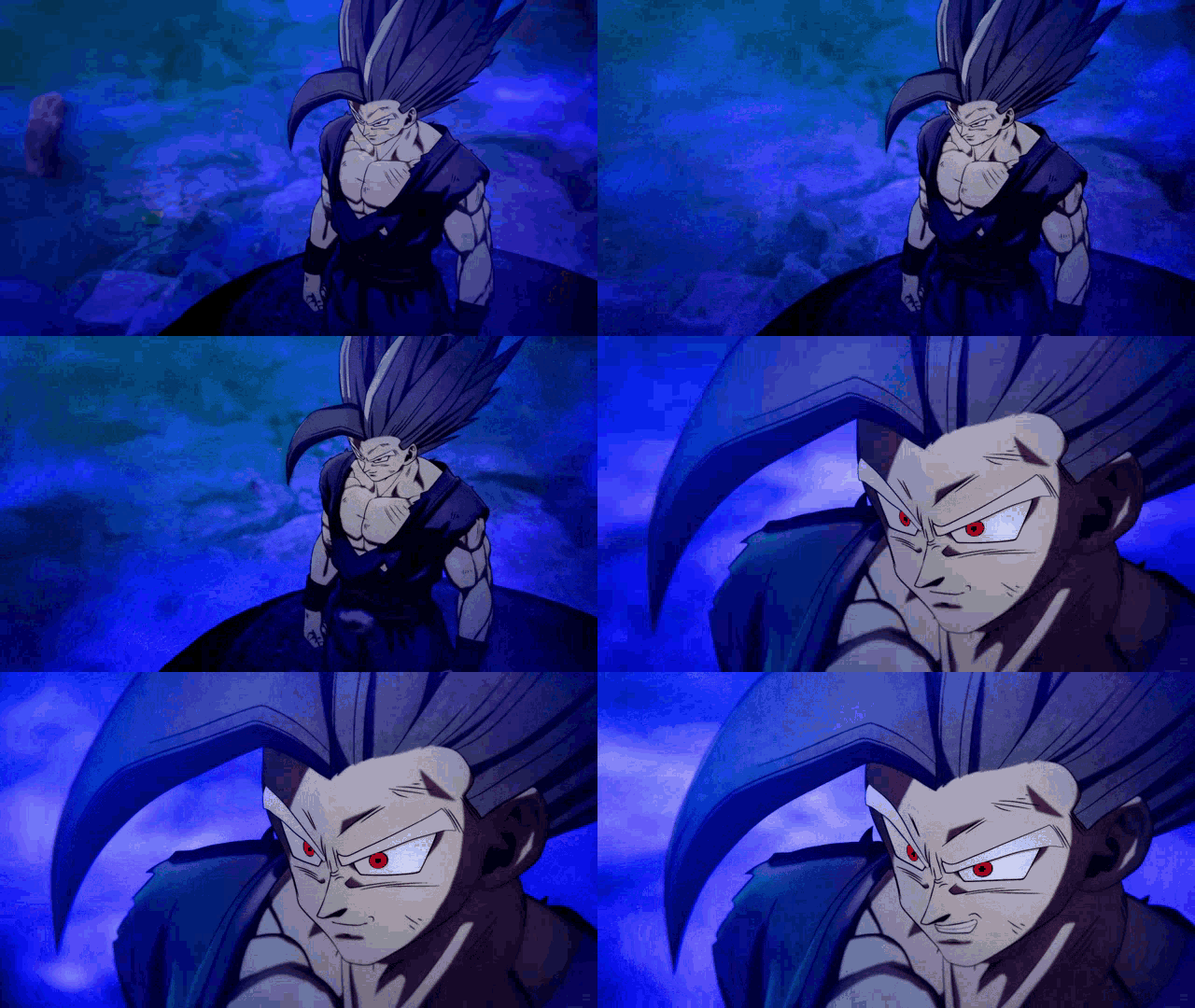
Among Dragon Ball’s modern cinematic offerings, Dragon Ball Super: Super Hero stands out not because it escalates power endlessly—but because it remembers who truly built the soul of the franchise. This is a film about restoration. About characters long pushed to the margins stepping back into mythic relevance.
At the heart of the story are Gohan and Piccolo, warriors whose legacies once defined entire eras of Dragon Ball. With Goku and Vegeta occupied among gods, the Earth becomes vulnerable again—and into that vacuum steps the resurrected Red Ribbon Army, reborn through obsession, legacy, and scientific ambition. Their new creations, Gamma 1 and Gamma 2, aren’t just android antagonists—they’re reflections of heroism shaped by the wrong hands.
Visually, Super Hero dares to evolve. Fully CG-animated, the film initially startled longtime fans, but quickly proved its worth. Rather than abandoning Toriyama’s identity, it translates his designs into a dynamic, cinematic language—fluid camera movement, expressive action, and kaiju-scale destruction that feels ripped straight from classic monster cinema. It’s different, yes—but deliberately so.
Tonally, the film strikes a delicate balance. Beneath the looming threat is Toriyama’s unmistakable charm: playful humor, absurd situations, and heartfelt quiet moments. The standout is Piccolo—not just as a warrior, but as family. His role as Pan’s protector, mentor, and fiercely devoted “Uncle Piccolo” adds warmth and humanity rarely afforded to characters at this stage of the saga.
And then come the awakenings.
Orange Piccolo is not just a transformation—it’s a long-overdue acknowledgment of the Namekian’s lifetime of sacrifice and guardianship.
Gohan Beast is something even deeper: the violent return of a destiny long suppressed. A reminder that Gohan’s true power has never come from obsession with strength—but from the terrifying fusion of intellect, emotion, and instinct.
Dragon Ball Super: Super Hero earns its place not by shouting louder than its predecessors, but by focusing sharper. It proves Dragon Ball can evolve visually, emotionally, and structurally—while still honoring the warriors who once carried the world on their shoulders.
In doing so, it reminds us:- heroes don’t fade. They wait.
8) Dragon Ball: The Path to Power
Where the Legend Began—Refined, Remembered, and Reborn
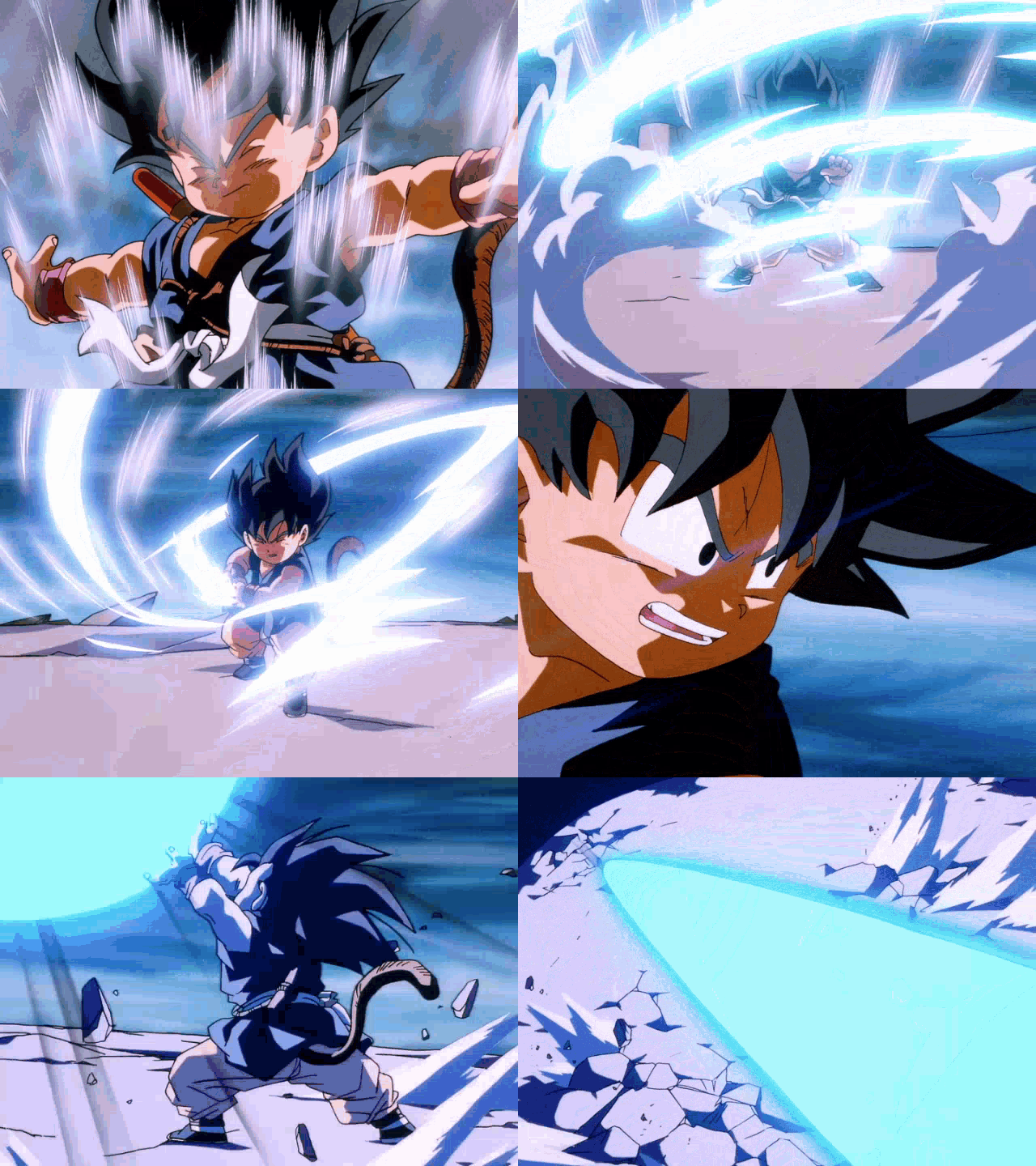
Before gods, transformations, and universe-shattering battles, Dragon Ball was a story of wonder. Dragon Ball: The Path to Power is a cinematic return to that innocence—a lovingly polished retelling of Goku’s earliest steps into legend.
The film revisits the foundation of the saga, reimagining the original Dragon Ball storyline with sharper animation and modern pacing while preserving the charm that made it timeless. It begins exactly where destiny first stirred: a chance, chaotic meeting between a wild, tail-bearing boy and a brilliant, headstrong girl named Bulma. From that moment, the journey unfolds—seven mystical Dragon Balls, the promise of Shenron, and an adventure fueled not by ambition, but by curiosity.
Though released in 1997, the film’s animation carries a warmth that never fades. It feels nostalgic without being dated, elevated without losing its simplicity. The pacing is tight, the humor lands effortlessly, and the sense of discovery remains intact—making it as welcoming to newcomers as it is comforting to longtime fans.
More importantly, The Path to Power quietly plants the seeds of Dragon Ball’s larger mythology. The introduction of the Red Ribbon Army—a shadowy force driven by greed and militaristic obsession—serves as an early warning of the technological horrors to come. Long before Androids 17 and 18 would threaten existence itself, this was where that lineage truly began.
At its heart, however, the film belongs to Goku. His innocence, kindness, and unshakable spirit take center stage. This is Goku before prophecy, before destiny—when strength was something he used to help, not dominate.
7) Dragon Ball: Episode of Bardock
When Fate Refused to Let a Saiyan Die
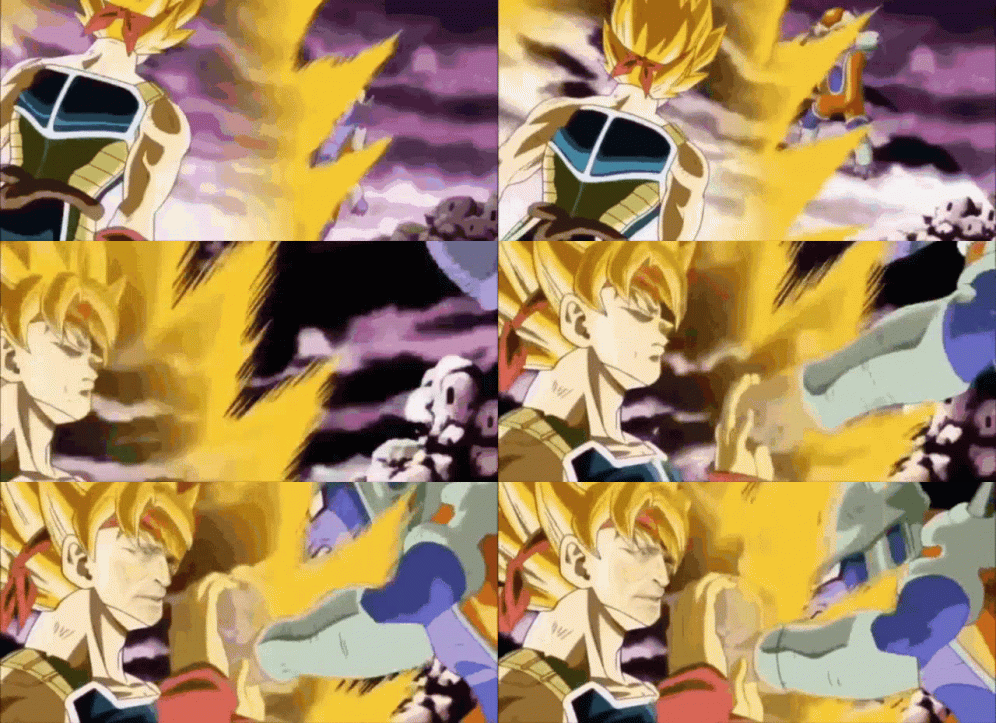
Dragon Ball: Episode of Bardock dares to ask one of the most whispered what-ifs in franchise history:
What if Bardock survived?
Born from fan curiosity and fueled by Saiyan myth, this short but striking spin-off breaks from canon to explore a fate denied in the main timeline. In this version of events, Bardock—Goku’s father, the doomed warrior who challenged Frieza in his final moments—awakens not in death, but in the distant past. Thrown across time, he finds himself face-to-face with Chilled, Frieza’s ancestral predecessor, in a cruel echo of history repeating itself.
This premise does more than rewrite events—it grants Bardock what the original saga never could: time. Time to fight. Time to rage. Time to be more than a footnote in Saiyan extinction.
For once, Bardock is not the tragic messenger shouting into the void. He is the center of the storm. Stripped of prophecy but driven by instinct, he battles not for revenge alone, but for meaning. And in that confrontation, the impossible happens—Bardock ascends into Super Saiyan, not through hope or legacy, but through pure, burning defiance.
The transformation is symbolic as much as it is spectacular. It reframes the Super Saiyan legend not as something born from Goku’s journey—but as a spark that always existed within Saiyan blood. Bardock doesn’t inherit destiny. He forces it into existence.
Though brief, Episode of Bardock exceeded expectations with its sharp animation, pulpy storytelling, and unapologetic fan-service. It doesn’t try to replace canon—it stands beside it, as a myth, a legend, a brutal alternate truth.
6) Dragon Ball Z: Wrath of the Dragon
Where Music, Myth, and Final Hope Collide

Dragon Ball Z: Wrath of the Dragon is Dragon Ball at its most haunting and heroic—a story about legends unsealed, worlds trembling, and the weight of songs meant to keep monsters asleep.
The film introduces Hirudegarn, a towering nightmare born from ancient magic rather than science—a creature too large for city skylines and too cruel for mercy. Alongside this catastrophe arrives Tapion, the lone warrior bound to the beast’s myth, carrying both a sword and a sorrow that feels centuries old. His quiet grief and stoic resolve give the film a depth rarely seen in DBZ-era movies.
The pacing lingers, almost melancholic, like a story struggling under the burden of its own prophecy. But when the final confrontation arrives, it erupts into one of the most visually striking battles in Dragon Ball history. Cities crumble, skies burn—and Goku reaches past his limits into something almost mythical.
This is the film where Dragon Fist becomes legend.
In his Super Saiyan 3 form, Goku channels everything—rage, resolve, and raw power—into the iconic, golden dragon-shaped blast that obliterates Hirudegarn in a single, breathtaking charge. For many fans who first encountered the move in the Budokai Tenkaichi games, this movie reveals its origin—the moment it was truly born.
Wrath of the Dragon brings together everything Dragon Ball does best:
colossal stakes, sweeping emotion, unforgettable music, and Goku’s power at its absolute peak.
5) Dragon Ball Z: Broly – The Legendary Super Saiyan
When Power Stopped Being a Number and Became a Nightmare
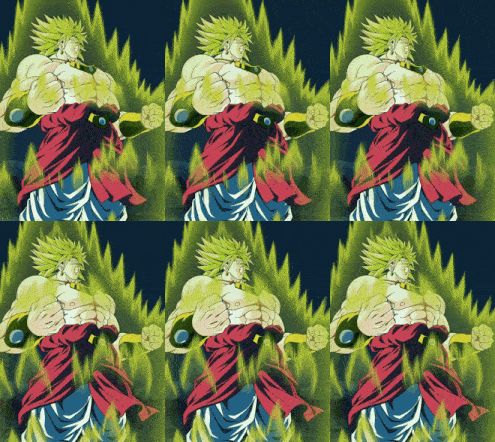
Dragon Ball Z: Broly – The Legendary Super Saiyan isn’t just another DBZ movie—it is the moment the franchise stared directly into the face of unchecked power and flinched. This film births Broly, not as a typical villain, but as a natural disaster wearing Saiyan skin—a living embodiment of rage without restraint.
The story wastes no time with elaborate twists. Broly arrives. Broly sees the Saiyans who unknowingly shaped his fate. And then the universe trembles. What begins as a confrontation escalates into a relentless, suffocating onslaught as Goku, Vegeta, Gohan, and the others realize they are not fighting a warrior—they are facing the Legendary Super Saiyan, a myth made flesh.
Just when it seems the heroes have him contained, Broly’s aura fractures into madness. He ascends into his true legendary form—towering, unstoppable, smiling as whole landscapes crumble beneath his feet. His laughter echoes louder than their battle cries; his blows feel less like punches and more like verdicts. For the first time, Dragon Ball presented a foe whose strength didn’t feel like something to surpass—only something to survive.
This was the film that changed the temperature of Dragon Ball combat. It showed fans what happens when talent, trauma, and limitless potential collide without conscience or control. Every clash since then carries a shadow of Broly’s rampage.
4) Dragon Ball Z: Fusion Reborn
When Hell Broke Loose—and Two Rivals Became One
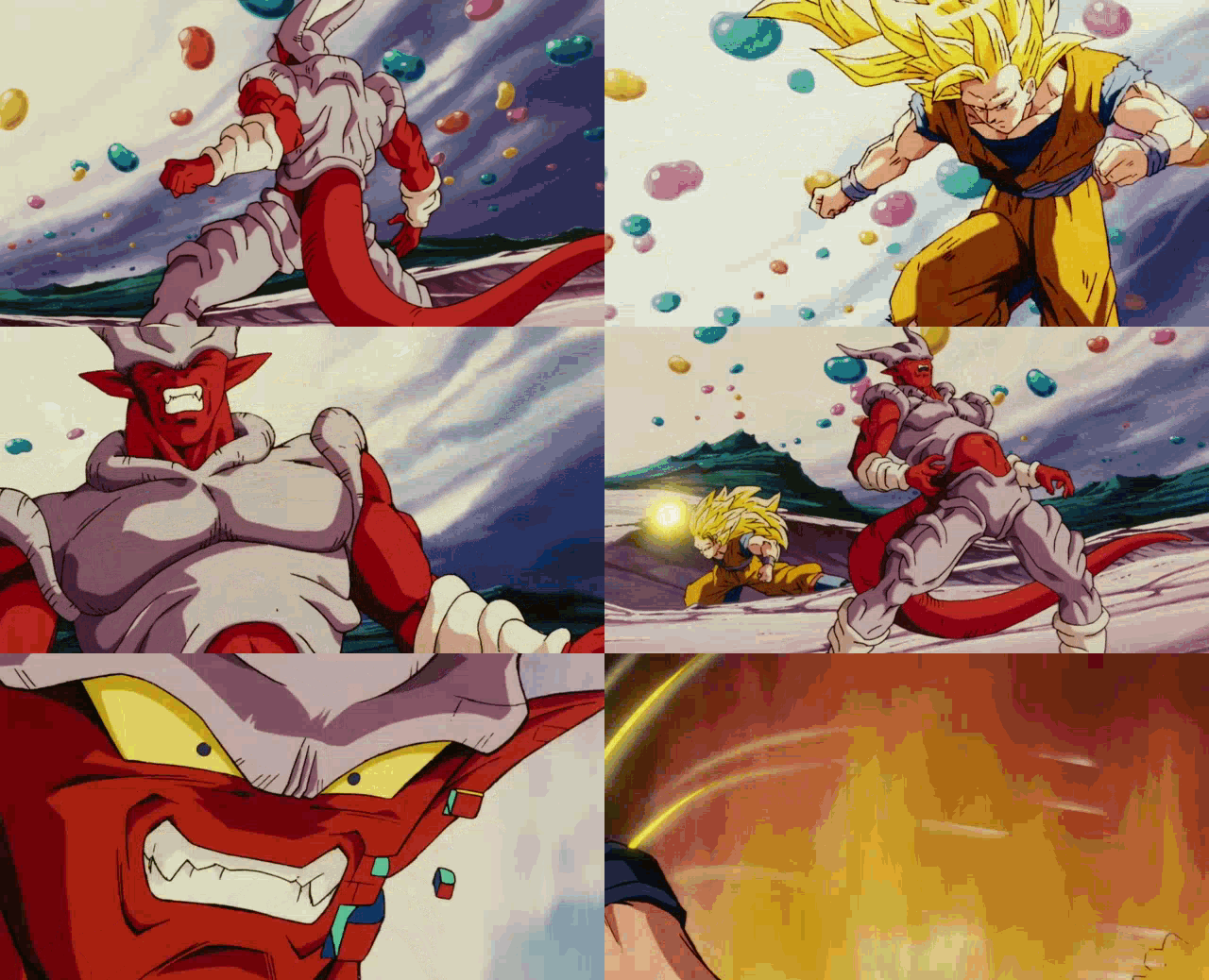
Dragon Ball Z: Fusion Reborn tears open a corner of the Dragon Ball universe we rarely linger in—the afterlife itself. What begins as playful chaos, with Goku and Vegeta navigating eternity crowned with halos, slowly twists into something far darker. Reality bends. Rules fracture. And from that cosmic glitch is born a demon made of pure distortion: Janemba.
At first, Janemba is almost absurd—childlike, round, and gleefully destructive, a nightmare wearing a smile. But innocence rots quickly. His evolution is sudden and terrifying as he transforms into a sleek, blade-wielding devil whose very presence fractures space. Swords cut dimensions. Portals shatter physics. Heaven and hell bleed into one another.
Goku and Vegeta throw everything they have at him—and it isn’t enough.
Their blows scatter like dust against Janemba’s demonic form. For once, even Saiyan pride wavers. It is here, in the ruins of the afterlife, that something unthinkable happens: two lifelong rivals choose unity over ego.
And thus, fusion becomes destiny.
The Metamoran dance is completed, light erupts, and a new warrior steps forward—Gogeta. He is not merely a combination of Goku and Vegeta; he is the harmony of their opposites, the weapon born when rivalry becomes resolve. In moments, Janemba’s reign collapses under Gogeta’s overwhelming brilliance.
Fusion Reborn is more than a movie about a villain defeated.
It is about worlds colliding, sins escaping from the cracks of reality, and the revelation that sometimes the universe can only be saved when two legends become one.
3) Dragon Ball Super: Broly
The Legend Wasn’t Just Retold — It Was Reborn

Dragon Ball Super: Broly is more than a remake; it is a restoration. A myth reforged in flame.
Taking inspiration from The Legendary Super Saiyan, this film doesn’t simply repeat the story — it rewrites Broly’s place in Dragon Ball history, stitching him seamlessly into modern canon while deepening everything that once made him iconic. The result is a Broly who is not just a monster of rage, but a tragedy wrapped in muscle and raw instinct.
Here, Broly is no longer a simple engine of destruction.
He is a survivor — raised in exile on a desolate world, shaped by harsh terrain, a controlling father, and a childhood torn from him before he ever understood why. His power grows alongside his loneliness, becoming something feral and limitless.
When fate finally brings Goku and Vegeta to him, it isn’t just a battle that erupts — it’s memory, trauma, and destiny igniting all at once. Broly snaps the chains of restraint and descends into a rampage that feels less like a fight and more like a natural disaster. Mountains break. Atmospheres tear. Even gods of battle feel small.
The confrontation is one of the most spectacular in Dragon Ball history — a swirling collision of:
-
unimaginable power,
-
wounded psychology,
-
and Saiyan heritage rewritten in real time.
What elevates Dragon Ball Super: Broly beyond its predecessor is heart. Broly isn’t just a villain to be defeated; he’s a life to be understood. His overwhelming power becomes a language of pain, and the film makes you feel every ounce of it.
2) Dragon Ball Z: Bardock – The Father of Goku
The Tragedy That Lit the First Spark
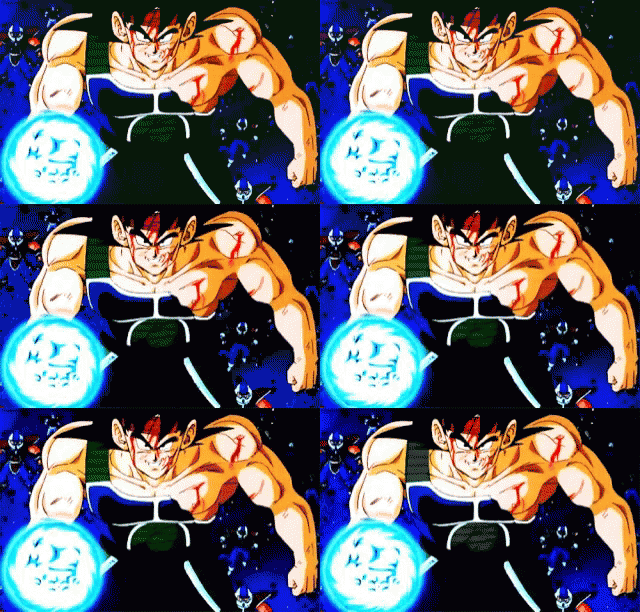
Dragon Ball Z: Bardock – The Father of Goku is one of the franchise’s most somber stories — a tale about a man who realizes the truth too late, and still chooses to stand.
The film rewinds time to the final, doomed days of Planet Vegeta, focusing on Bardock, a low-class Saiyan warrior whose life is forever altered when he gains terrifying visions of the future. He sees it all before anyone else does: the genocide of his people, the obliteration of his world, and the rise of a single infant who will escape it all.
That infant is his son.
As Frieza’s tyranny tightens, Bardock becomes the lone voice of defiance among a proud race too confident to believe in their own extinction. His warnings are ignored. His allies fall. The sky burns purple with a death they refuse to acknowledge — until Bardock is the last one left, standing like a crack in fate.
He charges toward the heavens anyway.
The movie’s emotional core lies not in Bardock’s defeat, but in his decision — to confront Frieza not because he thinks he can win, but because someone must. His final stand becomes less a battle and more a message hurled into destiny’s path.
And from the ashes of that tragedy, the saga truly begins.
Goku’s journey — his kindness, his strength, his very survival — is born directly from Bardock’s loss. The father dies seeing visions of a future where his son will rise beyond anything the Saiyans ever imagined. It is heartbreaking. It is inevitable. And it transforms Bardock from background warrior to mythic cornerstone of Dragon Ball’s lore.
1) Dragon Ball Z: The History of Trunks
A World Where the Heroes Never Arrived
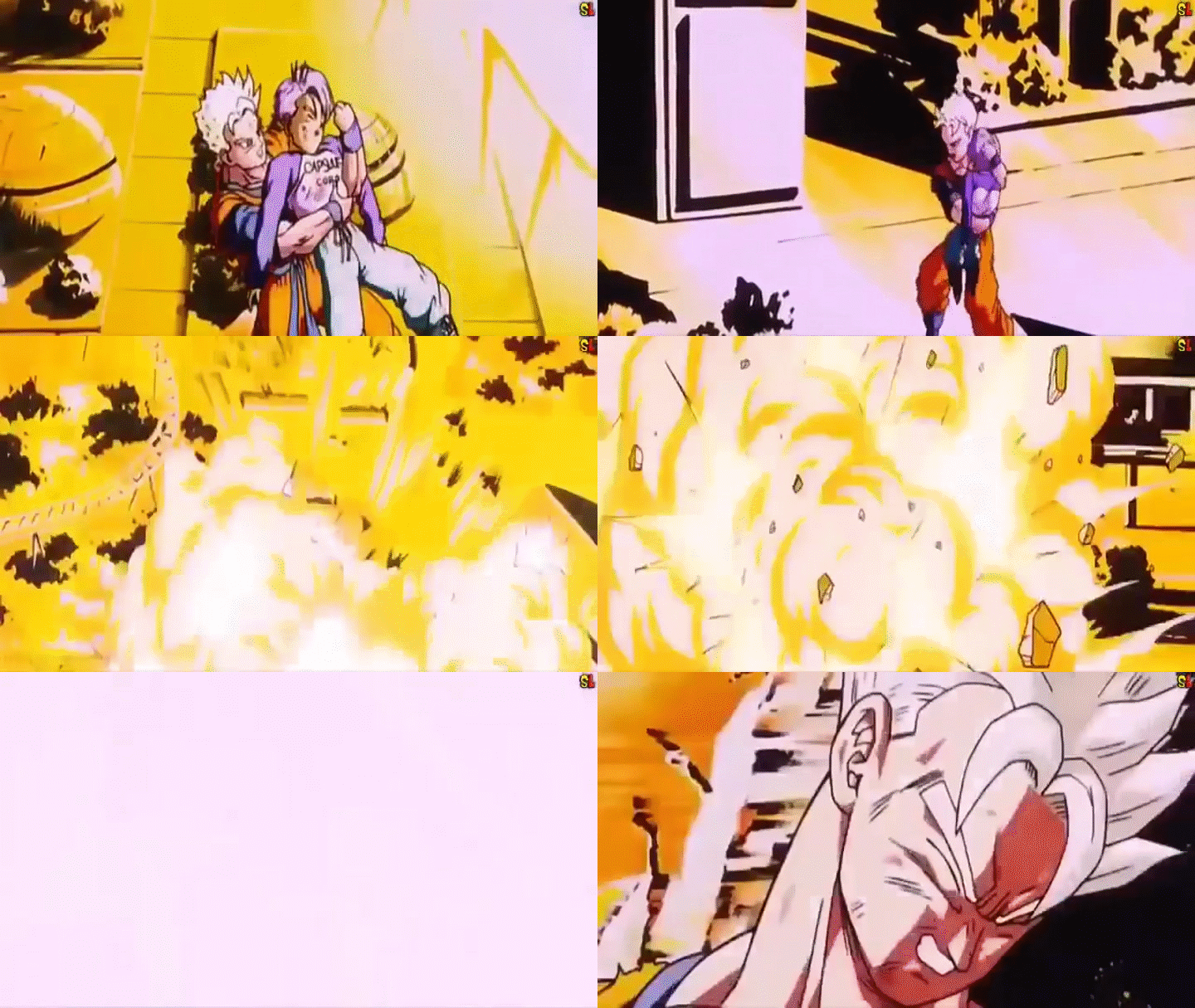
Dragon Ball Z: The History of Trunks is Dragon Ball at its bleakest — and perhaps its most human. It drags us into a future where the unthinkable has already happened: the heroes failed. Goku is gone. Vegeta is gone. The Earth’s mightiest defenders have fallen, and in their absence, two smiling nightmares roam freely — Androids 17 and 18 — turning cities into graveyards for sport.
In this shattered world, hope narrows down to just two figures: Future Gohan and Future Trunks. Not comrades of equal standing, but master and student — the last flickers of Saiyan blood fighting against an ocean of loss. Gohan becomes Trunks’ anchor, mentor, and older brother figure, training him not just to fight, but to endure in a world where victory feels impossible.
And then comes the moment that breaks the sky.
Gohan goes to face the Androids alone. No backup. No speeches. Only resolve. His final stand is one of the most devastating scenes in the franchise — rain falling, cities silent, Trunks arriving too late to save the only person he had left. The Androids’ casual cruelty and Gohan’s lonely death redefine the word “villain” in Dragon Ball.
It is there — in grief so heavy it feels physical — that Trunks becomes a Super Saiyan for the first time. Not from rivalry. Not from pride. But from unbearable loss.
What follows is not triumph, but purpose.
Trunks doesn’t vow to defeat the Androids in his world — he vows to change history itself. His journey to the past isn’t an escape; it’s an act of desperate love, a last attempt to save a world that never got the chance his did.
Yes, the animation shows its age.
But the story? It hasn’t aged a day.
Every frame feels like a world mourning itself. Every punch lands like a plea for a future that doesn’t hurt. The History of Trunks earns its place at the top because it strips Dragon Ball of tournament lights and cheering crowds and asks a single, searing question:
What if the heroes died… and the world kept suffering anyway?
From doomed futures to rewritten legends, Dragon Ball’s movies have done far more than expand a franchise — they’ve expanded imagination itself. These films let us witness fathers defy destiny, students become masters, gods test mortals, and forgotten warriors rise again. Each story carries something timeless: the idea that even in ruin, someone will still stand up and fight.
Whether it was Broly’s primal rage, Trunks’ grief-born resolve, Bardock’s final scream against fate, or the quiet return of Gohan and Piccolo to the spotlight, every film on this list showcases what has always made Dragon Ball special — heart, heroism, and the refusal to stay down.
If these journeys stirred your Saiyan spirit, take the next step beyond the screen. Check out exclusive Anime, Marvel, DC, Transformers, LEGO, and more collectibles at up to 40% OFF — perfect for fans who don’t just watch their stories, but live them. Click hereto avail.