


The Odyssey Cast Breakdown: Heroes, Gods, Kings & Villains
For many people, The Odyssey was the massive Greek epic assigned in school—the one filled with gods, monsters, impossible journeys, and enough twists to make modern fantasy stories look simple. More than 2,700 years after it was first composed, Homer's legendary tale is once again preparing to captivate audiences worldwide, this time through the lens of one of cinema's most ambitious filmmakers: Christopher Nolan.
Widely regarded as one of the foundational works of Western literature, The Odyssey follows the story of Odysseus, the legendary King of Ithaca, as he struggles to return home after the devastating Trojan War. What should have been a straightforward voyage turns into a brutal ten-year odyssey across dangerous seas, mysterious islands, and supernatural realms. Along the way, Odysseus encounters monstrous creatures, vengeful gods, seductive enchantresses, and countless trials that test not only his strength but also his intelligence, resilience, and humanity.
While Odysseus fights to survive and find his way home, another battle unfolds in Ithaca. His wife, Penelope, and his son, Telemachus, must defend their kingdom against a growing number of power-hungry suitors eager to seize Odysseus' throne and wealth. Their struggle transforms The Odyssey from a simple adventure story into a deeply emotional tale about loyalty, perseverance, family, and the lasting scars left behind by war.
These themes remain remarkably relevant even today. Beneath its mythical creatures and divine interventions lies a powerful exploration of survival, trauma, identity, and the unbreakable desire to return home. It's precisely the kind of layered storytelling that feels perfectly suited for Christopher Nolan, a filmmaker known for combining large-scale spectacle with deeply human emotional journeys.
A Timeless Story Meets One of Hollywood's Most Ambitious Directors
Over the centuries, The Odyssey has inspired countless adaptations across theater, television, literature, and film. Yet Nolan's version stands apart from anything audiences have seen before. The Academy Award-winning director behind The Dark Knight Trilogy, Inception, Interstellar, Dunkirk, and Oppenheimer is bringing Homer's epic to life on an unprecedented scale.
Reports indicate that The Odyssey was filmed across multiple countries, including Greece, Italy, Scotland, Iceland, Morocco, and Malta, with Nolan once again collaborating with cinematographer Hoyte van Hoytema and composer Ludwig Göransson. The production is also notable for becoming the first major blockbuster filmed entirely using IMAX film cameras, pushing cinematic technology to new heights. The film is scheduled to arrive in theaters on July 17, 2026.
The recently released trailer has only amplified anticipation, offering audiences their first glimpse at Nolan's interpretation of ancient mythology. Sweeping landscapes, large-scale battles, emotional family drama, and encounters with legendary figures from Greek mythology suggest that this could become one of the director's most ambitious and visually spectacular projects to date. Early ticket sales have already broken records, demonstrating just how eager audiences are to embark on this mythological journey.
Who Has Been Officially Confirmed in the Cast?
As excitement surrounding The Odyssey continues to build, fans have been eager to learn exactly which Hollywood stars are stepping into the roles of Homer's iconic characters.
This guide focuses exclusively on actors whose roles have been officially confirmed through promotional material, studio reveals, or reliable production sources. While speculation continues regarding several members of the ensemble—including Elliot Page, whose exact role remains undisclosed at the time of writing—only confirmed character assignments will be included here.
Several major cast members are still shrouded in mystery, including Corey Hawkins, Jesse Garcia, James Remar, Sean Avery, and others whose characters have yet to be officially revealed. As additional information emerges, the roster of confirmed characters will undoubtedly continue to grow.
What is already clear, however, is that Nolan has assembled one of the most star-studded ensembles of his career. Leading the cast are Matt Damon as Odysseus, Tom Holland as Telemachus, Anne Hathaway as Penelope, Robert Pattinson as Antinous, Zendaya as Athena, Charlize Theron as Circe, Jon Bernthal as Menelaus, Benny Safdie as Agamemnon, and several other acclaimed performers bringing figures from Greek mythology to life.
With gods, kings, warriors, monsters, and legends all converging in Nolan's vision of Homer's masterpiece, let's dive into every confirmed actor in The Odyssey and discover exactly who they're playing—presented, fittingly, in alphabetical order.
The Punisher Trades Vigilantism for a Crown in Christopher Nolan's The Odyssey
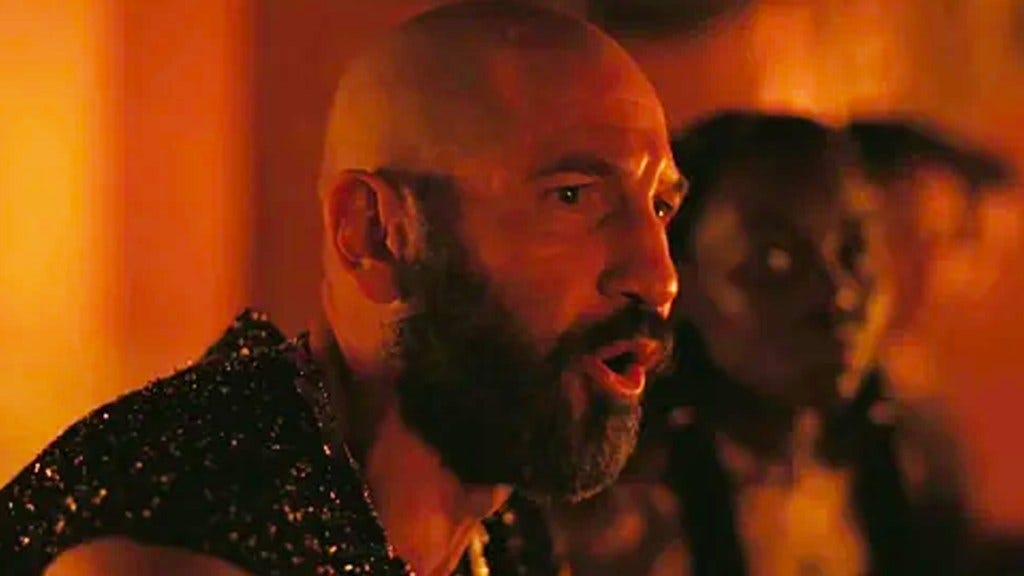
After years of captivating audiences as intense, battle-hardened characters in projects like The Punisher, The Bear, The Walking Dead, and King Richard, Jon Bernthal is stepping into a very different kind of leadership role. In Christopher Nolan's The Odyssey, the acclaimed actor takes on the role of Menelaus, the legendary King of Sparta and one of the most important figures in Greek mythology.
Bernthal officially joined Nolan's star-studded cast in 2025, and while promoting several recent projects, he couldn't help but reflect on the extraordinary experience of working with the filmmaker. Speaking to Esquire, the actor shared heartfelt thoughts about the bonds that formed during production and the lasting impact he believes the film will have on everyone involved.
Recalling conversations he had with fellow cast and crew members, Bernthal said:
"I told them, 'Whatever you think in the day-to-day, just know you are going to look back on this, and it will be the defining moments of your life. These relationships, these friendships, what you guys have built together, not because you're part of this unbelievable movie, not because it's got to be the biggest movie in the world, but because of the blood, sweat, and tears that you guys laid out with each other, for each other, every single day.'"
His comments offer a glimpse into the atmosphere surrounding Nolan's ambitious adaptation—one that appears to have forged genuine friendships alongside cinematic spectacle.
Visually, Bernthal seems perfectly suited for the role. Sporting a thick beard and a weathered appearance in promotional material, the actor embodies the rugged endurance associated with Menelaus, a ruler whose own journey home after the Trojan War was far from easy. While Odysseus famously spent ten years struggling to return to Ithaca, Menelaus himself endured a difficult seven-year voyage across the Mediterranean before finally reclaiming his throne in Sparta.
For those unfamiliar with Greek mythology, Menelaus is far more than a supporting character. He is the younger brother of Agamemnon, the commander of the Greek forces during the Trojan War, and the husband of Helen of Troy, whose abduction by Paris sparked the legendary conflict that changed the ancient world. In many ways, Menelaus' personal tragedy serves as one of the key catalysts for the events that eventually lead to The Odyssey.
Within Homer's epic, Menelaus plays an important mentoring role for Telemachus, the son of Odysseus. During Telemachus' quest to learn what happened to his missing father, he visits Sparta, where Menelaus and Helen welcome him with hospitality and wisdom. It is Menelaus who ultimately provides crucial information regarding Odysseus' fate and whereabouts, helping set the next stage of the young prince's journey. Because of this, his role becomes a significant piece of the narrative puzzle, connecting the stories of multiple heroes across the Greek world.
The Odyssey also marks the second major collaboration between Bernthal and Tom Holland, who portrays Telemachus in Nolan's adaptation. The two actors previously developed a close friendship after working together earlier in their careers, and audiences will soon see them reunite once again in Spider-Man: Brand New Day, where Bernthal returns as Frank Castle, better known as The Punisher.
With his trademark intensity, commanding screen presence, and ability to portray warriors carrying the weight of hard-earned experience, Jon Bernthal appears to be an inspired choice for Menelaus—a king whose wisdom, resilience, and hard-fought survival make him one of the most fascinating figures in Homer's timeless epic.
Matt Damon as Odysseus
Christopher Nolan's Epic Finds Its Hero in Matt Damon
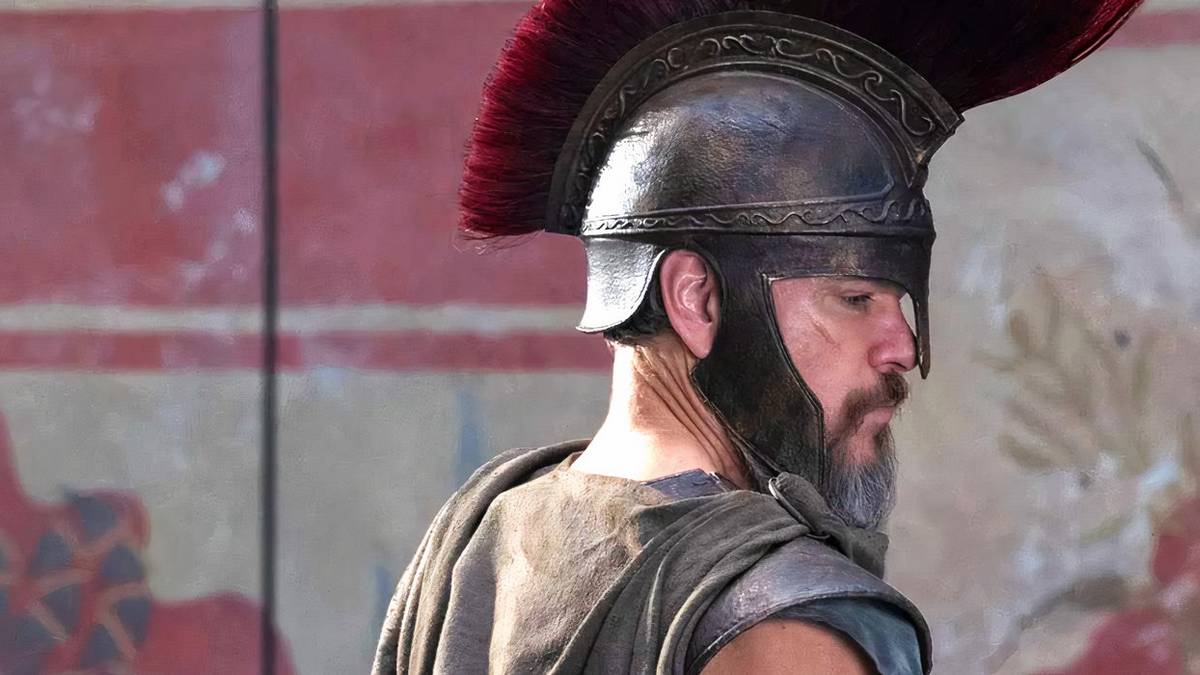
At the heart of Christopher Nolan's The Odyssey stands one of the most iconic heroes ever created in literature, and bringing that legendary figure to life is none other than Academy Award winner Matt Damon. Entrusted with the coveted role of Odysseus, the King of Ithaca and the central protagonist of Homer's timeless epic, Damon takes center stage in what is already shaping up to be one of the most ambitious performances of his career.
The casting itself marks a notable departure from many previous adaptations of Greek mythology and ancient epics, which have often relied heavily on British ensembles to portray their legendary heroes. Nolan's version takes a different approach, with Damon leading an international cast while bringing a distinctly American presence to one of Western literature's most celebrated characters.
For Damon, however, this wasn't simply another leading role. Speaking to Time in a profile focused on Nolan and the film, the actor revealed just how deeply he approached the opportunity.
"There aren't a lot of people in their mid-50s as protagonists in these epics," Damon explained. "I looked at this like the last movie I'd ever do."
The comment perfectly captures the significance of the role. Opportunities to portray characters as legendary and culturally influential as Odysseus come along perhaps once in a lifetime, even for actors with careers as accomplished as Damon's. After collaborating with Nolan in the Oscar-winning Oppenheimer, the actor now steps firmly into the spotlight as the driving force behind the filmmaker's latest cinematic spectacle.
In Greek mythology, Odysseus is far more than a warrior. He is one of the most complex and enduring heroes ever written. As the legendary King of Ithaca, he earns fame not through overwhelming strength but through extraordinary intelligence, strategic thinking, and unmatched resourcefulness. Ancient Greek audiences often viewed him as the embodiment of cunning and wisdom, qualities that famously helped secure victory during the Trojan War through the ingenious Trojan Horse strategy.
Yet The Odyssey is not merely a story about triumph. It is a deeply human tale about endurance, sacrifice, and the longing for home.
Following the fall of Troy, Odysseus embarks on a perilous ten-year journey across the Mediterranean in an attempt to return to his wife Penelope and son Telemachus. Along the way, he faces some of the most famous challenges in mythology, including the Cyclops Polyphemus, the deadly Sirens, the enchantress Circe, the six-headed monster Scylla, the whirlpool Charybdis, and the wrath of the sea god Poseidon. Each encounter tests not only his physical courage but also his leadership, patience, and ability to adapt under impossible circumstances.
What makes Odysseus such a fascinating character centuries after his creation is that he is not portrayed as flawless. His greatest weakness is his hubris—an excessive pride that repeatedly complicates his journey and often turns victory into hardship. Unlike many traditional heroes, Odysseus succeeds not because he is perfect but because he learns, perseveres, and refuses to surrender despite overwhelming odds. That emotional complexity is one of the reasons the character continues to resonate with readers and audiences more than two millennia after Homer first told his story.
For Damon, the role presents an opportunity unlike anything audiences have seen from him before. Throughout his career, he has excelled in both ensemble-driven productions and commanding lead performances, from Good Will Hunting and The Bourne Identity franchise to The Martian, Ford v Ferrari, and Oppenheimer. Yet Odysseus demands something entirely different—a performance that combines the physicality of an action hero, the intellect of a strategist, and the emotional vulnerability of a husband and father desperately trying to find his way home.
Given Christopher Nolan's remarkable run of critical acclaim and awards success in recent years, many industry observers already view The Odyssey as a potential major contender during awards season. If the film fulfills its immense promise, Damon's portrayal of one of literature's greatest heroes could very well place him back in the spotlight when Oscar season arrives.
For now, though, audiences can look forward to seeing one of Hollywood's most respected actors tackle the defining role of an ancient legend whose journey has captivated the world for nearly 3,000 years. In Nolan's hands—and with Damon leading the charge—Odysseus may be about to embark on his most unforgettable voyage yet.
Jimmy Gonzales as Cepheus
A Rising Character Actor Joins Odysseus' Crew in Christopher Nolan's Mythological Epic

While much of the spotlight surrounding Christopher Nolan's The Odyssey has understandably focused on its major heroes, kings, queens, and gods, the film's sprawling ensemble also includes the brave warriors who accompany Odysseus on his perilous voyage home. Among them is Jimmy Gonzales, who has been confirmed to portray Cepheus, one of Odysseus' loyal shipmates.
Gonzales joins a growing roster of actors playing members of Odysseus' crew, including Will Yun Lee, who, at the time of writing, has only been identified as another unnamed sailor accompanying the King of Ithaca on his legendary journey. Though Cepheus is not among the most prominent figures in Homer's epic, his role serves as a reminder of the tremendous human cost endured by those who followed Odysseus through one of mythology's most dangerous adventures.
In the context of The Odyssey, Cepheus is a minor but memorable warrior who sails alongside Odysseus during the long voyage back to Ithaca following the Trojan War. Like many members of the hero's crew, his fate is tragic. During one of the story's most famous and terrifying episodes, Cepheus is killed by the monstrous Cyclops Polyphemus, the one-eyed giant whose encounter with Odysseus becomes one of the defining moments of the entire epic.
The Cyclops sequence remains one of the most iconic chapters in Greek mythology. After becoming trapped inside Polyphemus' cave, Odysseus and his men are hunted and devoured by the giant before the king devises a clever escape plan. The encounter ultimately saves several survivors but comes at a devastating cost, with crew members—including Cepheus—losing their lives along the way. His death serves as another example of the sacrifices made during Odysseus' decade-long struggle to return home.
Interestingly, the name Cepheus carries a much larger legacy within Greek mythology beyond Homer's poem. In broader mythological tradition, Cepheus is most famously known as the legendary King of Ethiopia, the husband of Queen Cassiopeia, and the father of Andromeda. Together, these figures are connected to one of Greek mythology's most enduring stories, which eventually leads to the heroic exploits of Perseus and the rescue of Andromeda from a sea monster. The tale became so influential that several constellations visible in the night sky—including Cepheus, Cassiopeia, Andromeda, and Perseus—were later named after these legendary figures.
For Jimmy Gonzales, The Odyssey represents another major step in a steadily growing career filled with memorable television and film performances. Before joining Nolan's blockbuster adaptation, Gonzales was perhaps best known for portraying Ibarra in the acclaimed FX crime drama Mayans M.C., where he became a familiar face to audiences throughout the series' run.
Television viewers may also recognize him from recurring appearances in AMC productions such as Lodge 49 and The Walking Dead, both of which showcased his ability to bring depth and authenticity to supporting characters.
On the big screen, Gonzales earned additional recognition for his performance as Omar in Netflix's inspirational drama Blue Miracle. Based on a remarkable true story, the film follows a struggling orphanage fighting to survive financially. Gonzales portrayed Omar, the real-life manager who enters a high-stakes fishing tournament in a desperate effort to save the boys' home and secure a future for the children under his care.
Although Cepheus may not be one of the most widely known names in The Odyssey, his presence contributes to the larger emotional weight of Odysseus' journey. Every sailor aboard those ships represents a life shaped—and often lost—by the consequences of war, fate, and the whims of the gods. Through Jimmy Gonzales' portrayal, audiences will likely gain a deeper appreciation for the ordinary warriors whose sacrifices helped transform Odysseus' voyage into one of the greatest stories ever told.
Mia Goth as Melantho
Horror's Modern Icon Steps Into One of The Odyssey's Most Infamous Palace Betrayers

Over the past few years, Mia Goth has become one of the most fascinating and unpredictable talents working in modern cinema. Known for delivering unforgettable performances in psychological horror and dark character studies, the actress is now venturing into the world of ancient mythology. In Christopher Nolan's The Odyssey, Goth has been cast as Melantho, a character whose betrayal and arrogance make her one of the most disliked figures within Homer's legendary tale.
It is a role that feels tailor-made for an actress who has built her reputation portraying complex, morally ambiguous, and emotionally charged characters.
Within The Odyssey, Melantho occupies a unique place in the royal household of Ithaca. She is the sister of Melanthius, the notoriously disloyal goatherd who ultimately sides against Odysseus and his family. Despite being born a servant, Melantho is treated with remarkable kindness throughout her life. Queen Penelope raises her almost as though she were her own daughter, providing her with affection, protection, and privileges rarely afforded to palace servants.
Yet rather than repaying that generosity with loyalty, Melantho becomes one of Penelope's greatest disappointments.
As the years pass and Odysseus remains missing following the Trojan War, Melantho aligns herself with the arrogant suitors who invade the palace and seek to claim Ithaca's throne. She openly abuses the hospitality of the royal household, mocks and disrespects Penelope, and repeatedly insults the disguised Odysseus when he secretly returns home. Adding to her betrayal, Melantho also becomes romantically involved with Eurymachus, one of the most powerful and manipulative suitors vying for Penelope's hand.
In a story where loyalty and faithfulness are among the highest virtues, Melantho represents the opposite. Her actions stand in direct contrast to Penelope's unwavering devotion and Telemachus' determination to protect his family. As a result, she becomes one of the epic's most antagonistic supporting characters, and like several others who betray Odysseus' household, she ultimately meets a fitting and long-foreshadowed downfall.
The role appears to be an ideal showcase for Goth's ability to bring depth and intensity to complicated characters. While Melantho may not command armies or battle monsters, her influence within the palace contributes significantly to the tension and emotional stakes of the story. In many ways, the danger she poses comes not from physical strength but from her willingness to betray the people who trusted her most.
For Goth, The Odyssey marks another major milestone in what has become one of Hollywood's fastest-rising careers.
The actress first captured widespread attention through her collaborations with filmmaker Ti West, particularly in the acclaimed X trilogy, which includes X, Pearl, and MaXXXine. Her portrayal of Pearl, a young woman consumed by ambition, loneliness, and psychological instability, earned widespread praise and transformed her into one of the defining faces of contemporary horror cinema.
Since then, Goth has become one of the industry's most in-demand performers, building a reputation for fearlessly embracing challenging material and emotionally layered characters. Her momentum continued with Guillermo del Toro's highly anticipated adaptation of Frankenstein, further cementing her status as a performer capable of moving seamlessly between prestige filmmaking and genre storytelling.
Now, she trades gothic horror for Greek mythology.
Speaking about her experience working on The Odyssey, Goth shared her enthusiasm during an interview with Fandango in the fall of 2025. Reflecting on her time with Nolan and the production team, she described the experience as "amazing" and called it "one of the best experiences" of her career.
Beyond the scale of the project itself, Goth also revealed how much she learned from watching Nolan's filmmaking process firsthand. She noted that many of the lessons she observed—particularly the way the acclaimed director manages a production and collaborates with his cast and crew—would remain with her and influence how she approaches future projects throughout her career.
That admiration is hardly surprising. Nolan's productions are renowned for their practical filmmaking techniques, meticulous planning, and collaborative atmosphere, making them valuable learning experiences for performers at every stage of their careers.
Although Melantho may not be one of the most famous names in Greek mythology, she plays an important role in highlighting one of The Odyssey's central themes: the difference between loyalty and betrayal. Through Mia Goth's performance, audiences will likely witness a character whose choices become a cautionary tale about misplaced allegiance, ingratitude, and the consequences of turning against those who once offered kindness and trust.
For an actress who has repeatedly excelled at portraying characters operating in moral gray areas, Melantho could prove to be yet another standout addition to Mia Goth's growing list of unforgettable roles.
Anne Hathaway as Penelope
Anne Hathaway Brings Strength, Intelligence, and Heart to Ithaca's Unbreakable Queen
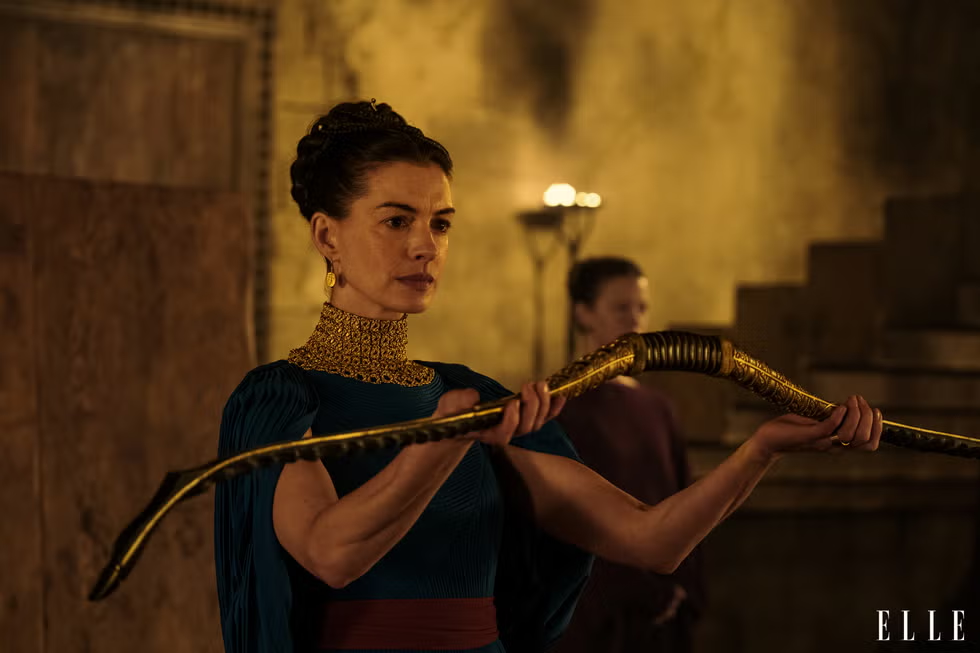
When audiences first see Christopher Nolan's The Odyssey, they may need a moment to overlook the fact that Anne Hathaway is portraying the mother of Tom Holland's Telemachus. But once the story unfolds, that casting choice quickly becomes easy to embrace. After all, few actresses working today possess the grace, emotional depth, and commanding screen presence required to bring one of literature's most beloved heroines to life.
In Nolan's ambitious adaptation of Homer's epic, Hathaway takes on the role of Penelope, the Queen of Ithaca, the devoted wife of Odysseus, and the loving mother of Telemachus. While much of The Odyssey follows Odysseus' perilous journey across the seas after the Trojan War, Penelope's story unfolds at home, where she fights a quieter but equally important battle—one built on patience, resilience, intelligence, and unwavering faith.
Far from being a passive character waiting to be rescued, Penelope is one of the most remarkable women in all of Greek mythology. Believing Odysseus to be dead after years without news of his whereabouts, more than a hundred ambitious suitors descend upon Ithaca, each eager to marry the queen and seize control of the kingdom. Their presence turns the royal palace into a political battleground, threatening not only Penelope's future but also the inheritance and safety of her son.
Yet Penelope refuses to surrender.
Rather than openly confronting the suitors with force, she relies on wit and strategy. Her most famous act of defiance involves promising to choose a new husband once she finishes weaving a burial shroud for Odysseus' father, Laertes. By day, she diligently works on the cloth. By night, she secretly unravels her progress, delaying the decision for years. The ingenious deception has become one of the most celebrated examples of intelligence and perseverance in classical literature, helping cement Penelope's legacy as a symbol of loyalty and wisdom.
Throughout Homer's epic, Penelope serves as the emotional heart of the story. While Odysseus battles monsters, gods, and impossible odds across distant lands, Penelope represents everything he is fighting to return to—a home, a family, and a life worth reclaiming. Her steadfast devotion provides the narrative with much of its emotional weight, making her every bit as essential to the story as the hero himself.
It's difficult to imagine a more fitting actress for the role than Anne Hathaway.
An Academy Award winner celebrated for performances in films such as Les Misérables, The Devil Wears Prada, Rachel Getting Married, and The Intern, Hathaway has spent decades proving her ability to balance strength and vulnerability with remarkable ease. Those qualities make her uniquely suited to portray a queen whose greatest weapons are patience, intelligence, and emotional endurance.
The Odyssey also marks Hathaway's third collaboration with Christopher Nolan, following their acclaimed work together on The Dark Knight Rises and Interstellar. Having already played complex and memorable characters under Nolan's direction, she enters this production with a deep understanding of the filmmaker's meticulous approach to storytelling.
That dedication was evident throughout filming. Speaking with Variety, actor Logan Marshall-Green, whose role in The Odyssey remains undisclosed, shared an intriguing observation about Hathaway's commitment to her craft. According to Marshall-Green, the actress would remain completely immersed in Penelope's mindset even when cameras were not focused on her.
"She would be fully performing in character, and the camera wouldn't even see her for three days in the one scene we'd be shooting."
The comment offers a fascinating glimpse into Hathaway's process and highlights the level of authenticity she brought to the role. Even when Penelope was not the focal point of a scene, Hathaway reportedly remained fully engaged in the emotional reality of the story unfolding around her.
The timing of The Odyssey also arrives during one of the busiest and most exciting periods of Hathaway's career. Audiences have already seen her headline major projects including The Devil Wears Prada 2 and Mother Mary, reaffirming her position as one of Hollywood's most versatile and respected performers.
When the first trailer for The Odyssey was released, Hathaway quickly became one of its standout talking points. Her prominent appearance generated widespread excitement among fans, many of whom were eager to see her interpretation of Penelope. Early footage suggested a portrayal that captures both the character's quiet dignity and formidable intelligence—a stoic yet deeply emotional queen who refuses to abandon hope despite years of uncertainty and heartbreak.
In many ways, Penelope is the soul of The Odyssey. She embodies endurance in the face of adversity, loyalty in a world filled with temptation, and wisdom in moments when strength alone is not enough. With Anne Hathaway stepping into the role, audiences can expect a portrayal that honors the character's legendary legacy while bringing new depth to one of mythology's most enduring women.
For a story filled with warriors, monsters, gods, and epic battles, Penelope remains one of its most powerful figures—and Hathaway appears poised to remind audiences exactly why she has captivated readers for nearly three thousand years.
Tom Holland as Telemachus
Tom Holland Steps Into the Hero's Journey as Odysseus' Son and Ithaca's Future King

While Matt Damon may be leading Christopher Nolan's The Odyssey as the legendary Odysseus, the emotional and narrative heartbeat of the story belongs just as much to another character: Telemachus. Brought to life by Tom Holland, the son of Odysseus and Penelope embarks on one of the most compelling coming-of-age journeys in all of classical literature, evolving from an uncertain young prince into a courageous leader determined to defend his family, reclaim his home, and uncover the truth about his missing father.
In Homer's epic, Telemachus begins the story in a position of profound vulnerability. With Odysseus absent for nearly two decades—first fighting in the Trojan War and then struggling through his long journey home—the young prince grows up without the guidance of the father he barely remembers. As a result, Ithaca falls into political turmoil. Opportunistic suitors flood the royal palace, consuming the kingdom's resources while pressuring Penelope to choose a new husband and abandon hope that Odysseus will ever return.
For years, Telemachus feels powerless to stop them.
Yet The Odyssey is not simply the story of Odysseus' return. It is also the story of Telemachus discovering who he is meant to become.
Driven by determination and inspired by the possibility that his father may still be alive, Telemachus sets out on a transformative journey across the Greek world in search of answers. Along the way, he seeks wisdom from kings, warriors, and survivors of the Trojan War while gradually finding the confidence that has long eluded him. Through hardship, uncertainty, and self-discovery, he begins to grow into the kind of leader Ithaca desperately needs.
One of the most important influences on that journey comes from Athena, the goddess of wisdom, strategy, and warfare. In Nolan's adaptation, Athena is portrayed by Zendaya, adding an intriguing layer for audiences given her real-life relationship with Holland. Throughout the original myth, Athena acts as Telemachus' divine protector and mentor, encouraging him to leave the safety of home and embrace the responsibilities awaiting him. Her guidance becomes instrumental in shaping his transformation from hesitant youth to capable heir.
As Telemachus matures, his path eventually converges with that of his long-lost father. Their reunion stands as one of the most emotional and rewarding moments in the entire epic. More than simply a family reunion, it becomes a partnership between two generations of heroes. Together, Odysseus and Telemachus launch the decisive effort to reclaim their kingdom, restore order to Ithaca, and bring an end to the suitors who have plagued their home for years.
In many ways, Telemachus represents the future while Odysseus embodies the past. Their alliance becomes the ultimate father-son team-up and serves as one of the defining emotional payoffs of Homer's legendary tale.
For Tom Holland, the role offers an opportunity unlike any he has tackled before.
The actor was among the first members of the cast spotted in costume during production, immediately sparking excitement among fans eager to see his interpretation of the iconic Greek hero. Holland himself has spoken enthusiastically about the project, describing The Odyssey as featuring "the best script I've ever read." Given the caliber of writers, directors, and franchises he has worked with throughout his career, that statement only heightened anticipation surrounding Nolan's adaptation.
Although audiences around the world know Holland primarily for portraying Peter Parker in the Marvel Cinematic Universe, Telemachus allows him to step into an entirely different kind of heroic role. There are no high-tech gadgets, multiversal threats, or superhero costumes here. Instead, Holland is tasked with portraying a young man whose greatest battles are internal—overcoming fear, discovering confidence, and learning what it truly means to become a leader.
Of course, Holland's career has already demonstrated his ability to carry major productions. His performance as Spider-Man transformed him into one of the most recognizable actors of his generation, while films such as The Impossible, Cherry, The Crowded Room, and Uncharted showcased his range beyond the superhero genre. However, The Odyssey may represent his most prestigious and artistically ambitious project to date.
Working under Christopher Nolan's direction places Holland alongside some of the industry's most celebrated performers while giving him the chance to anchor a story that has endured for nearly three thousand years. The role also allows him to demonstrate a different side of his talent, one rooted in dramatic growth, emotional vulnerability, and classical storytelling rather than blockbuster spectacle alone.
Following the release of the film's first trailer, many viewers were quick to note Holland's serious and determined portrayal of Telemachus. Early footage suggested a character caught between adolescence and adulthood, perfectly capturing the uncertainty and courage that define his journey throughout the epic.
Should The Odyssey achieve the critical and commercial success many are predicting, the film could mark a major turning point in Holland's career. A strong box-office performance combined with awards-season recognition would not only further establish him as a leading man outside the superhero genre but would also mirror the very journey Telemachus undertakes within the story itself—a young man stepping out from the shadow of legends and proving that he is capable of becoming one in his own right.
For audiences familiar with Homer's epic, Telemachus has always been one of its most underrated heroes. Through Tom Holland's performance, a new generation may finally discover why his journey of growth, courage, and self-discovery remains just as inspiring today as it was thousands of years ago.
Bill Irwin as Polyphemus
From Beloved Stage Performer to One of Greek Mythology's Most Terrifying Monsters
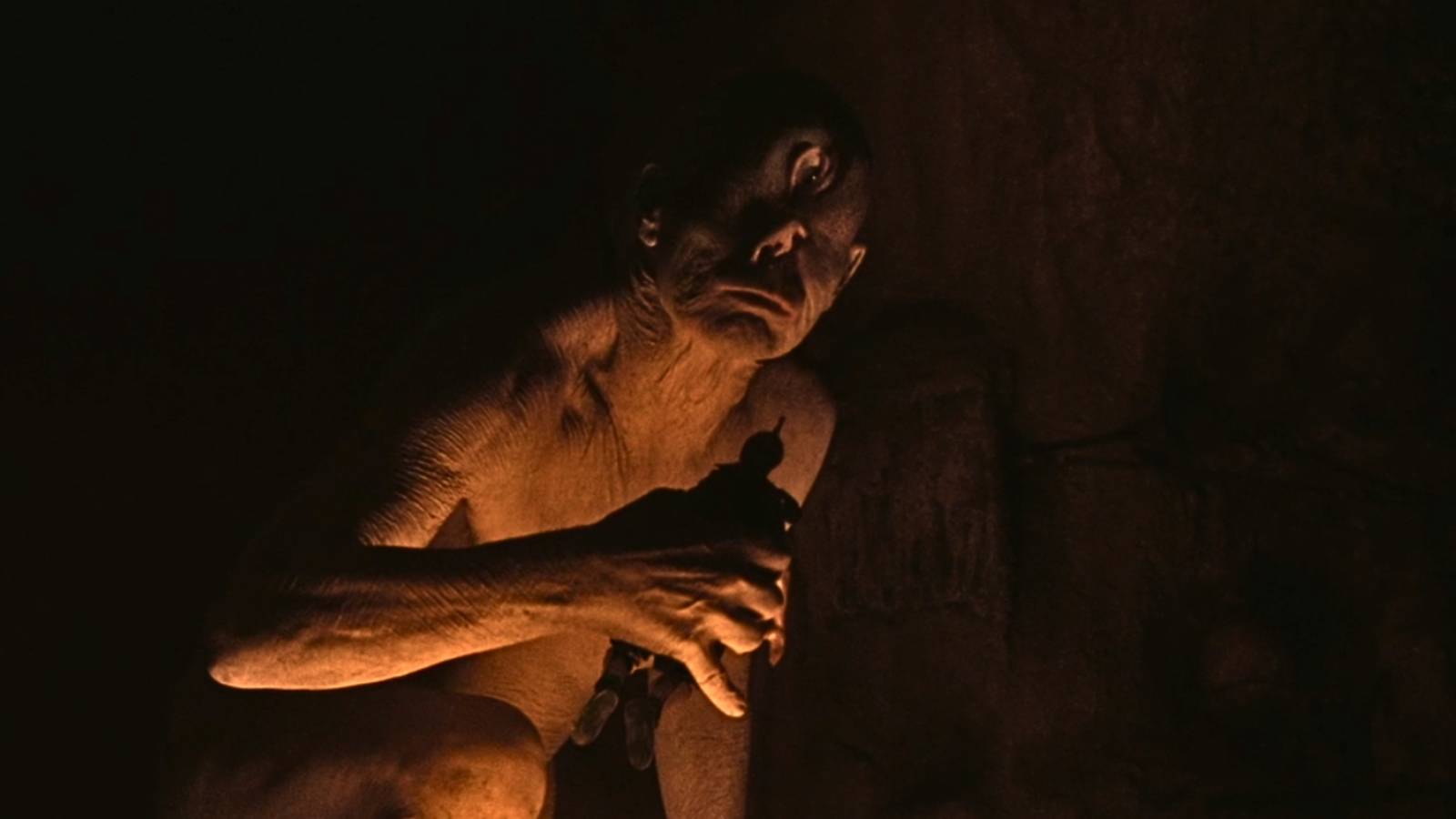
Among the many legendary figures appearing in Christopher Nolan's The Odyssey, few are as iconic—or as terrifying—as Polyphemus, the gigantic one-eyed Cyclops whose encounter with Odysseus remains one of the most famous episodes in all of Greek mythology. Bringing this monstrous character to life is acclaimed actor, clown, puppeteer, and theater legend Bill Irwin, who reunites with Christopher Nolan for the first time since their memorable collaboration on Interstellar.
For audiences unfamiliar with Irwin's remarkable career, he is widely regarded as one of the most celebrated stage performers of his generation. A master of physical comedy, movement, clowning, and theatrical performance, Irwin has spent decades captivating audiences on Broadway and beyond. His unique blend of expressive storytelling and physical artistry makes him an inspired choice to portray a creature as larger-than-life as Polyphemus.
In Homer's The Odyssey, Polyphemus is not merely another obstacle standing in Odysseus' path. He is one of the hero's most dangerous adversaries and the catalyst for a chain of events that dramatically alters the course of the journey home.
The story begins when Odysseus and his crew become trapped inside the Cyclops' cave while exploring an unfamiliar island. What initially appears to be a shelter quickly turns into a nightmare. Polyphemus seals the entrance with an enormous boulder and begins devouring members of the crew, revealing himself to be a savage, man-eating giant with little regard for hospitality or mercy.
Facing certain death, Odysseus devises one of the cleverest plans in Greek mythology.
After tricking the Cyclops into drinking strong wine, Odysseus tells him that his name is "Nobody." Once Polyphemus falls asleep, Odysseus and his surviving companions drive a sharpened stake into the giant's single eye, blinding him. When the wounded Cyclops cries out for help, neighboring Cyclopes ask who is attacking him. Because he claims that "Nobody" is hurting him, they assume nothing is wrong and leave him to suffer alone.
The escape that follows is just as legendary. Knowing Polyphemus will feel the backs of his sheep as they leave the cave, Odysseus instructs his men to cling to the undersides of the giant's flock. Hidden beneath the animals' bellies, they successfully slip past the blinded monster and escape to safety.
Yet victory comes at a cost.
Humiliated and enraged, Polyphemus unleashes a devastating curse upon Odysseus. As the son of Poseidon, the powerful god of the sea, the Cyclops calls upon his divine father to punish the Greek hero. That curse becomes one of the central reasons Odysseus' journey home stretches into a decade-long ordeal filled with storms, shipwrecks, monsters, and endless suffering.
Because of this, Polyphemus occupies a crucial place in the narrative. His confrontation with Odysseus is not only one of the epic's most thrilling action sequences but also a turning point that shapes everything that follows.
For Nolan's adaptation, the character appears poised to become one of the film's most visually spectacular creations.
Drawing upon his extensive background in physical performance and puppetry, Bill Irwin is expected to bring an extraordinary level of personality and presence to the Cyclops. His theatrical instincts and ability to communicate emotion through movement make him uniquely suited to portraying a giant creature that must feel both monstrous and believable.
The casting also continues a creative partnership that began with Nolan's acclaimed science-fiction epic Interstellar. In that film, Irwin provided the voice and puppetry performance for TARS, the fan-favorite robot known for his dry humor, intelligence, and memorable one-liners. Despite being hidden behind a machine's exterior, Irwin's performance helped make TARS one of the most beloved characters in the film.
Interestingly, Nolan revealed to Time that Irwin will once again be drawing upon those same specialized skills for The Odyssey. Rather than relying entirely on digital effects, the production is reportedly utilizing a massive practical puppet to bring Polyphemus to life, with Irwin helping maneuver and perform the creature much like he did with TARS years earlier.
The decision aligns perfectly with Nolan's longstanding commitment to practical filmmaking techniques. Throughout his career, the director has favored tangible effects, real-world sets, and in-camera solutions whenever possible, and Polyphemus appears to be another example of that philosophy in action.
For audiences familiar with Irwin's work, seeing him transformed into the fearsome Cyclops may come as a surprise. Known for his vaudeville-inspired stage presence, expressive performances, and often whimsical energy, the actor is almost completely unrecognizable beneath the character's towering appearance in the film's trailer. The transformation is so dramatic that many viewers may not immediately realize they are watching the same performer who once brought the witty TARS to life.
With its blend of practical effects, mythological spectacle, and one of Greek mythology's most unforgettable monsters, the Polyphemus sequence is already shaping up to be one of the most anticipated portions of Nolan's epic. And with Bill Irwin's unique talents at the center of it all, audiences can expect a Cyclops that is not only terrifying and imposing but also richly realized and endlessly fascinating.
In a film filled with gods, kings, and heroes, Polyphemus remains one of the story's most memorable figures—and Irwin appears perfectly positioned to ensure that this legendary monster leaves a lasting impression on a whole new generation of viewers.
John Leguizamo as Eumaeus
John Leguizamo Transforms Into Odysseus' Most Loyal Ally in Christopher Nolan's The Odyssey

Among the many surprising casting choices in Christopher Nolan's The Odyssey, few are as striking as John Leguizamo's transformation into Eumaeus. In fact, much like several other performers in the film, Leguizamo appears almost unrecognizable beneath the character's rugged appearance, fully disappearing into one of the most beloved and faithful figures from Homer's epic.
For a story filled with kings, warriors, gods, and monsters, Eumaeus stands apart because of something much simpler yet equally powerful: unwavering loyalty.
Leguizamo takes on the role of Odysseus' trusted swineherd, lifelong friend, and one of the few people who remains steadfastly devoted to the King of Ithaca throughout his prolonged absence. While Eumaeus may not possess royal authority or legendary combat skills, his loyalty becomes one of the most important forces working in Odysseus' favor during the final chapters of the story.
His own backstory is surprisingly tragic and deeply compelling.
Although Eumaeus spends much of his life serving as a swineherd in Ithaca, he was actually born into royalty. According to Greek mythology, he was the son of a king before being kidnapped as a child by pirates and sold into slavery. Despite losing his noble birthright and enduring years of hardship, Eumaeus grows into a man defined not by bitterness but by honor, humility, and an unshakable moral compass.
These qualities make him one of the most admired characters in The Odyssey.
After spending twenty years away from home—ten years fighting in the Trojan War and another ten struggling to return across the seas—Odysseus eventually arrives in Ithaca disguised as a beggar. Unsure whom he can trust, the weary king first seeks refuge with Eumaeus. The swineherd welcomes the stranger with kindness, hospitality, and respect, completely unaware of his true identity.
That moment becomes one of the most emotionally resonant scenes in the entire epic.
Once Odysseus reveals who he really is, Eumaeus proves himself worthy of the trust placed in him. He becomes one of the very first people entrusted with the king's secret and plays a vital role in the plan to reclaim Ithaca from the suitors who have overrun the palace. Alongside Telemachus, Eumaeus helps Odysseus prepare for the climactic confrontation that ultimately restores order to the kingdom.
In many ways, Eumaeus embodies one of the central themes of The Odyssey: true nobility comes from character rather than status. Despite his royal birth, years of servitude, and countless hardships, he remains one of the story's most honorable individuals.
For John Leguizamo, the role adds another fascinating chapter to an already remarkable career that spans film, television, theater, voice acting, and stand-up comedy.
A Golden Globe and Emmy-winning performer, Leguizamo has built a reputation as one of Hollywood's most versatile actors. Audiences know him from projects ranging from Romeo + Juliet, Moulin Rouge!, and John Wick to his memorable voice work as Sid the Sloth in the Ice Age franchise. Whether playing dramatic, comedic, or larger-than-life characters, Leguizamo has consistently demonstrated an ability to command attention while bringing authenticity to every role.
Before audiences got their first look at The Odyssey, Leguizamo spoke enthusiastically about the project, describing the production as a true "dream team."
The actor was especially complimentary of Christopher Nolan's filmmaking process, comparing the experience to working with one of cinema's most revered directors.
"It's like what I imagine it must have been like to work with Stanley Kubrick," Leguizamo said.
He went on to praise Nolan's unique creative vision, describing him as:
"Somebody creating worlds, and who thinks in a different way than the rest of us."
Coming from a performer who has collaborated with some of the industry's most respected filmmakers, the comments offer another glimpse into the immense ambition surrounding Nolan's adaptation of Homer's masterpiece.
What makes Leguizamo's casting particularly exciting is how perfectly his strengths align with Eumaeus as a character. Both possess warmth, resilience, humor, and emotional depth beneath their outward toughness. Eumaeus is not a hero because he slays monsters or commands armies. He is a hero because he remains loyal when loyalty is difficult, compassionate when kindness is rare, and courageous when standing beside a friend in need.
As trailers and promotional material continue to reveal more of Nolan's vision, Leguizamo's transformation into the faithful swineherd has already become one of the film's most intriguing surprises. Hidden beneath weathered costumes and years of hardship, Eumaeus may not be the most famous name in Greek mythology, but he is undoubtedly one of its most beloved.
And with an actor of John Leguizamo's caliber bringing him to life, audiences can expect one of The Odyssey's most heartfelt and memorable performances when the epic finally arrives in theaters.
Samantha Morton as Circe
Samantha Morton Brings New Depth to Greek Mythology's Most Enigmatic Sorceress
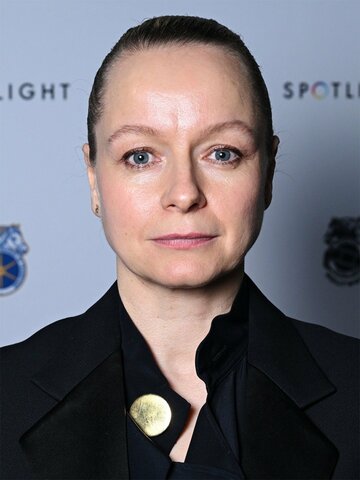
Few actresses possess the ability to portray unsettling, emotionally layered, and deeply complex characters quite like Samantha Morton. Throughout her celebrated career, she has repeatedly transformed difficult, unconventional women into some of the most memorable figures in film and television. Whether portraying Agatha, the emotionally fragile yet powerful precognitive in Minority Report, or Alpha, the terrifying and psychologically damaged leader of the Whisperers in The Walking Dead, Morton has built a reputation for breathing humanity into characters who exist on the fringes of society.
Now, in Christopher Nolan's The Odyssey, she is taking on one of the most fascinating and mysterious women in all of Greek mythology: Circe.
For centuries, Circe has remained one of the most iconic figures associated with Homer's epic poem. A powerful enchantress and daughter of the sun god Helios, she resides on the remote island of Aeaea, far from the kingdoms and battlefields that dominate much of the story. Blessed with extraordinary magical abilities, Circe possesses the power to alter reality itself, making her one of the most formidable supernatural beings Odysseus encounters during his long voyage home.
When Odysseus and his exhausted crew arrive on her shores, what initially appears to be a sanctuary quickly transforms into a nightmare.
Using enchanted food and powerful magic, Circe famously transforms many of Odysseus' men into pigs, stripping them of their humanity and placing them completely under her control. In the original myth, this act serves as both a display of her immense power and a means of manipulating Odysseus, whom she hopes to keep as her companion and suitor on the island.
The episode has become one of the most celebrated and enduring chapters in The Odyssey, blending fantasy, danger, temptation, and psychological intrigue into a single unforgettable encounter.
Yet Circe is far more than a traditional villain.
As the story unfolds, she becomes one of the epic's most complicated figures. After Odysseus resists her magic with the help of the god Hermes, their relationship evolves in unexpected ways. Circe ultimately aids the hero, offering wisdom, guidance, and crucial information that helps him survive future challenges on his journey back to Ithaca. This duality—both threatening and compassionate, manipulative yet caring—has fascinated readers for nearly three thousand years.
It is precisely this complexity that makes Samantha Morton such an inspired choice for the role.
Christopher Nolan himself confirmed Morton's casting while discussing the film, revealing that his interpretation of Circe would move beyond the familiar archetype often seen in previous adaptations. According to Nolan, Morton will bring a uniquely "unsettling yet sympathetic" quality to the legendary sorceress, creating a version of Circe that feels more human, emotionally nuanced, and psychologically believable than ever before.
That approach aligns perfectly with Nolan's filmmaking philosophy. Throughout his career, the director has consistently reimagined iconic characters by grounding them in emotional realism and moral complexity. Rather than presenting Circe as a one-dimensional enchantress or mythical obstacle, Nolan appears intent on exploring the motivations, loneliness, intelligence, and vulnerabilities that may lie beneath her magical abilities.
For Morton, this territory is familiar.
Few performers excel at portraying off-kilter, emotionally unpredictable characters quite as naturally as she does. Across acclaimed projects such as Sweet and Lowdown, In America, Fantastic Beasts and Where to Find Them, The Walking Dead, and The Serpent Queen, Morton has demonstrated an extraordinary ability to make even the most unconventional characters feel authentic and deeply human.
That talent could prove invaluable in bringing Circe to life.
The sorceress occupies a unique place within Greek mythology. She is neither fully hero nor villain, neither ally nor enemy. Instead, she exists somewhere in between—a woman possessing immense power who challenges Odysseus both physically and emotionally. Her island becomes more than just another stop on his journey; it serves as a test of temptation, self-control, wisdom, and personal growth.
In many interpretations of The Odyssey, Circe represents one of the most transformative encounters in Odysseus' entire adventure. The lessons he learns during his time on Aeaea ultimately prepare him for the even greater trials awaiting him ahead.
Following the release of early promotional material and casting announcements, many mythology enthusiasts and film fans have pointed to Morton's involvement as one of the adaptation's most exciting creative decisions. Her ability to balance menace with vulnerability makes her uniquely qualified to portray a character who has captivated audiences for centuries.
If Nolan's vision succeeds, Samantha Morton's Circe may become one of the most memorable interpretations of the legendary enchantress ever brought to the screen. Equal parts unsettling, sympathetic, powerful, and tragic, this version of Circe promises to be far more than a mythological archetype. Instead, she could emerge as one of The Odyssey's most emotionally compelling and psychologically rich characters—a fitting challenge for one of the finest character actresses of her generation.
Lupita Nyong'o as Helen of Troy and Clytemnestra
Lupita Nyong'o Takes on Two of Greek Mythology's Most Fascinating and Tragic Women
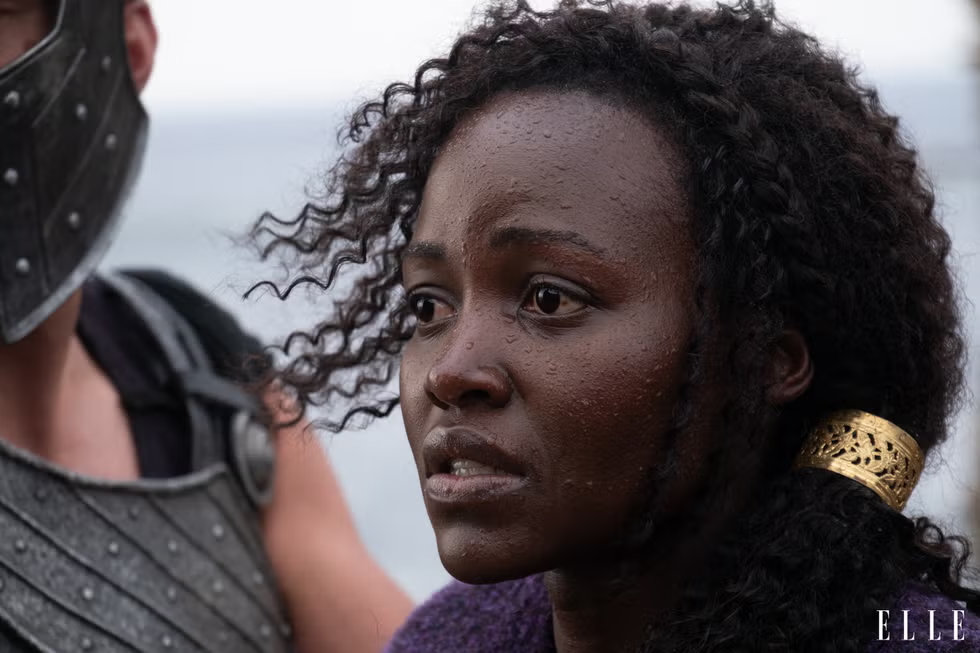
For months, Lupita Nyong'o's role in Christopher Nolan's The Odyssey remained one of the production's best-kept secrets. Fans knew the Academy Award-winning actress was part of the film's extraordinary ensemble, but exactly who she would be portraying remained a mystery. That speculation finally came to an end following Nolan's extensive feature in Time, which revealed that Nyong'o isn't playing just one important character—she's playing two.
In one of the adaptation's most intriguing casting decisions, Nyong'o has been entrusted with the dual roles of Helen of Troy and her sister, Clytemnestra, two women whose lives helped shape the course of Greek mythology and whose stories serve as powerful reflections of one another.
It's a bold creative choice that adds another layer of thematic depth to Nolan's interpretation of Homer's epic.
The first of those roles, Helen of Troy, is arguably one of the most famous women in all of mythology. Often described in ancient texts as the most beautiful woman in the world, Helen's story lies at the very heart of the Trojan War. Her departure from Sparta with the Trojan prince Paris sparked a conflict that would rage for a decade and forever alter the destinies of heroes, kingdoms, and gods alike.
By the time the events of The Odyssey unfold, Helen has returned to Sparta alongside her husband, Menelaus. During his search for information about his missing father, Telemachus visits their kingdom, where Helen becomes one of the key figures he encounters. Alongside Menelaus, she offers hospitality, insight, and valuable knowledge that helps the young prince continue his quest to uncover the truth about Odysseus' fate.
Within Homer's narrative, Helen functions as a fascinating contrast to Penelope. While Penelope remains steadfastly loyal to Odysseus throughout decades of uncertainty, Helen's earlier decision to leave her husband became one of mythology's most consequential acts. This contrast between the two women has long fascinated scholars and readers, making Helen one of the epic's most morally complex and debated characters.
Yet Helen is only half of Nyong'o's challenge.
The actress will also portray Clytemnestra, the powerful Queen of Mycenae and wife of Agamemnon, the supreme commander of the Greek forces during the Trojan War. While Clytemnestra appears more prominently in Greek tragedies than in The Odyssey itself, her story casts a long shadow across the world Homer created.
Unlike Penelope, whose loyalty becomes legendary, Clytemnestra follows a dramatically different path.
During Agamemnon's absence at war, she begins a relationship with Aegisthus. When her husband finally returns home after the fall of Troy, she murders him, setting off one of the most famous cycles of revenge in Greek mythology. Her actions eventually lead to further tragedy within the House of Atreus, inspiring countless plays by ancient Greek dramatists and influencing storytelling traditions for centuries.
Like Helen, Clytemnestra serves as a foil to Penelope. Both women endure years separated from their husbands, yet they respond to that absence in profoundly different ways. One remains faithful despite overwhelming pressure, while the other chooses betrayal and vengeance. Together, their stories create a compelling exploration of loyalty, grief, power, and personal agency in the ancient world.
According to reports surrounding the production, Nolan's decision to have one actress portray both sisters is intentional. The casting is designed to emphasize the mirrored tragedies that define Helen and Clytemnestra's lives. Although their circumstances differ, both women become central figures in events that reshape entire kingdoms and leave lasting scars on those around them.
For Lupita Nyong'o, taking on dual roles is hardly unfamiliar territory.
The actress previously earned widespread acclaim for her extraordinary performance in Jordan Peele's Us, where she portrayed two distinct versions of the same character with remarkable emotional and physical precision. That performance showcased her ability to create completely separate identities within a single film, making her uniquely qualified to tackle the challenge of bringing both Helen and Clytemnestra to life.
Over the course of her acclaimed career, Nyong'o has consistently demonstrated extraordinary range. From her Oscar-winning breakthrough in 12 Years a Slave to beloved performances in Black Panther, Black Panther: Wakanda Forever, A Quiet Place: Day One, and numerous stage productions, she has established herself as one of the most respected and versatile performers of her generation.
Interestingly, for much of the film's promotional campaign, Nyong'o's presence remained relatively understated. While many cast members appeared prominently in marketing materials, her role was intentionally kept under wraps. One of the few glimpses audiences received came through a 60 Minutes profile featuring Christopher Nolan, where she could be seen alongside the director during production.
Since the official confirmation of her dual roles, discussion surrounding her casting has intensified. While some criticism emerged online regarding her portrayal of Helen of Troy, those reactions have done little to diminish the overwhelming respect Nyong'o commands as a performer. Her body of work speaks for itself, and few actresses possess the talent, emotional intelligence, and screen presence necessary to embody two of mythology's most iconic women within the same film.
What makes this casting particularly exciting is the opportunity it presents to explore the parallels between Helen and Clytemnestra in a fresh and meaningful way. One woman became synonymous with desire and the catastrophic consequences of beauty. The other became infamous for betrayal, vengeance, and political ambition. Together, their stories reveal the immense pressures placed upon women in the mythological world and the vastly different ways they navigate power, love, loss, and survival.
With Christopher Nolan reimagining one of history's greatest stories and Lupita Nyong'o stepping into not one but two legendary roles, audiences can expect a nuanced and emotionally rich interpretation of characters whose influence has endured for nearly three thousand years.
In a cast already overflowing with remarkable talent, Nyong'o's dual performance may ultimately become one of The Odyssey's most fascinating achievements.
Himesh Patel as Eurylochus
Himesh Patel Takes on One of The Odyssey's Most Complicated and Tragic Characters
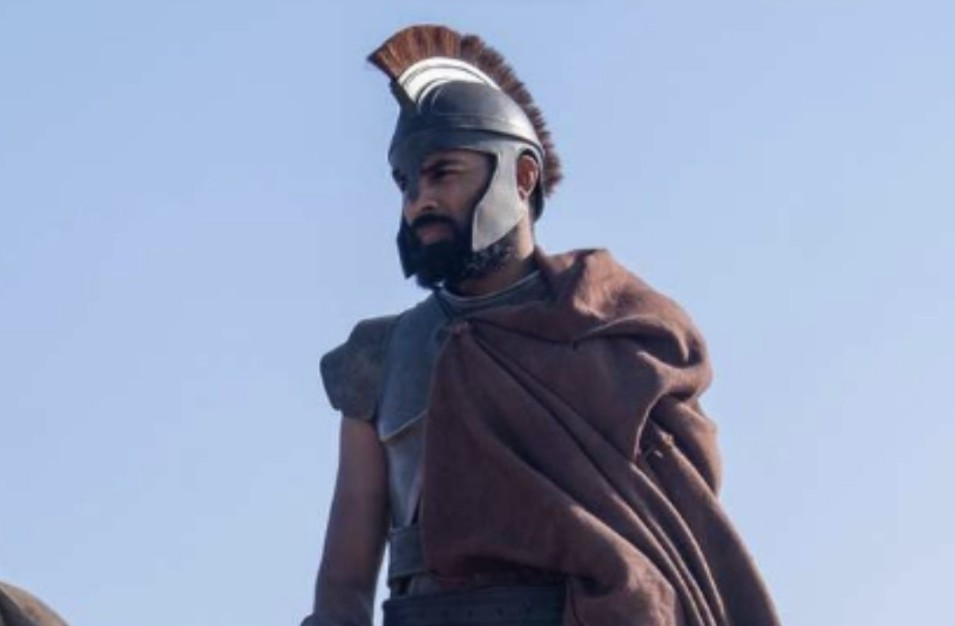
Among the many warriors who accompany Odysseus on his legendary voyage home, few are as fascinating, conflicted, and ultimately heartbreaking as Eurylochus. In Christopher Nolan's The Odyssey, that pivotal role belongs to Himesh Patel, an actor whose ability to portray layered and deeply human characters makes him an especially compelling choice for one of Homer's most misunderstood figures.
Serving as Odysseus' second-in-command, Eurylochus occupies a unique position within the epic. He is not simply another member of the crew following orders. Instead, he functions as both a trusted lieutenant and a philosophical counterbalance to Odysseus, often questioning decisions that others accept without hesitation. Intelligent, cautious, and fiercely protective of his fellow sailors, Eurylochus frequently acts as the voice of skepticism throughout the journey.
That skepticism, however, becomes both his greatest strength and his greatest weakness.
In Homer's poem, Eurylochus is one of the most important crew members accompanying Odysseus during the long voyage from Troy to Ithaca. While many of the hero's companions blindly follow orders or fall victim to temptation, Eurylochus consistently demonstrates a more guarded and pragmatic outlook. His caution repeatedly allows him to recognize dangers before others do, making him one of the few men capable of challenging Odysseus' authority when circumstances demand it.
One of the most famous examples of this occurs during the encounter with Circe, the powerful enchantress who lives on the island of Aeaea. When Odysseus sends a group of men to investigate the mysterious island, Eurylochus becomes suspicious of the situation and refuses to enter Circe's dwelling. His instincts prove correct when the sorceress transforms the rest of the scouting party into pigs. Because of his caution, Eurylochus becomes the only member of the group to escape and warn Odysseus about what has happened.
At first, his mistrust saves lives.
Yet as the journey continues, those same human flaws that make Eurylochus relatable begin to surface more prominently. Unlike the legendary heroes around him, he is not immune to fear, frustration, or desperation. The relentless hardships of the voyage gradually wear him down, and his judgment begins to falter under the weight of exhaustion and hunger.
His most consequential mistake arrives when the crew becomes stranded on the island of Thrinacia, home to the sacred cattle of the sun god Helios. Despite explicit warnings from both Odysseus and the gods not to touch the animals, starvation pushes Eurylochus to convince the crew to slaughter the sacred herd. His reasoning is understandable—his men are slowly dying from hunger—but the decision carries catastrophic consequences.
The act provokes divine wrath, leading Zeus to destroy the ship and kill nearly every remaining crew member. It is one of the most devastating moments in The Odyssey and serves as a tragic reminder of how desperation can drive even good people toward disastrous choices.
This complexity is what makes Eurylochus such a compelling character. He is neither hero nor villain. Instead, he represents the ordinary human caught between survival and morality, loyalty and doubt, wisdom and fear. His story provides a powerful contrast to Odysseus' resilience and serves as one of the epic's most emotionally resonant cautionary tales.
For Christopher Nolan, casting Himesh Patel in the role appears to be a natural fit.
The actor previously collaborated with Nolan on Tenet in 2020, where he delivered a memorable supporting performance alongside future The Odyssey co-star Robert Pattinson. That earlier partnership clearly left an impression, as Nolan has once again entrusted Patel with an important role in one of his most ambitious productions.
Patel's career trajectory has been nothing short of remarkable. He first gained widespread recognition in the United Kingdom through his long-running portrayal of Tamwar Masood on the iconic BBC soap opera EastEnders. Over the years, his performance earned him a loyal following and established him as one of the show's standout talents.
His international breakthrough arrived with Yesterday, the acclaimed musical fantasy film directed by Danny Boyle, in which Patel played Jack Malik, an aspiring musician who wakes up in a world where nobody remembers The Beatles. The performance showcased both his charisma and emotional depth, introducing him to audiences around the globe.
Patel continued to expand his reputation with acclaimed projects such as Don't Look Up, The Aeronauts, and HBO Max's Station Eleven. His work in the latter earned particular praise, with many critics hailing the post-apocalyptic miniseries as one of the finest television productions of recent years. Patel's nuanced performance even earned him an Emmy Award nomination, further cementing his status as one of Britain's most versatile actors.
Now, with The Odyssey, Patel joins an ensemble packed with some of the biggest names in modern cinema. Although Eurylochus may not be as famous as Odysseus, Penelope, or Athena, his journey remains one of the most significant among the supporting characters. His choices directly influence the fate of the crew and contribute to some of the epic's most dramatic turning points.
Unfortunately, if Nolan remains faithful to Homer's source material, Eurylochus' path is destined for tragedy. The same caution that initially protects him ultimately gives way to desperation, and the consequences of his decisions become impossible to escape.
Yet that tragic dimension is precisely what makes the character so memorable. Eurylochus embodies the imperfect humanity at the heart of The Odyssey—a man who strives to do what he believes is right, only to discover that survival, leadership, and morality are rarely simple.
With Himesh Patel bringing his trademark emotional authenticity to the role, audiences can expect a deeply layered portrayal of one of Homer's most compelling and consequential figures. In a story filled with gods, monsters, and legendary heroes, Eurylochus stands as a reminder that some of the most powerful struggles are profoundly human.
Robert Pattinson as Antinous
Robert Pattinson Embraces the Role of Ithaca's Most Dangerous Suitor
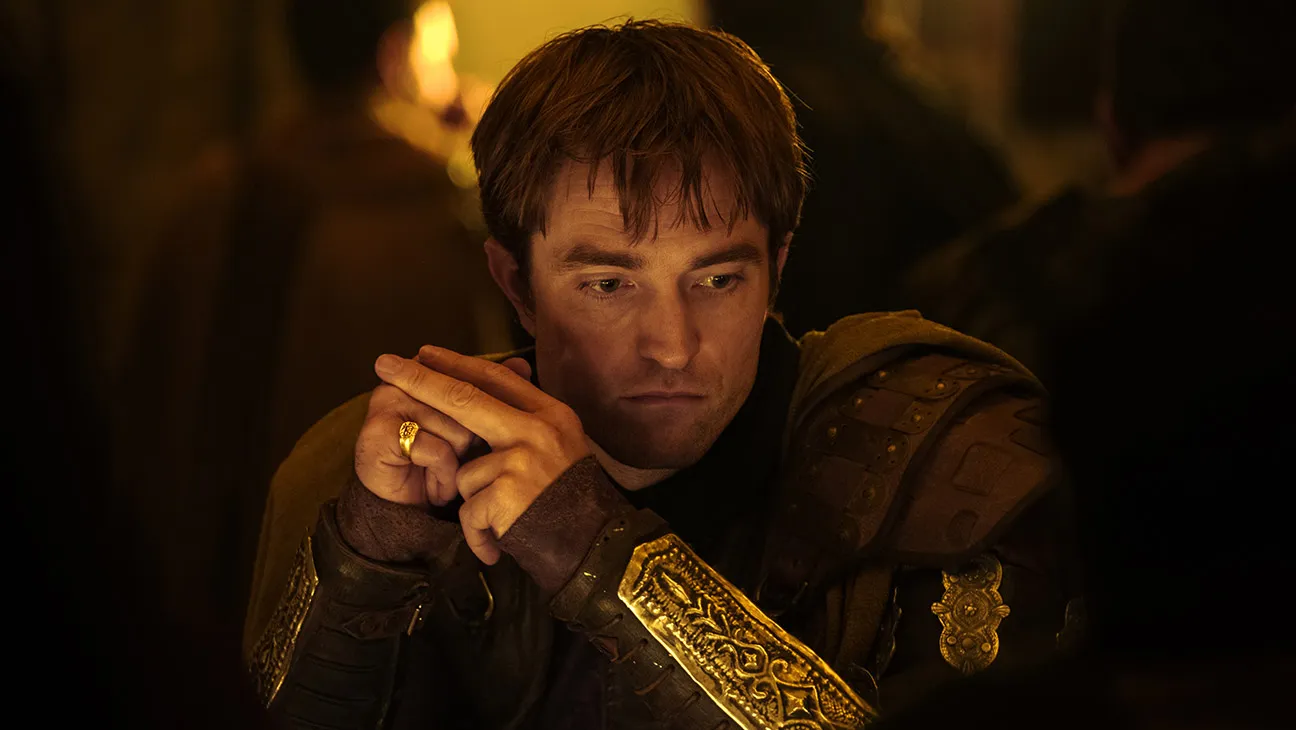
In almost any other film, Robert Pattinson would likely be one of the undisputed headliners. Yet Christopher Nolan's The Odyssey boasts such an extraordinary ensemble that even one of Hollywood's most recognizable leading men finds himself sharing the spotlight with a roster of cinematic heavyweights. Fortunately, Pattinson is in excellent company—and he has been given a role that could allow him to steal scenes in an entirely different way.
Rather than portraying a hero, king, or mythical warrior, Pattinson steps into the role of Antinous, arguably the most ruthless and intimidating of Penelope's many suitors and one of the primary antagonists of Homer's epic.
While Odysseus battles gods, monsters, and impossible odds on his long journey home, a different threat grows within the walls of Ithaca itself. Believing the king to be dead after decades of absence, more than a hundred suitors descend upon the royal palace, determined to marry Queen Penelope and seize control of the kingdom. Among them, none is more arrogant, ambitious, or dangerous than Antinous.
As portrayed in The Odyssey, Antinous serves as the undisputed leader of the suitors. He is the driving force behind their efforts to pressure Penelope into choosing a new husband and abandoning hope that Odysseus will ever return. Unlike some of the other suitors, who simply seek wealth or status, Antinous actively works to consolidate power for himself and views the throne of Ithaca as his rightful prize.
His actions make him far more than a nuisance.
Throughout the story, Antinous becomes a symbol of the disorder and corruption that have consumed Ithaca during Odysseus' absence. He openly disrespects Penelope, wastes the kingdom's resources, bullies those who oppose him, and repeatedly demonstrates a willingness to use intimidation and violence to achieve his goals. His cruelty extends even further when he conspires against Telemachus, plotting to kill the young prince before he can grow into a legitimate threat.
These actions elevate Antinous above the other suitors and establish him as their most formidable representative.
As a result, he ultimately becomes the central target of Odysseus' long-awaited vengeance.
One of the most iconic moments in Homer's epic occurs when Odysseus finally returns to Ithaca disguised as a beggar. After carefully assessing the situation and identifying those who remained loyal to him, he reveals his true identity and unleashes his fury upon the suitors who have overrun his home. Antinous, as the leader of the group, becomes the first victim of Odysseus' revenge, marking the beginning of one of the most dramatic confrontations in classical literature.
The role offers Pattinson a fascinating opportunity to explore a character driven by ambition, entitlement, and unchecked power. While Antinous may lack supernatural abilities or royal lineage, his arrogance and brutality make him one of the most memorable human antagonists in Greek mythology.
The casting also continues Pattinson's impressive evolution as an actor.
For many audiences, he first became a global sensation through The Twilight Saga, where he portrayed Edward Cullen and helped launch one of the biggest young-adult franchises in modern cinema. Rather than relying solely on blockbuster success, however, Pattinson spent the following decade reinventing himself through acclaimed performances in independent films such as Good Time, The Lighthouse, High Life, and Cosmopolis. Those projects earned him widespread praise and established him as one of the most adventurous actors of his generation.
He later returned to blockbuster territory with The Batman, delivering a darker and more introspective interpretation of Gotham's iconic vigilante. That balance between large-scale franchises and challenging character-driven work has become one of the defining traits of his career.
The Odyssey represents another exciting chapter in that journey.
This marks Pattinson's second collaboration with Christopher Nolan following their successful partnership on Tenet, where the actor's charismatic performance as Neil became one of the film's most celebrated elements. Nolan has repeatedly demonstrated a talent for casting actors against audience expectations, and Antinous may provide Pattinson with yet another opportunity to surprise viewers.
Interestingly, Pattinson's role was officially revealed alongside that of Zendaya, another major member of Nolan's ensemble. The two actors have already shared the screen in The Drama and are also set to reunite in Dune: Part Three, making The Odyssey another significant chapter in their growing professional collaboration.
What makes Pattinson's casting particularly intriguing is that he enters a story filled with heroic figures, noble leaders, and mythological legends. Surrounded by characters such as Odysseus, Penelope, Telemachus, Athena, and Menelaus, Antinous stands apart as a character defined not by courage or honor but by greed, arrogance, and self-interest.
And that may be exactly why the role suits him so well.
Throughout his career, Pattinson has excelled when exploring morally ambiguous and psychologically complex individuals. Antinous offers him the chance to channel that same intensity into a character audiences will love to hate. The suitor's confidence, charm, volatility, and cruelty create a compelling villain whose presence raises the stakes for every hero in the story.
As anticipation for Christopher Nolan's adaptation continues to build, many fans are eager to see how Pattinson interprets one of Greek mythology's most notorious antagonists. If the source material remains intact, Antinous will stand at the center of the conflict unfolding in Ithaca—and at the receiving end of one of literature's most satisfying acts of justice.
In a cast overflowing with heroes, Robert Pattinson may ultimately thrive by embracing the darkness. And if his previous performances are any indication, audiences could be witnessing the definitive cinematic version of Antinous when The Odyssey arrives in theaters.
Benny Safdie as Agamemnon
Benny Safdie Brings the Tragic King of Mycenae to Life in Christopher Nolan's The Odyssey
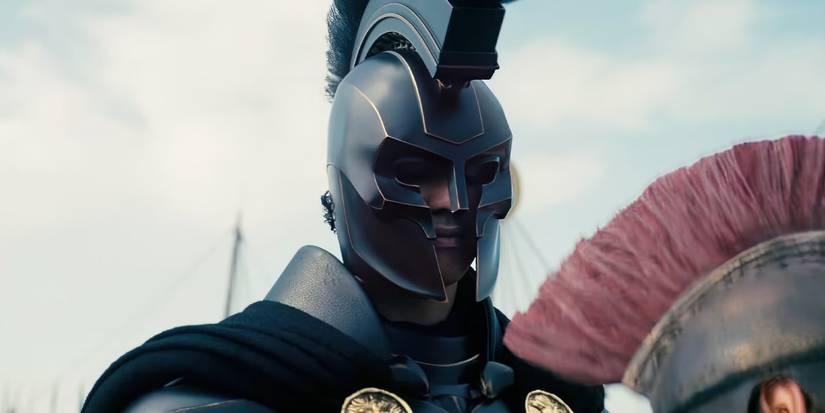
Among the many legendary figures who populate Christopher Nolan's The Odyssey, few carry a legacy as dramatic, influential, and tragic as Agamemnon. Revered as a king, remembered as a warrior, and ultimately immortalized as a cautionary tale, Agamemnon's story looms large over Homer's epic, even when he is no longer among the living.
In Nolan's adaptation, the powerful ruler of Mycenae will be portrayed by Benny Safdie, marking the actor and filmmaker's second collaboration with Christopher Nolan following their acclaimed work together on Oppenheimer. For Safdie, it is another opportunity to step into a complex historical and mythological figure whose choices continue to echo throughout one of the greatest stories ever told.
Although Odysseus serves as the central hero of The Odyssey, Agamemnon functions as one of the narrative's most important parallels. His fate becomes a haunting warning of what can happen when a victorious warrior finally returns home only to discover that the greatest threat was waiting for him all along.
In Greek mythology, Agamemnon is the legendary King of Mycenae and the commander of the Greek forces during the Trojan War. As the most powerful leader among the Greek kings, he united warriors from across the ancient world and led the decade-long campaign against Troy. His authority, military brilliance, and ambition made him one of the most influential figures of the age, but those same qualities also contributed to a life marked by controversy and tragedy.
Throughout mythological tradition, Agamemnon's story is deeply intertwined with themes of pride, sacrifice, revenge, and fate.
Before the Greek fleet could even set sail for Troy, Agamemnon famously incurred the wrath of the goddess Artemis. According to the myth, he was forced to make the unimaginable decision to sacrifice his daughter, Iphigenia, to secure favorable winds for the expedition. That devastating act cast a shadow over his family and sowed the seeds of future catastrophe long before the Trojan War had ended.
When Agamemnon eventually returned victorious from Troy after ten years of conflict, he expected to reclaim his throne and celebrate his triumph.
Instead, he walked directly into his doom.
While he had been away at war, his wife, Clytemnestra, had begun a relationship with Aegisthus. Together, the pair plotted the king's murder, and upon his return to Mycenae, Agamemnon was killed by the very people who should have welcomed him home. His death became one of the most famous tragedies in Greek mythology and would later inspire countless works of literature, theater, and art, particularly in the ancient Greek tragedies of Aeschylus.
Within The Odyssey, Agamemnon's story serves as a dark mirror to Odysseus' own journey.
Both men spend years fighting in the Trojan War. Both endure long absences from their families. Both dream of returning home to reclaim their lives. Yet where Odysseus eventually reunites with Penelope, Agamemnon finds betrayal and death. His fate becomes a warning that echoes throughout the epic, reminding both Odysseus and the audience that a homecoming is never guaranteed to end happily.
This thematic significance makes Agamemnon one of the most important supporting figures in the story despite his limited screen time.
For Benny Safdie, the role represents another fascinating addition to a career that continues to expand in exciting directions.
Over the past decade, Safdie has established himself as one of the most respected creative voices in modern cinema. Alongside his brother Josh Safdie, he helped create critically acclaimed films such as Good Time and Uncut Gems, projects celebrated for their intense energy, emotional realism, and unforgettable characters. The Safdie brothers became known for crafting some of the most anxiety-inducing and immersive films of their generation, earning admiration from audiences and filmmakers alike.
More recently, Benny has continued to build his reputation as both an actor and director in his own right. His directorial efforts include The Smashing Machine, while his acting career has flourished through appearances in high-profile productions that showcase his remarkable range.
Interestingly, some of Safdie's most recent roles couldn't be more different from Agamemnon. Audiences recently saw him portray Frank Manatee in Happy Gilmore 2, while younger viewers may recognize him as the voice of Bowser Jr. in The Super Mario Galaxy Movie. Both performances highlight his versatility, making his transformation into one of Greek mythology's most formidable kings all the more intriguing.
His reunion with Nolan feels particularly fitting given the director's knack for casting performers in unexpected yet inspired roles. After delivering a memorable performance in Oppenheimer, Safdie now steps into a world of ancient warfare, royal intrigue, and mythological tragedy.
Off-screen, Safdie has already shared several stories from the production, offering fans a glimpse into the demanding nature of filming such a large-scale epic. Among his most memorable anecdotes was an unfortunate lesson learned while shooting in Morocco, where he accidentally drank local water and quickly discovered why cast and crew members are often warned against doing so during international productions.
While the story provided a humorous behind-the-scenes moment, it also underscored the physically demanding conditions involved in bringing Nolan's vision to life. Filmed across multiple countries and practical locations, The Odyssey has become one of the most ambitious productions of the director's career.
As anticipation for the film continues to grow, Safdie's portrayal of Agamemnon stands out as one of the adaptation's most intriguing casting choices. The character may not dominate the narrative in terms of screen time, but his influence is felt throughout the story. His life, decisions, and ultimate downfall become a constant reminder of the fragile line separating victory from tragedy.
In many ways, Agamemnon represents the fate Odysseus desperately hopes to avoid. He is the hero who made it home, only to lose everything. Through Benny Safdie's performance, audiences will likely experience the full weight of that tragedy, adding another layer of emotional depth to Christopher Nolan's ambitious retelling of Homer's timeless masterpiece.
Charlize Theron as Calypso
Charlize Theron Steps Into the Role of Greek Mythology's Most Enchanting and Heartbreaking Immortal
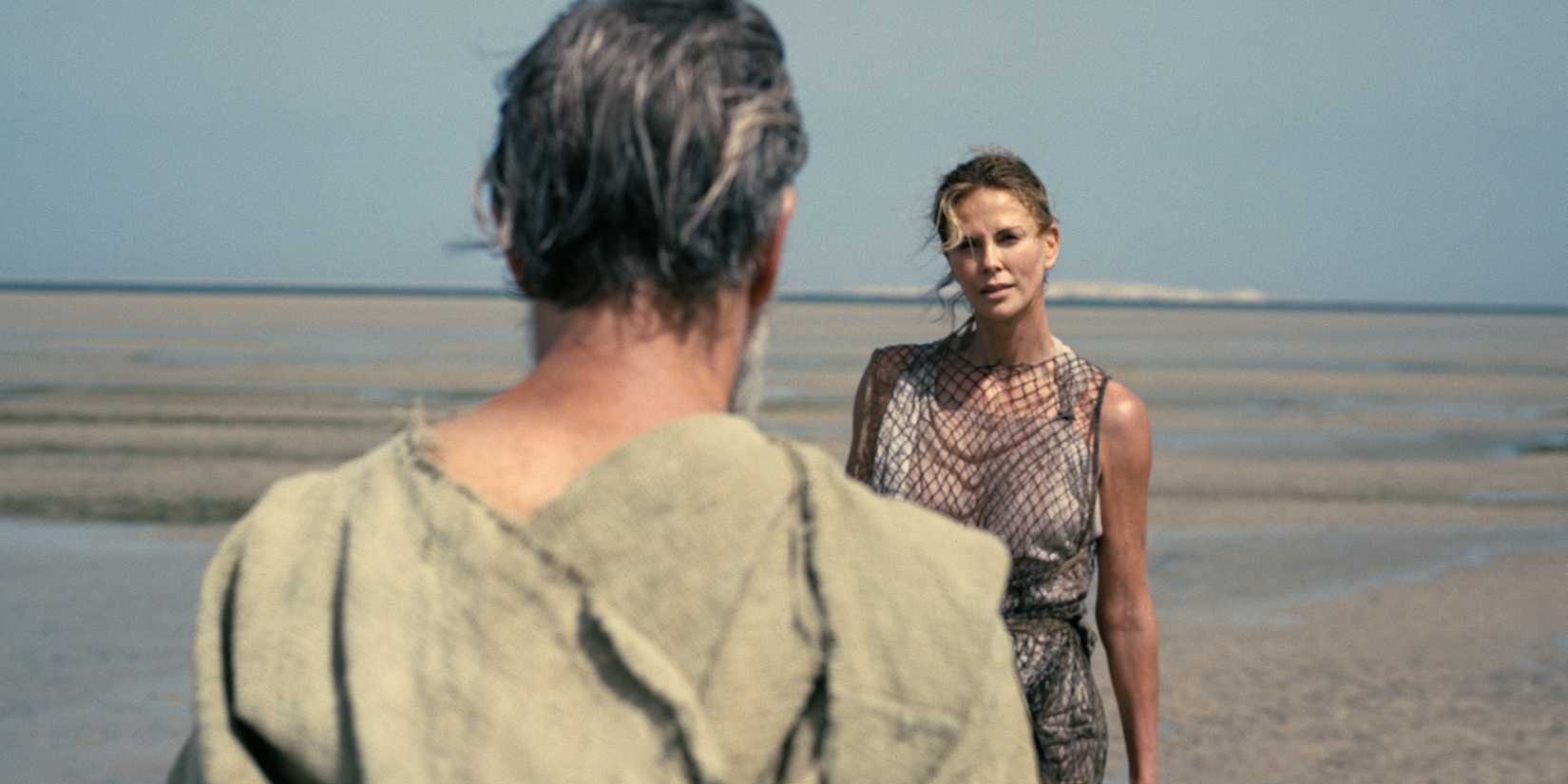
Among the many legendary figures Odysseus encounters during his long and perilous journey home, few leave a greater impression than Calypso. Beautiful, powerful, immortal, and deeply tragic, she is one of the most memorable characters in Homer's The Odyssey. In Christopher Nolan's ambitious adaptation of the ancient epic, that pivotal role belongs to Academy Award winner Charlize Theron, an actress whose commanding screen presence makes her a natural fit for one of mythology's most fascinating women.
The confirmation of Theron's casting arrived during Universal Pictures' presentation at CinemaCon, immediately sparking excitement among fans eager to see how Nolan would interpret one of the story's most emotionally complex characters. With the film's marketing campaign gradually revealing more details, it has become increasingly clear that Calypso will play a significant role in shaping Odysseus' journey and testing his resolve.
In Greek mythology, Calypso is an immortal nymph and the daughter of the Titan Atlas, the mighty figure condemned to hold up the heavens. She resides on the mystical island of Ogygia, an isolated paradise far removed from the kingdoms, wars, and political conflicts of the mortal world. Described in ancient texts as breathtakingly beautiful and extraordinarily powerful, Calypso exists in a realm where time seems to stand still.
It is there that Odysseus arrives after enduring countless hardships at sea.
Following a devastating shipwreck, the exhausted hero washes ashore on Ogygia, where Calypso discovers him and takes him into her care. What begins as an act of compassion gradually evolves into something far more complicated. Captivated by Odysseus, Calypso keeps him on the island and compels him to remain with her as her lover.
For seven long years, the King of Ithaca remains trapped in paradise.
Unlike many antagonistic figures in Greek mythology, Calypso is not driven by cruelty or malice. Her actions stem from genuine affection and a desperate desire to keep the man she loves by her side. Throughout Homer's epic, she repeatedly attempts to convince Odysseus to abandon his quest and remain with her forever.
In perhaps the most extraordinary offer made anywhere in The Odyssey, Calypso promises Odysseus something no mortal could reasonably refuse: immortality.
She offers to transform him into an eternal god so they can spend the rest of existence together. It is a proposal that would grant him freedom from aging, suffering, and death itself.
Yet Odysseus refuses.
Despite the comfort, beauty, and eternal life being placed before him, his heart remains with Penelope. He longs not for immortality but for home. His unwavering devotion to his wife becomes one of the defining themes of the epic, and nowhere is that devotion tested more profoundly than during his years with Calypso.
Eventually, the gods intervene. Ordered to release her captive, Calypso reluctantly accepts that she cannot force Odysseus to love her in return. Though heartbroken, she helps him prepare for the next stage of his journey by providing supplies, guidance, and the means to leave Ogygia and continue his voyage back to Ithaca.
Her departure from the story is bittersweet.
Calypso loses the man she loves, yet she allows him the freedom to pursue the life he truly wants. That emotional complexity has made her one of the most compelling and frequently reinterpreted figures in Greek mythology for centuries.
It is precisely that combination of seduction, vulnerability, strength, and heartbreak that makes Charlize Theron such an inspired casting choice.
Over the course of her remarkable career, Theron has repeatedly demonstrated an extraordinary ability to portray women who are both captivating and formidable. Whether earning an Academy Award for her transformative performance in Monster, commanding fantasy epics like Snow White and the Huntsman, leading action blockbusters such as Mad Max: Fury Road and Atomic Blonde, or appearing in major franchises including Fast & Furious, Theron has consistently brought intelligence and emotional depth to every role she undertakes.
Few actresses possess her ability to balance elegance with danger.
That talent should serve her particularly well in portraying Calypso, a character who exists in the gray area between temptation and tragedy. She is neither villain nor hero. Instead, she represents one of the greatest emotional obstacles Odysseus must overcome—a life of comfort, power, and eternal existence that stands in direct opposition to his desire to return home.
The role also allows Theron to explore a character whose motivations are surprisingly human despite her divine nature. Beneath Calypso's supernatural abilities lies a woman struggling with loneliness, longing, and the pain of loving someone who cannot fully return her affection.
Early glimpses of Theron in promotional material have already generated considerable enthusiasm among mythology enthusiasts and film fans alike. Her regal appearance and commanding presence seem perfectly aligned with the ancient descriptions of Calypso, while her proven ability to portray emotionally layered characters suggests audiences may see a more nuanced version of the immortal nymph than ever before.
As Christopher Nolan continues to reimagine one of history's greatest literary works, Calypso remains one of the story's most essential figures. She represents temptation, desire, sacrifice, and the difficult choices that define a person's true character.
And with Charlize Theron bringing the immortal enchantress to life, viewers can expect a portrayal that captures every side of the legendary nymph—from her beauty and power to her vulnerability and heartbreak. In a film filled with gods, monsters, kings, and warriors, Calypso may ultimately emerge as one of The Odyssey's most unforgettable characters.
Zendaya as Athena
Zendaya Takes on the Role of Athena, the Goddess Who Guides the Fate of Heroes
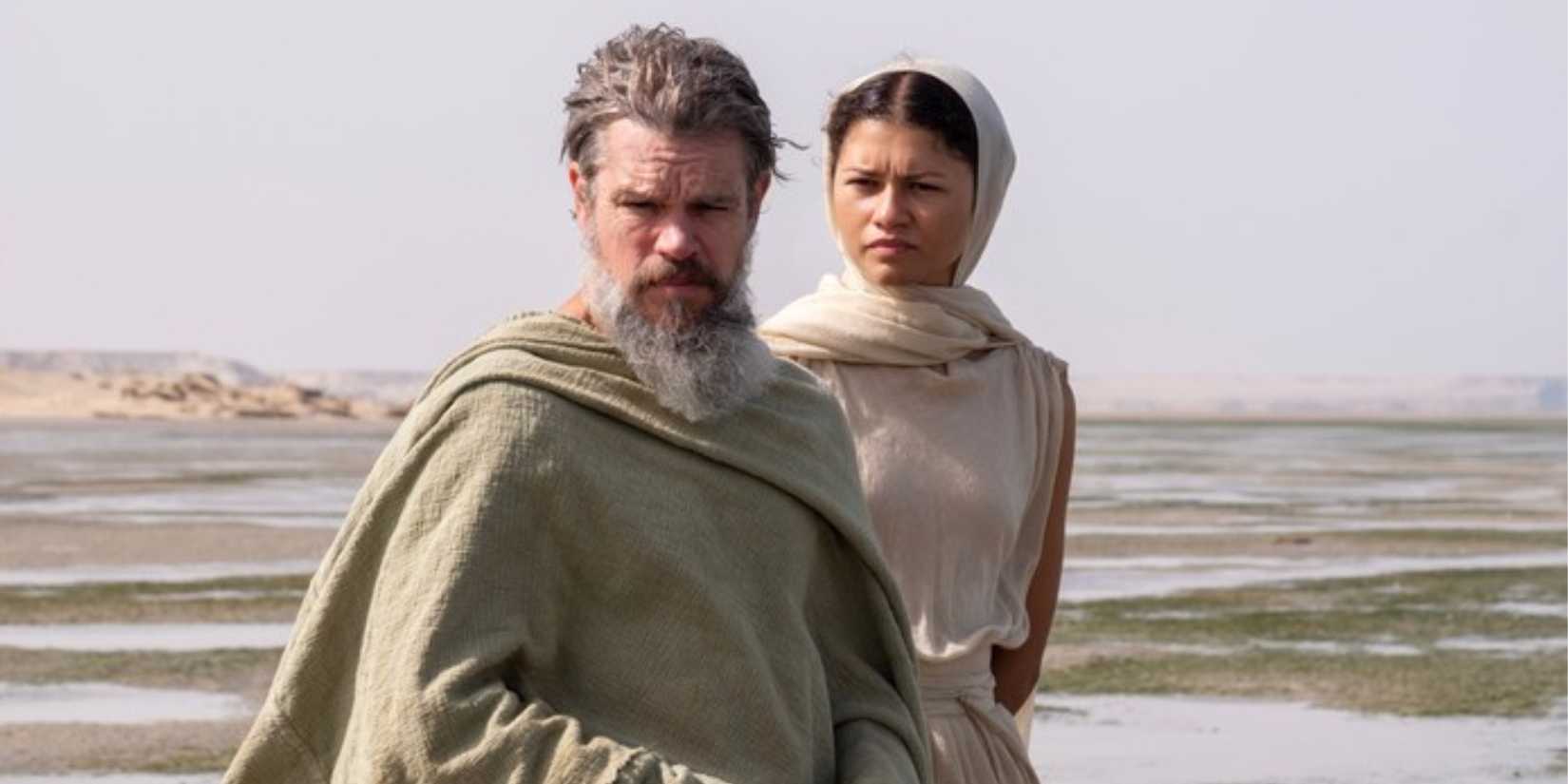
Few casting announcements for Christopher Nolan's The Odyssey generated as much excitement and speculation as Zendaya's. As one of the most admired and influential performers of her generation, the Emmy-winning actress was always expected to play a significant role in the filmmaker's ambitious adaptation of Homer's legendary epic. The only mystery was which iconic figure from Greek mythology she would embody.
Now that the answer has been revealed, it feels almost inevitable.
Zendaya has been cast as Athena, the powerful goddess of wisdom, strategic warfare, intelligence, and divine guidance. Among all the gods and goddesses who populate The Odyssey, Athena stands apart as arguably the most important ally in Odysseus' long struggle to return home. Her influence stretches across nearly every major event in the story, making her one of the emotional, intellectual, and strategic pillars upon which the entire narrative rests.
In many ways, Athena is the invisible force steering the epic from beginning to end.
Unlike gods who act impulsively or allow emotion to cloud their judgment, Athena is renowned throughout Greek mythology for her wisdom, patience, and calculated decision-making. As the daughter of Zeus and one of the most revered deities in the Greek pantheon, she is often associated with knowledge, strategy, justice, craftsmanship, and military tactics. Ancient Greek heroes frequently sought her favor because she valued intelligence and resourcefulness as much as physical strength.
That philosophy makes her a natural champion of Odysseus.
Among all the heroes who fought in the Trojan War, Odysseus is known not for being the strongest warrior but for being the cleverest. His ingenuity, adaptability, and strategic mind mirror many of Athena's own qualities, creating a unique bond between mortal and goddess. Throughout Homer's epic, Athena acts as his mentor, protector, and advocate, repeatedly intervening to ensure that he survives the seemingly impossible challenges standing between him and Ithaca.
Her assistance takes many forms.
Sometimes she offers direct guidance. At other times, she disguises herself as a mortal, manipulates events behind the scenes, or influences the decisions of those around him. Whether confronting hostile kings, navigating dangerous territories, or enduring the wrath of the sea god Poseidon, Odysseus often finds himself benefiting from Athena's unseen hand.
Her role extends beyond the hero himself.
One of the most important aspects of Athena's story in The Odyssey is her relationship with Telemachus, the son of Odysseus and Penelope. While Odysseus struggles to return home, Telemachus embarks on his own journey of self-discovery and leadership. Athena becomes a guiding force in the young prince's life, encouraging him to leave Ithaca, seek answers about his father, and grow into the leader his kingdom desperately needs.
Through wisdom, encouragement, and carefully timed interventions, Athena helps transform Telemachus from an uncertain youth into a confident and capable heir.
As a result, she becomes far more than a divine observer. She is the catalyst that helps shape the journeys of both father and son.
Given the character's intelligence, authority, and emotional significance, Athena was always one of the most coveted roles in Nolan's adaptation. Before her casting was officially confirmed, fans spent months speculating about which deity Zendaya might portray. Various theories circulated online, but once Athena's identity became known, many viewers agreed that the role seemed perfectly suited to her strengths as a performer.
The casting reflects both the character's importance and Zendaya's remarkable standing within modern Hollywood.
Over the last decade, she has evolved from a promising young performer into one of the entertainment industry's most versatile and sought-after stars. Her work spans blockbuster franchises, prestige television, independent dramas, and high-fashion campaigns, making her one of the rare performers capable of dominating multiple corners of popular culture simultaneously.
Her Emmy-winning performance in Euphoria showcased her dramatic range and emotional depth, while major film projects such as Spider-Man: Homecoming, Spider-Man: Far From Home, Spider-Man: No Way Home, Dune, Dune: Part Two, and Challengers demonstrated her ability to command audiences across vastly different genres.
Her connection to The Odyssey is also strengthened by an interesting piece of casting symmetry. In Nolan's film, Athena serves as a mentor and protector to Telemachus, who is portrayed by Tom Holland. Outside the world of mythology, Zendaya and Holland are one of Hollywood's most beloved real-life couples, adding an extra layer of intrigue for audiences watching their characters interact on screen.
As production details continue to emerge, many industry observers have noted that Zendaya's schedule remains among the busiest in entertainment. Between Euphoria, Spider-Man: Brand New Day, Dune: Part Three, and The Odyssey, she is attached to some of the most anticipated projects currently in development. Given the scale and commercial potential of those releases, there is a strong possibility that she could finish the year with one of the highest cumulative global box-office totals of any actor in Hollywood.
That level of success is a testament not only to her popularity but also to her remarkable versatility.
Athena herself embodies many of the qualities that have defined Zendaya's rise to stardom: intelligence, composure, adaptability, and quiet confidence. She is not the loudest figure in the room, nor the most physically imposing. Instead, her strength comes from wisdom, foresight, and the ability to influence events through thoughtful action rather than brute force.
Those qualities make Athena one of the most beloved deities in Greek mythology and one of the most important characters in The Odyssey.
With Christopher Nolan's ambitious vision bringing Homer's timeless story to a new generation, Zendaya appears perfectly positioned to deliver a fresh and compelling interpretation of the goddess. As the protector of Odysseus, the mentor of Telemachus, and the guiding intelligence behind much of the epic's action, Athena serves as the story's strategic heart.
And with one of Hollywood's brightest stars stepping into the role, audiences can expect Athena's presence to be felt throughout every stage of this extraordinary journey home.
Christopher Nolan's The Odyssey May Be the Definitive Greek Epic for a New Generation
With a cast that reads like a who's who of modern Hollywood, Christopher Nolan's The Odyssey is shaping up to be far more than just another literary adaptation. From Matt Damon's battle-worn Odysseus and Anne Hathaway's steadfast Penelope to Zendaya's wise Athena and Robert Pattinson's ruthless Antinous, every casting choice feels carefully crafted to breathe new life into Homer's timeless masterpiece.
What makes this adaptation particularly exciting is Nolan's commitment to grounding mythology in human emotion. At its heart, The Odyssey isn't simply a story about gods, monsters, and epic battles. It's a story about perseverance, loyalty, family, sacrifice, temptation, grief, redemption, and the universal longing to find one's way home. These themes have resonated with audiences for nearly 3,000 years, and with Nolan's signature blend of spectacle and emotional depth, they are poised to captivate an entirely new generation of moviegoers.
The film's sprawling ensemble, practical filmmaking techniques, breathtaking international locations, and IMAX-first production approach suggest that The Odyssey could become one of the most ambitious cinematic events of the decade. Whether you're a longtime fan of Greek mythology, a Christopher Nolan enthusiast, or simply someone eager to experience a truly epic adventure on the big screen, this adaptation promises something extraordinary.
As more casting reveals, trailers, and story details emerge, one thing is becoming increasingly clear: The Odyssey isn't just another blockbuster. It's a celebration of one of humanity's greatest stories, brought to life by one of cinema's most visionary directors and an ensemble cast worthy of legend itself.