


A subtle but fascinating Easter egg appears during the Loguetown storyline in One Piece Season 2, quietly hinting at a much larger piece of lore connected to one of the series’ most beloved characters. At this stage of the live-action adaptation, the pirate who inspired Monkey D. Luffy to pursue life at sea is known simply as Shanks, or more commonly by his famous title, “Red-Haired Shanks.” While longtime fans of the manga know that there is far more to Shanks than meets the eye, the show has only begun to scratch the surface of his background.
Later revelations in the broader One Piece story confirm that Shanks’ full name is Figarland Shanks, linking him to the Figarland family, an elite bloodline tied to the highest circles of power within the World Government. In the deeper lore of the series, the Figarlands are closely associated with the Celestial Dragons, the aristocratic rulers who sit at the very top of the One Piece world’s political hierarchy. This connection adds a fascinating layer of intrigue to Shanks’ character, as it suggests that the carefree pirate who once inspired Luffy may actually come from one of the most influential noble families in the world.
With that context in mind, a seemingly minor background detail in Season 2 suddenly becomes far more meaningful. During the Straw Hats’ time in Loguetown, Nami and Usopp are shown browsing the marketplace in an area labeled “Figarland Square.” At first glance, it might appear to be nothing more than a location name designed to flesh out the city’s environment. However, for fans familiar with the deeper lore of the series, the name immediately stands out as a clever reference.
Loguetown itself holds enormous historical significance within the One Piece universe—it is famously the town where Gol D. Roger, the Pirate King, was executed, sparking the beginning of the Great Pirate Era. By naming a part of this legendary city after the Figarland family, the show quietly acknowledges the influence of that powerful lineage within the world’s history.
Moments like this highlight how carefully Netflix’s adaptation is weaving long-term storytelling into its worldbuilding. The mention of Figarland Square may pass unnoticed by casual viewers, but for those who know what lies ahead in the story, it serves as a small yet tantalizing clue that the show is laying the groundwork for some of One Piece’s deepest secrets.
Multiple Pandaman Sightings
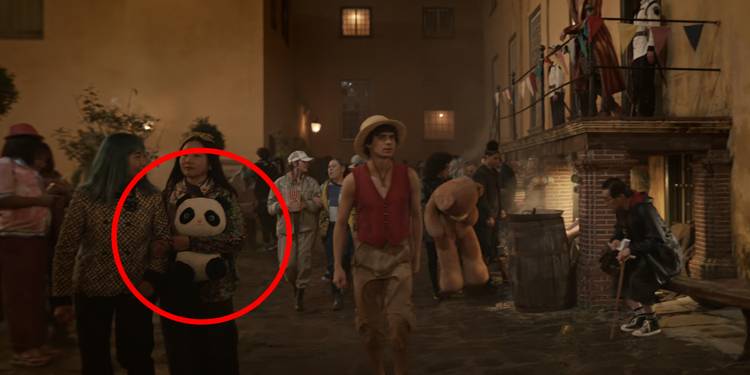
Sharp-eyed fans watching One Piece Season 2 may notice a familiar and slightly absurd face popping up in unexpected places. That character is Pandaman, a recurring gag figure created by Eiichiro Oda who has quietly become something of an inside joke among long-time readers of the One Piece.
Pandaman has been appearing in the background of the manga for decades. Originally introduced as a joke character submitted by a fan during Oda’s early work on the series, the masked panda-headed wrestler has since evolved into one of the franchise’s most beloved Easter eggs. Throughout the manga and anime, Pandaman can often be spotted lurking in large crowds, hiding in battle scenes, or quietly observing major story moments from the sidelines. His presence rarely affects the story directly, but spotting him has become a fun challenge for attentive fans.
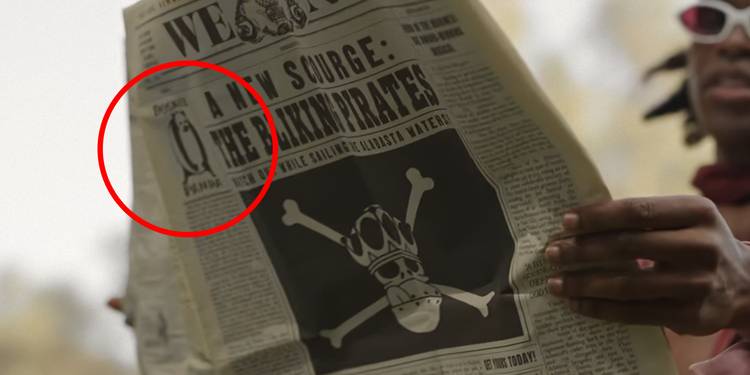
Netflix’s live-action adaptation clearly embraces this tradition, scattering multiple Pandaman sightings across Season 2. Rather than placing the character front and center, the show follows the same playful approach used in the manga by tucking him subtly into the background of certain scenes.
One of the most noticeable appearances occurs during the Straw Hats’ visit to Loguetown, the historic port city where the Pirate King Gol D. Roger was executed. While the bustling fairground scenes are filled with food stalls, games, and colorful decorations, eagle-eyed viewers may spot panda plush toys that closely resemble Pandaman being sold among the attractions. It’s a small visual detail, but one that immediately stands out to fans familiar with Oda’s running gag.
Pandaman’s presence isn’t limited to the fairground, however. A second clever reference appears when Mr. 5 is seen reading a newspaper. Hidden within the design of the newspaper is a small illustration of Pandaman, quietly peeking out from the page as another subtle nod to the manga’s long-running tradition.
Moments like these highlight just how carefully the creative team behind Netflix’s adaptation has approached the source material. Including Pandaman may seem like a small gesture, but it shows a deep respect for the playful quirks that have helped make One Piece such a beloved series for more than two decades. For longtime fans, spotting the panda-faced mascot scattered throughout Season 2 becomes its own mini treasure hunt—one more delightful secret hidden within the Grand Line
Smoker Mentions Raoul

A small but thoughtful Easter egg tucked into One Piece Season 2 pays tribute to a moment that originally appeared in the One Piece, specifically during the Loguetown arc. In the anime, this storyline includes a memorable filler sequence that never appeared in the manga but still became a beloved scene among longtime viewers.
In that anime episode, Monkey D. Luffy wanders into an old, quiet bar while exploring Loguetown—the legendary port city where Gol D. Roger, the Pirate King, spent his final moments before his public execution. Inside the bar, Luffy meets the bartender, a man named Raoul, who once served drinks to Roger himself.
Raoul explains that during his younger days he personally served the Pirate King when Roger used to visit the establishment. When Luffy boldly declares his dream of becoming the next Pirate King and following Roger’s path across the seas, the bartender experiences a powerful moment of recognition. Looking at the young pirate standing before him, Raoul senses something eerily familiar—an echo of the same fearless spirit Roger once carried. The scene ends with the impression that Raoul realizes he may be witnessing the birth of a new legend and the dawn of another great pirate era.
Because the moment originated from anime-only material rather than the original One Piece, Netflix’s adaptation understandably doesn’t recreate the entire sequence. However, the show still finds a clever way to acknowledge it.
In Season 2, Smoker, portrayed in the live-action series by Callum Kerr, is shown visiting the same historic bar where Roger is said to have enjoyed his final drink before facing execution. Smoker reveals that he makes a habit of returning to this place every year, using the location as a reminder of the Marine mission to uphold justice against piracy.
During this quiet scene, Smoker addresses the bartender by name—Raoul—creating a subtle but meaningful connection to the anime’s Loguetown filler episode. For viewers familiar with that storyline, the reference feels like a respectful nod to a piece of One Piece history that, while not part of the manga canon, still holds a special place in the broader legacy of the series.
It’s exactly the kind of deep-cut Easter egg that rewards longtime fans while still fitting naturally into the live-action world, reinforcing how carefully Netflix’s adaptation acknowledges every corner of the One Piece universe.
Sabo!
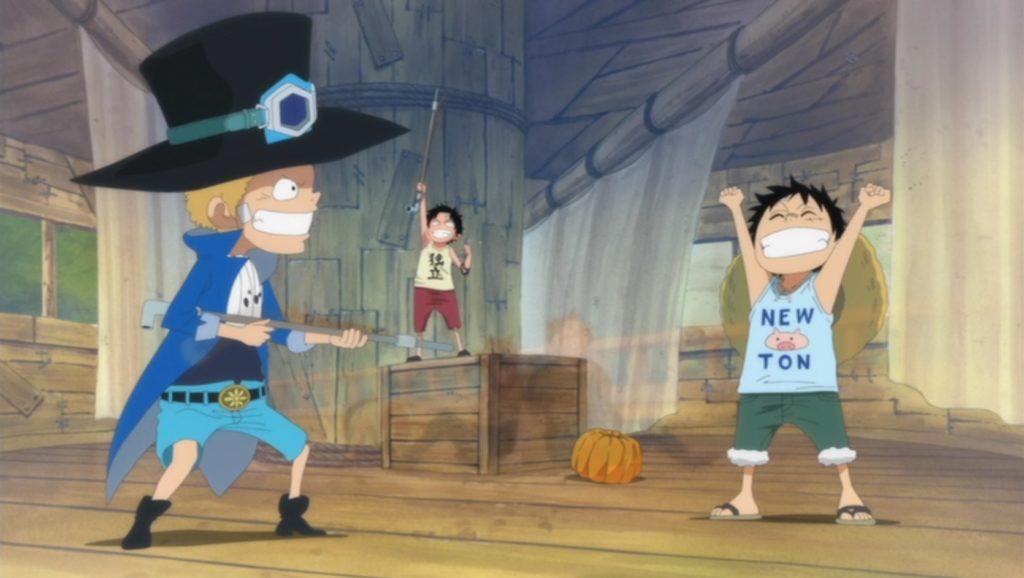
One of the most surprising and quietly emotional Easter eggs in One Piece Season 2 involves the unexpected appearance of Sabo. While many viewers anticipated the live-action debut of Monkey D. Dragon, the mysterious leader of the Revolutionary Army and father of Monkey D. Luffy, Sabo’s presence comes as a much bigger surprise.
Within the world of One Piece, Sabo holds a significant role as the second-in-command of the Revolutionary Army, the global resistance movement that opposes the rule of the World Government. Dragon may be the organization’s leader, but Sabo is widely regarded as one of its most powerful and trusted figures, often acting as his right-hand man. His presence in the live-action series, even briefly, hints that the show is slowly beginning to introduce the broader political forces shaping the One Piece world.
Long before he became a revolutionary leader, however, Sabo shared a deeply personal connection with Luffy. As children growing up in the Goa Kingdom, Sabo formed an inseparable bond with Luffy and Portgas D. Ace. Though they were not related by blood, the three boys considered themselves brothers and dreamed of becoming pirates together. Their childhood adventures—stealing sake, building secret hideouts, and declaring their brotherhood through a ceremonial exchange of cups—remain some of the most touching moments in the series’ history.
Tragically, that bond was shattered during a violent encounter with the Marines many years earlier. During an attempt to escape the oppressive nobles of his homeland, Sabo’s ship was attacked by a World Government vessel. The explosion was so devastating that everyone believed he had died in the incident.
What few people knew at the time was that Sabo actually survived. After being rescued by Monkey D. Dragon, he was taken in by the Revolutionary Army. However, the explosion left him with severe injuries and complete memory loss, wiping away all recollection of his past life—including his childhood friendship with Luffy and Ace.
Because of this tragic twist of fate, the two brothers live under heartbreaking misunderstandings. Luffy still believes that Sabo died long ago, mourning the loss of a brother he cherished deeply. Meanwhile, Sabo continues to fight for justice as one of the world’s most powerful revolutionaries, unaware of the bond he once shared with the future captain of the Straw Hat Pirates.
By quietly including Sabo in One Piece Season 2, the live-action series plants the seeds for one of the most emotional storylines yet to unfold. For fans familiar with the manga and anime, even a brief glimpse of the Revolutionary Army’s second-in-command serves as a powerful reminder that the story of Luffy’s brothers is far from over.
Luffy Dreams of “Dadan”
A brief but meaningful moment in One Piece Season 2 quietly references an important figure from Monkey D. Luffy’s childhood—someone who has yet to appear in the live-action story but played a crucial role in shaping the pirate he would eventually become. That person is Curly Dadan, the rough-and-tumble leader of a group of mountain bandits who essentially acted as Luffy’s guardian for many years.
So far, the live-action series has already shown glimpses of Luffy’s early life in Windmill Village, where he spent much of his childhood surrounded by the pirate crew of Shanks and under the watchful eye of Makino, the kind-hearted bartender who looked after him. His formidable grandfather, Monkey D. Garp, also appeared from time to time, often bringing chaos with him. However, after the famous incident in which Shanks sacrificed his arm to save Luffy from a Sea King, the young boy’s upbringing took a very different turn.
For much of his youth following that event, Luffy was sent to live in the mountains outside the Goa Kingdom with a gang of bandits. Their leader was Dadan, a loud, fiercely protective woman who ran the Dadan Family, a group of outlaws who lived in the forests surrounding the kingdom. Although she initially viewed Luffy as nothing more than an unwanted responsibility forced upon her by Garp, she eventually became the closest thing the boy had to a parental figure.
Dadan’s household became even more significant when Portgas D. Ace, the biological son of Gol D. Roger, was also entrusted to her care by Garp. Together, Luffy and Ace grew up under Dadan’s watch, often causing trouble, fighting with each other, and dreaming of becoming pirates. Their chaotic upbringing in the mountains helped forge the strong bond that would later define their brotherhood.
Despite their constant arguments and the bandit leader’s tough-love approach to parenting, Dadan clearly cared deeply for the boys she raised. While Luffy and Ace frequently clashed with her authority, the bond between them eventually became something resembling a dysfunctional family.
This history makes a small moment in One Piece Season 2, Episode 2 particularly touching. After the Straw Hats arrive near the home of Crocus, Luffy is briefly shown waking up from sleep and mumbling, “Five more minutes, Dadan…” The line might seem like a throwaway piece of dialogue, but for longtime fans it serves as a subtle reminder of the childhood that helped shape him.
Even though the live-action series has yet to introduce Dadan directly, this fleeting reference shows that the showrunners are already planting seeds for Luffy’s deeper backstory. It’s a small but heartfelt Easter egg that acknowledges the woman who, despite her gruff personality and outlaw lifestyle, played a pivotal role in raising the future captain of the Straw Hat Pirates.
Luffy Hits the Nika Pose While Singing to Laboon
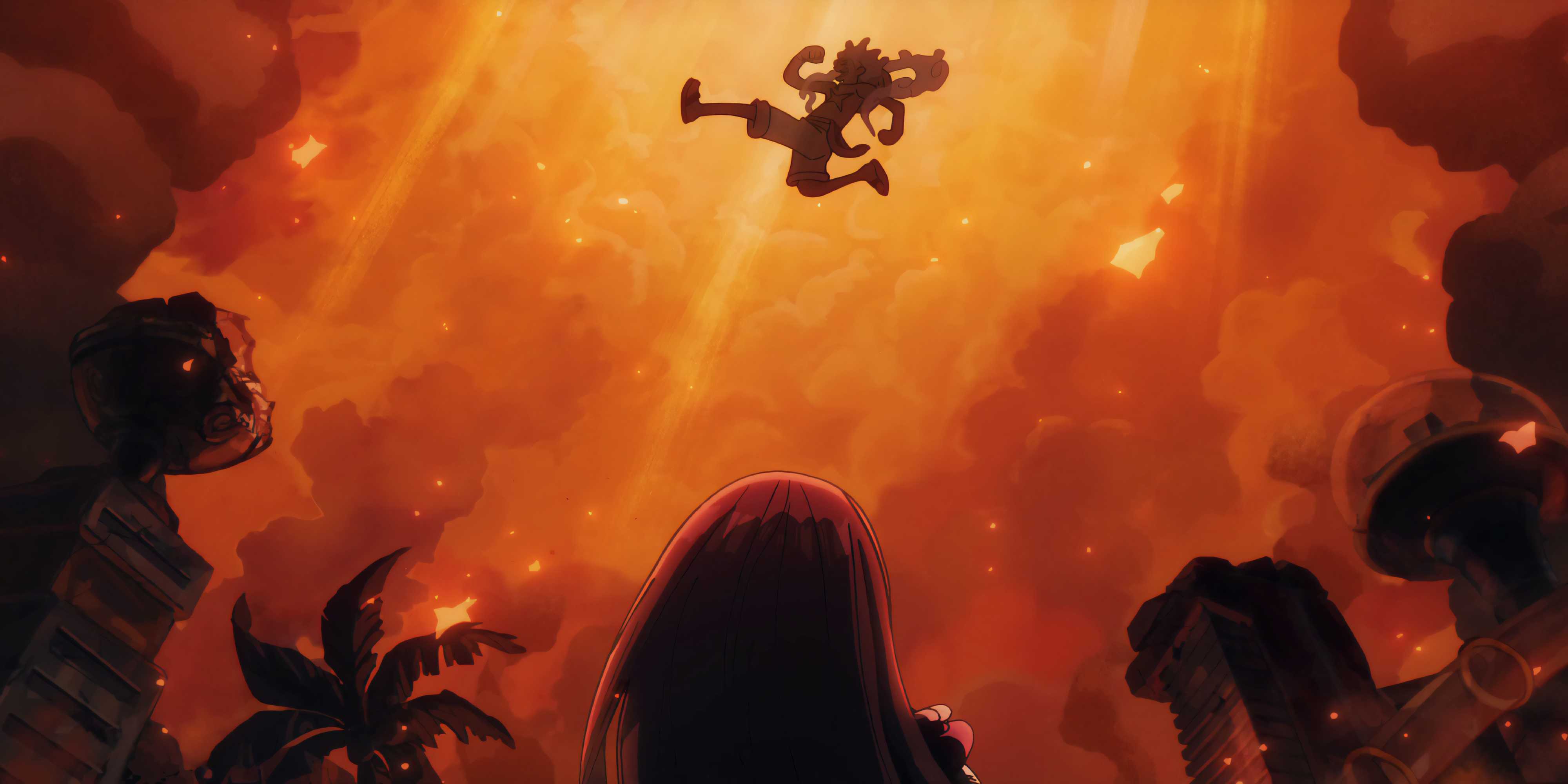
One of the cleverest hidden details tucked into One Piece Season 2 appears during a surprisingly lighthearted moment involving Monkey D. Luffy and the enormous whale Laboon. At first glance, the scene seems like classic Luffy behavior—goofy, spontaneous, and full of the carefree energy that defines his personality. However, for viewers familiar with the deeper lore of the One Piece story, the moment carries a subtle hint about a much larger secret tied to Luffy’s mysterious powers.
For most of the series, Luffy’s abilities are believed to come from the Gum-Gum Fruit, the Devil Fruit that gave his body its famous rubber-like elasticity. Yet the One Piece manga eventually reveals a startling truth: the fruit Luffy consumed as a child is actually the Human-Human Fruit, Model: Nika. This rare Mythical Zoan-type Devil Fruit transforms its user into the living embodiment of Sun God Nika, a legendary figure whose story has been whispered across the seas for centuries.
Within the mythology of the One Piece world, Nika is remembered as a symbol of liberation and joy—a warrior who fought to free the oppressed while spreading laughter wherever he went. The legend even describes a distinctive dance associated with the Sun God. The movement resembles a person running in place, with their arms and legs bent at exaggerated right angles, all while wearing a wide, carefree smile.
During Season 2, Episode 2, Luffy attempts to calm Laboon by singing to the massive whale in his usual playful fashion. In the middle of the performance, he briefly strikes a pose that mirrors this exact dance-like stance—the same iconic posture associated with Nika. For casual viewers, the moment may appear to be nothing more than another example of Luffy’s silly antics.
However, for fans who know the truth behind his Devil Fruit, the scene functions as a subtle piece of foreshadowing. By incorporating this familiar pose into such a cheerful moment, the live-action series quietly hints at Luffy’s deeper connection to the legendary Sun God long before the full revelation arrives.
It’s a small but brilliant detail that reflects the long-term storytelling approach that Eiichiro Oda has always favored. Even in the earliest chapters of the manga, Oda frequently planted clues that would only make sense years later. Netflix’s adaptation appears to be following the same philosophy—layering subtle hints into the story that reward attentive viewers while still fitting naturally into the character’s playful personality.
In true One Piece fashion, what looks like a simple joke may actually be the beginning of something far more legendary.
Usopp Mentions Living Inside Laboon
A playful line delivered by Usopp toward the end of One Piece Season 2, Episode 2 hides a clever reference to one of the stranger pieces of lore from the original One Piece. While the moment is presented as a throwaway joke, longtime fans will immediately recognize that it nods to a surprisingly literal truth within the story.
The scene unfolds when the Straw Hat crew encounters Crocus, the eccentric lighthouse keeper stationed at Reverse Mountain, the massive natural gateway leading into the Grand Line. Crocus is responsible for watching over Laboon, the enormous whale that has spent decades waiting faithfully for a pirate crew known as the Rumbar Pirates to return.
During the conversation, Usopp jokingly suggests the ridiculous idea that Crocus might actually live inside the giant whale itself. The remark is delivered with the Straw Hats’ usual sense of humor, sounding like exactly the kind of exaggerated theory Usopp might invent on the spot.
However, what makes the joke particularly clever is that in the original One Piece story, Crocus quite literally does live inside Laboon.
Inside the whale’s enormous body, Crocus has constructed a small living space and research station. The interior includes medical equipment, living quarters, and even an entrance hatch that allows Crocus to travel in and out when needed. The reason for this unusual arrangement is both practical and compassionate—Crocus monitors Laboon’s health from the inside, treating the injuries the whale repeatedly causes itself while ramming its head against Reverse Mountain in grief.
This unusual living situation first appears during the Reverse Mountain arc, one of the earliest adventures of the Straw Hat Pirates in the Grand Line. It perfectly captures the whimsical logic that defines the One Piece universe, where even the inside of a whale can become someone’s home.
Crocus’ subtle reaction to Usopp’s joke in the live-action series adds another layer of meaning. His response suggests that Usopp’s wild guess might not be entirely absurd, quietly hinting that there could indeed come a time when living inside the whale becomes necessary. For viewers unfamiliar with the original story, the moment passes quickly. But for fans who know the lore, it functions as a delightful Easter egg acknowledging one of the series’ most delightfully bizarre details.
Like many references sprinkled throughout One Piece Season 2, this brief exchange demonstrates the care taken by the show’s creators to honor the source material. Even a simple joke about living inside a whale becomes an affectionate tribute to the imaginative storytelling that has made One Piece such a beloved adventure for decades.
Usopp’s Battle Against the “Mole Monster”
During one of his trademark storytelling moments in One Piece Season 2, Usopp spins yet another wildly exaggerated tale while speaking with the giant warrior Brogy. In the middle of his boastful storytelling, Usopp claims that he once fought a terrifying “mole monster” using a hammer that supposedly weighed five tons. Like many of Usopp’s stories, the claim sounds completely absurd at first—just another tall tale from the Straw Hats’ resident storyteller.
However, fans of the original One Piece know that this particular lie carries a surprising amount of truth hidden within it.
Later in the story during the Alabasta arc, Usopp and Tony Tony Chopper face off against a member of the criminal organization Baroque Works whose Devil Fruit allows her to transform into a mole. That character, Miss Merry Christmas, possesses the Mole-Mole Fruit, granting her the ability to burrow underground and emerge suddenly during combat. During this fight, Usopp famously wields a massive hammer that he loudly claims weighs five tons—though in reality, it’s simply a clever bluff designed to intimidate his opponent.
This connection highlights one of the long-running comedic traditions within the One Piece universe: Usopp’s lies have a strange habit of eventually coming true. Throughout the series, many of the outrageous claims he makes early on later turn into real events. Even earlier in the story, Usopp once mentioned the existence of a giant mole while telling stories in Kaya’s village—another seemingly ridiculous statement that eventually proved oddly prophetic.
The live-action adaptation’s decision to reference the mole monster in Season 2 may also serve a practical storytelling purpose. By having Usopp mention the creature ahead of time, the series acknowledges the famous moment from the manga without necessarily recreating the exact battle later on.
There’s another clue suggesting that the fight itself might not appear in Season 3. In the original Alabasta storyline, Miss Merry Christmas teams up with Mr. 4, whose combat style revolves around baseball-themed attacks involving explosive baseballs and a massive bat. Interestingly, the live-action series already incorporates a similar baseball-themed gag during a fight involving Smoker, subtly borrowing elements that were originally associated with Usopp’s mole battle.
Because the show has already introduced the baseball-style joke and allowed Usopp to reference the mole monster during Season 2, it’s possible that the adaptation is paying tribute to the famous fight without planning to recreate it exactly in the upcoming Alabasta storyline. If that turns out to be the case, the Easter egg becomes both a nod to longtime fans and a clever way of honoring one of Usopp’s most memorable moments without repeating it directly.
As always in One Piece, even the most ridiculous lies sometimes contain a surprising grain of truth.
Semla Is a Reference to Big Mom
Food has always played an oddly important role in the world of One Piece, often serving as a small but meaningful detail that ties different parts of the story together. During the Straw Hat crew’s encounter with the giant warriors Dorry and Brogy in Season 2, the two warriors enthusiastically mention a sweet treat known as semla, a traditional delicacy from the land of the giants, Elbaf.
At first glance, the reference appears to be nothing more than a bit of cultural flavor that helps flesh out the giants’ homeland. Dorry and Brogy are famously larger-than-life characters who enjoy hearty meals and lively celebrations, so their fondness for desserts fits perfectly with their personalities. However, longtime fans of the One Piece immediately recognize the mention of semla as a much deeper nod to a future antagonist.
The dessert becomes especially significant in the backstory of Charlotte Linlin (Big Mom), one of the fearsome Four Emperors of the Sea. Big Mom’s history with the giants of Elbaf dates back to her childhood, long before she rose to become one of the most powerful pirates in the world. Despite not being a giant herself, the young Linlin was temporarily raised among the giants in Elbaf under the care of a nun named Mother Carmel.
During her time there, Linlin’s overwhelming strength and uncontrollable appetite often created chaos. Her obsession with sweets became particularly notorious, and semla was one of her absolute favorite treats. In the manga and anime, a flashback reveals that a craving for this dessert ultimately leads to one of the darkest moments in her childhood story—a tragic incident that permanently damages her relationship with the giants.
Because of that history, the mention of semla carries an ironic undertone. What sounds like a simple culinary reference is actually tied to one of the most dramatic and unsettling events in One Piece lore. It also hints at the deep historical tensions between Big Mom and the giants of Elbaf, a conflict that continues to echo throughout the series.
By slipping this reference into the conversation between Dorry and Brogy, the live-action adaptation quietly acknowledges a future storyline while also rewarding attentive fans. It’s a small detail, but one that reflects the careful way the show draws from Eiichiro Oda’s enormous world-building—reminding viewers that even something as innocent as a dessert can carry decades of storytelling behind it.
Dorry Has a Statue of Loki’s Silhouette
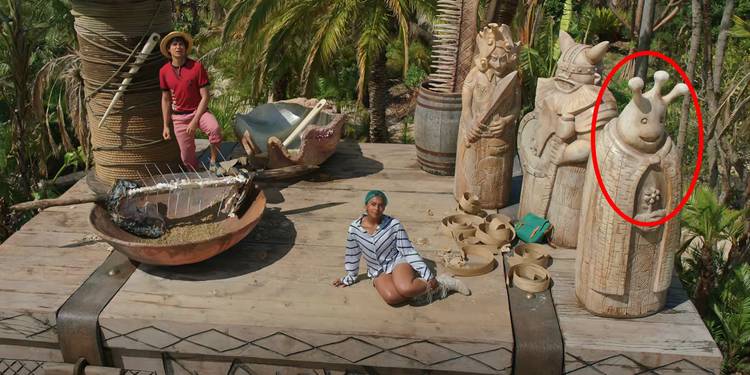
One of the most cleverly hidden references in One Piece Season 2 pays tribute to a long-running storytelling tradition created by Eiichiro Oda. Over the years, Oda has become famous among fans for introducing important characters through mysterious silhouette drawings long before their full designs are revealed.
In the One Piece, when a powerful pirate, villain, or historical figure is first mentioned, Oda often teases their existence by showing only a rough shadowy outline. These silhouettes are usually exaggerated and intentionally vague, leaving readers guessing about what the character might actually look like. The amusing twist is that when those characters finally appear in the story, their real design often looks completely different from the original shadow.
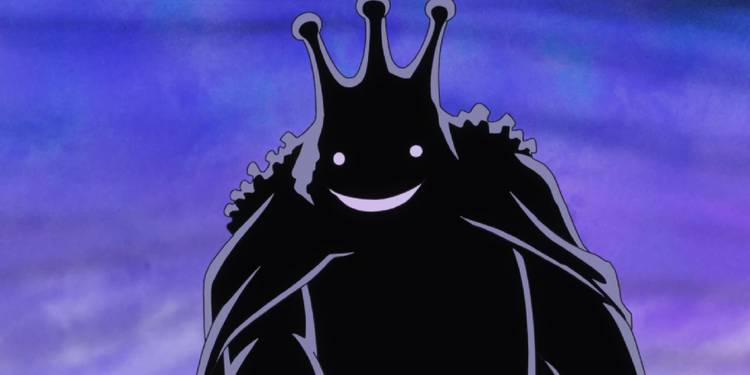
This playful trick has happened multiple times throughout the One Piece saga. Characters such as Kaido and Charlotte Linlin (Big Mom) were both introduced years earlier as mysterious silhouettes before eventually debuting with fully detailed and dramatically different appearances.
Another character who followed this tradition is Loki, the enigmatic Prince of Elbaf, the legendary homeland of the giants. When Loki was first referenced in the story, Oda presented him as a shadowy figure with a three-pronged crown and very minimal facial detail—a simple, almost cartoonish silhouette that revealed almost nothing about the character himself.
However, when Loki eventually appeared properly in the story, his true design looked very different from that early tease. The Prince of Elbaf is depicted with long flowing hair, bandages covering his eyes, a horned helmet, and a towering muscular physique, making him far more imposing than the crude outline fans originally saw.
Netflix’s live-action adaptation quietly acknowledges this long-standing Oda tradition with a clever background detail involving the giant warrior Dorry. In one scene, Dorry is shown carving wooden figures—small models that reflect the mythology and legends of giant culture. Among these carvings is a statue that perfectly recreates Loki’s original silhouette design, complete with the distinctive crown shape seen in the manga’s early tease.
For casual viewers, the statue may simply appear to be another decorative object crafted by the giants. But for fans familiar with Oda’s storytelling habits, the carving acts as a delightful Easter egg—an affectionate nod to one of the series’ most recognizable running gags.
Moments like this highlight just how carefully the creators of the live-action adaptation are weaving the franchise’s history into the visual world of the show. Even a small wooden statue can carry years of storytelling behind it, rewarding viewers who know exactly what they’re looking at.
Dorry Also Has a Statue That Looks Like Nika
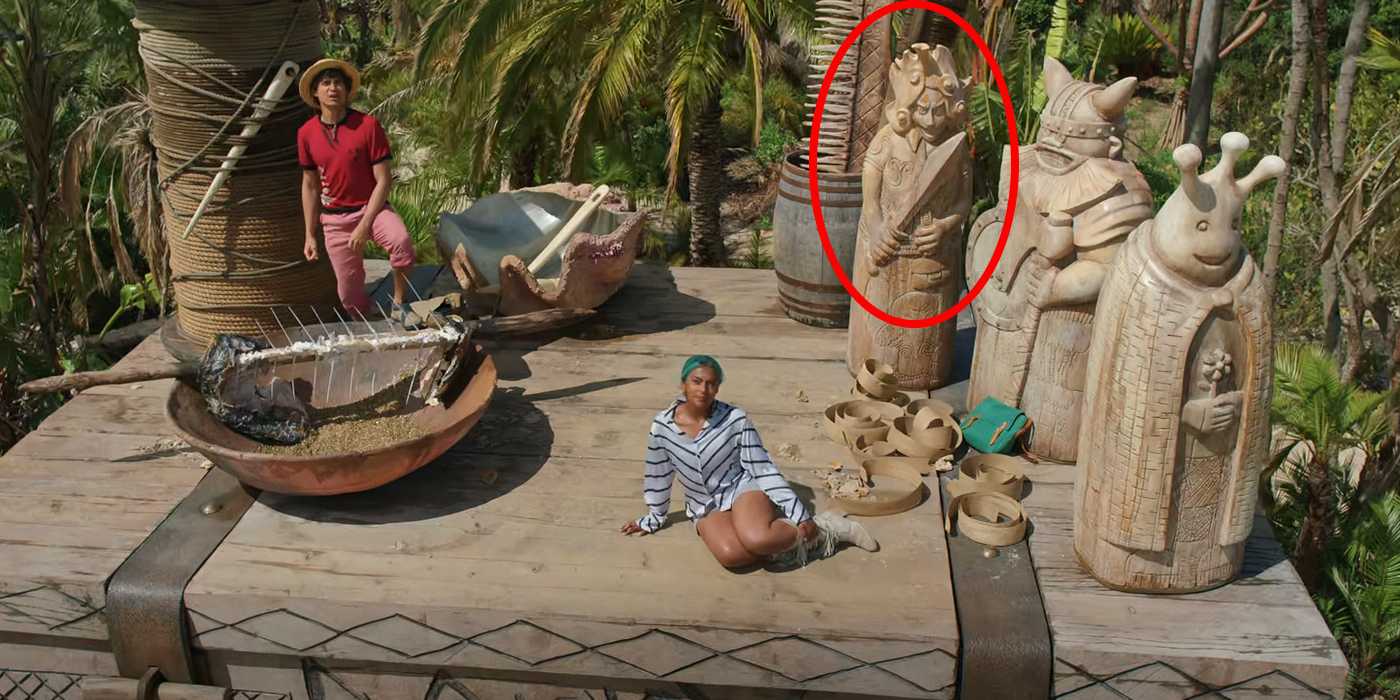
The wooden carvings created by the giant warrior Dorry in One Piece Season 2 contain more hidden references than viewers might initially realize. While the statue resembling Loki, the Prince of Elbaf, is already a clever nod to future lore, it isn’t the only Easter egg hidden among Dorry’s collection of handcrafted figures.
Positioned just behind the carvings representing Loki and Brogy, another statue can be spotted—one that bears a striking resemblance to Sun God Nika. The design of the carving is surprisingly specific. It features the same distinctive wavy hairstyle associated with Nika, along with the character’s signature sword and the loose, almost cartoonishly expressive posture that fans have come to associate with the legendary figure.
Even more intriguingly, the statue appears to capture the wispy, cloud-like aura that surrounds Monkey D. Luffy when he enters his Gear 5 transformation, the awakened state of his Devil Fruit. In the broader lore of the One Piece, Luffy’s abilities are eventually revealed to originate from the Human-Human Fruit, Model: Nika, a mythical Devil Fruit that allows its user to embody the legendary Sun God himself.
Within the culture of the giants—particularly those from the land of Elbaf—Nika is revered as a powerful deity. Stories describe the Sun God as a warrior who brought joy and liberation to oppressed people while spreading laughter wherever he appeared. Because of this mythology, it makes perfect sense that a giant like Dorry would carve a figure representing Nika as part of his collection.
Interestingly, the show even references the Sun God directly during One Piece Season 2, further reinforcing how deeply rooted this legend is within the world’s history. For fans familiar with the long-term storytelling of Eiichiro Oda, the presence of this statue serves as a subtle but meaningful hint toward the deeper mythology surrounding Luffy’s powers.
At the same time, the moment carries a layer of playful irony. While Dorry proudly displays a carving of Nika among his statues, Iñaki Godoy’s portrayal of Luffy is standing just a few feet away from the figure—completely unaware that the wooden model resembles his own future transformation.
It’s a clever visual gag that perfectly captures the spirit of One Piece: a story where the seeds of legendary destinies are often hiding in plain sight.
Baroque Works’ Drawings of the Straw Hats Honor the One Piece Anime
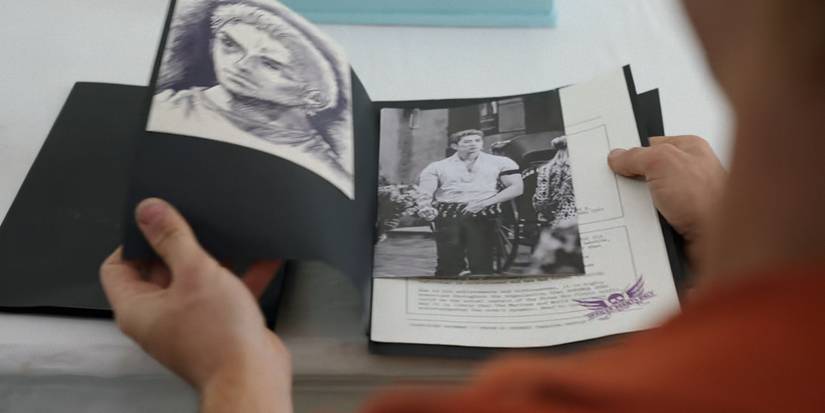
During the events unfolding on Little Garden in One Piece Season 2, there’s a small but delightful detail that longtime fans of the franchise immediately recognize as a tribute to the original animated series. The moment occurs when Sanji manages to sneak into the wax-filled hideout belonging to Mr. 3, one of the higher-ranking agents within the criminal organization Baroque Works.
While searching through the hideout, Sanji comes across a collection of folders containing surveillance material on the Straw Hat crew. Inside these files are drawings depicting several members of the pirate crew—essentially Baroque Works’ attempts at documenting their targets. Although this concept already exists in both the One Piece and the long-running One Piece, the live-action version introduces a clever visual twist.
Rather than simply creating generic sketches of the characters, the production team chose to design the drawings so that they strongly resemble the anime versions of the Straw Hat pirates. For fans who have spent years watching the animated series, this becomes an instantly recognizable nod to the franchise’s visual history.
The resemblance is particularly noticeable with the drawings of Roronoa Zoro and Nami. Their portraits look as though they were lifted directly from the art style used in the anime, faithfully capturing the distinctive facial features and expressions associated with those characters.
The image of Monkey D. Luffy, however, takes a slightly different approach. Instead of resembling the anime’s stylized design, Luffy’s sketch appears to mirror the real-world appearance of Iñaki Godoy, who portrays the Straw Hat captain in the live-action adaptation. This subtle difference creates an amusing blend between the animated and live-action worlds.
It’s a small creative decision, but it highlights the care taken by the show’s creators to acknowledge the legacy of the anime while still maintaining the identity of the live-action series. Moments like this function almost like a wink to longtime fans—quiet reminders that even as One Piece continues to evolve across different mediums, its roots in the manga and anime remain firmly respected.
A Small Update on the Pet Shop from One Piece Season 1
Hidden within the background of One Piece Season 2 is a small but heartwarming callback to one of the most emotional moments from the show’s first season. The reference appears briefly when Mr. 5 opens a newspaper while taunting Nefertari Vivi with troubling news from Alabasta. While the focus of the scene is on the political turmoil unfolding in Vivi’s homeland, eagle-eyed viewers might notice a smaller headline tucked into the paper.
The article reads: “FAMOUS EAST BLUE PET SHOP REOPENS.”
For fans who followed the events of Season 1 closely, that single line carries a surprising amount of meaning. The headline strongly suggests that Chouchou’s Pet Shop in Orange Town has reopened its doors.
Chouchou, of course, is the fiercely loyal little dog introduced during the Orange Town storyline. Despite his small size, the determined canine became one of the most memorable characters in the early chapters of One Piece. After the pirate crew led by Buggy the Clown took over Orange Town, Chouchou remained behind to guard the pet shop that once belonged to his late owner. Even when Buggy’s pirates destroyed the building, the dog refused to abandon his post, stubbornly protecting what remained of the place that held his memories.
The scene became a fan-favorite moment because it perfectly captured one of the central themes of One Piece—loyalty and perseverance, even in the face of overwhelming odds. Luffy himself was visibly moved by Chouchou’s determination, which helped inspire the Straw Hats to drive Buggy’s crew out of the town.
The small newspaper update in Season 2 quietly confirms that life in Orange Town has begun returning to normal following those events. With Buggy’s reign of chaos brought to an end by Monkey D. Luffy and the Straw Hat Pirates, the residents of the town have apparently rebuilt the pet shop and reopened it for business.
It’s a tiny detail that many viewers might easily miss, but it adds a reassuring sense of continuity to the world of One Piece. Even as the Straw Hats sail deeper into the dangerous waters of the Grand Line, the places they helped along the way continue to recover and thrive.
And somewhere back in Orange Town, it seems Chouchou is still proudly standing guard over the shop he never stopped protecting.
A Tease for One Piece Season 5
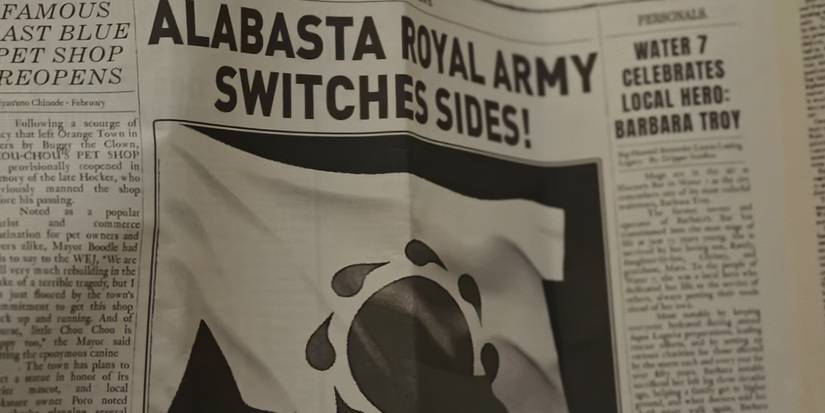
Hidden within the pages of a newspaper briefly shown in One Piece Season 2 lies a fascinating piece of foreshadowing for events that are still far down the Straw Hats’ journey. While Mr. 5 flips through the paper while taunting Nefertari Vivi, a headline casually mentions the island known as Water 7.
For viewers unfamiliar with the broader story, the name might seem like a random location dropped into the world-building. However, fans of the One Piece and anime immediately recognize Water 7 as one of the most important islands in the entire series. The city, often called the “City of Water,” is famous for its intricate canal systems and thriving shipbuilding industry. It is heavily inspired by the architecture and waterways of Venice, Italy, making it one of the most visually distinctive locations in the One Piece world.
If Netflix’s adaptation continues adapting the story at its current pace, the Straw Hat crew will likely arrive at Water 7 around Season 5. That arc becomes a turning point for the series, both narratively and emotionally. It’s in Water 7 that the tragic past of Nico Robin finally comes to light, revealing her lifelong struggle against the power of the World Government.
The events in Water 7 also mark the beginning of a major conflict between Monkey D. Luffy and the authorities that rule the seas, setting up one of the most dramatic storylines in the entire saga. During this arc, the Straw Hats also meet Franky, the eccentric but brilliant shipwright who eventually becomes the crew’s official shipbuilder and joins their ranks.
The article mentioning Water 7 also includes the name “Barbara Troy.” Interestingly, this name does not appear anywhere within the official One Piece lore. Instead, it appears to be a small personal Easter egg inserted by Randy Troy, one of the writers working on the live-action adaptation. It’s the kind of playful behind-the-scenes detail that occasionally slips into productions as a quiet nod from the creative team.
Vivi’s Flashback with Wapol Mentions a Key Murder (and a Future Straw Hat)

Much like the original anime and manga, One Piece Season 2 includes a flashback to a Reverie meeting that Vivi attended as a child. The Reverie is a gathering of world leaders convened by the World Government, where kings and queens from across the seas meet to discuss global affairs.
During the flashback, tensions flare when Wapol clashes with Vivi’s father, Nefertari Cobra. In the confrontation, Wapol even strikes the young Vivi, demonstrating the arrogant cruelty that defines his character. The discussion also briefly touches on Monkey D. Dragon, who is described as a growing threat to the authority of the World Government.
While this moment already existed in the original story, the live-action version expands on it with several intriguing details.
During the argument, Wapol refers to the assassination of the Fish-Man queen, a clear reference to Queen Otohime of Fish-Man Island. In the broader storyline, Otohime was a beloved leader who worked tirelessly to build peaceful relations between humans and fish-men. Her dream was to end centuries of prejudice and discrimination between the two groups.
Tragically, that dream was cut short when she was assassinated by the extremist villain Hody Jones. This event becomes one of the central conflicts when the Straw Hats eventually reach Fish-Man Island. The assassination deeply damages the fragile trust between humans and fish-men, setting the stage for the arc’s major political and emotional struggles. During that storyline, Luffy personally holds Hody Jones accountable for the chaos he caused.
The scene also contains another subtle but important reference. Wapol mentions that the “Fish-Man Warlord” failed to prevent Otohime’s death. This is a clear reference to Jinbe, the powerful fish-man warrior who currently serves as one of the Seven Warlords of the Sea during the timeline of the live-action series.
Jinbe’s story becomes deeply intertwined with Luffy’s journey in later arcs. Although he eventually loses his position as a Warlord, Jinbe goes on to form a strong bond with the Straw Hat captain and ultimately becomes one of the most respected members of the Straw Hat Pirates.
By including these references in Vivi’s flashback, the live-action series quietly plants seeds for major storylines that lie far ahead in the adventure—once again demonstrating how carefully the adaptation is weaving long-term One Piece lore into its narrative.
As One Piece Season 2 proves once again, the real treasure hidden across the Grand Line isn’t always gold or Devil Fruits—it’s the incredible level of detail woven into the world itself. From blink-and-you-miss-it references like Pandaman sightings and Figarland Square, to deeper lore hints involving Jinbe, Sabo, and even the legendary Sun God Nika, the live-action adaptation clearly understands what makes One Piece such a beloved story.
These Easter eggs aren’t just fun callbacks—they are pieces of a much larger puzzle. Every subtle nod to the manga created by Eiichiro Oda reminds fans that the Straw Hat Pirates’ adventure stretches far beyond what we’ve seen so far. Mentions of Water 7, hints about Fish-Man Island politics, and visual clues tied to Luffy’s connection with Nika all signal that Netflix is carefully laying the groundwork for some of the most legendary arcs still to come.
For longtime fans, spotting these details feels like discovering hidden treasure scattered throughout each episode. For new viewers, they offer a glimpse of the vast mythology waiting beyond the horizon.
And if One Piece has sparked the collector in you, there’s never been a better time to celebrate your fandom.
Calling all collectors and pop-culture fans!
Explore an incredible range of premium collectibles and action figures from iconic franchises including He-Man and Masters of the Universe, Anime, Marvel, DC, Transformers, LEGO, and more — all available at up to 40% OFF.
Whether you're searching for rare statues, premium action figures, or the perfect centerpiece for your collection, there’s a legendary treasure waiting for you.
Discover the latest collectibles now at Superhero Toystore and build your ultimate fandom display.
Because every great adventure deserves legendary collectibles.