India’s Official Distributor and Retailer for Licensed Action Figures, Statues and Anime Collectibles

0

Your Cart is Empty

April 09, 2026 14 min read

Michael Jackson wasn’t just a musician—he was a phenomenon that refused to be contained. Regarded as one of the most important musical figures of the 20th century, the man crowned the King of Pop didn’t just shape music—he reshaped culture itself. His career wasn’t built on a single pillar of greatness, but on an entire universe of it: record-breaking achievements, gravity-defying performances, and a deeply ingrained sense of philanthropy that ran parallel to his superstardom.

But to reduce him to just his voice or his movement would be missing the point entirely.

Because Michael Jackson didn’t just perform—he designed experiences.

And fashion? That was never an accessory. It was part of the choreography.

From the moment he stepped into the spotlight, his style became inseparable from his identity. The glittering glove. The sharply tailored silhouettes. The military jackets that looked like they belonged to a king from another era. Every detail was intentional—crafted not just to be seen, but to be remembered. His outfits didn’t follow trends; they created them, often inspired by history, royalty, and theatrical spectacle rather than conventional fashion rules .

Even something as simple as white socks paired with black loafers became iconic—not by accident, but by design. The contrast made every step, every glide, every moonwalk visible—even to the furthest seat in the arena . His clothing moved with him, amplifying the rhythm of his body like a visual echo of sound.

And that’s what made him different.

Where others wore outfits, Michael Jackson wore moments.

From his early days in the Jackson 5—decked in vibrant, flamboyant stagewear that already hinted at his instinct for spectacle—to the global phenomenon of Thriller, where a single red leather jacket could define an entire era, his evolution was never random. It was a carefully curated journey through identity, artistry, and reinvention .

His military-style jackets, often adorned with gold embellishments, weren’t just fashion statements—they were declarations. Structured, commanding, almost regal—they reflected a man who understood his place in the world stage, not just as a performer, but as a symbol . And yet, he balanced that grandeur with minimalism: monochrome palettes, sleek tailoring, and silhouettes that felt timeless, even in his later years .

Then there are the pieces that transcended clothing entirely:

  • The single sequined glove—a fragment of light that became one of the most recognizable symbols in pop culture history.
  • The fedora, tilted just enough to hide and reveal at the same time—mystery woven into movement.
  • The red “Thriller” jacket, bold and cinematic, forever stitched into the DNA of music videos.
  • The white suit from “Smooth Criminal”, a tribute to classic Hollywood elegance, yet reimagined through impossible physics and anti-gravity defiance.

Each look wasn’t just worn—it was performed. And in doing so, it embedded itself into global consciousness.

Even today, decades later, you don’t need to hear the music.

A silhouette—fedora, glove, angled stance—is enough.

That’s legacy. That’s mythology. That’s Michael Jackson.

And as we step into his most iconic looks, what we’re really exploring isn’t just fashion—it’s the visual language of a man who turned style into storytelling, and clothing into immortality.


HIStory Tour – The Armour of a Legend
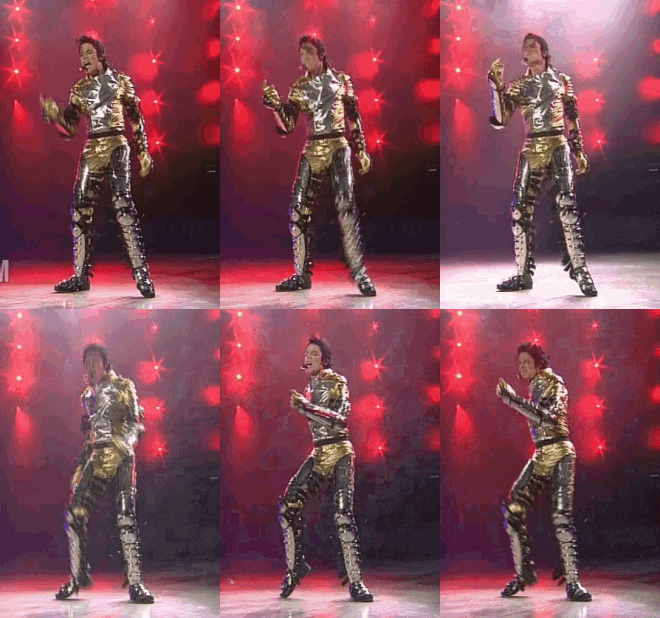
Mj History Tour GIFs | Tenor

When Michael Jackson stepped onto the stage during the opening of his HIStory World Tour in 1997, he did not simply make an entrance, he created a moment that felt larger than music itself, a moment where time, spectacle, and identity fused into something unforgettable. At his concert in Copenhagen, Denmark, Michael Jackson emerged encased in a futuristic, robotic full-body suit complete with a helmet, standing still in gold-plated armor that reflected the lights of an entire stadium, transforming him into something beyond human, something symbolic.

The Damtoys Michael Jackson Statue showcases this luxurious armored version, drawing direct inspiration from that iconic opening look, and capturing the sheer ambition and theatrical brilliance that defined this era of his career. Every detail of the statue echoes the original costume, from the sleek, mechanical structure of the suit to the commanding presence of the helmet, creating a visual that feels both futuristic and timeless at the same time.

Michael Jackson History Tour Gif

During the 1997 HIStory World Tour, Michael Jackson pushed boundaries not only through his music and performances but through the way he presented himself as an artist, and in Copenhagen, he chose to begin with stillness instead of motion, allowing anticipation to build as he stood like a statue before the performance erupted into life. This futuristic costume radiated his signature charisma, proving that even without movement, he could completely command the attention of thousands, and perhaps millions more watching from afar.

The gold-plated armor was not just a costume, it was a declaration of presence, a visual metaphor for an artist who had transcended eras and expectations, someone who did not follow trends but created them, someone who could move through time while remaining culturally immortal. Who needed sunglasses when the armor itself became the statement, reflecting not only light but the magnitude of his legacy.

This look cemented Michael Jackson’s identity as a timeless visual icon, someone capable of carrying concepts that other artists could only imagine, let alone execute with such precision and impact, and through this statue, that exact moment is preserved, allowing collectors and fans to hold onto a piece of that history, a piece of that presence, and a piece of that legend.


Dangerous Tour – The Birth of a Stage Conqueror

Jam Michael Jackson GIF - Jam Michael Jackson Dangerous Tour - Discover &  Share GIFs

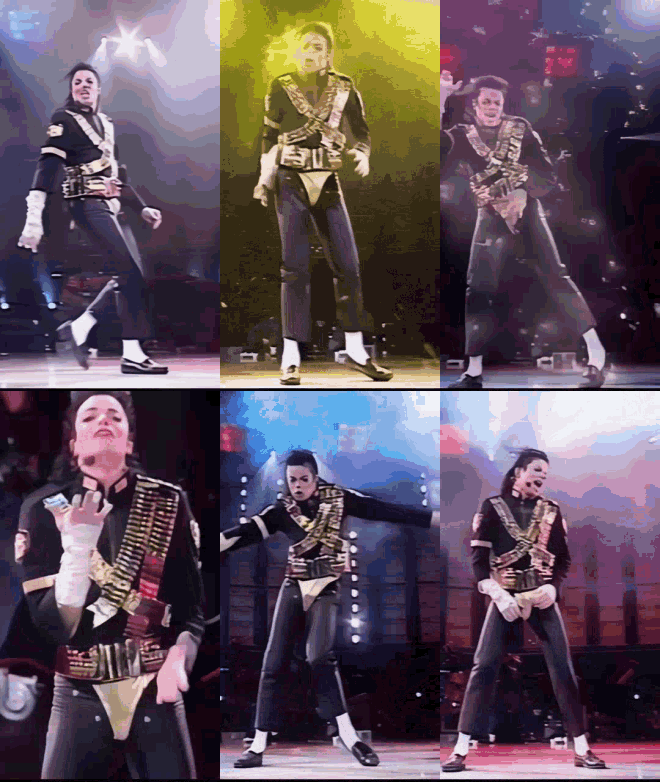
When Michael Jackson stepped onto the stage in Munich, Germany in 1992 to begin his second world concert tour, the Dangerous Tour, he did not simply start a show, he announced dominance in a way only he could, through silence, posture, and presence before a single beat even dropped. The Damtoys Michael Jackson Statue pays homage to this exact moment, capturing his signature pose from the opening of that legendary performance, a pose that has since become permanently etched into pop culture memory.

Michael Jackson’s second world concert tour began in Munich, and for that opening show, he appeared in a futuristic black, gold, and white ensemble, accented with the faintest touch of red on the arm, a subtle detail that added just enough contrast to break the precision of the palette without overpowering it. The costume itself leaned heavily into militaristic inspiration, featuring a high collar that framed his silhouette with authority, while layers of gold accessories resembling bullet casings were draped across his torso, creating a visual language of power, discipline, and theatrical intensity.

Every element of the outfit was intentional, from the belt and the gold shield that amplified the armored aesthetic, to the tight tailoring that sculpted his figure with sharp, precise lines across the jacket and trousers, making every movement look calculated, controlled, and almost surgical in its execution. This was not just fashion, this was performance architecture, designed to command attention from the very first second.

And then there was the stance.

Dangerous, indeed.

The gold crotch plate, bold and unapologetic, paired with his powerful, grounded posture, radiated ultimate confidence as Michael Jackson stood motionless before the music began, allowing anticipation to build into something almost unbearable. This moment became one of the most iconic stage openings in live performance history, with MJ holding the pose for minutes as the crowd erupted, proving that even stillness could be electrifying when owned with that level of charisma.

Beyond the visual spectacle, the Dangerous Tour itself went on to become one of the highest-grossing tours of its time, reaching millions of fans worldwide and further solidifying Michael Jackson’s global influence not just as a musician, but as a master of live performance and visual storytelling. His rotation of outfits throughout the tour became legendary in its own right, but it is these opening looks, the ones he steps onstage in, that remain permanently seared into our minds, because they are not just costumes, they are introductions to moments that define history.

The Damtoys statue preserves that exact energy, that exact confidence, and that exact second where anticipation meets impact, allowing fans and collectors to hold onto a version of Michael Jackson not just as a performer, but as a force who could command an entire world’s attention without even moving a muscle.


“Smooth Criminal” – The Lean That Defied Reality

Do you like the Smooth Criminal short film and why? : r/MichaelJackson

When “Smooth Criminal” premiered internationally on MTV, Michael Jackson delivered far more than a music video, as he created a cinematic, choreographed experience that fused dance, storytelling, and illusion into something that still feels timeless. Dressed in a sharply tailored white suit paired with a fedora, he paid tribute to Fred Astaire, drawing inspiration from Astaire’s look in The Band Wagon, while reinterpreting it through a modern, stylized lens that carried his unmistakable identity.

This choice of styling was deeply symbolic for that phase of his career, as The Band Wagon tells the story of an aging musical star navigating relevance, expectation, and the pressure to continually prove himself, and in “Smooth Criminal,” Michael Jackson not only embraced that narrative but elevated it, demonstrating with absolute clarity that he remained at the very peak of his creative power. The white suit, almost luminescent under the lighting, amplified every precise movement of his body, while the blue shirt beneath added contrast and depth, and the fedora completed a silhouette that balanced mystery, control, and effortless charisma.

At the heart of this performance lies the moment that would become one of the most iconic visual illusions in entertainment history, the anti-gravity lean, a movement so smooth and so seemingly impossible that it challenged the very perception of physics, achieved through a combination of innovative stage design, specially engineered footwear, and extraordinary physical discipline, ultimately becoming a defining symbol of Michael Jackson’s genius and his relentless pursuit of pushing artistic boundaries.

Beyond the spectacle, “Smooth Criminal” carried a sharper, more aggressive energy within his signature R&B groove, blending elegance with tension and precision with attitude, resulting in a performance that felt both controlled and rebellious at the same time. Every movement, every pause, and every visual element worked in harmony to create an experience that was not just watched but felt, reinforcing Michael Jackson’s ability to transform music into something deeply immersive.

In that white suit, under that perfectly tilted fedora, and in that impossible lean, Michael Jackson did not simply perform, he redefined what performance could be, proving once again that he was not following time or trends but shaping them, and reminding the world with quiet confidence that his artistry existed on a level that few could ever reach and none could ever replicate.


Bad – The Rebel With a Purpose

a man in a black jacket and black pants is standing on a desert road

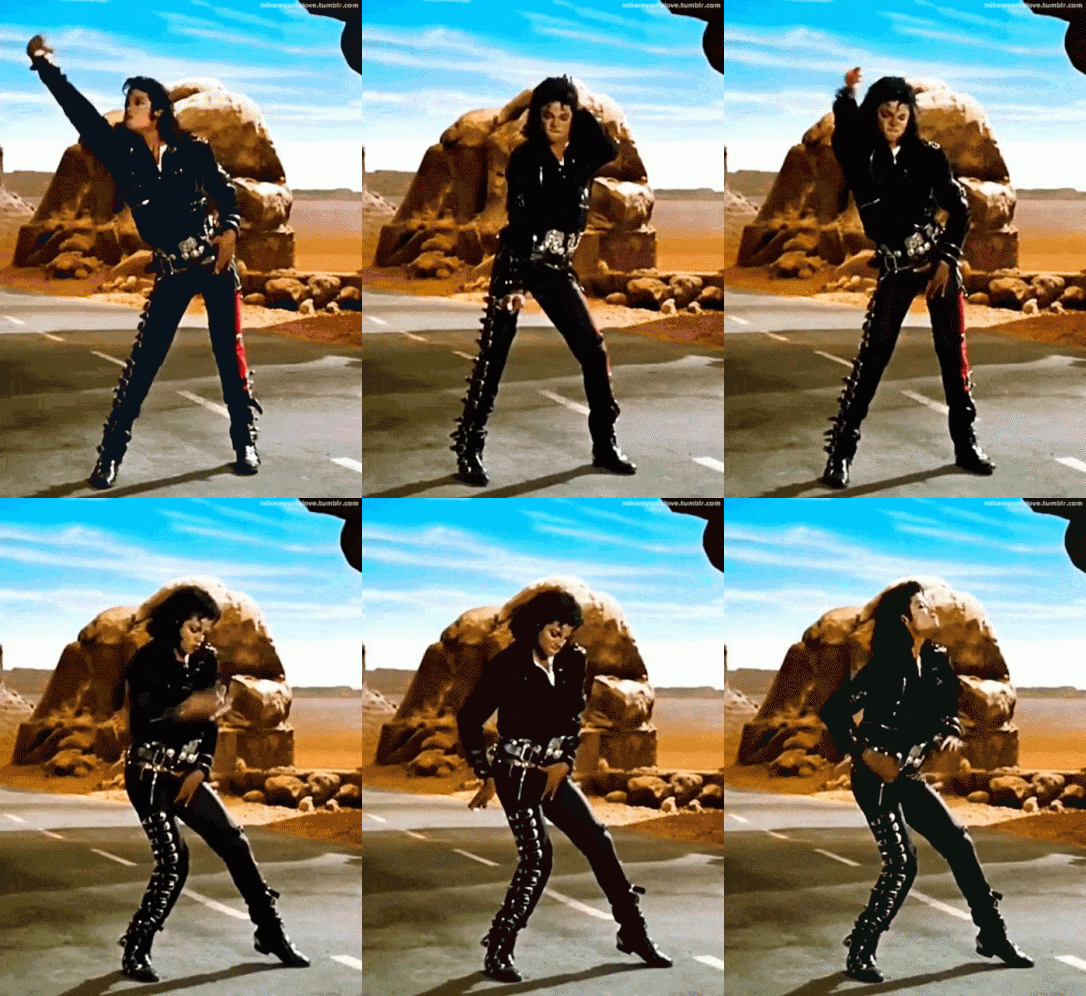
When Michael Jackson stepped into the Bad era, he did not simply change his look, he redefined his identity, embracing an aesthetic that felt sharper, edgier, and unapologetically bold while still carrying the emotional depth that had always defined him. Black leather, excessive buckles, and silver spikes became the visual language of this transformation, forming the foundation of a “bad boy” persona that, in anyone else’s hands, might have felt intimidating or abrasive, but in Michael Jackson’s hands was curated with unmistakable finesse and sophistication.

Following the massive global success of Thriller and a period of reinvention that saw him push his artistry even further, the Bad album, released in 1987, arrived with a promise of something more aggressive in both sound and attitude, and this was immediately reflected in the costume he wore on the album cover and in the lead single. The outfit itself, designed in collaboration with fashion designer Michael Bush, was layered with intricate details, including straps, belts, metallic hardware, and textured leather, creating a look that felt almost armored yet fluid enough to move with his signature precision.

The visual inspiration behind this style drew heavily from street culture, rock influences, and even cinematic rebellion, most notably echoing elements from biker aesthetics and urban toughness, while still maintaining a polished, almost regal execution that kept it distinctly Michael Jackson. The result was a look that felt dangerous on the surface but was deeply intentional beneath it, balancing raw energy with calculated elegance.

And yet, what makes this era truly fascinating is the contrast between appearance and message.

Despite the aggressive visual tone of Bad, the album itself carried themes that were far from hostile, as it championed world peace, love, and human connection while directly addressing issues such as racial profiling, social injustice, and media bias in songs like “Man in the Mirror” and “Leave Me Alone.” This duality became one of the defining aspects of Michael Jackson’s artistry, where the exterior challenged expectations while the interior delivered compassion and reflection.

The man presented on the cover, dressed in black leather and adorned with spikes and buckles, might appear confrontational at first glance, but beneath that image was someone advocating for justice, empathy, and unity, someone using his platform not just to entertain but to provoke thought and inspire change. In many ways, this outfit became more than just a fashion statement, it became a visual metaphor for who Michael Jackson was at that point in his life, a blend of rebellion and responsibility, strength and sensitivity.

This look, immortalized through the album, the music videos, and the Bad World Tour, remains one of the most iconic in pop culture history, not just because of how it looked, but because of what it represented, proving once again that Michael Jackson did not just wear fashion, he infused it with meaning, turning style into storytelling and image into ideology.


“Thriller” – When Style Became Cinematic History

a group of zombies are dancing on the street in the dark

When Michael Jackson released “Thriller,” he did not simply drop a music video, he redefined what a music video could be, turning it into a full-scale cinematic experience that blurred the lines between film, fashion, and music in a way the world had never seen before. The story begins with Michael Jackson and his onscreen girlfriend arguing outside a movie theater, a seemingly simple setup that quickly unfolds into something far more imaginative, eerie, and unforgettable.

And then there is the color.

Red.

The color red should thank Michael Jackson for what he did with it, because in “Thriller,” he transformed it into a cultural symbol. Dressed in a candy-apple-red leather jacket set against a deep black palette, MJ created a look that was bold, striking, and instantly iconic. The silhouette of the jacket, designed with raised, structured shoulders forming an inverted triangle, emphasized his lithe, agile frame while allowing complete freedom of movement, ensuring that every spin, snap, and step of choreography remained sharp and fluid.

a man wearing a red leather jacket is smiling

That jacket, now famously known as the “Thriller” jacket, did not stay confined to the screen, as it quickly became one of the biggest fashion trends of the 1980s, influencing streetwear, pop culture, and costume design across the globe. Even today, it continues to be emulated everywhere, from modern media reinterpretations to Halloween costumes, proving that its impact has never faded.

But “Thriller” was never just about the outfit.

It was about transformation.

Widely regarded as one of the most influential music videos of all time, “Thriller” pushed the boundaries of special effects and visual storytelling, introducing audiences to a version of Michael Jackson that felt both playful and terrifying. In the narrative, his teenage doppelgänger appears in a vibrant red and yellow letterman jacket, capturing a youthful, nostalgic charm before the tone shifts dramatically.

Then comes the metamorphosis.

Michael Jackson transforms into a hairy, hulking werewolf with glowing eyes, a sequence that showcased groundbreaking practical effects led by legendary makeup artist Rick Baker, whose work on the video earned critical acclaim and helped elevate the standards of visual effects in music videos. As the story progresses, the now-iconic zombie sequence unfolds, with MJ leading a group of the undead in one of the most recognizable dance routines in history, a moment that forever changed choreography in visual media.

Masterful and mesmerizing, the creatures and zombies of “Thriller” were not just additions to the video, they became defining elements of the entertainment industry, inspiring generations of filmmakers, choreographers, and artists. The video itself, released in 1983 and directed by John Landis, is often credited with transforming MTV from a music channel into a platform for cinematic storytelling, while also contributing to the Thriller album becoming the best-selling album of all time.

In “Thriller,” Michael Jackson did not just wear a jacket, perform a dance, or act in a story, he built an entire world, one where fashion, horror, music, and movement coexisted seamlessly, creating a legacy that continues to live on decades later.

Because in that red jacket, under the moonlight, surrounded by the undead... He immortalized himself.


Ghosts – The Haunting Reflection of a Legend

a man in a white shirt is dancing in front of a group of werewolves

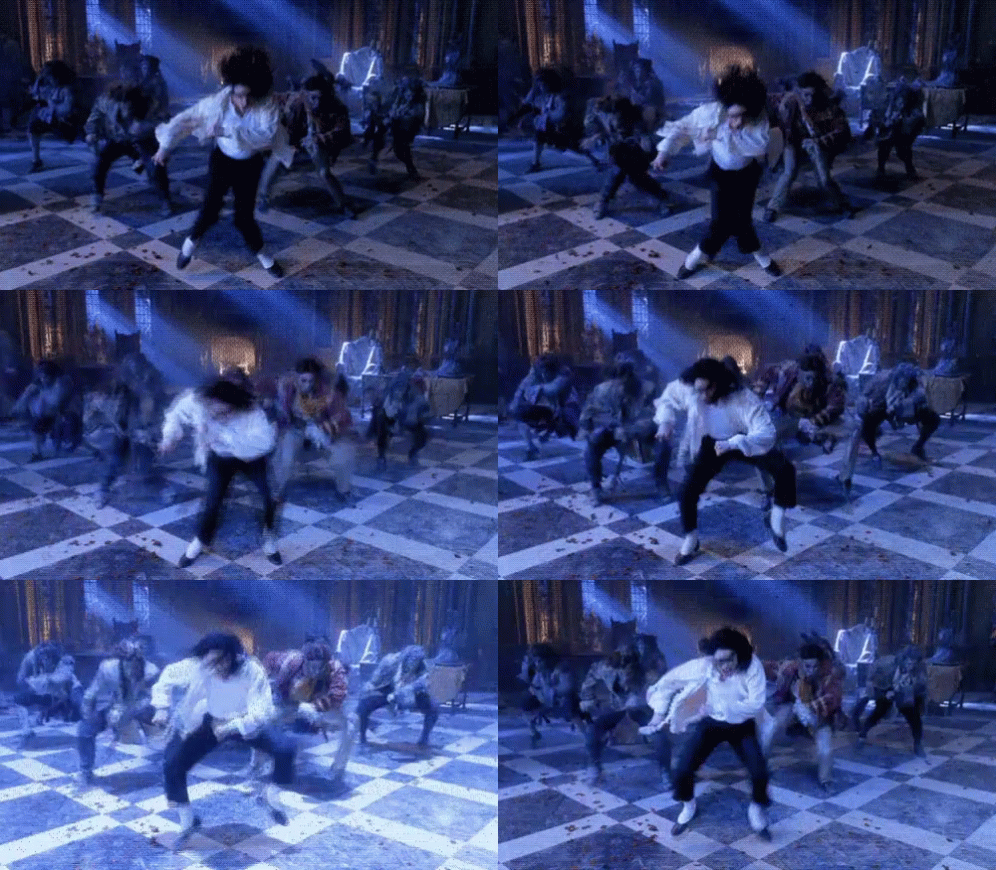
When Michael Jackson returned to the horror genre in 1996 with the short film Ghosts, he did not simply revisit a familiar space, he expanded it into something more introspective, more theatrical, and deeply personal, blending fear with emotion in a way that only he could. Behind the scenes, Michael Jackson stood alongside Stan Winston, the legendary creator known for redefining practical effects in cinema, and together they crafted a visual experience that felt both haunting and artistically rich.

Directed by Stan Winston and written by Stephen King and Mick Garris, Ghosts became more than just a short film, as it unfolded as an allegory for Michael Jackson’s relationship with fame, public perception, and his evolving place within pop culture. At its core, the story explores a character who is misunderstood and ultimately banished as a “freak,” a narrative that echoes the real-life scrutiny and judgment Michael Jackson faced during that period of his life.

In terms of costume, Michael Jackson adopts the classic visual language of a ghost story, wearing flowing white shirts paired with black pants, a combination that might appear simple at first glance but carries a deeper, more deliberate aesthetic. The muted color palette creates a stark contrast against the supernatural elements of the film, while the soft ruffles and fluid fabrics introduce a romantic, almost poetic quality that softens the horror without diminishing its impact.

Throughout the film, Michael Jackson undergoes a series of striking transformations, from skeletal distortions to grotesque apparitions, all achieved through groundbreaking practical effects that pushed the boundaries of what was possible at the time. The choreography remains as sharp and expressive as ever, seamlessly integrated into the horror narrative, proving once again that even within darkness, movement could still tell a powerful story.

Ghosts ultimately stands as one of the longest music videos ever produced and is often regarded as a spiritual successor to “Thriller,” but with a more mature and introspective tone that reflects where Michael Jackson was both artistically and personally. It is not just a return to horror, it is a conversation with it, using fear as a lens to explore identity, isolation, and resilience.


“Beat It” – Style, Strength, and Street Harmony

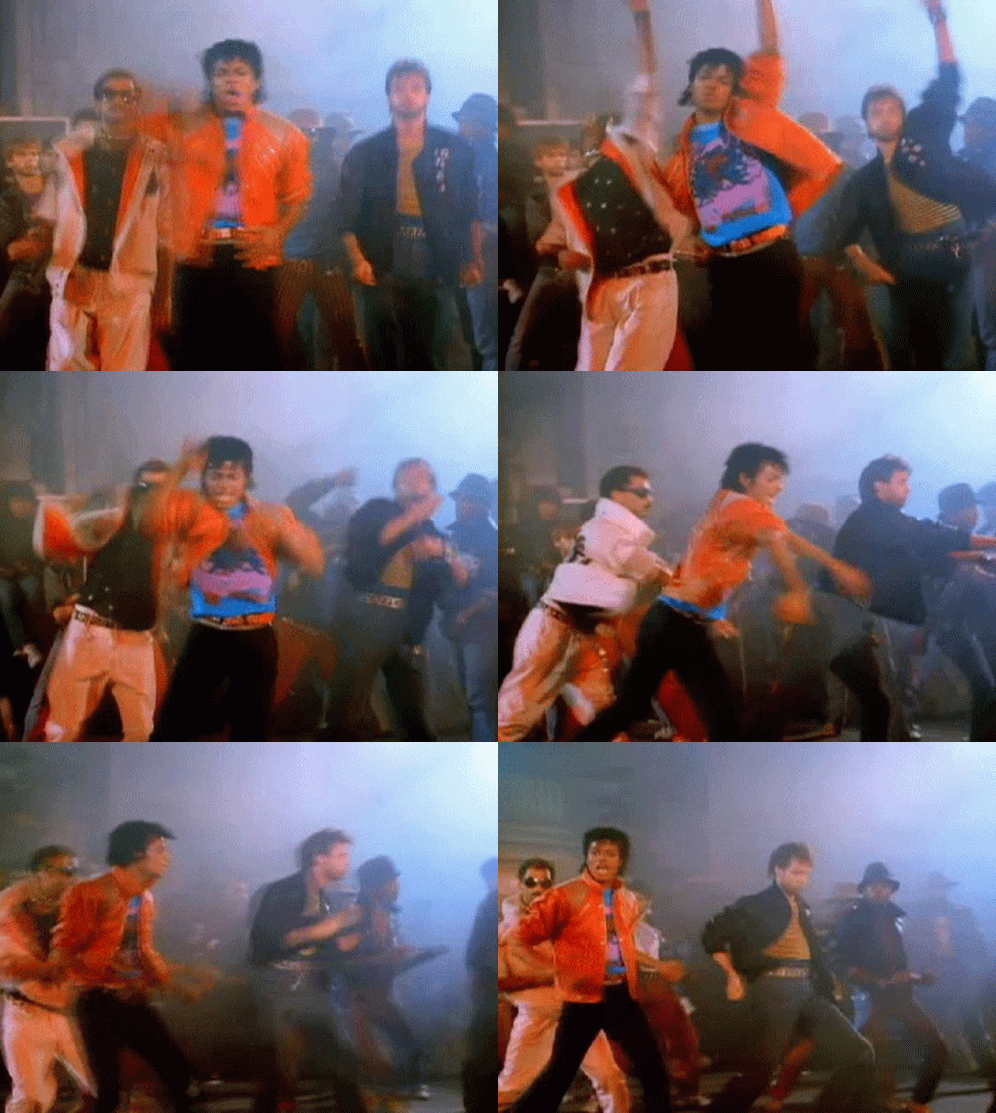
a group of men are standing next to each other in a dark room . one of the men is wearing an orange jacket .

When Michael Jackson released “Beat It” in the early 1980s, he did not just create a hit song, he delivered a powerful visual and cultural statement that fused music, storytelling, and style into something that resonated far beyond the screen. In the music video, Michael Jackson is seen singing passionately while walking through an abandoned diner, a gritty, dimly lit setting that instantly establishes tension and conflict, while also serving as the perfect contrast to his striking presence.

And once again, the red jacket takes center stage.

Let’s hear it for another red jacket, because in “Beat It,” Michael Jackson proves that color is not just fashion, it is focus. Dressed in a vibrantly colored red jacket layered over a multicolored T-shirt featuring prominent shades of pink, blue, and green, MJ creates a look that cuts through the darkness of the environment, ensuring that every movement, every gesture, and every beat remains visually commanding. Against the worn-down, dingy backdrop of the diner and the surrounding urban setting, his outfit does more than stand out, it defines the frame.

This styling choice becomes even more meaningful when placed alongside the message of the song, whose lyrics address peer pressure and violence, echoing lines like “Don’t want to see your face / You better disappear,” a reflection of the harsh realities many young people face. Rather than glorifying conflict, “Beat It” actively challenges it, and Michael Jackson positions himself not as a participant in violence, but as a force that rises above it.

The video famously features real dancers alongside performers styled as rival gangs, building toward a confrontation that never quite explodes into violence, as MJ intervenes not with aggression, but with rhythm, transforming tension into choreography. This approach was groundbreaking at the time, as it replaced the expectation of a fight with a dance sequence, subtly reinforcing the idea that expression can replace destruction.

Adding another layer of cultural impact, the track itself features a legendary guitar solo by Eddie Van Halen, blending rock and pop in a way that helped “Beat It” cross genre boundaries and reach an even wider audience, further solidifying Michael Jackson’s status as a global phenomenon.

Through the power of music, dance, and impeccable style, Michael Jackson’s character ultimately unites rival gangs, turning division into unity and conflict into performance, and in doing so, he cements not only his role within the narrative of the video but also his place in the real world as an international icon and pop superstar.

Michael Jackson was never just an artist you listened to—he was an experience you felt, a presence that lingered long after the music stopped and the screen faded to black. From the rebellious edge of Bad to the cinematic brilliance of Thriller, from the street unity of “Beat It” to the haunting introspection of Ghosts, and the commanding spectacle of his world tours, every look he wore became a chapter in a story that continues to inspire generations.

What made Michael Jackson truly unforgettable was not just how he looked, but what those looks stood for. Each costume carried intention, each silhouette told a story, and each performance blurred the line between reality and mythology. He didn’t follow trends—he created visual identities that would go on to define entire eras.

Even today, his influence lives on in fashion, music videos, live performances, and pop culture at large. His style remains timeless because it was never about clothes—it was about emotion, storytelling, and presence.

And for fans, collectors, and lovers of pop culture, these moments are no longer just memories.