


Mario & Peach Full Guide: History, Powers & Evolution
Princess Peach Toadstool (ピーチ姫 / Pīchi-hime)—commonly referred to simply as Princess Peach—is the sovereign ruler of the Mushroom Kingdom and one of the central figures of Nintendo’s Super Mario franchise. She made her first appearance in the 1985 Super Mario Bros. for the Nintendo Entertainment System and has since remained the franchise’s primary female lead and a key supporting character, often positioned as its tritagonist.
Peach is widely recognized as Mario’s primary love interest, with their relationship forming one of the emotional constants of the series. She is also frequently associated with Princess Daisy, the ruler of Sarasaland, who is commonly portrayed as her close friend across spin-off titles and shared appearances.
Role in the Mario Franchise
From her debut onward, Princess Peach has typically fulfilled the narrative role of the damsel in distress, most often being kidnapped by Bowser, the primary antagonist of the series. This recurring plot device serves as the central motivation for Mario’s adventures across the mainline games.
Bowser’s intentions are frequently tied to his desire to make Peach his queen, reinforcing her importance not only as a ruler but also as a symbol of power within the Mushroom Kingdom.
Despite this traditional role, Peach’s characterization has evolved over time. In several titles, she demonstrates independence and capability—either assisting Mario directly or taking on active roles herself. Notably, in Super Paper Mario, she is briefly forced into marriage with Bowser, marking a rare variation of her typical narrative arc.
Character Traits and Evolution
Princess Peach is consistently portrayed as kind, graceful, and benevolent, embodying the qualities of an ideal ruler. She is compassionate toward her subjects and allies, often placing their well-being above her own.
While early portrayals emphasized her vulnerability, later interpretations highlight her inner strength, resilience, and leadership. She has been shown to resist manipulation, assist in battles, and even take on protagonist roles in select titles, reflecting Nintendo’s gradual shift toward a more active and empowered depiction of the character.
Character Summary

Since her debut in Super Mario Bros. (1985), Princess Peach Toadstool has remained one of the most consistently featured characters in the Mario franchise. She effectively replaced Pauline as the primary “damsel-in-distress” figure in the Super Mario series and has since become the central female lead of the franchise.
Peach is widely associated with the color pink, which is reflected in nearly all of her outfits and visual identity. Her name is derived from the real-world fruit “peach,” and the in-universe item Peachy Peach (featured in RPG titles) further reinforces this connection.
Narratively, Peach is most often portrayed as Mario’s primary love interest, though there are occasional moments across games and spin-offs where she displays warmth or affection toward Luigi as well. She is also depicted as the best friend of Princess Daisy, the ruler of Sarasaland.
While Peach is frequently positioned as a character in need of rescue—typically due to repeated kidnappings by Bowser—her role is not limited to passivity. She regularly appears as a supporting character, and in many titles, she is fully playable, particularly in spin-offs such as sports and party games (e.g., Mario Hoops 3-on-3).
Her most significant standalone role as a protagonist occurs in Super Princess Peach (released worldwide on February 27, 2006, and earlier in Japan in 2005), where she rescues Mario, Luigi, and the Mushroom Kingdom herself. Additionally, Peach demonstrates combat capability in titles such as:
-
Super Mario Bros. 2
-
Super Mario RPG: Legend of the Seven Stars
-
Super Paper Mario
-
Super Smash Bros. series
Peach resides in her castle within the Mushroom Kingdom, attended by numerous Toads. The kingdom is frequently attacked by the Koopa Troop, led by Bowser, whose recurring objective often involves kidnapping Peach—frequently with the intent of marrying her (notably in Super Paper Mario and Super Mario Odyssey).
She maintains close relationships with key characters including Luigi, Yoshi, Toad, and Toadette, and shares a strong friendship and friendly rivalry with Princess Daisy.
Physical Description

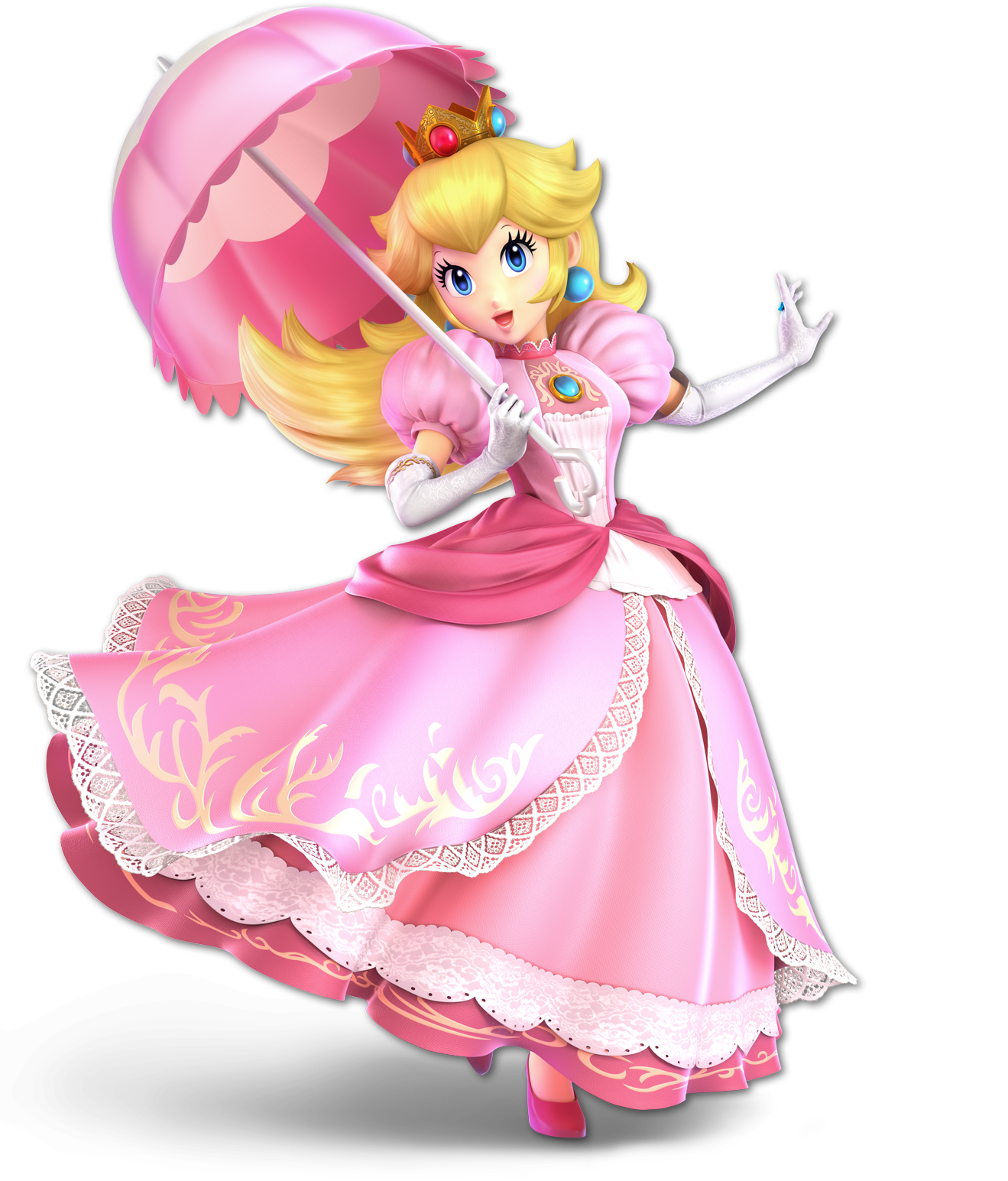
Princess Peach is depicted as a human character with blue eyes and long blonde hair that typically reaches her waist. In early NES-era appearances, her hair appeared brown due to graphical limitations, which influenced later portrayals such as the DiC cartoons (where she was depicted as a redhead). Her hairstyle includes sideburns and a distinctive heart-shaped fringe. In more active scenarios, she often ties her hair into a ponytail.
She wears sapphire earrings and makeup including mascara, eyeliner, and rose-colored lipstick. In select appearances (Super Mario Sunshine, Mario Strikers: Battle League), she appears without gloves and is shown wearing matching nail polish.
In terms of height comparison, Peach is shorter than characters such as Pauline, Waluigi, and Rosalina (though Pauline’s height may be influenced by high heels).
Primary Outfit

Peach’s iconic attire consists of:
-
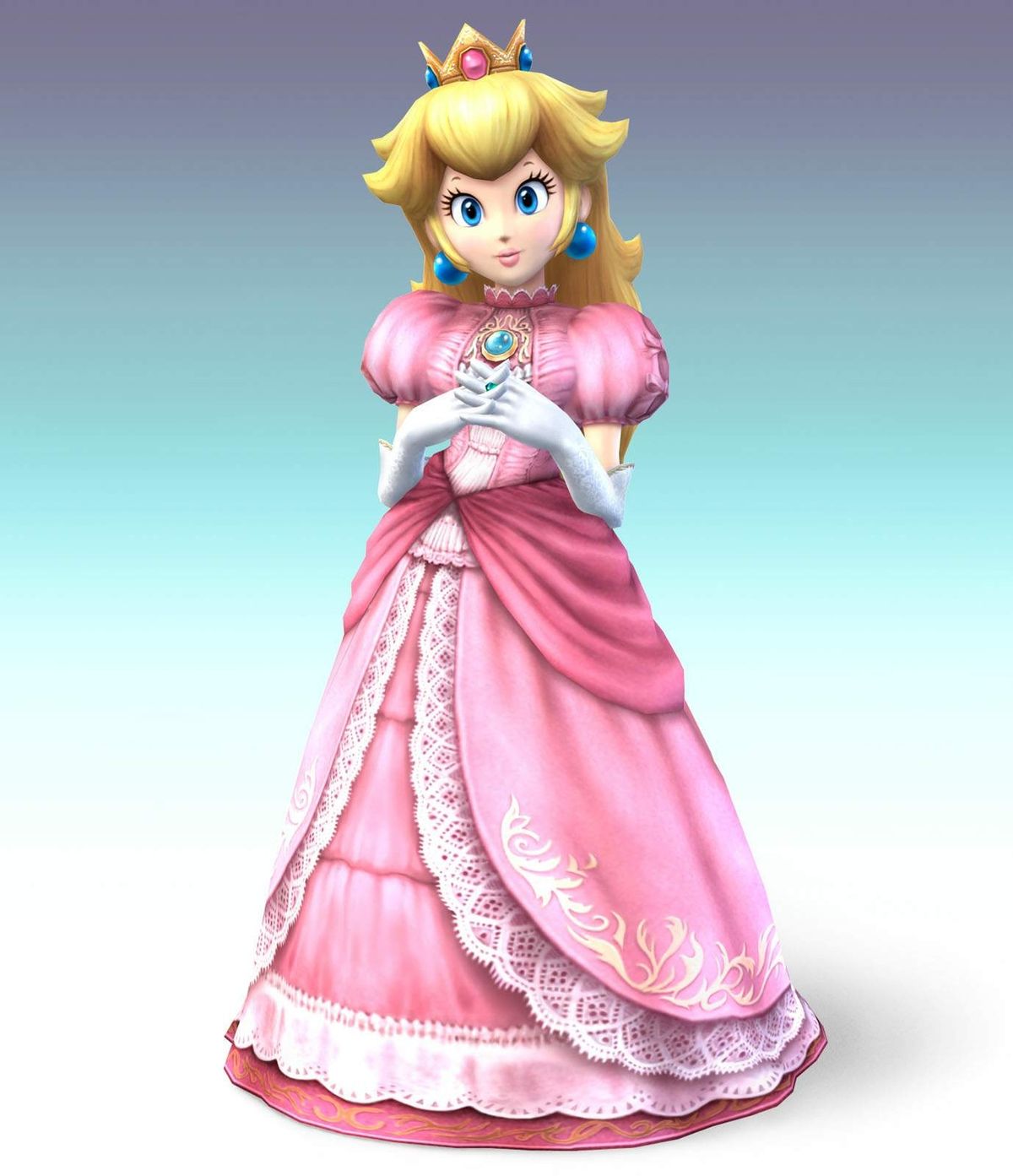
A floor-length pink gown with puffy sleeves
-
Dark pink accents (collar, hem, panniers)
-
A sapphire brooch set in gold
-
A gold crown featuring four jewels (two rubies and two sapphires), which also serves as her emblem
-
White evening gloves
-
Red or dark pink high-heeled shoes
In earlier appearances, her dress design differed slightly in color and structure.
Alternate Outfits
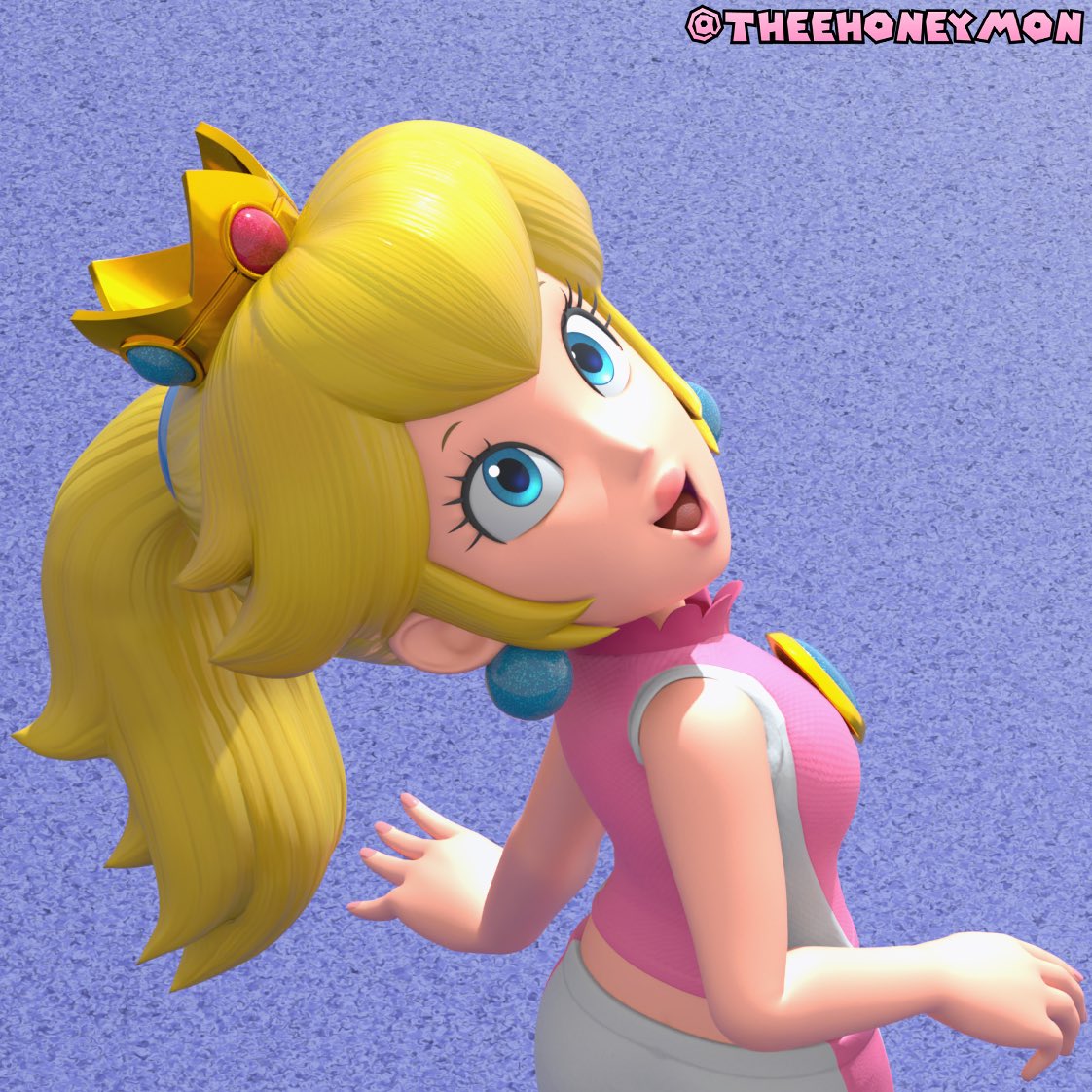
Peach adapts her attire depending on context, including:
-
Sportswear: Pink minidress or tank top and shorts (paired with tennis shoes and accessories)
-
Medical attire: Pink nurse outfit (Dr. Mario)
-
Racing gear: Pink-and-white biker suit (Mario Kart Wii, Mario Kart 8)
-
Tropical variant: Sleeveless gown (Super Mario Sunshine)
-
Seasonal outfits:
-
Summer: Pink swimsuit/leotard
-
Winter: Pink minidress with leggings and boots
-
-
Athletic gear: Midriff-baring crop top and shorts (Mario Strikers series), sometimes with armor
Mario Kart Variations
-
Early titles: Two-tone pink dress and straight hair
-
Later titles: Standard gown with ponytail
-
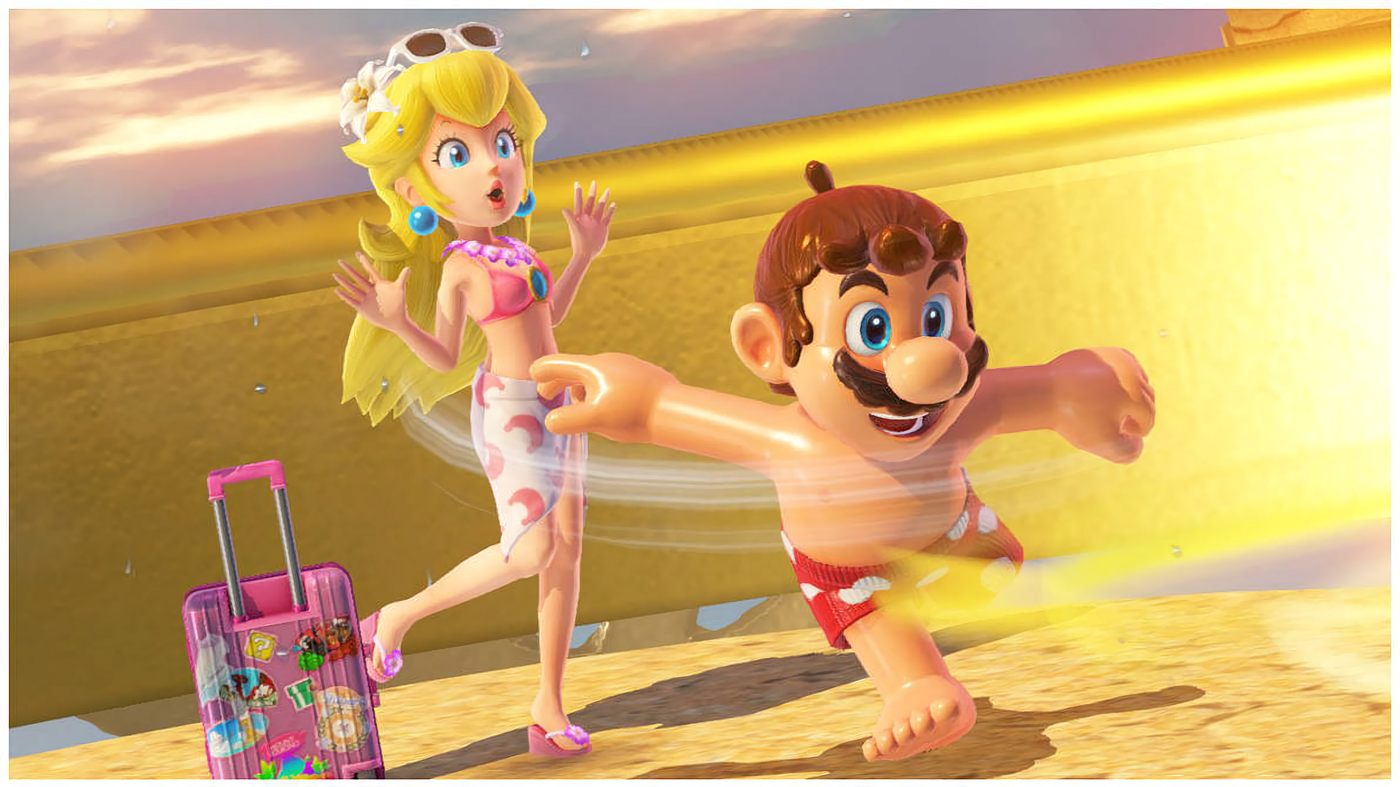
Mario Kart Tour: Multiple themed outfits including kimono, summer, winter, and wedding attire (Super Mario Odyssey)
-
Mario Kart Wii: Alternate biker suit with gloves, boots, scarf, and heart motif
Personality Traits
Princess Peach is consistently portrayed as kind, optimistic, friendly, and compassionate, embodying the qualities of a benevolent ruler. She is highly motivated to help others—even when assistance is refused—and demonstrates a strong sense of responsibility toward her kingdom.
Despite her frequent role as a captive, Peach is not naïve. She has repeatedly shown:
-
Situational awareness (e.g., identifying Shadow Mario in Super Mario Sunshine)
-
Strategic thinking (e.g., deducing threats in Mario & Luigi: Bowser’s Inside Story)
-
Leadership (e.g., maintaining order during crises, encouraging cooperation among allies)
She often acts as a mediator, such as diffusing conflicts in Super Smash Bros. Brawl. In other portrayals (e.g., animated series), she is depicted as nurturing and maternal.
Peach also displays a range of emotional responses:
-
She can be sensitive and easily moved to tears
-
She has occasional temperamental moments (notably in Mario Strikers and minigames)
-
She maintains composure and regains control quickly
Her interests include sports, ballroom dancing, gaming, gardening, and exploration.
Importantly, Peach has demonstrated bravery and independence, particularly in:
-
Super Princess Peach (rescues Mario and Luigi)
-
Princess Peach: Showtime! (teams with Stella to save Sparkle Theater)
-
Additional titles such as Super Mario Bros. 2, Super Mario RPG, and Mario + Rabbids series
Family and Relationships
-
Father: Mushroom King (mentioned but not seen in mainline games)
-
Grandmothers: One Toad, one human
-
Close relationships:
-
Mario (primary love interest)
-
Luigi (close ally and friend)
-
Princess Daisy (close friend and possible cousin—unconfirmed canon)
-
Yoshi, Toad, Toadette (trusted companions)
-
Bowser is repeatedly shown to have romantic intentions toward Peach, often attempting to marry her, though she consistently rejects him.
There were early conceptual ideas suggesting Rosalina may be related to Peach, but this has not been confirmed canonically.
Speech and Voice Acting
Peach’s dialogue evolved alongside hardware capabilities:
-
Early games: Text-based dialogue
-
Super Mario 64: First voiced by Leslie Swan
-
Later voice actors:
-
Jen Taylor
-
Nicole Mills (temporary)
-
Samantha Kelly (current voice actress)
-
Her voice is typically portrayed as soft, high-pitched, and refined.
Musical Themes
Peach’s musical identity often draws from the Super Mario Bros. theme, frequently arranged in softer or orchestral styles. Rescue sequences are often accompanied by ballet-like musical cues, reinforcing her elegance.
Powers, Abilities, and Equipment
Abilities
-
Ability to reverse Bowser’s spells (established early in the series)
-
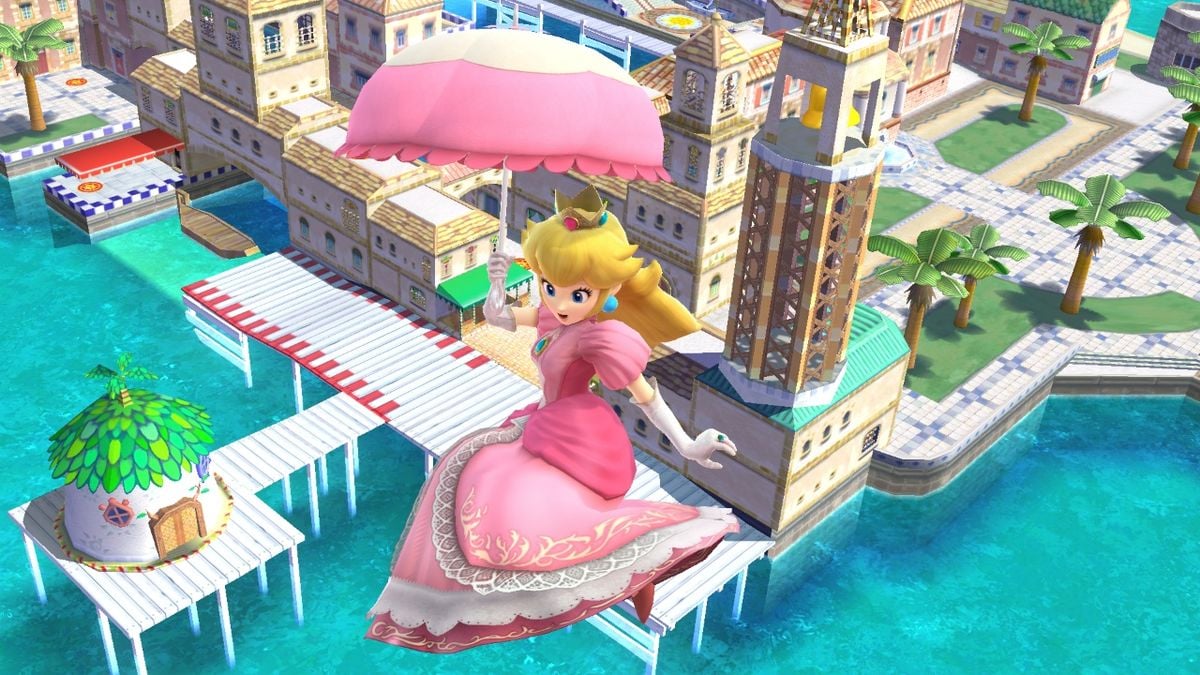
Hovering/gliding ability (notably in Super Mario Bros. 2)
-
Standard movement abilities: running, jumping, ground-pounding
-
Use of heart-based and peach-themed powers
-
Transformation via power-ups
-
Athletic capability comparable to other main characters
Tools and Weapons
-
Parasol: Used for gliding and combat
-
Perry (in Super Princess Peach): Sentient parasol with additional abilities
-
Sports equipment:
-
Tennis racket
-
Baseball bat
-
Transportation
-
Toad Express (travel between regions such as Delfino Island and Beanbean Kingdom)
-
Hot air balloon (travel to Dinosaur Land)
Early Life
Limited canonical information exists regarding Princess Peach Toadstool’s early life. It is generally assumed that she was born and raised in the Mushroom Kingdom to her parents, the Mushroom King and Mushroom Queen, though neither parent has been directly depicted in mainline games.
Mushroom Kingdom Crisis (Super Mario Bros.)

Princess Peach first appears in Super Mario Bros. under the name Princess Toadstool. During this event, Bowser cast dark magic that transformed the Toads into bricks and other objects. Peach was the only individual capable of reversing this spell.
To prevent this, Bowser kidnapped her. Mario (or Luigi) undertook a rescue mission, liberating Toads from seven castles—each incorrectly reported as Peach’s location. Ultimately, Mario defeated Bowser in the eighth castle and rescued Peach.
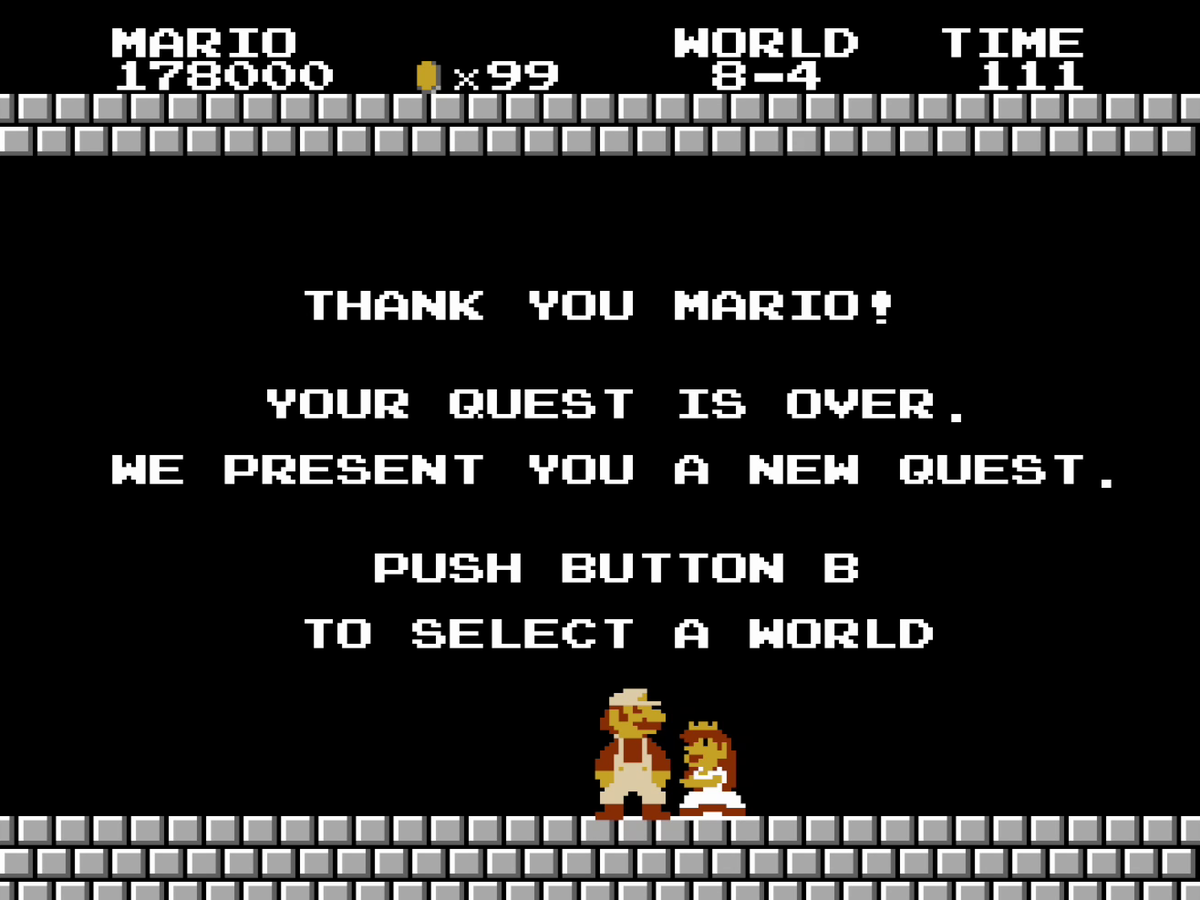
Upon rescue, Peach thanked Mario and assigned him a new, more challenging quest. The accompanying music in this sequence is noted to resemble “Die Wacht Am Rhein.”
Subcon Incident (Super Mario Bros. 2)
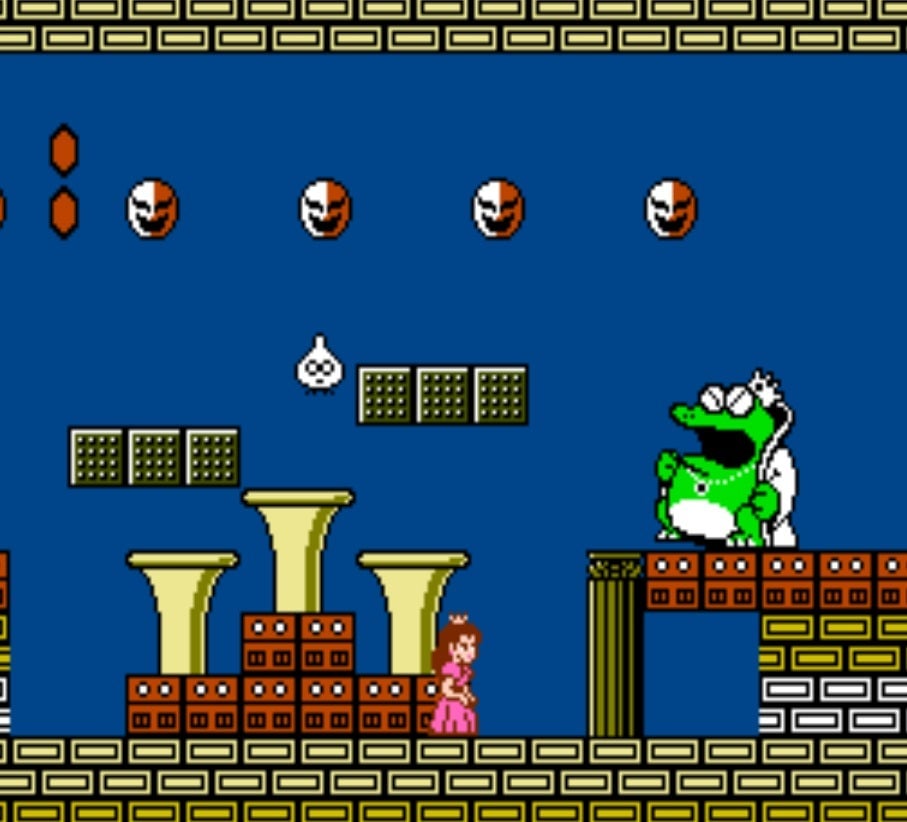
After Mario described a recurring dream about a place called Subcon, Peach joined Mario, Luigi, and Toad on a picnic where they discovered a cave leading to this world.
Within Subcon, Peach recalled that Wart—the ruler—was vulnerable to vegetables. Acting on this knowledge, she directly participated in defeating Wart and freeing the inhabitants (the Subcons). The group celebrated their victory following the removal of Wart’s curse.
Koopalings’ Invasion (Super Mario Bros. 3)
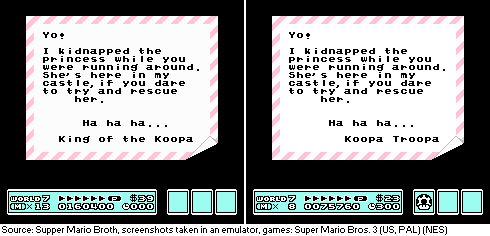
Bowser deployed the Koopalings to conquer multiple regions, transforming the kings of seven lands into animals using stolen magic wands. Peach and Toad remained behind while Mario and Luigi set out to restore order.
Throughout the journey, Peach provided assistance via letters and items (including jewels). After the Koopalings were defeated, Bowser kidnapped Peach and took her to the Dark Land. Mario defeated Bowser and rescued her. Peach responded with a lighthearted remark before expressing gratitude.
Timeline of Game Appearances (1985–Present)
Princess Peach’s appearances reflect both the evolution of the Super Mario franchise and her gradual transition from a traditional damsel-in-distress to a fully playable and, at times, leading character.
1980s — Introduction and Foundational Role
-
1985 – Super Mario Bros. (NES): First appearance as Princess Toadstool; non-playable; primary damsel-in-distress
-
1986 – Super Mario Bros. Special / The Lost Levels: Non-playable; recurring damsel role
-
1988 – Super Mario Bros. 2: First playable appearance
-
1988 – Super Mario Bros. 3: Returns to non-playable role; provides assistance via letters
During this era, Peach’s role was primarily narrative-driven, serving as the central objective of Mario’s quest.
1990s — Transition to Playable Character

-
1990 – Super Mario World: Non-playable; continues damsel role
-
1992 – Super Mario Kart: Playable character debut in racing genre
-
1993 – Super Mario All-Stars: Playable in Super Mario Bros. 2 remake
-
1994 – Mario’s Tennis (Virtual Boy): Playable
-
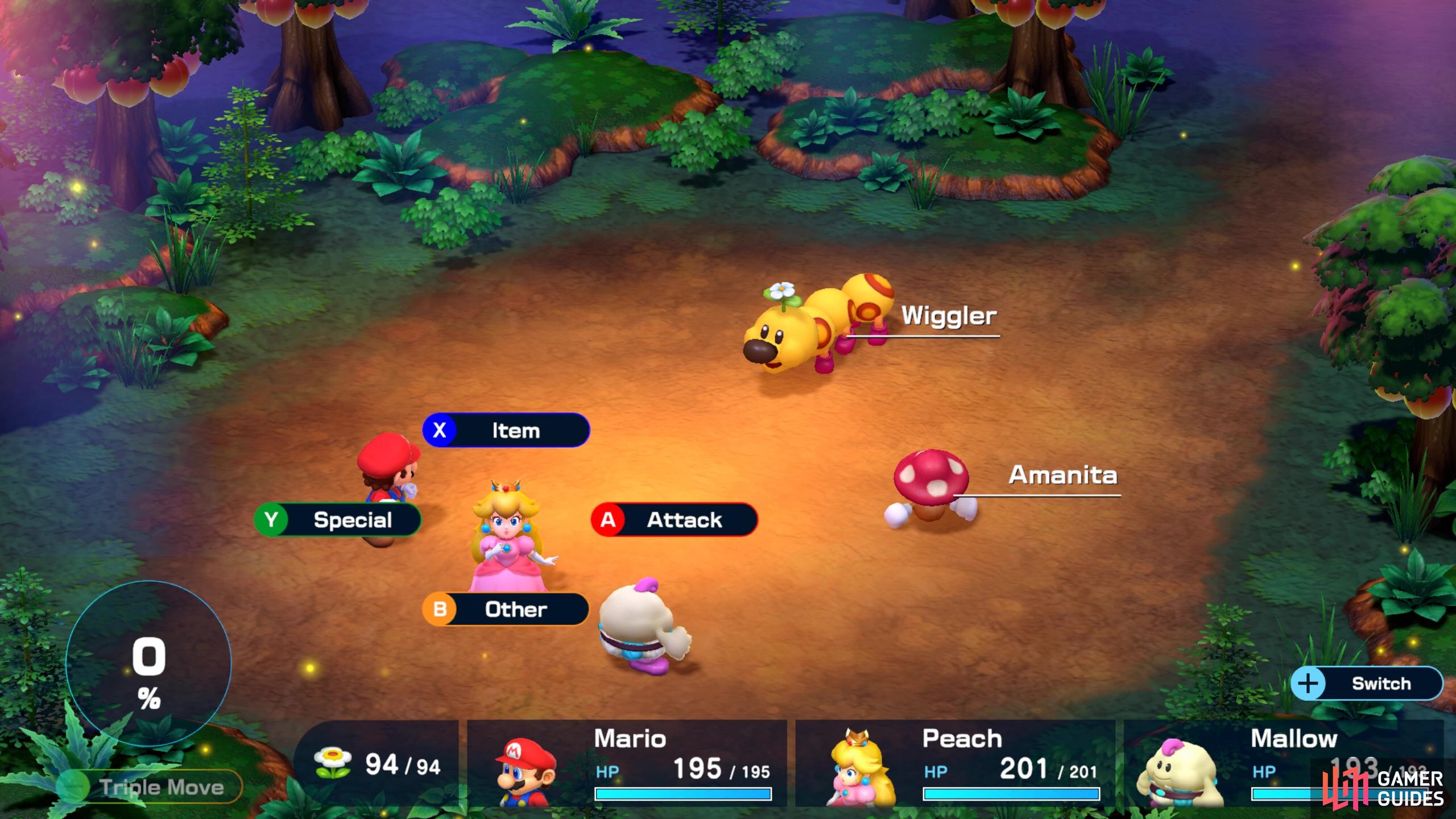
1996 – Super Mario RPG: Playable party member with combat abilities
-
1996 – Super Mario 64: Non-playable; central narrative figure
-
Late 1990s: Appears in Mario Party, Mario Golf, and Game & Watch Gallery
This decade marked Peach’s expansion into gameplay roles beyond her original narrative function.
2000s — Expanded Roles and Protagonist Status
4
-
2000 – Paper Mario: Playable; retains damsel role within story
-
2001 – Super Smash Bros. Melee: Fighting game debut
-
2002 – Super Mario Sunshine: Non-playable; damsel-in-distress
-
2003–2005: Regular playable presence in sports, party, and crossover titles
-
2005 – Super Princess Peach (DS): First mainline title as the protagonist
Additional appearances include guest roles in third-party titles (NBA Street V3, SSX on Tour) and continued prominence in Mario Kart, Mario Party, and sports franchises.
Late 2000s–2010s — Balanced Representation


4
-
2007 – Super Mario Galaxy: Non-playable; damsel role continues
-
2007–2010: Playable in Mario Party, Mario Kart, Mario & Sonic Olympic Games, and Super Smash Bros. Brawl
-
2011–2013:
-
Super Mario 3D Land: Non-playable
-
Super Mario 3D World: Fully playable character
-
-
2014–2015: Continues as playable in Mario Kart 8, Super Smash Bros., Mario Party, Mario Maker (via Mystery Mushroom)
-
2017 – Super Mario Odyssey: Non-playable; damsel-in-distress role continues
Peach’s role during this period alternates between traditional narrative placement and strong gameplay presence in spin-offs.
2020s — Modern Era and Increased Agency

-
2020 – Paper Mario: The Origami King: Non-playable
-
2021 – Super Mario 3D World + Bowser’s Fury: Playable (3D World portion)
-
2022 – Mario + Rabbids Sparks of Hope: Playable combat role
-
2023 – Super Mario Bros. Wonder / Super Mario RPG (Remake): Playable
-
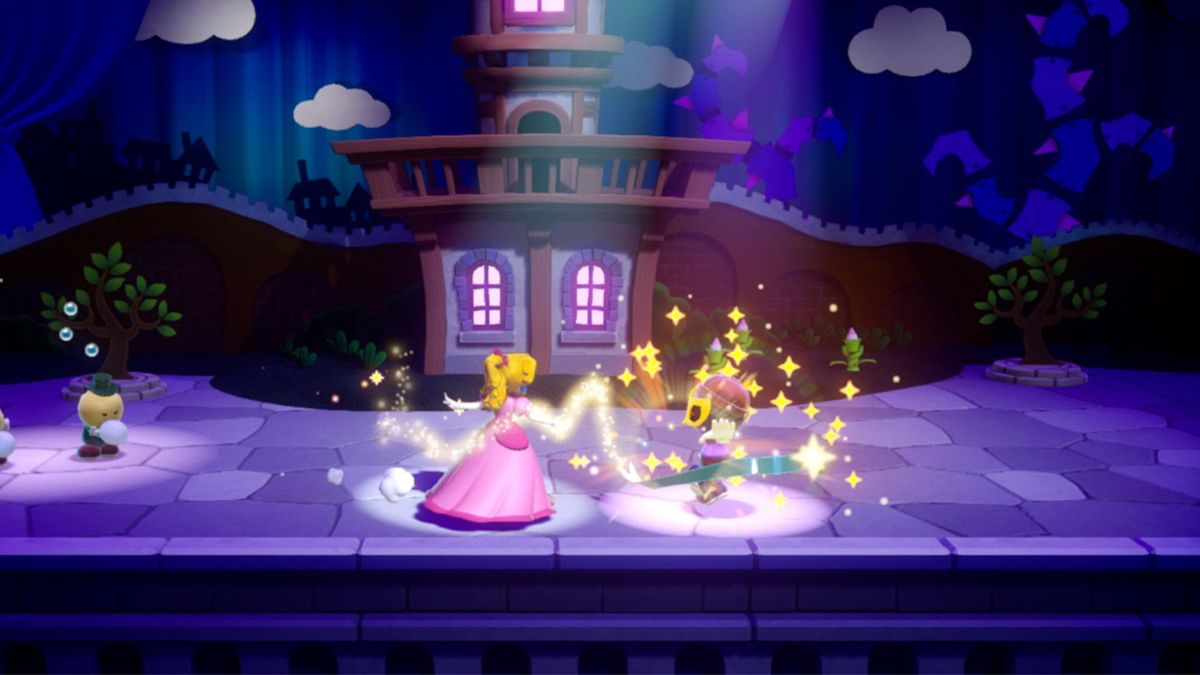
2024 – Princess Peach: Showtime!: Main protagonist
-
2024–2025: Continued presence in party, racing, and upcoming titles (Mario Kart World, Mario Party Jamboree)
This era highlights Peach’s increasing independence and prominence as a lead character.
Creation and Development
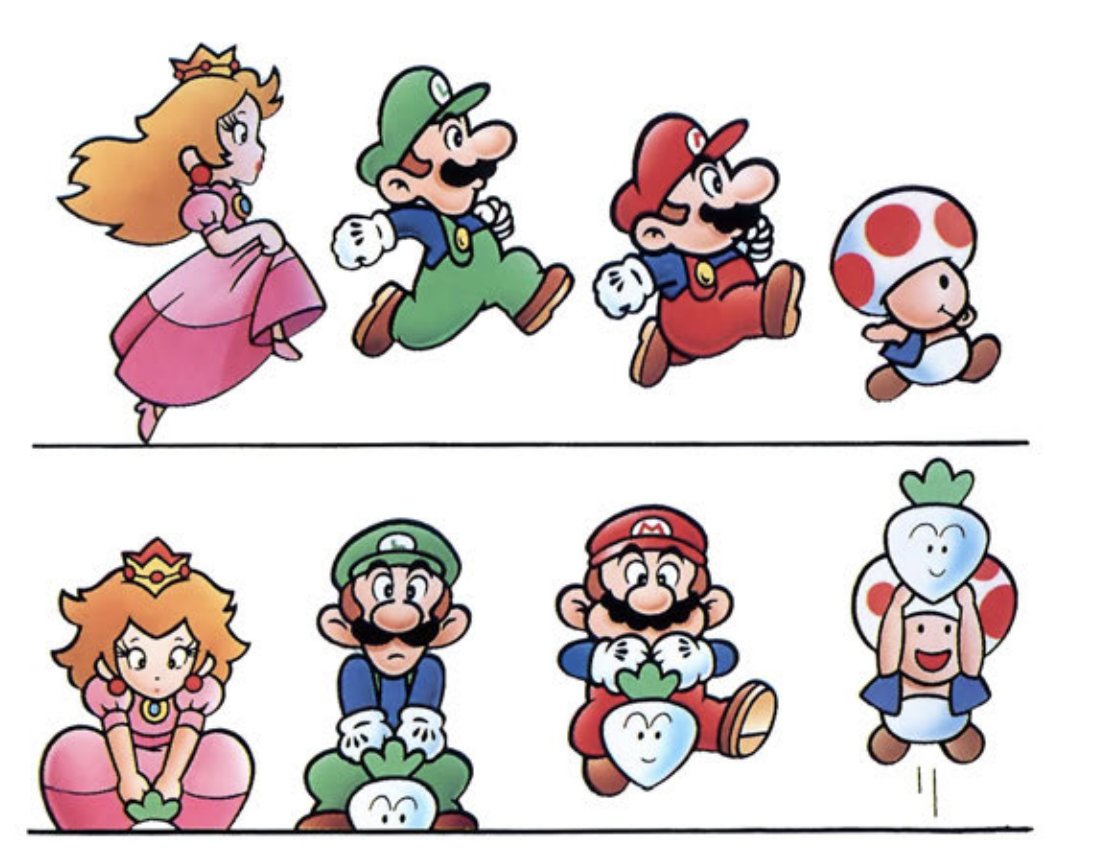
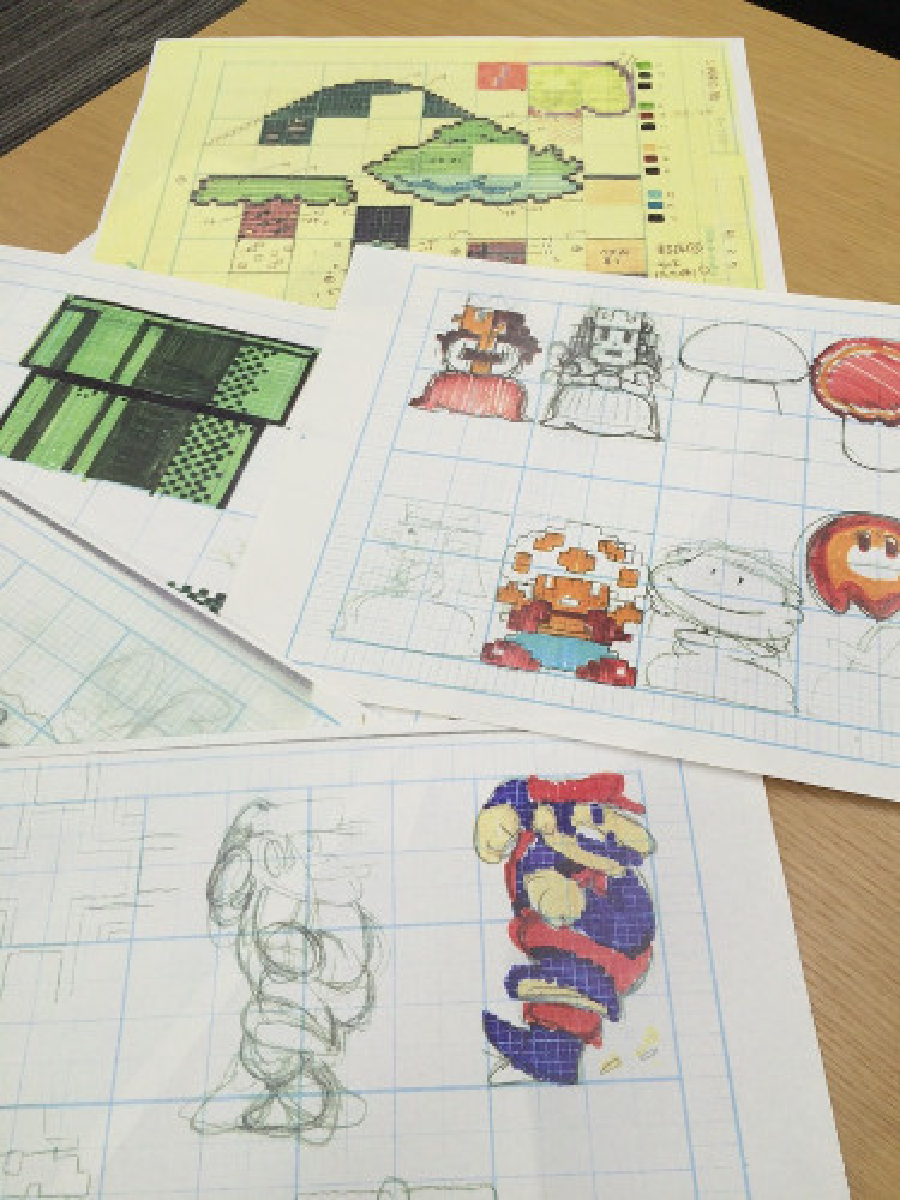
Princess Peach was originally designed by Shigeru Miyamoto, with later refinements by Yōichi Kotabe. Miyamoto specifically requested that Peach’s design include:
-
Slightly cat-like eyes
-
A balance between stubbornness and cuteness
Kotabe’s artistic influence significantly shaped Peach’s modern appearance.
Originally, Peach was intended to be a playable and more powerful character in Super Mario Bros., but this concept was changed, establishing her as the damsel-in-distress—a role that defined her early appearances.
Voice Portrayals
-
Leslie Swan: First voice (starting with Super Mario 64); also served as localization director
-
Jen Taylor: Long-running voice actress (from Mario Tennis onward; retired in 2006)
-
Nicole Mills: Temporary replacement
-
Samantha Kelly: Current voice actress (from Mario Strikers Charged through Mario & Luigi: Brothership)
Samantha Kelly has noted that she values Peach’s defining traits: innocence, kindness, and determination.
Reception and Cultural Standing
Princess Peach has received significant recognition in gaming culture:
-
Ranked #1 on WatchMojo’s “Top 10 Video Game Damsels in Distress”
-
Frequently cited as the most kidnapped character in video game history
-
Recognized as one of Nintendo’s most iconic female characters
Summary
Princess Peach’s timeline demonstrates a clear evolution:
-
1980s–early 1990s: Primarily a narrative objective
-
Mid-1990s onward: Increasingly playable and active
-
Modern era: Fully realized character capable of leading her own titles
While her classic role as a damsel-in-distress remains a defining element of the franchise, Peach has progressively been redefined as a capable, playable, and independent character, reflecting broader changes in character design and storytelling within the gaming industry.
General Facts and Legacy
-
Princess Peach has never been referred to as “Princess Toadstool” in Japan. From her debut onward, she has consistently been known as Princess Peach in Japanese releases, while the “Toadstool” name was primarily used in early Western localizations.
-
Since her introduction in 1985, Peach has appeared in more video games than any other female character in history, making her one of the most recognizable and enduring figures in gaming culture. Her visibility rivals other major Nintendo icons and has contributed to her status as a global pop culture symbol.
-
Within the Mario universe itself, Peach is portrayed as a widely recognized and influential ruler. Nearly every character—heroes and villains alike, including Bowser—is aware of her identity and authority.
Crossovers and References
4
-
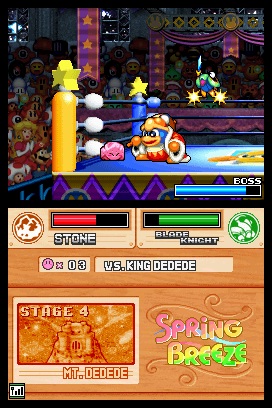
In Kirby Super Star and Kirby Super Star Ultra, Princess Peach appears as a background audience member during Kirby’s battle with King Dedede in the “Spring Breeze” mode.
-
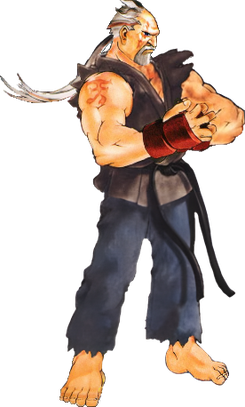
A well-known Mario quote—“Thank you Mario / Luigi. But our Princess is in another castle.”—was referenced in Super Street Fighter II Turbo HD Remix. After defeating the hidden boss Akuma, players receive an achievement titled “Sheng Long is in another castle,” humorously echoing the original line.
-
The “Sheng Long” reference itself originates from a mistranslation of Ryu’s line in Street Fighter II (“You must defeat Sheng Long to stand a chance”), which led players to believe a secret boss existed. This ultimately influenced the creation of characters such as Akuma and Gouken.
-
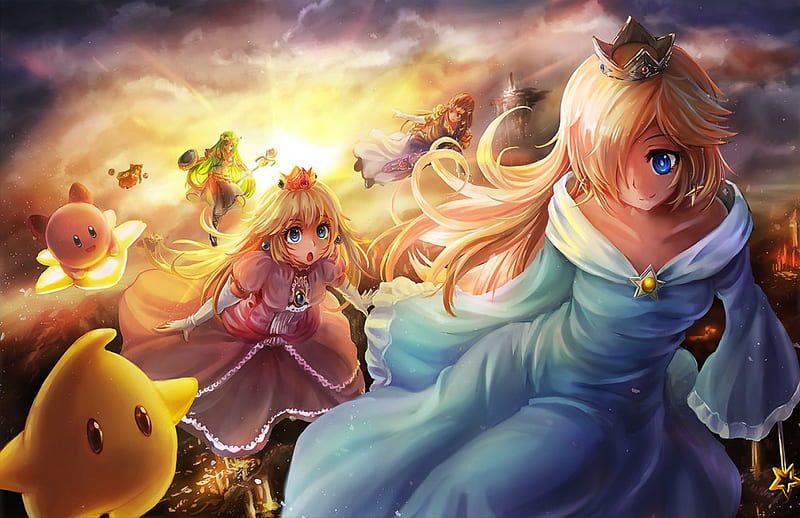
Princess Peach is often compared to Princess Zelda from The Legend of Zelda. Both characters are royal figures frequently placed in danger by recurring antagonists (Bowser and Ganon, respectively) and are central to their respective narratives. Unlike Peach and Mario, Zelda and Link typically display less overt romantic expression. Across various Nintendo media and spin-offs, Peach and Zelda are also depicted as acquaintances or friends.
In-Game Behaviors and Details
-
Since Super Mario World, it has become a recurring tradition that when Mario or Luigi rescues Peach, she rewards them with a kiss on the cheek. In Super Mario All-Stars (The Lost Levels, World D-4), this is extended into multiple affectionate kisses.
-
In Super Mario Kart, Peach’s sprite appears to display an irritated or stern expression, though this detail has never been officially confirmed.
Age and Early Depictions
-
Despite being clearly portrayed as a young adult, Princess Peach’s official age has never been confirmed within the games.
-
External materials have suggested ages:
-
16 years old (pamphlet for Super Mario Bros.: Peach-hime Kyūshutsu Dai Sakusen!)
-
17 years old (DiC cartoon adaptation)
These figures are not considered canon within the main game series.
-
-
In Mario & Luigi: Partners in Time, Peach appears as a younger child, even smaller than Baby Mario and Baby Luigi. She is often carried by Toadsworth and wears a pink romper instead of her usual attire. During this stage, she is still developing abilities such as her signature floating skill, unlike other baby characters who can already fight.
-
In Yoshi’s Island DS, Peach appears as a baby alongside Mario, Luigi, Wario, Donkey Kong, and Bowser. Notably:
-
She appears to be similar in age to the others
-
She is the only human baby not wearing a diaper, instead wearing a pink romper
-
This detail may suggest she is slightly older than the others
-
Design Changes and Visual Evolution
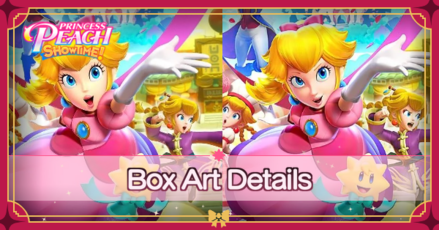
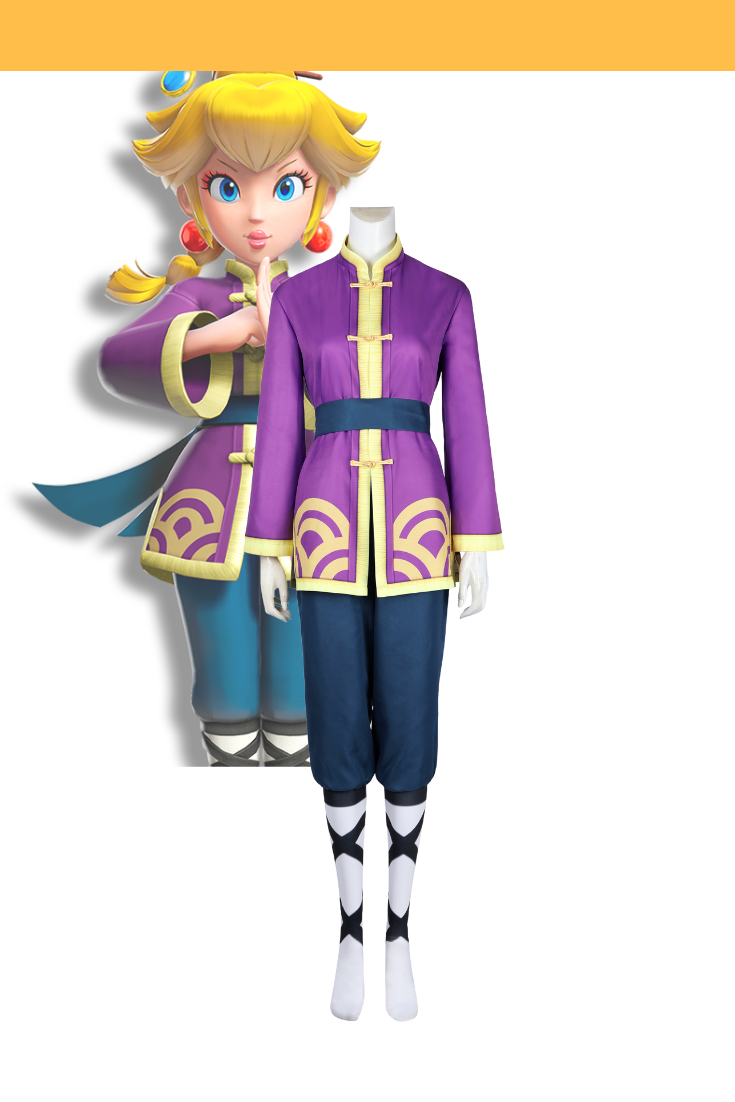
-
The box art for Princess Peach: Showtime! was updated on October 13, 2023, following a Nintendo Direct presentation. Changes included:
-
A more serious facial expression (notably a frown during martial arts poses)
-
Subtle shading on her nose
-
More almond-shaped eyes
-
Slightly curved eyebrows
Some fans observed similarities between this updated design and Peach’s appearance in The Super Mario Bros. Movie (2023), though no official explanation has been provided for the redesign.
-
Cultural Influence and Inspiration
-
Princess Peach has served as inspiration for characters beyond Nintendo. For example, Padparadscha from Steven Universe is noted to have been influenced by Peach’s design and character traits.