


Bowser Guide: Origins, Powers & Ultimate Villain Story
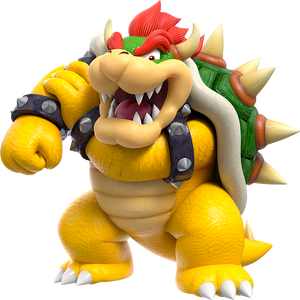
King Bowser Koopa Sr. (大魔王クッパ / Daimaō Kuppa, literally “Great Demon King Koopa”)—commonly referred to as Bowser, Lord Bowser, or historically King Koopa—is the primary antagonist of Nintendo’s Super Mario franchise and the long-standing arch-nemesis of Mario.
He rules as the king of the Koopa race and commands the Koopa Troop, a vast army that includes various species such as Goombas, Koopa Troopas, and other loyal minions. Since his debut in Super Mario Bros. (1985), Bowser has remained the central opposing force in the series, consistently driving its core conflicts.
Core Motivation and Role
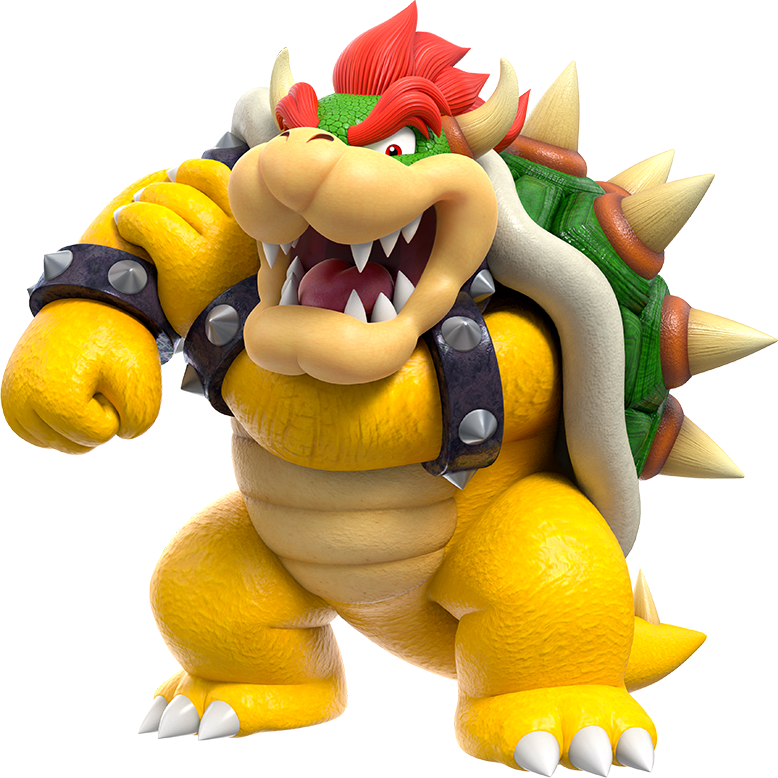
Bowser’s most recurring objective is the abduction of Princess Peach, driven by his unrequited romantic feelings and his desire to make her his queen. Despite his persistence, Peach consistently rejects him—even in rare cases where she is forced into marriage, such as in Super Paper Mario, the union is never genuine or lasting.

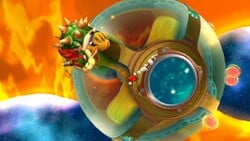
In addition to his personal motivations, Bowser frequently attempts to conquer the Mushroom Kingdom and, at times, expand his ambitions to global or even universal domination (as seen in titles like Super Mario Galaxy).
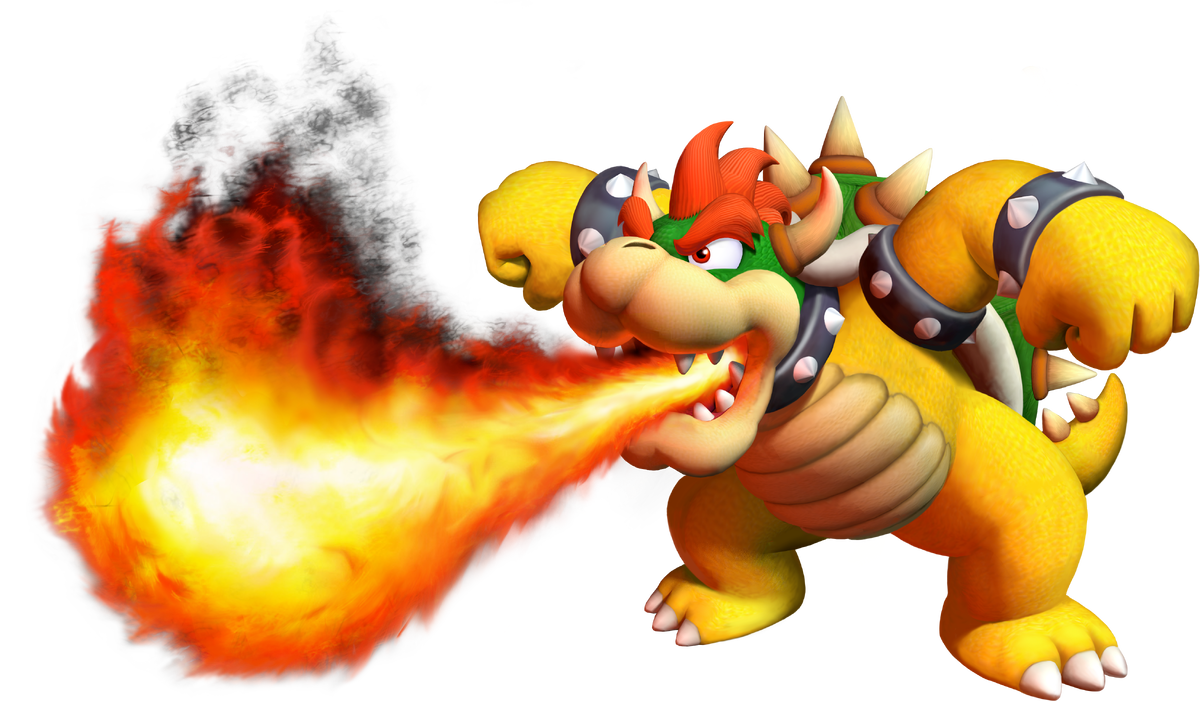
A defining aspect of Bowser’s character is his unwavering determination. Regardless of how many times he is defeated by Mario or Luigi, he continues to return with new strategies, technologies, or alliances—making him one of gaming’s most persistent antagonists.
Role Across Games
-
Frequently serves as the final boss in mainline Super Mario titles
-
Acts as the central antagonist driving the narrative
-
Appears as a playable character in numerous spin-offs, including:
-
Mario Kart
-
Mario Party
-
Super Smash Bros.
-
Various sports titles
-
This duality—villain in core titles, competitor or ally in spin-offs—adds depth to his characterization and broadens his role within the franchise.
Temporary Alliances and Anti-Heroic Roles
While primarily antagonistic, Bowser has occasionally aligned himself with Mario and others when faced with greater threats. These instances highlight a more pragmatic side of his character:
-
Super Mario RPG: Legend of the Seven Stars — joins forces against the Smithy Gang
-
Mario & Luigi: Superstar Saga — opposes Cackletta
-
Super Paper Mario — allies against Count Bleck
-
Mario & Luigi: Bowser’s Inside Story — combats Fawful
-
Paper Mario: The Origami King — aids in defeating King Olly
-
Mario & Luigi: Brothership — assists against Zokket and Reclusa
In these scenarios, Bowser’s cooperation is typically driven by self-interest or survival, rather than a permanent shift in allegiance.
Family and Relationships

-
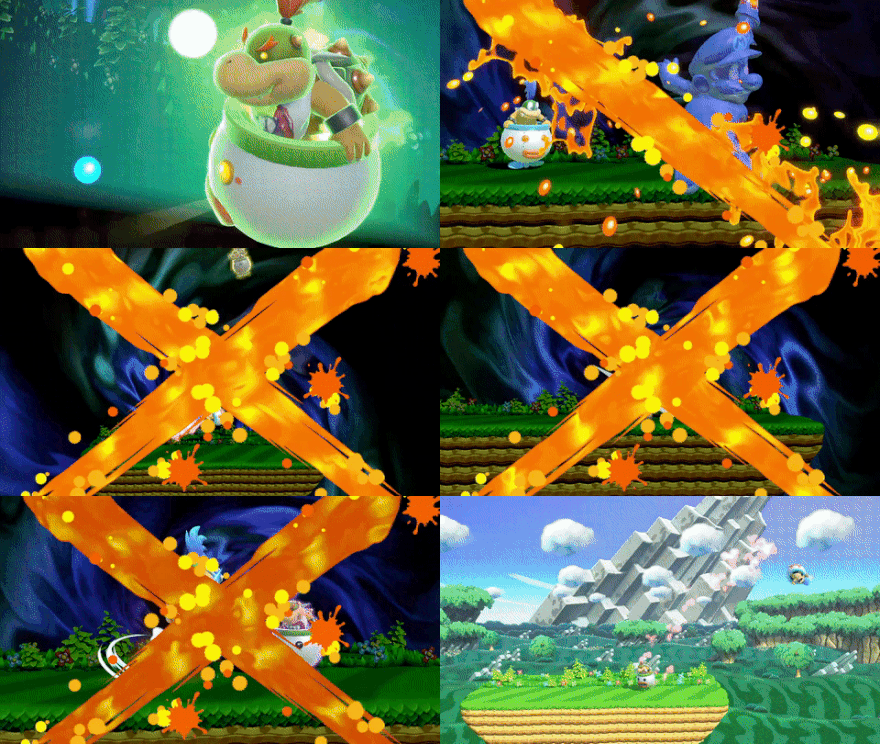
Bowser Jr.: His son, introduced in later titles, often assists him and occasionally acts independently
-
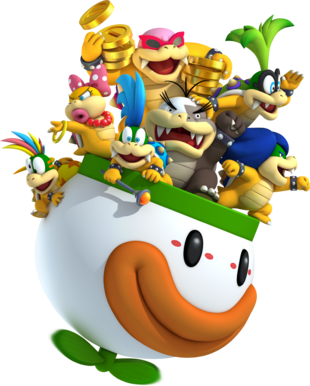
Koopalings: Seven additional children featured prominently in earlier games (Ludwig, Iggy, Roy, Lemmy, Wendy, Larry, Morton)
Bowser’s relationship with Bowser Jr. is often portrayed with a degree of genuine parental care, adding a softer dimension to his otherwise domineering personality.
Cultural Impact and Recognition
Bowser is widely regarded as one of the most iconic villains in video game history. His consistent presence across decades, combined with his distinctive design (spiked shell, horns, fire-breathing abilities), has made him instantly recognizable worldwide.
In broader media:
-
He has appeared in animated series, films (including The Super Mario Bros. Movie), and merchandise
-
He is frequently ranked among the greatest video game antagonists of all time
-
His rivalry with Mario is considered one of the most enduring in gaming history
Core Power Set
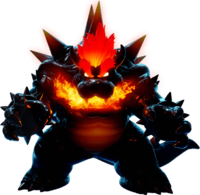
As the primary antagonist across the Super Mario franchise, Bowser possesses a wide range of physical and magical abilities, making him one of the most formidable characters in Nintendo’s roster. At a fundamental level, he combines immense brute strength with elemental and magical powers, allowing him to challenge not only Mario but also other powerful entities within the series.
His most recognizable ability is his flame breath, which he uses alongside:
-
Razor-sharp claws for close combat
-
Exceptional strength to move or destroy large structures
-
High durability, enabling him to withstand repeated attacks from Mario and even survive extreme environments
Bowser is also frequently depicted as a magic user, with some portrayals referring to him as a “sorcerer-king,” highlighting his command over various forms of dark magic.
He is additionally known for numerous transformations, many of which involve significant increases in size—ranging from large-scale enhancements to towering, near-kaiju proportions.
Physical Abilities
Fire Breath (Biological Ability)
Bowser’s ability to breathe fire is innate, present even during infancy, and linked directly to his internal biology. He can project fire in multiple forms:
-
Concentrated fireballs
-
Continuous streams of flame
-
Wide-area fiery rain attacks
These attacks are powerful enough to destroy stone and melt metal, making them effective both offensively and for environmental destruction.
Strength and Impact Force
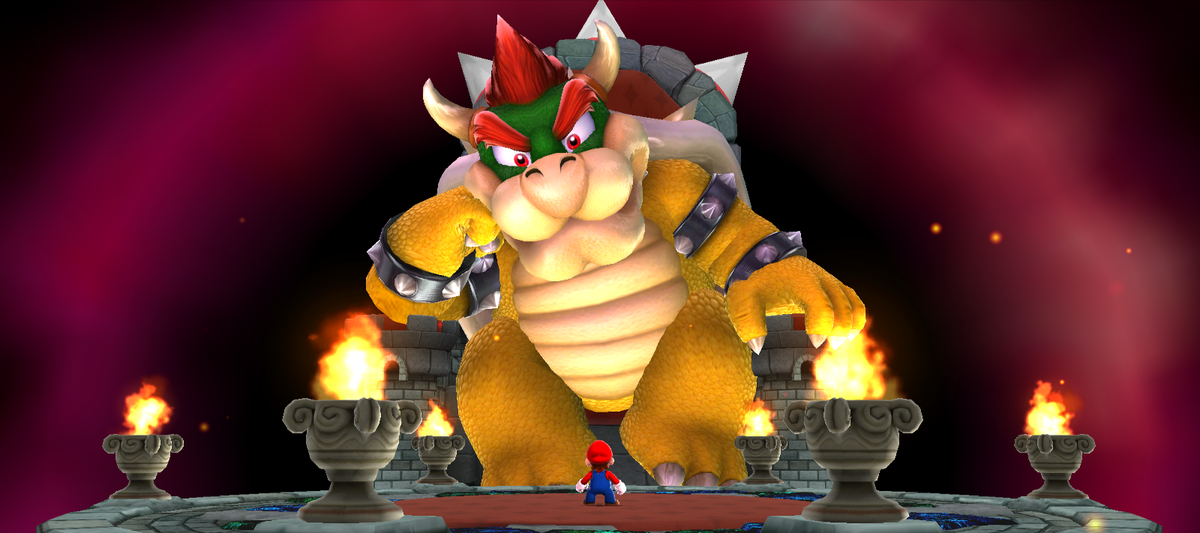
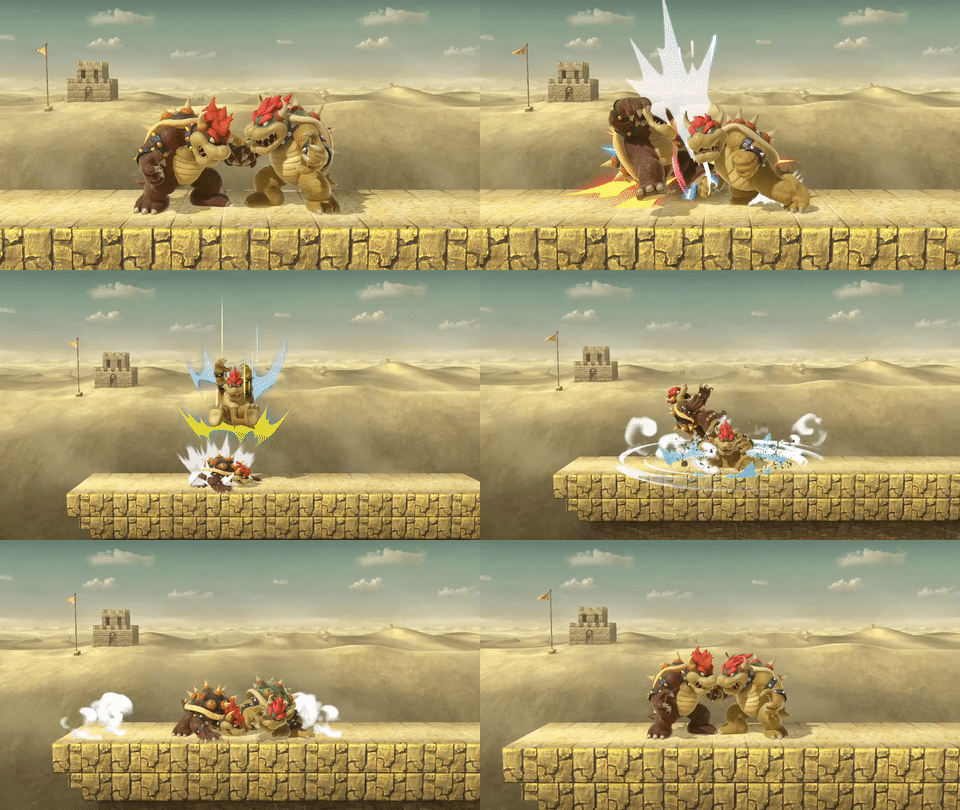
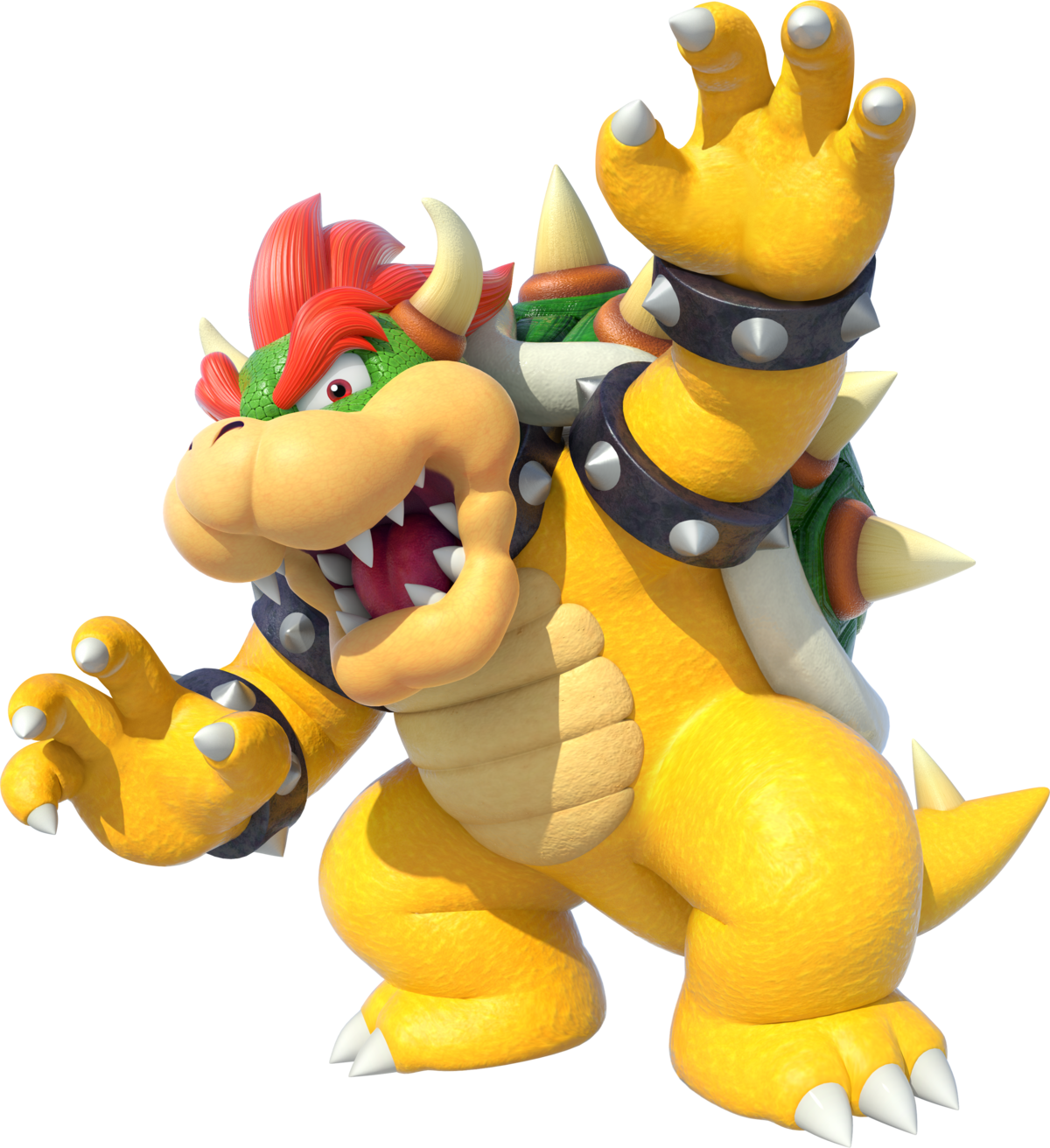
Bowser’s physical strength is among his most defining traits:
-
His jumps generate shockwaves, capable of destabilizing terrain
-
He can tear through environments using only his claws
-
He has demonstrated the ability to lift and support extremely heavy objects, including:
-
A massive iron cannonball weighing over 1 million pounds
-
-
Under extreme stress, Bowser has shown the capacity to move entire landmasses, including an island
Stress-Induced Enhancements
Bowser’s internal systems can temporarily amplify his abilities under pressure. These enhancements may include:
-
Increased speed and strength
-
Significant growth in size, sometimes comparable to his castle
These transformations are typically not under direct control and may require external triggers or conditions.
A notable enhancement occurs after consuming the Vacuum Shroom, granting him the ability to:
-
Generate powerful suction
-
Inhale objects and opponents
-
Miniaturize and internalize targets
Magical Abilities

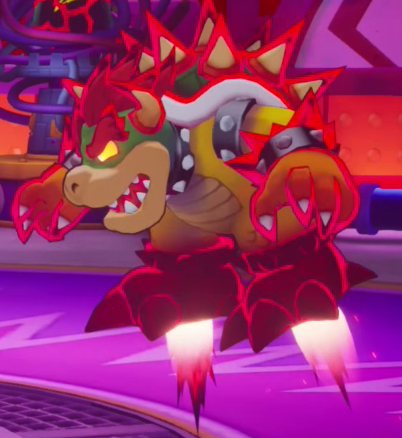
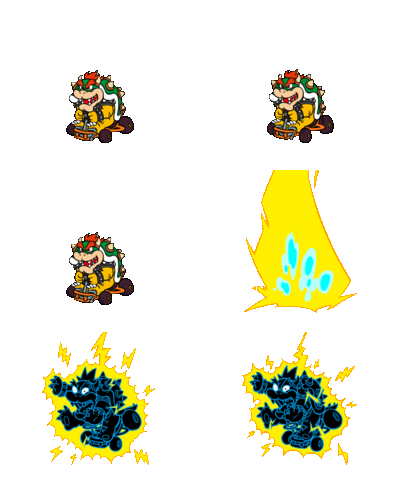
Although less emphasized than his physical power, Bowser is also a highly capable practitioner of dark magic.
Transformation Magic
One of Bowser’s earliest and most consistent magical abilities is transmutation, including:
-
Turning the Mushroom Kingdom’s Toads into bricks and objects
-
Creating Fake Bowsers from his minions
-
Transforming Yoshi’s Island into a storybook
-
Altering characters (e.g., transforming a Koopa into a frog in Mario Party)
Earth Manipulation
Bowser has demonstrated advanced control over terrain, possibly driven by rivalry (notably with Mallow’s weather-based powers). His abilities include:
-
Summoning boulders and metal constructs
-
Coating himself in stone to perform rolling attacks
-
Creating massive spikes emerging from the ground
-
Launching flaming meteors
-
Crystallizing opponents
It remains unclear whether this ability is purely magical or a form of elemental telekinesis.
Additional Magical Capabilities
-
Lightning manipulation: Able to summon thunderclouds and control lightning (demonstrated on multiple occasions)
-
Structure creation: Conjured a 30-floor tower from nothing
-
Duplication:
-
Created Bubble Clones of characters
-
Replicated objects such as his wedding cap
-
-
Barrier creation: Defensive energy shields
-
Telekinesis: Manipulation of large objects (e.g., Giga Bells)
-
Flight (rare instance): Demonstrated unaided flight following defeat in Super Mario 3D World
Undead State — Dry Bowser
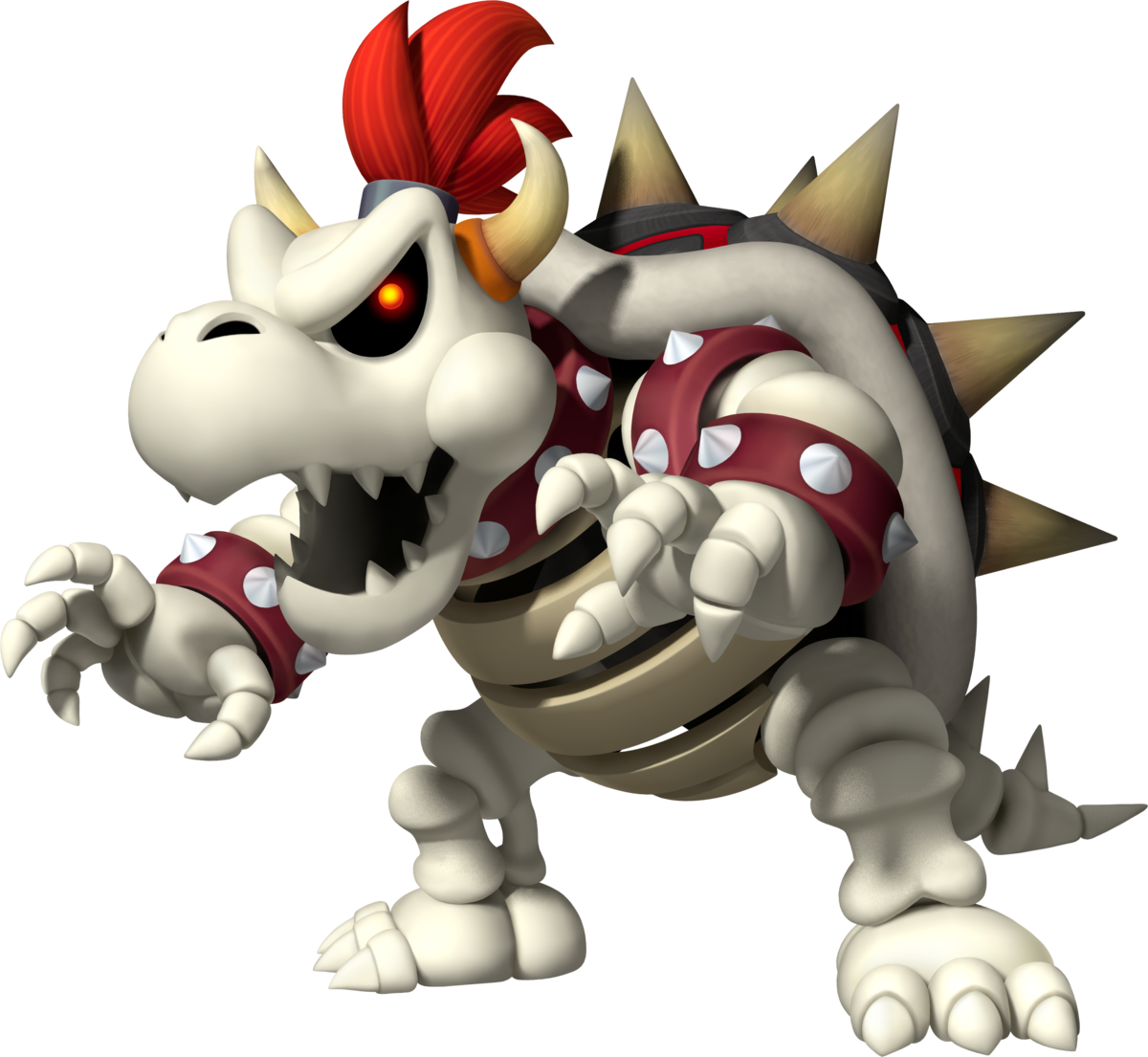
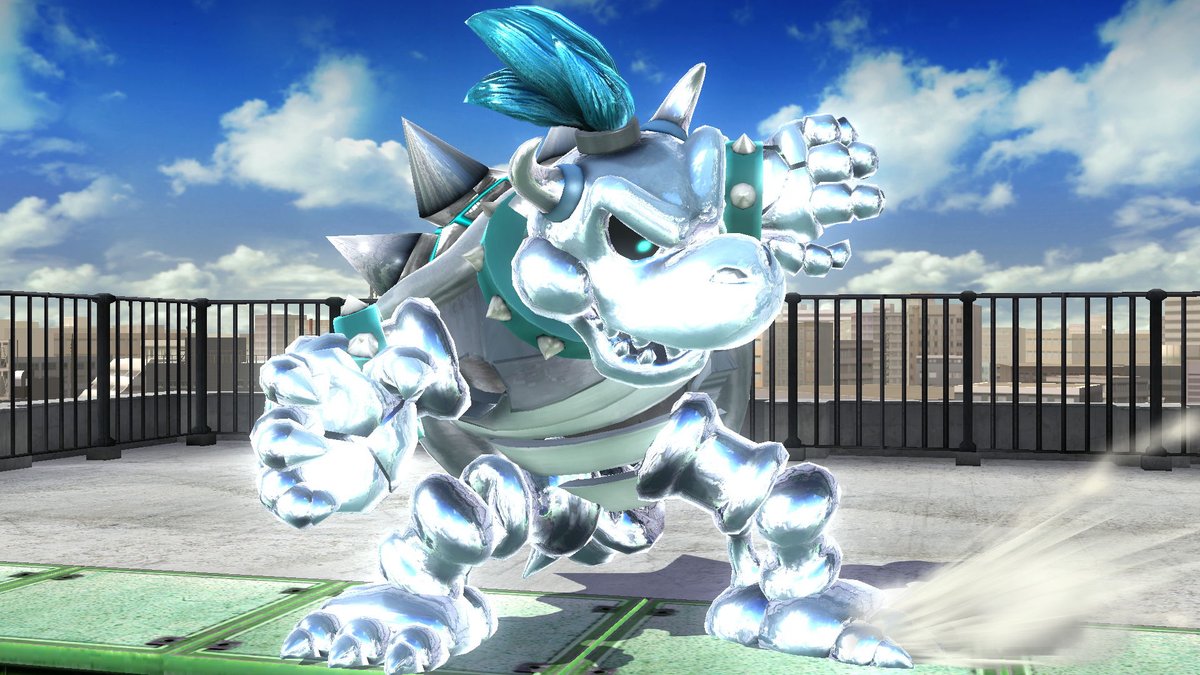
In certain scenarios, Bowser can return after defeat as Dry Bowser, his skeletal form.
Key traits include:
-
Immunity to fire and lava
-
Ability to reassemble his body after being shattered
-
Emission of blue flames
-
Use of dark portals for teleportation and movement of allies
This form effectively allows Bowser to bypass conventional defeat, reinforcing his resilience as a recurring antagonist.
Origins, Inspiration, and Design

-
According to Prima’s Super Mario Galaxy guide, Bowser and the Koopas were partially inspired by the kappa, creatures from Japanese folklore. However, this connection has never been officially confirmed by Shigeru Miyamoto.
-
Bowser is also believed to draw inspiration from the Bull Demon King from the Chinese classic Journey to the West, further reinforcing his mythological roots.
-
In early hardware such as the NES, sprites were limited to three colors, yet Bowser appeared to have four. This visual trick was achieved by using the black background as part of his design. When placed against a different background, his sprite can appear visually disconnected.
-
In The Super Mario Bros. Super Show! and related cartoons, Bowser’s color palette and crown design were influenced by Wart, the antagonist of Super Mario Bros. 2. Some of Wart’s minions (including 8-bit enemies) were also incorporated into Bowser’s forces in these adaptations.
Historical Significance
-
Having debuted in 1985, Bowser is among the earliest major villains in video game history and is widely regarded as one of the most influential antagonists in the medium.
-
Despite being Mario’s most iconic enemy, Bowser is not his first adversary. That distinction belongs to Donkey Kong, who served as the original antagonist in the 1981 arcade game.
-
Over time, Bowser has become one of the most recognizable villains globally, consistently ranked alongside other major antagonists in gaming.
Audio and Presentation
-
Bowser’s iconic laugh and roars during the Nintendo 64 era through New Super Mario Bros. were not originally custom voice recordings:
-
His laugh was actually Charles Martinet’s voice (Mario’s voice actor), slowed down
-
His roars were created from edited animal sounds, including cougar growls, boar squeals, and a roar from the 1957 film The Land Unknown
-
The Boo enemy used a sped-up version of the same laugh
-
-
In Super Mario 64, Bowser’s silhouette with a deep laugh appears on the Game Over screen. This imagery was considered unsettling by some players and was later reused in early Mario Party games as a transition effect, before being toned down in later generations.
-
In both Super Mario Sunshine and The Super Mario Bros. Movie, Bowser is depicted with a deep, gruff speaking voice, aligning with his imposing personality.
Gameplay and Mechanics
-
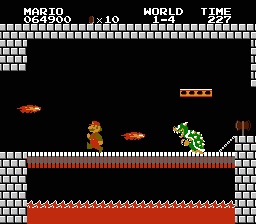
In the original Super Mario Bros., Bowser appears only in World 8-4 as the true final boss. Earlier castle encounters feature “Fake Bowsers”, which are enemies transformed by his magic. This is evident when they revert to their original forms upon defeat with fireballs.
-
Bowser is the only Mario villain to appear in all five Mario & Luigi RPG titles, demonstrating his consistent narrative importance.
-
In Mario Party 2, Bowser is shown to use a Metal transformation, similar to Metal Mario, increasing his weight significantly during duels.
-
In Luigi’s Mansion, Bowser is referenced during Madame Clairvoya’s séance as having captured Mario. This turns out to be a false lead, as the real antagonist is King Boo using a Bowser-like puppet. This is technically Bowser’s only connection to the Luigi’s Mansion series.
Narrative Impact and Power
-
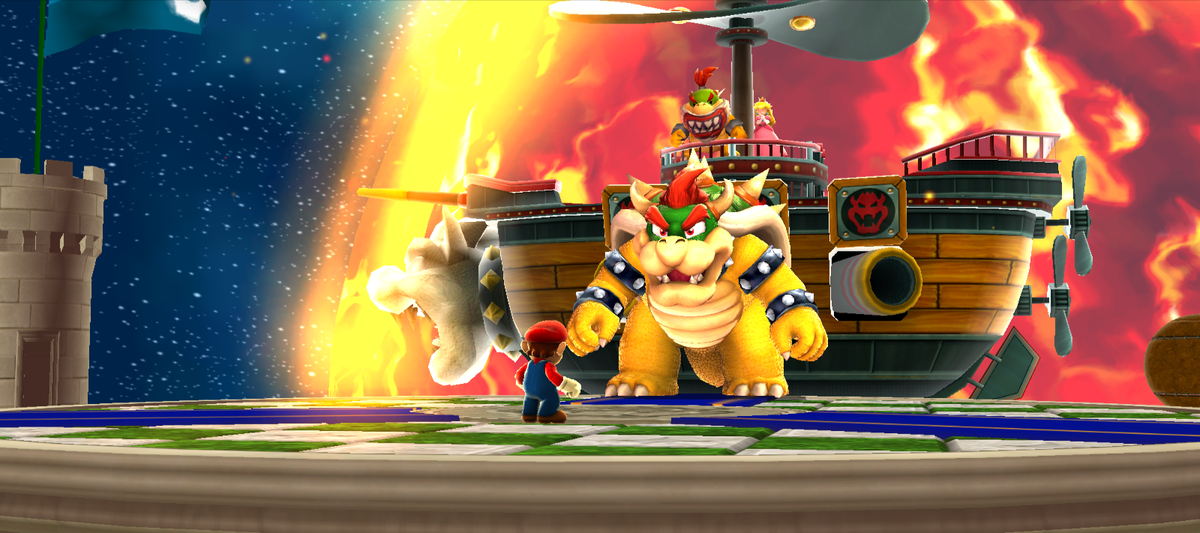
Although Bowser’s plans typically fail, in Super Mario Galaxy he represents a genuine universal-level threat. His attempt to use the Grand Star to create and rule a galaxy nearly results in the destruction of the universe via a black hole, requiring intervention from the Lumas.
-
Bowser has been corrupted by external forces in multiple titles:
-
Paper Mario: Color Splash — corrupted by black paint
-
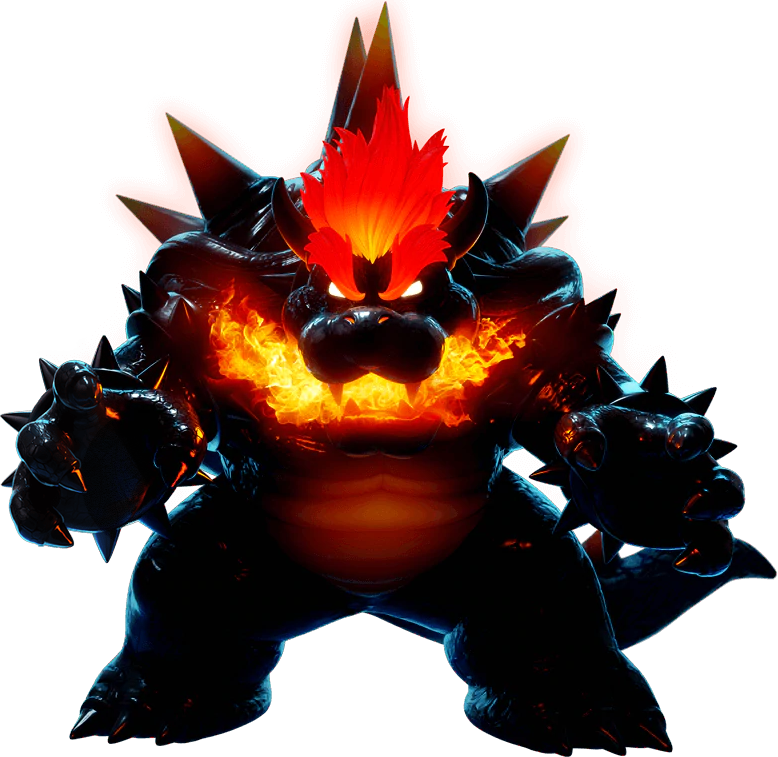
Bowser’s Fury — transformed again due to black goop after Bowser Jr.’s actions
-
-
In Super Mario Bros. Wonder, Bowser uses a Wonder Flower to merge with Prince Florian’s castle, gaining the ability to fly.
Character Relationships and Parallels
-
Bowser is often compared to Ganon from The Legend of Zelda. Both characters:
-
Are monstrous, animal-inspired antagonists (turtle/boar)
-
Seek to conquer kingdoms (Mushroom Kingdom/Hyrule)
-
Kidnap princesses (Peach/Zelda)
-
Are repeatedly opposed by heroes (Mario/Link)
While both share similar narrative roles, Ganon is often considered more inherently malevolent, whereas Bowser occasionally shows nuance or humor.
-
-
Bowser notably never attempts to kidnap Princess Daisy, possibly due to her demonstrated strength (e.g., sending him flying in Mario Party 3).
-
Bowser and Bowser Jr. share a mutually influential relationship:
-
Bowser Jr. behaves arrogantly toward others but is loyal and affectionate toward his father
-
Bowser, despite his temper, shows a softer, proud side when interacting with his son
-
Crossovers, Media, and References
-
Bowser has appeared in crossover media such as Skylanders, making him one of only two Nintendo characters (alongside Donkey Kong) to do so.
-
In manga adaptations like KC Mario and Super Mario-kun, Bowser references Gamera, even using an attack named “Gamera Attack.”
-
Bowser was originally portrayed as “King Koopa” in early Western media and film adaptations, though he is fundamentally a humanoid, fire-breathing turtle-like creature.
Personality and Miscellaneous Facts
-
Bowser has shown a strong dislike for vegetables, explicitly stating in Mario & Luigi: Bowser’s Inside Story:
“Vegetables are GROSS!!! WHERE IS meat?!” -
In Mario Baseball titles, Bowser is unique among team captains in that all of his teammates have strong chemistry with him, reflecting his leadership style.
-
Despite his villainy, Bowser has occasionally been perceived as intimidating or frightening, particularly in earlier games due to his design, sound effects, and presentation.
-
In Mario Super Sluggers, Bowser shows poor chemistry with King K. Rool, possibly due to disapproval of how K. Rool treats his own crew—contrasting with Bowser’s comparatively better treatment of his followers.
-
Bowser and Ganondorf are the only villains to be playable across every Super Smash Bros. title from Melee to Ultimate.
Bowser is the backbone of the Super Mario universe. For decades, the King of the Koopas has stood as a symbol of relentless ambition, raw power, and unforgettable presence. Whether he’s breathing fire across lava-filled arenas, commanding entire armies, or nearly reshaping the universe itself, Bowser continues to redefine what a video game antagonist can be.
What makes Bowser truly iconic isn’t just his strength—it’s his consistency. No matter how many times he falls, he returns stronger, smarter, and more determined. From classic 8-bit battles to modern cinematic showdowns, Bowser remains one of gaming’s most recognizable and enduring characters.
And honestly? The Mario universe wouldn’t feel the same without him.