
India’s Official Distributor and Retailer for Licensed Action Figures, Statues and Anime Collectibles
India’s Official Distributor and Retailer for Licensed Action Figures, Statues and Anime Collectibles


How Many Spider-Man Movies Are There? A Complete Guide to Every Spider-Man Film
June 05, 2026 57 min read
Few superheroes in pop culture history have achieved the level of global recognition that Spider-Man enjoys today. Created by legendary Marvel creators Stan Lee and Steve Ditko, the wall-crawling hero has spent decades captivating comic book readers, television audiences, and moviegoers alike. Yet despite his immense popularity, Spider-Man didn't officially make his big-screen debut until 2002, when director Sam Raimi brought Marvel's beloved web-slinger to life in a groundbreaking live-action adaptation.
That first film not only introduced a new generation to Peter Parker but also helped redefine what superhero movies could achieve at the box office. Since then, Spider-Man has become one of the most successful and lucrative characters in cinematic history, with nearly every major film adaptation emerging as a commercial phenomenon. The franchise has evolved far beyond a single hero's journey, expanding into a vast cinematic universe filled with alternate Spider-People, multiversal adventures, animated masterpieces, and spin-off stories that continue to attract audiences around the world.
Whether you're a longtime fan looking to revisit the franchise or a newcomer preparing for the next chapter of Spider-Man's cinematic journey, this guide will help you navigate every major Spider-Man movie and spin-off in chronological order. You'll also find useful breakdowns based on release order and actor-specific viewing lists, making it easier than ever to explore the ever-expanding Spider-Verse.
How Many Spider-Man Movies Are There?
When looking specifically at movies where Spider-Man serves as the primary protagonist, there are currently ten feature-length Spider-Man films.
Of those ten movies:
-
Eight are live-action films, divided among three different versions of Peter Parker:
- Three starring Tobey Maguire
- Two starring Andrew Garfield
- Three starring Tom Holland
- Two are animated Spider-Verse films, which shift the spotlight to Miles Morales while also introducing audiences to multiple Spider-People from across the multiverse. These films, Spider-Man: Into the Spider-Verse (2018) and Spider-Man: Across the Spider-Verse (2023), are widely regarded among the greatest superhero movies ever made and have earned critical acclaim for their groundbreaking animation and storytelling.
If you expand the definition further to include spin-offs and Spider-Man-related projects such as Venom, Morbius, Madame Web, Kraven the Hunter, and the upcoming Spider-Noir universe entries, the broader Spider-Man cinematic franchise grows significantly larger. However, when focusing solely on films where Spider-Man is the central hero, the total currently stands at ten movies, with additional installments—including Spider-Man: Brand New Day and Spider-Man: Beyond the Spider-Verse—already on the horizon.
More than two decades after his first theatrical appearance, Spider-Man remains one of Hollywood's most bankable superheroes, continually reinventing himself for new generations while staying true to the heart of what makes Peter Parker—and every Spider-Person—so relatable: extraordinary responsibility carried by ordinary people.
Here are movies in Chronological order:
1. Spider-Man (2002)
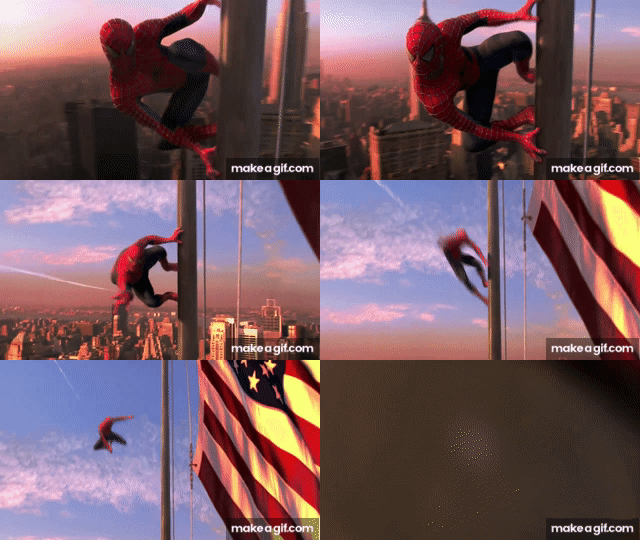
When people talk about the modern superhero movie boom, Spider-Man (2002) is often one of the first films mentioned—and for good reason. Directed by acclaimed filmmaker Sam Raimi, this groundbreaking blockbuster marked the first time Peter Parker truly swung onto the big screen in a live-action feature film, introducing millions of moviegoers to Marvel's beloved web-slinger in a way that had never been seen before.
Leading the charge was Tobey Maguire, whose earnest and relatable portrayal of Peter Parker quickly became the definitive version of the character for an entire generation. Alongside him, Kirsten Dunst brought warmth and charm to Mary Jane Watson, Peter's longtime love interest and one of the emotional anchors of the story. Together, they helped create some of the most memorable moments in superhero cinema history, including the famous upside-down rain-soaked kiss—a scene that remains one of the most recognizable romantic moments ever filmed.
But the film's success wasn't built on its heroes alone.
One of the movie's greatest strengths was its unforgettable villain. Willem Dafoe delivered a wonderfully unhinged and captivating performance as Norman Osborn, the brilliant industrialist who transforms into the terrifying Green Goblin. Dafoe's portrayal remains one of the gold standards for comic book movie villains and would become so beloved that he later returned to the role nearly two decades later in Spider-Man: No Way Home.
The film also introduced audiences to J. Jonah Jameson, the loud, stubborn, and endlessly entertaining editor of the Daily Bugle. Played to perfection by J.K. Simmons, Jameson instantly became a fan favorite thanks to his hilarious obsession with exposing Spider-Man as a menace. Simmons' performance was so universally praised that Marvel and Sony would eventually bring him back for future Spider-Man films, making him one of the few actors to portray the same comic book character across multiple cinematic continuities.
Released in May 2002, Spider-Man became a cultural phenomenon and shattered box-office records, becoming the first film in history to earn more than $100 million during its opening weekend. More importantly, it proved that superhero movies could be both critically acclaimed and commercially dominant, paving the way for the comic book movie era that would eventually give rise to the Marvel Cinematic Universe and countless superhero franchises that followed.
More than two decades later, Spider-Man remains a beloved classic—a film that captured the heart, humor, and humanity of Peter Parker while reminding audiences why Spider-Man has always been one of the world's most enduring heroes.
2. Spider-Man 2 (2004)

Widely regarded as one of the greatest superhero films ever made, Spider-Man 2 took everything that worked in its predecessor and elevated it to another level. Released in 2004, the sequel continued Peter Parker's journey two years after the events of the first film, exploring the increasingly difficult balancing act between his responsibilities as Spider-Man and his desire to live a normal life.
Tobey Maguire returned as Peter Parker, but this time the young hero finds himself exhausted, overwhelmed, and questioning whether he can continue carrying the weight of being Spider-Man. As his personal life begins to unravel, Peter struggles with his relationships, finances, education, and the emotional toll of constantly putting others before himself. The result is a deeply human story that resonates just as strongly today as it did upon release.
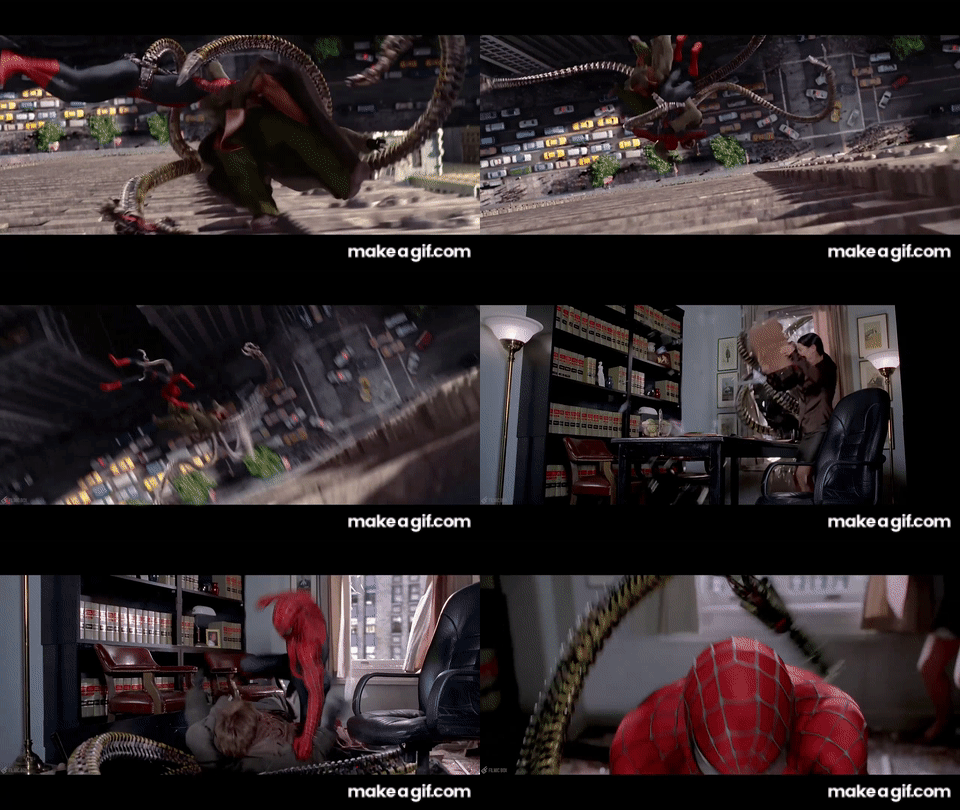
Standing in Peter's way is one of the most beloved villains in Spider-Man history: Doctor Otto Octavius. Brilliantly portrayed by Alfred Molina, Octavius begins the film as a respected scientist and mentor figure whose ambitious fusion experiment ends in catastrophe. After a tragic laboratory accident fuses four advanced mechanical tentacles to his body and alters his mind, the once-kindhearted researcher transforms into the fearsome Doctor Octopus, or Doc Ock.
What makes Molina's performance so memorable is the humanity he brings to the character. Rather than being a straightforward villain, Otto Octavius is presented as a tragic figure whose downfall stems from loss, obsession, and the corrupting influence of his own technology. His dynamic with Peter Parker adds an emotional depth rarely seen in superhero films of the era.
Of course, no discussion of Spider-Man 2 is complete without mentioning its most iconic sequence.
The film delivered one of the greatest action scenes in comic book movie history when Spider-Man desperately attempts to stop a runaway elevated train speeding through New York City. Using every ounce of his spider-strength, agility, and web-slinging ability, Peter pushes himself beyond his physical limits to save the passengers onboard. The sequence remains one of the defining moments of the character on screen and perfectly captures Spider-Man's unwavering commitment to protecting others, no matter the personal cost.
Beyond its spectacular action, Spider-Man 2 earned widespread critical acclaim for its emotional storytelling, character development, and mature themes. Many critics and fans still consider it the benchmark for superhero cinema, and its influence can be seen in countless comic book films that followed. More than twenty years later, it remains not only one of the finest Spider-Man movies ever made but also one of the most celebrated superhero films in cinematic history.
3. Spider-Man 3 (2007)
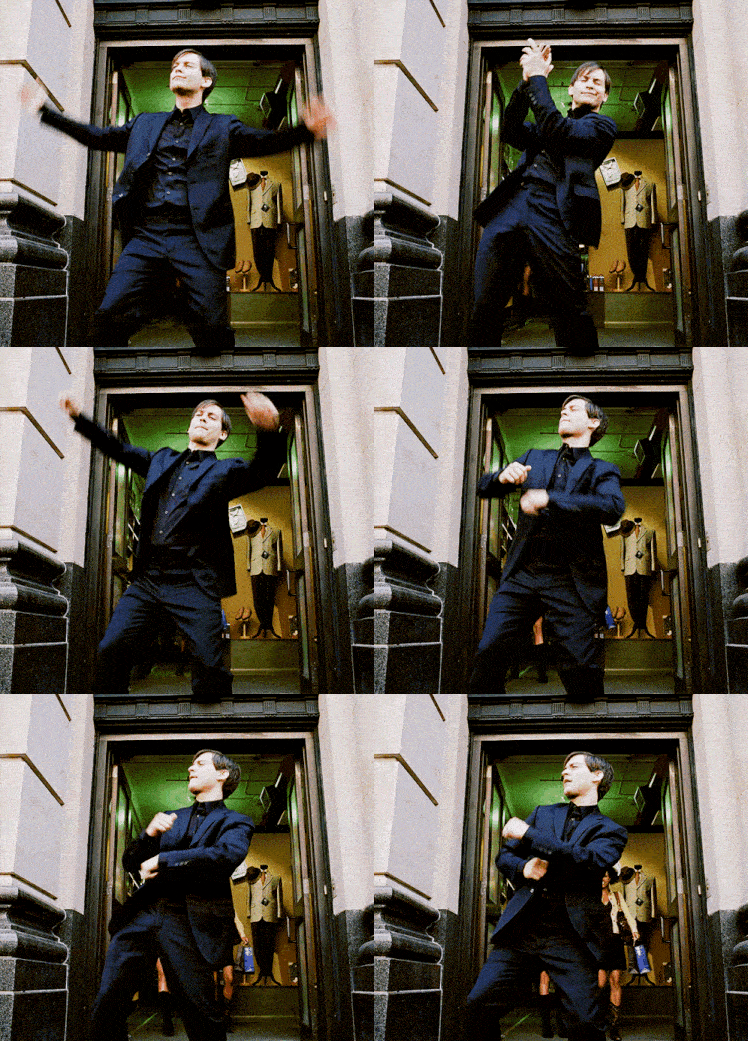
Released in 2007, Spider-Man 3 brought Sam Raimi's groundbreaking Spider-Man trilogy to a close and marked Tobey Maguire's final appearance as Peter Parker in the original film series. Following the enormous success of the first two movies, expectations were sky-high for the trilogy's conclusion, and Raimi responded by delivering the biggest, most ambitious Spider-Man adventure audiences had seen at the time.
Set roughly a year after the events of Spider-Man 2, Peter Parker finally seems to have found some balance in his life. New York has embraced Spider-Man as a hero, his relationship with Mary Jane Watson appears to be moving forward, and for the first time in years, Peter feels genuinely happy. However, that sense of stability doesn't last long, as a series of personal and external threats begin to test both the man and the hero beneath the mask.
Unlike the previous films, which focused primarily on a single central antagonist, Spider-Man 3 dramatically expanded the scope of its villain roster by introducing three major foes.
The first is Flint Marko, better known as Sandman, played by Thomas Haden Church. Following a tragic accident involving an experimental particle accelerator, Marko gains the ability to transform his body into sand, becoming one of Spider-Man's most powerful and surprisingly sympathetic adversaries. His emotional backstory and motivations added a layer of complexity that distinguished him from many comic book villains of the era.
The film also introduces Eddie Brock, portrayed by Topher Grace. A rival photographer competing with Peter Parker at the Daily Bugle, Brock eventually bonds with an alien symbiote and transforms into Venom, one of Spider-Man's most iconic enemies from the comics. While fans continue to debate the adaptation's interpretation of the character, Venom's live-action debut remains one of the film's most talked-about elements.
Completing the villain trio is Harry Osborn, played by James Franco. After spending two films wrestling with the belief that Spider-Man killed his father, Harry finally embraces his destiny as the new Green Goblin. His conflict with Peter serves as the emotional backbone of the movie, bringing years of friendship, betrayal, grief, and unresolved resentment to a dramatic conclusion.

Perhaps the most memorable aspect of Spider-Man 3, however, is the introduction of Spider-Man's legendary Black Suit. After bonding with the alien symbiote, Peter experiences a dramatic change in both his powers and personality. The suit enhances his abilities, making him stronger and more aggressive, but it also amplifies his darker impulses, pushing him toward arrogance, anger, and revenge. This storyline drew inspiration from Marvel's famous symbiote saga and gave audiences their first live-action look at one of Spider-Man's most beloved comic book costumes.

Over the years, Spider-Man 3 has become one of the most debated superhero movies ever made. Some fans praise its emotional themes, ambitious storytelling, visual effects, and memorable character moments, while others feel the film struggled under the weight of its numerous storylines and villains. Despite its divisive reputation, the movie has developed a passionate following and remains an important chapter in Spider-Man's cinematic history.
Love it or hate it, Spider-Man 3 delivered unforgettable moments, expanded Spider-Man's mythology in significant ways, and gave audiences the long-awaited arrival of the Black Suit. For many fans, that alone earns the film a special place in the Spider-Verse.
4. The Amazing Spider-Man (2012)
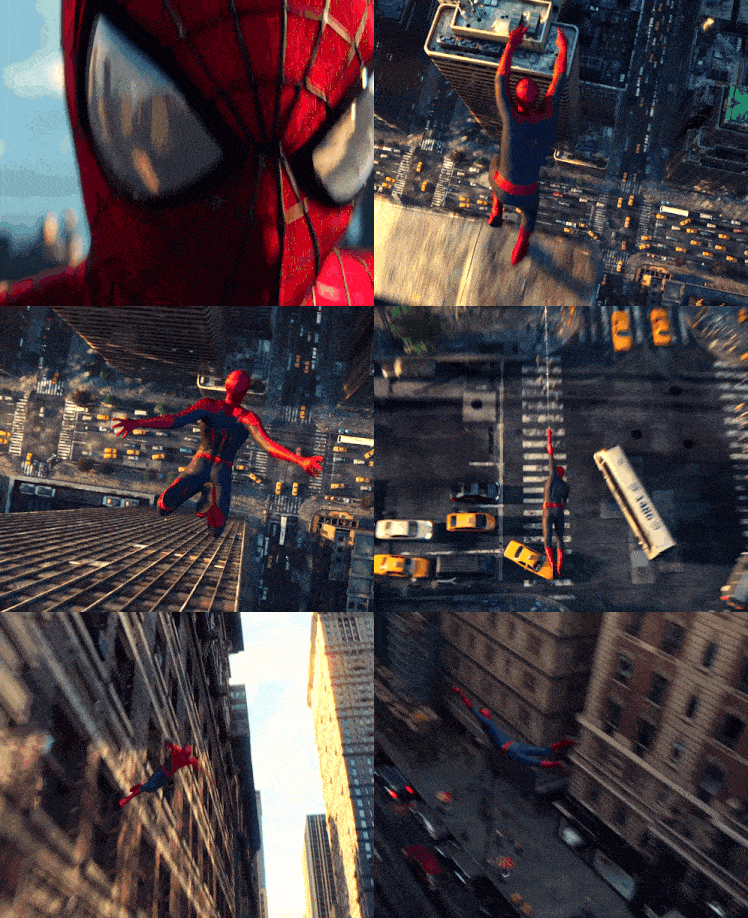
Five years after Sam Raimi's Spider-Man trilogy came to an end, Sony Pictures decided to reboot the franchise with a fresh creative vision. Enter The Amazing Spider-Man (2012), directed by Marc Webb, which introduced audiences to a new version of Peter Parker and kicked off an entirely new cinematic era for Marvel's iconic wall-crawler.
Stepping into the role of Spider-Man was Andrew Garfield, whose portrayal brought a different energy to the character. While Tobey Maguire's Peter Parker was often defined by his earnestness and quiet determination, Garfield's version leaned more heavily into Peter's intelligence, wit, awkward charm, and youthful confidence. His Spider-Man was quicker with jokes, more physically agile, and closer in tone to many fans' interpretation of the character from the comics.
Alongside Garfield was Emma Stone as Gwen Stacy, one of the most beloved characters in Spider-Man lore. The chemistry between Garfield and Stone became one of the film's greatest strengths, helping create a relationship that felt natural, heartfelt, and emotionally authentic. Their connection quickly became a fan favorite and remains one of the most celebrated romantic pairings in any Spider-Man movie.
The Amazing Spider-Man revisits Peter Parker's origin story, it approaches familiar events from a new perspective. Rather than simply retelling the same journey audiences had already seen in 2002, the film places greater emphasis on the mystery surrounding Peter's parents, Richard and Mary Parker. Their sudden disappearance and the secrets they left behind become a driving force throughout the story, adding a layer of intrigue that distinguishes this reboot from previous adaptations.
As Peter begins uncovering clues about his family's past, his investigation leads him to Oscorp Industries and Dr. Curt Connors, a brilliant scientist portrayed by Rhys Ifans. Connors was once a close colleague of Peter's father and is determined to revolutionize human genetics through groundbreaking research.
However, his ambitious experiments take a disastrous turn.
After testing a regenerative serum on himself, Connors mutates into the Lizard—a massive, reptilian superhuman with extraordinary strength, enhanced abilities, and a dangerous belief that humanity must evolve into something stronger. As the city faces an escalating threat, Peter must embrace his newfound powers and responsibilities to stop a villain whose connection to his family makes the conflict deeply personal.
One of the film's standout elements is its modernized approach to Spider-Man's world. From the redesigned suit and mechanical web-shooters to the updated visual effects and action sequences, The Amazing Spider-Man sought to bring the character into a new generation while remaining faithful to many of the comics' core themes.
The film also offered a more grounded and emotional portrayal of Peter Parker's early struggles. His journey is shaped not only by the loss of Uncle Ben but also by his search for identity, belonging, and answers about the family he barely remembers.
While opinions differ on whether it surpasses Raimi's original films, The Amazing Spider-Man successfully reintroduced Spider-Man to audiences and laid the foundation for Andrew Garfield's beloved interpretation of the character. Over time, Garfield's performance has earned widespread appreciation from fans, many of whom consider him one of the most comic-accurate portrayals of Peter Parker and Spider-Man ever brought to the screen.
For all its action and spectacle, The Amazing Spider-Man is ultimately a story about discovery—of family secrets, personal responsibility, and the kind of hero Peter Parker is destined to become.
5. The Amazing Spider-Man 2 (2014)
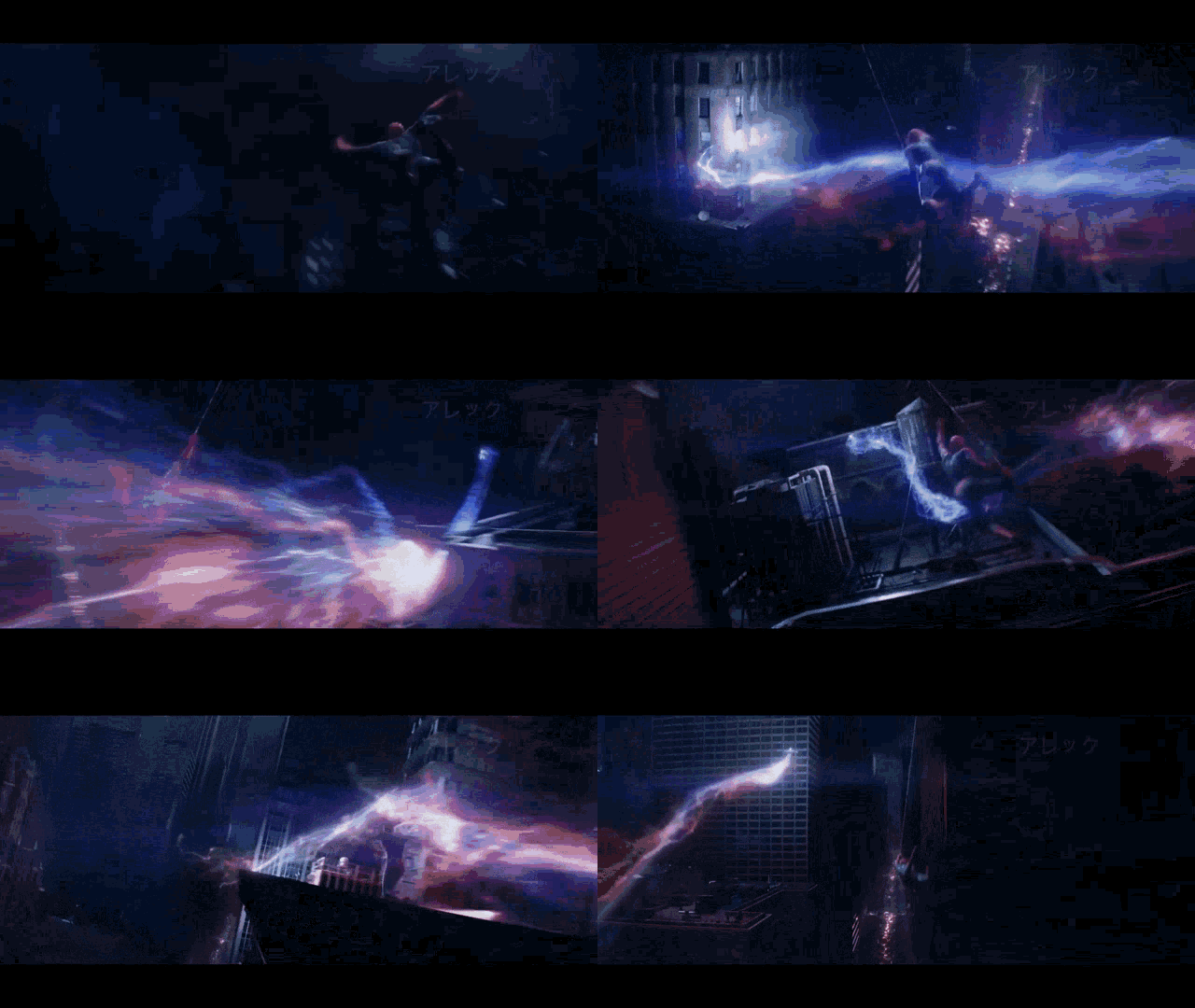
Released in 2014, The Amazing Spider-Man 2 marked the second—and ultimately final—chapter of Andrew Garfield's Spider-Man journey. Building on the foundation established by its predecessor, the film aimed to expand Peter Parker's world in a much bigger way, introducing new villains, deepening existing relationships, and planting the seeds for an ambitious shared universe that Sony hoped would rival other major superhero franchises.
Set roughly two years after the events of The Amazing Spider-Man, the sequel finds Peter Parker becoming increasingly comfortable in his role as New York City's protector. As Spider-Man, he continues to save lives and battle crime across the city, but Peter's personal life remains far more complicated. His relationship with Gwen Stacy grows stronger, yet he struggles with a promise made to her late father—a promise to keep Gwen out of harm's way by staying away from her.
At the heart of the film is Peter's ongoing search for answers about his parents, Richard and Mary Parker, a mystery that continues to influence his life and ultimately connects him to the larger events unfolding around him.
Like Spider-Man 3 before it, The Amazing Spider-Man 2 significantly expanded its villain roster by introducing three major antagonists.
The primary threat comes in the form of Max Dillon, played by Jamie Foxx. A socially isolated Oscorp employee who idolizes Spider-Man, Dillon's life changes forever after a catastrophic accident transforms him into Electro. Armed with the ability to generate, absorb, and manipulate electricity, Electro becomes one of the most visually spectacular villains ever featured in a Spider-Man film. His growing resentment and desire for recognition quickly turn him into a dangerous adversary capable of threatening the entire city.
The film also introduces Aleksei Sytsevich, portrayed by Paul Giamatti. Although his screen time is relatively brief, the Russian criminal eventually transforms into Rhino, a heavily armored powerhouse inspired by one of Spider-Man's classic comic book foes. His appearance serves as one of the film's many attempts to broaden the franchise's villain landscape.
Perhaps the most emotionally significant antagonist is Harry Osborn, played by Dane DeHaan. Reimagined as Peter Parker's childhood friend, Harry returns to New York desperate to find a cure for a hereditary disease that is slowly killing him. His increasingly desperate actions lead him down a dark path, ultimately transforming him into this universe's version of the Green Goblin. The tragic collapse of Peter and Harry's friendship becomes one of the film's central emotional conflicts.
Beyond its action and villains, The Amazing Spider-Man 2 is perhaps best remembered for the powerful relationship between Peter Parker and Gwen Stacy. Andrew Garfield and Emma Stone's chemistry once again shines throughout the film, elevating many of its most emotional moments and helping create one of the most beloved romances in superhero movie history.
The movie also featured some of the most visually dynamic Spider-Man action sequences ever put on screen. Garfield's Spider-Man moves with incredible speed, agility, and fluidity, resulting in web-swinging scenes that many fans still consider among the best in the character's cinematic history.
At the time of its release, Sony had enormous plans for the future of the franchise. The film was designed to serve as a launching pad for several interconnected projects, including standalone movies centered on Venom and the Sinister Six. Various Easter eggs and Oscorp-related teases throughout the film hinted at a much larger universe waiting to be explored.
However, despite strong performances and impressive visual effects, The Amazing Spider-Man 2 received a mixed critical reception. While many viewers praised Garfield's portrayal of Spider-Man, the emotional storytelling, and the chemistry between the lead actors, others felt the film struggled with an overcrowded narrative and too many competing storylines. Combined with a box-office performance that fell short of Sony's expectations, those ambitious expansion plans were ultimately abandoned.
The cancellation of the planned spin-offs and sequels paved the way for one of the biggest shifts in Spider-Man's cinematic history: Sony's landmark partnership with Marvel Studios, which would eventually introduce Tom Holland's Spider-Man into the Marvel Cinematic Universe.
Although The Amazing Spider-Man 2 remains one of the most divisive entries in the franchise, its reputation has improved considerably over time. Many fans have come to appreciate its emotional depth, ambitious scope, and Andrew Garfield's heartfelt performance, especially following his celebrated return in Spider-Man: No Way Home. Today, the film stands as both the conclusion of an unfinished chapter and an important turning point that helped shape Spider-Man's future on the big screen.
6. Captain America: Civil War (2016)
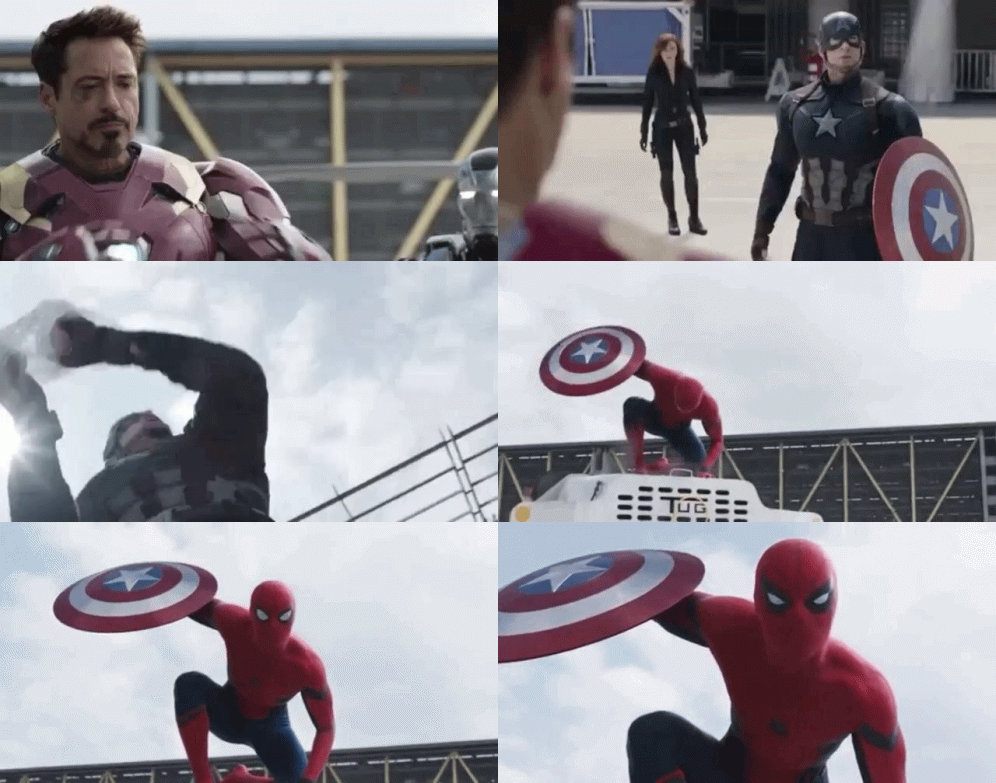
Captain America: Civil War isn't technically a Spider-Man movie, but it occupies a crucial place in Spider-Man's cinematic timeline. Released in 2016, the film marked the long-awaited arrival of Spider-Man into the Marvel Cinematic Universe and introduced audiences to Tom Holland's interpretation of Peter Parker—a version of the character that would quickly become one of the most beloved incarnations ever brought to the screen.
For years, fans had dreamed of seeing Spider-Man interact with Marvel's larger roster of heroes. Thanks to the landmark agreement between Sony Pictures and Marvel Studios, that dream finally became reality when Peter Parker made his MCU debut in one of the franchise's biggest crossover events.
By the time audiences meet him, Peter has already been operating as Spider-Man for several months. Unlike previous film versions that dedicated significant screen time to his origin story, Civil War wisely skips the radioactive spider bite and Uncle Ben retread, allowing viewers to jump straight into Peter's life as an emerging young hero trying to do the right thing.
His introduction comes courtesy of Tony Stark, played by Robert Downey Jr. As tensions rise between Earth's Mightiest Heroes over the Sokovia Accords, Stark seeks additional allies for his side of the conflict. This search leads him to Queens, New York, where he discovers a remarkably gifted teenager with extraordinary abilities and an even greater sense of responsibility.
The meeting between Tony and Peter instantly became one of the film's standout moments. Their dynamic established a mentor-student relationship that would go on to become one of the emotional cornerstones of Spider-Man's MCU journey.
Of course, Spider-Man's arrival isn't subtle.
Soon after being recruited by Tony Stark, Peter finds himself thrown into the middle of the legendary airport battle sequence, where he comes face-to-face with some of the most powerful heroes in the Marvel Cinematic Universe. For a teenager who had previously spent his time stopping local crimes and helping neighborhood citizens, suddenly battling alongside Iron Man while exchanging blows with superheroes like Captain America, Falcon, Winter Soldier, Hawkeye, Scarlet Witch, Ant-Man, and others is quite the promotion.
The film brilliantly showcases Peter's youthful enthusiasm and comic-book-accurate personality. He talks constantly, cracks jokes during combat, references pop culture, and reacts with genuine excitement to meeting the heroes he has admired from afar. At the same time, Holland captures Peter's intelligence, kindness, and underlying nervousness, reminding audiences that beneath the mask is still a high school student trying to find his place in the world.
One of the most memorable moments comes during the airport showdown when Spider-Man effortlessly catches Winter Soldier's metal arm and casually comments, "You have a metal arm? That is awesome!" The scene perfectly encapsulates the charm and youthful energy that Holland brought to the role.
Despite relatively limited screen time, Spider-Man makes an enormous impact throughout Civil War. His debut was widely praised by critics and fans alike, many of whom felt Marvel Studios had finally captured the perfect balance between Peter Parker's awkward teenage life and Spider-Man's wisecracking superhero persona.
More importantly, Captain America: Civil War served as the launching pad for Spider-Man's future within the MCU. It established Peter's relationship with Tony Stark, introduced him to the larger Marvel universe, and set the stage for Spider-Man: Homecoming, where audiences would finally get to explore Tom Holland's Spider-Man in his own standalone adventure.
In many ways, Civil War wasn't just Spider-Man's MCU debut—it was the beginning of an entirely new chapter for the character, one that would eventually lead to some of the biggest and most emotional stories in Spider-Man's cinematic history.
7. Spider-Man: Homecoming (2017)
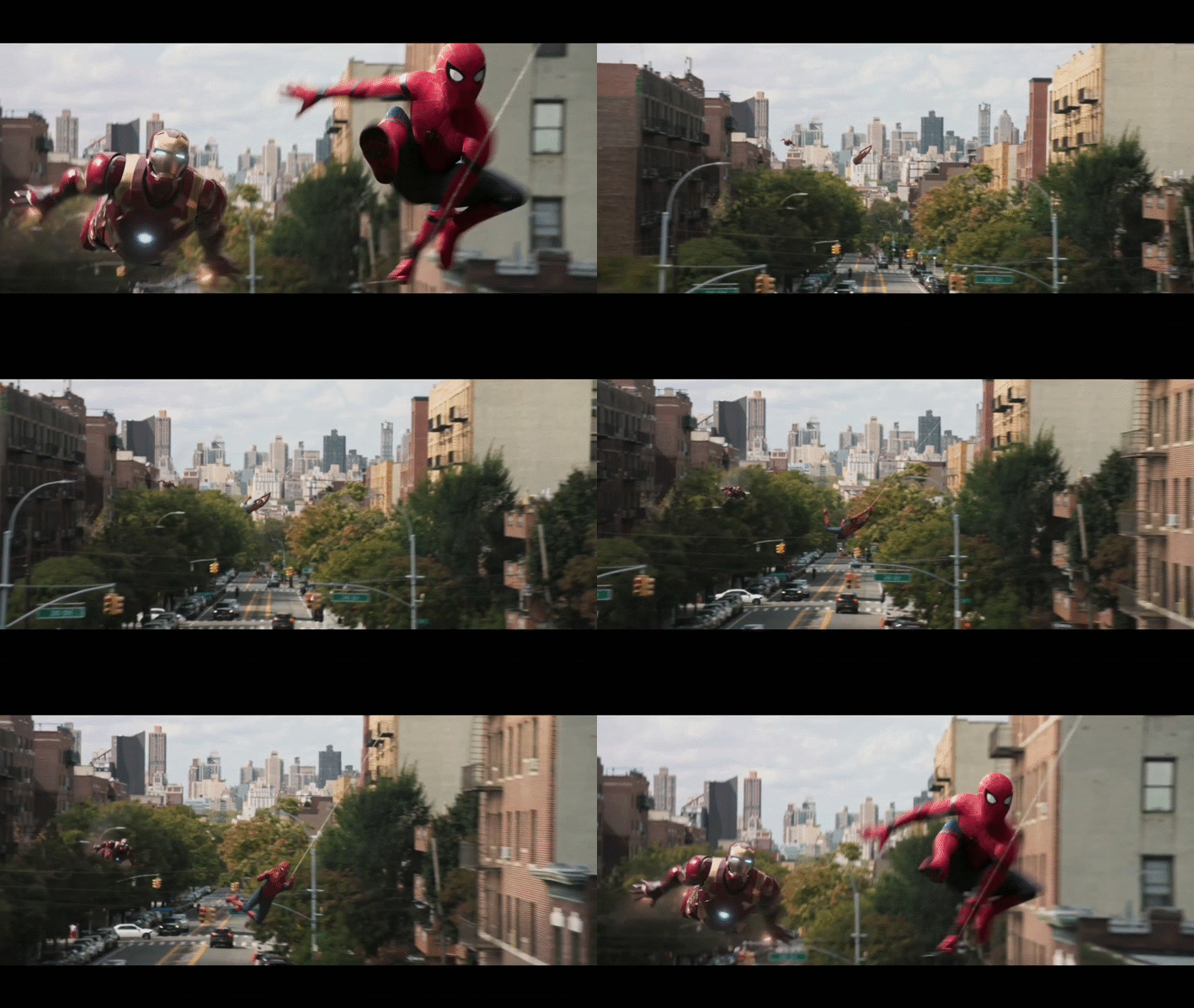
Following his scene-stealing debut in Captain America: Civil War, Tom Holland finally stepped into the spotlight with Spider-Man: Homecoming (2017), the first standalone Spider-Man film set within the Marvel Cinematic Universe. Directed by Jon Watts, the movie offered a fresh and youthful take on Peter Parker, focusing less on world-ending threats and more on the everyday challenges of being a teenager who just happens to have superpowers.
Set shortly after the events of Civil War, the film finds Peter Parker returning home to Queens after experiencing the adventure of a lifetime. Having fought alongside some of the world's greatest heroes, Peter is eager to prove that he belongs among them. However, reality quickly sets in. Instead of embarking on globe-trotting missions with the Avengers, he finds himself back in school, attending classes, completing homework, and trying to balance a normal teenage life with his responsibilities as Spider-Man.
For Peter, that balance is anything but easy.
While Tony Stark continues to monitor his progress from a distance, Peter becomes increasingly frustrated with being treated like a "friendly neighborhood Spider-Man." Convinced that he is ready for bigger challenges, he constantly searches for opportunities to prove himself worthy of joining the Avengers full-time. His impatience and eagerness to be taken seriously become central themes throughout the story, creating a compelling coming-of-age journey that feels distinctly different from previous Spider-Man films.
At the same time, Peter is still trying to enjoy life as an ordinary high school student. He spends much of his time alongside his best friend Ned Leeds, played by Jacob Batalon, whose discovery of Peter's secret identity leads to some of the movie's funniest and most memorable moments. The film also introduces audiences to Michelle, later revealed to be "MJ," portrayed by Zendaya. Though her role is smaller than it would become in future films, her sharp wit, intelligence, and mysterious personality immediately made her a fan favorite.
One of the film's greatest strengths is how authentically it captures Peter's teenage experience. Whether he's attending academic decathlons, navigating awkward social situations, dealing with crushes, or sneaking away to stop criminals between classes, Homecoming embraces the idea that Peter Parker is still a kid trying to figure out who he wants to be.
Of course, every Spider-Man story needs a memorable villain, and Homecoming delivers one of the strongest in the franchise's history.
The film introduces Adrian Toomes, better known as the Vulture, portrayed brilliantly by Michael Keaton. Unlike many comic book villains driven by world domination or revenge, Toomes is presented as a working-class businessman who feels abandoned by the powerful institutions around him. After losing a lucrative government cleanup contract following the Battle of New York, he turns to salvaging and weaponizing alien technology, building a criminal empire beneath the noses of both the government and the Avengers.
Keaton's performance brings a grounded realism and complexity to the character, making Vulture one of the MCU's most compelling antagonists. Rather than being purely evil, Toomes sees himself as a man doing whatever it takes to provide for his family, creating a fascinating moral contrast with Peter Parker's unwavering sense of responsibility.
The movie's most shocking twist—and one of the best reveals in any Spider-Man film—further elevates the rivalry between Peter and Toomes, transforming their conflict from a simple hero-versus-villain battle into something far more personal.
Beyond its humor, action, and heartfelt character moments, Spider-Man: Homecoming successfully established Tom Holland's Spider-Man as a cornerstone of the MCU. The film embraced the character's comic book roots while introducing him to a new generation of fans, proving that Spider-Man could thrive within Marvel's interconnected universe without losing the relatable charm that has always defined him.
More importantly, Homecoming reminded audiences that being Spider-Man isn't about joining the Avengers or gaining recognition. It's about helping people, doing the right thing when nobody is watching, and understanding that true heroism comes from responsibility rather than status.
By the time the credits rolled, Peter Parker had taken his first major step toward becoming the Spider-Man he was always meant to be, while Michael Keaton's Vulture left a lasting impression that would continue to echo throughout Spider-Man's future adventures in the MCU.
8. Venom (2018)

Venom (2018) doesn't feature Spider-Man himself, but it remains an important entry in the broader Spider-Man cinematic universe and a film that Spider-Man fans should keep on their radar. Directed by Ruben Fleischer, the movie introduced audiences to Sony's standalone interpretation of one of Marvel's most popular and complex antiheroes, with Tom Hardy stepping into the role of investigative journalist Eddie Brock and his extraterrestrial alter ego, Venom.
For decades, Venom has been one of Spider-Man's most iconic adversaries in the comics. Traditionally, the alien symbiote first bonds with Peter Parker before eventually finding its way to Eddie Brock, creating a villain who possesses many of Spider-Man's own abilities while harboring a deep personal hatred for the wall-crawler. However, Venom takes a different approach by telling Eddie Brock's story independently, removing Spider-Man from the character's origin and allowing Venom to stand on his own.
The film follows Brock, a journalist whose life spirals out of control after investigating the unethical experiments being conducted by the powerful Life Foundation and its founder, Carlton Drake. During his investigation, Eddie becomes bonded to an alien symbiote that grants him extraordinary powers, enhanced strength, rapid healing, and a terrifying new voice living inside his head. What follows is an unusual and often hilarious partnership as Eddie and the symbiote learn to coexist while confronting an even greater extraterrestrial threat.
One of the movie's biggest attractions is Tom Hardy's wildly entertaining dual performance. Balancing Eddie's constant frustration with Venom's chaotic personality, Hardy creates a unique dynamic that feels part buddy-comedy, part superhero adventure, and part monster movie. The relationship between host and symbiote quickly became the heart of the franchise and helped transform Venom from a traditional villain into an unlikely antihero.
While Venom exists largely separate from the Marvel Cinematic Universe, its connection to Spider-Man became increasingly significant as Sony expanded its own interconnected universe of Spider-Man-related characters. The film's massive box-office success led to multiple sequels and helped establish what would eventually become Sony's Spider-Man Universe.
For Spider-Man fans, the most intriguing aspect of Venom lies in its future implications. While Peter Parker and Eddie Brock do not meet in this film, later entries in both the MCU and Sony's Spider-Man Universe tease the possibility of their worlds colliding. In particular, the post-credit developments of Venom: Let There Be Carnage and Spider-Man: No Way Home created direct connections between Hardy's Venom and Tom Holland's Spider-Man, suggesting that their stories are linked in ways that could have major consequences down the road.
As of now, Holland's Spider-Man and Hardy's Venom have come tantalizingly close to crossing paths without actually sharing the screen. Whether that long-awaited encounter eventually happens remains one of the biggest unanswered questions in Spider-Man cinema.
Even without Spider-Man's presence, Venom plays an important role in the larger mythology surrounding Marvel's web-slinger. It introduces a character whose history is deeply intertwined with Spider-Man in the comics and whose influence continues to loom over the future of the franchise. Whether as a rival, an ally, or something in between, Venom remains a major piece of the Spider-Man puzzle—and one that could become increasingly important as the Spider-Verse continues to expand.
9. Spider-Man: Into the Spider-Verse (2018)
![Spider-Man: Into the Spider-Verse (2018) - "What's Up, Danger" Scene [1080p] on Make a GIF](https://i.pinimg.com/originals/44/4b/20/444b201707a2c3a5b43a5922b98a335e.gif)
If there is one Spider-Man film that completely redefined what a superhero movie could look and feel like, it's Spider-Man: Into the Spider-Verse (2018). While separate from the live-action Spider-Man franchises starring Tobey Maguire, Andrew Garfield, and Tom Holland, this animated masterpiece has become one of the most celebrated entries in Spider-Man's entire cinematic history and is widely regarded as one of the greatest superhero films ever made.
Produced by Sony Pictures Animation and directed by Bob Persichetti, Peter Ramsey, and Rodney Rothman, Into the Spider-Verse introduced mainstream audiences to Miles Morales, a character who had already become a fan favorite in Marvel Comics. Voiced by Shameik Moore, Miles is a Brooklyn teenager trying to find his place in the world while navigating family expectations, friendships, school life, and his own growing sense of identity.
Everything changes when Miles is bitten by a genetically altered spider and suddenly develops powers remarkably similar to those of Spider-Man. Just as he's beginning to understand his new abilities, he discovers that he's not the only Spider-Person in existence.
A catastrophic experiment involving the Kingpin tears open the barriers between dimensions, causing Spider-People from different universes to collide in Miles' world. What begins as a classic Spider-Man origin story quickly evolves into a groundbreaking multiversal adventure that forever changes the scope of Spider-Man storytelling.
One of the film's greatest strengths is its incredible ensemble cast of Spider-heroes.
Joining Miles on his journey is Jake Johnson's Peter B. Parker, an older, more weathered version of Spider-Man who serves as an unconventional mentor. Unlike the confident hero audiences are accustomed to seeing, Peter B. is dealing with personal failures, heartbreak, and self-doubt, making him one of the franchise's most relatable interpretations of the character.
The film also introduces Hailee Steinfeld's Gwen Stacy, better known as Spider-Gwen, a highly skilled hero from another universe whose intelligence, confidence, and emotional depth quickly made her one of the movie's breakout stars.
Adding even more personality to the team are several wildly different Spider-Variants, including John Mulaney's Spider-Ham, a cartoon pig with Spider-Man powers whose comedic timing provides many of the film's funniest moments; Nicolas Cage's Spider-Man Noir, a black-and-white, hard-boiled vigilante straight out of a 1930s detective story; and Kimiko Glenn's Peni Parker, a futuristic young genius who pilots a highly advanced robotic spider suit inspired by anime and Japanese mecha storytelling.
Together, these heroes form one of the most unique and entertaining ensembles ever assembled in a Spider-Man movie.
Beyond its memorable characters, Into the Spider-Verse earned widespread acclaim for its revolutionary animation style. Rather than attempting to mimic traditional animated films, the movie blended comic book artwork, hand-drawn effects, stylized action, and innovative visual techniques to create an experience that felt as though a comic book had come to life on screen. Every frame bursts with color, energy, and creativity, setting a new standard for animated filmmaking.
The film's emotional core is equally powerful. At its heart, Into the Spider-Verse is a story about self-belief, responsibility, and discovering who you are meant to be. Miles' journey from an uncertain teenager into a confident hero resonates deeply because it embraces one of Spider-Man's most enduring themes: anyone can wear the mask.
That message became the defining heartbeat of the film and helped it connect with audiences around the world.
The movie's impact was enormous. It won the Academy Award for Best Animated Feature, becoming the first Spider-Man film ever to earn an Oscar, and its influence can still be seen throughout animation, superhero storytelling, and even later live-action Spider-Man projects. The film also played a significant role in popularizing the concept of the Spider-Verse among mainstream audiences, paving the way for future multiversal Spider-Man stories across both film and television.
While it exists outside the continuity of the live-action Spider-Man films, Spider-Man: Into the Spider-Verse is far more than just a spin-off. It's a bold, heartfelt, and visually stunning celebration of everything that makes Spider-Man special.
Whether you're a lifelong fan or someone discovering Spider-Man for the first time, Into the Spider-Verse is essential viewing—a film that proves the Spider-Man legacy is much bigger than Peter Parker alone and that heroism can come from anyone, anywhere, in any universe.
10. Avengers: Infinity War (2018)
![Avengers: Infinity War -- Spiderman [GIF]](https://i.pinimg.com/originals/53/34/7a/53347a3f0fc61c145e2adae1a06a176d.gif)
Avengers: Infinity War isn't a traditional Spider-Man movie, it represents one of the most important chapters in Tom Holland's journey as Peter Parker and serves as a major turning point for his character within the Marvel Cinematic Universe. Released in 2018, the film brought together an unprecedented roster of Marvel heroes for a battle against the universe's greatest threat, Thanos, and placed Spider-Man right at the center of the action.
By this point in the MCU timeline, Peter Parker has grown considerably since audiences first met him in Captain America: Civil War and followed his adventures in Spider-Man: Homecoming. No longer just a young hero trying to prove himself, Peter has become a trusted ally of Tony Stark and is beginning to understand the true weight of being an Avenger.
The film wastes little time reminding audiences just how eager Peter is to help others. When the massive alien spacecraft known as the Q-Ship arrives over New York City, Peter immediately abandons a school field trip and leaps into action as Spider-Man. His instinctive decision to help, despite the overwhelming danger, perfectly embodies the selflessness that has always defined the character.
This moment also leads to one of Spider-Man's biggest upgrades.
Recognizing the scale of the threat, Tony Stark activates the Iron Spider suit, a technologically advanced costume first teased at the end of Spider-Man: Homecoming. Inspired by a famous storyline from Marvel Comics, the suit provides Peter with enhanced protection, advanced combat capabilities, and mechanical spider-like appendages that become invaluable during the battles ahead.
From there, Peter finds himself far beyond the streets of Queens.
Alongside Iron Man, Doctor Strange, and the Guardians of the Galaxy, Spider-Man is thrust into a cosmic conflict that takes him all the way to the planet Titan. It marks the first time audiences see Peter operating on an interplanetary scale, facing challenges that dwarf anything he encountered in his standalone adventures.
Despite fighting alongside some of the MCU's most powerful heroes, Peter never loses the qualities that make him Spider-Man. He continues to crack jokes under pressure, think creatively during combat, and approach situations with the enthusiasm and wonder of someone who still can't quite believe he's fighting aliens in outer space.
One of the film's greatest strengths is the evolving relationship between Peter Parker and Tony Stark.
What began in Captain America: Civil War as a mentor-student dynamic has developed into something much deeper. Tony increasingly sees Peter as more than just a recruit, while Peter looks up to Tony as both a role model and father figure. Their bond becomes one of the emotional pillars of Infinity War, giving several key scenes extraordinary emotional weight.
That emotional connection ultimately leads to one of the most heartbreaking moments in superhero movie history.
Following Thanos' successful acquisition of all six Infinity Stones, he activates the Infinity Gauntlet and wipes out half of all life in the universe with a single snap of his fingers. As heroes across the galaxy begin to disappear, Peter realizes something is wrong.
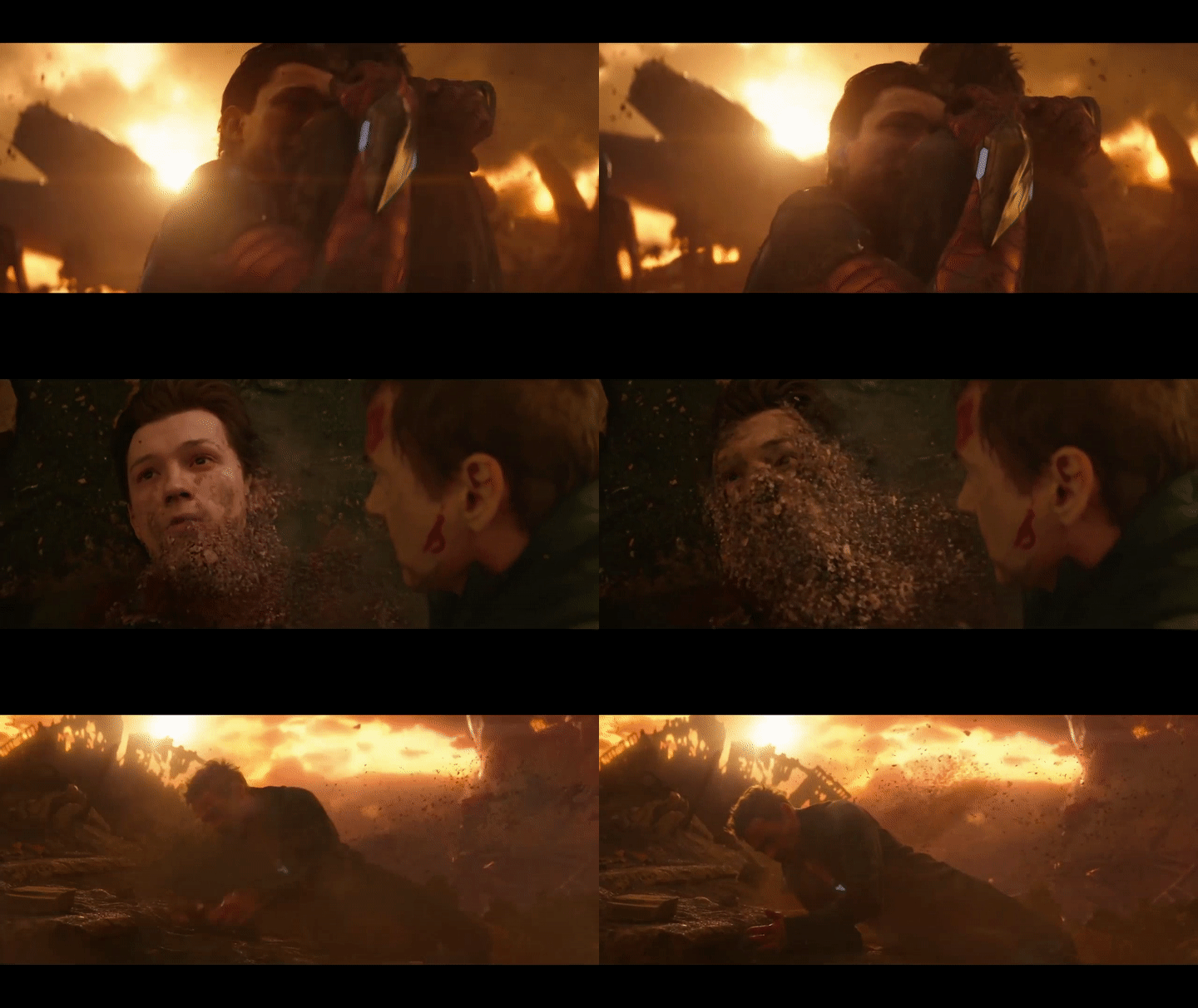
In an emotionally devastating scene, he turns to Tony and says, "I don't feel so good," before slowly fading away in his mentor's arms. Peter's desperate fear and Tony's helplessness created one of the most memorable and emotional moments in the entire Marvel Cinematic Universe, leaving audiences stunned as the credits rolled.
The scene became an instant cultural phenomenon and remains one of Tom Holland's most powerful performances as Spider-Man.
Although Avengers: Infinity War features dozens of superheroes, Spider-Man manages to leave a lasting impression throughout the film. Whether he's helping devise battle strategies on Titan, showcasing his courage against impossible odds, or delivering one of the MCU's most emotional moments, Peter Parker proves that he belongs alongside Marvel's greatest heroes.
More importantly, Infinity War demonstrates how far Tom Holland's Spider-Man has come. The teenager who once dreamed of joining the Avengers is now fighting shoulder-to-shoulder with them to save the universe. It's a defining chapter in Peter Parker's MCU story—and one whose consequences would dramatically shape the events of Avengers: Endgame and Spider-Man: Far From Home.
11. Avengers: Endgame (2019)

While Avengers: Endgame is primarily remembered as the grand finale to Marvel Studios' first decade of storytelling, it also serves as a crucial chapter in Spider-Man's MCU journey. Although certain events at the end of Avengers: Infinity War keep Tom Holland's Peter Parker absent for a significant portion of the film, his presence is still felt throughout the story, and when Spider-Man finally returns, he becomes part of some of the most unforgettable moments in Marvel history.
Released in 2019, Avengers: Endgame was more than just another superhero movie. It was the culmination of an unprecedented cinematic experiment that had been building across 21 interconnected Marvel Cinematic Universe films. The movie brought together countless heroes, storylines, and emotional arcs, delivering a massive payoff for audiences who had followed the MCU since its beginning with Iron Man in 2008.
The film opens in the aftermath of Thanos' devastating victory in Infinity War. Half of all life in the universe has vanished, including Peter Parker, whose heartbreaking farewell to Tony Stark remains one of the MCU's most emotional scenes. For much of Endgame, the surviving Avengers struggle to cope with their loss while searching for a way to undo the catastrophic events caused by the Infinity Gauntlet.
Although Spider-Man spends much of the movie off-screen, his absence serves as a constant reminder of what is at stake. Few losses affect Tony Stark more deeply than Peter's disappearance. Throughout the film, Tony carries the emotional burden of failing to protect the young hero he had come to view almost like a son, making Peter's eventual return all the more meaningful.
When Spider-Man finally re-enters the story, it is during one of the most celebrated sequences in superhero cinema.
After the Avengers successfully reverse the effects of the Snap, portals begin opening across the battlefield as heroes from every corner of the universe arrive to face Thanos and his army. Among them is Peter Parker, who immediately jumps back into action alongside Earth's Mightiest Heroes. The moment is made even more impactful by Peter's reunion with Tony Stark, a brief but emotional exchange that perfectly captures the bond they had built over multiple films.
Once the battle begins, Spider-Man proves exactly why he belongs among Marvel's greatest heroes. Despite being one of the youngest participants in the conflict, Peter plays a critical role in protecting the Infinity Gauntlet and helping ensure that it stays out of Thanos' hands. His courage, determination, and willingness to put himself in danger for the greater good embody everything that makes Spider-Man such an enduring hero.
One of the film's standout moments sees Peter carrying the Infinity Gauntlet across the battlefield while being assisted by a collection of Marvel's most powerful heroes. The sequence highlights how far he has come since the wide-eyed teenager who nervously joined the Avengers during Captain America: Civil War.
However, Endgame is just as much about emotional closure as it is about epic battles.
Following the defeat of Thanos, the film delivers one of the most heartbreaking moments in MCU history when Tony Stark sacrifices himself to save the universe. For Peter Parker, the loss is devastating. Their relationship had evolved from mentor and student into something much deeper, and Peter's grief during Tony's final moments serves as a powerful reminder of how important Iron Man had become in his life.
That loss would go on to shape much of Peter's journey in Spider-Man: Far From Home, making Endgame an essential piece of his overall story rather than simply another Avengers crossover.
Even though Spider-Man doesn't receive as much screen time as he did in Infinity War, Avengers: Endgame remains a vital entry in his MCU timeline. It concludes the Infinity Saga, delivers emotional resolution to Peter's relationship with Tony Stark, and sets the stage for the next phase of Spider-Man's evolution as a hero.
More importantly, it reminds audiences that Spider-Man is no longer just the kid from Queens trying to prove himself. By the end of Endgame, Peter Parker has stood alongside legends, fought in a battle to save the universe, and witnessed the sacrifices required to be a true hero. Those experiences would forever change him—and prepare him for the challenges that awaited in the next chapter of his story.
12. Spider-Man: Far From Home (2019)
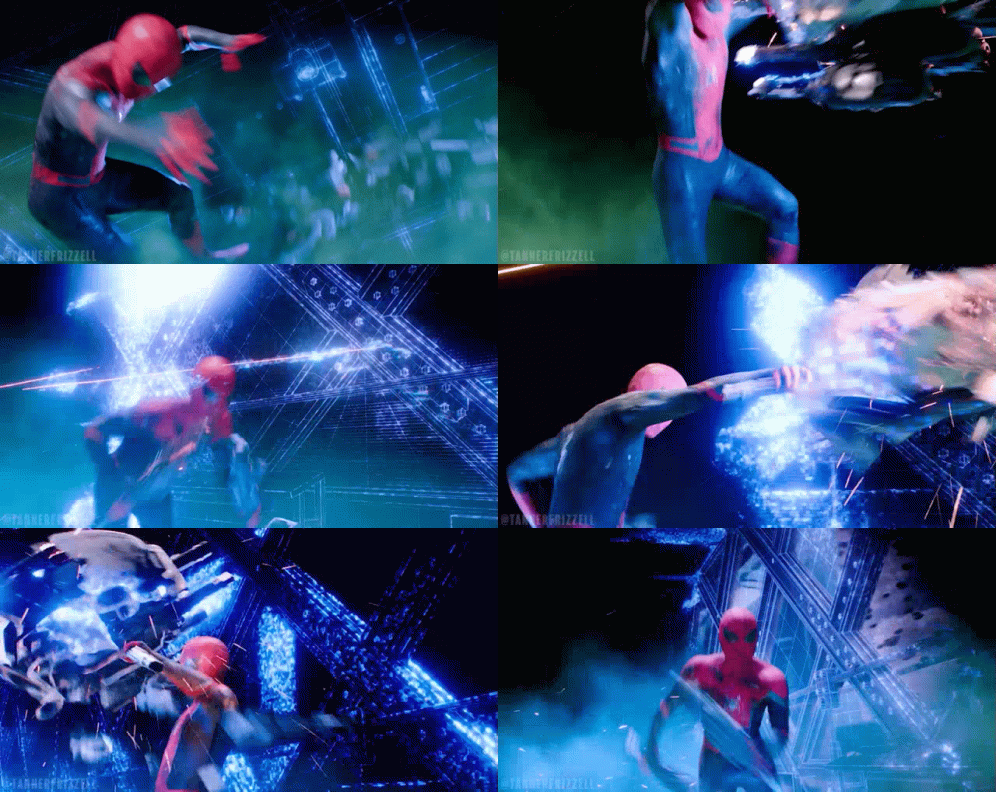
Following the universe-altering events of Avengers: Endgame, Spider-Man: Far From Home serves as both the conclusion of the MCU's Infinity Saga and the beginning of a brand-new chapter for Peter Parker. Released in 2019 and directed by Jon Watts, the film explores the emotional aftermath of Tony Stark's sacrifice while pushing Spider-Man into his biggest solo adventure yet.
For the first time in the MCU, Peter Parker's journey extends far beyond the streets of New York City.
The story begins shortly after the events of Endgame, with the world still trying to adjust to life after the return of billions of people who vanished during Thanos' Snap. The film cleverly addresses the consequences of what Marvel refers to as "The Blip," showing how society has been forced to adapt to the chaos created by five years of missing time.
Amid all this uncertainty, Peter Parker is simply trying to be a normal teenager.
Still grieving the loss of Tony Stark and overwhelmed by the expectations now being placed upon him, Peter eagerly looks forward to a school trip across Europe. More than anything, he hopes to take a temporary break from being Spider-Man, spend time with his friends, and finally tell MJ how he feels about her.
Unfortunately, the universe has very different plans.
What starts as a relaxing educational tour quickly turns into an international superhero adventure when mysterious elemental creatures begin attacking cities across Europe. Before long, Peter finds himself pulled back into action and once again facing responsibilities he hoped to leave behind, even if only for a few weeks.
Adding to the chaos is the arrival of Nick Fury, played by Samuel L. Jackson, and Maria Hill, portrayed by Cobie Smulders. The veteran S.H.I.E.L.D. operatives repeatedly push Peter into situations he would rather avoid, reminding him that the world still needs heroes—even when he wishes he could focus on being an ordinary high school student.
The film's biggest mystery revolves around Quentin Beck, portrayed by Jake Gyllenhaal.
Introduced as a charismatic and experienced superhero known as Mysterio, Beck claims to come from an alternate universe devastated by the same elemental threats now attacking Peter's world. Presenting himself as a seasoned hero willing to protect Earth, Beck quickly earns the trust of both Peter Parker and the public.
At first glance, Mysterio appears to be everything Peter thinks a hero should be. He's confident, respected, and seemingly capable of handling threats far beyond Spider-Man's experience level. For a teenager still mourning Tony Stark and questioning whether he can ever fill the void left behind by Iron Man, Beck represents a comforting presence and a potential mentor figure.
However, as longtime Spider-Man fans already know, appearances can be deceiving.
Without venturing into major spoiler territory, Far From Home delivers some of the most visually inventive sequences in any Spider-Man film thanks to Mysterio's comic-book-inspired abilities. The movie's illusion-based action scenes create mind-bending spectacles that challenge Peter both physically and psychologically, resulting in some of Tom Holland's most impressive performances as Spider-Man.
Beyond its superhero action, the film places significant emphasis on Peter's personal growth. Throughout the story, he struggles with self-doubt, responsibility, and the enormous pressure of being viewed as Iron Man's potential successor. Unlike previous adventures, where Peter was eager to prove himself, Far From Home focuses on a young hero learning to trust his own instincts and define himself on his own terms.
The movie also further develops Peter's relationship with MJ, played by Zendaya. Their evolving dynamic brings heart, humor, and emotional depth to the story, laying the groundwork for one of the MCU's most beloved romances.
Visually, Far From Home expands Spider-Man's world in exciting new ways. From Venice and Prague to London and beyond, the European setting gives the franchise a fresh atmosphere while allowing Peter to face threats on a global scale. It also marks the first Spider-Man solo film to take the hero so far away from his familiar New York surroundings.
Most importantly, the film pushes Peter toward becoming a more independent hero. With Tony Stark gone, Peter can no longer rely on mentors to guide him through every challenge. The choices he makes throughout Far From Home help establish the confidence and maturity that will become essential in later MCU stories.
And if there's one piece of advice every Spider-Man fan should follow, it's this:
Do not leave when the credits start rolling.
Spider-Man: Far From Home features one of the most shocking and consequential post-credit scenes in Marvel history. The reveal completely changes Peter Parker's future, sets the stage for Spider-Man: No Way Home, and delivers a game-changing moment that would send shockwaves through the Spider-Man franchise for years to come.
For that reason alone, the film's ending is absolutely essential viewing.
By the time Far From Home concludes, Peter Parker has taken another major step toward becoming the Spider-Man the world needs—not as the next Iron Man, but as the first and only Spider-Man. The lessons he learns, the enemies he faces, and the revelations that emerge during the final moments of the film all pave the way for one of the most ambitious and emotional Spider-Man stories ever told.
13. Venom: Let There Be Carnage (2021)
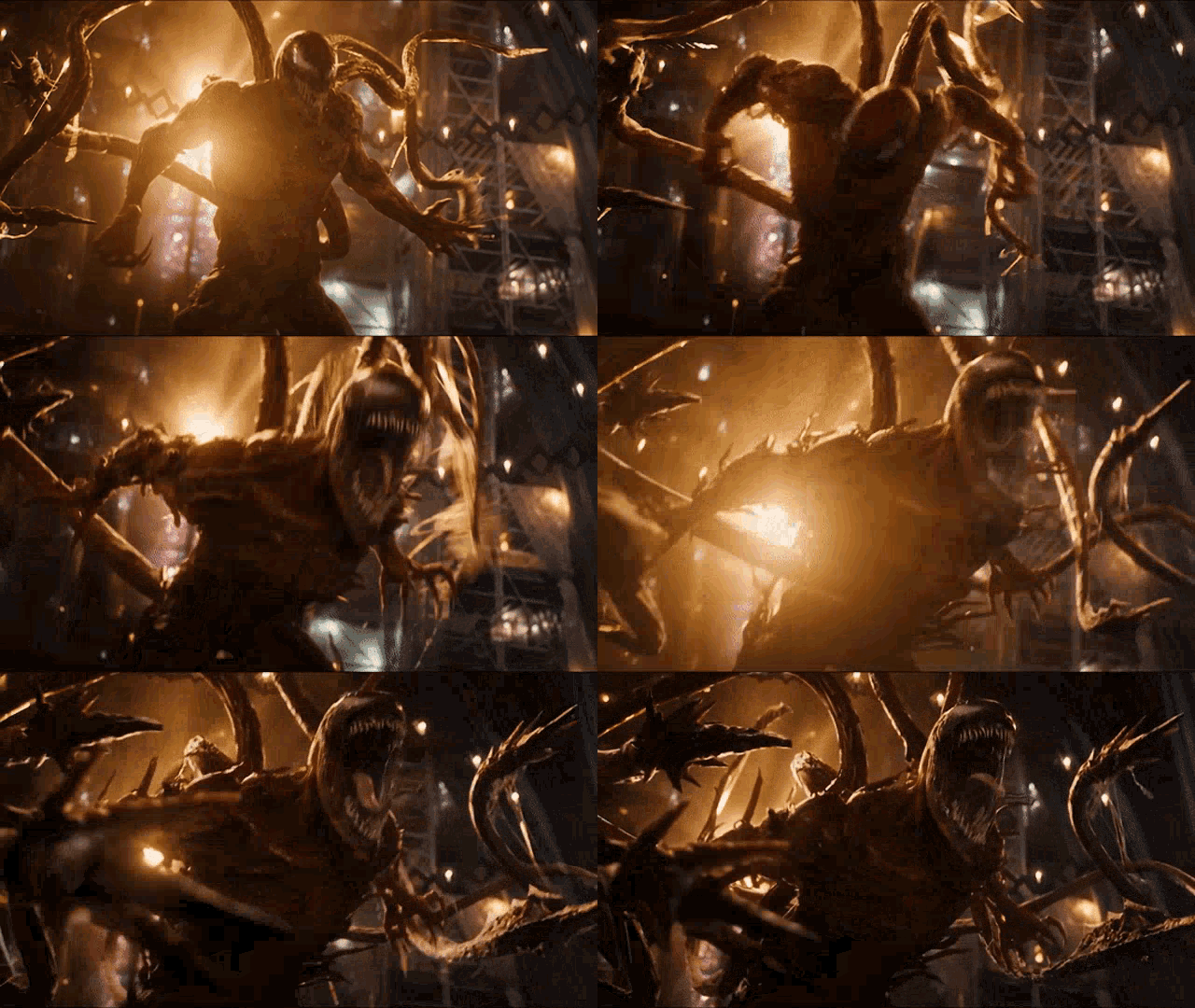
Again! Venom: Let There Be Carnage isn't a Spider-Man movie in the traditional sense, it occupies an increasingly important place within the broader Spider-Man cinematic landscape. Released in 2021 and directed by Andy Serkis, the sequel continues the story of Tom Hardy's Eddie Brock and his chaotic symbiotic partner, Venom, while taking significant steps toward connecting Sony's Spider-Man Universe with the wider Marvel multiverse.
Like its predecessor, the film largely exists on the fringes of Spider-Man's world rather than directly within it. Peter Parker doesn't appear, and the story remains focused primarily on Eddie Brock's unconventional relationship with the alien symbiote living inside him. However, beneath the film's action, humor, and monstrous battles lies a development that would eventually have major implications for Spider-Man fans.
At the start of the movie, Eddie and Venom are still struggling to coexist. Despite having saved the world together, the two remain wildly different personalities forced to share the same body. Their constant arguments, awkward living arrangements, and dysfunctional friendship provide much of the film's comedic charm, further cementing the odd-couple dynamic that became one of the franchise's biggest strengths.
The central threat arrives in the form of Cletus Kasady, portrayed by Woody Harrelson.
First teased during the post-credit scene of the original Venom, Kasady is a notorious serial killer whose encounter with Venom leads to the birth of an even more dangerous symbiote: Carnage. Unlike Venom, who possesses at least some moral restraint, Carnage is a creature of pure chaos and destruction. Combined with Kasady's violent nature, the result is one of Marvel's most terrifying comic book villains.
The film's primary conflict revolves around Venom's struggle to stop Carnage before he unleashes widespread devastation. The battle between the two symbiotes delivers larger-scale action, more intense confrontations, and some of the most visually spectacular sequences in Sony's Spider-Man Universe.
For longtime comic book readers, the arrival of Carnage was particularly significant. In Marvel Comics, Carnage has long been regarded as one of Venom's deadliest enemies and one of Spider-Man's most dangerous adversaries. His live-action debut had been anticipated for years, making his introduction one of the sequel's biggest attractions.
Beyond the action, Let There Be Carnage continues to expand the mythology surrounding symbiotes, exploring their hive-mind knowledge and suggesting that these alien beings possess awareness that extends far beyond a single universe. At the time, this detail seemed relatively minor—but it would later prove to be incredibly important.
The real reason Spider-Man fans should pay attention to this film arrives after the credits.
Without spoiling every detail, the movie's post-credit scene delivers one of the most surprising moments in Sony's Spider-Man Universe. In a matter of seconds, the scene dramatically alters Venom's status quo and establishes a direct connection to the events unfolding in the Marvel Cinematic Universe.
For years, audiences had wondered whether Tom Hardy's Venom and Tom Holland's Spider-Man would ever share the same screen. While Let There Be Carnage doesn't fully answer that question, its post-credit sequence brings the two worlds closer together than ever before and immediately sparked widespread speculation about the future of both franchises.
The scene also serves as a direct lead-in to the multiversal events explored in Spider-Man: No Way Home, making it one of the most important post-credit stingers in recent superhero movie history.
Although Venom: Let There Be Carnage remains largely separate from Peter Parker's story, it plays a crucial role in the evolving relationship between Sony's Spider-Man Universe and the MCU. It expands the mythology of Venom, introduces one of Marvel's most infamous villains, and plants the seeds for future developments that could significantly impact Spider-Man's cinematic future.
For viewers following Spider-Man's larger multiversal saga, Let There Be Carnage is more than just a Venom sequel—it's a key piece of the puzzle that helps explain how these seemingly separate worlds are beginning to collide. And thanks to that game-changing post-credit scene, its importance extends far beyond the film's main storyline.
14. Spider-Man: No Way Home (2021)

Spider-Man: No Way Home is one of the most ambitious superhero movies ever made. Arriving in theatres in 2021, the film serves as the culmination of Tom Holland's Spider-Man trilogy while simultaneously celebrating nearly two decades of Spider-Man cinema. What unfolds is a deeply emotional, action-packed, and nostalgia-filled adventure that rewards longtime fans while fundamentally reshaping Peter Parker's future.
The story begins immediately after the shocking post-credit reveal from Spider-Man: Far From Home. For the first time in cinematic history, Peter Parker's secret identity has been exposed to the entire world. Overnight, Peter goes from being New York's friendly neighborhood hero to one of the most talked-about people on the planet.
The consequences are devastating.
Peter's life is thrown into chaos as media scrutiny, public opinion, and legal troubles begin affecting not only him but also the people he cares about most. MJ, Ned, and Aunt May all find their lives disrupted simply because they are connected to Spider-Man. For a teenager who has always tried to protect those closest to him, the situation quickly becomes unbearable.
Desperate to fix things, Peter turns to one of the most powerful individuals in the Marvel Cinematic Universe: Doctor Stephen Strange.
Peter asks Strange to cast a spell that will make the world forget he is Spider-Man, allowing everyone to return to their normal lives. On paper, it sounds like a simple solution. However, Peter's attempts to modify the spell midway through its casting create disastrous consequences.
Instead of solving the problem, the spell fractures the boundaries between universes.
Suddenly, characters from entirely different Spider-Man realities begin appearing within the MCU. What follows is a multiversal collision unlike anything audiences had seen before, bringing together heroes, villains, and storylines from across Spider-Man's cinematic history.
One of the film's greatest achievements is how it transforms what could have been a simple nostalgia exercise into a meaningful continuation of multiple Spider-Man stories.
Fans are reunited with several legendary villains from previous Spider-Man franchises, including familiar faces from both the Tobey Maguire and Andrew Garfield eras. Rather than treating these returning characters as mere cameos, No Way Home gives them genuine purpose within the narrative, allowing them to evolve beyond their original appearances while exploring themes of redemption, second chances, and personal responsibility.
The result is a movie that feels equally connected to all three Spider-Man generations.
For Tom Holland's Peter Parker, the film serves as the most important chapter of his journey to date. Throughout the story, he faces heartbreaking losses, impossible moral choices, and challenges that force him to confront what being Spider-Man truly means. The film strips away many of the comforts and support systems Peter previously relied upon, pushing him toward a level of maturity audiences had never seen before.
At the same time, No Way Home functions as a loving tribute to the Spider-Man legacy as a whole.
Without diving into major spoilers, the film beautifully honors the stories, characters, and themes that defined both the Raimi and Webb franchises. Longtime fans who grew up watching Tobey Maguire and Andrew Garfield's Spider-Man films are rewarded with emotional moments, meaningful character interactions, and callbacks that feel earned rather than forced.
What makes these moments so effective is that they aren't included merely for nostalgia. Instead, they directly contribute to Peter Parker's growth and help shape the choices he ultimately makes.
The film's emotional core is every bit as powerful as its multiversal spectacle. Beneath the returning characters, epic battles, and crowd-pleasing surprises lies a story about sacrifice, responsibility, grief, and the difficult choices that come with being a hero. In many ways, No Way Home functions as Peter Parker's true coming-of-age story within the MCU.
Visually, the film delivers some of the most exciting Spider-Man action sequences ever put on screen, combining classic villains, magical threats, and multiversal chaos into a series of memorable set pieces. Yet for all its scale, the movie never loses sight of Peter's personal journey.
The impact of No Way Home extended far beyond the box office. The film became a global phenomenon, earning nearly $2 billion worldwide and becoming one of the highest-grossing superhero films in history. It also reignited appreciation for previous Spider-Man franchises, introducing a new generation of viewers to the Tobey Maguire and Andrew Garfield eras while solidifying Tom Holland's place among the character's greatest live-action portrayals.
Most importantly, No Way Home feels like both an ending and a beginning.
It provides emotional closure to numerous storylines spanning multiple Spider-Man universes while simultaneously setting the stage for a brand-new chapter in Peter Parker's life. By the time the credits roll, Spider-Man's world has been changed forever, leaving audiences eager to see where his story goes next.
For fans who have followed Spider-Man's cinematic journey from 2002 to today, Spider-Man: No Way Home is much more than another sequel. It's a celebration of everything that has made Spider-Man one of the most beloved superheroes of all time—a heartfelt love letter to the character, his legacy, and the generations of fans who have grown up alongside him.
15. Morbius (2022)

Like Venom and Venom: Let There Be Carnage, Morbius occupies a somewhat unusual place within the larger Spider-Man cinematic landscape. While Spider-Man himself does not appear in the film, Morbius continues Sony's efforts to expand its universe of Spider-Man-related characters and introduces another classic villain from Marvel Comics whose history is deeply connected to the web-slinger.
Released in 2022 and directed by Daniel Espinosa, the film stars Jared Leto as Dr. Michael Morbius, a brilliant scientist suffering from a rare and debilitating blood disorder. Driven by a desperate desire to cure both himself and others afflicted by the same condition, Morbius embarks on a risky scientific experiment that combines cutting-edge biotechnology with the DNA of vampire bats.
The procedure succeeds—but at a terrible cost.
While Morbius gains extraordinary abilities, including superhuman strength, enhanced speed, heightened senses, echolocation, and accelerated healing, he also develops an uncontrollable thirst for blood. The transformation turns him into something caught between man and monster, earning him the nickname that comic book fans know well: the Living Vampire.
One of the more fascinating aspects of Morbius as a character is that he exists in a moral gray area. Unlike many traditional Spider-Man villains, Michael Morbius is not inherently evil. In Marvel Comics, he has often been portrayed as a tragic antihero—a man whose attempts to do good inadvertently transform him into something dangerous. The film largely embraces this interpretation, presenting Morbius as someone constantly battling his darker instincts while trying to retain his humanity.
For much of its runtime, Morbius functions as a standalone origin story, but Spider-Man fans quickly noticed several clues suggesting a larger connection to Sony's growing universe.
Perhaps the clearest indication comes through references that appear to link the film to the world established in Venom. One notable mention of strange events occurring "in San Francisco" is widely interpreted as a nod to Eddie Brock and Venom, whose adventures are based in that city. While subtle, the reference helps establish that these characters may exist within the same broader continuity.
However, where things become significantly more complicated is the film's relationship with Spider-Man.
Unlike the Venom films, which largely avoid direct Spider-Man references, Morbius actively introduces elements tied to the wall-crawler's cinematic history. Most notably, the movie features the return of Adrian Toomes, also known as the Vulture, portrayed once again by Michael Keaton.
Spider-Man fans will immediately recognize Toomes as the primary antagonist from Spider-Man: Homecoming. His appearance raises a host of intriguing questions because Vulture is firmly established as an MCU character, making his presence in Morbius difficult to explain through conventional storytelling alone.
Without venturing too deeply into spoiler territory, the film's post-credit scenes suggest that Toomes may have a much larger role to play in future projects. His interactions hint at the possibility of assembling a team connected to Spider-Man's rogues' gallery, a concept that longtime comic readers will instantly associate with the Sinister Six.
These developments sparked widespread debate among fans regarding exactly where Morbius fits within the larger multiversal puzzle.
Is it set entirely within Sony's Spider-Man Universe? Does it exist alongside the Venom films? Is it connected to the Marvel Cinematic Universe through the events of Spider-Man: No Way Home? Or does it somehow occupy a space between multiple realities?
The film deliberately leaves many of these questions unanswered, contributing to the ongoing mystery surrounding Sony's interconnected Spider-Man projects.
Although Morbius received a mixed response from both critics and audiences upon release, its significance within the broader Spider-Man mythology extends beyond its standalone story. The film introduces one of Spider-Man's most recognizable comic book adversaries, strengthens connections between Sony's various franchises, and continues laying groundwork for future crossovers involving characters traditionally associated with Peter Parker.
Whether those plans ultimately lead to Spider-Man himself remains to be seen.
For now, Morbius serves as another piece of Sony's expanding Spider-Man Universe—a film that may not focus directly on the friendly neighborhood hero but nevertheless contributes to the growing web of characters, villains, and multiversal mysteries that continue to shape Spider-Man's cinematic future.
16. Spider-Man: Across the Spider-Verse (2023)
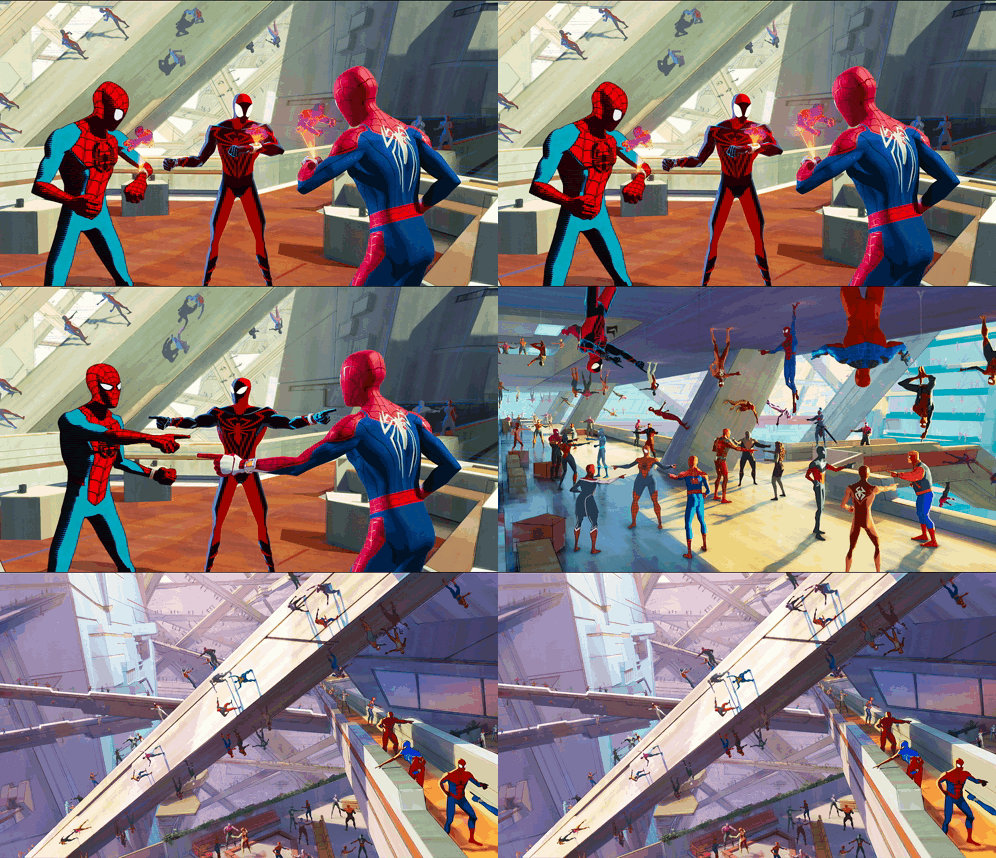
Few sequels have arrived with as much anticipation as Spider-Man: Across the Spider-Verse. Following the critical and commercial success of Spider-Man: Into the Spider-Verse, the 2023 follow-up expanded the scope of the Spider-Verse in ways that few superhero films have ever attempted, delivering a visually breathtaking, emotionally rich, and wildly ambitious continuation of Miles Morales' journey.
At first glance, Across the Spider-Verse exists separately from the Marvel Cinematic Universe and the live-action Spider-Man franchises. However, much like Into the Spider-Verse before it, the film explores the concept of the multiverse on a massive scale, further blurring the lines between different Spider-Man realities. Given how Spider-Man: No Way Home successfully united multiple live-action Spider-Man continuities, many fans have speculated that the animated Spider-Verse films could eventually become even more closely connected to the wider Spider-Man mythos.
Whether or not that crossover ever happens, Across the Spider-Verse proves that the Spider-Verse concept is capable of telling stories every bit as compelling as its live-action counterparts.
Set approximately one year after the events of Into the Spider-Verse, the film reunites audiences with Miles Morales, once again voiced by Shameik Moore. Since embracing his destiny as Spider-Man, Miles has become far more confident in his abilities, but he still finds himself struggling to balance the demands of heroism with the expectations of family, school, friendships, and his own uncertain future.
Although he has successfully grown into the role of Spider-Man, Miles continues to feel isolated. Few people truly understand the challenges he faces, and he frequently finds himself caught between the life he wants and the responsibilities he cannot escape.
That changes when Gwen Stacy returns.
Voiced once again by Hailee Steinfeld, Gwen re-enters Miles' life and introduces him to a much larger world than he ever imagined. Their reunion sets the stage for a new adventure that pulls Miles deeper into the multiverse than ever before.
As the story unfolds, Miles discovers the existence of an expansive network of Spider-People from countless dimensions, many of whom are part of an organization dedicated to protecting the stability of the multiverse itself. This sprawling society introduces audiences to dozens of new Spider-Variants, each with their own unique designs, personalities, worlds, and interpretations of what it means to be Spider-Man.
Among the most prominent newcomers is Miguel O'Hara, also known as Spider-Man 2099, voiced by Oscar Isaac. Unlike many of the Spider-People Miles has previously encountered, Miguel approaches his responsibilities with a far more serious and uncompromising mindset. His role quickly becomes one of the film's most intriguing and complex elements, challenging Miles' understanding of destiny, responsibility, and the very foundations of Spider-Man's existence.
The film's central conflict revolves around a mysterious and increasingly dangerous new threat known as The Spot. Initially appearing harmless and almost comedic, the villain gradually evolves into something far more powerful and terrifying, becoming a threat not just to a single universe but potentially to the entire multiverse itself.
As Miles, Gwen, and their allies attempt to confront this growing danger, they are forced to grapple with difficult questions about fate, sacrifice, and whether certain tragedies are destined to occur across every Spider-Man reality.
What truly sets Across the Spider-Verse apart, however, is its breathtaking artistry.
Building upon the revolutionary visual style of the first film, the sequel pushes animation to astonishing new heights. Different universes are rendered using entirely distinct artistic techniques, allowing each dimension to feel like a living work of art. From watercolor-inspired worlds to futuristic cityscapes and comic-book-inspired action sequences, every frame feels meticulously crafted and bursting with creativity.
The result is a film that not only raises the bar for superhero storytelling but also redefines what modern animation can achieve.
Beyond its stunning visuals, Across the Spider-Verse is ultimately a deeply personal story about identity, family, choice, and self-determination. At its heart, the film asks whether people are defined by the paths laid out before them or by the choices they make when faced with impossible circumstances.
For Miles Morales, that question becomes more important than ever.
The movie's emotional depth, character-driven storytelling, and ambitious exploration of the Spider-Verse earned widespread acclaim from critics and audiences alike, with many considering it one of the finest superhero films ever produced. It also further cemented Miles Morales as one of the most important and beloved Spider-People in modern popular culture.
Perhaps most impressively, Across the Spider-Verse manages to feel both massive and intimate at the same time. While the fate of countless universes hangs in the balance, the story never loses sight of the personal relationships and emotional stakes that make Spider-Man stories so enduring.
By the time the credits roll, Miles Morales finds himself facing his greatest challenge yet, setting the stage for the highly anticipated conclusion to the trilogy in Spider-Man: Beyond the Spider-Verse.
Whether you're a lifelong Spider-Man fan or simply someone who appreciates exceptional storytelling, Spider-Man: Across the Spider-Verse is essential viewing—a spectacular celebration of the limitless possibilities that exist within the Spider-Verse and a powerful reminder that anyone can wear the mask.
17. Madame Web (2024)
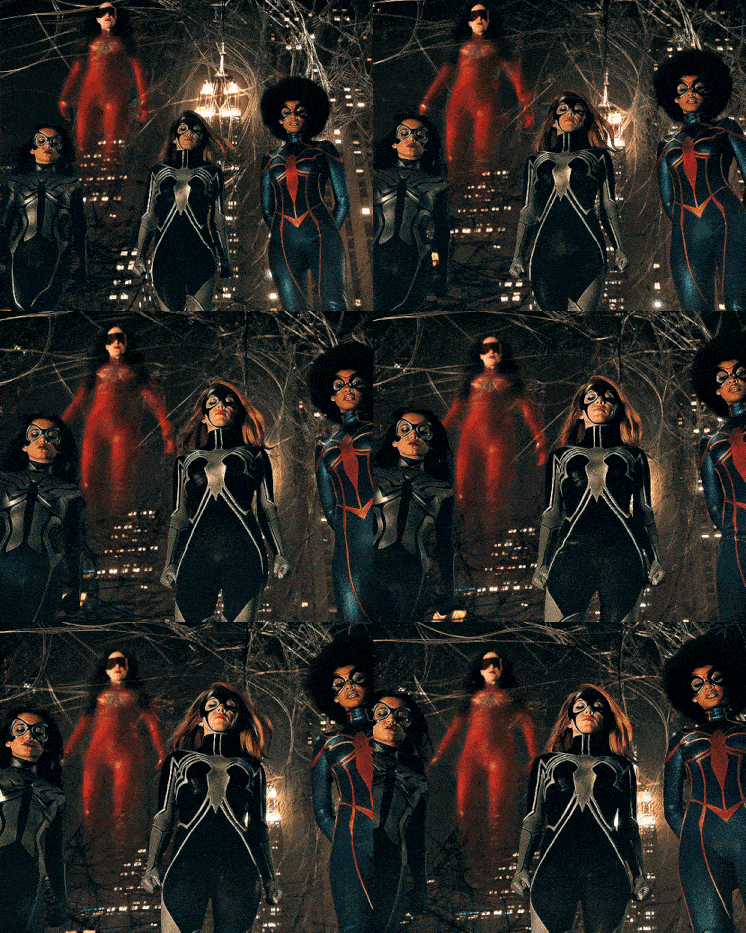
Among Sony's growing collection of Spider-Man-related films, Madame Web stands out as one of the most unique and unconventional entries. Released in 2024, the movie shifts the spotlight away from traditional superheroes and supervillains to explore a character who has long played a mysterious yet important role within Spider-Man mythology.
While Madame Web is connected to the larger Spider-Man universe, fans expecting Peter Parker to swing into action should know that this is largely a standalone story. Spider-Man himself does not play a direct role in the film's events, making it one of the few Spider-Man-adjacent projects that focuses almost entirely on new characters and mythology. That said, longtime Marvel fans will undoubtedly notice several connections, references, and subtle links to Spider-Man lore throughout the story—some of which are best left unspoiled for first-time viewers.
At the center of the film is Cassandra Webb, portrayed by Dakota Johnson.
Unlike the elderly clairvoyant mentor that comic book readers may recognize, this version of Cassandra begins her journey as an ordinary paramedic working in Manhattan. Her life changes dramatically after a near-death experience triggers extraordinary abilities that allow her to glimpse events before they happen.
Suddenly gifted—or perhaps burdened—with visions of the future, Cassandra finds herself caught between what is destined to occur and what might still be changed. As she struggles to understand the true nature of her powers, she is forced to confront difficult questions about fate, responsibility, and whether the future is something that can be rewritten.
Much of the film revolves around Cassandra learning to trust her abilities while racing against time to prevent a looming tragedy.
As her visions become increasingly clear, she discovers that the future of several young women is intertwined with her own. These individuals are destined to play important roles in the Spider-Man mythos, and protecting them becomes Cassandra's primary mission.
Joining Dakota Johnson's Cassandra Webb are three young characters portrayed by an impressive ensemble cast.
Sydney Sweeney plays Julia Cornwall, Isabela Merced portrays Anya Corazon, and Celeste O'Connor appears as Mattie Franklin. Although each comes from a different background and possesses a distinct personality, all three share one important characteristic: they are connected to powerful destinies that could one day transform them into heroes.
As Cassandra uncovers the truth behind her visions, she realizes that these young women are being hunted by a dangerous enemy whose plans threaten not only their futures but their very survival in the present.
The movie's tagline perfectly captures the heart of the story: these characters are "bound for powerful destinies... if they can survive a deadly present."
Unlike many superhero films that focus heavily on action and large-scale battles, Madame Web leans more heavily into mystery, suspense, and supernatural elements. The story often plays like a thriller, with Cassandra attempting to piece together fragments of future events while desperately trying to stay one step ahead of a threat she only partially understands.
This approach gives the film a noticeably different tone from other Spider-Man-related projects, offering a fresh perspective on the broader Spider-Verse.
One of the most interesting aspects of Madame Web is how it explores the idea of interconnected destinies. Throughout Spider-Man history, Madame Web has often served as a guardian of the Web of Life and Destiny—a mystical network that connects Spider-People across countless realities. While the film presents its own interpretation of this mythology, it still draws inspiration from those comic book roots, hinting at a much larger world beyond the immediate story.
Although Madame Web largely functions as a self-contained origin story, it also plants seeds for potential future developments within Sony's Spider-Man Universe. The film introduces characters whose comic book counterparts have longstanding connections to Spider-Man, raising intriguing possibilities for where their stories might lead next.
Whether those threads will eventually intersect with Peter Parker remains an open question.
For now, Madame Web offers something different within the Spider-Man franchise: a character-driven story centered on prophecy, destiny, and the burden of knowing what the future holds. By focusing on Cassandra Webb's transformation from ordinary paramedic to a woman capable of seeing beyond time itself, the film expands the boundaries of Spider-Man mythology while introducing audiences to a corner of the Marvel universe that has rarely been explored on the big screen.
While it may not feature the friendly neighborhood Spider-Man himself, Madame Web remains an intriguing piece of the larger Spider-Verse puzzle—one that sheds light on the people, powers, and destinies that exist beyond Peter Parker's world.
18. Venom: The Last Dance (2024)
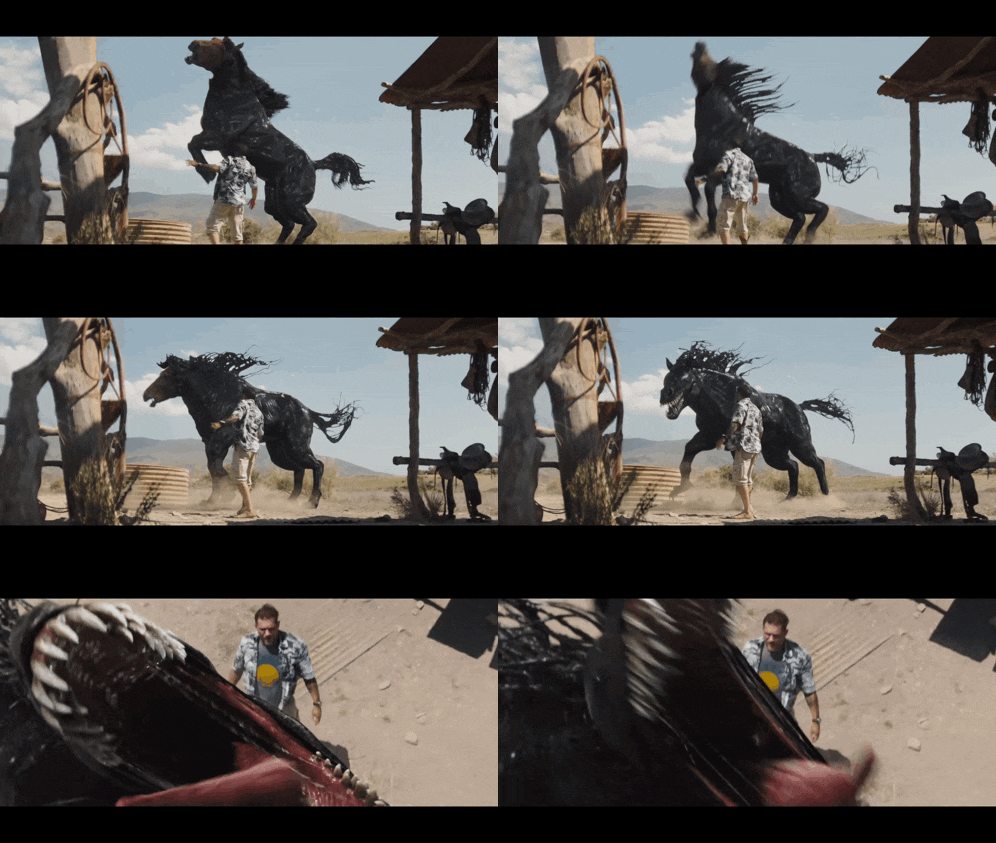
After three films, countless arguments, chaotic adventures, and an unexpectedly heartfelt friendship between man and symbiote, Venom: The Last Dance (2024) brought Tom Hardy's run as Eddie Brock and Venom to a close. Serving as the final chapter of Sony's Venom trilogy, the film attempts to deliver a larger, more emotional farewell to one of Marvel's most unconventional antiheroes while further expanding the cosmic mythology surrounding the symbiotes.
Picking up after the events of Venom: Let There Be Carnage and the brief multiversal detour that connected Eddie Brock to the Marvel Cinematic Universe, The Last Dance finds Eddie and Venom once again on the run. This time, however, the stakes are significantly higher as forces from both Earth and beyond begin hunting them, forcing the unlikely duo into a final battle for survival.
By this point in the trilogy, the relationship between Eddie and Venom has become the franchise's greatest strength.
What began in the first film as an uneasy coexistence has evolved into one of the most entertaining partnerships in modern superhero cinema. Despite their constant bickering, wildly different personalities, and tendency to drive each other crazy, Eddie and Venom have developed a genuine bond that feels more like an odd-couple friendship than a traditional superhero partnership.
It is this dynamic that continues to anchor The Last Dance.
Throughout the film, audiences once again get to enjoy the humor, chaos, and surprisingly emotional moments that emerge whenever Eddie and Venom are forced to navigate increasingly absurd situations together. Whether they're arguing over life choices, disagreeing about how to handle danger, or reluctantly protecting one another, their chemistry remains the heart of the story.
The film also dives deeper into symbiote mythology than any previous entry in the franchise. Expanding on ideas introduced in earlier movies, The Last Dance explores the larger cosmic origins of the symbiotes and introduces threats that extend far beyond anything Eddie Brock has faced before. The story aims to raise the stakes from a local conflict to a battle with consequences that could impact the entire symbiote species.
Visually, the movie delivers the large-scale action sequences fans have come to expect from the franchise, featuring massive symbiote battles, destructive confrontations, and plenty of opportunities for Venom to unleash his signature blend of brutality and dark humor.
However, despite its ambitious scope, the film received a mixed response from critics and audiences.
Many reviewers felt that the story struggled under the weight of an overly familiar plot, uneven pacing, and action sequences that lacked the excitement and creativity expected from a trilogy finale. While the film certainly aims for a bigger and more dramatic conclusion, some felt that its narrative never fully capitalized on the emotional potential of Eddie and Venom's final adventure.
One review notably summarized the experience by stating that "Venom: The Last Dance trips over its own tendrils and lets a boring, generic plot and underwhelming action distract from the surprisingly resilient central relationship between Eddie Brock and his symbiote bestie."
Ironically, that assessment also highlights the movie's greatest success.
Even when the larger story stumbles, the connection between Eddie and Venom remains consistently entertaining. Tom Hardy once again commits fully to both sides of the partnership, delivering a performance that balances absurd comedy, emotional sincerity, and chaotic energy in a way few actors could manage.
For Spider-Man fans, the film's importance extends beyond simply concluding the Venom trilogy. While Spider-Man himself remains absent, the movie continues to occupy a significant place within Sony's broader Spider-Man Universe. Given the multiversal connections established in previous films and Venom's long-standing comic book history with Peter Parker, many fans remain hopeful that the character's story may not be completely finished—even if this chapter has reached its conclusion.
Whether The Last Dance ultimately serves as a definitive goodbye or merely the end of one era remains to be seen.
What is certain, however, is that Tom Hardy's portrayal helped transform Venom from one of Spider-Man's most famous villains into a standalone cinematic star. Across three films, audiences watched Eddie Brock and Venom evolve from reluctant partners into inseparable companions, creating one of the most distinctive relationships in modern superhero cinema.
As a result, Venom: The Last Dance stands as both a farewell to Hardy's interpretation of the character and the closing chapter of a trilogy that carved out its own unique corner of the Spider-Man universe—one built as much on friendship and chaos as it was on superhero action.
19. Kraven the Hunter (2024)
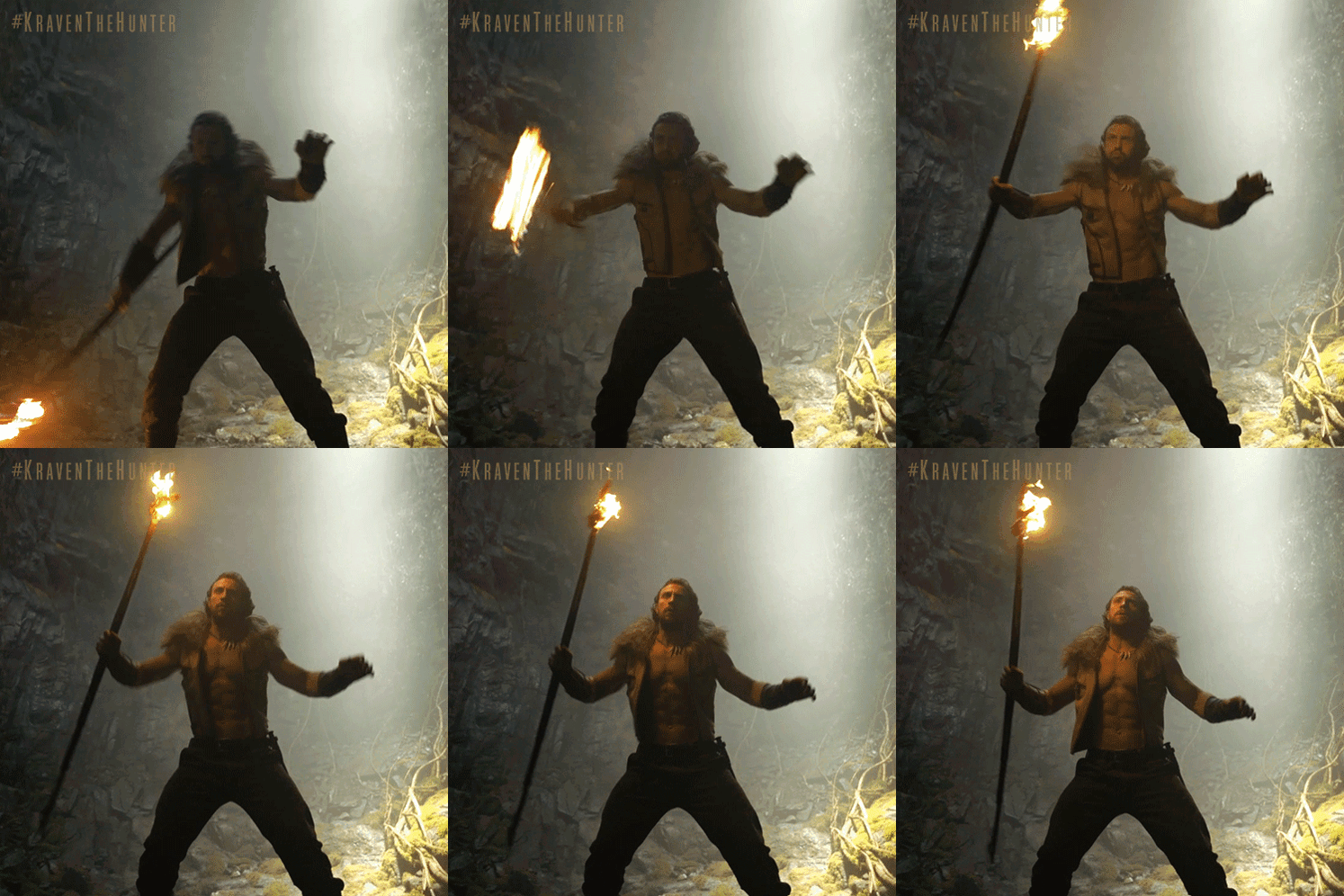
Few Spider-Man villains have been as highly anticipated for a live-action debut as Kraven the Hunter. A longtime fan favorite from Marvel Comics and one of Spider-Man's most dangerous adversaries, Sergei Kravinoff has spent decades tormenting the wall-crawler in stories that are often regarded among the character's greatest adventures. Unfortunately, despite the character's rich comic book legacy, Kraven the Hunter (2024) struggled to make the impact that many fans had hoped for.
Starring Aaron Taylor-Johnson in the title role, the film was conceived as another major piece of Sony's Spider-Man Universe, following in the footsteps of Venom, Morbius, and Madame Web. Rather than portraying Kraven as a villain, however, the movie reimagines him as a complex antihero, continuing Sony's trend of adapting Spider-Man's most famous enemies into standalone protagonists.
The story explores the origins of Sergei Kravinoff and his transformation into the legendary hunter known throughout Marvel lore. Driven by a complicated family history, personal trauma, and an intense connection to the natural world, Kraven embarks on a violent journey that gradually turns him into one of the most feared predators on the planet.
Aaron Taylor-Johnson fully commits to the role, bringing a physical intensity and animalistic presence that often feels pulled directly from the comics. The film also embraces a darker and more violent tone than many previous Spider-Man-related projects, leaning heavily into action sequences that showcase Kraven's enhanced abilities, survival instincts, and relentless hunting skills.
For comic book fans, the character carries significant importance. Kraven has long been considered one of Spider-Man's greatest foes and was the central figure in Kraven's Last Hunt, a storyline frequently cited as one of the finest Spider-Man stories ever written. As a result, expectations for the character's cinematic debut were understandably high.
Unfortunately, the film struggled to connect with both critics and general audiences upon release.
While some viewers praised Aaron Taylor-Johnson's performance and appreciated the attempt to bring a darker Marvel character to the big screen, many felt the movie suffered from familiar issues that had plagued several of Sony's recent Spider-Man Universe projects. Criticisms often centered on the screenplay, inconsistent tone, and the challenge of building a compelling Spider-Man villain story without Spider-Man himself.
In many ways, Kraven the Hunter became symbolic of a larger issue facing Sony's interconnected universe.
For years, the studio had assembled a roster of Spider-Man villains and antiheroes—including Venom, Morbius, Vulture, Madame Web, and Kraven—while never actually introducing the hero who connected them all. Audiences repeatedly watched Spider-Man's most famous enemies receive their own movies, yet the long-awaited confrontation between these characters and Peter Parker never materialized.
That absence became increasingly difficult to ignore.
By the time Kraven the Hunter arrived, enthusiasm for Sony's standalone villain universe had noticeably diminished. The film's disappointing critical reception and underwhelming box-office performance led many industry observers to view it as the project that effectively brought the studio's live-action Spider-Man Universe ambitions to a halt.
As a result, Kraven the Hunter is widely regarded as the final chapter—at least for now—in Sony's experiment with building a shared cinematic universe centered around Spider-Man characters without Spider-Man himself.
There's a certain irony to it all.
After years of films featuring Venom, Morbius, Vulture, Madame Web, Kraven, and numerous other Spider-Man-related characters, none of them ever truly got the opportunity to share the screen with the hero who made them famous in the first place.
Whether Sony revisits these characters in the future remains uncertain. With Spider-Man: Brand New Day on the horizon and the multiverse continuing to play a major role in Marvel storytelling, anything remains possible. But as things currently stand, Kraven the Hunter feels less like the beginning of a new chapter and more like the closing page of an ambitious experiment that never quite found its footing.
Even so, the film remains a notable entry in Spider-Man's cinematic history—not because it transformed the franchise, but because it marks the apparent end of an era where Spider-Man's greatest villains tried to carry an entire universe on their own. And perhaps the strangest part of that story is that, despite all those movies, the hunter never got the chance to hunt the Spider.
Spider-Man Movies by Actor: Every Tobey Maguire, Andrew Garfield, and Tom Holland Appearance
One of the most fascinating aspects of Spider-Man's cinematic legacy is that three different actors have portrayed Peter Parker on the big screen, each bringing their own unique interpretation to Marvel's beloved hero. From Tobey Maguire's heartfelt and earnest portrayal in the early 2000s to Andrew Garfield's emotionally driven take and Tom Holland's youthful MCU version, every era has left a lasting impact on Spider-Man fans.
Thanks to the multiversal events of Spider-Man: No Way Home, these three generations of Spider-Man are now officially connected, making it easier than ever for fans to revisit each actor's complete journey through the Spider-Verse.
Below is a complete guide to every Spider-Man movie featuring Tobey Maguire, Andrew Garfield, and Tom Holland in release order.
Tobey Maguire Spider-Man Movies in Order of Release
For many fans, Tobey Maguire will always be the original cinematic Spider-Man. Under director Sam Raimi, Maguire helped launch the modern superhero movie era and introduced a generation of audiences to Peter Parker's struggles, triumphs, and responsibilities.
His trilogy remains one of the most influential superhero franchises ever made and continues to be celebrated more than two decades later.
1. Spider-Man (2002)
The film that started it all. Peter Parker gains incredible powers after being bitten by a genetically enhanced spider and learns the life-changing lesson that "with great power comes great responsibility" while battling the Green Goblin.
2. Spider-Man 2 (2004)
Widely considered one of the greatest superhero movies ever made, Peter struggles to balance his personal life and his responsibilities as Spider-Man while facing Alfred Molina's unforgettable Doctor Octopus.
3. Spider-Man 3 (2007)
The final chapter of Raimi's trilogy sees Peter confronting Sandman, Venom, and Harry Osborn's New Green Goblin while grappling with the corrupting influence of the alien symbiote and the iconic Black Suit.
4. Spider-Man: No Way Home (2021)
Fourteen years after his last Spider-Man film, Tobey Maguire returned to the role in one of the most celebrated moments in superhero movie history. His appearance serves as both a continuation and a heartfelt epilogue to the Raimi trilogy.
Andrew Garfield Spider-Man Movies in Order of Release
Andrew Garfield's Spider-Man brought a more modern, emotionally expressive interpretation of Peter Parker to the big screen. Although his era lasted only two standalone films, Garfield's performance has become increasingly beloved over the years and earned renewed appreciation following his return in No Way Home.
1. The Amazing Spider-Man (2012)
Garfield makes his debut as Peter Parker in a reboot that explores the mystery surrounding his parents while introducing Emma Stone's Gwen Stacy and Rhys Ifans' Lizard.
2. The Amazing Spider-Man 2 (2014)
Peter faces new threats in the form of Electro, Rhino, and the Green Goblin while continuing his search for answers about his family and navigating his relationship with Gwen Stacy.
3. Spider-Man: No Way Home (2021)
After seven years away from the role, Garfield returned in a performance that many fans consider the emotional highlight of No Way Home. The film provides meaningful closure for several storylines left unresolved in his original series.
Tom Holland Spider-Man Movies in Order of Release
Tom Holland's Spider-Man became the first version of Peter Parker to officially join the Marvel Cinematic Universe. His journey has seen him evolve from an enthusiastic teenager eager to impress the Avengers into a seasoned hero forced to make extraordinary sacrifices.
To date, Holland has appeared in six MCU films, making him the most interconnected Spider-Man in cinematic history.
1. Captain America: Civil War (2016)
Peter Parker makes his MCU debut after being recruited by Tony Stark to assist Team Iron Man during the superhero conflict surrounding the Sokovia Accords.
2. Spider-Man: Homecoming (2017)
Peter attempts to prove himself worthy of becoming an Avenger while balancing high school life and confronting Adrian Toomes, better known as the Vulture.
3. Avengers: Infinity War (2018)
Spider-Man joins Iron Man, Doctor Strange, and the Guardians of the Galaxy in a desperate battle against Thanos as the fate of the universe hangs in the balance.
4. Avengers: Endgame (2019)
Although absent for much of the story due to the events of Infinity War, Peter returns during the climactic battle against Thanos and plays a key role in the conclusion of the Infinity Saga.
5. Spider-Man: Far From Home (2019)
Still grieving Tony Stark's death, Peter embarks on a school trip across Europe only to find himself facing mysterious elemental threats and the enigmatic Quentin Beck, also known as Mysterio.
6. Spider-Man: No Way Home (2021)
Tom Holland's most ambitious Spider-Man adventure sees Peter accidentally unleash multiversal chaos after seeking help from Doctor Strange. The film unites three generations of Spider-Man and forever changes Peter Parker's life.
Three Spider-Men, One Incredible Legacy
From Tobey Maguire's groundbreaking trilogy and Andrew Garfield's emotionally charged reboot era to Tom Holland's adventures in the Marvel Cinematic Universe, each actor has contributed something special to Spider-Man's enduring legacy.
What once seemed like three separate interpretations are now part of a much larger story, connected through the Spider-Verse and celebrated together in Spider-Man: No Way Home. Whether you prefer the classic charm of Tobey Maguire, the emotional depth of Andrew Garfield, or the youthful energy of Tom Holland, one thing remains certain: every generation has had its own unforgettable Spider-Man.
And with Spider-Man: Brand New Day set to continue Tom Holland's journey and Spider-Man: Beyond the Spider-Verse on the horizon, the future of Marvel's friendly neighborhood hero looks brighter than ever.
Upcoming Spider-Man Movies and Projects
The future of Spider-Man on both the big and small screen remains incredibly exciting, even as Sony's plans for its live-action villain universe appear to have undergone a major shift.
Following the disappointing performance of Kraven the Hunter, Sony's Spider-Man Universe—which included films such as Venom, Morbius, Madame Web, and Kraven the Hunter—appears to be on indefinite pause. For many fans, Kraven felt like the final chapter of an experiment that never fully found its footing. After all, audiences spent years watching Spider-Man's villains and antiheroes build their own cinematic universe without ever sharing the screen with Spider-Man himself.
As a result, many assumed Sony's interconnected Spider-Man villain universe had effectively reached its conclusion.
However, reports from industry insiders and statements from Sony executives suggest the studio isn't finished with Spider-Man-related storytelling just yet. Instead, Sony appears to be reassessing and potentially rebooting its approach to the franchise. While details remain scarce, the studio has indicated that it intends to develop a new direction for its side of the Spider-Man property, though exactly what that looks like remains a closely guarded secret.
Fortunately, Spider-Man fans still have several major projects to look forward to.
Spider-Man: Beyond the Spider-Verse (2027)
After the cliffhanger ending of Spider-Man: Across the Spider-Verse, anticipation for the trilogy's conclusion has reached extraordinary levels.
Spider-Man: Beyond the Spider-Verse is currently in development and will serve as the third and final chapter in Miles Morales' groundbreaking animated saga. Originally expected to arrive much sooner, the film underwent multiple delays as the creative team worked to ensure the finale lives up to the incredibly high standards established by its predecessors.
The wait now has an official end date.
During CinemaCon, Sony confirmed that Spider-Man: Beyond the Spider-Verse is scheduled to swing into theaters on June 4, 2027.
The film is expected to continue Miles Morales' multiversal journey following the shocking events of Across the Spider-Verse, while bringing closure to one of the most acclaimed superhero trilogies ever created. Given the emotional stakes, unresolved storylines, and the ever-expanding Spider-Verse mythology, expectations could not be higher.
For many fans, Beyond the Spider-Verse isn't simply another Spider-Man movie—it's one of the most anticipated animated films of the decade.
Spider-Man Noir Expands Into Live Action

Another exciting Spider-Verse project is already on the way.
Fan-favorite Spider-Man Noir, who stole scenes in Into the Spider-Verse and Across the Spider-Verse, is making the leap into live action through an upcoming television series being developed for Amazon.
Nicolas Cage, who voiced the black-and-white vigilante in the animated films, is set to continue his association with the character by starring in the series.
The project is being developed by acclaimed Spider-Verse producers Phil Lord and Christopher Miller alongside writer Oren Uziel. Rather than focusing on a traditional Peter Parker story, the series will reportedly explore a darker and more mature corner of Spider-Man mythology, bringing the noir-inspired hero into a fully realized live-action world.
For fans who loved Spider-Man Noir's unique style and dry humor, this could become one of the most distinctive Spider-Man projects ever produced.
Spider-Man: Brand New Day (2026)

Of all the upcoming Spider-Man projects, none carries more anticipation than Tom Holland's next MCU adventure.
Spider-Man: Brand New Day is officially scheduled to release on July 31, 2026 and will continue Peter Parker's story following the life-changing events of Spider-Man: No Way Home.
With the world having forgotten Peter Parker's existence, the upcoming film is expected to present a very different version of Spider-Man—one operating without the support systems, friendships, and connections that previously defined his life.
Directing the film is Destin Daniel Cretton, best known for helming Shang-Chi and the Legend of the Ten Rings. Cretton has spoken extensively about his passion for the character and his desire to tell a Spider-Man story unlike anything audiences have seen before.
The cast is already generating significant buzz.
Tom Holland returns as Peter Parker alongside Zendaya and Jacob Batalon, while Stranger Things star Sadie Sink joins the franchise in a mystery role that has sparked endless fan speculation. Some theories suggest she could portray Jean Grey from the X-Men, while others believe she may be connected to a new interpretation of Mary Jane Watson.
Adding even more excitement is the return of Jon Bernthal as Frank Castle, better known as The Punisher. His inclusion hints at a potentially more grounded and street-level direction for Peter Parker's next adventure, something comic book fans have been eager to see for years.
If early reports are accurate, Brand New Day could mark the beginning of a completely new era for Spider-Man within the Marvel Cinematic Universe.
What About Miles Morales in the MCU?
One question that continues to dominate conversations among Spider-Man fans is whether Miles Morales will eventually appear in live-action.
For now, Marvel Studios president Kevin Feige has indicated that audiences shouldn't expect Miles to join the MCU anytime soon.
Marvel has repeatedly expressed its desire to allow the animated Spider-Verse films to complete Miles Morales' story before introducing a live-action version of the character. While Miles remains one of Marvel's most popular modern heroes, it appears fans may have to wait a little longer before seeing him officially enter the MCU.
That said, given the immense popularity of the character and the MCU's growing embrace of multiversal storytelling, few would be surprised if Miles eventually swings into live action somewhere down the line.
The Future of Spider-Man Has Never Been Bigger
Whether it's Tom Holland beginning a new chapter in Spider-Man: Brand New Day, Miles Morales concluding his animated journey in Beyond the Spider-Verse, or Spider-Man Noir stepping into the spotlight with his own live-action series, Spider-Man's future remains brighter than ever.
While Sony's original villain-centric universe may have reached a crossroads, the Spider-Verse itself continues to expand in exciting directions. More than twenty years after Spider-Man first swung into theaters, the character remains one of the most beloved and versatile heroes in popular culture.
And if the projects currently on the horizon are any indication, the next few years could deliver some of the most exciting Spider-Man stories audiences have ever seen.
From Tobey Maguire's genre-defining trilogy to Andrew Garfield's emotional adventures, Tom Holland's MCU journey, Miles Morales' groundbreaking Spider-Verse saga, and Sony's ambitious spin-offs, Spider-Man has built one of the richest and most expansive cinematic legacies in entertainment history.
What started with a single teenager learning that "with great power comes great responsibility" has evolved into a multiversal phenomenon spanning live-action blockbusters, Oscar-winning animated films, interconnected universes, and countless unforgettable characters.
Whether you're revisiting the classics, discovering these stories for the first time, or preparing for the next chapter with Spider-Man: Brand New Day and Spider-Man: Beyond the Spider-Verse, there has never been a better time to be a Spider-Man fan.
As the Spider-Verse continues to expand, one thing remains unchanged: Spider-Man's enduring ability to inspire audiences through courage, sacrifice, resilience, and hope. No matter the universe, the suit, or the hero beneath the mask, Spider-Man continues to remind us that anyone can make a difference.
Be sure to bookmark this guide, as we'll continue updating it with new Spider-Man movies, spin-offs, release dates, trailers, casting news, and major Spider-Verse developments as they are announced.
The next great Spider-Man story is always just around the corner.
Build Your Ultimate Spider-Verse Collection
Love Spider-Man and the worlds beyond?
Now is the perfect time to bring your favorite heroes, villains, and legendary franchises home with an incredible range of officially licensed collectibles, action figures, statues, replicas, LEGO sets, and premium merchandise.
Click here to check all Spiderman action figures, statues and more.
Subscribe
Sign up to get the latest on sales, new releases and more …