
India’s Official Distributor and Retailer for Licensed Action Figures, Statues and Anime Collectibles
India’s Official Distributor and Retailer for Licensed Action Figures, Statues and Anime Collectibles


Scorpion Explained: Origin, Powers, Fatalities & MK History
March 24, 2026 41 min read
Hanzo Hasashi (波佐志 半蔵), known across realms as Scorpion (全蠍人 — Zenkatsujin, meaning “Full Scorpion Man”), is not just a character in Mortal Kombat—he is its pulse, its rage, and its most human tragedy wrapped in hellfire. As one of the very few original fighters from the first Mortal Kombat arcade game, Scorpion has stood the test of time alongside Raiden and Sub-Zero, appearing in every generation of the franchise in one form or another, constantly evolving while never losing the essence of what makes him unforgettable.
Before the flames and fury, however, there was simply Hanzo—a man trying to live a quiet, honest life. His father, once tied to the Shirai Ryu clan, had forbidden him from joining their ranks, hoping to spare his son from the violent life of an assassin. But life rarely bends to gentle intentions, and Hanzo chose that path anyway, not out of ambition, but out of love. He wanted to provide for his wife, Harumi, and his son, Satoshi, to give them comfort and security in a world that demanded sacrifice for survival. In choosing to protect his family, Hanzo unknowingly set himself on a path that would take everything away from him.
The massacre that followed did not just end his life—it erased his world. The Shirai Ryu clan was annihilated, and his family was brutally murdered, leaving behind nothing but silence and ashes. Yet death did not grant him peace. Instead, it reshaped him into something far more terrifying. Hanzo returned as Scorpion, a hell-spawned spectre driven not by purpose, but by an unrelenting hunger for vengeance. His existence became singular, focused entirely on punishing those responsible for his suffering.
Manipulated by the sorcerer Quan Chi, Scorpion was led to believe that Bi-Han, the original Sub-Zero of the rival Lin Kuei clan, had orchestrated the destruction of his family and clan. Consumed by grief and rage, Scorpion confronted Bi-Han during the first Mortal Kombat tournament and killed him, unknowingly setting in motion the creation of the wraith known as Noob Saibot. It was only much later that the truth surfaced—Quan Chi himself had committed the massacre, using deception to turn Scorpion into his weapon.
In the original timeline, this revelation did not bring closure but redirected Scorpion’s fury, leading him to torment Quan Chi within the Netherrealm. In the rebooted timeline, where Hanzo is eventually restored to his human form, his revenge becomes more deliberate and final, culminating in Quan Chi’s execution. This shift from blind rage to conscious action marks one of the most important evolutions in his character, transforming him from a pawn of vengeance into a man reclaiming control over his destiny.
Despite his terrifying appearance, Scorpion has never truly been evil. In the early portrayals of Mortal Kombat, he was often cast as a villain due to his demonic presence, his flaming skull, and his association with the Netherrealm. However, his actions have always been rooted in deeply personal motivations rather than malice. He aligns himself with dark forces only when they offer him a chance to resurrect his clan or avenge their deaths, and even then, he remains emotionally and morally distinct from those he temporarily stands beside. His fierce hatred for Quan Chi, even when positioned among the Forces of Darkness in Mortal Kombat: Armageddon, reinforces that he belongs to no side but his own.
In more recent interpretations, especially in the second timeline, Scorpion is widely recognized as the series’ definitive anti-hero. He fights for what is right, but he does so on his own terms, often through brutal and uncompromising means. His moral ambiguity, combined with his iconic design and self-reliant nature, has made him one of the most beloved characters in gaming history, standing apart from both traditional heroes and outright villains.
Visually, Scorpion walks the line between man and monster. With his mask on, he resembles a human ninja, though his glowing white, pupil-less eyes and the demonic edge in his voice betray his true nature. His control over fire, both as a weapon and as a shield, further distances him from humanity. When the mask is removed, the illusion is shattered entirely, revealing a flaming skull beneath—a haunting manifestation of the life he lost and the torment he carries. His most iconic ability, the spear attack, is as symbolic as it is deadly, allowing him to drag his opponents toward him while declaring, “Get over here!” or “Come here!”—a phrase that has become one of the most recognizable lines in video game history.
Beneath the rage, however, lies a man defined by honor. In the original timeline, when Scorpion discovers that the Sub-Zero entering the second tournament is not Bi-Han but his younger brother Kuai Liang, a warrior of far greater compassion, he chooses not to repeat his mistake. Instead, he vows to protect him as a form of atonement, acknowledging the weight of the life he unjustly took. In the rebooted timeline, Scorpion initially intends to spare Bi-Han in exchange for the resurrection of his clan, but Quan Chi once again manipulates his grief, pushing him into an act he later regrets. Reflecting on this, Scorpion himself admits that killing Bi-Han was “a mistake borne of rage,” a rare moment of vulnerability that reveals the humanity still burning within him.
That humanity becomes even more evident in Mortal Kombat X, where Hanzo takes on a role far removed from vengeance. Rebuilding the Shirai Ryu not as assassins but as protectors of Earthrealm, he becomes a leader and a mentor, offering refuge to survivors of the Netherrealm War. Among them is Takeda Takahashi, the orphaned son of Kenshi, whom Hanzo raises as his own. In doing so, he does something he once believed impossible—he creates a new family, not through blood, but through compassion and responsibility.
In the New Era timeline introduced in Mortal Kombat 1, Hanzo’s story begins in an entirely different place. He is no longer a spectre or a master, but a young, homeless orphan driven by desperation, attacking Tomas Vrbada simply to survive. Recognizing his potential, Tomas brings him to Kuai Liang, where Hanzo becomes one of the first initiates of the newly formed Shirai Ryu. This reimagining presents a version of Hanzo untouched by tragedy, offering the possibility that his future may not be defined by loss and vengeance, but by guidance and growth.
Scorpion endures as one of gaming’s most iconic figures not merely because of his design or his abilities, but because of the emotional weight he carries. He is a man who chose love and lost everything, who was manipulated into becoming a weapon, and who continues to struggle between the pull of vengeance and the possibility of redemption. His story is not about fire alone, but about what remains after the flames have burned everything away—and whether something human can still rise from the ashes.
The Armor of a Man Who Became a Legend

Scorpion’s appearance has never been just about aesthetics—it has always been a reflection of what he is becoming at that point in his story. Every redesign, every layer of armor, every shift from cloth to metal feels less like a cosmetic upgrade and more like a visual diary of a man constantly caught between being human and something far more terrifying.
In the beginning, Scorpion carried the now-iconic palette swap ninja look, a design choice born out of arcade limitations but one that accidentally became legendary. Clad in yellow to contrast Sub-Zero’s blue, he stood out instantly, even when the structure of his outfit mirrored the other ninjas. From the very first Mortal Kombat through to Mortal Kombat 4, this identity remained largely intact, simple yet striking, as if the character himself didn’t need excess detail to command attention. Over time, however, subtle additions began to creep in—two swords strapped across his back, and his signature kunai spear coiled at his waist, always ready to snap forward like a predator’s strike. His white, pupil-less eyes added an unsettling edge, and when the mask came off, the illusion of humanity vanished entirely, revealing a skull—sometimes engulfed in flames—staring back without mercy or emotion.
By the time Mortal Kombat 4 arrived, Scorpion’s design began leaning heavily into his supernatural identity. The skeletal motif became more pronounced, especially in his mask, which now carried bone-like structures that almost seemed fused to his face. His outfit evolved into something far more intricate, featuring a yellow skull-shaped mask, a belt accented with black sections and a distinct skull buckle, and forearm guards that fully wrapped around his arms with sharp, deliberate designs. These guards extended over the back of his hands, giving his movements a heavier, more armored presence. His shin guards, metallic and detailed with black patterns, complemented a black top edged with yellow shoulders and segmented yellow markings across the torso, creating a look that felt both ceremonial and deadly.
Then came Mortal Kombat: Deadly Alliance, where Scorpion’s transformation took a bold turn. He no longer looked like just a ninja—he carried the presence of a samurai, as if his identity had matured into something more disciplined and ancient. His mask was simplified, covering only his nose and mouth, but his attire became richer, with a gold karate gi that gave him a regal yet battle-hardened appearance. The skull belt buckle remained, grounding him in his identity, while gold and black thigh and shin guards added weight and authority to his stance. His two swords were now clearly visible in holsters across his back, and his spear hung at his side in an almost deceptive stillness, as though it could spring to life at any moment.
In Mortal Kombat: Armageddon, elements from his past designs merged into something more cohesive. His mouth guard echoed the skeletal design from MK4, while his signature yellow ninja aesthetic returned, now reinforced with layers of armor spread throughout his costume. His arms were left bare, emphasizing strength and mobility, but were protected by metal arm guards and gloves. The hilts of his twin swords rose from his back like silent threats, always present. His lower attire featured darker pants with reinforced metal knee pads, and his footwear leaned heavily into samurai influence—sandals paired with black socks, blending tradition with brutality. It was a version of Scorpion that felt fully realized, as if all his past selves had converged into one.
His alternate costume during this era paid homage to Mortal Kombat 4, recreating that look with a sharper, more refined edge. Blue tights covered his chest, legs, and even his head, contrasted by a skull-like mouth guard and completely white eyes that stripped away any trace of warmth. Over this, he wore his signature yellow vest-like armor, paired with bare arms, wrist guards, gloves, and a yellow belt adorned with the familiar skull buckle. His legs were wrapped in tight fabric leading into blue samurai-style shoes, reinforced with yellow and gold shin guards. The back of the costume blended blue and yellow seamlessly, and his coiled spear rested at his left side, ready to strike at a moment’s notice.
As Mortal Kombat X redefined his character, it also redefined his appearance. With his humanity restored, Hanzo Hasashi was no longer just a spectre—he was a man again. This was reflected in his face, now visible with a goatee and mustache, grounding him in reality. Yet, the most striking aspect of this era was his ability to shift between his human form and his hellish spectre appearance at will, visually embodying the internal conflict he carried. His design leaned more toward that of an assassin than a traditional ninja, with a highly detailed mask and chest armor that felt practical, tactical, and lethal. At times, even his eyes glowed orange instead of white, hinting that the fire within him had not fully faded.
One of the most iconic visual interpretations of Scorpion unmasked is known as Inferno Scorpion, a design first introduced in Mortal Kombat: Shaolin Monks. Here, his skull form becomes even more intense, emphasizing the infernal nature of his existence. This version would later reappear in the Challenge Tower, where he battles Kano in the Netherrealm, reinforcing the idea that Scorpion’s true form is something far removed from humanity. Across newer designs, his costumes increasingly embrace his namesake, incorporating scorpion-inspired elements into his gear. The hilts of his swords now resemble stingers, while his shoulder pads and masks are sculpted with subtle, predatory curves, as if he is no longer just named after the creature—he is becoming it.
There is also an interesting layer of symbolism tied to his iconic yellow attire. It is said to have originally served as a form of mockery toward Sub-Zero and the Lin Kuei, a subtle act of defiance rooted in history. Takeda, once a member of the Lin Kuei, developed Ninjutsu, believing it to be superior to the clan’s techniques. After leaving, he founded the Shirai Ryu, setting the stage for one of the most enduring rivalries in the Mortal Kombat universe. Scorpion’s colors, therefore, are not just aesthetic—they are a statement, a legacy of conflict and identity.
When Scorpion crossed into Injustice: Gods Among Us as a guest character, his design took on a completely new direction. He appeared less like a ninja and more like a legendary warrior, clad in armor with a glowing gem embedded in the chest. While this version retained his signature scorpion-like swords, it reimagined him as something almost mythological, a champion rather than a revenant. This look would later carry over as a selectable outfit in Mortal Kombat X and even appear as a playable card in Mortal Kombat Mobile, though in MKX, the absence of swords in certain variations reflected gameplay choices like the Ninjutsu variation.
In Mortal Kombat 11, his design was refined yet again, giving him a striking golden mask and eyes that carried a muted yellow glow, further enhancing his supernatural presence while maintaining a sense of control and restraint. And in Mortal Kombat 1, he returns once more, this time as a Kameo Fighter, wearing his classic MKII costume—a reminder that no matter how much he evolves, the essence of Scorpion always circles back to where it began.
Through every iteration, Scorpion’s appearance has done more than just change—it has told a story. From a simple palette-swapped ninja to a spectral warrior, from a vengeance-driven revenant to a man reclaiming his humanity, every design carries the weight of who Hanzo Hasashi was, who he became, and who he continues to struggle to be.
Powers and Abilities
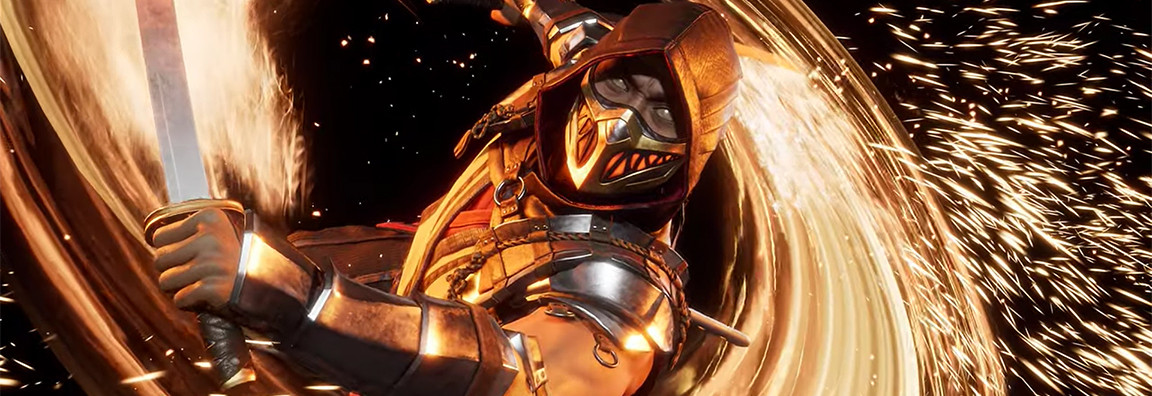
If Scorpion’s story is written in grief, then his powers are written in fire—specifically, Hellfire, the Netherrealm’s own twisted version of flame. This isn’t ordinary fire. It doesn’t just burn the body; it feels like it reaches deeper, as if it’s meant to punish the soul itself. Scorpion doesn’t just wield it—he is completely immune to it, as though the flames recognize him as one of their own. When he fights, Hellfire becomes his signature, often used to ensure his enemies are truly finished, especially when he removes his mask and unleashes it directly from his skull in a moment that feels as terrifying as it is iconic.
But Hellfire, in Scorpion’s hands, is far from a single-purpose weapon. He bends it to his will in ways that feel almost instinctive. He can summon it beneath his opponent’s feet, turning the ground itself into a trap, or engulf his own body in it, creating a blazing aura that damages anything foolish enough to come close. At range, he hurls fireballs that explode on impact, turning every fight into a battlefield of controlled chaos. Over time, his connection to Hellfire has only deepened, evolving alongside his character, becoming more expressive, more destructive, and more personal.
Beyond fire, Scorpion’s abilities extend into darker, more unsettling territory. He possesses necromantic power and summoning abilities, drawing directly from the Netherrealm. Even after being betrayed by the Elder Gods—who once resurrected his clan only to leave them as undead—Scorpion finds purpose in what remains. These fallen warriors, now known as Hellspawns, fight at his side, capable of wielding Hellfire just as he does. He can also summon demonic entities at will, including minions that rush forward only to self-destruct, and floating skull-like creatures that breathe Hellfire and launch explosive projectiles. Fighting Scorpion rarely feels like facing one opponent—it feels like stepping into a war against the Netherrealm itself.
As a spectre, Scorpion exists in a state that defies the natural order. Death does not claim him in the way it claims others, because his soul is bound to vengeance. As long as that purpose remains, so does he. This makes him functionally immortal, able to return again and again, no matter how thoroughly he is destroyed. In Mortal Kombat: Deadly Alliance, Quan Chi seemingly ends him by kicking him into a pool of acid in the Acid Bath arena, dissolving his body completely. Yet Scorpion returns, relentless as ever, continuing his pursuit of the Deadly Alliance and their forces. In the Mortal Kombat X comic series, even after Havik brutally kills him by destroying his chest and lungs, Scorpion rises again, proving that his existence is tied not to flesh, but to purpose.
One of his most feared abilities is his teleportation, which he can activate effortlessly, often without any visible motion. For Scorpion, it is less of a technique and more of an instinct—he disappears and reappears in an instant, usually behind his opponent, turning every fight into a psychological game of anticipation and fear. He can also open portals to the Netherrealm at will, bending space itself to suit his needs. Interestingly, the true extent of his power is closely tied to the Netherrealm. The longer he remains within it, the stronger he becomes. This gives him a significant advantage when battling there, as seen when he hunts Quan Chi in the depths of hell, where even Quan Chi’s own magic weakens under the realm’s oppressive nature.
After his full resurrection, a deeper truth about Scorpion’s power comes to light—one that makes him as dangerous as it is tragic. His Hellfire and wraith abilities are directly tied to his emotional pain. To access his full strength, Hanzo must relive his greatest trauma, whether it is the destruction of his family and clan or witnessing the suffering of those he cares about, such as the moment he believes Takeda has died. When he does, he begins to shift, becoming more spectre than man, surrounded by raging Hellfire as his power surges to overwhelming levels. At his peak, he can even rival or surpass beings like Raiden in combat. However, this power comes at a cost. The longer he channels Hellfire, the more it threatens to consume him entirely, risking the destruction of his very existence. At the same time, the Scorpion persona can take over, pushing Hanzo into a state where reason fades and pure rage takes control.
Despite all his supernatural abilities, Scorpion remains a master of armed combat, trained in the disciplined traditions of a ninja. Over the years, he has wielded a variety of weapons, from axes to twin ninjatō blades, adapting his style to suit each battle. Yet, one weapon defines him above all others—the Spear. This kunai, attached to a rope or chain, is more than just a tool; it is an extension of his identity, often referred to as a kyoketsu-shoge in ancient Japan, symbolizing the stinger of a scorpion. In battle, it becomes a terrifying equalizer, capable of piercing opponents and dragging them toward him, often enhanced with Hellfire for added devastation. Across different adaptations, the spear has taken on unique forms—it has been depicted as a chain attached to a mace in the comics, and even as a living, serpentine creature emerging from his hand in the films, emphasizing just how deeply it is tied to his supernatural nature.
There have also been moments when forces beyond him have recognized his importance. In Mortal Kombat: Deception, Scorpion is empowered by the Elder Gods themselves to defeat the Dragon King, Onaga. Although he ultimately does not land the final blow—Shujinko defeats Onaga before he can—this moment reinforces that even higher powers see Scorpion as a necessary force in the balance of realms.
By the time Mortal Kombat 11 arrives, Scorpion’s abilities reach a new level of refinement. Even in his restored human form as Hanzo Hasashi, he retains many of the powers he once wielded as a spectre. He can transform into a fiery skeleton, incinerating anything he touches, breathe Hellfire at will, and channel it through his attacks with precision. His control over fire has grown so complete that he becomes immune to other sources of flame, demonstrated when Sektor’s flamethrower fails to harm him. His spear, too, evolves, now capable of being ignited with Hellfire, allowing it to burn opponents with every strike. His speed has also increased noticeably, with afterimages trailing behind him as he teleports and attacks, making his movements nearly impossible to predict.
When fully embracing his Scorpion persona, these abilities become even more visually intense. His teleportation can manifest as a fiery tornado, igniting the battlefield as he appears, and when he unleashes Hellfire from his mouth, his head transforms into a flaming skull—mirroring the brutal “Toasty!” Fatality that has become synonymous with his character.
In the end, Scorpion’s powers are not just abilities—they are expressions of everything he has endured. Every flame carries memory. Every strike carries loss. And every time he rises again, it is not just because he can… but because something inside him refuses to let the fire die.
Signature Moves
Scorpion doesn’t just fight—he imposes himself on a battlefield. Every move he uses feels deliberate, almost personal, as if each strike carries the weight of everything he’s lost. Over the years, his signature techniques have evolved across Mortal Kombat titles, but the essence has always remained the same: relentless pressure, supernatural brutality, and a style that makes escape feel impossible.
At the center of it all is the move that defines him.
The one everyone hears before they even see it.
Spear — The Pull of Vengeance
Scorpion’s most iconic technique is the Spear, a rope or metal chain tipped with a kunai that shoots forward with terrifying precision. When it connects, it pierces straight into the opponent’s chest, allowing Scorpion to violently yank them through the air toward him, setting up a free hit while dealing initial damage. And of course, it almost always comes with that legendary call—“GET OVER HERE!” or “COME HERE!”—lines that have become inseparable from his identity. In Shaolin Monks, he occasionally twists these into more profane variations, adding a raw edge to his fury.
In that same game, the Spear could even be upgraded into a whip-like weapon, expanding its use beyond a single strike. The technique itself closely resembles the Chinese rope dart (Shéng biāo), a weapon known for being extremely difficult to master, which only reinforces how dangerous Scorpion truly is.
As the games evolved, so did the Spear. In Mortal Kombat 11, after pulling the opponent in, Scorpion steps behind them and follows up with a katana slash that knocks them down instead of stunning them. Earlier depictions of the weapon varied wildly—comics portrayed it as a chain attached to a mace, while the films reimagined it as a living, serpentine creature emerging from his hand.
Enhanced versions pushed it even further. In Mortal Kombat (2011), the Flame Spear allowed him to launch two Hellfire-coated spears at once while being armored during the attack. In Mortal Kombat X, this evolved into Double Spear, faster and more aggressive. A second enhancement could ignite the chains themselves, sending Hellfire surging into the opponent, burning and stunning them for extended punishment.
By MK11, amplifying the Spear changed its function entirely—Scorpion follows up with a brutal elbow to the face, trading raw damage for a stun that opens up further attacks. At maximum range, this amplified hit triggers a devastating Krushing Blow, crushing the opponent’s upper skull inward and dealing significantly increased damage, especially if Burning Spear is active.
Hellfire Punch / Teleport — The Strike You Never See Coming
Scorpion’s Hellfire Punch, more commonly known as his Teleport, is less a move and more a psychological weapon. He vanishes and reappears behind his opponent in an instant, striking before they can even react. In earlier games like Deception and Unchained, this attack took the form of a kick, only to later return as a punch in Armageddon, while the kick variation was passed on to Chameleon.
In Shaolin Monks, the move could be upgraded to leave behind a burst of fire as he disappeared, and it could even be performed mid-air. Variations also existed where Scorpion would dash forward instead of teleporting behind, catching opponents off guard.
In Mortal Kombat (2011) and MKX, the move is simply called Teleport, but it becomes far more tactical. In MKX, Scorpion can cancel the attack entirely, reappearing behind or away from the opponent without striking—though doing so costs a full bar of stamina. The move also adapts depending on context: a kick if performed on the ground, a punch if executed in the air.
By MK11, it transforms into Hell Port, where Scorpion leaves behind an afterimage before reappearing to stab his opponent with a kunai instead of striking them directly. The attack can miss ducking opponents, adding a layer of risk. Amplifying it results in a katana uppercut that launches the opponent for a juggle, though it remains punishable if blocked. With the Hell Port Cancel ability equipped, Scorpion can once again fake the attack, teleporting behind or away using directional inputs at the cost of defensive meter.
Enhanced versions in earlier games, known as Flameport, added a flaming uppercut, which in MKX could juggle opponents for extended combos.
Leg Takedown — Precision Over Power
The Leg Takedown is simple, efficient, and brutally effective. Scorpion sweeps his opponent off their feet using a leg scissor motion, grounding them instantly. In MK vs. DC Universe, this evolved into Hellish Slide, where he simply slides forward to trip the opponent. In later entries like MK (2011) and MKX, it is renamed Takedown.
Its enhanced version, Takeout, increases both speed and range, allowing Scorpion to grab opponents from farther away, deal more damage, and even gain armor in MKX.
Air Throw / Demon Slam — Dominance from Above
When Scorpion meets his opponent mid-air, he doesn’t just knock them down—he owns the moment. His Air Throw slams opponents to the ground, but in MK11, it evolves into Demon Slam, where he grabs them with a Hellfire-wreathed hand, spins them violently, and drives them down before stabbing them in the upper back.
Amplifying this move adds a cruel twist—Scorpion burns the opponent’s face with Hellfire before the final stab, increasing the damage. If executed outside of a combo, it triggers a Krushing Blow, where the blade digs deeper, causing blood to erupt and applying damage over time that drains 10% of the opponent’s health. This effect remains even if the move is amplified further.
Fire Breath / Demon Breath — The Face of Hell
Few moves capture Scorpion’s identity like his Fire Breath. Removing his mask—or in later games, transforming his head—he reveals the flaming skull beneath and unleashes Hellfire directly onto his opponent.
In MK11, this becomes Demon Breath, where his head morphs into a blazing skull instead of physically removing the mask. The attack gives Scorpion a slight recovery advantage, and in certain situations, even if interrupted, the opponent may still suffer hitstun, allowing him to continue attacking.
In Mortal Kombat 1, his Kameo version appears already unmasked, launching two fireballs before vanishing in flames. The move can be executed at different distances, known as Mid or Far Fire Breath.
Amplifying the attack in MK11 has Scorpion advance forward while breathing more flames, increasing damage and recovery speed. Even when blocked, it creates strong pushback, though it doesn’t fully guarantee safety.
Hellfire — The Ground Itself Betrays You
Scorpion’s Hellfire attack summons flames directly beneath his opponent, turning the ground into a weapon. Known as Demon Fire in MK (2011) and Hell Fire in MKX, it becomes even more dangerous when enhanced—expanding its range, increasing damage, and in MKX, even striking downed opponents.
Fire Ball / Hell Flame — Controlled Destruction
Scorpion’s projectile game comes in the form of Fire Ball, where he launches a sphere of Hellfire toward his opponent. In MK11, this becomes Hell Flame, thrown at the opponent’s feet rather than directly at them, and interestingly, it is neither classified as a traditional projectile nor a low attack.
He can vary its range—Close or Far Hell Flame—adding unpredictability. The enhanced version, Hell Ball, deals more damage and can even destroy incoming projectiles. With the Blinding Inferno Jinsei Augment, the attack gains explosive properties and a significantly larger blast radius.
Inferno Abilities — Fighting with the Netherrealm
In MKX, Scorpion’s Inferno Variation allows him to summon demonic allies.
- Minion Grab pulls opponents from below, setting up attacks.
- Minion Hold improves speed and combo utility.
- Minion Charge strikes from behind, with Minion Slam increasing damage.
- Minion Drop delivers an overhead attack, while Minion Strike enhances it with knockdown power.
These moves make it clear—Scorpion is never truly fighting alone
Advanced Techniques — Mastery of Flame and Steel
Scorpion’s later abilities in MK11 show just how refined his combat style has become:
- Demon Dash turns him into a fiery skeleton as he dashes through opponents, grabbing and burning them. Amplifying it summons a pillar of flames beneath them.
- Death Spin has him rotate his spear multiple times for a multi-hit attack, with amplification adding extra spins.
- Burning Spear enhances all spear attacks by 30% temporarily, though it ends if a Krushing Blow or Fatal Blow occurs.
- Flaming Backflip Kick leaves a trail of fire and serves as a combo or breaker tool in later games.
- Inner Flames and Flame Aura engulf him in Hellfire, damaging nearby opponents, with enhanced versions increasing duration and damage.
Misery Blade — Controlled Rage
The Misery Blade stance is where Scorpion slows down—just for a moment. He unsheathes his katana and gains access to a new set of attacks:
- Hate Strike — a downward stab that forces the opponent face-first into the ground.
- Tsuka Poke — a quick strike with the hilt of the sword.
- Hamon Sweep — a low slash that knocks the opponent off their feet.
He can cancel the stance instantly, returning to neutral at the cost of defensive meter. When amplified, the stance creates an afterimage effect, making it appear as though he is performing multiple attacks at once, confusing the opponent without increasing damage.
The Truth Behind the Moves
What makes Scorpion’s moves unforgettable isn’t just how they look or how much damage they deal—it’s how they feel. Every ability, from the Spear to Hellfire, carries intention. There’s always a sense that he’s not just trying to win.
He’s trying to finish something.
Because for Scorpion, every fight is still the same fight.
Every opponent is just another shadow standing between him… and the fire that never stopped burning.
X-Rays/Fatal Blow

There’s a moment in every Mortal Kombat fight where things stop being about combos, spacing, or strategy… and become something far more personal. For Scorpion, that moment is where his true nature surfaces. His X-Rays, Fatal Blows, and Fatalities are not just finishers—they feel like executions shaped by memory, rage, and ritual. Every bone he breaks, every flame he unleashes, carries a kind of finality that goes beyond winning. It feels like he’s settling something.
X-Ray Attacks — Breaking You from the Inside Out
In Mortal Kombat (2011), Scorpion’s X-Ray, Scorpion Sting, is brutally direct. He vanishes into flame, reappears behind his opponent, and drives a punch straight into their groin before following up with a devastating blow to the side of the face that cracks their skull. As they collapse, he walks forward without hesitation and stomps down on their chest, crushing ribs underfoot. It’s not flashy—it’s personal, almost grounded in raw physical violence.
By Mortal Kombat X, his X-Ray evolves into something far more cinematic with From Hell. Scorpion charges through his opponent, seizing them mid-motion, and delivers a knee to the jaw that shatters it and launches them upward. Before they can fall, he fires one spear into their abdomen and another straight into their skull, puncturing both. Then, with a violent pull, he drags them down headfirst into the ground, cracking their skull further and snapping their neck. There’s even a layer of tactical depth here—if the player inputs a direction, Scorpion can teleport behind the opponent during the attack, making it significantly safer if blocked.
Fatal Blow — “Get Over Here” Reimagined
In Mortal Kombat 11, Scorpion’s Fatal Blow, Get Over Here, takes his most iconic move and turns it into something horrifyingly elaborate. He begins by slicing his opponent with his sword before driving his spears directly into their eyes. He kicks them away, only to yank them back in and force the spears deeper into their skull with another brutal strike. Finally, he slams their head into the ground so violently that the spear tips burst through the back of the skull. This sequence was first revealed in the MK11 announcement trailer, performed on Raiden, instantly reminding everyone why Scorpion remains the face of the franchise.
In Mortal Kombat 1, his Kameo Fatal Blow adds a new layer of spectacle. He erupts from a portal, slashes across the opponent’s chest mid-air, then launches his kunai to spear their intestines. As if that isn’t enough, he removes his mask, revealing the flaming skull beneath, and engulfs them in fire before disappearing once again into the Netherrealm.
Combat Extensions — The Brutality Between the Finishers
Scorpion’s toolkit outside of finishers is just as vicious. Moves like Knee Launch see him grab his opponent, land two punches to the gut, and finish with a crushing knee to the face. In Armageddon, this becomes even more theatrical—launching the opponent upward, pulling them back down with his spear while shouting “GET OVER HERE!”, and ending with a kick that drops them flat.
His Free-Fall Super Move in MK vs. DC Universe has him impale an opponent through the chest with his spear, swing them behind him, and slam them into the ground. His throws evolve across games as well—from stabbing the throat and kicking the opponent away in MK (2011) to slashing their throat and abdomen before finishing with a flaming uppercut in MKX.
In MK11, throws become far more technical and punishing. His forward throw involves multiple precise stabs followed by a slicing finish, and if the opponent previously failed to escape a throw, it triggers a Krushing Blow, driving the kunai deep into the abdomen and causing heavy damage over time. His backward throw is even more brutal—kicking the opponent’s knee to break it, teleporting away, then returning to deliver a final strike that can shatter their spine and ribs if the Krushing Blow condition is met. Interestingly, each version locks out the other if successfully triggered, adding a strategic layer to brutality.
Advanced Combat Techniques — Precision Meets Cruelty
Scorpion’s later moves in MK11 reflect a refined but no less violent fighting style. His Flip Kick crashes down with a flame-coated leg and can break armor, bouncing opponents for follow-ups. Dark Soul blends punches into a Hellfire-wreathed superman strike that can become a Krushing Blow if used deep into a combo, crushing ribs and damaging internal organs while applying damage over time that scales based on combo length.
With Falling Ashes, a roundhouse transitions into a flaming spin kick that, when used as a counter or punish, shatters ribs and opens up further attacks. His Death Spear Kombo introduces new chained sequences like Wrath, where he stabs and slams opponents using the spear chain, and Hack and Slash, combining kicks and overhead spear whips that can leave him vulnerable if perfectly blocked.
Even his aerial game evolves with (Air) Sin Blade, a katana-based jump attack that bounces opponents for juggle opportunities while remaining relatively safe unless perfectly countered.
Kameo Support — Scorpion Never Fights Alone
In Mortal Kombat 1, Scorpion’s Kameo abilities bring back his signature aggression in support form. With Dynamic Entrance, he rushes in with a flaming jump kick, knocking the opponent back. His classic Get Over Here! returns in assist form, pulling allies back into position, while Hell Blades sees him slam flame-covered swords down to ignite and stagger opponents for follow-ups.
Fatalities — The Ritual of Ending
Scorpion’s Fatalities are not just iconic—they are foundational to Mortal Kombat’s identity.
Toasty!
His most famous finisher sees him remove his mask to reveal a flaming skull (or a skull burning from within in MK1) and unleash a stream of fire that burns the opponent alive. Across games, the results vary—sometimes reducing them instantly to a skeleton, sometimes making them writhe in agony before exploding, or slowly burning their flesh away. The moment is often punctuated by Dan Forden’s legendary “Toasty!”—a fourth-wall-breaking audio cue that has become part of gaming culture itself. This Fatality has appeared across multiple titles and even returned through DLC in later games.
Spear Slice
A brutal, straightforward execution where Scorpion slits the opponent’s throat before slicing them clean through the torso. In Shaolin Monks, this becomes more savage, ending with Scorpion tearing the body apart and lifting the torso in victory.
Annihilation
Scorpion transports his opponent to his lair, where fallen Shirai Ryu warriors rise from the ground to tear them apart. In some versions, the violence is so intense it fades to black, leaving only the sound of destruction behind. In certain console versions, the opponent is simply incinerated upon arrival.
Hand from Hell
A massive skeletal hand erupts from below, dragging the opponent into the Netherrealm while burning them alive.
Scorpion Sting
Scorpion transforms into a giant scorpion, impaling and tearing his opponent apart—an answer to fan demand for a more fitting Animality tied to his namesake.
Spear Shot
A precise execution where he embeds his spear into the opponent’s head and violently rips it off. In some versions, it instead tears out internal organs.
Spine Rip
Borrowed from Bi-Han’s Sub-Zero, Scorpion rips the opponent’s head and spine out in one motion, an ironic twist given their rivalry.
Hellish Dismemberment
Piece by piece, Scorpion tears the opponent apart before calmly snapping their neck as they beg for mercy.
Boss Fatality / Lava Pool
He drags opponents into lava or the Netherrealm, where they burn to skeletal remains before being thrown back out.
Split Decision
A clean yet brutal sequence of sword strikes that dismembers the opponent with precision.
Nether Gates
Scorpion drags his opponent through a Netherrealm portal, melting their flesh before suspending them midair on his spear.
Stop Ahead
A horrifying display where Scorpion blasts a hole through the opponent’s chest, exposes their heart, and slices off their face, leaving their brain to spill out.
Who’s Next!
He decapitates the opponent and impales their head on a structure behind him, a moment first seen in MKX’s reveal trailer.
You’re Next
He charges through the opponent in a blaze of Hellfire, leaving only the spine intact before finishing with decapitation and a final spear strike.
Chain Reaction
A modern classic from MK11, where Scorpion overheats his spear chain, wraps it around the opponent, and snaps it like a whip, slicing them clean in half.
The Meaning Behind the Violence
Scorpion’s finishing moves are not just designed to shock—they tell you exactly who he is. There’s always a pattern: pull them in, break them down, burn them away. The spear, the fire, the skull—these aren’t just tools. They’re symbols.
Because when Scorpion reaches the end of a fight, he isn’t improvising.
He’s repeating something.
Something he’s been doing ever since the day he lost everything.
And every time he says “Get over here”… it sounds less like a command—and more like a promise.
Scorpion’s Fatalities: Rituals of Fire, Fury, and Finality
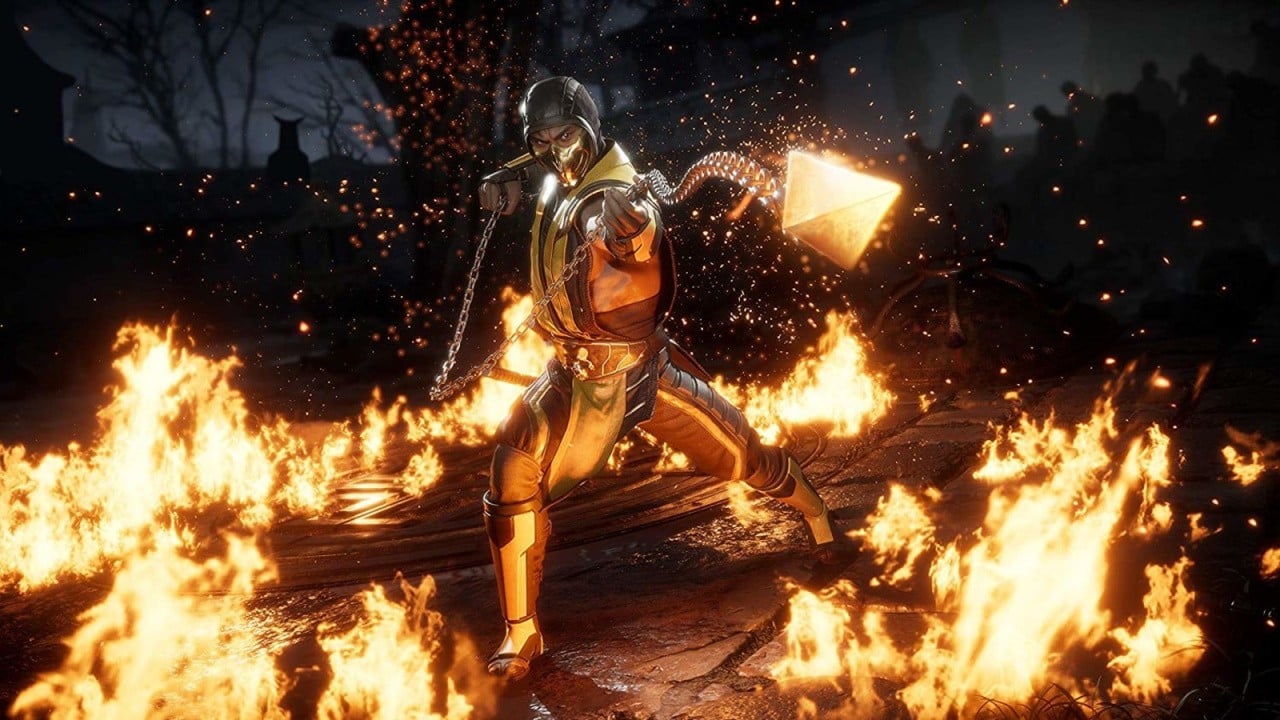
If there’s one thing Mortal Kombat built its legacy on, it’s the idea that a fight doesn’t truly end until it ends violently—and no one embodies that philosophy quite like Scorpion. His Fatalities aren’t just finishing moves; they feel like rituals. Each one is deliberate, theatrical, and soaked in identity. Fire, chains, skulls, and vengeance—everything that defines Hanzo Hasashi finds its way into how he ends his opponents.
Toasty! — The Fatality That Defined a Franchise
This is the one. The moment. The signature.
Scorpion’s Toasty! Fatality is arguably the most iconic finisher in fighting game history. He removes his mask, revealing the skull beneath—sometimes wreathed in fire (Shaolin Monks, MK vs DC Universe, MK 2011, MKX), and in Mortal Kombat 1, burning from within like a furnace—and unleashes a continuous stream of Hellfire that consumes his opponent entirely.
And then comes the voice.
Dan Forden’s legendary “Toasty!”—a fourth-wall-breaking audio cue that became inseparable from the moment. In Mortal Kombat 4, the line even evolves into “Toasty! 3D!”, acknowledging the franchise’s leap into a new graphical dimension. Interestingly, in Shaolin Monks, the move is renamed Flame, though the “Toasty!” callout still appears randomly afterward, almost like the game itself refuses to let go of tradition.
What makes this Fatality fascinating is how differently it has been portrayed across games:
- In the original Mortal Kombat, the opponent is instantly reduced to a skeleton that drops to its knees.
- In MKII, Shaolin Monks, and MK1, they writhe in agony before exploding.
- In Ultimate Mortal Kombat 3, the skeleton burns for a few moments before collapsing into charred remains.
- In Mortal Kombat 4, the skin burns while the body remains intact, with the victim stumbling aimlessly before collapsing.
- In MK 2011, the burning is slower and more agonizing, with flesh visibly melting away.
- In MKX, it combines both—agonizing screams, gradual burning, and finally a skeletal collapse.
This Fatality has been so beloved that it has repeatedly returned through special means. In MK 2011, it could be unlocked via DLC code or by purchasing the Komplete Edition. In MKX, it came back through the free Klassic Fatality Pack 1. And in MK1, it lives on as Scorpion’s Kameo Fatality, proving that some things in Mortal Kombat never fade.
Spear Slice — Clean, Brutal, Final
In Spear Slice, Scorpion leans into precision. He draws his kunai, slits the opponent’s throat, and then slices straight through their body at the hip, leaving the torso to fall away. In Shaolin Monks, the move becomes far more savage—starting with a backhand, followed by a deep stab, then dragging the opponent’s body across the blade embedded in their stomach before ripping the torso free and lifting it in victory.
Annihilation — The Wrath of the Shirai Ryu
With Annihilation, Scorpion doesn’t finish the fight alone. He enters a victory pose as the ground trembles violently, then drags both himself and his opponent into his lair. From the earth, the dead Shirai Ryu rise—his fallen clan—who proceed to tear the opponent apart. The brutality is so overwhelming that the screen often fades to black, leaving only the sound of destruction, a final scream, and a sickening impact.
In console versions of UMK3, this changes slightly—the opponent is simply incinerated upon entering the Netherrealm. On the Sega Genesis version, the victim is immediately set ablaze upon arrival.
Hand from Hell — No Escape
Scorpion raises his hand, and from the depths emerges a massive, flaming skeletal hand that seizes the opponent and drags them screaming into Hell, burning them alive in the process. Simple, mythic, and terrifying.
Scorpion Sting — Becoming the Monster
In Scorpion Sting, he fully embraces his namesake, transforming into a giant scorpion. With a brutal strike of his stinger, he impales the opponent and tears their torso apart. This Fatality is widely believed to have been added in response to fan backlash—previously, Scorpion’s Animality turned him into a penguin, while Sheeva somehow received a scorpion form instead.
Spear Shot — One Pull Too Many
Scorpion hurls his spear directly into the opponent’s head, letting it lodge there. He tugs the rope slowly, almost teasing the inevitable, before delivering one final, violent pull that rips the head clean off. In the Game Boy Advance version, the spear instead embeds into the torso, ending with an organ being torn out.
Spine Rip — A Bitter Irony
Borrowed from his rival Bi-Han, the original Sub-Zero, Spine Rip sees Scorpion thrust his hand into the opponent’s neck and tear out the head along with the spine. The irony is unmistakable—using Sub-Zero’s own signature brutality against others. In Mortal Kombat (2011), this Fatality is used in Raiden’s vision to depict Scorpion killing Sub-Zero, though it is not available in gameplay.
Hellish Dismemberment — Piece by Piece
This Fatality is methodical. Scorpion uses his spear to tear off one arm, then a leg, reducing his opponent to helpless desperation. As they beg—“No. No! NO!!”—he walks toward them calmly, grabs their head, and snaps their neck, ending it without hesitation.
Boss Fatality / Lava Pool — The Netherrealm Claims You
In Shaolin Monks, Scorpion’s Boss Fatality sends his opponent tumbling into lava via a spear strike, only to be dragged and torn apart by skeletal remains embedded in the environment. Both Scorpion and Inferno Scorpion can perform this.
In MK vs DC Universe, the Lava Pool sees him summon molten rock beneath his feet, descending into it while a second version of himself drags the opponent down. Moments later, their skeletal remains are thrown back out.
Split Decision — Precision Execution
Scorpion unsheathes his sword and slices clean through the opponent’s waist, follows up with a cut to the neck, and delivers a powerful kick. As the head falls, he splits it vertically in half—a clean, calculated finish.
Nether Gates — Dragged Through Hell
Scorpion impales the opponent with his spear, wraps it around their neck, and opens a portal behind them. With a kick, he sends them into the Netherrealm. Moments later, another portal opens above him, and the opponent falls out—skin melted away—left hanging midair on his spear like a macabre display.
Stop Ahead — Pure Horror
One of his most disturbing Fatalities, Stop Ahead begins with Scorpion firing a flaming projectile straight through the opponent’s chest. Their still-beating heart dangles from the wound as they collapse. He then slices off their face, exposing brain and tongue, and as the body falls, the brain slips free. If performed on masked characters (excluding specific exceptions like Erron Black, Torr, Jason Voorhees, Predator, Tremor, and Leatherface), their mask shatters first, revealing their face before it’s removed.
Who’s Next! — A Trophy of Violence
Scorpion throws his spear into the opponent’s head, rips it off, and impales it onto a pillar behind him with his sword. This was first seen in the MKX announcement trailer, where he used a tree instead.
You’re Next — Nothing Left But the Spine
Scorpion engulfs himself in Hellfire and charges through his opponent, obliterating everything except the spine. As they stare in shock, he decapitates them, kicks the head into the air, and drives his spear through their open mouth. This brutal sequence debuted in the MK11 reveal trailer.
Chain Reaction — Fire, Chain, and Finality
One of his most visually striking modern Fatalities, Chain Reaction begins with Scorpion embedding his spear into the opponent’s chest and overheating the chain until it glows. He flips over them, dives underground, and wraps the blazing chain vertically around their body. When he emerges, he snaps it like a whip—cleanly bisecting them.
Why Scorpion’s Fatalities Matter
Scorpion’s Fatalities are not random acts of violence—they’re extensions of his identity. The fire represents his suffering, the spear represents his relentless pull toward vengeance, and the recurring themes of dismemberment and burning reflect the way his own life was torn apart.
Every time he finishes a fight, it feels less like a victory… and more like a memory being replayed. Because for Scorpion, the battle never really ended. He’s just been finishing it… over and over again.
Brutalities of Scorpion: When the Fight Ends Mid-Sentence
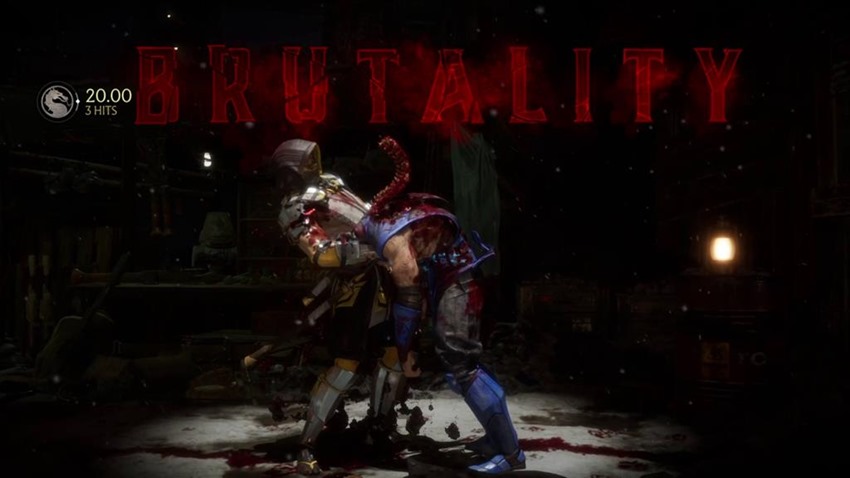
If Fatalities are theatrical endings, then Brutalities are something far more abrupt… and, in many ways, more disturbing. There’s no pause, no dramatic flourish, no moment to process what’s happening. The fight is still moving—and suddenly, it isn’t. Scorpion’s Brutalities carry that same philosophy: fast, savage, and deeply tied to his identity as a warrior who doesn’t always wait for the final curtain to fall.
Across Mortal Kombat X, Mortal Kombat 11, and Mortal Kombat 1, these finishers evolve alongside him, blending technique, Hellfire, and sheer brutality into something that feels almost instinctive.
Mortal Kombat X — Controlled Chaos
In Mortal Kombat X, Scorpion’s Brutalities feel like extensions of his variations, each one tied to a specific fighting style.
Get Over Here turns his iconic Double Spear into something catastrophic. When enhanced again, the Hellfire doesn’t just burn—it detonates the opponent’s torso entirely, leaving behind nothing but a charred skeleton.
With Shirai Ryu Fire, Scorpion uses an Air Flameport to decapitate the opponent instantly with a flaming uppercut. It’s precise, almost surgical, but cannot be performed on a juggled or airborne opponent.
Just a Scratch, tied to the Ninjutsu Variation, is anything but minor. Using Doom Blade, Scorpion slices off both of the opponent’s arms, leaving them to bleed out. It requires multiple Downfalls to connect during the match and cannot be executed on airborne or juggled enemies.
Nether Hole, from the Hellfire Variation, sees Scorpion channel his aura into a Fire Ball or Hell Ball that burns a massive hole straight through the opponent’s torso. Positioning matters here—he must be at a specific distance—and again, it cannot be used on airborne opponents.
With Little Devil, Scorpion calls upon his Inferno Variation. A summoned minion erupts from below, grabs the opponent, and instead of merely restraining them, disintegrates—taking the opponent’s entire body with it and leaving only the head behind. For this to trigger, all Minion attacks must connect during the match.
Finally, there’s Trial by Fire, a secret Brutality introduced in MKXL. Scorpion performs his Throw, but instead of ending it normally, he slices open the opponent’s throat and abdomen before finishing with a fiery uppercut that causes their head to explode.
Mortal Kombat 11 — Precision, Conditions, and Pain
By Mortal Kombat 11, Brutalities become more technical, often tied to specific conditions, timing, and player intent. They feel less accidental and more like something you earn.
The Klassic is a universal Brutality shared across the roster, but Scorpion’s version carries weight. A rising uppercut cleanly decapitates the opponent, spine still attached. To trigger it, the player must not block during the entire final round and must hold a specific button.
Spine Ripper builds on his backward throw. After breaking the opponent’s leg, Scorpion pulls their shoulder apart, then yanks their upper body with such force that the spine tears free from their back. It requires multiple throws to connect and will not trigger if its Krushing Blow condition hasn’t been met.
Crispy is pure Scorpion. Using Demon Breath, he incinerates the opponent down to a skeleton that eventually collapses at his feet. His head remains a flaming skull during the victory pose, mirroring his iconic Toasty! Fatality. A button must be held, and it cannot be used on airborne opponents.
Stinger evolves from Demon Slam. After impaling the opponent, Scorpion follows up by slashing the back of their neck and cleanly decapitating them. Like others, it requires a held input and won’t trigger without meeting its Krushing Blow conditions.
Clean Cut is all about timing and positioning. Using Rising Cut, Scorpion slices downward, and the second strike splits the opponent cleanly from head to torso. It requires Scorpion to be at a certain health level and cannot be used on airborne enemies.
With Beheaded, Scorpion enhances his Spear while Burning Spear is active. The follow-up elbow strike doesn’t just stun—it removes the opponent’s head, spine included. Again, Krushing Blow conditions must be met.
Soul Burn uses Demon Dash in a devastating way. Scorpion burns away the opponent’s flesh entirely, leaving behind a charred corpse. This one requires a Mercy to be performed beforehand and must be executed at maximum range.
Demon’s Blood, tied to his Wrath combo, sees Scorpion wrap his spear chain around the opponent’s neck and arm before yanking it tight—decapitating them while tearing off the limb.
Save Me A Slice transforms Hell Port into something far more lethal. The amplified katana strike cuts the opponent diagonally from shoulder to waist. It requires specific health conditions and cannot be performed on airborne opponents.
Heartless takes his Spear and gives it a cruel twist—when pulled back, it rips the opponent’s heart out with it. This requires multiple successful Spear uses during the match.
Gutted, tied to his forward throw, carves a vertical opening through the opponent’s chest and abdomen, requiring repeated button presses and proper setup conditions.
There are even hidden variations. An Alternate Crispy Brutality adds Dan Forden’s iconic “Toasty!” at the end, while Alternate Heartless replaces the heart extraction with a full decapitation instead.
Mortal Kombat 1 — Kameo Carnage
In Mortal Kombat 1, Scorpion’s Brutalities return in Kameo form, still carrying his unmistakable identity.
Well Done sees Kameo Scorpion perform his throw and ignite the opponent until their flesh burns away, leaving only a skeleton.
Slice Above uses Hell Blades to chop off the opponent’s arms before Scorpion removes his mask and burns their head down to bone.
Hot Air takes advantage of airborne opponents, where Scorpion’s Fire Breath strips flesh from bone mid-air. Like others, these require holding a button to activate.
Other Finishers — The Lighter, Stranger Side of Scorpion
Not everything Scorpion does ends in horror. Mortal Kombat has always balanced brutality with absurdity.
His Friendships show a playful side:
- Scorpion Doll Sale has him present a toy version of himself with the message “Buy a Scorpion Doll.”
- Skull-in-the-Box features a jack-in-the-box scare tactic.
- Teddy-Ality sees him summon a giant teddy bear and hug it.
Then there’s his infamous Animality, where he transforms into… a penguin. In Atomic Egg, he lays an explosive egg that destroys the opponent—a bizarre choice that famously led to fan backlash, eventually influencing later additions like Scorpion Sting.
His Hara-Kiri is deeply ironic. Instead of defeating his opponent, he kneels and snaps his own neck.
In Multality: Raise Hell, he summons Netherrealm flames that engulf multiple opponents at once, causing them to explode.
And in Shaolin Monks, his Brutality: Searing Blade sees him engulf himself in fire and carve through enemies before decapitating them.
Even his Babality carries his identity—turning into a childlike version of himself who shouts “GET OVER HERE!” in a high-pitched voice, flies forward with his spear, then breaks down crying in a tantrum.
Why Brutalities Feel Different
Scorpion’s Brutalities hit differently because they feel… immediate. There’s no ceremony. No pause. Just action that goes too far, too fast. And maybe that’s what defines them. Because Scorpion isn’t always the kind of man who waits for the right moment to end a fight. Sometimes— He just does it.
Scorpion Beyond the Games: A Warrior Rewritten Across Realms

Scorpion has never been confined to just the arena. Over the years, Hanzo Hasashi has stepped far beyond the boundaries of the games and into films, animated features, television series, comics, and even alternate retellings that reshape his identity in ways that feel both familiar and entirely new. What makes these appearances so fascinating is that while the details shift, the core of Scorpion—the grief, the rage, the fire—always remains intact, even when the story around him changes completely.
Mortal Kombat (1995 Film) — The Silent Enforcer of Shang Tsung
In the 1995 Mortal Kombat film, Scorpion is portrayed physically by Chris Casamassa, with Ed Boon, co-creator of the franchise, providing his voice. Interestingly, the deep-rooted rivalry between Scorpion and Sub-Zero (Bi-Han) is almost entirely absent here, reduced to a single line from Shang Tsung, who describes them as “the deadliest of enemies, but slaves under my power.”
Scorpion appears alongside Sub-Zero as one of Shang Tsung’s personal guardians, confronting Liu Kang, Johnny Cage, and Sonya Blade aboard the sorcerer’s ship. Before a proper fight can begin, Raiden intervenes and incapacitates both warriors, establishing early on that they serve more as extensions of Shang Tsung’s will than independent characters.
During the tournament itself, Scorpion faces Johnny Cage in a forest, only to abruptly shift the battleground by teleporting them both into his Netherrealm lair. Surrounded by skeletal remains and remnants of past victims, Scorpion initially dominates the fight. However, Cage adapts, using weapons scattered throughout the lair to turn the tide and ultimately defeat him.
One of the most notable changes in this adaptation is Scorpion’s spear. Instead of a chain-bound kunai, it becomes a living, snake-like creature that shoots from a slit in his palm and moves with a mind of its own, adding a grotesque, almost biological edge to his attacks. Although the film never explicitly labels him as undead, he removes his mask to reveal a skull and attempts to incinerate Cage using his signature “Toasty!” attack. Cage survives by using a shield to block the flames and ultimately destroys Scorpion using both the shield and a spear.
Mortal Kombat: The Journey Begins & Annihilation — Expanding the Myth
In Mortal Kombat: The Journey Begins, an unofficial prequel, Scorpion is again depicted as one of Shang Tsung’s guardians, paired with Sub-Zero. This time, the film explores their shared history more directly, adding depth to their rivalry. The duo nearly defeats Liu Kang, Johnny Cage, and Sonya Blade before Raiden once again intervenes.
In Mortal Kombat: Annihilation, Scorpion returns briefly, portrayed by J.J. Perry and again voiced by Ed Boon. Now serving Shao Kahn, he defeats the younger Sub-Zero and kidnaps Kitana under Kahn’s orders. His spear evolves further into two smaller, living entities that shoot from his hand, continuing the film series’ reinterpretation of his iconic weapon.
Television Adaptations — Reinvention and Experimentation
Defenders of the Realm
In the animated series Mortal Kombat: Defenders of the Realm, Scorpion is voiced by Ron Perlman and appears in the episode “Sting of the Scorpion.” Here, he leads an army of undead warriors in an invasion of Earthrealm, defeats the younger Sub-Zero in combat, but is ultimately stopped by Liu Kang.
Mortal Kombat: Conquest
In Mortal Kombat: Conquest, Scorpion’s origin is completely reimagined. Instead of Hanzo Hasashi, he begins as a mystical entity known as the Scorpio, a warrior soul trapped within a powerful emperor scorpion hidden in Outworld’s cobalt mines. Shang Tsung releases this spirit, which possesses a guard named Takeda.
Kung Lao eventually defeats this incarnation of Scorpion and sends him to the Netherrealm after Scorpion mortally wounds Jen Reyland, Kung Lao’s love. Later, Scorpion is resurrected by Shao Kahn and forms an organization of assassins, even recruiting Siro’s brother Cassar before killing him.
His story continues with a reluctant alliance with the Lin Kuei to assassinate Kung Lao, but the partnership collapses following the deaths of key allies, leading to a fierce battle between Scorpion and Sub-Zero that ends in a draw when Kung Lao intervenes. Notably, this version retains the living hand creature instead of a traditional spear.
Malibu Comics — A Darker, More Vengeful Spectre
In the Malibu Comics series, Scorpion is portrayed far more explicitly as an unwilling servant of evil. Consumed entirely by revenge against Sub-Zero, he is willing to kill not just his rival, but anyone close to him. There are even hints of an unusual camaraderie between Scorpion and Kano.
Throughout the Blood & Thunder arc, Scorpion relentlessly stalks Sub-Zero, only to be defeated when Sub-Zero overcomes his fear—revealed to be the source of Scorpion’s power—and shatters him. Scorpion then seeks greater power through the Tao Te Zhan.
In later issues, he clashes with Kitana, dies, and returns again despite claiming that death would end him permanently. During the Battlewave series, Shao Kahn resurrects him using the Deathstone, allowing Scorpion to command an army of undead soldiers as a general.
His brutality continues during the second tournament, where he kills Siang and later confronts Sub-Zero. Despite Sub-Zero’s attempt to appeal to honor, Scorpion kills him with a final act of vengeance, even as Earthrealm claims victory.
Mortal Kombat (1995 Novel) — A Different Identity Entirely
In Jeff Rovin’s non-canon novel, Scorpion’s identity is completely reimagined. Instead of Hanzo Hasashi, he becomes the fusion of a father, Yong Park, and his son, Tsui Park. After Yong is killed by Sub-Zero, the demigod Yu allows his spirit to merge with his son’s body, creating Scorpion as an embodiment of shared vengeance.
Mortal Kombat: Rebirth & Legacy — Grounded, Humanized Stories
In the 2010 short film Mortal Kombat: Rebirth, Scorpion is portrayed by Ian Anthony Dale as an assassin working for Jax and Sonya Blade. In this grounded reinterpretation, he agrees to eliminate targets like Baraka and Shang Tsung in exchange for the chance to fight Sub-Zero. By the end, he abandons his identity as Hanzo Hasashi and fully embraces the name Scorpion.
This portrayal evolves further in Mortal Kombat: Legacy, where Hanzo is depicted as a disciplined general of the Shirai Ryu, speaking Japanese and earning the nickname “Scorpion” through his mastery of the kunai. He has a wife, Kara, and a son, Jubei, and shares a complex history with Bi-Han, initially as a close friend before clan tensions tear them apart.
Their relationship is tragic, shifting from friendship to rivalry as manipulation and betrayal unfold. Hanzo’s family is slaughtered, and he is ultimately killed by Bi-Han, only for it to be revealed that Quan Chi orchestrated everything. Resurrected as Scorpion, Hanzo enters the Mortal Kombat tournament driven entirely by revenge, ultimately killing Sub-Zero using the Spine Rip fatality.
Mortal Kombat Legends — The Most Faithful Yet Emotional Take
Voiced by Patrick Seitz, Scorpion becomes the central figure in the Mortal Kombat Legends animated films.
In Scorpion’s Revenge, his story closely follows the games, with Quan Chi disguising himself as Sub-Zero to massacre the Shirai Ryu and Hanzo’s family. After escaping torture in the Netherrealm, Hanzo is manipulated into becoming Scorpion and entering the tournament. Over time, he uncovers the truth, kills Goro to save Liu Kang, and ultimately defeats Quan Chi, avenging his family before dying as the island collapses.
In Battle of the Realms, Scorpion returns, tied to Shinnok’s amulet and the Kamidogu, eventually teaming up with Sub-Zero to stop the One Being and restore the balance of realms.
In Snow Blind, set in a dystopian future, an older Kuai Liang summons Scorpion to help rescue Kenshi from Kano’s Black Dragon. After defeating enemies like Kabal and destroying Kronika’s Hourglass, Scorpion fulfills his promise and returns Kuai Liang to the Netherrealm.
Mortal Kombat (2021 Film) — A Warrior Reborn
In the 2021 Mortal Kombat film, Scorpion is portrayed by Hiroyuki Sanada, bringing a grounded, emotional depth to Hanzo Hasashi. This version leans heavily into his origin as a family man turned revenant, emphasizing his loss, his rage, and his eventual return to confront Sub-Zero in a climactic battle that visually and emotionally captures the essence of the character.
One Character, Many Interpretations
Across all these adaptations, Scorpion changes constantly. Sometimes he is a silent enforcer, sometimes a tragic hero, sometimes a literal embodiment of vengeance, and sometimes something entirely reimagined. Yet no matter how much the details shift—whether his spear is a chain, a creature, or something else entirely—the core remains the same.
He is always a man who lost everything. He is always a soul that refused to rest. And no matter the medium, no matter the timeline…
Scorpion always finds his way back through the fire.
Scorpion was never just a character you pick on a selection screen. He is memory, rage, honor, and consequence wrapped in flame. Every version of Hanzo Hasashi, whether in games, films, comics, or animated stories, carries the same truth—this is a man who lost everything, was broken beyond death, and still chose to rise again.
That’s why he endures. Because beneath the iconic “GET OVER HERE!”… beneath the Hellfire and skull… there is something painfully human. A father. A warrior. A soul that refuses to let go.
And maybe that’s why every time Scorpion steps into the arena, it doesn’t feel like just another fight.
It feels like unfinished business.
If Scorpion’s story still hits the way it should, then it’s time to bring that fire into your collection.
Explore a massive range of collectibles featuring Mortal Kombat, He-Man and the Masters of the Universe, Anime, Marvel, DC, Transformers, LEGO, and more—now at up to 40% OFF.
From premium statues to action figures that capture every detail, this is where fandom turns into something real you can hold.
Your collection deserves legends.
And legends… never stay in stock for long.
Subscribe
Sign up to get the latest on sales, new releases and more …